Interim Coronavirus Relief Bill

https://heathercoxrichardson.substack.com/p/april-23-2020

Congress expected to announce deal on latest coronvirus relief bill

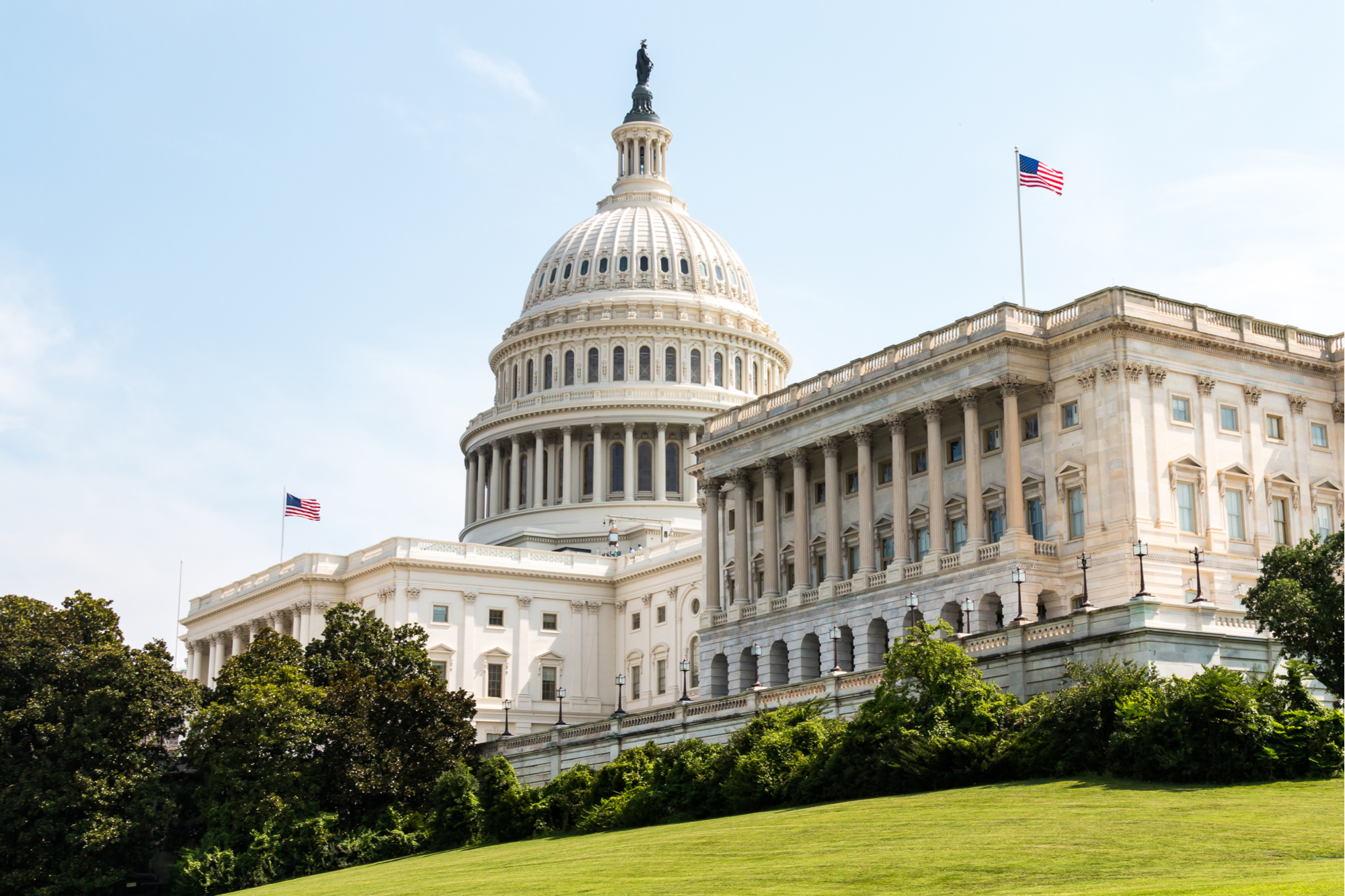
Today the House of Representatives passed a new $484 billion coronavirus relief bill by a vote of 388-5. The Senate passed it Tuesday. $381 billion is for small businesses left out in the cold when the money from the previous coronavirus relief package quickly ran dry. Republicans wanted to stop there, but Democrats demanded $75 billion for hospitals, and $25 billion for coronavirus testing, as well as a requirement that the administration figure out a strategy to get tests to states.

The relief bill comes as more than 26 million Americans are out of work and almost 50,000 Americans have died of Covid-19. The representatives had to drive to Washington, D.C., or fly unusual routes because regular flights are canceled. They arrived for the vote in the Capitol building in alphabetical groups of 50 to 60 so they could keep their distance from each other. A number of Republicans refused to wear masks during the vote, while all but one Democrat wore one.

Democrats inserted into the bill a new committee to oversee the administration’s “preparedness for and response to the coronavirus crisis,” chaired by Jim Clyburn (D-SC). The committee has the power to subpoena witnesses and documents. Republicans and Trump objected.

But the Democrats did not get any more aid to states, crippled by the crisis, than the $150 billion previously provided. The bipartisan National Governors Association, headed by Maryland Governor Larry Hogan, a Republican, has asked for $500 billion to help the states replace lost tax revenues. Democrats wanted such aid, but Republicans refused.

Senate Majority Leader Mitch McConnell (R-KY) went on talk radio host Hugh Hewitt’s show on Wednesday and tried to make the question of state aid partisan. He said that he opposed granting money to states whose problems, he said, stemmed from their underfunded state pension plans. Instead, the states should consider bankruptcy. A document put out by McConnell’s office called aid to the states a “blue state bailout.”

In fact, Michael Leachman, the senior director of state fiscal research at the Center on Budget and Policy Priorities, said that McConnell has it wrong. States have not been overspending; their expenses for education and infrastructure are actually significantly below what they were in 2008, despite more inhabitants, and they have put about 7.6% of their budgets into rainy day funds, a historic high, up from the previous high of 5% they held in reserve in 2006 before the Great Recession.

The problem is that states have to balance their budgets annually, and they depend on sales and income taxes for 70% of their revenue. The shutdowns have decimated tax revenues as shopping ends and people lose their jobs. At the same time, unemployment claims are climbing dramatically. States are looking at a $500 billion loss between now and 2022.

States need money to avoid massive layoffs and deep spending cuts, actions that would make the economic crisis continue much longer than it would if they do not have to make them. They would not use bailout money on pensions, Leachman writes, but put it in state general funds, which are collapsing. Pensions come out of a separate trust fund (although the general fund does put money toward future pensions, that’s less than 5% spending from the general fund). Federal bankruptcy law currently does not allow states to declare bankruptcy, but in any case, Leachman writes, there is no need for it. Bankruptcy relieves high debt levels, but state debt is not high, and once the pandemic passes, the states should be financially sound again.

If Leachman’s explanation was scholarly, New York Governor Andrew Cuomo was blunt. “New York puts into that federal pot $116B more than we take out. Kentucky takes out $148B more than they put in,” he said at a press conference. “Senator McConnell, who’s getting bailed out here? It’s your state that’s living on the money that we generate.” A recent study by the Rockefeller Institute of Government shows that New Yorkers as a group pay in to the federal government $1,792 per capita more than they take out, while for every dollar Kentucky puts in, it gets $2.61 back.

Cuomo called McConnell out for trying to turn the crisis into a political fight: “That’s not what this country is all about,” Cuomo said. “It’s not red and blue, it’s red, white and blue.”

Today’s other big news was Trump’s suggestion at his coronavirus briefing that it would be worth studying whether injecting disinfectant into patients would kill the novel coronavirus. “And then I see the disinfectant where it knocks it out in a minute. One minute. And is there a way we can do something like that, by injection inside or almost a cleaning?” he said. “Because, you see, it gets on the lungs, and it does a tremendous number on the lungs. So it’d be interesting to check that. So that you’re going to have to use medical doctors, but it sounds — it sounds interesting to me.” He also suggested using heat and light to kill the virus.

Doctors were horrified at his comment, calling it irresponsible and dangerous. Disinfectants are poisonous and are deadly if they are used inappropriately. “To be clear:” emergency medicine physician Dara Kass tweeted, “Intracavitary UV light and swallowing bleach or isopropyl alcohol can kill you. Don’t do it.”

Trump’s emphasis on dramatic cures for Covid-19 reinforces his disagreement with health experts that we must dramatically increase our testing for the disease so we can identify hot spots and isolate them before they spread. At today’s briefing, Trump disagreed with Dr. Anthony Fauci, the director of the National Institute of Allergy and Infectious Diseases and one of the administration’s top medical advisors about the pandemic, who recently said “We absolutely need to significantly ramp up, not only the number of tests but the capacity to actually perform them.” Today, Trump said: “I don’t agree with him on that, no, I think we’re doing a great job on testing.”

In fact, the U.S. lags behind other nations in per capita tests, and Trump’s continuing reluctance to support getting them seems to me mystifying. It is this odd gap Congress is trying to address with its requirement in the new coronavirus package that the administration must figure out a strategy to get tests to states. The bill now heads to the Oval Office for Trump’s signature.

For all the dark nitty-gritty of politics today, it is also a day that begins a joyous month, and that seems to me a far better way to leave you all tonight than with the day’s troubles. For those who celebrate, Ramadan Mubarak.


4.4 million Americans sought jobless benefits last week, as economic pain continued across the United States

https://www.washingtonpost.com/business/2020/04/23/economy-coronavirus-unemployment/?fbclid=IwAR3EbJpE7nmIUWOM4HUrZVOKaBmls7Uh3gL5ewCP98q7So0s38JlPdTT-SI&utm_campaign=wp_main&utm_medium=social&utm_source=facebook

4.4 million Americans sought jobless benefits last week, as ...

The White House and Congress have tried to arrest the downturn, but the coronavirus pandemic keeps pushing Americans out of the labor force.

More than 4.4 million Americans filed for unemployment benefits last week, according to the Labor Department, a signal the tidal wave of job losses continues to grow during the coronavirus pandemic.

It’s the fifth straight week that job losses were measured in the millions. From March 15 to April 18, 26.5 million people have probably been laid off or furloughed. The number of jobs lost in that brief span effectively erased all jobs created after the 2008 financial crisis. Jobless figures on this scale haven’t been seen since the Great Depression.

The new weekly total comes on top of 22 million Americans who had sought benefits in previous weeks, a volume that has overwhelmed state systems for processing unemployment claims. Economists estimate the national unemployment rate sits between 15 and 20 percent, much higher than it was during the Great Recession in 2008 and 2009. The unemployment rate at the peak of the Great Depression was about 25 percent.

The new weekly jobless claims figure came in around economists’ predictions, which were expected “to be staggering, but not growing, which is a small mercy,” said Julia Pollak, a labor economist at ZipRecruiter. For comparison, 5.2 million people filed unemployment claims for the week ending April 11.

As the coronavirus began spreading in the United States earlier this year, many businesses rapidly began to close. Hotels, restaurants, and airlines were hit particularly hard, but few businesses were immune from the economic toll. The problems have only worsened each week, as more Americans reduced their spending and more businesses cut workers because income has fallen so sharply.

Pollack said many businesses quickly “cut to the bone” when they realized how the pandemic would gut sales. Now, many of the new layoffs stem from businesses like news organizations and tech companies that weren’t directly affected by people staying home but are suffering the consequences of vanishing ad revenue and paid subscriptions.

“We see declines across every major industry and state, although the declines hit industries at different times,” Pollak said.

Meanwhile, consumer spending, the engine behind the longest economic expansion in U.S. history, has evaporated. If they’re still operating, many offices are working with skeleton staffs and staring down months of dismal revenue.

The White House and Congress have tried to intervene, but with limited impact so far.

New funding for small businesses in a $2 trillion March emergency spending package quickly dried up in the face of overwhelming demand, prompting the Senate to expand funding by $310 billion on Tuesday. The bill would direct an additional $60 billion to a separate small-business emergency grant and loan program. The House is slated to vote on the measure Thursday afternoon.

Even with all the new government spending, hopes for a sharp economic rebound are fading, overtaken by the public fear of going back to restaurants, movie theaters, schools and gyms. The growing possibility of a “W”-shaped recovery — in which a resurgence of the virus, or a spike in defaults and bankruptcies, triggers another downturn — has analysts reframing what a reopened or rehabilitated economy might look like.

This year defies historical comparison. In 2020, 28.9 million people have filed for unemployment benefits. Halfway through the fourth month of the year, the figure has already eclipsed the full-year totals of every year but 1982 (30.4 million) and 2009 (29.8 million). At this rate, it will overtake both within a week or so.

Less than half of working-age Americans will be earning a wage next month, said James Knightley, ING Chief International Economist.

“In an election year, this means that the call for politicians to reopen the economy is only going to get louder, irrespective of the health advice,” Knightley said.

In five weeks, 9.4 percent of the working-age population has filed for unemployment insurance, said Nick Bunker, Indeed Hiring Lab’s director of economic research. That’s about twice the share of the population that lost a job during the Great Recession. In some states, such as Michigan, about one in four workers has filed an unemployment claim in the past few weeks.

“The numbers detailing the shock to the U.S. labor market are so large, and cover such a short time, that your first reaction is that they’re a typo,” Bunker said.

Employers are also unlikely to be hiring at the same levels they were before the pandemic. As of April 16, job postings on Indeed were down 34 percent compared with last year, Bunker said.

The job losses, like the epidemic itself, haven’t fallen evenly across the country. In three states — Hawaii, Kentucky and Michigan — about 1 in 4 workers have filed for unemployment benefits in the past 5 weeks. In Michigan, plant shutdowns and furloughs have ravaged the manufacturing economy, which had only recently recovered all the jobs it lost in the Great Recession.

On the opposite of the ledger sits South Dakota, where Gov. Kristi L. Noem (R) has resisted calls to lock down the state’s businesses to slow the spread of the coronavirus. Only 6 percent of the state’s labor force has applied for unemployment benefits. It may be a regional trend: Neighboring Wyoming and Nebraska, and nearby Utah, also have unusually low claims numbers.

As part of its sprawling stimulus package, Washington has rolled out relief for millions of households and small businesses struggling to make ends meet. But money for struggling businesses quickly ran dry, and system glitches have prevented $1,200 stimulus checks from reaching some of the neediest.

On Tuesday, the Senate passed a bill to expand the Paycheck Protection Program for small businesses by $310 billion, and flood a separate small-business emergency grant and loan initiative by an additional $60 billion.

Meanwhile, many low-income veterans and Social Security recipients still haven’t received the stimulus money in their bank accounts, while other IRS checks are going to dead people. People who didn’t file tax returns last year or don’t have direct-deposit information may have weeks more to wait.

In the wake of the Great Recession, the number of unemployed — about 15 million — was significantly higher than the number who claimed benefits, and the unemployment rate still peaked at just 10 percent. Economists expect the United States to blow by that figure when April’s jobs data are released on May 8.

Granted, this comes as unemployment eligibility and benefits have been greatly expanded. The government has relied on the unemployment insurance system to deliver relief to out-of-work Americans as it forces millions of businesses to close during temporary stay-at-home orders. The soaring numbers are, for once, a sign of the system working as intended.


The Health 202: States are ending their coronavirus lockdowns earlier than health roadmaps recommend

https://www.washingtonpost.com/news/powerpost/paloma/the-health-202/2020/04/23/the-health-202-states-are-ending-their-coronavirus-lockdowns-earlier-than-health-roadmaps-recommend/5ea09b5988e0fa34528d6eb8/?utm_campaign=wp_the_health_202&utm_medium=email&utm_source=newsletter&wpisrc=nl_health202

The Health 202: States are ending their coronavirus lockdowns ...

Over a nearly three-week span in March, most state governors across the nation locked down their states because of the novel coronavirus.

Gradually opening things up will take even longer — and probably will vary considerably from state to state.

Governors are feeling pressure from two sides. Many troubling questions about the coronavirus remain unanswered, such as how to get more Americans tested and whether the United States even has enough capacity to track and isolate virus cases. At the same time, they’re feeling immense pressure to restart economic activity, with tens of millions of Americans out of work and the country stuck in a deepening economic crater.

As governors weigh when and how to reopen public gathering spots, there are several road maps they could look to.

Yesterday the National Governors Association released a 10-point guide for states. The first point is to make coronavirus testing broadly available. It urges states to improve surveillance to detect outbreaks, ensure hospitals are equipped to respond to surges and create a plan to reopen in stages.

The plan also warns states against opening prematurely. 

“Opening without the tools in place to rapidly identify and stop the spread of the virus … could send states back into crisis mode, push health systems past capacity and force states back into strict social distancing measures,” it says.

Then there’s guidance from the Trump administration, which says states should first see a decrease in confirmed coronavirus cases over a 14-day period. That guidance is in line with what public health experts have recommended — although Trump has also frequently suggested he’d like to see states open sooner.

So far, governors vary widely in how they’re approaching the issue.

Some, like Trump, are chomping at the bit. Georgia Gov. Brian Kemp (R) is allowing businesses including gyms and barber shops to reopen on Friday. Colorado Gov. Jared Polis (D) has said some businesses may reopen on Monday, and retailers can have a limited number of in-store shoppers starting May 1.

Other governors are much more cautious. Virginia Gov. Ralph Northam (D), for example, has issued a stay-at-home order in effect until June 10. California Gov. Gavin Newsom (D) declined yesterday to name a date for easing restrictions, saying the state hasn’t reached its six goals before reopening the economy.

Newsom, however, did indicate progress has been made with his detailed playbook for reopening the state. After a phone conversation with Trump, the governor said the two had agreed to significantly ramp up testing across California, with hundreds of thousands of new swabs on the way and 86 new testing sites opening.

But virtually every governor is working on plans, some in coordination with other governors, on how to shape the post-quarantine world.

Here are the states opening things up first:

Georgia: Certain businesses may open on Friday; theaters and restaurants can reopen on Monday. Bars, nightclubs and music venues will remain closed; schools have been closed through the end of the school year.

Kemp explained his decision to reopen tanning salons, barber shops, massage parlors and bowling alleys, saying on Monday: “I see the terrible impact of covid-19 on public health as well as the pocketbook.” Kemp said he will urge businesses to take precautions, such as screening for fevers, spacing workstations apart and having workers wear gloves and masks “if appropriate,” my Washington Post colleagues William Wan, Carolyn Y. Johnson and Joel Achenbach report.

“Georgia, according to some models, is one of the last states that should be reopening,” they write. “The state has had more than 830 covid-19 deaths. It has tested fewer than 1 percent of its residents — low compared with other states and the national rate. And the limited amount of testing so far shows a high rate of positives, at 23 percent.”

Trump blasted Kemp’s decision during his briefing last night, saying it violates his administration’s phase 1 guidelines for when to reopen.


Colorado: Polis is allowing the state’s stay-at-home order to expire Sunday, after which the state will gradually reopen businesses. Starting May 4, nonessential offices may have 50 percent of their workforce at the site, although large workplaces will be advised to conduct symptom and temperature checks.

Polis has warned the restrictions won’t all be lifted at the same time.

“The virus will be with us,” he said earlier this month. “We have to find a sustainable way that will be adapted in real time to how we live with it.”


South Carolina: Gov. Henry McMaster (R) said Monday he was allowing nonessential businesses such as department stores and retailers to open, followed by beaches on Tuesday.

But businesses must follow three rules for operating: They must limit the number of customers in the store; require patrons to be six feet apart; and follow sanitation guidelines from the Centers for Disease Control and Prevention.

“I urge everyone to remember we are still in a very serious situation,” McMaster said at a news conference. “We know that this disease, this virus, spreads easily, and we know it is deadly. So we must be sure that we continue to be strict and disciplined with our social discipline and taking care not to infect others.”


Tennessee: Gov. Bill Lee (R) said he plans to allow some businesses to reopen once his “safer-at-home” order expires in one week. But the state’s biggest cities will make their own reopening determinations. Lee has appointed a 30-member economic recovery group to create a plan.

Lee, along with Kemp and McMaster, have met with the governors of Mississippi, Alabama and Florida to consider how to reopen their economies in a coordinated way in the country’s southeast region. The number of new cases and deaths in Florida has leveled off somewhat — something the state’s governor, Ron DeSantis (R), has been pointing to as he urges a speedy reopening in his state.

Ahh, oof and ouch

AHH: CDC Director Robert Redfield confirmed comments he made to our colleague Lena H. Sun after Trump claimed he’d been “misquoted.”
Trump claims his CDC director was ‘misquoted’ on second wave of covid-19
Director of the Centers for Disease Control and Prevention Robert Redfield said April 22 that his statement on covid-19 in the fall is “accurately quoted.” (The Washington Post)

The president took issue with the portrayal of comments from Redfield following an interview with our Post colleague Lena H. Sun. In that interview, Redfield warned that a second wave of the coronavirus could be worse than the current one.

“There’s a possibility that the assault of the virus on our nation next winter will actually be even more difficult than the one we just went through,” Redfield told Lena. He added: “We’re going to have the flu epidemic and the coronavirus epidemic at the same time.”

The president again repeated the claim at his daily White House coronavirus task force briefing – this time, with Redfield standing awkwardly next to him.

Redfield then said this: “I’m accurately quoted in The Washington Post.”

But Redfield also sought to “soften his words as the president glowered next to him,” Lena, Ashley Parker, Josh Dawsey and Yasmeen Abutaleb write.

“The remarkable spectacle provided another illustration of the president’s tenuous relationship with his own administration’s scientific and public health experts, where the unofficial message from the Oval Office is an unmistakable warning: Those who challenge the president’s erratic and often inaccurate coronavirus views will be punished — or made to atone,” they write.

Ahh, oof and ouch

AHH: CDC Director Robert Redfield confirmed comments he made to our colleague Lena H. Sun after Trump claimed he’d been “misquoted.”
Trump claims his CDC director was ‘misquoted’ on second wave of covid-19

It’s apparent “Trump is again bristling at a health official offering too dire a scenario,” our colleague Aaron Blake writes. He points out that Trump was set off a previous time when another top CDC official warned in February that the spread of the coronavirus was inevitable.

OOF: The former head of the U.S. agency pursuing a coronavirus vaccine says he was ousted for opposing efforts to promote hydroxychloroquine, a drug Trump has insistently touted as a weapon against the virus despite a lack of scientific proof.

Rick Bright, previously the director of the Biomedical Advanced Research and Development Authority, said he was dismissed and pushed into a narrower role after he called for strictly vetting supposed treatments like anti-malarials repeatedly embraced publicly by the president. 

“I believe this transfer was in response to my insistence that the government invest the billions of dollars allocated by Congress to address the Covid-19 pandemic into safe and scientifically vetted solutions, and not in drugs, vaccines and other technologies that lack scientific merit,” Bright said in a statement, according to the New York Times’s Michael D. Shear and Maggie Haberman.

He added: “I am speaking out because to combat this deadly virus, science — not politics or cronyism — has to lead the way.” 

The president was asked about Bright during last night’s briefing and whether the official was pushed out.

“Maybe he was and maybe he wasn’t. I don’t know who he is,” Trump responded.

OUCH: There were early missteps by Health and Human Services Secretary Alex Azar that bogged down the government’s response to the virus.

In late January, days after the first coronavirus case was confirmed in the United States, Azar told Trump in a meeting the coronavirus spread was “under control,” the Wall Street Journal’s Rebecca Ballhaus and Stephanie Armour report. Azar also told the president more than a million diagnostic tests would be available in weeks and that it was the “fastest we’ve ever created a test.”

These promises didn’t pan out.

“Six weeks after that Jan. 29 meeting, the federal government declared a national emergency and issued guidelines that effectively closed down the country,” Rebecca and Stephanie write. “Mr. Azar, who had been at the center of the decision-making from the outset, was eventually sidelined.”

There were numerous factors that slowed the administration’s initial coronavirus response, but “interviews with more than two dozen administration officials and others involved in the government’s coronavirus effort show that Mr. Azar waited for weeks to brief the president on the threat, oversold his agency’s progress in the early days and didn’t coordinate effectively across the health-care divisions under his purview,” they report.

Earlier this year, Azar tapped an aide to lead HHS’s day-to-day coronavirus response who had joined the agency after running a dog-breeding business for six years. 

The aide, Brian Harrison, was derisively called “the dog breeder” by some within the White House, Reuters’s Aram Roston and Marisa Taylor report.

“Azar’s optimistic public pronouncement and choice of an inexperienced manager are emblematic of his agency’s oft-troubled response to the crisis,” they add. “… Harrison, 37, was an unusual choice, with no formal education in public health, management, or medicine and with only limited experience in the fields. In 2006, he joined HHS in a one-year stint as a ‘Confidential Assistant’ to Azar, who was then deputy secretary. He also had posts working for Vice President Dick Cheney, the Department of Defense and a Washington public relations company.”

There’s much we don’t know about the coronavirus

Scientists say a mysterious blood-clotting complication may be causing a number of the coronavirus-related deaths.

Doctors are learning that covid-19, once believed to be a straightforward respiratory virus, is much more frightening. Since the earlier waves of coronavirus cases, doctors have learned that the disease attacks not just lungs but kidneys, the heart, intestines, liver and the brain. Autopsies also have shown that some coronavirus patients lungs were filled with hundreds of microclots, our Post colleague Ariana Eunjung Cha reports.

“The problem we are having is that while we understand that there is a clot, we don’t yet understand why there is a clot,” said Lewis Kaplan, a University of Pennsylvania physician and head of the Society of Critical Care Medicine. “We don’t know. And therefore, we are scared.”

“In hindsight, there were hints blood problems had been an issue in China and Italy as well, but it was more of a footnote in studies and on information-sharing calls that had focused on the disease’s destruction of the lungs,” Ariana writes.

New data provide troubling statistics about coronavirus patients on ventilators.

A study found 88 percent of 320 coronavirus patients on ventilators in New York state’s largest health system died.

It’s an uptick from pre-pandemic figures. “That compares with the roughly 80 percent of patients who died on ventilators before the pandemic, according to previous studies — and with the roughly 50 percent death rate some critical care doctors had optimistically hoped when the first cases were diagnosed,” Ariana reports.

The research, published in the journal JAMA, also notes many of the hospitalized had other conditions.

“The paper also found that of those who died, 57 percent had hypertension, 41 percent were obese and 34 percent had diabetes, which is consistent with risk factors listed by the Centers for Disease for Control and Prevention,” she adds. “Noticeably absent from the top of the list was asthma. As doctors and researchers have learned more about covid-19, the less it seems that asthma plays a dominant role in outcomes.”

The economic fallout

If there’s a recovery from the current economic downswing this year, it could be temporary, economists warn.

There’s a growing chance of a second economic downturn if there’s another surge of the coronavirus or if there’s an increase in bankruptcies and defaults, our Post colleague Heather Long reports.

Instead of a V-shaped recovery, economists say, it is increasingly likely that the recovery will be W-shaped, in which there are improvements before another downturn later this year or in the following year. That possibility is “in part because creating a vaccine is likely to take at least a year and millions of Americans and businesses are piling up debt without an easy ability to repay it,” Heather writes.

“It could be triggered by reopening the economy too quickly and seeing a second spike in deaths from covid-19, the disease the coronavirus causes,” she adds. “… This could cause many businesses, which were barely hanging on, to close again. Many Americans could become even more afraid to venture out until a vaccine is found.”

“Pretending the world will return to normal in three months or six months is just wrong,” said Diane Swonk, chief economist at Grant Thornton, told The Post. “The economy went into an ice age overnight. We’re in a deep freeze. As the economy thaws, we’ll see the damage done as well. Flooding will occur.”

https://www.nga.org/wp-content/uploads/2020/04/NGA-Report.pdf?utm_campaign=wp_the_health_202&utm_medium=email&utm_source=newsletter&wpisrc=nl_health202


Here are the innovations we need to reopen the economy

https://www.washingtonpost.com/opinions/2020/04/23/bill-gates-here-are-innovations-we-need-reopen-economy/?arc404=true

Bill Gates: Here are the innovations we need to reopen the economy ...

Bill Gates is a co-chair of the Bill & Melinda Gates Foundation. This article is adapted from his blog post “Pandemic I: the First Modern Pandemic,” available at gatesnotes.com.

It’s entirely understandable that the national conversation has turned to a single question: “When can we get back to normal?” The shutdown has caused immeasurable pain in jobs lost, people isolated and worsening inequity. People are ready to get going again.

Unfortunately, although we have the will, we don’t have the way — not yet. Before the United States and other countries can return to business and life as usual, we will need some innovative new tools that help us detect, treat and prevent covid-19.

It begins with testing. We can’t defeat an enemy if we don’t know where it is. To reopen the economy, we need to be testing enough people that we can quickly detect emerging hotspots and intervene early. We don’t want to wait until the hospitals start to fill up and more people die.

Innovation can help us get the numbers up. The current coronavirus tests require that health-care workers perform nasal swabs, which means they have to change their protective gear before every test. But our foundation supported research showing that having patients do the swab themselves produces results that are just as accurate. This self-swab approach is faster and safer, since regulators should be able to approve swabbing at home or in other locations rather than having people risk additional contact.

Another diagnostic test under development would work much like an at-home pregnancy test. You would swab your nose, but instead of sending it into a processing center, you’d put it in a liquid and then pour that liquid onto a strip of paper, which would change color if the virus was present. This test may be available in a few months.

We need one other advance in testing, but it’s social, not technical: consistent standards about who can get tested. If the country doesn’t test the right people — essential workers, people who are symptomatic and those who have been in contact with someone who tested positive — then we’re wasting a precious resource and potentially missing big reserves of the virus. Asymptomatic people who aren’t in one of those three groups should not be tested until there are enough for everyone else.

The second area where we need innovation is contact tracing. Once someone tests positive, public-health officials need to know who else that person might have infected.

For now, the United States can follow Germany’s example: interview everyone who tests positive and use a database to make sure someone follows up with all their contacts. This approach is far from perfect, because it relies on the infected person to report their contacts accurately and requires a lot of staff to follow up with everyone in person. But it would be an improvement over the sporadic way that contact tracing is being done across the United States now.

An even better solution would be the broad, voluntary adoption of digital tools. For example, there are apps that will help you remember where you have been; if you ever test positive, you can review the history or choose to share it with whoever comes to interview you about your contacts. And some people have proposed allowing phones to detect other phones that are near them by using Bluetooth and emitting sounds that humans can’t hear. If someone tested positive, their phone would send a message to the other phones, and their owners could get tested. If most people chose to install this kind of application, it would probably help some.

Naturally, anyone who tests positive will immediately want to know about treatment options. Yet, right now, there is no treatment for covid-19. Hydroxychloroquine, which works by changing the way the human body reacts to a virus, has received a lot of attention. Our foundation is funding a clinical trial that will give an indication whether it works on covid-19 by the end of May, and it appears the benefits will be modest at best.

But several more-promising candidates are on the horizon. One involves drawing blood from patients who have recovered from covid-19, making sure it is free of the coronavirus and other infections, and giving the plasma (and the antibodies it contains) to sick people. Several major companies are working together to see whether this succeeds.

Another type of drug candidate involves identifying the antibodies that are most effective against the novel coronavirus, and then manufacturing them in a lab. If this works, it is not yet clear how many doses could be produced; it depends on how much antibody material is needed per dose. In 2021, manufacturers may be able to make as few as 100,000 treatments or many millions.

If, a year from now, people are going to big public events — such as games or concerts in a stadium — it will be because researchers have discovered an extremely effective treatment that makes everyone feel safe to go out again. Unfortunately, based on the evidence I’ve seen, they’ll likely find a good treatment, but not one that virtually guarantees you’ll recover.

That’s why we need to invest in a fourth area of innovation: making a vaccine. Every additional month that it takes to produce a vaccine is a month in which the economy cannot completely return to normal.

The new approach I’m most excited about is known as an RNA vaccine. (The first covid-19 vaccine to start human trials is an RNA vaccine.) Unlike a flu shot, which contains fragments of the influenza virus so your immune system can learn to attack them, an RNA vaccine gives your body the genetic code needed to produce viral fragments on its own. When the immune system sees these fragments, it learns how to attack them. An RNA vaccine essentially turns your body into its own vaccine manufacturing unit.

There are at least five other efforts that look promising. But because no one knows which approach will work, a number of them need to be funded so they can all advance at full speed simultaneously.

Even before there’s a safe, effective vaccine, governments need to work out how to distribute it. The countries that provide the funding, the countries where the trials are run, and the ones that are hardest-hit will all have a good case that they should receive priority. Ideally, there would be global agreement about who should get the vaccine first, but given how many competing interests there are, this is unlikely to happen. Whoever solves this problem equitably will have made a major breakthrough.

World War II was the defining moment of my parents’ generation. Similarly, the coronavirus pandemic — the first in a century — will define this era. But there is one big difference between a world war and a pandemic: All of humanity can work together to learn about the disease and develop the capacity to fight it. With the right tools in hand, and smart implementation, we will eventually be able to declare an end to this pandemic — and turn our attention to how to prevent and contain the next one.


Hospitals to get $75B in latest round of COVID-19 funding passed by Senate

https://www.healthcaredive.com/news/hospitals-to-get-75b-in-latest-round-of-covid-19-funding-passed-by-senate/576466/

Jobs: A Historic Topic When Presidents Address Congress ...

Dive Brief:

  • Hospitals are set to get $75 billion in the next round of emergency funding for the country’s COVID-19 response as the Senate approved legislation Tuesday and the White House expressed support. The House of Representatives could return for a vote as soon as this week.
  • The amount is three-quarters of what various hospital groups had requested as their facilities face a major financial hit from the pandemic. Most have stopped lucrative elective procedures at the same time expenses rise due to increased need for staff and specialty supplies to treat the virus. Still, hospitals commended the legislation, saying it would “help ensure that critical care can continue to be provided by frontline providers throughout the country.”
  • The Paycheck Protection Program and Health Care Enhancement Act allocates another $25 billion for expanding and administering COVID-19 testing for active infection and prior exposure as well as conducting surveillance and contact tracing.

Dive Insight:

Major hospital operators HCA Healthcare, Community Health Systems and Tenet Healthcare have all pulled their 2020 guidance as they adjust for the influx of COVID-19 patients across the country.

In its first quarter report Tuesday, HCA attributed a steep decrease in volumes and 45% drop in profit to the pandemic. “We do believe the impact to the company will be most pronounced during this current response phase, as volume continues to decline throughout April,” HCA CFO Bill Rutherford told investors Tuesday.

Hospitals received $100 billion in the $2.2 trillion Coronavirus Aid, Relief, and Economic Security Act passed last month and the first tranche of that funding has already been deposited in facilities’ bank accounts, based on historic Medicare payments.

The second round will be targeted to reach providers in hot spots and those not included previously, CMS has said. The agency has declined to give further details or an update on timing, however.

The American Hospital Association said in a statement the CARES funds “are already being used by hospitals and health systems to increase capacity and provide care, and in some cases to keep access to care available by keeping the doors open.”

And while the agency touted the funding as “no strings attached,” terms and conditions subsequently put out have given some providers pause.

CMS has made other attempts to help hospitals financially. The CARES Act includes a 20% bump to payments for treating COVID-19 and the agency has sent billions in expedited Medicare payments as hospitals request them.

Hospitals warned Tuesday that HHS should distribute funds quickly. “While we appreciate Congress taking swift action — more still needs to be done to defeat COVID,” the Federation of American Hospitals said in a statement. “It is important that HHS distributes the funding in a timely, well-targeted fashion. And it remains mission-critical to reform the Medicare Accelerated Payment Program so that it does not impede hospitals’ ability to meet patient needs.”


Envision hires restructuring advisers, considers bankruptcy filing

https://www.beckershospitalreview.com/finance/envision-hires-restructuring-advisers-considers-bankruptcy-filing.html?utm_medium=email

Envision Healthcare Said to Be Considering Bankruptcy, 2 Years ...

Envision Healthcare, a Nashville, Tenn.-based physician staffing company owned by private equity firm KKR, is struggling to manage its $7 billion debt load and recently hired lawyers and an investment bank to advise on its restructuring options, sources told Bloomberg.

The company is looking at restructuring options, including a potential Chapter 11 bankruptcy filing, as it faces financial pressure from the COVID-19 pandemic, according to Bloomberg. Envision has seen a significant decline in patient volume across its practices and specialties during the pandemic.  

No decision has been made on a course of action for Envision, and the company is still seeking to ease its debt burden by swapping $1.2 billion of unsecured notes for a new term loan. Creditors have until the end of the month to decide whether to participate in the deal.

The company is exploring its restructuring options after taking several steps to improve its financial position, including holding back pay for physicians, reducing salaries of senior leadership and furloughing nonclinical staff. The company said clinical pay will be reduced in services with low patient volumes, and performance-based bonuses and clinician profit-sharing will be delayed until the fall. Additionally, Envision temporarily suspended retirement contributions, merit increases and promotions for all employees.

About a week after Envision implemented many of the changes, U.S. Sen. Elizabeth Warren of Massachusetts and U.S. Rep. Katie Porter of California sent a letter to Envision and other healthcare staffing companies backed by private equity regarding pay and benefits.

The letter, which Ms. Porter posted on Twitter, said Envision is cutting its physicians’ pay and benefits, “all while our doctors face new financial strains of their own” amid the COVID-19 pandemic.

In response, Envision cited challenges healthcare organizations are facing.

“The nation’s healthcare system has experienced a drastic drop in patient volume since the beginning of the COVID-19 crisis,” wrote Envision, which has more than 40,000 team members, 27,000 of whom are physicians and clinicians. “Even as COVID-19 fills emergency departments in hot spots around the country, Envision’s overall emergency volume is actually down 45 percent.”

Hospital and physician groups are trying to secure funds from the Coronavirus Aid, Relief and Economic Security Act and get additional aid. Though the private equity industry is lobbying Washington to gain access to the funds, it remains unclear whether private equity-backed companies like Envision will receive the emergency government funds. 


Tower Health furloughs 1,000 workers amid dramatic revenue drop

https://www.beckershospitalreview.com/finance/tower-health-furloughs-1-000-workers-amid-dramatic-revenue-drop.html?utm_medium=email

Under financial pressure from the COVID-19 pandemic, Philadelphia-based Tower Health has furloughed at least 1,000 employees, according to The Philadelphia Inquirer

Tower Health implemented the furloughs, which affect roughly 7 percent of the system’s 14,000-person workforce, after suspending elective procedures and shutting down many of its outpatient clinics. The seven-hospital system said it has lost as much as half its revenue, according to the report. 

Tower Health received more than $23 million in grants made available under the Coronavirus Aid, Relief and Economic Security Act, but it’s still facing financial pressure.

“These funds, while helpful, do not come close to making up for the decline in revenue Tower Health has experienced in March and into April,” a spokesperson told The Philadelphia Inquirer.

Tower Health joins more than 150 other hospitals and health systems across the U.S. that have furloughed workers in recent months. 


Health Care Workers Stand Up To People Protesting Stay-At-Home Orders

https://nowthisnews.com/news/health-care-workers-stand-up-to-people-protesting-stay-at-home-orders

View image on Twitter

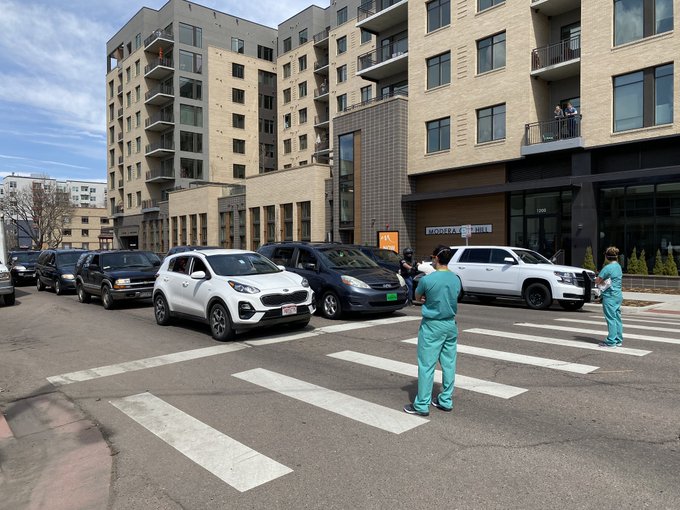
Remarkable scene at 12th and Grant, where two healthcare workers from a Denver-area hospital — they declined to say which or give their names — are standing in the crosswalk during red lights as a “reminder,” they say, of why shutdown measures are in place.

Two health care workers blocked a parade of protesters in Denver, Colorado on Sunday, who were storming the capitol to protest the state’s stay-at-home order.

Powerful images and videos of the standoff were widely shared on social media of the two unidentified people wearing scrubs and N95 masks, standing in a crosswalk blocking protesters’ vehicles. The two were identified as health care workers by photographers on the scene. 

One video shared by Twitter user Marc Zenn, captured cars lined up and beeping their horns at the two medical workers, with a woman hanging out of her vehicle’s window shouting “Go to China if you want communism. Go to China,” and “You get to go to work, why can’t we?”

View image on Twitter

They say they’ve been treating COVID patients for weeks. Today most of the people driving by have been “very aggressive,” they say. I’ve been standing here for a few minutes and already seen two people get in their faces.

Hundreds of people showed up on foot and in their vehicles for two separate protests in Colorado’s capitol on Sunday. The protests were reportedly planned by ReOpen Colorado and “various Libertarian parties,” according to a local Denver news outlet. People attending the march were shown carrying American flags, “Don’t Tread on Me” flags, and signs about reopening businesses and schools.

“Coloradans have a first amendment right to protest and to free speech, and the Governor hopes that they are using social distancing and staying safe,” Colorado Gov. Jared Polis’ office said in a statement. “No one wants to reopen Colorado businesses and lift these restrictions more than the Governor, but in order to do that, Coloradans have to stay home as much as possible during this critical period, wear masks and wash their hands regularly to slow the spread of this deadly virus.”

As of Monday morning, Colorado has more than 9,700 cases of COVID-19, leading to at least 420 deaths, according to the Johns Hopkins coronavirus tracker. The state of Colorado is set to continue its stay-at-home order until at least April 26, to slow the transmission of the virus.  

Colorado isn’t the only state where protesters are demonstrating against their government’s stay-at-home orders—Several other states held protests over the weekend including Utah, Idaho, and Washington state. Last week, parts of Michigan, New York, Ohio, Virginia, North Carolina, and others also saw a wave of demonstrators

President Trump encouraged the protesters last week during his Friday press briefing and in tweets which said to “liberate” multiple states holding protests.

In a Politico poll, 81% of Americans agreed we “should continue to social distance for as long as is needed to curb the spread of coronavirus, even if it means continued damage to the economy.” An NBC News poll found that 60% of responders agreed with keeping at-home restrictions.


Current State of the Union

https://www.buzzfeednews.com/article/gabrielsanchez/huge-crowds-protest-coronavirus-trump-coronavirus-pandemic?fbclid=IwAR0abgB9Wpv2WAOhNgdYhQgNU6W6h1NnqoVcxxye4QTRBwQaSEsxzeIXyho

These Pictures Show Crowds Protesting Against Coronavirus Lockdowns At State Capitols

Conservative demonstrators gathered at the capitol buildings of Michigan, Kentucky, and North Carolina to protest against stay-at-home orders during a pandemic that has already left more than 26,000 Americans dead.