9 states seek $36B in federal advances for unemployment claims

https://www.politico.com/states/california/story/2020/05/05/9-states-seek-36b-in-federal-advances-for-unemployment-claims-1282530?utm_source=The+Fiscal+Times&utm_campaign=f343554e9c-EMAIL_CAMPAIGN_2020_05_06_09_42&utm_medium=email&utm_term=0_714147a9cf-f343554e9c-390702969

9 states seek $36B in federal advances for unemployment claims

Nine states have told the Department of Labor they plan to ask for $36 billion in federal advances to cover the astronomical cost of unemployment payouts amid the coronavirus pandemic, according to new information provided to POLITICO Tuesday night by federal officials.

Illinois, which had fiscal problems before the coronavirus, tops the list with an $11 billion request in May and June.

California, the first state to borrow, plans to seek the next-highest amount over the same two months: $8 billion.

Texas will ask for advances totaling $6.4 billion in May, June and July and New York will ask for $4.4 billion in the same three months.

Connecticut, Hawaii, Massachusetts, Ohio and West Virginia have also signaled an intent to borrow between May and July to fund their unemployment systems. Some of the states, like Illinois and California, only requested advances for May and June.

There is no approval process for the advances, a department spokesperson said. States notify the Departments of Labor and Treasury of their needs, the spokesperson said, and the Department of Labor certifies those amounts to the Treasury Department.

States are able to draw down advances as they need them, but won’t necessarily end up using the full amounts.

California took out its first $348 million unemployment insurance loan last week, slipping into the red just two years after repaying the $65 billion it borrowed from the federal government during and after the Great Recession. It was one of about three dozen states that took out federal loans to weather the last downturn, a scenario likely to repeat itself in the coming weeks and months as unemployment numbers soar nationwide.

The latest national figures last week showed that more than 30 million had filed jobless claims since mid-March.

California’s unemployment insurance system, funded by payroll taxes, was barely solvent before the pandemic blindsided the economy, with less of a cushion than any other state or territory except for the U.S. Virgin Islands, according to the Department of Labor’s Trust Fund Solvency Report.

Besides Hawaii, all of the states requesting advances also fell well below the department’s recommended solvency level.

Since mid-March, California Gov. Gavin Newsom said Monday, the state has issued $7.8 billion in unemployment relief, and more than 4.1 million people have filed claims — about 21 percent of the state’s pre-pandemic workforce.

Newsom stressed that the state was “good for our word,” but called for direct federal aid. “This pandemic is bigger than even the state of California,” he said. “The economic consequences of this pandemic are such that we can balance our budgets without substantial cuts, unless we get additional federal support.”

States won’t accrue interest on these federal loans through Dec. 31, under the federal Families First Coronavirus Response Act. But the last round of unemployment fund borrowing cost California $1.4 billion in interest payments, according to the state’s Department of Finance.


ADP National Employment Report

https://adpemploymentreport.com/2020/April/NER/NER-April-2020.aspx?utm_source=The+Fiscal+Times&utm_campaign=f343554e9c-EMAIL_CAMPAIGN_2020_05_06_09_42&utm_medium=email&utm_term=0_714147a9cf-f343554e9c-390702969

Private-sector employment decreased by 20,236,000 from March to April, on a seasonally adjusted basis.


COVID-19 and the End of Individualism

https://www.project-syndicate.org/commentary/covid19-economic-interdependence-waning-individualism-by-diane-coyle-2020-05?utm_source=Project+Syndicate+Newsletter&utm_campaign=1cfd702284-covid_newsletter_07_05_2020&utm_medium=email&utm_term=0_73bad5b7d8-1cfd702284-105592221&mc_cid=1cfd702284&mc_eid=5f214075f8

Daniel Innerarity - Project Syndicate

The pandemic has shown that it is not existential dangers, but rather everyday economic activities, that reveal the collective, connected character of modern life. Just as a spider’s web crumples when a few strands are broken, so the coronavirus has highlighted the risks arising from our economic interdependence.

CAMBRIDGE – Aristotle was right. Humans have never been atomized individuals, but rather social beings whose every decision affects other people. And now the COVID-19 pandemic is driving home this fundamental point: each of us is morally responsible for the infection risks we pose to others through our own behavior.

In fact, this pandemic is just one of many collective-action problems facing humankind, including climate change, catastrophic biodiversity loss, antimicrobial resistance, nuclear tensions fueled by escalating geopolitical uncertainty, and even potential threats such as a collision with an asteroid.

As the pandemic has demonstrated, however, it is not these existential dangers, but rather everyday economic activities, that reveal the collective, connected character of modern life beneath the individualist façade of rights and contracts.

Those of us in white-collar jobs who are able to work from home and swap sourdough tips are more dependent than we perhaps realized on previously invisible essential workers, such as hospital cleaners and medics, supermarket staff, parcel couriers, and telecoms technicians who maintain our connectivity.

Similarly, manufacturers of new essentials such as face masks and chemical reagents depend on imports from the other side of the world. And many people who are ill, self-isolating, or suddenly unemployed depend on the kindness of neighbors, friends, and strangers to get by.

The sudden stop to economic activity underscores a truth about the modern, interconnected economy: what affects some parts substantially affects the whole. This web of linkages is therefore a vulnerability when disrupted. But it is also a strength, because it shows once again how the division of labor makes everyone better off, exactly as Adam Smith pointed out over two centuries ago.

Today’s transformative digital technologies are dramatically increasing such social spillovers, and not only because they underpin sophisticated logistics networks and just-in-time supply chains. The very nature of the digital economy means that each of our individual choices will affect many other people.

Consider the question of data, which has become even more salient today because of the policy debate about whether digital contact-tracing apps can help the economy to emerge from lockdown faster.

This approach will be effective only if a high enough proportion of the population uses the same app and shares the data it gathers. And, as the Ada Lovelace Institute points out in a thoughtful report, that will depend on whether people regard the app as trustworthy and are sure that using it will help them. No app will be effective if people are unwilling to provide “their” data to governments rolling out the system. If I decide to withhold information about my movements and contacts, this would adversely affect everyone.

Yet, while much information certainly should remain private, data about individuals is only rarely “personal,” in the sense that it is only about them. Indeed, very little data with useful information content concerns a single individual; it is the context – whether population data, location, or the activities of others – that gives it value.

Most commentators recognize that privacy and trust must be balanced with the need to fill the huge gaps in our knowledge about COVID-19. But the balance is tipping toward the latter. In the current circumstances, the collective goal outweighs individual preferences.

But the current emergency is only an acute symptom of increasing interdependence. Underlying it is the steady shift from an economy in which the classical assumptions of diminishing or constant returns to scale hold true to one in which there are increasing returns to scale almost everywhere.

In the conventional framework, adding a unit of input (capital and labor) produces a smaller or (at best) the same increment to output. For an economy based on agriculture and manufacturing, this was a reasonable assumption.

But much of today’s economy is characterized by increasing returns, with bigger firms doing ever better. The network effects that drive the growth of digital platforms are one example of this. And because most sectors of the economy have high upfront costs, bigger producers face lower unit costs.

One important source of increasing returns is the extensive experience-based know-how needed in high-value activities such as software design, architecture, and advanced manufacturing. Such returns not only favor incumbents, but also mean that choices by individual producers and consumers have spillover effects on others.

The pervasiveness of increasing returns to scale, and spillovers more generally, has been surprisingly slow to influence policy choices, even though economists have been focusing on the phenomenon for many years now. The COVID-19 pandemic may make it harder to ignore.

Just as a spider’s web crumples when a few strands are broken, so the pandemic has highlighted the risks arising from our economic interdependence. And now California and Georgia, Germany and Italy, and China and the United States need each other to recover and rebuild. No one should waste time yearning for an unsustainable fantasy.


Cartoon – Poor Safety and False Hopes

The False Hope Comics And Cartoons | The Cartoonist Group

Grim and getting worse: US set for historic unemployment surge

https://news.yahoo.com/grim-getting-worse-us-set-historic-unemployment-surge-015532438.html

Grim and getting worse: US set for historic unemployment surge

Like a global tsunami, the coronavirus pandemic has caused a huge loss of life and taken a massive economic toll.

In the US economy, skyrocketing unemployment is the most-visible sign of the devastation: almost overnight, at least 30 million workers lost their jobs.

The April employment report, due out Friday, is expected to show the jobless rate soaring into double digits, perhaps as high as 20 percent, far surpassing the worst of the global financial crisis and reaching levels not seen since the Great Depression last century.

The US government and central bank worked at a stunning pace to rush out aid and financing to workers and businesses to try to prevent a complete economic collapse, but there is a growing fear that the temporary shutdowns imposed to contain the spread of the virus will become permanent for many companies.

The coronavirus has infected nearly 1.2 million people in the United States and killed around 70,000, according to a count from Johns Hopkins University, and analysts fear some of the economic damage may be permanent.

“We took the elevator down, but we’re going to need to take the stairs back up,” Tom Barkin, president of the Federal Reserve Bank of Richmond, said in a recent speech.

Despite nearly $3 trillion in financial aid approved by Congress in March alone and trillions more in liquidity provided by the Federal Reserve, the US economy contracted by 4.8 percent in the first three months of the year — a period that included only a couple of weeks of the strict business shutdowns.

The second quarter could see the economy plunge by twice that amount.

– The worst is yet to come –

The data on the jobs market has become so bad so fast that there are no comparisons.

Statisticians in the Labor Department’s Bureau of Labor Statistics (BLS), which produces the monthly unemployment report, are using natural disasters as a point of reference.

“The closest that we have in terms of what was in our playbook has been usually hurricanes, because they tend to be large and impact significant periods of time, or areas,” BLS Associate Commissioner Julie Hatch Maxfield told AFP.

But even devastating events, like Hurricane Katrina in 2005, were regional — not national and certainly not global.

The job losses spread from airlines and hotels to restaurants and factories as states ordered lockdowns and then closed schools, sending initial claims for unemployment insurance surging from mid-March, with 20 million posted in the four weeks of April alone.

But those figures could underestimate the true size of the shock, since many people have not been able to file for benefits, and others do not qualify.

The official unemployment rate in March jumped from a historic low of 3.5 percent to 4.4 percent, with 701,000 jobs lost.

But the monthly data, which are separate from the jobless claims reports, are calculated only during the pay period that includes the 12th day of each month, so they too missed the real picture. BLS said the survey of households likely underestimated the jobless rate, which should have been 5.4 percent.

April will be far worse, with some economists projecting jobs losses at 28 million and a 17 percent unemployment rate. And as more businesses report their data, job losses in March are expected to be revised higher as well.

Employment in the private sector alone collapsed 20.2 million last month, US payroll services firm ADP said Wednesday. But ADP acknowledges the data do not present the complete picture.

“Job losses of this scale are unprecedented. The total number of job losses for the month of April alone was more than double the total jobs lost during the Great Recession,” said Ahu Yildirmaz, co-head of the ADP Research Institute.

– False rebound, slow comeback –

Job losses during the global financial crisis in 2008 and 2009 totaled 8.6 million and the unemployment rate peaked at 10 percent.

Even among workers who are still employed, many have seen their hours cut.

“It’s now clear the economy was in a downdraft much more rapidly than anyone expected,” Diane Swonk, chief economist at Grant Thornton, told AFP.

The expansive government aid programs mean the US might see a temporary pickup in hiring in May and June, Swonk said.

But if small businesses aren’t fully back to normal by July, which depends on consumers feeling safe enough to go back to restaurants and shops, “they’re going to have to lay them off again,” she said.


The coronavirus is outlasting the stimulus

https://www.axios.com/newsletters/axios-vitals-7038a5b1-74fa-44e3-ba7e-43c87052e1c5.html?utm_source=newsletter&utm_medium=email&utm_campaign=newsletter_axiosvitals&stream=top

The coronavirus is outlasting the stimulus - Axios

The coronavirus pandemic is lasting longer than Congress and the White House anticipated when it committed hundreds of billions of dollars to individuals and small businesses, Axios’ Dan Primack and Alayna Treene report.

Why it matters: These bailouts were meant to stop the bleeding, to buy time while the wound cauterizes. Unfortunately, the injury was more severe than originally diagnosed.

Treasury Secretary Steve Mnuchin told CBS that “the entire package provides economic relief overall for about 10 weeks.”

  • The CARES Act was signed by President Trump on March 27.
  • Mnuchin’s 10-week window expires on June 5.
  • No one expects to see a Phase 4 stimulus by that date, nor a full-scale economic reopening.

Paycheck Protection Program (PPP) loans require that small businesses maintain staffing levels for eight weeks. For early recipients, that means their payroll obligations could run out by month’s end.

  • Direct checks of up to $1,200 to individuals were only expected to help cover expenses for one month, even though many states already are well into their second month of locking down.

All of this makes economic reopening even more complicated.

  • The federal government has effectively created a “back to normal” deadline for small businesses, even though such decisions are supposed to be made by the states.

The bottom line: The small business loans and individual checks were designed as bridges to reopening, but if they only delayed layoffs and economic pain by a couple of months, then they may end up being remembered as bridges to nowhere.


Where the virus is spreading

https://www.axios.com/newsletters/axios-vitals-7038a5b1-74fa-44e3-ba7e-43c87052e1c5.html?utm_source=newsletter&utm_medium=email&utm_campaign=newsletter_axiosvitals&stream=top

Axios

The Trump administration’s reopening guidelines detail that in order to start lifting restrictions and reopening the economy, a state needs to report 14-day trends of fewer cases or fewer positive tests (though local officials do get some leeway in adjusting the metrics).

  • Not a lot of states meet that criteria, Axios editor-in-chief Nick Johnston writes.

Our chart compares each state’s seven-day average of new cases from Monday and the seven-day average from a week prior, April 27.

  • By this metric, Minnesota, Nebraska and Puerto Rico have the most worrisome trends, while Arkansas and Wyoming have the most positive trends. Twelve states are moving in the right direction.
  • But more than a third of the nation still has growing numbers of cases. And that includes states such as Texas and Virginia, where Republican and Democratic governors are beginning to unveil re-opening plans.

Yes, but: These trends only tell us so much.

  • Some states may see their case counts rise not necessarily because their outbreaks are getting dramatically worse, but because their testing is getting better, so they’re catching more cases.
  • That’s why health officials are also pulling in other metrics — including the number of deaths, the number of hospitalizations and the percentage of tested patients who test positive. A higher percentage means you’re probably missing people.
  • Still, public-health guidance calls for a steady decrease in cases before opening up, and few states have achieved that.

The bottom line: The virus isn’t just some other states’ problem. It’s everyone’s problem.


The next phase of America’s coronavirus failure

https://www.axios.com/newsletters/axios-vitals-7038a5b1-74fa-44e3-ba7e-43c87052e1c5.html?utm_source=newsletter&utm_medium=email&utm_campaign=newsletter_axiosvitals&stream=top

The next phase of America's coronavirus failure has begun - Axios

The evidence is mounting that America is steamrolling toward a nightmarish failure to control the coronavirus.

Where it stands: We made a lot of mistakes at the beginning, and despite a month of extreme social distancing to try to hit “reset,” a hurried reopening now raises the risk that we’ll soon be right back where we started.

Driving the news: The Trump administration is in “preliminary discussions” to wind down its coronavirus task force, possibly in early June, Vice President Mike Pence told reporters yesterday.

  • The formal existence of a task force isn’t necessarily going to make or break the coronavirus response, but its dissolution is yet another sign that the administration is ready to move on — despite all of the indications that we’re not prepared.

What we’re watching: The U.S. is still seeing around 30,000 new coronavirus cases a day — and those are just the ones that we’re catching, because we are still not testing enough people.

  • Even with a robust contact tracing workforce, which we don’t have, tracking down the interactions of 30,000 people a day would be an impossible task.
  • And even if it weren’t, we have no system in place for isolating those people to prevent them from infecting their family members, coworkers or other contacts.
  • Once we lift social distancing measures and people start interacting with one another again, the number of cases will inevitably spike, making containment even more impossible.

We don’t have a treatment or a vaccine, and we’re about to loosen the reins on a virus whose reach, symptoms and long-term effects we are still learning.

Yes, but: Some cities and states have been more proactive in building up their public health infrastructure, and have said they’ll continue with social distancing until their caseloads indicate it’s safe to begin returning to normal.


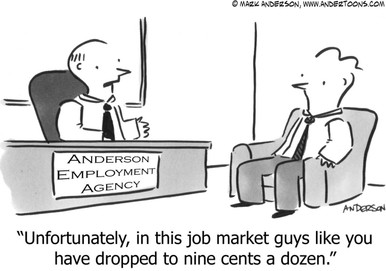
Cartoon – Nine Cents a Dozen Job Market

Interview Cartoon # 4244 - ANDERTOONS

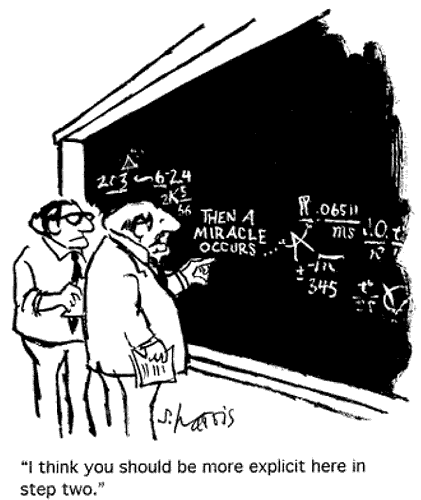
Cartoon – Coronavirus Recovery Plan

Then a Miracle Occurs | HENRY KOTULA