The first presidential debate: 7 healthcare takeaways

https://www.beckershospitalreview.com/hospital-management-administration/the-first-presidential-debate-7-healthcare-takeaways.html?origin=CFOE&utm_source=CFOE&utm_medium=email&oly_enc_id=2893H2397267F7G

5 key takeaways from Joe Biden and Donald Trump's 1st presidential debate -  ABC News

President Donald Trump and former Vice President and Democratic presidential nominee Joe Biden sparred over the future of the ACA, the COVID-19 pandemic and health insurance during a 90-minute debate in Cleveland Sept. 29.

Seven takeaways for healthcare leaders:

The ACA

1. Moderator and Fox News host Chris Wallace opened the debate with the topic of President Trump’s nomination of Judge Amy Coney Barrett of the U.S. Court of Appeals for the 7th Circuit to the U.S. Supreme Court. In the first few minutes of the debate, the discussion turned to the future of the ACA should Ms. Coney Barrett join the Supreme Court. A week after the November presidential election, the Supreme Court is set to hear a lawsuit, supported by the Trump administration, that seeks to overturn the ACA. 

2. If the Supreme Court overturns the ACA, Mr. Biden said 22 million Americans would lose insurance and 100 million would lose protections for preexisting conditions. HHS said in 2017 as many as 133 million Americans have preexisting conditions, and a KFF analysis estimates 54 million Americans have conditions serious enough to lead to coverage denials if the ACA is overturned.

3. Mr. Wallace questioned the president about his promise to repeal and replace the ACA, adding that President Trump hadn’t released a comprehensive plan to replace the health law despite pledges to do so. The president disagreed with that, saying he had gotten rid of the individual mandate. Mr. Wallace said eliminating the mandate was not a comprehensive plan. Mr. Wallace called President Trump’s recent executive orders on preexisting conditions and surprise billing “largely symbolic.” President Trump disagreed, but did not tell how the executive orders would be implemented.

Drug prices 

4. The president said drug prices would be coming down “80 or 90 percent.” The president highlighted insulin, which he said he’s getting so inexpensively, “it’s like water.” Insulin continues to retail for about $300 per vial, according to STAT, but cheaper insulin prices could be coming for some seniors. CMS recently said it is expanding the number of Medicare Advantage plans that provide insulin for a $35 or less monthly copay.

Public option

5. In an exchange with Mr. Biden, President Trump accused the Democratic Party of wanting “socialist medicine,” and claimed Mr. Biden wants to end private insurance. Mr. Biden denied those claims and said his health plan, which includes expanded ACA subsidies and a public option, would allow employees to keep their private health insurance. He has not supported Medicare-for-All proposals.

COVID-19

6. On the topic of the pandemic, Mr. Wallace asked President Trump about differing timelines for a vaccine that have been presented by him versus federal scientists like CDC Director Robert Redfield, MD. The president said he has spoken with Pfizer, Moderna and Johnson & Johnson, who’ve said “they can go faster” on a vaccine, but “it’s a very political thing.” He added that the military is already set up to distribute vaccines. Mr. Biden questioned Americans’ trust in the process. A Sept. 29 poll from the Axios/Ipsos Coronavirus Index found 8 in 10 Americans wouldn’t likely get a first generation COVID-19 vaccine if the president said it was safe.

7. President Trump and Mr. Biden took different stances on masks. Mr. Biden cited Dr. Redfield’s renewed call to wear masks, and said masking up and social distancing would save 100,000 lives between now and January. President Trump responded by saying, “They’ve said the opposite.” He alluded to early in the pandemic when public health experts, including Anthony Fauci, MD, director of the National Institute of Allergy and Infectious Diseases, were slow to recommend widespread mask-wearing before scientists better understood how the virus spreads. The CDC currently recommends that every American wear a mask.


Cartoon – Coronavirus Projections

Cartoon – Coronavirus Projections | HENRY KOTULA

COVID-19 vaccine verdicts loom as next big market risk

https://finance.yahoo.com/news/covid-19-vaccine-verdicts-loom-050615809.html

Optimism that vaccines are on the way to end the coronavirus pandemic has been a major factor in this year’s U.S. stock resurgence. That will face a critical test in coming weeks, as investors await clinical data on whether they actually work.

A UBS analysis found that about 40% of the market’s gains since May can be pegged to hopes for vaccines to protect against COVID-19, which has killed over 960,000 worldwide and rocked the global economy.

Global efforts to develop a vaccine are coming to a head, with late-stage data on trials by companies such as Pfizer Inc <PFE.N> and Moderna Inc <MRNA.O> possible as soon as October or November. Disappointing results could further shake markets that have recently grown turbulent on worries over fiscal stimulus delays and uncertainty around the Nov. 3 U.S. presidential election.

“The anticipation is that this stuff is going to work,” said Walter Todd, chief investment officer at Greenwood Capital in South Carolina. “So any news to the contrary could be a risk to the market.”

The number of vaccines in development could blunt the negative market impact of any single setback. More than a half-dozen vaccines globally are in late-stage trials out of over 30 currently being tested in humans, according to the World Health Organization.

“We are setting ourselves up for success in the sense of if you throw enough spaghetti at the wall, hopefully at least one noodle sticks,” said Liz Young, director of market strategy at BNY Mellon Investment Management.

That could explain why stocks overall barely reacted earlier this month, when AstraZeneca Plc <AZN.L> and partner Oxford University paused global trials of one of the leading vaccine candidates after a participant in its U.K. trial became seriously ill. The trials have resumed in Britain, Brazil and South Africa, but remain on hold in the United States.

Some forecasts on vaccine availability have grown less optimistic. Good Judgment, a company whose forecasters make predictions based on publicly available evidence, put the chances that a vaccine will be widely distributed in the United States by the end of March at 54%. That is up from an estimate of less than 20% in early July, but down from above 70% earlier this month.

Pfizer and Moderna could report initial efficacy results in October or November based on an early read of data, followed by data from companies such as AstraZeneca, Johnson & Johnson <JNJ.N> and Novavax Inc <NVAX.O>.

An approval or emergency use authorization this year could lead to a surge in travel, leisure and other stocks that have been decimated by pandemic-related shutdowns, while also fueling a long-awaited shift into value stocks from tech and other growth names that have led the market for years.

Even if a vaccine is approved, questions persist about how easily and quickly it can be distributed. President Trump and his health officials have issued conflicting predictions about when the general public could have access.

“The potential for market disappointment will likely come from the realization that manufacturing and broad distribution will take longer,” said Art Hogan, chief market strategist at National Securities.

An approved, broadly distributed and accepted vaccine could result in a gain of about 300 points to the S&P 500, or more than 8% at the index’s current level, according to Keith Parker, head of U.S. and global equity strategy at UBS.

If a vaccine is widely distributed in the first quarter, BofA Global Research projects global gross domestic product (GDP) growth of 6.3% in 2021, compared with 5.6% if that does not occur until the third quarter.

Disappointing clinical trial news could result in a loss of 100 points from the S&P 500, or about 3%, Parker estimates.

While the market might be able to handle one vaccine setback “reasonably well,” several setbacks could cause a rethink of the vaccine race, he said.


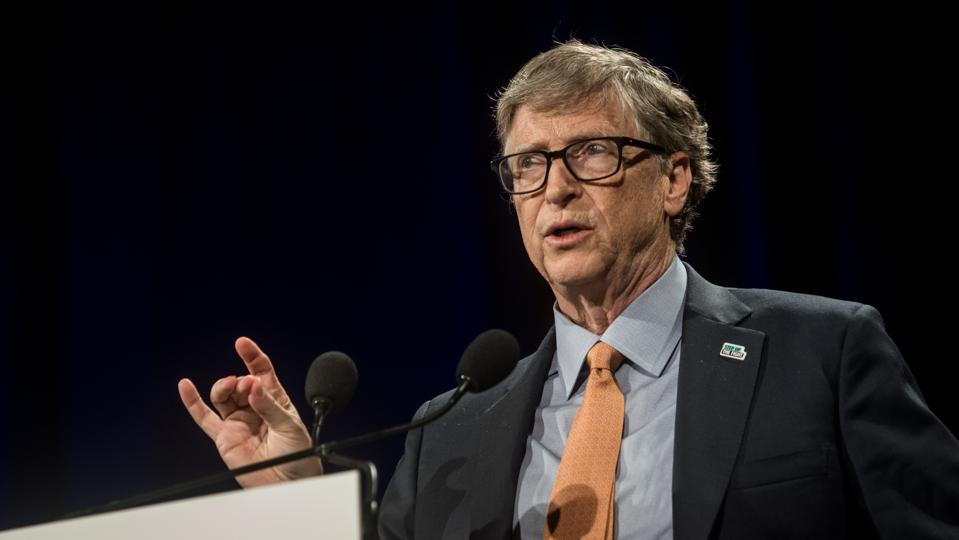
Bill Gates: U.S. Needs To ‘Own Up To The Fact That We Didn’t Do A Good Job’

https://www.forbes.com/sites/mattperez/2020/09/20/bill-gates-us-needs-to-own-up-to-the-fact-that-we-didnt-do-a-good-job/?utm_source=newsletter&utm_medium=email&utm_campaign=coronavirus&cdlcid=5d2c97df953109375e4d8b68#54d6544f3fb8

TOPLINE

The United States needs to “own up to the fact that we didn’t do a good job” up until this point of the Covid-19 pandemic, billionaire and philanthropist Bill Gates said during a Fox News Sunday interview, adding that the slow turnaround for testing results remains “outrageous.”

KEY FACTS

“Unfortunately we did a very poor job and you can just see that in the numbers,” Gates said.

Despite having around 4% of the world’s population, the U.S. has around 22% of all cases with 6,782,083 and about 21% of all reported deaths with 199,411.

The inability to create a testing structure as seen in countries like South Korea “led to us having not just a bad spring, we’ve had a pretty tough summer and sadly because of the seasonality, until we get these new tools, the fall is looking to shape up as pretty tough as well,” Gates said.

“Part of the reluctance I think to fix the testing system now is that nobody wants to admit that it’s still outrageous,” Gates said, adding, “The U.S. has more of these machines, more capacity than other countries by a huge amount, and so partly the reimbursement system is creating perverse incentive.”

After remaining fairly stagnant through the end of summer into September, the U.S. performed a record 1,061,106 Covid-19 tests on Saturday, according to Johns Hopkins University, but labs are still dealing with supply shortages and delays in results.

“We’ll have time to look at those mistakes, which in February and March were really super unfortunate, but we can’t pretend like we get a good grade even today,” Gates said.

CRUCIAL QUOTE

“Even today, people don’t get their results in 24 hours, which it’s outrageous that we still have that,” Gates said.

BIG NUMBER

4.7%. That’s the average positivity percentage in the past week, according to Johns Hopkins.

TANGENT

President Trump has excused the world-leading cases of the coronavirus as a result of the number of tests performed in the country, even saying that he instructed officials to slow testing down. The Centers for Disease Control and Prevention sparked outrage in August when it published new guidelines on testing, recommending people exposed to the virus but not showing symptoms should not get tested. Reports indicate that the guidance was dictated by the Health and Human Services and Trump administration as opposed to CDC scientists. The guidelines were changed again on Friday.


The N95 shortage America can’t seem to fix

https://www.washingtonpost.com/graphics/2020/local/news/n-95-shortage-covid/?utm_campaign=wp_post_most&utm_medium=email&utm_source=newsletter&wpisrc=nl_most

Nurses and doctors depend on respirator masks to protect them from covid-19. So why are we still running low on an item that once cost around $1?

The patient exhaled. She lifted her tongue for a thermometer. She raised her finger for a blood sugar test, and that’s when she started coughing. One cough can send 3,000 droplets into the air, one droplet can contain millions of coronavirus particles, and now some of those particles were heading for the face of emergency department nurse Kelly Williams.

The nurse inhaled. Strapped over her mouth and nose was an N95 respirator, the disposable filtering mask that has become the world’s most reliable and coveted defense against the virus.

N95s were designed to be thrown away after every patient. By this July afternoon, Williams had been wearing the same one for more than two months.

To get to her, the N95 had traveled from a British factory to a Baltimore warehouse, in a supply chain as tangled and layered as the web of microscopic fibers inside the mask’s filter.

It was purchased by Johns Hopkins Hospital, the famed medical institution that has tracked cases of the novel coronavirus around the world since the pandemic’s start. When its map of dots marking clusters of infections began to show pools of red across the United States, Hopkins was quietly unpacking a stock of personal protective equipment it had been building for over a year — a literal lifesaver when the onslaught of covid-19 cases led to a massive shortage of N95s.

Six months later, that shortage persists, leaving health-care workers exposed, patients at risk and public health experts flummoxed over a seemingly simple question: Why is the world’s richest country still struggling to meet the demand for an item that once cost around $1 a piece?

At Hopkins, nurses are asked to keep wearing their N95s until the masks are broken or visibly dirty. Williams, a 30-year-old from Georgia with a marathoner’s endurance and a nurse’s practicality, went into health care after working for three years in the corporate offices of retailers Abercrombie & Fitch and Under Armour. She understood supply chains. She believed that the makers of N95s, anticipating the pandemic’s eventual end, would invest only so much in expanding production. She believed it was her duty, on top of risking her life for her patients, to make her disposable respirator mask last through as many 12-hour shifts as she could.

When the country was short of ventilators, the companies that made them shared their trade secrets with other manufacturers. Through the powers of the Defense Production Act, President Trump ordered General Motors to make ventilators. Other companies followed, many supported by the government, until the terrifying problem of not enough ventilators wasn’t a problem at all.

But for N95s and other respirators, Trump has used this authority far less, allowing major manufacturers to scale up as they see fit and potential new manufacturers to go untapped and underfunded. The organizations that represent millions of nurses, doctors, hospitals and clinics are pleading for more federal intervention, while the administration maintains that the government has already done enough and that the PPE industry has stepped up on its own.

As the weather cools and the death toll climbs, America’s health-care workers fear that when winter comes, they still won’t have enough respirators. And the longer the shortage lasts, the longer N95s will remain largely out of reach for millions of others who could be protected by them — teachers and day-care workers, factory employees and flight attendants, restaurant servers and grocery store clerks.

While the pandemic that has killed almost 200,000 Americans drags on, Williams will keep trying to conserve her respirator, wearing it as she rushes in and out of virus-filled rooms, touches virus-shedding patients, and now, comforts a covid-positive woman who is having a coughing fit.

“How can I help you feel a little more comfortable?” Williams asked her patient, who was in her 80s. The woman was about to be admitted to the hospital. Her oxygen level was too low, so they had to run tubes of air into her nostrils. If her situation didn’t improve, a ventilator could come next.

This was the routine in the part of the emergency department Williams called “Covidland.” She’d just risked exposure to care for this woman, but she would never get to find out what happened to her.

She could only take a deep breath through her N95, roll her patients upstairs and hope that she would never become one of them.

‘The gauntlet’

Before the N95 was on her face, it was in a plastic wrapper, in a box, on a shelf inside an East Baltimore warehouse four miles from the hospital. The 165,000-square-foot building had concrete floors, rolling doors, overhead lighting — unremarkable, except to a man named Burton Fuller.

Fuller, a 38-year-old father of three, had once planned on becoming a doctor. Instead, he went into hospital supply chains. It was the kind of job that didn’t earn many follow-up questions at dinner parties. But six months after Fuller was hired at Hopkins, the pandemic made him the person that everyone relied on and no one envied. It was up to him to keep 40,000 employees in six hospitals safe.

Even before covid-19, masks were key to that equation. There are surgical masks, which protect a patient from a nurse’s germs, and respirator masks, which protect a nurse from the patient. Humans have recognized the need for protective masks since at least A.D. 77, when Pliny the Elder wrote about wearing animal bladders as face coverings to make breathing easier in lead-filled mines.

The evolution of early masks brought leather beaks stuffed with straw and herbs to ward off the bubonic plague, and long beards that firefighters would wet and clamp between their teeth. Once the far more effective gas mask became standard for coal miners breathing in silica and soldiers facing chemical weapons, engineers at the Minnesota Mining and Manufacturing Company, better known as 3M, started trying to make a protective respirator that wasn’t so bulky. They realized in the 1960s that the technology used to make pre-made gift bows could also make a mask that was a lightweight, molded cup. And so began the single-use respirator as it exists today.

Inside that cup, and more recently, inside the flat-fold versions, is the key component: fibers 1/50th the width of a human hair, blown together in an intricate web that creates an obstacle course for dangerous particles. An electrostatic charge works like a magnet to trap the floating menaces and attach them to the fibers. If an N95 is fitted properly — a metal nose piece folded snugly, no beard in the way — less than 5 percent of even the most difficult-to-catch particles will make it into the lungs.

At Hopkins, Fuller’s job was to get manufacturers to deliver N95s and other equipment directly to the warehouse, rather than through a distributor. In 2019, the shelves started to fill up, and on one of them was the N95 that would make its way to nurse Kelly Williams. The respirator had been made by 3M at a plant in Aycliffe, a town of 7,000 in northern England.

But this Hopkins stockpile was rare in the world of hospitals, where costs were cut by using medical supply companies to provide equipment when it was needed, rather than letting PPE pile up.

Hospital administrators knew that in cases of natural disaster, chemical warfare or what global health officials used to call “Disease X,” the federal government had its own warehouses in secret locations, filled with PPE.

Except that in 2009, while Fuller was in his first job out of college, the H1N1 flu epidemic depleted 85 million N95s from the national stockpile — and the supply was never replenished. In 2013, 2014, 2016 and 2017, public health officials published alarming reports warning of a “massive gap” in what remained. Even more concerning, they said, the vast majority of N95s and the materials needed to manufacture them were now being made in Asia.

The Department of Health and Human Services did fund the invention of a “one-of-a-kind, high-speed machine” that could make 1.5 million N95s per day. But when the design was completed in 2018, the Trump administration did not purchase it.

This year, as the virus spread from Wuhan to Washington state, HHS turned down a January offer from a manufacturer who could make millions of N95s. The agency didn’t start ordering N95s from multiple companies until March 21. Paul Mango, deputy chief of staff for policy at HHS, would later call that timeline “friggin’ light speed … the fastest this has ever been done.”

By then, the United States had 8,000 reported coronavirus cases and 85 deaths, and health-care workers were panicking over PPE shortages.

Fuller’s orders began being canceled. As the Hopkins emergency department was being readied for covid-19 patients, and Williams was being told she would need to start wearing an N95, the hospital’s administration decided not to reveal how many N95s were in the warehouse.

“Only a half a dozen people know,” Fuller said. “Behavioral economics say that if we communicate a number someone perceives as high, they will use the supply more gratuitously. If we communicate a number they perceive as low, they may hoard to ensure there is enough.”

As the boxes of N95s were loaded into trucks headed for Hopkins hospitals, Fuller and a dozen staff members entered what he would come to call “the gauntlet.” Every hospital and health department in the country was competing for N95s and other PPE, a mess of bidding wars, price gouging and worthless knockoff masks. Fuller uncovered one scam when a company CEO, claiming to be based in Indianapolis, didn’t recognize the name of the city’s most famous steakhouse.

“For every mask shipment we have been able to bring in,” Fuller said, “there are 10 or 15 transactions we have had to terminate.”

He worked so much that his wife, home with their children, received flowers from Hopkins executives. He joked about the other crucial stockpile in his life, his wine collection.

Fuller was desperate to make the stockpiled N95s last as long as possible. He wanted every employee wearing one to also wear a face shield, but those, too, were impossible to find.

So at the end of March, the warehouse filled with folding tables spaced six feet apart. Volunteers were given foam strips, elastic straps and sheets of plastic to make homemade shields. At one of the most prestigious medical institutions in the country, they were trying to fix the problem for themselves, with scissors, staplers and hot glue guns.

‘Bracing yourself’

A face shield was clipped to Williams’s belt in the middle of May, when for only the fourth time during the pandemic, she unwrapped a new N95.

After nine weeks in and out of Covidland, she had come to trust in her disposable respirator. It hurt her nose, gave her acne and made breathing hard. But the power of its protection was starting to give her back the feeling of safety she’d lost in March when she and the dozens of colleagues who worked alongside her each shift watched the areas where they’d cared for gunshot victims and heart attack patients turn into isolation rooms. They were tested to make sure the N95s fit their faces and taught to use other respirators that looked like gas masks or blew clean air into a hood.

And then, they were slammed. The first covid patient to go on a ventilator at Hopkins was a 40-year-old who worked out every day. The ambulance bay became a testing center. Williams’s co-workers were crying in the break room. Her patients couldn’t breathe, and then tubes were going down their throats, and then it felt like she couldn’t breathe, like everything she knew about nursing would never be enough.

“Our lives changed overnight,” she said. “You’re bracing yourself for people to die.”

She started silently saying a prayer she knew, every morning, every few hours, then sometimes 20 times a day in Covidland.

God, grant me the serenity to accept the things I cannot change, it began. She said it before her patient started violently shaking and flailing, seizing in his bed. She couldn’t run out the door to ask for help, because to leave the room without potentially taking the virus out, she had to sanitize her gloves, trash them, take her gown off, trash it, exit into an antechamber, take off her first layer of gloves, sanitize her hands and wipe down her face shield. So she ran to the window and banged on it, then ran back to her patient, trying to hold him down, her face inches from his.

Courage, to change the things I can, the prayer continued. Williams said it in the car that she drove to work and wouldn’t let any member of her family touch. Its speakers blared Lizzo-filled playlists she used to pump herself up for what she told her friends was an “awesome learning experience.” She had been a nurse for only two years. Her job in merchandising at Under Armour had brought her to Baltimore, where she met her husband, Sean, and his two children. They were the ones to make her realize that she wanted a job where she could actually see the impact of all those hours she worked. Now, every day might be the day she took the virus home to them.

Grant me the serenity to accept the things I cannot change, courage, to change the things I can, and wisdom to know the difference. Another day in Covidland, and Williams was wearing her new N95, pumping her palms into an unconscious man’s chest, not thinking of all the particles flying out of his airways. Another, and her face shield popped off and clattered to the floor. Another, and a young Latina mother told Williams she couldn’t self-quarantine because she could not afford to stay home from work.

Another, and Williams was watching the chest of a middle-aged man rise and fall by the force of a ventilator. Outside the walls of the hospital on this day in July, America seemed to have moved on from the conversation about the shortage of N95s. Instead, people were fighting over simple cloth masks.

Maybe this patient had worn one. Maybe he’d said he didn’t believe in them. Either way, it was her job to take care of him. Williams suctioned virus-filled fluid from his airways, and breathed in again.

‘Not profitable’

The radio advertisements could be heard across South Dakota, playing inside cars passing billboards plastered with the same message: 3M is hiring in Aberdeen. In a state that hosted 460,000 people at an August motorcycle rally and requires no one to wear a mask sits the largest respirator plant in the United States.

Its N95 manufacturing lines have been running 24 hours a day, 7 days a week since Jan. 21, the same day public health officials announced the arrival of the coronavirus in Washington state.

Plant manager Andy Rehder hired 200 new employees this year and was still looking for more this summer so he could staff another N95 line being built. Rehder, whose wife wears an N95 as a hospital social worker, had a Bloomberg Magazine article from March displayed in his office. The headline asked, “How do you make more masks yesterday?”

The question still hangs over the plant, and the entire country, nearly six months after that article was published.

Ask the Trump administration, and the N95 shortage is nearly solved. Rear Adm. John Polowczyk, whom Trump put in charge of securing PPE, said that by December, 160 million N95s will be made in the United States per month. By his calculations, that will be enough to handle a “peak surge” from hospitals, clinics, independent physicians, nursing homes, dentists and first responders. The Strategic National Stockpile has 60 million N95s on hand, and states are rebuilding their stockpiles.

“I’ve got production up to what we think is the limits of what we need,” Polowczyk said. “I believe now that hospital systems are making management decisions that might lead to an appearance that we still don’t have masks, which is the farthest from the truth.”

But ask the people inside hospitals, and the shortage is far from over. An August survey of 21,500 nurses showed 68 percent of them are required to reuse respirators, many for more than the five times recommended by the CDC, and some even more than Kelly Williams. One Texas nurse reported she’s still wearing the same five N95s she was given in March.

Many health-care facilities that ordered KN95s, Chinese-made masks meant to have a similar filtering efficiency, gave up on them after realizing that the looser fit left workers in danger. The N95 shortage is more acute for primary care physicians, home health aides and hospice workers. But even for many hospital systems, the situation remains “fragile and challenging,” the American Hospital Association said this month.

“Maddening, frustrating, mind-blowing, aggravating, that’s the polite language for it,” said American Medical Association President Susan Bailey, who still hears from doctors who do not have respirators. “There has been such an outpouring for support for ‘health-care heroes.’ Everybody knows now how important it is for our front-line health-care workers to be able to work in a safe environment. … And yet, that desire doesn’t seem to be turning into a reality.”

The AMA, AHA, American Nurses Association and the AFL-CIO all point to the same solution: broader use of the Defense Production Act, which gives the president power over funding for the production and distribution of critical supplies during crises.

In August, Trump stood before a group of socially distanced reporters, praising himself for using the DPA “more comprehensively than any president in history.”

“There was a time,” he said, “when the media would say, ‘Why aren’t you using it? Why aren’t you using it?’ Well, we have used it a lot, where necessary. Only where necessary.”

That’s not what it looks like to the man who used to run Trump’s DPA program within the Federal Emergency Management Agency. Larry Hall, who retired last year, said the authority has been executed in an “ad hoc, haphazard fashion.”

Along with ordering 3M to import 166.5 million masks from China, the administration has used the DPA to invest $296.9 million in bolstering the N95 and filter-making supply chains. The Department of Defense, which oversees that funding, spends more per year on instruments, uniforms and travel for military bands.

“By not having a national strategy,” Hall said, “we have fewer masks.”

Ask the PPE industry and the refrain is that without long-term guarantees that the government will keep buying respirators, N95 manufacturers are wary of investing too much, and other companies that could start making respirators or the filters for them are hesitant to do so.

Peter Tsai, the scientist who invented a method to charge the fibers inside the respirator filter, knows why: “It is not profitable to make respirators in the United States,” he said. It can take six months just to create one manufacturing line that makes the N95′s filter.

But there is a workaround, Tsai said. Companies that already make similar filters — for vehicle emissions, air pollution and water systems — can modify their equipment to make N95 filters.

While Tsai, 68, has been fielding hundreds of calls from hospitals and researchers trying to sanitize N95s with heat and ultraviolet light, he has been working with Oak Ridge National Laboratory in Tennessee to woo the 15 to 20 American companies that have the potential to produce respirator filters more quickly.

The government has funded just three of these companies through the DPA.

Others have gradually joined in on their own. But then those filters have to be made into respirators, and those respirators have to be approved by NIOSH, the National Institute for Occupational Safety and Health.

The entire process has moved at a glacial pace in comparison with the flurry of activity that rid the country of its ventilator shortage. Ventec, a company known for its efficient, toaster-size ventilators, handed its plans over to General Motors so that the auto company, under the DPA, could mass produce a product that was known to work. Other ventilator companies followed, handing over their trade secrets to Ford, Foxconn and other major manufacturers.

But when GM started making N95s, engineers with expertise in car interiors and air bags were charged with figuring out the process from scratch, the company said. Although they received advice from major mask makers, there were no groundbreaking corporate partnerships this time. The first N95s GM made were rejected by NIOSH. The second design didn’t correctly fit most people.

Other potential manufacturers went through the same challenges as GM, failing tests and making flat-fold N95s that experts worry do not offer a tight enough seal.

“If there was some kind of intellectual sharing, they wouldn’t be doing that,” said Christopher Coffey, who was the associate director for science in the NIOSH approvals program before retiring in January.

The DPA does have a provision that would allow manufacturers to work together without being subject to antitrust laws. But it has yet to be used for N95s.

Instead, established U.S. makers of N95s, whose products have been successfully protecting miners, construction workers and health-care professionals for decades, have continued to protect their processes as intellectual property.

Though 3M helped Ford make the far more expensive powered respirators, which blow clean air into a hood, the company has not entered into any major partnerships with outside manufacturers to make N95s. Asked why, 3M declined to explain, instead pointing to its other pandemic partnerships.

Ford gained its own approval to manufacture disposable respirators but has made just 16,000 of them while focusing instead on face shields and surgical masks. Other major U.S. manufacturers of N95s, including Honeywell and Moldex, have kept their manufacturing in-house, too.

“Folks aren’t likely to share that information outside of their own company,” said Jeff Peterson, who now oversees NIOSH approvals. NIOSH employees may know how 3M makes its respirators and the filters inside them. But by contract, they can’t tell other manufacturers how to do the same.

Meanwhile, 3M continues to dominate the American N95 market. While other parts of its business, such as office supplies and industrial adhesives, have struggled during the pandemic, 3M has invested $100 million to expand domestic production of respirators from 22 million to 50 million per month. Once the new production line is up and running in South Dakota in October, that number is expected to reach 95 million per month in the United States.

It still won’t be enough.

“Even though we are making more respirators than ever before and have dramatically increased production,” 3M spokeswoman Jennifer Ehrlich said, “the demand is more than we, and the entire industry, can supply for the foreseeable future.”

‘I just don’t get it’

Her N95 was already on, but Williams’s hands were slipping as she tried to force on a pair of gloves. She could hear the alarms going off. One of her patients was crashing, and she had to get into the room.

She should be able to just go, her runner’s legs carrying her to the bedside. But in Covidland, there were two closed doors standing in her way. She had started wearing her N95 all day so she could be ready for this moment. She pulled on her gown and another set of gloves and her face shield, reached for the door — and realized the patient inside was her 13-year-old stepson Kellen.

She jolted awake. She was in her bed. Her husband was asleep beside her. She slid out from her sheets and went downstairs to check on her stepchildren. Kellen and 19-year-old Alle were sleeping, too.

The nurse inhaled. She could still hear the alarms.

This is what it meant now, to be a health-care worker: across the country, nurses and doctors were reporting increased sleeplessness, anxiety, depression and post-traumatic stress.

Williams reminded herself that she’d always had an N95, and the heavier, more protective respirators she sometimes wore instead.

But she knew, too, that covid-19 had taken the lives of more than 1,000 health-care workers, including a New Jersey primary care doctor who, determined to keep his practice open, doubled up on surgical masks when his N95 orders didn’t come. And a California nurse who rushed into a covid patient’s room to perform chest compressions. She saved his life, then doused her hair in hand sanitizer. She hadn’t been given an N95 at the beginning of her shift.

And then there was the news that shook every health-care worker Williams knew: Less than two miles from Hopkins, the head of the ICU at Mercy Hospital died after contracting the virus in July.

Joseph Costa was one of the people who’d guided the hospital through its PPE shortage early in the pandemic. His husband, David Hart, remembered him coming home and saying, “This is my mask for the week.” Neighbors pushed N95s through their mailbox slot.

“This is the United States of America, and we can’t seem to get factories built to deliver this stuff? I just don’t get it,” Hart said.

He will never know exactly how his husband, who insisted on caring for covid patients alongside his staff, became infected. Costa died in the ICU, the gloved hands of his colleagues on him as he went. Minutes later, they returned to caring for other patients.

At Mercy, at Hopkins, at every hospital that had found a way to get N95s, health-care workers wore their PPE to try to save the lives of people who contracted the virus because they had none.

Williams and her colleagues didn’t need to see the statistics to know that the pandemic was disproportionately affecting Black and Brown people, especially those deemed essential workers. They saw it in their patients and heard it from their families and friends.

Williams worked side by side with Shanika Young, a nurse whose brother seemed to have every known covid-19 symptom before he started to recover.

Afraid of infecting anyone in her community, Young went weeks without seeing her parents and newborn niece. She adopted a hound-mix puppy to have a friend when she couldn’t see her own. In the weeks that followed the killing of George Floyd, she agonized over her decision to stay away from the protests. She knew there wouldn’t be N95s there.

On a sweltering August morning, she left her dog in her apartment and packed her respirator in her car. She, too, re-wore her mask, but usually for four or five 12-hours shifts.

Now Young was taking it across Baltimore, not toward the hospital, but to a predominantly Hispanic neighborhood with one of the worst infection rates in the city.

During the pandemic, Baltimore has seen outbreaks in its homeless shelters, its trash-collecting facility and its jail. Now every place Young drove by fell on one side or the other of a new dividing line in America: those who have PPE and those who don’t. Bodegas, restaurants, nail salons and funeral homes. Downtown, a nonprofit’s dental clinic remained shuttered. She passed a mental health counseling center where sessions were still conducted only by video, and a physical therapist who wore KN95s to see clients. She parked near a school that, without N95s, had no way of ensuring its teachers were protected. It serves primarily Latino children, all of whom would be forced to learn online.

In the parking lot of the church, a booth that used to sell $1 snow cones had been transformed into a coronavirus testing center run by a team of Hopkins doctors and nurses.

On her day off, Young volunteered to work with them, spending hours sweating in her scrubs, sending swabs deep into nose after nose. She wore a surgical mask on top of her N95.

“I don’t think there’s any science that says this is actually safer,” she said. “But it’s just a mental thing.”

The line of people sweating on the asphalt was so long, Young couldn’t see the people at the end: a man in painter’s clothes, a mother pushing a stroller and a woman who, like Young, was wearing scrubs. Stitched onto the chest was the name of a retirement home.

‘Hazard’

The coughing patient was starting to fall asleep when Williams left her in the covid unit. Her shift had been over for more than 30 minutes. She checked in to make sure there was no one else who needed her help and headed for the locker room. She washed her hands twice. She used alcohol wipes to sanitize her phone, glasses, ID badges and pens.

She took off her N95, and she inhaled.

For the first time in two months, she decided that this respirator was done. Its straps were starting to feel too stretched. The shape of it looked just a little too warped.

Instead of hanging the N95 from a hook in her locker to air dry, she stuffed it in a bag marked “hazard.”

A new mask, still in its plastic packaging, was waiting for her next shift. She would wear it as long as possible, especially after learning that the Hopkins stockpile had run out of the British-made mask she wore and couldn’t get any more. She needed to change to a different type of N95, one that felt unfamiliar once again. She told herself that she was grateful just to have it. She told herself that it would protect her just the same.


CDC pulls revised guidance on coronavirus from website

https://thehill.com/policy/healthcare/517387-cdc-says-revised-guidance-on-airborne-coronavirus-transmission-posted-in

National coronavirus updates: CDC provides detailed guidance on reopening -  ExpressNews.com

The Centers for Disease Control and Prevention (CDC) said Monday pulled revised guidance from its website that had said airborne transmission was thought to be the main way the coronavirus spreads, saying it was “posted in error.”

The sudden change came after the new guidance had been quietly posted on the CDC website on Friday.

“CDC is currently updating its recommendations regarding airborne transmission of SARS-CoV-2 (the virus that causes COVID-19),” the CDC wrote. “Once this process has been completed, the update language will be posted.”

The CDC guidance on the coronavirus is now the same as it was before the revisions.

The change and the the reversal comes as the CDC comes under extensive scrutiny over whether decisions by and guidance from government scientists are being affected by politics.

Just last week, President Trump contradicted CDC Director Robert Redfield on the timing of a vaccine and the necessity of wearing masks. 

Public health experts were pleased with the updated guidance, saying evidence shows COVID-19 can be spread through the air and that the public should be made aware of that fact. 

The World Health Organization issued a warning in July, saying that coronavirus could be spread through people talking, singing and shouting after hundreds of scientists released a letter urging it to do so.

The CDC said the guidance posted Friday was a “draft version of proposed changes.”

It is not clear if that draft will eventually become the CDC’s guidance, or if it will go through additional changes.

CNN first reported the new guidance on Sunday.

The now-deleted guidance had noted that the coronavirus could spread through airborne particles when an infected person “coughs, sneezes, sings, talks or breaths.”

“There is growing evidence that droplets and airborne particles can remain suspended in the air and be breathed in by others, and travel distances beyond 6 feet (for example, during choir practice, in restaurants, or in fitness classes),” the agency had written. “In general, indoor environments without good ventilation increase this risk.”

“These particles can be inhaled into the nose, mouth, airways, and lungs and cause infection,” the deleted guidance said. “This is thought to be the main way the virus spreads.”


America Is Trapped in a Pandemic Spiral

https://www.theatlantic.com/health/archive/2020/09/pandemic-intuition-nightmare-spiral-winter/616204/

America Is Trapped in a Pandemic Spiral - The Atlantic

As the U.S. heads toward the winter, the country is going round in circles, making the same conceptual errors that have plagued it since spring.

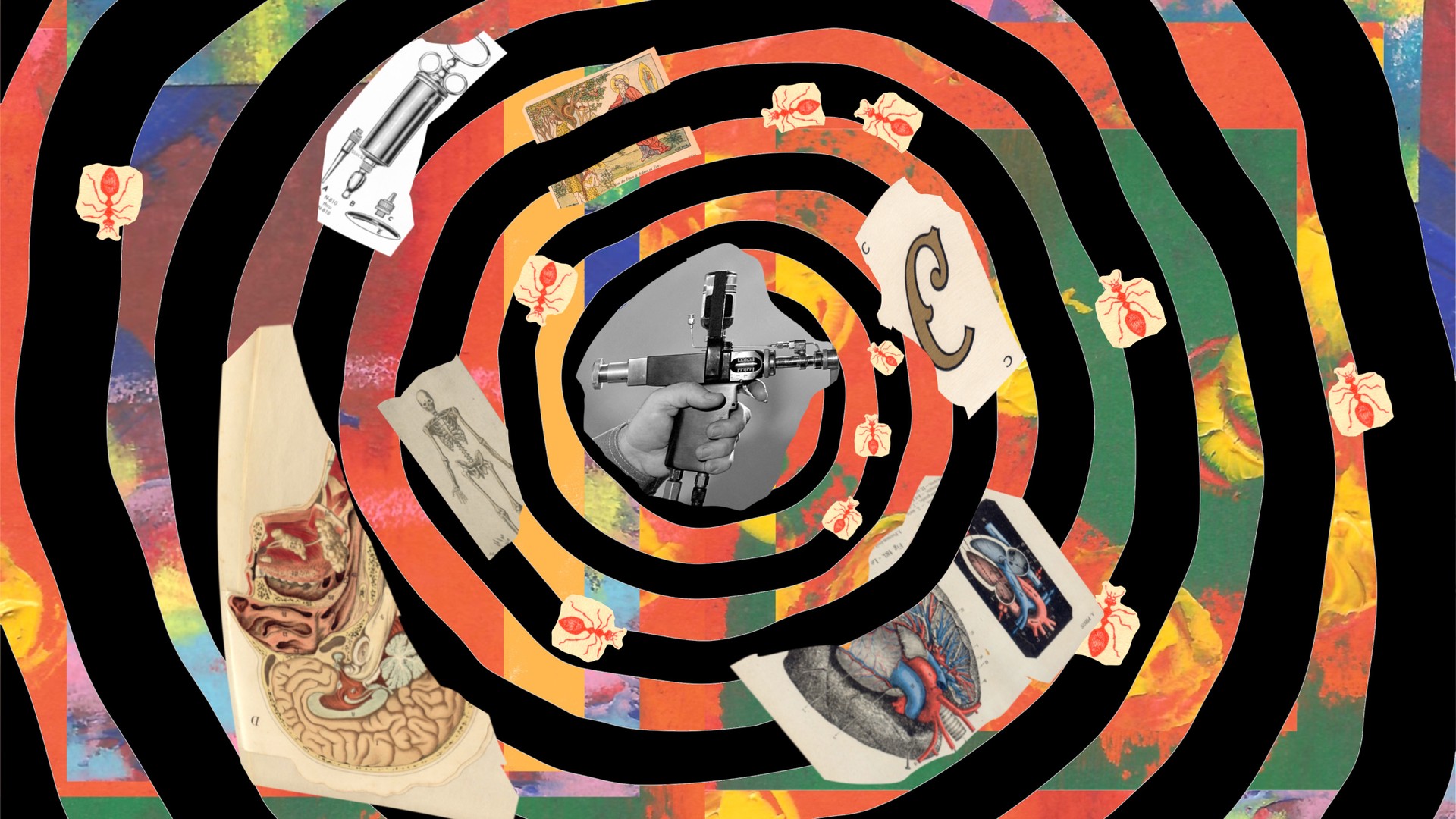
Army ants will sometimes walk in circles until they die. The workers navigate by smelling the pheromone trails of workers in front of them, while laying down pheromones for others to follow. If these trails accidentally loop back on themselves, the ants are trapped. They become a thick, swirling vortex of bodies that resembles a hurricane as viewed from space. They march endlessly until they’re felled by exhaustion or dehydration. The ants can sense no picture bigger than what’s immediately ahead. They have no coordinating force to guide them to safety. They are imprisoned by a wall of their own instincts. This phenomenon is called the death spiral. I can think of no better metaphor for the United States of America’s response to the COVID-19 pandemic.

The U.S. enters the ninth month of the pandemic with more than 6.3 million confirmed cases and more than 189,000 confirmed deaths. The toll has been enormous because the country presented the SARS-CoV-2 coronavirus with a smorgasbord of vulnerabilities to exploit. But the toll continues to be enormous—every day, the case count rises by around 40,000 and the death toll by around 800—because the country has consistently thought about the pandemic in the same unproductive ways.

Many Americans trusted intuition to help guide them through this disaster. They grabbed onto whatever solution was most prominent in the moment, and bounced from one (often false) hope to the next. They saw the actions that individual people were taking, and blamed and shamed their neighbors. They lapsed into magical thinking, and believed that the world would return to normal within months. Following these impulses was simpler than navigating a web of solutions, staring down broken systems, and accepting that the pandemic would rage for at least a year.

These conceptual errors were not egregious lies or conspiracy theories, but they were still dangerous. They manifested again and again, distorting the debate around whether to stay at home, wear masks, or open colleges. They prevented citizens from grasping the scope of the crisis and pushed leaders toward bad policies. And instead of overriding misleading intuitions with calm and considered communication, those leaders intensified them. The country is now trapped in an intuition nightmare: Like the spiraling ants, Americans are walled in by their own unhelpful instincts, which lead them round and round in self-destructive circles.

“The grand challenge now is, how can we adjust our thinking to match the problem before us?” says Lori Peek, a sociologist at the University of Colorado at Boulder who studies disasters. Here, then, are nine errors of intuition that still hamstring the U.S. pandemic response, and a glimpse at the future if they continue unchecked. The time to break free is now. Our pandemic summer is nearly over. Now come fall, the season of preparation, and winter, the season of survival. The U.S. must reset its mindset to accomplish both. Ant death spirals break only when enough workers accidentally blunder away, creating trails that lead the spiraling workers to safety. But humans don’t have to rely on luck; unlike ants, we have a capacity for introspection.

The spiral begins when people forget that controlling the pandemic means doing many things at once. The virus can spread before symptoms appear, and does so most easily through five P’s: people in prolonged, poorly ventilated, protection-free proximity. To stop that spread, this country could use measures that other nations did, to great effect: close nonessential businesses and spaces that allow crowds to congregate indoors; improve ventilation; encourage mask use; test widely to identify contagious people; trace their contacts; help them isolate themselves; and provide a social safety net so that people can protect others without sacrificing their livelihood. None of these other nations did everything, but all did enough things right—and did them simultaneously. By contrast, the U.S. engaged in …

1. A Serial Monogamy of Solutions

Stay-at-home orders dominated March. Masks were fiercely debated in April. Contact tracing took its turn in May. Ventilation is having its moment now. “It’s like we only have attention for only one thing at a time,” says Natalie Dean, a biostatistician at the University of Florida.

As often happens, people sought easy technological fixes for complex societal problems. For months, President Donald Trump touted hydroxychloroquine as a COVID-19 cure, even as rigorous studies showed that it isn’t one. In August, he switched his attention to convalescent plasma—the liquid fraction of a COVID-19 survivor’s blood that might contain virus-blocking antibodies. There’s still no clear evidence that this century-old approach can treat COVID-19 either, despite grossly misstated claims from FDA Commissioner Stephen Hahn (for which he later apologized). More generally, drugs might save some of the very sickest patients, as dexamethasone does, or shorten a hospital stay, as remdesivir does, but they are unlikely to offer outright cures. “It’s so reassuring to think that a magic-bullet treatment is out there and if we just wait, it’ll come and things will be normal,” Dean says.

Other strategies have merit, but are wrongly dismissed for being imperfect. In July, Carl Bergstrom, an epidemiologist and a sociologist of science at the University of Washington, argued that colleges cannot reopen safely without testing all students upon entry. “The gotcha question I’ve handled most from reporters since is: This school did entry testing, so why did they get an outbreak?” he says. It’s because such testing is necessary for a safe reopening, but not sufficient. “If you do it and screw everything else up, you’ll still have a big outbreak,” Bergstrom adds.

This brief attention span is understandable. Adherents of the scientific method are trained to isolate and change one variable at a time. Academics are walled off into different disciplines that rarely connect. Journalists constantly look for new stories, shifting attention to the next great idea. These factors prime the public to view solutions in isolation, which means imperfections become conflated with uselessness. For example, many critics of masks argued that they provide only partial protection against the virus, that they often don’t fit well, or that people wear them incorrectly. But some protection is clearly better than no protectionAs Dylan Morris of Princeton writes, “X won’t stop COVID on its own is not an argument against doing X.” Instead, it’s an argument for doing X along with other measures. Seat belts won’t prevent all fatal car crashes, but cars also come with airbags and crumple zones. “When we layer things, we give ourselves more wiggle room,” Dean says.

Several experts I’ve talked with have been asked: What now? The question assumes that the pandemic lingers because the U.S. simply hasn’t found the right solution yet. In fact, it lingers because the familiar solutions were never fully implemented. Despite claims from the White House, the U.S. is still not testing enough people. It still doesn’t have enough contact tracers. “We have the playbook, but I think there’s a confusion about what we’ve actually tried and what we’ve just talked about doing,” Dean says. A successful response “is never going to be one thing done perfectly. It’ll be a lot of different things done well enough.” That resilience disappears if we create…

2. False Dichotomies

A world of black and white is easier to handle than one awash with grays. But false dichotomies are dangerous. From the start, COVID-19 has been portrayed as a disease that mostly causes mild symptoms in people who quickly recover, and occasionally causes severe illness that leads to hospitalization and death. This two-sided caricature—severe or mild, sick or recovered—has erased the thousands of “long-haulers” who have endured months of debilitating symptoms at home with neither recognition nor care.

Meanwhile, as businesses closed and stay-at-home orders rolled out, “we presumed a trade-off between saving lives and saving the economy,” says Danielle Allen, a political scientist at Harvard. “That was foolishness of the most profound degree.” The two goals were actually aligned: Epidemiologists and economists largely agree that the economy cannot rebound while the pandemic is still raging. By treating the two as opposites, state leaders rushed to reopen, leading a barely contained virus to surge anew.  

Now, as winter looms and the pandemic continues, another dichotomy has emerged: enter another awful lockdown, or let the virus run free. This choice, too, is false. Public-health measures offer a middle road, and even “lockdowns” need not be as overbearing as they were in spring. A city could close higher-risk venues like bars and nightclubs while opening lower-risk ones like retail stores. There’s a “whole control panel of dials” on offer, but “it’s hard to have that conversation when people think of a light switch,” says Lindsay Wiley, a professor of public-health law at American University. “The term lockdown has done a lot of damage.” It exacerbated the false binary between shutting down and opening up, while offering …

3. The Comfort of Theatricality

Stay-at-home orders saved lives by curtailing COVID-19’s spread, and by giving hospitals some breathing room. But the orders were also meant to buy time for the nation to ramp up its public-health defenses. Instead, the White House treated months of physical distancing as a pandemic-ending strategy in itself. “We squandered that time in terms of scaling up testing and contact tracing, enacting policies to protect workers who get infected on the job, getting protective equipment to people in food-processing plants, finding places for people to isolate, offering paid sick leave … We still don’t have those things,” says Julia Marcus, an infectious-disease epidemiologist at Harvard Medical School and regular Atlantic contributor. The country is now facing the fall with many of the same problems that plagued it through the summer.

Showiness is often mistaken for effectiveness. The coronavirus mostly spreads through air rather than contaminated surfaces, but many businesses are nonetheless trying to scrub and bleach their way toward reopening. My colleague Derek Thompson calls this hygiene theater—dramatic moves that appear to offer safety without actually doing so. The same charge applies to temperature checks, which can’t detect the many COVID-19 patients who don’t have a fever. It also applies to the porous and inefficient travel bans that Trump and his allies still tout as policy successes. These tactics might do some good—let’s not conflate imperfect with useless—but they cause harm when they substitute for stronger measures. Theatricality breeds complacency. And by emphasizing solutions that can be easily seen, it exacerbated the American preference for …

4. Personal Blame Over Systemic Fixes

SARS-CoV-2 spread rapidly among America’s overstuffed prisons and understaffed nursing homes, in communities served by overstretched hospitals and underfunded public-health departments, and among Black, Latino, and Indigenous Americans who had been geographically and financially disconnected from health care by decades of racist policies. Without paid sick leave or a living wage, “essential workers” who earn a low, hourly income could not afford to quarantine themselves when they fell ill—and especially not if that would jeopardize the jobs to which their health care is tied. “The things I do to stay safe, they don’t have that as an option,” says Whitney Robinson, a social epidemiologist at the University of North Carolina at Chapel Hill.

But tattered social safety nets are less visible than crowded bars. Pushing for universal health care is harder than shaming an unmasked stranger. Fixing systemic problems is more difficult than spewing moralism, and Americans gravitated toward the latter. News outlets illustrated pandemic articles with (often distorted) photos of beaches, even though open-air spaces offer low-risk ways for people to enjoy themselves. Marcus attributes this tendency to America’s puritanical roots, which conflate pleasure with irresponsibility, and which prize shame over support. “The shaming gets codified into bad policy,” she says. Chicago fenced off a beach, and Honolulu closed beaches, parks, and hiking trails, while leaving riskier indoor businesses open.

Moralistic thinking jeopardizes health in two ways. First, people often oppose measures that reduce an individual’s risk—seat belts, condoms, HPV vaccines—because such protections might promote risky behavior. During the pandemic, some experts used such reasoning to question the value of masks, while the University of Michigan’s president argued that testing students widely would offer a “false sense of security.” These paternalistic false-assurance arguments are almost always false themselves. “There’s very little evidence for overcompensation to the point where safety measures do harm,” Bergstrom says.

Second, misplaced moralism can provide cover for bad policies. Many colleges started their semester with in-person teaching and inadequate testing, and are predictably dealing with large outbreaks. UNC Chapel Hill lasted just six days before reverting to remote classes. Administrators have chastised students for behaving irresponsibly, while taking no responsibility for setting them up to faila pattern that will likely continue through the fall as college clusters inevitably grow. “If you put 10,000 [students] in a small space, eating, sleeping, and socializing together, there’ll be an explosion of cases,” Robinson says. “I don’t know what [colleges] were expecting.” Perhaps they fell prey to …

5. The Normality Trap

In times of uncertainty and upheaval, “people crave a return to familiar, predictable rhythms,” says Monica Schoch-Spana, a medical anthropologist at the Johns Hopkins Center for Health Security. That pull is especially strong now because the pandemic’s toll is largely invisible. There’s nothing as dramatic as ruined buildings or lapping floodwater to hint that the world has changed. In some circles, returning to normal has been valorized as an act of defiance. That’s a reasonable stance when resisting terrorists, who seek to stoke fear, but a dangerous one when fighting a virus, which doesn’t care.

The powerful desire to re-create an old world can obscure the trade-offs necessary for surviving the new one. Keeping high-risk indoor businesses open, for example, helps the virus spread within a community, which makes reopening schools harder. “If schools are a priority, you have to put them ahead of something. What is that something?” says Bill Hanage, an epidemiologist at Harvard. “In an ideal world, they would be the last to close and the first to open, but in many communities, casinos, bars, and tattoo parlors opened before them.” A world with COVID-19 is fundamentally different from one without it, and the former simply cannot include all the trappings of the latter. Cherished summer rituals like camps and baseball games have already been lost; back-to-school traditions and Thanksgiving now hang in the balance. Change is hard to accept, which predisposes people to …

6. Magical Thinking

Back in April, Trump imagined the pandemic’s quick end: “Maybe this goes away with heat and light,” he said. From the start, he and others wondered if hot, humid weather might curb the spread of COVID-19, as it does other coronavirus diseases. Many experts countered that seasonal effects wouldn’t stop the new virus, which was already spreading in the tropics. But, fueled by shaky science and speculative stories, people widely latched on to seasonality as a possible savior, before the virus proved that it could thrive in the Arizona, Texas, and Florida summer.

This brand of magical thinking, in which some factor naturally defuses the pandemic, has become a convenient excuse for inaction. Recently, some commentators have argued that the pandemic will imminently fizzle out for two reasons. First, 20 to 50 percent of people have defensive T-cells that recognize the new coronavirus, because they were previously exposed to its milder, common-cold-causing cousins. Second, some modeling studies claim that herd immunity—whereby the virus struggles to find new hosts, because enough people are immune—could kick in when just 20 percent of the population has been infected.

Neither claim is implausible, but neither should be grounds for complacency. No one yet knows if the “cross-reactive” T-cells actually protect against COVID-19, and even if they do, they’re unlikely to stop people from getting infected. Herd immunity, meanwhile, is not a perfect barrier. Even if the low thresholds are correct, a fast-growing and uncontrolled outbreak will still shoot past themPursuing this strategy will mean that, in the winter, many parts of the U.S. may suffer what New York City endured in the spring: thousands of deaths and an untold number of lingering disabilities. That alone should be an argument against …

7. The Complacency of Inexperience

When illness is averted and lives are spared, “nothing happens and all you have is the miracle of a normal, healthy day,” says Howard Koh, a public-health professor at Harvard. “People take that for granted.” Public-health departments are chronically underfunded because the suffering they prevent is invisible. Pandemic preparations are deprioritized in the peaceful years between outbreaks. Even now, many people who have been spared the ravages of COVID-19 argue that the disease wasn’t a big deal, or associate their woes with preventive measures. But the problem is still the disease those measures prevented: The economy is still hurtingmental-health problems are growing, and educational futures have been curtailed, not because of some fearmongering overreaction, but because an uncontrolled pandemic is still afoot.

If anything, the U.S. did not react swiftly or strongly enough. Nations that had previously dealt with emerging viral epidemics, including several in East Asia and sub-Saharan Africa, were quick to take the new coronavirus seriously. By contrast, America’s lack of similar firsthand experience, combined with its sense of exceptionalism, might have contributed to its initial sloppiness. “One of my colleagues went to Rwanda in February, and as soon as he hit the airport, they asked about symptoms, checked his temperature, and took his phone number,” says Abraar Karan, an internist at Brigham and Women’s Hospital and Harvard Medical School. “In the U.S., I flew in July, and walked out of the airport, no questions asked.”

Even when the virus began spreading within the U.S., places that weren’t initially pummeled seemed to forget that viruses spread. “In April, I was seeing COVID patients in the ER every day,” Karan says. “In Texas, I had friends saying, ‘No one believes it here because we have no cases.’ In L.A., fellow physicians said, ‘Are you sure this is worse than the flu? We’re not seeing anything.’” Three months later, Texas and California saw COVID-19 all too closely. The tendency to ignore threats until they directly affect us has consigned the U.S. to …

8. A Reactive Rut

In March, Mike Ryan at the World Health Organization advised, “Be fast, have no regrets … The virus will always get you if you don’t move quickly.” The U.S. failed to heed that warning, and has repeatedly found itself several steps behind the coronavirus. That’s partly because exponential growth is counterintuitive, so “we don’t understand that things look fine until right before they’re very not fine,” says Beth Redbird, a sociologist at Northwestern. It’s also because the coronavirus spreads quickly but is slow to reveal itself: It can take a month for infections to lead to symptoms, for symptoms to warrant tests and hospitalizations, and for enough sick people to produce a noticeable spike. Pandemic data are like the light of distant stars, recording past events instead of present ones. This lag separates actions from their consequences by enough time to break our intuition for cause and effect. Policy makers end up acting only when it’s too late. Predictable surges get falsely cast as unexpected surprises.

This reactive rut also precludes long-term planning. In April, Michael Osterholm, an epidemiologist at the University of Minnesota, told me that “people haven’t understood that [the pandemic] isn’t about the next couple of weeks [but] about the next two years.” Leaders should have taken the long view then. “We should have been thinking about what it would take to ensure schools open in the fall, and prevent the long-term harms of lost children’s development,” Redbird says. Instead, we started working our way through a serial monogamy of solutions, and, like spiraling army ants, marched forward with no sense of the future beyond the next few footsteps.

These errors crop up in all disasters. But the COVID-19 pandemic has special qualities that have exacerbated them. The virus moved quickly enough to upend the status quo in a few months, deepening the allure of the hastily abandoned past. It also moved slowly enough to sweep the U.S. in a patchwork fashion, allowing as-yet-untouched communities to drop their guard. The pandemic grew huge in scope, entangling every aspect of society, and maxing out our capacity to deal with complexity. “People struggle to make rational decisions when they cannot see all the cogs,” says Njoki Mwarumba, an emergency-management professor at the University of Nebraska at Omaha. Full of fear and anxiety, people furiously searched for more information, but because the virus is so new, they instead spiraled into more confusion and uncertainty. And tragically, all of this happened during the presidency of Donald Trump.

Trump embodied and amplified America’s intuition death spiral. Instead of rolling out a detailed, coordinated plan to control the pandemic, he ricocheted from one overhyped cure-all to another, while relying on theatrics such as travel bans. He ignored inequities and systemic failures in favor of blaming China, the WHO, governors, Anthony Fauci, and Barack Obama. He widened the false dichotomy between lockdowns and reopening by regularly tweeting in favor of the latter. He and his allies appealed to magical thinking and steered the U.S. straight into the normality trap by frequently lying that the virus would go away, that the pandemic was ending, that new waves weren’t happening, and that rising case numbers were solely due to increased testing. They have started talking about COVID-19 in the past tense as cases surge in the Midwest.

“It’s like mass gaslighting,” says Martha Lincoln, a medical anthropologist at San Francisco State University. “We were put in a situation where better solutions were closed off but a lot of people had that fact sneak up on them. In the absence of a robust federal response, we’re all left washing our hands and hoping for the best, which makes us more susceptible to magical thinking and individual-level fixes.” And if those fixes never come, “I think people are going to harden into a fatalistic sense that we have to accept whatever the risks are to continue with our everyday lives.”

That might, indeed, be Trump’s next solution. The Washington Post reports that Trump’s new adviser—the neuroradiologist Scott Atlas—is pushing a strategy that lets the virus rip through the non-elderly population in a bid to reach herd immunity. This policy was folly for Sweden, which is nowhere near herd immunity, had one of the world’s highest COVID-19 death rates, and has a regretful state epidemiologist. Although the White House has denied that a formal herd-immunity policy exists, the Centers for Disease Control and Prevention recently changed its guidance to say that asymptomatic people “do not necessarily need a test” even after close contact with an infected personThis change makes no sense: People can still spread the virus before showing symptoms. By effectively recommending less testing, as Trump has specifically called for, the nation’s top public-health agency is depriving the U.S. of the data it needs to resist intuitive errors. “When there’s a refusal to take in the big picture, we are stuck,” Mwarumba says.

The pandemic is now in its ninth month. Uncertainties abound as fall and winter loom. In much of the country, colder weather will gradually pack people into indoor spaces, where the coronavirus more readily spreads. Winter also typically heralds the arrival of the flu and other respiratory viruses, and although the Southern Hemisphere enjoyed an unusually mild flu season, that’s “because of the severe precautions they were taking against COVID-19,” says Eleanor Murray, an epidemiologist at Boston University. “It’s not clear to me that our precautions will be successful enough to also prevent the flu.”

Schools are reopening, which will shape the path of the pandemic in still-uncertain ways. Universities are more predictable: Thanks to magical thinking and misplaced moralism, the U.S. already has at least 51,000 confirmed infections in more than 1,000 colleges across every state. These (underestimated) numbers will grow, because only 20 percent of colleges are doing regular testing, while almost half are not testing at all. As more are forced to stop in-person teaching, students will be sent back to their communities with COVID-19 in tow. “I expect this will blow up outbreaks in places that never had outbreaks, or in places that had outbreaks under control,” Murray says. Further spikes will likely occur after Thanksgiving and Christmas, as people who yearn to return to normal (or who think that the country overreacted) travel to see their family. Despite that risk, the CDC recently dropped its recommendation that out-of-state travelers should quarantine themselves for 14 days.

But many of the experts I spoke with thought it unlikely that “we’ll have cities going full New York,” as Bergstrom puts it. Doctors are getting better at treating the disease. States like Massachusetts, New York, and New Jersey have managed to avoid new surges over the summer, showing that local leadership can at least partly compensate for federal laxity. A new generation of cheap, rapid, paper-based tests will hit the market and make it easier to work out who is contagious. And despite the spiral of bad intuitions, many Americans are holding the line: Mask use and support for physical distancing are still high, according to Redbird, who has been tracking pandemic-related attitudes since March. “My feeling is that while things are going to get worse, I’m not sure they’ll be catastrophic, because of situational awareness,” Bill Hanage says.

Meanwhile, Trump seems to be teeing up a vaccine announcement in late October, shortly before the November 3 election. Moncef Slaoui, the scientific head of Operation Warp Speed, told NPR that it’s “extremely unlikely” a vaccine will be ready by then, and many scientists are concerned that the FDA will be pressured into approving a product that hasn’t been adequately tested, as Russia and China already have. Many Americans share this concern. A safe and effective vaccine could finally bring the pandemic under control, but its arrival will also test America’s ability to resist the intuitive errors that have trapped it so far. Vaccination has long been portrayed as the ultimate biomedical silver bullet, separating an era when masks and social distancing mattered from a world where normality has returned. This is yet another false dichotomy. “Everyone’s imagining this moment when all of a sudden, it’s all over, and they can go on vacation,” Natalie Dean says. “But the reality is going to be messier.”

This problem is not unique to COVID-19. It’s more compelling to hope that drug-resistant bacteria can be beaten with viruses than to stem the overuse of antibiotics, to hack the climate than to curb greenhouse-gas emissions, or to invest in a doomed oceanic plastic-catcher than to reduce the production of waste. Throughout its entire history, and more than any other nation, the U.S. has espoused “an almost blind faith in the power of technology as panacea,” writes the historian Howard Segal.* Instead of solving social problems, the U.S. uses techno-fixes to bypass them, plastering the wounds instead of removing the source of injury—and that’s if people even accept the solution on offer.

A third of Americans already say they would refuse a vaccine, whether because of existing anti-vaccine attitudes or more reasonable concerns about a rushed development process. Those who get the shot are unlikely to be fully protected; the FDA is prepared to approve a vaccine that’s at least 50 percent effective—a level comparable to current flu shots. An imperfect vaccine will still be useful. The risk is that the government goes all-in on this one theatrical countermeasure, without addressing the systemic problems that made the U.S. so vulnerable, or investing in the testing and tracing strategies that will still be necessary. “We’re still going to need those other things,” Dean says.

Between these reasons and the time needed for manufacturing and distribution, the pandemic is likely to drag on for months after a vaccine is approved. Already, the event is exacting a psychological toll that’s unlike the trauma of a hurricane or fire. “It’s not the type of disaster that Americans specifically are used to dealing with,” says Samantha Montano of Massachusetts Maritime Academy, who studies disasters. “Famines and complex humanitarian crises are closer approximations.” Health experts are burning outLong-haulers are struggling to find treatments or support. But many Americans are turning away from the pandemic. “People have stopped watching news about it as much, or talking to friends about it,” Redbird says. “I think we’re all exhausted.” Optimistically, this might mean that people are becoming less anxious and more resilient. More worryingly, it could also mean they are becoming inured to tragedy.

The most accurate model to date predicts that the U.S. will head into November with 220,000 confirmed deaths. More than 1,000 health-care workers have died. One in every 1,125 Black Americans has died, along with similarly disproportionate numbers of Indigenous people, Pacific Islanders, and Latinos. And yet, a recent poll found that 57 percent of Republican voters and 33 percent of independents think the number of deaths is acceptable. “In order for us to mobilize around a social problem, we all have to agree that it’s a problem,” Lori Peek says. “It’s shocking that we haven’t, because you really would have thought that with a pandemic it would be easy.” This is the final and perhaps most costly intuitive error …

9. The Habituation of Horror

The U.S. might stop treating the pandemic as the emergency that it is. Daily tragedy might become ambient noise. The desire for normality might render the unthinkable normal. Like poverty and racismschool shootings and police brutalitymass incarceration and sexual harassmentwidespread extinctions and changing climate, COVID-19 might become yet another unacceptable thing that America comes to accept.


More cities and states are opening bars and restaurants despite mounting evidence of potential danger

https://www.washingtonpost.com/health/2020/09/14/covid-spread-restaurants-bars/?arc404=true&itid=lk_inline_manual_28&itid=lk_inline_manual_10&itid=lk_inline_manual_9

More cities and states are opening bars and restaurants despite mounting  evidence of potential danger — TodayHeadline

In New York City, diners will be able to have a meal inside a restaurant at the end of the month, something that hasn’t happened there since the coronavirus pandemic began. In some parts of Florida, bars reopened Monday for the first time since late June.

One decision appears to be riskier than the other, according to an analysis of cellphone and coronavirus case data by The Washington Post.

States that have reopened bars experienced a doubling in the rate of coronavirus cases three weeks after the opening of doors, on average. The Post analysis — using data provided by SafeGraph, a company that aggregates cellphone location information — found a statistically significant national relationship between foot traffic to bars one week after they reopened and an increase in cases three weeks later.

The analysis of the cellphone data suggests there is not as strong a relationship between the reopening of restaurants and a rise in cases, nor with bar foot traffic and cases over time, except for a handful of states.

But like with so much in the pandemic, easy answers can prove elusive.

study by the Centers for Disease Control and Prevention of nearly 300 adults who tested positive for the coronavirus found that they were more than twice as likely to have dined at a restaurant in the two weeks before getting sick than people who were uninfected. Those who tested positive and did not have close contact with anyone sick were also more likely to report going to a bar or coffee shop. The same effect was not seen in visits to salons, gyms and houses of worship, or in the use of public transportation.

“You’re sitting there for a long time, everyone’s talking,” said Linsey Marr, an environmental engineer at Virginia Tech. “And that’s just a recipe for spread.”

Few states make their contact-tracing data available, but in two that do — Colorado and Louisiana — bars and restaurants are responsible for about 20 percent of cases traced to a known source. San Diego traced nearly one-third of community outbreaks to restaurants and bars, more than any other setting.

But Louisiana’s experience suggests bar patrons contribute more to the spread of the virus than restaurant diners. There have been 41 outbreaks tied to restaurants and the same number of outbreaks associated with bars, but bar outbreaks appeared to result in more infections, with 480 cases traced to those establishments compared with 180 from restaurants.

Marr said indoor dining can be reasonably safe in a restaurant operating at 25 percent capacity and with a ventilation system that fully recirculates air every 10 minutes. New York City’s policy will allow for only 25 percent capacity at first, with a scheduled increase to 50 percent in November if transmission rates remain low.

Still, Marr said, she “will not eat inside a restaurant until the pandemic is over.” As one of the first scientists to begin emphasizing that the virus was spread primarily by air, she has been concerned about indoor drinking and dining since March.

“People go to restaurants to talk,” she said, “and we know that it’s talking that produces a lot — 10 to 100 times more — aerosols than just sitting.”

Other countries facing outbreaks imposed stricter and longer shutdowns on bars and restaurants. Ireland has yet to open its pubs. Countries that did reopen bars and restaurants have, like American states, scaled back in the face of fresh outbreaks.

Researchers at the Massachusetts Institute of Technology say that because U.S. policies vary by state and county, waves of closures and reopenings may have perversely led to more viral spread, as people traveled to enjoy freedoms not allowed closer to home.

The National Restaurant Association argues that restaurants are safe if they follow proper mitigation guidelines and that the industry has been unfairly maligned by the actions of an irresponsible few.

“Bars become particularly risky,” said Larry Lynch, who handles food science for the restaurant trade group. “Anybody who had been in bars knows that conversations get louder, people get closer.”

But, he said, “we haven’t seen … any kind of systemic outbreaks from people going into a restaurant that’s practicing what we ask them to practice.”

Lynch questioned the methodology of the CDC study, noting it covered only 295 people and did not identify the sources of transmission.

The American Nightlife Association, which represents the bar and nightclub industry, did not respond to a request for comment.

Kristen Ehresmann, director of the Infectious Disease Epidemiology, Prevention and Control Division at the Minnesota Department of Health, agreed that when restaurants and bars abide by guidelines designed to reduce transmission, few cases of the coronavirus have been traced to those establishments.

But there are more than a few bad actors, she said: 1,592 cases of covid-19, the disease caused by the coronavirus, have been tied to 66 bars and restaurants in Minnesota. And in 58 other establishments, cases were reported among only staff members, resulting in 240 illnesses. One bar in St. Cloud, Minn., the Pickled Loon, was the only place visited by 73 people who got sick and was one stop among several for 44 other people.

“The bottom line is, we’re seeing a big chunk of our cases associated with these venues, and those cases go on to get other cases in other settings,” Ehresmann said. “We can’t ignore the impact.”

Iowa’s first big spike in coronavirus cases originated in the meatpacking industry. Then, says University of Iowa epidemiologist Jorge Salinas, came bars in college towns such as Iowa City, where he is based.

“It was very clear,” Salinas said. “We reviewed records for patients, and they all shared that common exposure of having been to a bar in the previous five days or so. Usually, the same bars that tend to be very crowded and very loud, rather than a place you just sit down to go and have a beer.”

He said those bars began closing not because of government intervention, but because so many staff members fell ill. By that point, the young people who got infected at bars had begun spreading the virus to an older population through family and work.

After about two months, the outbreak in Iowa City started to burn out. But then college students started returning to campus.

“It’s just a different group of young people but similar exposures — going to bars, hanging out, going to large parties,” he said.

He said an order from Gov. Kim Reynolds (R) closing bars in Iowa City and five other hard-hit counties was welcome but overdue. In the past two weeks, more than 1,000 young people in the region have become infected.

“Unfortunately, it’s late in the game,” Salinas said. “It would have been better if it had been done to prevent this rather than as a reaction to this.”

Politicians who favor an aggressive approach to containing the coronavirus have been hesitant to shut down bars and restaurants. Expanded federal unemployment benefits lapsed more than a month ago. Loans to small businesses are forgiven only if they can keep workers on the payroll, which is usually impossible while running at reduced capacity.

According to the Bureau of Labor Statistics, 2.5 million jobs in bars and restaurants have been lost since February. Although that’s an improvement from the spring, many restaurant owners say they are barely hanging on.

“Winter is coming, and I’m staring down the barrel of the gun of what’s going to happen,” said Ivy Mix, owner of a restaurant called Leyenda in New York and author of the book “Spirits of Latin America.” Even when indoor dining reopens, Mix said she is not sure she and her staff would be comfortable serving enough people inside her Brooklyn restaurant to make a profit.

“This is almost like being thrown a deflated life-jacket — the action and the symbolism is there, but the actual aid is not,” she said.

That’s why she says the only solution is federal legislation introduced by Rep. Earl Blumenauer (D-Ore.) that would issue $120 billion in grants to independent bars and restaurants. A Senate version would cover some chains as well.

“Eleven million people work for these independent restaurants,” Blumenauer said. “If we don’t do something, the evidence suggests that 85 percent of them are not going to survive this year.”

His office estimates that the legislation would more than pay for itself, generating $186 billion in tax revenue and unemployment savings. He said President Trump was receptive in a meeting with supporters earlier this year, but that in recent weeks the administration “has basically shut down meaningful negotiations.”

Arizona reopened indoor restaurants and some bars at the end of August, after a hasty spring reopening and more than 5,000 deaths.

“We really kind of reaped the whirlwind,” said David Engelthaler, a former state epidemiologist now at the Translational Genomics Research Institute. “A lot of that was driven by people going into bars and nightclubs, typically the 20- to 30-year-old set, interacting, socializing like they did prepandemic. And that just supported a kind of wildfire of cases.”

He said he thinks it is probably feasible to reopen restaurants at reduced capacity, but bars are a different story.

“One thing that all bars have in common is that they create a lowering of inhibition, and I think more than anything, this will cause the spread of covid,” he said. “We get more complacent, more comfortable, covid starts spreading.”

With temperatures still regularly topping 100 degrees in Arizona, the appeal of outdoor food and drink is limited. After a rapid May reopening led to a spike in cases and deaths, the state has just begun trying a more cautious approach.

Under Arizona’s new, more deliberate reopening, businesses must apply to reopen and bars must serve food to qualify. But Saskia Popescu, an epidemiologist based in Phoenix, said it is unclear whether those requirements are sufficiently stringent.

“If you put out two items does that count?” she asked. “I just worry that we’re kind of all doing this at once.” She noted that more than 500 new cases a day continue to be reported in Arizona, about the same as during the first reopening: “We’ll see if we learn from our lessons.”


Cartoon – National Pandemic Strategy

Head For The Hills Cartoons and Comics - funny pictures from CartoonStock

Fauci Says It Will Be ‘Well Into 2021’ Before U.S. Returns To Normal From Coronavirus

https://www.forbes.com/sites/sarahhansen/2020/09/11/fauci-says-it-will-be-well-into-2021-before-us-returns-to-normal-from-coronavirus/#4eb5a0862f7c

Dr Anthony Fauci disagrees with Trump over the coronavirus says US has not  turned the final corner | Daily Mail Online

TOPLINE

Dr. Anthony Fauci, the country’s top infectious disease official, told MSNBC on Friday that because of the timeline for manufacturing and distributing a coronavirus vaccine, it will be well into next year before American life returns to normal.


KEY FACTS

President Trump suggested this week that a vaccine will be ready in time for November’s election, but Fauci has said such an accelerated timeline is not realistic. 

Fauci said Friday it’s possible that a vaccine could be available by the end of this year or early 2021.

Manufacturing the vaccine in large quantities and distributing it to the majority of the population will take significantly longer, however, meaning that returning to “normal” life—including indoor and enclosed activities like movie theaters—won’t happen until the middle or end of next year. 

Fauci on Friday also refuted Trump’s comments Thursday that the U.S. is “rounding the corner” on coronavirus, characterizing the current data on the virus, which shows about 40,000 new cases and 1,000 deaths a day, as “disturbing.”

During a discussion with doctors from Harvard Medical School on Thursday, Fauci said the U.S. needs to prepare to “hunker down” this fall and winter and warned against looking only at the “rosy side of things,” CNBC reported


CRUCIAL QUOTE

“If you’re talking about getting back to a degree of normality, which resembles where we were prior to COVID, it’s gonna be well into 2021,” Fauci said. “Maybe even towards the end of 2021.”


KEY BACKGROUND

According to a New York Times tracker, there are 38 coronavirus vaccine candidates being tested on humans in clinical trials. This week, pharma giant AstraZeneca announced it had paused a late-stage vaccine trial after a participant developed what is suspected to be an adverse reaction to the drug. The heads of nine pharma companies have also pledged that they would not submit their coronavirus vaccine candidates to regulators until they are shown to be safe and effective in large critical trials.