Trump says Covid-19 is ‘dying out.’ Experts fear his dismissiveness could prolong the crisis

Trump says Covid-19 is ‘dying out.’ Experts fear his dismissiveness could prolong the crisis

The Trump Administration Paid Millions for Test Tubes — and Got ...

The White House is taking a new position on the coronavirus pandemic: a daily count of 750 deaths is a testament to the federal government’s successful pandemic response.

On Wednesday, when U.S. health officials reported nearly 27,000 new Covid-19 cases, President Trump said in a television interview that the virus was “dying out.” He brushed off concerns about an upcoming rally in Tulsa, Okla., because the number of cases there is “very miniscule,” despite the state’s surging infection rate. In a Wall Street Journal interview Wednesday, Trump argued coronavirus testing was “overrated” because it reveals large numbers of new Covid-19 cases, which in turn “makes us look bad,” and suggested that some Americans who wear masks do so not only to guard against the virus, but perhaps to display their anti-Trump animus.

But a range of public health experts told STAT that this messaging not only diverts attention from a pandemic that has already caused 120,000 U.S. deaths, but has more practical implications: It could make it difficult for local governments to enlist the public in the mitigation measures necessary to reduce the continued spread of the virus.

“The science behind how people process public warnings in a crisis supports this: You have to have people speaking with one voice,” said Monica Schoch-Spana, a medical anthropologist at the Johns Hopkins Center for Health Security. “You need a chorus.”

Conflicting directives can make it more difficult for recommendations coming from state and local leaders to have an impact, said Sara Bleich, a professor of public health policy at Harvard’s T.H. Chan School of Public Health.

“It sends a mixed message, which is confusing, particularly because while many people will get infected, most will not get severely sick, so it’s easy to say this won’t happen to me,” she said. “And it’s that sort of attitude that will keep us in this situation for a very long time.”

While the president has for weeks, if not months, underplayed the pandemic, his sharp and repeated remarks this week represent a remarkable attempt from the leader of American government to effectively declare the U.S. Covid-19 epidemic over.

The president’s rhetoric comes at a time that his coronavirus task force, which once conducted daily briefings, has not addressed the public since May. The president’s resumption of campaign rallies flouts federal guidance that encourages mask use (Trump’s campaign will hand out masks and hand sanitizer at the rally, but has not said it will require attendees to use them) and discourages large indoor gatherings. And the president has repeatedly claimed, misleadingly, that persistently high U.S. case totals are simply the result of increased testing.

Health experts say that political leaders preaching caution and modeling proper behavior — such as wearing a mask and demonstrating proper hand hygiene — can send a powerful signal to people that these steps can not only protect them, but their communities. They say that, essentially, national and state leaders need to walk the walk in a situation when individual behavior, like staying home when sick and cooperating with contact tracing, can make a large impact in curbing contagion.

Trump’s counterproductive behavior, Schoch-Spana said, extends far beyond the consistently dismissive tone he has taken toward the health risks of Covid-19. With few exceptions, the president has refused to wear a mask in public, and has insisted on continuing in-person briefings and White House events that effectively defy federal health guidance about gathering indoors in large groups.

“It’s not just words, it’s actions,” she said. “So when you have the nation’s top executive refusing to wear a mask, holding meetings where people are shoulder to shoulder, where he’s signing executive orders — that is also a form of communication.”

Experts also say continued federal commitments to combating the virus are crucial as the public grows tired of abatement measures. Instead, Trump has only elevated his monthslong campaign of downplaying the virus.

And Vice President Mike Pence, in a Wall Street Journal op-ed, framed the declines in cases and deaths since April as “testament to the leadership of President Trump” — even as hundreds of Americans are still dying every day and cases are not dropping further.

Rep. Donna Shalala (D-Fla.), who served as health secretary during the Clinton administration, said she hoped Americans would listen to public health guidance from local officials, not Trump and Pence.

“The president of the United States is dangerous to the health of the people of my district, because he’s giving out misinformation and false hope,” she said. “For those that believe him, they’re putting themselves and their families at risk.”

Public health experts have raised a number of issues with the administration’s messaging.

For one, a plateau of cases and deaths should not be celebrated, they say. While some countries in Europe and Asia have not only flattened their curve but driven them down, that hasn’t happened in the United States. Daily cases and deaths dipped from the peak in April, but have averaged about 20,000 and 800, respectively, for weeks.

Beyond those numbers representing real people getting sick and dying, there are other problems with sustained high levels of spread. The more cases there are, the more difficult it is for the surveillance system, including contact tracing, to keep up. It’s also more likely that some of the cases will spiral into explosive spread; 20,000 cases can turn into 40,000 a lot faster than one case can turn into 20,000.

Plus, a failure to suppress spread now could lead to more prolonged disruptions to daily life. If transmission rates come fall are still what they are now in certain communities, that makes it harder to reopen schools, for example.

Experts also point to evidence suggesting that the daily case and death numbers won’t stay flat for long. While new cases in the Northeast and Midwest are declining, a number of states in the West and South — Arizona, Texas, Florida, California, and Oregon among them — have reported record number of new cases this week. What worries public health officials is that, without measures to stem those increases, those outbreaks could keep growing. Those thousands of new cases also signal that, in a week or two, some portion of those people will show up in the hospital, and, about a week after that, a number of them will be dead, even as clinicians have learned more about treating severe Covid-19.

Some states in the South and West are already reporting record hospitalizations from Covid-19.

The White House’s shrug has been echoed by some governors, who insist, like Pence and Trump, that increased testing explains away the rise in cases. That is certainly one reason; testing has become more widespread, so states are capturing a more accurate reading of their true case burden.

But experts say increased testing can only account for some of the data states are reporting. Other metrics — including rising hospitalizations, filling ICUs, and the increasing rate of tests that are positive for the virus — signal broader spread.

Until Wednesday, leaders of Texas and Arizona also bristled at efforts from city and county officials to institute mask requirements, but acceded to growing pressure even as they have not ordered statewide mandates.

Cameron Wolfe, an infectious disease expert at Duke University, said he was seeing a growing “fatigue” among the public to keep up with precautionary steps like physical distancing and mask wearing. People letting down their guard was coinciding with an increase of cases in states, including North Carolina.

He said medical experts and health workers needed to model proper behavior to show others that the coronavirus epidemic was still something that required action. But, he added, “that also comes from political leaders buying into this.”

Federal and state authorities, he said, need to be “taking this to heart. That has not yet happened. That needs to change if we’re going to get people to buy into this.”



Cartoon – Coronavirus Leadership

Hake's - JACK DAVIS ARTWORK ON NETWORK PROMO BUTTON FOR "CHICO AND ...

Coronavirus drugmakers’ latest tactics: Science by press release

https://www.politico.com/news/2020/06/05/drugmakers-media-coronavirus-303895

Coronavirus drugmakers' latest tactics: Science by press release ...

Pharmaceutical companies are using the media to tout treatments that are still under review.

Vaccine maker Moderna attracted glowing headlines and bullish investors when it revealed that eight participants in a preliminary clinical trial of its coronavirus vaccine had developed antibodies to the virus. The company’s share price jumped nearly 20 percent that day as it released a massive stock offering.

But the full results of the 45-person safety study haven’t been published, even though Moderna began a second, larger trial in late May aimed at determining whether the vaccine works. Several vaccine researchers say the scant public information on the earlier safety study is hard to evaluate because it addresses less than 20 percent of participants.

Call it science by press release — a tactic that pharmaceutical companies are increasingly relying upon to set their experimental coronavirus drugs and vaccines apart in a crowded field, shape public opinion and court regulators. Public health experts say the approach could increase political pressure on federal health officials to green-light drugs and vaccines before it is clear they are safe or effective, with potentially dangerous consequences.

“There’s a long history of pharmaceutical manufacturers putting out self-serving press releases related to clinical trial data that they’re developing that present an overly rosy picture of the data, usually with a boilerplate disclaimer at the end, which is fairly useless,” said Aaron Kesselheim, a professor of medicine at Harvard Medical School who studies drug regulation and pricing.

There are already signs of hype and political pressure influencing the U.S.’ coronavirus response. The Food and Drug Administration authorized emergency use of the malaria drug hydroxychloroquine in March without any proof that it was safe or effective for coronavirus patients — but with the backing of President Donald Trump, who had begun touting the treatment during daily White House briefings.

Subsequent studies have found that hydroxychloroquine doesn’t help those with Covid-19 and can cause potentially fatal side effects. And a top government scientist, Rick Bright, filed a whistleblower complaint in May alleging that he was ousted from his job leading the Biomedical Advanced Research Authority after he resisted political pressure to greenlight widespread use of the drug.

“The FDA has remained an unwavering, science-based voice helping to guide the all-of-government response,” agency Commissioner Stephen Hahn said in a statement. “I have never felt any pressure to make decisions, other than the urgency of the situation around COVID-19.”

But observers aren’t so sure. “From the outside looking in, there seems to be more political pressure than ever,” said Marc Scheineson, a former associate commissioner at the FDA and head of the FDA group at Alston & Bird. “The example in the White House is trickling down and there is a lot of pressure on the FDA … to color information on the optimistic side for political purposes and that is a hugely disturbing trend.”

A spokesperson for Moderna, which has received nearly a half billion dollars from the U.S. government and praise from Trump, said the company previewed its vaccine trial results by press release because it was concerned that the data might leak. The National Institutes of Health’s top infectious disease expert, Anthony Fauci, had hinted at the results in an interview with National Geographic, and data from a trial of the experimental drug remdesivir had leaked in April.

“You had this data moving widely around NIH and the remdesivir leak was also in our minds,” the Moderna spokesperson said.

But Peter Bach, director of Memorial Sloan-Kettering’s Center for Health Policy and Outcomes, said Moderna’s effort to preview its findings in the press “could be construed as an effort to make sure they are part of the conversation — and it worked on that front.”

Other groups have also previewed their hotly anticipated vaccine studies in the press. In late April, The New York Times revealed that six monkeys given a vaccine developed by researchers at the U.K.’s University of Oxford had stayed healthy for 28 days despite sustained exposure to the coronavirus. The article quoted Vincent Munster, a researcher at the NIH’s Rocky Mountain Laboratory, which conducted the monkey study at the British scientists’ behest.

The Oxford researchers, who signed a deal with AstraZeneca two days later to develop the experimental vaccine, did not publish a formal scientific analysis of the monkey data until mid-May. The study revealed that the noses of vaccinated monkeys and unvaccinated monkeys contained similar levels of coronavirus particles, suggesting that the vaccinated animals could still spread the disease — and the vaccine might not be as effective as the earlier data had hinted.

AstraZeneca has since inked a $1.2 billion deal with the U.S. government to provide 300 million vaccine doses, and a £65.5 million ($80 million) agreement with the U.K. government to supply 30 million doses.

Liz Derow, a spokesperson for Oxford’s Jenner Institute, where the vaccine researchers are based, said they did not give the monkey data to The New York Times. The NIH’s National Institute of Allergy and Infectious Disease, which operates the Rocky Mountain Laboratory, said it did not provide the data to the newspaper — but one of its researchers, Vincent Munster, spoke to a Times reporter about the monkey findings at the request of the Jenner Institute.

“I was really disturbed by not just Moderna, but the Oxford group as well, presenting a press release without data, without a scientific review, without knowing what the press release was based on,” said Barry Bloom, an immunologist at the Harvard School of Public Health. “And very positively enough to raise the stock price so two days later officials within the company sold their stock and made a whole lot of money, whether or not the vaccine works.”

Four of the pharmaceutical firm’s top executives together saw gains of $29 million from prescheduled sales of shares in the company in the two days following the vaccine announcement. The company has not yet responded to a request for comment on the stock sales.

Neither the Oxford nor Moderna vaccines are available to the public. But some drugs whose safety and efficacy are now being studied have already been repurposed or authorized for emergency use during the pandemic. The rush to release snippets of information on drug trials to the press ahead of full results has left some doctors wondering how to best treat their patients.

After leaked data from a trial of Gilead’s experimental antiviral remdesivir suggested the drug might be the first shown to help coronavirus patients, the company put out a press release in late April teasing results from a larger, government-run study. Hours later, Fauci revealed some findings of the study during an Oval Office press spray.

But the full analysis of the NIAID trial results was not published until three weeks later. Until that point, frontline physicians had no way to know that patients on ventilators did not benefit from remdesivir treatment — meaning that doctors may have inadvertently wasted some of the United States’ limited stock of the drug.

This lack of understanding on how to use remdesivir was evident in a recent survey more than 250 hospitals by the American Society of Health-System Pharmacists, which found that just 15 percent planned to use their remdesivir doses as described in the FDA’s emergency authorization for the drug.

Andre Kalil, an infectious disease doctor at the University of Nebraska Medical Center who led the NIAID trial, told POLITICO that physicians could have patterned their use of remdesivir on the dosages given during the trial.

Others say doctors using experimental treatments should have as much information as possible.

“If we want doctors to make rational medical decisions based on data, then before an authorized product reaches patients, the data should be available to review in some way, not just a press release,” said Walid Gellad, director of the University of Pittsburgh’s Center for Pharmaceutical Policy and Prescribing.

Kesselheim, too, said that clinical trial data should be made public alongside any emergency authorizations to give physicians “the maximum amount of help they need in figuring out how to prescribe the drug.”

Gilead did not respond to a request for comment. But NIAID said that the urgency of the coronavirus prompted Fauci to share initial results before a full analysis was ready for publication.

Ivan Oransky, a professor of medical journalism at New York University and co-founder of the blog Retraction Watch, which monitors errors and misconduct in scientific research, told POLITICO he fears that the temptation to conduct science by press release will get “worse before it gets better.”

The world is growing more desperate for drugs and vaccines that could bring the coronavirus to heel. And many members of the public and politicians are treating every scrap of scientific information about the pandemic equally, he said — whether data comes from a peer-reviewed study or a company press release.

“There have been mechanisms to review science critically that, given the speed of Covid, have gone out the window,” said Bloom.

And interpreting results of clinical trial data can be difficult under the best of circumstances — especially when that data concerns a virus that was unknown to science until December of last year. When to end a trial and which conclusions to highlight are in many cases a matter of discretion, said Scheineson.

“It’s an art, not a science, in that respect,” he said. “I, for one, will not be the first in line to the new Moderna vaccine.”


FDA ends emergency use authorization for hydroxychloroquine

https://www.axios.com/hydroxychloroquine-fda-ends-emergency-use-authorization-f5353a2c-115a-4a57-b8e2-360b735b4937.html?stream=health-care&utm_source=alert&utm_medium=email&utm_campaign=alerts_healthcare

FDA withdraws emergency use authorization for hydroxychloroquine ...

The FDA ended Monday its emergency use authorizations for two controversial drugs, hydroxychloroquine and chloroquine, as a potential coronavirus treatment.

Why it matters: Despite gaining President Trump’s adamant support and use, the drugs have failed in several clinical trials and have been found to possibly cause serious heart problems.

What they’re saying: The FDA said it believes the drugs “are unlikely to be effective in treating COVID-19” under the emergency use authorization.

  • It also said that “in light of ongoing serious cardiac adverse events and other serious side effects, the known and potential benefits of [the drugs] no longer outweigh the known and potential risks for the authorized use.”

Read the letter and memo regarding the revocation:


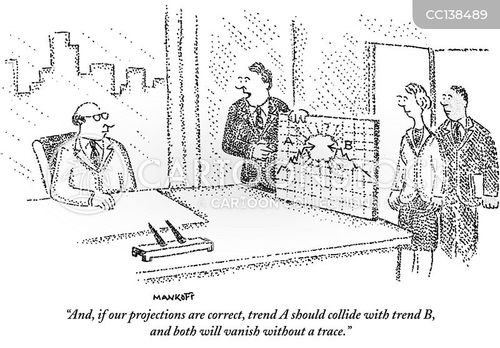
Cartoon – Coronavirus Projections

Vanish Cartoons and Comics - funny pictures from CartoonStock

South Asia emerges as a new coronavirus hotspot

https://www.axios.com/india-coronavirus-cases-south-asia-pakistan-5447da22-7418-43f7-a17a-d247b92e4205.html

Featured image

India opened up restaurants, shopping malls and places of worship today even as it recorded a record-high 9,971 new coronavirus cases, the third-most worldwide behind Brazil and the U.S.

Why it matters: Lockdowns are being lifted in South Asia — home to one-quarter of the world’s population — not because countries are winning the battle against COVID-19, but because they simply can’t sustain them any longer.

Flashback: For a time, South Asia was cited as a source of optimism because relatively few cases and deaths were being recorded despite large, dense populations.

  • Lockdowns came relatively early, with varying severity (India’s was considerably stricter than Pakistan’s, for example).
  • Outbreaks have continued to accelerate, however. Pakistan’s daily case count is now on par with the U.K.’s and six times Germany’s, adjusted for population.
Data: The Center for Systems Science and Engineering at Johns Hopkins; Chart: Naema Ahmed/Axios

Limited testing means South Asia’s outbreaks could actually be far more severe. India, for example, is testing at one-twentieth the rate of the U.S.

  • John Clemens, an epidemiologist at ICDDR,B (formerly the International Centre for Diarrheal Disease Research, Bangladesh), estimates that Bangladesh’s capital, Dhaka, may have up to 750,000 cases — 12 times the official tally, per the Economist.
  • The official numbers still show India, Pakistan and Bangladesh with the third-, seventh- and tenth-most new cases in the world over the past three days, respectively.

Bhramar Mukherjee, a professor at the University of Michigan who has been modeling India’s outbreak, tells Axios that while some states have hit initial peaks, she doesn’t expect a national peak until late July or August.

  • While the transmission rate has slowed, “you see this steady rise in cases because the population is so large.” She expects the numbers to fall slowly after the peak, unlike the trajectory in Europe.
  • The numbers can be unreliable, Mukherjee says, with some states fearing that testing symptomatic people will cause them to “look bad” as cases rise.
  • She also worries that India didn’t use the lockdown period to build up testing and hospital capacity.
  • “It’s really chaos unfolding in Mumbai and Delhi, and I think unfortunately India is going to be at the top of the list in terms of cases,” she says.

Zoom in: Mumbai has launched an app to help people locate hospitals with empty beds, but such is the scarcity that they’re often full by the time patients arrive, WSJ reports. Some die without ever receiving treatment.

  • Morgues are overfull t00. There are reports of patients being treated in rooms that also contain dead bodies.
  • Public hospitals in Delhi, home to 26 million people, are also reportedly full and turning people away.

The coronavirus likely arrived in Mumbai with wealthy people returning from abroad, before spreading among poorer people and to slums where social distancing is hardly an option.

  • That pattern has been seen elsewhere in the developing world, including in cities like Rio de Janeiro.
  • There’s an additional complication in India’s case, though. After initially failing to account for migrant workers when implementing the lockdown, the government started to transport them to their home villages on special busses and trains.
  • The virus traveled too. 71% of cases recorded in Bihar, a state in eastern India, have been linked to returning workers, Foreign Policy reports.

The bottom line: South Asian governments attempted to balance health and hunger, knowing they could only shut down their largely informal economies for so long.

  • But with health care systems already stretched and case counts continuing to rise, they’re opening up with more hope than confidence.


Coronavirus: 15 emerging themes for boards and executive teams

https://www.mckinsey.com/business-functions/risk/our-insights/coronavirus-15-emerging-themes-for-boards-and-executive-teams?cid=other-eml-alt-mip-mck&hlkid=0e0b80570bfe48508db4370a1999a949&hctky=9502524&hdpid=b867bc22-e8f5-41b6-b080-40a5d4c21c71

11 Ways To Create More Time To Think | Auguste rodin, Rodin, Rodin ...

Board directors and executives can pool their wisdom to help companies grapple with the challenge of a lifetime.

As Winston Churchill said, “Now this is not the end. It is not even the beginning of the end. But it is, perhaps, the end of the beginning.” We are seeing some faint signs of progress in the struggle to contain the pandemic. But the risk of resurgence is real, and if the virus does prove to be seasonal, the effect will probably be muted. It is likely never more important than now for boards of directors and executive management teams to tackle the right questions and jointly guide their organizations toward the next normal.

Recently, we spoke with a group of leading nonexecutive chairs and directors at companies around the world who serve on the McKinsey Resilience Advisory Council. They generously shared the personal insights and experiences gained from their organizations’ efforts to manage through the crisis and resume work. The 15 themes that emerged offer a guide to boards and executive teams everywhere. Together, they can debate these issues and set an effective context for the difficult decisions now coming up as companies plan their return to full activity.

Managing through the crisis

1. Boards must strike the right balance between hope for the future and the realism that organizations need to hear. There are many prognostications on what comes after COVID-19. Many will be helpful. Some will be right. Boards and managers may have some hopes and dreams of their own. Creating value and finding pockets of growth are possible. It is important to have these aspirations, because they form the core of an inner optimism and confidence that organizations need. However, leaders should not conflate aspirations with a prescience about the future.

2. The unknown portion of the crisis may be beyond anything we’ve seen in our professional lives. Boards and managers feel like they might be grappling with only 5 percent of the issues, while the vast majority are still lurking, unknown. Executives are incredibly busy, fighting fires in cash management and other areas. But boards need to add to their burden and ask them to prepare for a “next normal” strategy discussion. Managers need to do their best to find out what these issues are, and then work with boards to ensure that the organization can navigate them. The point isn’t to have a better answer. The point is to build the organizational capability to learn quickly why your answer is wrong, and pivot faster than your peers do. Resilience comes through speed. This may be a new capability that very few organizations have now, and they will likely need to spend real time building it.

3. Beware of a gulf between executives and the rank and file. Top managers are easily adapting to working from home and to flexible, ill-defined processes and ways of working, and they see it as being very effective and also the wave of the future. Many people in the trenches think it is the worst thing to happen to them (even those that are used to working remotely). Remote working is raising the divide between elites and the common man and woman. There is a real risk of serious tension in the social fabric of organizations and in local and national communities.

4. Don’t overlook the risks faced by self-employed professionals, informal workers, and small businesses. These groups are often not receiving sufficient support. But their role in the economy is vital, and they may be noticed only later, when it is too late.

5. Certain industries and sectors are truly struggling and require support. Several disrupted industries and many organizations in higher education, the arts, and sports are severely struggling and require support to safeguard their survival.

Return to work—the path ahead

6. Mid- to long-term implications and scenarios vary considerably. It’s important to differentiate between industries and regions. Some industries may never come back to pre-COVID-19 levels.

7. What went wrong? Boards and executives, but also academics, need to debate the question. Where should we have been focusing? Take three examples. Why did companies ignore the issue of inadequate resilience in their supply chain? The risks of single sourcing were well known and transparent. Also, why did we move headlong toward greater specialization in the workforce, when we knew that no single skill was permanently valuable? Finally, why did we refuse to evolve our business models, although we knew that technology and shifts in societal preferences were forcing us down a treadmill of ever decreasing value-creation potential?

8. How can we prevent a backlash to globalization? The tendency toward nationalism was already strong and is growing during the crisis. The ramifications will be challenging. For example, in pharmaceutical development, residents of the country where a pharma company has its headquarters may expect to get the drug first. Global companies, despite their experience, may find it harder to address and engage directly with diverse, volatile, and potentially conflicting stakeholders. In such times, societies may need someone to mediate between the private sector and some of these stakeholders.

9. Companies need help with government relations. Strong government interventions are occurring on the back of a serious loss of confidence in free-market mechanisms. There is little question that different governments will land on different answers to the debate around how free markets really ought to be structured. The corporate community has been thrust into a new relationship with government, and it is struggling. The government landscape is fragmented, with highly varied approaches and competencies. Companies are looking for a playbook; no one has an infrastructure to manage this complexity.

10. Where will the equity come from, and with what strings attached? Governments are propping up various sectors with new capital. What will they receive in return? Will they distort markets? How can companies manage this process carefully to emerge from the crisis with a stronger balance sheet? Further, much more capital is likely needed; presumably some of it will come from the private sector. Will capital markets be effective and trusted in such times? Who governs this overall process, and what role should the government play? Is it the time for more state funds?

11. The balance between profits and cash flow is tricky, and essential to get right. Many companies are caught right now and are sacrificing their bottom line in order to pay for their financing. That’s not sustainable; companies will need guidance on how to balance the two.

12. It may be time for responsible acquisitions, including to help restructure certain industries. Many “resilients” have “kept their powder dry,” and are now ready to acquire. But they need to be sensitive and allow sellers a good path to exit. We need guidelines for responsible acquisitions.

13. Cyberrisk is growing. Remote working increases the “attack surface” for criminals and state actors. Both are more active. Chief information officers and chief information security officers are grappling with the overwhelming demand for work-from-home technology and the need for stringent cybersecurity.

14. Innovation may never have been so important. Innovation has always been essential to solving big problems. The world is looking not just for new things but also for new ways of doing things (especially on the people side, where we need new behaviors, long-term rather than short-term), capabilities, and work ethics.

15. The path ahead will surely have ups and downs and will require resilience. As lockdowns are relaxed, and segments of the economy reopen, viral resurgences and unforeseen events will keep growth from being a straight line going up. It will likely be a lengthy process of preserving “lives and livelihoods” over several months, if not years. The reality is that many or even most business leaders made choices over the past decades that traded resilience for a perceived increase in shareholder value. Now may be the moment to consider that the era of chipping away at organizational resilience in the name of greater efficiency may have reached its limits. This is not to say that there are no efficiencies to be sought or found, but more that the trade-off between efficiency and resiliency needs to be defined far more clearly than it has been in recent years.


It is the board’s responsibility to coach and advise its management team, especially when the terrain is trickier than usual. However, boards should not mistake the need for vigorous debate with the need for consensus. More than ever, a bias to action is essential, which will frequently mean getting comfortable with disagreement. Apart from all the operational focus needed for the return to work, it is even more important that boards and management teams take a step back to reflect upon these 15 core themes. In summary:

  1. Take the time to recognize how the people who (directly or indirectly) depend on the company feel.
  2. Have aspirations about the post-COVID world, but build the resilience to make them a reality.
  3. Strengthen your capability to engage and work with regulators and the government.
  4. Watch out for non-COVID risks, and make sure to carve out time to dedicate to familiar risks that have never gone away.
  5. Find out what went wrong, and answer the uncomfortable truths that investigation uncovers.