COVID-19 vaccine verdicts loom as next big market risk

https://finance.yahoo.com/news/covid-19-vaccine-verdicts-loom-050615809.html

Optimism that vaccines are on the way to end the coronavirus pandemic has been a major factor in this year’s U.S. stock resurgence. That will face a critical test in coming weeks, as investors await clinical data on whether they actually work.

A UBS analysis found that about 40% of the market’s gains since May can be pegged to hopes for vaccines to protect against COVID-19, which has killed over 960,000 worldwide and rocked the global economy.

Global efforts to develop a vaccine are coming to a head, with late-stage data on trials by companies such as Pfizer Inc <PFE.N> and Moderna Inc <MRNA.O> possible as soon as October or November. Disappointing results could further shake markets that have recently grown turbulent on worries over fiscal stimulus delays and uncertainty around the Nov. 3 U.S. presidential election.

“The anticipation is that this stuff is going to work,” said Walter Todd, chief investment officer at Greenwood Capital in South Carolina. “So any news to the contrary could be a risk to the market.”

The number of vaccines in development could blunt the negative market impact of any single setback. More than a half-dozen vaccines globally are in late-stage trials out of over 30 currently being tested in humans, according to the World Health Organization.

“We are setting ourselves up for success in the sense of if you throw enough spaghetti at the wall, hopefully at least one noodle sticks,” said Liz Young, director of market strategy at BNY Mellon Investment Management.

That could explain why stocks overall barely reacted earlier this month, when AstraZeneca Plc <AZN.L> and partner Oxford University paused global trials of one of the leading vaccine candidates after a participant in its U.K. trial became seriously ill. The trials have resumed in Britain, Brazil and South Africa, but remain on hold in the United States.

Some forecasts on vaccine availability have grown less optimistic. Good Judgment, a company whose forecasters make predictions based on publicly available evidence, put the chances that a vaccine will be widely distributed in the United States by the end of March at 54%. That is up from an estimate of less than 20% in early July, but down from above 70% earlier this month.

Pfizer and Moderna could report initial efficacy results in October or November based on an early read of data, followed by data from companies such as AstraZeneca, Johnson & Johnson <JNJ.N> and Novavax Inc <NVAX.O>.

An approval or emergency use authorization this year could lead to a surge in travel, leisure and other stocks that have been decimated by pandemic-related shutdowns, while also fueling a long-awaited shift into value stocks from tech and other growth names that have led the market for years.

Even if a vaccine is approved, questions persist about how easily and quickly it can be distributed. President Trump and his health officials have issued conflicting predictions about when the general public could have access.

“The potential for market disappointment will likely come from the realization that manufacturing and broad distribution will take longer,” said Art Hogan, chief market strategist at National Securities.

An approved, broadly distributed and accepted vaccine could result in a gain of about 300 points to the S&P 500, or more than 8% at the index’s current level, according to Keith Parker, head of U.S. and global equity strategy at UBS.

If a vaccine is widely distributed in the first quarter, BofA Global Research projects global gross domestic product (GDP) growth of 6.3% in 2021, compared with 5.6% if that does not occur until the third quarter.

Disappointing clinical trial news could result in a loss of 100 points from the S&P 500, or about 3%, Parker estimates.

While the market might be able to handle one vaccine setback “reasonably well,” several setbacks could cause a rethink of the vaccine race, he said.


America Is Trapped in a Pandemic Spiral

https://www.theatlantic.com/health/archive/2020/09/pandemic-intuition-nightmare-spiral-winter/616204/

America Is Trapped in a Pandemic Spiral - The Atlantic

As the U.S. heads toward the winter, the country is going round in circles, making the same conceptual errors that have plagued it since spring.

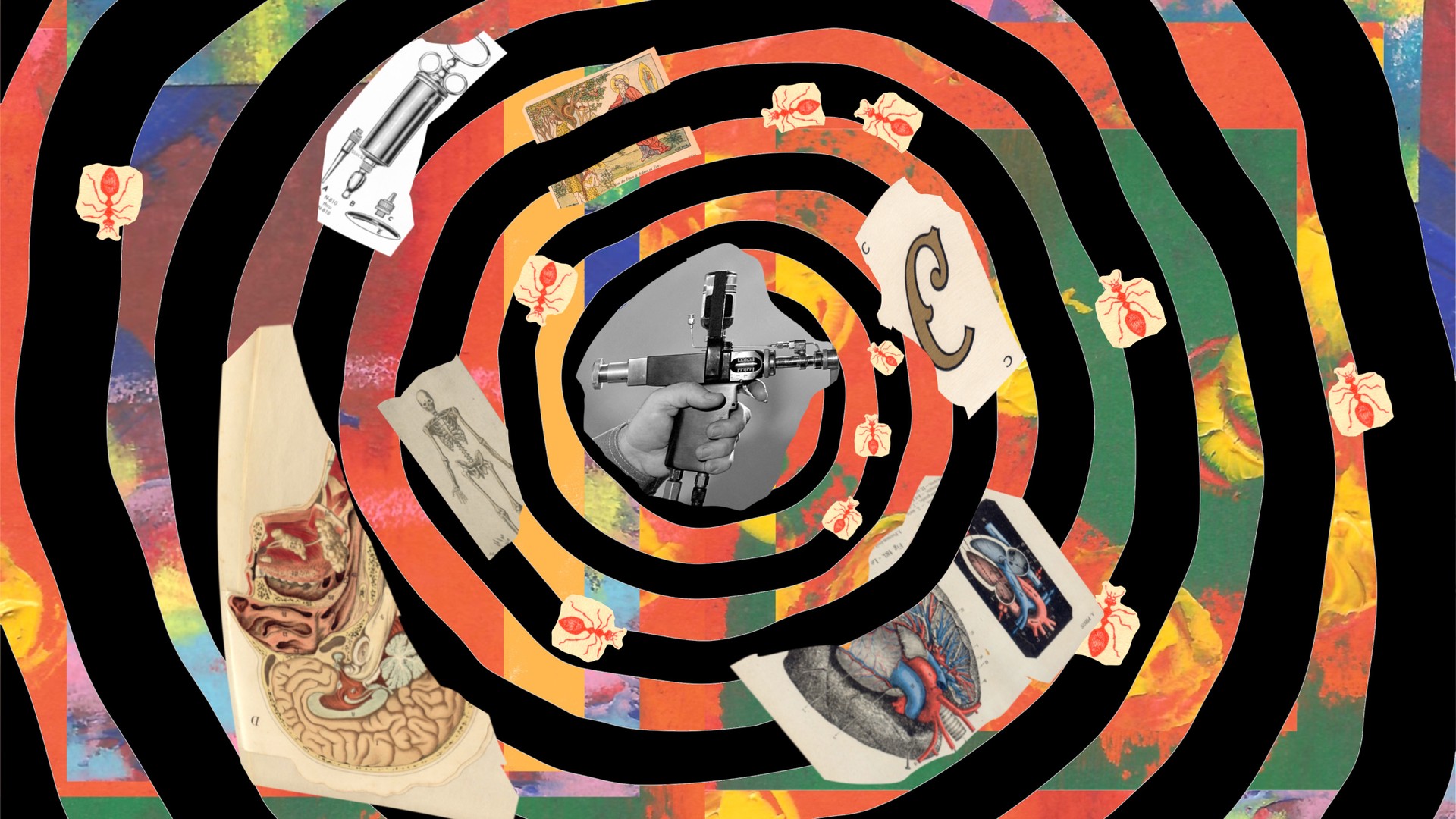
Army ants will sometimes walk in circles until they die. The workers navigate by smelling the pheromone trails of workers in front of them, while laying down pheromones for others to follow. If these trails accidentally loop back on themselves, the ants are trapped. They become a thick, swirling vortex of bodies that resembles a hurricane as viewed from space. They march endlessly until they’re felled by exhaustion or dehydration. The ants can sense no picture bigger than what’s immediately ahead. They have no coordinating force to guide them to safety. They are imprisoned by a wall of their own instincts. This phenomenon is called the death spiral. I can think of no better metaphor for the United States of America’s response to the COVID-19 pandemic.

The U.S. enters the ninth month of the pandemic with more than 6.3 million confirmed cases and more than 189,000 confirmed deaths. The toll has been enormous because the country presented the SARS-CoV-2 coronavirus with a smorgasbord of vulnerabilities to exploit. But the toll continues to be enormous—every day, the case count rises by around 40,000 and the death toll by around 800—because the country has consistently thought about the pandemic in the same unproductive ways.

Many Americans trusted intuition to help guide them through this disaster. They grabbed onto whatever solution was most prominent in the moment, and bounced from one (often false) hope to the next. They saw the actions that individual people were taking, and blamed and shamed their neighbors. They lapsed into magical thinking, and believed that the world would return to normal within months. Following these impulses was simpler than navigating a web of solutions, staring down broken systems, and accepting that the pandemic would rage for at least a year.

These conceptual errors were not egregious lies or conspiracy theories, but they were still dangerous. They manifested again and again, distorting the debate around whether to stay at home, wear masks, or open colleges. They prevented citizens from grasping the scope of the crisis and pushed leaders toward bad policies. And instead of overriding misleading intuitions with calm and considered communication, those leaders intensified them. The country is now trapped in an intuition nightmare: Like the spiraling ants, Americans are walled in by their own unhelpful instincts, which lead them round and round in self-destructive circles.

“The grand challenge now is, how can we adjust our thinking to match the problem before us?” says Lori Peek, a sociologist at the University of Colorado at Boulder who studies disasters. Here, then, are nine errors of intuition that still hamstring the U.S. pandemic response, and a glimpse at the future if they continue unchecked. The time to break free is now. Our pandemic summer is nearly over. Now come fall, the season of preparation, and winter, the season of survival. The U.S. must reset its mindset to accomplish both. Ant death spirals break only when enough workers accidentally blunder away, creating trails that lead the spiraling workers to safety. But humans don’t have to rely on luck; unlike ants, we have a capacity for introspection.

The spiral begins when people forget that controlling the pandemic means doing many things at once. The virus can spread before symptoms appear, and does so most easily through five P’s: people in prolonged, poorly ventilated, protection-free proximity. To stop that spread, this country could use measures that other nations did, to great effect: close nonessential businesses and spaces that allow crowds to congregate indoors; improve ventilation; encourage mask use; test widely to identify contagious people; trace their contacts; help them isolate themselves; and provide a social safety net so that people can protect others without sacrificing their livelihood. None of these other nations did everything, but all did enough things right—and did them simultaneously. By contrast, the U.S. engaged in …

1. A Serial Monogamy of Solutions

Stay-at-home orders dominated March. Masks were fiercely debated in April. Contact tracing took its turn in May. Ventilation is having its moment now. “It’s like we only have attention for only one thing at a time,” says Natalie Dean, a biostatistician at the University of Florida.

As often happens, people sought easy technological fixes for complex societal problems. For months, President Donald Trump touted hydroxychloroquine as a COVID-19 cure, even as rigorous studies showed that it isn’t one. In August, he switched his attention to convalescent plasma—the liquid fraction of a COVID-19 survivor’s blood that might contain virus-blocking antibodies. There’s still no clear evidence that this century-old approach can treat COVID-19 either, despite grossly misstated claims from FDA Commissioner Stephen Hahn (for which he later apologized). More generally, drugs might save some of the very sickest patients, as dexamethasone does, or shorten a hospital stay, as remdesivir does, but they are unlikely to offer outright cures. “It’s so reassuring to think that a magic-bullet treatment is out there and if we just wait, it’ll come and things will be normal,” Dean says.

Other strategies have merit, but are wrongly dismissed for being imperfect. In July, Carl Bergstrom, an epidemiologist and a sociologist of science at the University of Washington, argued that colleges cannot reopen safely without testing all students upon entry. “The gotcha question I’ve handled most from reporters since is: This school did entry testing, so why did they get an outbreak?” he says. It’s because such testing is necessary for a safe reopening, but not sufficient. “If you do it and screw everything else up, you’ll still have a big outbreak,” Bergstrom adds.

This brief attention span is understandable. Adherents of the scientific method are trained to isolate and change one variable at a time. Academics are walled off into different disciplines that rarely connect. Journalists constantly look for new stories, shifting attention to the next great idea. These factors prime the public to view solutions in isolation, which means imperfections become conflated with uselessness. For example, many critics of masks argued that they provide only partial protection against the virus, that they often don’t fit well, or that people wear them incorrectly. But some protection is clearly better than no protectionAs Dylan Morris of Princeton writes, “X won’t stop COVID on its own is not an argument against doing X.” Instead, it’s an argument for doing X along with other measures. Seat belts won’t prevent all fatal car crashes, but cars also come with airbags and crumple zones. “When we layer things, we give ourselves more wiggle room,” Dean says.

Several experts I’ve talked with have been asked: What now? The question assumes that the pandemic lingers because the U.S. simply hasn’t found the right solution yet. In fact, it lingers because the familiar solutions were never fully implemented. Despite claims from the White House, the U.S. is still not testing enough people. It still doesn’t have enough contact tracers. “We have the playbook, but I think there’s a confusion about what we’ve actually tried and what we’ve just talked about doing,” Dean says. A successful response “is never going to be one thing done perfectly. It’ll be a lot of different things done well enough.” That resilience disappears if we create…

2. False Dichotomies

A world of black and white is easier to handle than one awash with grays. But false dichotomies are dangerous. From the start, COVID-19 has been portrayed as a disease that mostly causes mild symptoms in people who quickly recover, and occasionally causes severe illness that leads to hospitalization and death. This two-sided caricature—severe or mild, sick or recovered—has erased the thousands of “long-haulers” who have endured months of debilitating symptoms at home with neither recognition nor care.

Meanwhile, as businesses closed and stay-at-home orders rolled out, “we presumed a trade-off between saving lives and saving the economy,” says Danielle Allen, a political scientist at Harvard. “That was foolishness of the most profound degree.” The two goals were actually aligned: Epidemiologists and economists largely agree that the economy cannot rebound while the pandemic is still raging. By treating the two as opposites, state leaders rushed to reopen, leading a barely contained virus to surge anew.  

Now, as winter looms and the pandemic continues, another dichotomy has emerged: enter another awful lockdown, or let the virus run free. This choice, too, is false. Public-health measures offer a middle road, and even “lockdowns” need not be as overbearing as they were in spring. A city could close higher-risk venues like bars and nightclubs while opening lower-risk ones like retail stores. There’s a “whole control panel of dials” on offer, but “it’s hard to have that conversation when people think of a light switch,” says Lindsay Wiley, a professor of public-health law at American University. “The term lockdown has done a lot of damage.” It exacerbated the false binary between shutting down and opening up, while offering …

3. The Comfort of Theatricality

Stay-at-home orders saved lives by curtailing COVID-19’s spread, and by giving hospitals some breathing room. But the orders were also meant to buy time for the nation to ramp up its public-health defenses. Instead, the White House treated months of physical distancing as a pandemic-ending strategy in itself. “We squandered that time in terms of scaling up testing and contact tracing, enacting policies to protect workers who get infected on the job, getting protective equipment to people in food-processing plants, finding places for people to isolate, offering paid sick leave … We still don’t have those things,” says Julia Marcus, an infectious-disease epidemiologist at Harvard Medical School and regular Atlantic contributor. The country is now facing the fall with many of the same problems that plagued it through the summer.

Showiness is often mistaken for effectiveness. The coronavirus mostly spreads through air rather than contaminated surfaces, but many businesses are nonetheless trying to scrub and bleach their way toward reopening. My colleague Derek Thompson calls this hygiene theater—dramatic moves that appear to offer safety without actually doing so. The same charge applies to temperature checks, which can’t detect the many COVID-19 patients who don’t have a fever. It also applies to the porous and inefficient travel bans that Trump and his allies still tout as policy successes. These tactics might do some good—let’s not conflate imperfect with useless—but they cause harm when they substitute for stronger measures. Theatricality breeds complacency. And by emphasizing solutions that can be easily seen, it exacerbated the American preference for …

4. Personal Blame Over Systemic Fixes

SARS-CoV-2 spread rapidly among America’s overstuffed prisons and understaffed nursing homes, in communities served by overstretched hospitals and underfunded public-health departments, and among Black, Latino, and Indigenous Americans who had been geographically and financially disconnected from health care by decades of racist policies. Without paid sick leave or a living wage, “essential workers” who earn a low, hourly income could not afford to quarantine themselves when they fell ill—and especially not if that would jeopardize the jobs to which their health care is tied. “The things I do to stay safe, they don’t have that as an option,” says Whitney Robinson, a social epidemiologist at the University of North Carolina at Chapel Hill.

But tattered social safety nets are less visible than crowded bars. Pushing for universal health care is harder than shaming an unmasked stranger. Fixing systemic problems is more difficult than spewing moralism, and Americans gravitated toward the latter. News outlets illustrated pandemic articles with (often distorted) photos of beaches, even though open-air spaces offer low-risk ways for people to enjoy themselves. Marcus attributes this tendency to America’s puritanical roots, which conflate pleasure with irresponsibility, and which prize shame over support. “The shaming gets codified into bad policy,” she says. Chicago fenced off a beach, and Honolulu closed beaches, parks, and hiking trails, while leaving riskier indoor businesses open.

Moralistic thinking jeopardizes health in two ways. First, people often oppose measures that reduce an individual’s risk—seat belts, condoms, HPV vaccines—because such protections might promote risky behavior. During the pandemic, some experts used such reasoning to question the value of masks, while the University of Michigan’s president argued that testing students widely would offer a “false sense of security.” These paternalistic false-assurance arguments are almost always false themselves. “There’s very little evidence for overcompensation to the point where safety measures do harm,” Bergstrom says.

Second, misplaced moralism can provide cover for bad policies. Many colleges started their semester with in-person teaching and inadequate testing, and are predictably dealing with large outbreaks. UNC Chapel Hill lasted just six days before reverting to remote classes. Administrators have chastised students for behaving irresponsibly, while taking no responsibility for setting them up to faila pattern that will likely continue through the fall as college clusters inevitably grow. “If you put 10,000 [students] in a small space, eating, sleeping, and socializing together, there’ll be an explosion of cases,” Robinson says. “I don’t know what [colleges] were expecting.” Perhaps they fell prey to …

5. The Normality Trap

In times of uncertainty and upheaval, “people crave a return to familiar, predictable rhythms,” says Monica Schoch-Spana, a medical anthropologist at the Johns Hopkins Center for Health Security. That pull is especially strong now because the pandemic’s toll is largely invisible. There’s nothing as dramatic as ruined buildings or lapping floodwater to hint that the world has changed. In some circles, returning to normal has been valorized as an act of defiance. That’s a reasonable stance when resisting terrorists, who seek to stoke fear, but a dangerous one when fighting a virus, which doesn’t care.

The powerful desire to re-create an old world can obscure the trade-offs necessary for surviving the new one. Keeping high-risk indoor businesses open, for example, helps the virus spread within a community, which makes reopening schools harder. “If schools are a priority, you have to put them ahead of something. What is that something?” says Bill Hanage, an epidemiologist at Harvard. “In an ideal world, they would be the last to close and the first to open, but in many communities, casinos, bars, and tattoo parlors opened before them.” A world with COVID-19 is fundamentally different from one without it, and the former simply cannot include all the trappings of the latter. Cherished summer rituals like camps and baseball games have already been lost; back-to-school traditions and Thanksgiving now hang in the balance. Change is hard to accept, which predisposes people to …

6. Magical Thinking

Back in April, Trump imagined the pandemic’s quick end: “Maybe this goes away with heat and light,” he said. From the start, he and others wondered if hot, humid weather might curb the spread of COVID-19, as it does other coronavirus diseases. Many experts countered that seasonal effects wouldn’t stop the new virus, which was already spreading in the tropics. But, fueled by shaky science and speculative stories, people widely latched on to seasonality as a possible savior, before the virus proved that it could thrive in the Arizona, Texas, and Florida summer.

This brand of magical thinking, in which some factor naturally defuses the pandemic, has become a convenient excuse for inaction. Recently, some commentators have argued that the pandemic will imminently fizzle out for two reasons. First, 20 to 50 percent of people have defensive T-cells that recognize the new coronavirus, because they were previously exposed to its milder, common-cold-causing cousins. Second, some modeling studies claim that herd immunity—whereby the virus struggles to find new hosts, because enough people are immune—could kick in when just 20 percent of the population has been infected.

Neither claim is implausible, but neither should be grounds for complacency. No one yet knows if the “cross-reactive” T-cells actually protect against COVID-19, and even if they do, they’re unlikely to stop people from getting infected. Herd immunity, meanwhile, is not a perfect barrier. Even if the low thresholds are correct, a fast-growing and uncontrolled outbreak will still shoot past themPursuing this strategy will mean that, in the winter, many parts of the U.S. may suffer what New York City endured in the spring: thousands of deaths and an untold number of lingering disabilities. That alone should be an argument against …

7. The Complacency of Inexperience

When illness is averted and lives are spared, “nothing happens and all you have is the miracle of a normal, healthy day,” says Howard Koh, a public-health professor at Harvard. “People take that for granted.” Public-health departments are chronically underfunded because the suffering they prevent is invisible. Pandemic preparations are deprioritized in the peaceful years between outbreaks. Even now, many people who have been spared the ravages of COVID-19 argue that the disease wasn’t a big deal, or associate their woes with preventive measures. But the problem is still the disease those measures prevented: The economy is still hurtingmental-health problems are growing, and educational futures have been curtailed, not because of some fearmongering overreaction, but because an uncontrolled pandemic is still afoot.

If anything, the U.S. did not react swiftly or strongly enough. Nations that had previously dealt with emerging viral epidemics, including several in East Asia and sub-Saharan Africa, were quick to take the new coronavirus seriously. By contrast, America’s lack of similar firsthand experience, combined with its sense of exceptionalism, might have contributed to its initial sloppiness. “One of my colleagues went to Rwanda in February, and as soon as he hit the airport, they asked about symptoms, checked his temperature, and took his phone number,” says Abraar Karan, an internist at Brigham and Women’s Hospital and Harvard Medical School. “In the U.S., I flew in July, and walked out of the airport, no questions asked.”

Even when the virus began spreading within the U.S., places that weren’t initially pummeled seemed to forget that viruses spread. “In April, I was seeing COVID patients in the ER every day,” Karan says. “In Texas, I had friends saying, ‘No one believes it here because we have no cases.’ In L.A., fellow physicians said, ‘Are you sure this is worse than the flu? We’re not seeing anything.’” Three months later, Texas and California saw COVID-19 all too closely. The tendency to ignore threats until they directly affect us has consigned the U.S. to …

8. A Reactive Rut

In March, Mike Ryan at the World Health Organization advised, “Be fast, have no regrets … The virus will always get you if you don’t move quickly.” The U.S. failed to heed that warning, and has repeatedly found itself several steps behind the coronavirus. That’s partly because exponential growth is counterintuitive, so “we don’t understand that things look fine until right before they’re very not fine,” says Beth Redbird, a sociologist at Northwestern. It’s also because the coronavirus spreads quickly but is slow to reveal itself: It can take a month for infections to lead to symptoms, for symptoms to warrant tests and hospitalizations, and for enough sick people to produce a noticeable spike. Pandemic data are like the light of distant stars, recording past events instead of present ones. This lag separates actions from their consequences by enough time to break our intuition for cause and effect. Policy makers end up acting only when it’s too late. Predictable surges get falsely cast as unexpected surprises.

This reactive rut also precludes long-term planning. In April, Michael Osterholm, an epidemiologist at the University of Minnesota, told me that “people haven’t understood that [the pandemic] isn’t about the next couple of weeks [but] about the next two years.” Leaders should have taken the long view then. “We should have been thinking about what it would take to ensure schools open in the fall, and prevent the long-term harms of lost children’s development,” Redbird says. Instead, we started working our way through a serial monogamy of solutions, and, like spiraling army ants, marched forward with no sense of the future beyond the next few footsteps.

These errors crop up in all disasters. But the COVID-19 pandemic has special qualities that have exacerbated them. The virus moved quickly enough to upend the status quo in a few months, deepening the allure of the hastily abandoned past. It also moved slowly enough to sweep the U.S. in a patchwork fashion, allowing as-yet-untouched communities to drop their guard. The pandemic grew huge in scope, entangling every aspect of society, and maxing out our capacity to deal with complexity. “People struggle to make rational decisions when they cannot see all the cogs,” says Njoki Mwarumba, an emergency-management professor at the University of Nebraska at Omaha. Full of fear and anxiety, people furiously searched for more information, but because the virus is so new, they instead spiraled into more confusion and uncertainty. And tragically, all of this happened during the presidency of Donald Trump.

Trump embodied and amplified America’s intuition death spiral. Instead of rolling out a detailed, coordinated plan to control the pandemic, he ricocheted from one overhyped cure-all to another, while relying on theatrics such as travel bans. He ignored inequities and systemic failures in favor of blaming China, the WHO, governors, Anthony Fauci, and Barack Obama. He widened the false dichotomy between lockdowns and reopening by regularly tweeting in favor of the latter. He and his allies appealed to magical thinking and steered the U.S. straight into the normality trap by frequently lying that the virus would go away, that the pandemic was ending, that new waves weren’t happening, and that rising case numbers were solely due to increased testing. They have started talking about COVID-19 in the past tense as cases surge in the Midwest.

“It’s like mass gaslighting,” says Martha Lincoln, a medical anthropologist at San Francisco State University. “We were put in a situation where better solutions were closed off but a lot of people had that fact sneak up on them. In the absence of a robust federal response, we’re all left washing our hands and hoping for the best, which makes us more susceptible to magical thinking and individual-level fixes.” And if those fixes never come, “I think people are going to harden into a fatalistic sense that we have to accept whatever the risks are to continue with our everyday lives.”

That might, indeed, be Trump’s next solution. The Washington Post reports that Trump’s new adviser—the neuroradiologist Scott Atlas—is pushing a strategy that lets the virus rip through the non-elderly population in a bid to reach herd immunity. This policy was folly for Sweden, which is nowhere near herd immunity, had one of the world’s highest COVID-19 death rates, and has a regretful state epidemiologist. Although the White House has denied that a formal herd-immunity policy exists, the Centers for Disease Control and Prevention recently changed its guidance to say that asymptomatic people “do not necessarily need a test” even after close contact with an infected personThis change makes no sense: People can still spread the virus before showing symptoms. By effectively recommending less testing, as Trump has specifically called for, the nation’s top public-health agency is depriving the U.S. of the data it needs to resist intuitive errors. “When there’s a refusal to take in the big picture, we are stuck,” Mwarumba says.

The pandemic is now in its ninth month. Uncertainties abound as fall and winter loom. In much of the country, colder weather will gradually pack people into indoor spaces, where the coronavirus more readily spreads. Winter also typically heralds the arrival of the flu and other respiratory viruses, and although the Southern Hemisphere enjoyed an unusually mild flu season, that’s “because of the severe precautions they were taking against COVID-19,” says Eleanor Murray, an epidemiologist at Boston University. “It’s not clear to me that our precautions will be successful enough to also prevent the flu.”

Schools are reopening, which will shape the path of the pandemic in still-uncertain ways. Universities are more predictable: Thanks to magical thinking and misplaced moralism, the U.S. already has at least 51,000 confirmed infections in more than 1,000 colleges across every state. These (underestimated) numbers will grow, because only 20 percent of colleges are doing regular testing, while almost half are not testing at all. As more are forced to stop in-person teaching, students will be sent back to their communities with COVID-19 in tow. “I expect this will blow up outbreaks in places that never had outbreaks, or in places that had outbreaks under control,” Murray says. Further spikes will likely occur after Thanksgiving and Christmas, as people who yearn to return to normal (or who think that the country overreacted) travel to see their family. Despite that risk, the CDC recently dropped its recommendation that out-of-state travelers should quarantine themselves for 14 days.

But many of the experts I spoke with thought it unlikely that “we’ll have cities going full New York,” as Bergstrom puts it. Doctors are getting better at treating the disease. States like Massachusetts, New York, and New Jersey have managed to avoid new surges over the summer, showing that local leadership can at least partly compensate for federal laxity. A new generation of cheap, rapid, paper-based tests will hit the market and make it easier to work out who is contagious. And despite the spiral of bad intuitions, many Americans are holding the line: Mask use and support for physical distancing are still high, according to Redbird, who has been tracking pandemic-related attitudes since March. “My feeling is that while things are going to get worse, I’m not sure they’ll be catastrophic, because of situational awareness,” Bill Hanage says.

Meanwhile, Trump seems to be teeing up a vaccine announcement in late October, shortly before the November 3 election. Moncef Slaoui, the scientific head of Operation Warp Speed, told NPR that it’s “extremely unlikely” a vaccine will be ready by then, and many scientists are concerned that the FDA will be pressured into approving a product that hasn’t been adequately tested, as Russia and China already have. Many Americans share this concern. A safe and effective vaccine could finally bring the pandemic under control, but its arrival will also test America’s ability to resist the intuitive errors that have trapped it so far. Vaccination has long been portrayed as the ultimate biomedical silver bullet, separating an era when masks and social distancing mattered from a world where normality has returned. This is yet another false dichotomy. “Everyone’s imagining this moment when all of a sudden, it’s all over, and they can go on vacation,” Natalie Dean says. “But the reality is going to be messier.”

This problem is not unique to COVID-19. It’s more compelling to hope that drug-resistant bacteria can be beaten with viruses than to stem the overuse of antibiotics, to hack the climate than to curb greenhouse-gas emissions, or to invest in a doomed oceanic plastic-catcher than to reduce the production of waste. Throughout its entire history, and more than any other nation, the U.S. has espoused “an almost blind faith in the power of technology as panacea,” writes the historian Howard Segal.* Instead of solving social problems, the U.S. uses techno-fixes to bypass them, plastering the wounds instead of removing the source of injury—and that’s if people even accept the solution on offer.

A third of Americans already say they would refuse a vaccine, whether because of existing anti-vaccine attitudes or more reasonable concerns about a rushed development process. Those who get the shot are unlikely to be fully protected; the FDA is prepared to approve a vaccine that’s at least 50 percent effective—a level comparable to current flu shots. An imperfect vaccine will still be useful. The risk is that the government goes all-in on this one theatrical countermeasure, without addressing the systemic problems that made the U.S. so vulnerable, or investing in the testing and tracing strategies that will still be necessary. “We’re still going to need those other things,” Dean says.

Between these reasons and the time needed for manufacturing and distribution, the pandemic is likely to drag on for months after a vaccine is approved. Already, the event is exacting a psychological toll that’s unlike the trauma of a hurricane or fire. “It’s not the type of disaster that Americans specifically are used to dealing with,” says Samantha Montano of Massachusetts Maritime Academy, who studies disasters. “Famines and complex humanitarian crises are closer approximations.” Health experts are burning outLong-haulers are struggling to find treatments or support. But many Americans are turning away from the pandemic. “People have stopped watching news about it as much, or talking to friends about it,” Redbird says. “I think we’re all exhausted.” Optimistically, this might mean that people are becoming less anxious and more resilient. More worryingly, it could also mean they are becoming inured to tragedy.

The most accurate model to date predicts that the U.S. will head into November with 220,000 confirmed deaths. More than 1,000 health-care workers have died. One in every 1,125 Black Americans has died, along with similarly disproportionate numbers of Indigenous people, Pacific Islanders, and Latinos. And yet, a recent poll found that 57 percent of Republican voters and 33 percent of independents think the number of deaths is acceptable. “In order for us to mobilize around a social problem, we all have to agree that it’s a problem,” Lori Peek says. “It’s shocking that we haven’t, because you really would have thought that with a pandemic it would be easy.” This is the final and perhaps most costly intuitive error …

9. The Habituation of Horror

The U.S. might stop treating the pandemic as the emergency that it is. Daily tragedy might become ambient noise. The desire for normality might render the unthinkable normal. Like poverty and racismschool shootings and police brutalitymass incarceration and sexual harassmentwidespread extinctions and changing climate, COVID-19 might become yet another unacceptable thing that America comes to accept.


Why Your Hand Sanitizer May Be Ineffective Or Tainted By Cancer-Causing Chemicals

https://www.forbes.com/sites/ericmack/2020/09/10/why-your-hand-sanitizer-may-be-ineffective-or-tainted-by-cancer-causing-chemicals/?utm_source=newsletter&utm_medium=email&utm_campaign=coronavirus&cdlcid=5d2c97df953109375e4d8b68#115d2e346241

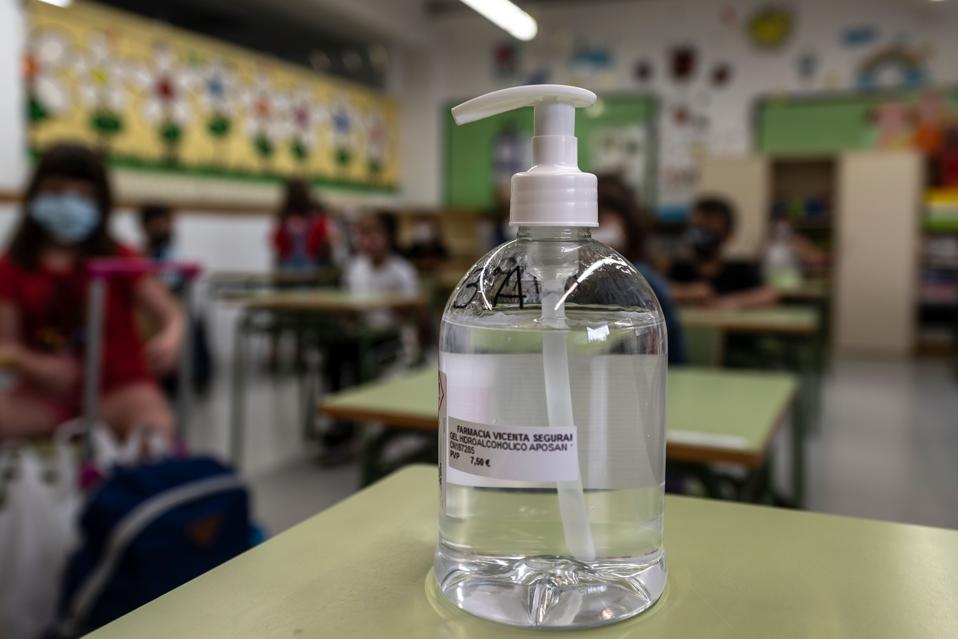
Since the start of the coronavirus pandemic, hand sanitizers have become a sought-after staple of life in a Covid-19-afflicted world. But supply chains have been turned upside down in our new normal, and some sketchy suppliers have at times stepped in to fill the vacuum. The result for consumers could be hand sanitizer that doesn’t work as advertised and might even be filled with impurities that can cause cancer.

When the pandemic set in during the spring, New Mexico’s Rolling Still Distillery began switching gears from making its trademark green chile vodka and other spirits to producing hand sanitizer for sale and free distribution during the early days of lockdown.

In the middle of May, Rolling Still founder Dan Irion (disclosure: Irion and I have lived in the same small town for years and occasionally hang out socially) began to receive a number of emails from bulk ethanol producers, offering up the alcohol for sanitizer production at prices as low as $1.60 a gallon, quite a deal over the $9 per gallon or more Rolling Still normally pays for its key ingredient.

To take advantage of the steep discount, Rolling Still would need to come up with $60,000 and take possession of a huge tank of the stuff.

Irion balked at the offer after he couldn’t get a straight answer about the quality of the ethanol. He asked one of the suppliers if organic alcohol was available and was told simply: “It’s all good. Don’t worry about it.”

He called Brian Coutu from Rolling Still’s regular alcohol supplier, Greenfield Global, who warned him away from what he says is fuel-grade ethanol potentially loaded with chemicals that are known to cause cancer.

Coutu knew this because Greenfield was getting the same cold calls Irion received, but as a large corporation, it could easily test samples.

“They send us a sample and it’s just God awful…it’s got acetaldehyde and benzene and all kind of nasty stuff in it; it’s not pure,” Coutu told me over the phone. “What (fuel producers) are trying to do is dump it off to these companies that run it through charcoal and try to do a million other things to make it USP grade (safe for food, drug or medicinal use), which it’s still not.”

Irion and Coutu both told me that the cold calls had largely stopped by the end of June. The price of ethanol cratered at the end of March as the pandemic took hold and fuel demand dropped. It stayed low through May before edging back near pre-pandemic levels at the end of June.

“Because of the fast and furious nature of the hand sanitizer industry at that time, we might have done it,” Irion says. “I’m sure there are others who saw this as a way to do something good and make money.”

And this is the big question for right now. How much of the sanitizer that made it to warehouses, store shelves and ultimately into our homes, cars and hands was produced from industrial fuel-grade ingredients rather than safe medical or food grade alcohol?

“You’re seeing less pure forms get into the market because there is a shortage of ethanol,” says Mike Sandoval, President and Chief Operating Officer of Santé Laboratories. “We see tert-butyl impurities, we see methanol, we see benzene in many of the hand sanitizers we test… We’ve seen some tequila grade ethanol that when you open the bottle it smells terrible, unless you like tequila… we’re seeing a lack of transparency in this space.”


Not just distilleries

Santé Labs works primarily in the hemp and CBD markets, providing quality testing and other services. CBD manufacturers can work with large amounts of ethanol and also turned to making hand sanitizers in the spring.

Sandoval says he began seeing CBD manufacturers and related companies using “untraditional sources” of ethanol from places like Mexico, Guatemala, South America and the fuel industry. The raw alcohol often came with a certificate of authenticity claiming 100 percent purity, but in reality it might actually contain chemical impurities and a significant amount of water.

“They come from a price sensitive market where no one wants to pay for high quality tests… They’re not used to operating in sophisticated manufacturing where you are required to test incoming raw material. For example the ethanol or isopropyl alcohol that goes in a hand sanitizer. You’re supposed to test (according to Food and Drug Administration rules) the purity of that ingredient before you formulate it, and that’s just not happening.”

For its part, the FDA has recently made public guidance on a testing method to detect impurities in hand sanitizers like those seen by Greenfield and Sante Labs.

“The agency’s investigation of contaminated hand sanitizers is ongoing,” the FDA said in an email. “Producing, importing and distributing toxic hand sanitizers poses a serious threat to the public and will not be tolerated.”

The takeaway from all this is that the ethanol market for manufacturers new to the production of hand sanitizer was flooded with sketchy raw alcohol that could be diluted or tainted with carcinogens. If that raw material isn’t tested on the front end, the resulting final product can come out with those impurities and an alcohol concentration that doesn’t meet the claims stated on the label.

The FDA maintains a list of hand sanitizers to avoid because they’ve been found to contain dangerous amounts of methanol, or an insufficient amount of its actual sanitizing ingredient, such as ethanol or isopropyl alcohol. However, the FDA’s enforcement powers are limited. A new waiver program created in response to the pandemic makes it easier for manufacturers to get around substantiating their label claims.

“Nine out of ten people are not meeting the label claim,” Sandoval says. “So most of the hand sanitizer you’re using from stores – and I even saw one from Wal-Mart that was a big brand… their hand sanitizers were crystallizing and turning green. I guarantee that they’re at 50 percent ethanol when they need to be at 70 percent.”

This brings up yet another concern, which is the shortage of proper plastic bottles and containers for sanitizer. Sandoval suspects that some manufacturers may have resorted to using the wrong type of containers, which then react with the alcohol, leaching chemicals into the sanitizer and turning its color.

“This entire supply chain is upside down because there’s a shortage of everything.”


Covering the stink of subpar sanitizer

Coutu at Greenfield Global says he’s aware of companies that have purchased their alcohol from unconventional sources, lured by prices as much as 90 percent lower than what Greenfield would charge.

The FDA relaxed the allowable limit of impurities like acetaldehyde and benzene that can make it into hand sanitizer, but Coutu says the limits still only allow a very small amount, whereas the samples Greenfield was testing had levels of contamination ten to 100 times higher than the new limits.

“And the odor on it is just not acceptable. It smells like burnt tequila… there’s some pretty nasty stuff out there and it’s dangerous.”

New services have even popped up this year, with fragrance manufacturers offering up products to help reduce the bad odor of some ethanol-based hand sanitizers.

Irion feels like he dodged a bullet by not jumping at the deeply discounted supply of ethanol others may not have been able to resist.

Rolling Still continued buying the organic alcohol it uses in both its spirits and sanitizer. It’s now ramping up production of sanitizer, which Irion says has no need for added fragrances to mask any ethanol odors, but some local osha and sage is infused to lighten the scent.

The alcohol used is also distilled five times just to make sure all impurities are removed.


Fauci Says It Will Be ‘Well Into 2021’ Before U.S. Returns To Normal From Coronavirus

https://www.forbes.com/sites/sarahhansen/2020/09/11/fauci-says-it-will-be-well-into-2021-before-us-returns-to-normal-from-coronavirus/#4eb5a0862f7c

Dr Anthony Fauci disagrees with Trump over the coronavirus says US has not  turned the final corner | Daily Mail Online

TOPLINE

Dr. Anthony Fauci, the country’s top infectious disease official, told MSNBC on Friday that because of the timeline for manufacturing and distributing a coronavirus vaccine, it will be well into next year before American life returns to normal.


KEY FACTS

President Trump suggested this week that a vaccine will be ready in time for November’s election, but Fauci has said such an accelerated timeline is not realistic. 

Fauci said Friday it’s possible that a vaccine could be available by the end of this year or early 2021.

Manufacturing the vaccine in large quantities and distributing it to the majority of the population will take significantly longer, however, meaning that returning to “normal” life—including indoor and enclosed activities like movie theaters—won’t happen until the middle or end of next year. 

Fauci on Friday also refuted Trump’s comments Thursday that the U.S. is “rounding the corner” on coronavirus, characterizing the current data on the virus, which shows about 40,000 new cases and 1,000 deaths a day, as “disturbing.”

During a discussion with doctors from Harvard Medical School on Thursday, Fauci said the U.S. needs to prepare to “hunker down” this fall and winter and warned against looking only at the “rosy side of things,” CNBC reported


CRUCIAL QUOTE

“If you’re talking about getting back to a degree of normality, which resembles where we were prior to COVID, it’s gonna be well into 2021,” Fauci said. “Maybe even towards the end of 2021.”


KEY BACKGROUND

According to a New York Times tracker, there are 38 coronavirus vaccine candidates being tested on humans in clinical trials. This week, pharma giant AstraZeneca announced it had paused a late-stage vaccine trial after a participant developed what is suspected to be an adverse reaction to the drug. The heads of nine pharma companies have also pledged that they would not submit their coronavirus vaccine candidates to regulators until they are shown to be safe and effective in large critical trials. 


Nearly half of Americans hesitant to get a COVID vaccine

https://mailchi.mp/365734463200/the-weekly-gist-september-11-2020?e=d1e747d2d8

The race for a COVID-19 vaccine is well underway, with dozens of vaccine candidates being tested worldwide. Because vaccines typically take a decade to get to market, the pace of Operation Warp Speed—which aims to deliver a COVID vaccine by January 2021—has raised concerns that the government will sacrifice vaccine safety and efficacy for speed.

Shown in the graphic above, a survey conducted by Jarrard Phillips Cate & Hancock and Public Opinion Strategies found nearly half of American adults are on the fence about getting a COVID-19 vaccine, with over 20 percent saying they are unlikely to get one at all.

This hesitancy is greater among both female and Black respondents—with the latter doubly concerning given that Blacks have been disproportionately impacted by the disease. The top reasons given for skepticism include concerns about side effects (47 percent) and the risk of becoming infected by the vaccine (22 percent).

A related survey from STAT and the Harris Poll found that 78 percent of Americans worry the vaccination approval process is being driven more by politics than science.

Whom do consumers trust for information? Their doctors. Physicians must be prepared to answer questions about how they have evaluated a vaccine, why they believe it to be safe and effective, and whether they have chosen to take it themselves.

As providers prepare to deliver millions of vaccine doses once one is approved and available, leveraging the trust inherent in physician-patient relationships will be essential, especially among vaccine-hesitant populations.


Major coronavirus vaccine trial is paused to investigate unexplained illness

https://www.washingtonpost.com/health/2020/09/09/astrazeneca-covid-vaccine-safety-trial/?utm_campaign=wp_main&utm_medium=social&utm_source=facebook&fbclid=IwAR2gomNZclHdUubRHKRqa3u5a6b06VEM2-wwNYFHitq9pK8_5ya8XflTFI0

The halt shows that safety protections are working, experts say

A major coronavirus vaccine trial is on hold as an independent committee investigates whether a case of spinal inflammation in a single British participant is linked to the vaccine — a step that several experts said is a sign of the protections in place to ensure the safety of products ultimately used in millions of healthy people.

The hold on human testing of the vaccine candidate being developed by the pharmaceutical company AstraZeneca and the University of Oxford was confirmed by the company in a statement Tuesday evening, calling it a “routine action.”

“The announcement yesterday about the AstraZeneca vaccine is a concrete example of how even a single case of an unexpected illness is sufficient to require a clinical hold for the trial in multiple counties,” said Francis Collins, director of the National Institutes of Health, at a Senate hearing.

The announcement comes as scientists and a growing numbers of Americans express concern about the politicization of the vaccine approval process during a presidential election campaign. President Trump has made approval of a coronavirus vaccine a cornerstone of his campaign and repeatedly said it could be greenlighted before the Nov. 3 election.

But Collins and other scientists pointed to AstraZeneca’s decision as evidence that scientists, rather than politicians, are running the process. The experts said that it was hard to estimate how long the investigation would take, but that the pause was a good sign and not unexpected in trials of this size and scale, where many thousands of people are closely followed.

Collins testified that while minimal information is available about the adverse event, he has heard it described as transverse myelitis, rare inflammation of the spinal cord that has been associated with vaccinations, but has also been documented in a few cases of covid-19 and can occur in immune system disorders such as multiple sclerosis.

A study in the journal Lupus reported that between 1970 and 2009, there were 37 cases of transverse myelitis associated with various vaccines.

“The event is being investigated by an independent committee, and it is too early to conclude the specific diagnosis,” said AstraZeneca spokesman Brendan McEvoy.

Serious adverse events are closely monitored in clinical trials to determine whether they are likely to be linked to the drug or vaccine being administered. In trials with many thousands of people, sicknesses are likely to occur, and they may have no connection to the drug or vaccine being tested.

Collins also said he was not worried that the delay or even possible elimination of the AstraZeneca vaccine candidate would limit the eventual availability of vaccines to Americans.

“The reason we’re investing not in one, but in six different vaccines is because of the expectation that they won’t all work,” he told members of the Senate Health, Education, Labor and Pensions Committee.

“To have a clinical hold as has been placed on AstraZeneca as of yesterday because of a single serious adverse effect is not at all unprecedented,” Collins said.

He said that if after a thorough investigation, the adverse reaction is traced back to the vaccine candidate, then all the doses of that vaccine being manufactured would be thrown away. The United States has committed up to $1.2 billion to AstraZeneca to support development of the vaccine and to purchase 300 million doses.

A hold on a trial is not common, but is also not cause for alarm — it is a sign the system in place to protect participants is working, said Susan Ellenberg, a biostatistician at the University of Pennsylvania who has served on the independent data safety monitoring boards that investigate such incidents.

“The process is when something unusual develops, they might want to put a hold on things — and given the incredible attention that’s being given to these vaccines, and the recognition of how fast we’re trying to go, I think people are bending over backwards to show safety is really the top priority,” Ellenberg said.

This is the second pause for the trial. An information sheet for study participants from July noted that the trial had been put on hold after a participant developed neurological symptoms, but those were determined to be caused by an “unrelated neurological illness.”

“I think the company is being prudent to stop and look and to determine whether this severe adverse event, whatever it is, was a coincidence that followed vaccination, or was caused by the vaccine,” said Paul Offit, director of the Vaccine Education Center at Children’s Hospital of Philadelphia. “The vaccine is designed to prevent covid-19, not everything else” that adults might develop.

The pause came a day after the leaders of nine drug companies signed a highly unusual pledge that they would be guided by science and prioritize safety in their effort to develop a coronavirus vaccine, amid worries that political pressure could lead to an unsafe or ineffective vaccine to be used in millions of healthy people.

“This temporary pause is living proof that we follow those principles while a single event at one of our trial sites is assessed by a committee of independent experts,” Pascal Soriot, the AstraZeneca chief executive, said in a statement. “We will be guided by this committee as to when the trials could restart, so that we can continue our work at the earliest opportunity to provide this vaccine broadly, equitably and at no profit during this pandemic.”

“Even if it turns out this is causally related to the vaccine, that doesn’t automatically mean this is something you might not carry on,” said Naor Bar-Zeev, deputy director of the International Vaccine Access Center at Johns Hopkins Bloomberg School of Public Health. “The benefit versus risk needs to be evaluated with the likelihood of each of these things and is clearly context dependent. If there was no covid in the world, you’d not want to take a vaccine.”

But Collins underscored at the hearing that the safety review and pause was just another reason that the United States was spreading its bets so widely, investing in six different vaccines. The United Kingdom has also made purchasing agreements for six vaccines in the final stages of human testing.

At a news conference at 10 Downing Street on Wednesday, United Kingdom chief scientific adviser Patrick Vallance said it was not unusual for a large Phase 3 trial test of effectiveness and safety of vaccines to be paused.

This is precisely why a Phase 3 trial is undertaken, he said.

“A pause is obviously not good,” Vallance said. “But it is sensible to look closely to see what is going on.”


What makes a Bad Vaccine?

A Covid-19 vaccine, amazingly, is close. Why am I so worried?

A mere six months after identifying the SARS-CoV-2 virus as the cause of Covid-19, scientists are on the precipice of a having a vaccine to fight it. Moderna and the National Institutes of Health recently announced the start of a Phase 3 clinical trial, joining several others in a constructive rivalry that could save millions of lives.

It’s a truly impressive a feat and a testament to the power of basic and applied medical sciences. Under normal circumstances, vaccine approvals are measured in decades. Milestones that once took months or years have been achieved in days or weeks. If these efforts are successful, the Covid-19 vaccine could take a place alongside the Apollo missions as one of history’s greatest scientific achievements.

I’m optimistic. And yet, as someone who studies drug development, I want to temper expectations with a dose of realism and perhaps a bit of angst. Behind the proud declarations, many science and medical professionals have been whispering concerns. These whispers have escalated into a murmur. It’s time to cry them loudly:

Hey, Food and Drug Administration: Don’t be rash! Premature approval of a sub-standard Covid-19 vaccine could have dire implications, and not just for this pandemic. It could harm public health for years, if not generations, to come.

Unfortunately, elements now in place make such a disastrous outcome not only possible but in fact quite likely. Specifically, the FDA and its staff of chronically overworked and underappreciated regulators will face enormous public and political pressure to approve a vaccine. Whether or not one worries about an “October surprise” aimed at the upcoming election, regulators will be pressed hard. Some will stand firm. Some may resign in protest. But others could break and allow a bad vaccine to be released.

What makes a “bad vaccine”? Insufficient protection against the disease it is designed for, unwanted side effects, or some combination of the two. If an approved Covid-19 vaccine turns out to be ineffective, this could unintentionally promote wider spread of the disease by individuals who presume they were protected from it. Likewise, a negative experience with one vaccine might discourage the use of other vaccines that are far more safe and effective, whether they are for Covid-19 or other vaccine-preventable diseases.

Some things take time. Under normal circumstances, ensuring that a vaccine’s effects are safe and durable requires years of study and monitoring. And there is some evidence that natural immune responses to SARS-CoV-2 infection could be transient, making sustained investigation all the more necessary. A merely short-term effect could encourage vaccinated individuals to resume risky behaviors, which would all but guarantee that the epidemic endures. And if unintended side effects turn out to include, for instance, chronic inflammatory or autoimmune disease, a bad vaccine could impart lifelong damage.

But wait, there’s worse! A bad Covid-19 vaccine could further undermine confidence in the many safe, reliable vaccines already in our public health arsenal. Vaccine skepticism and anti-science bias, propagated by B-list celebrities and Russian troll farms, have been gaining strength all year. Combined with disappointing Covid-19 outcomes, such malign forces could facilitate the reemergence of once-vanquished foes — polio, measles, mumps, rubella, diphtheria, whooping cough, and tetanus — that once killed multitudes of children each year.

These are enormous risks. Placing all of our bets on a small set of untried vaccine technologies would be gobsmackingly foolish. Yet this is exactly what we are now doing. Most of the high-profile names capturing headlines are pursuing comparatively minor variations on a theme of genetic vaccines (those delivered via DNA or RNA). If one approach happens to work, the odds are higher the others will work as well. Disappointing results from one candidate, though, might presage failure across the board.

Rather than investing in a balanced portfolio of vaccines with different approaches — not to mention different therapies, devices, and diagnostics for treating Covid-19 — too many observers, too many companies, and too many governmental officials seem to be narrowly focused on hopes for a “savior” vaccine. Were that savior to fail, our national morale, already low, could plummet even further.

Don’t get me wrong. I, along with millions of Americans, want a Covid-19 vaccine. But we deserve one that’s been proven to be safe and effective.

It’s not too late to take a deep breath and devise a strategy to balance short- and long-term goals, including vaccination, improved diagnostics, and existing and novel treatments. We must support the FDA and hope that its scientists and physicians retain the strength and conviction to resist approving a substandard vaccine.

For encouragement, we should look to Frances Oldham Kelsey, a veritable patron saint of the FDA. In 1960, during her first month working for the agency, Kelsey was asked to approve a sedative called Kevadon, which had the potential to generate billions in revenue. Despite enormous pressure, Kelsey spotted a risk for toxicity and dug in her heels. She refused to rubber stamp the approval. Her actions saved the lives of countless babies. Kevadon, better known as thalidomide, proved to be one of the most dangerous and disfiguring drugs in history.

Kelsey passed away in 2015 at the age of 101. We must pray that her spirit inspires a new generation of FDA leaders with the courage to say, “No.”


COVID-related controversy and hope amid a week of politics

https://mailchi.mp/95e826d2e3bc/the-weekly-gist-august-28-2020?e=d1e747d2d8

Democracy vs. disease: the role of freedom in facing pandemics | University  of Nevada, Reno

Week two of the 2020 Pre-Recorded Virtual Presidential Convention-thon wrapped up Thursday night, albeit with a decidedly less Zoom-Webex-FaceTimey feel for this week’s Republicans compared to last week’s Democrats. As delegates and VIPs sat cheek-by-jowl at several in-person events, with scarce masking and plenty of loud cheering, the viewer was left hoping that a rigorous attendee COVID testing protocol was being used.

That hope may have been dashed by a significant change to testing guidelines from the Centers for Disease Control and Prevention (CDC), which reversed course on Monday by recommending asymptomatic people who have been exposed to the coronavirus should no longer be tested.

The altered guidance drew sharp rebukes from doctors and infectious disease experts, who worried that it would undermine the ability to track the spread of the virus, which has now claimed more than 181,000 American lives. The flap over testing guidelines came at the same time as Food and Drug Administration (FDA) commissioner Stephen Hahn was forced to apologize for misleading claims he made over the weekend about the efficacy of convalescent plasma in treating COVID patients. In announcing an Emergency Use Authorization (EUA) for the treatment, Hahn dramatically overstated evidence supporting the lifesaving ability of the therapy. The missteps by CDC and FDA officials were undoubtedly an unwelcome distraction for the Trump administration, overshadowing the president’s bold promise in his acceptance speech that a COVID vaccine would be available before the end of the year.

There was hopeful news on the COVID front this week as well. In what was quickly hailed as a “game changer” in solving the nation’s faltering ability to deliver timely test results, Abbott Laboratories was granted its own EUA for a 15-minute, $5 rapid antigen test, which does not require laboratory analysis. The company plans to produce tens of millions of the new BinaxNOW test kits in the next month, and the US government has agreed to acquire nearly all of the 150M tests the company will produce by the end of the year, at a $760M purchase price. Although some antigen tests have been cited for accuracy problems, the FDA said that the new Abbott test delivers correct positive tests 97.1 percent of the time, and correct negative tests 98.5 percent of the time.

Rapid, reliable point-of-care testing could allow for safer return to schools, workplaces, and public gatherings, and if successfully deployed will be an essential tool in managing the impact of the virus until effective vaccines are fully developed, launched, and administered. A genuine ray of hope as the nation looks ahead to the fall and winter.

US coronavirus update: 5.9M cases; 181K deaths; 81.8M tests conducted.


Convalescent Plasma: The Unanswered Questions

https://www.medpagetoday.com/infectiousdisease/covid19/88264?xid=fb_o&trw=no&fbclid=IwAR0F6xiRAQ7ngBz4pNozJ2VqWm0-UJqGdlQojfOeyXbPJjbAeYtGL8jbAiw

“The data don’t show anything useful”

Problems with the government’s rationale for authorizing use of convalescent plasma in COVID-19 patients go far beyond the dustup over the purported 35% survival benefit cited by top officials on Sunday, numerous researchers say.

That figure quickly came under fire, leading to an apology from Commissioner Stephen Hahn, MD — but that’s not the only criticism leveled at the FDA’s analysis of the available data.

Much of it came from the Mayo Clinic and FDA expanded access program (EAP), at this point published only as a preprint manuscript. Although a large number of patients were included, the study was observational only, with no untreated control group. That makes the findings merely hypothesis-generating, and can’t offer any firm conclusions.

That’s fine for issuing an emergency use authorization (EUA), but not so much for making claims about survival benefit, independent researchers said.

“It’s not even a question of overstating,” Adam Gaffney, MD, MPH, a critical care doctor and health policy researcher at Harvard Medical School, told MedPage Today. “You can’t state much at all when you don’t have a randomized controlled trial.”

“People have made a big deal of Hahn referring to relative versus absolute risk reduction, but I think that’s less of a big deal,” Gaffney said. “The biggest problem is that the data they are citing … is not randomized. That’s the source of all the problems.”

Hahn took heat for saying that a “35% improvement in survival is a pretty substantial clinical benefit” further explaining that of “100 people who are sick with COVID-19, 35 would have been saved because of the administration of plasma.”

Critics rapidly took to Twitter, stating that the interpretation was incorrect. Hahn was referring to relative risk reduction, not absolute risk reduction. Thus, calculating the number of lives saved — which isn’t something experts recommend doing based on observational data in the first place — would have translated to somewhere more in the ballpark of 5 out of 100.

Moreover, the “risk reduction” came from a comparison of patients treated with high-titer plasma versus those receiving lower-titer preparations. The study offered no basis for concluding how many patients may have been “saved” relative to standard care.

And the 35% reduction in that analysis was for 7-day mortality; the relative reduction at 30 days was only 23%.

Hahn’s recital of the 35% figure “was just PART of the error,” tweeted Vinay Prasad, MD, MPH, of the University of California San Francisco. “The entire comparison is flawed. It is not a suitable control. The data don’t show anything useful.”

“The much broader problem here is the lack of commitment to performing large, national randomized controlled trials,” Gaffney said. “We could have done it for convalescent plasma. Instead, we did the EAP. I understand why people wanted it, but now we don’t know [if convalescent plasma works]. We have a question mark instead of a period.”

Undermining Trust in FDA?

Critics have charged that serious mistakes like Hahn’s misstatement could undermine FDA’s credibility, especially as it faces challenging decisions about potentially approving a vaccine this fall.

“This is playing out in the context of a hyper-politicized moment,” Gaffney said. “It behooves everyone to be extremely cautious in speaking about these things to avoid the appearance of politicization.”

On CBS This Morning on Tuesday, Hahn addressed concerns about politicization by offering reassurance to the “American people that this decision was made based upon sound science and data.”

In response to questions about the timing of the EUA announcement — it came just a day after President Donald Trump tweeted allegations that the “deep state” was holding back access to COVID-19 treatments with Hahn’s Twitter handle cited, and a day before the Republican National Convention got underway — Hahn said the agency had been working on the application for 3 or 4 weeks and was waiting on additional validation data, which were received at the end of last week and over the weekend.

“We’re going to continue to get data and as we’ve done with any other authorization, we will update that decision as new data come,” Hahn said on the news program. His agency initially issued an EUA for hydroxychloroquine, for instance, but later revoked it when the negative randomized trial data became available.

Lack of Access to FDA’s Data Review

Whether the public will ever see the full convalescent plasma data underlying the EUA is another matter. The “Clinical Memorandum” issued as the evidence behind the FDA’s decision glossed over the statistical analysis conducted by the agency; in particular, it made no mention of the 35% relative reduction in deaths.

Another problem with that is the 35% figure’s source isn’t fully clear. Although the EAP preprint manuscript is the most obvious source, Gaffney noted that HHS Secretary Alex Azar said it referred to a subgroup of patients under age 80 who were not on a ventilator. That is not found in the publicly available data. He also pointed to a tweet by FDA spokesperson Emily Miller that contains an agency slide showing a 37% reduction in mortality for non-intubated patients age 80 or under treated within 72 hours who got high-titer convalescent plasma, compared with low-titer product. Neither of those figures is reflected in the EAP manuscript.

The FDA did not return a request by MedPage Today for the full summary of data reviewed by FDA and any independent statistical analysis done by the agency.

Shmuel Shoham, MD, of Johns Hopkins University in Baltimore, said during a press briefing organized by the Infectious Diseases Society of America that “enormous amounts of data have been generated” from the EAP, in which more than 70,000 patients have been treated.

“Some data have been reported in articles and at meetings, but that’s only part of what the FDA — this is their program — has access to,” he said. “The stuff in the public domain is only a fraction of the data they have collected.”

Shoham is on the scientific advisory board of the EAP and is involved in two convalescent plasma clinical trials at Johns Hopkins.

Gaffney said Mayo researchers and FDA reviewers have noted that physicians were blinded to the dose of antibody given in plasma infusions, which he described as a “pseudo-randomization effect. We could use that to make more causal inferences about the effectiveness of antibody titers.”

However, he said there were some significant differences between those who received high-titer versus low-titer antibody, including differences in P-to-F ratio (a measure of inhaled oxygen to blood oxygen) and in those with five or more severe risk factors, suggesting the low-titer group was sicker to begin with than the high-titer group.

Also, patients in the EAP received a variety of other treatments: about half got steroids and 40% were given remdesivir.

“This is why we do randomized controlled trials,” Gaffney said. “Without them it’s very difficult to ensure that the effect you see is the result of the drug, and not the result of patient characteristics.”

Is an Answer Forthcoming?

Several randomized controlled trials of convalescent plasma are underway in the U.S., but the big concern is that wider access to convalescent plasma will limit enrollment. Will clinicians recommend that their patients enroll in a trial in which they might receive placebo? Will patients agree?

For the Hopkins studies, the prevention trial has enrolled 25 people out of a goal of 500, and its outpatient trial has enrolled 50 people of its 600-patient goal.

Liise-anne Pirofski, MD, of Montefiore Medical Center in New York, started a study at the end of April, looking to enroll 300 people. She said the team enrolled the first 150 people quickly, but “then the pandemic began to wane in New York.” With subsequent funding from the NIH, the trial has managed to enroll 190 patients, and has now expanded to four additional sites: New York University, Yale, the University of Miami, and the University of Texas Houston.

Clifton Callaway, MD, PhD, of the University of Pittsburgh Medical Center and lead investigator on the C3PO trial looking at outpatient convalescent plasma, said he hopes the EUA doesn’t discourage participation.

“To the contrary, I believe it should reassure persons considering participation that the FDA feels that convalescent plasma is safe and potentially useful and that the FDA specifically comments: ‘Current data suggest the largest clinical benefit is associated with high-titer units of CCP administered early in the course of disease.’ Giving high-titer convalescent plasma earlier (before you are sick enough to be in the hospital) is exactly what C3PO is testing.”

In addition to determining whether earlier or prophylactic treatment works, Shoham said other unanswered questions include identifying whether other components in plasma are useful therapies and whether low-titer plasma can work at all.

“What everyone agrees on is that the gaps in knowledge that exist can best be addressed by high-quality randomized controlled trials,” he said.

Pirofski said the science and data should be the focus, “rather than the decision and what drove the decision…. I don’t think anyone knows what drove that decision other than the people in that room. Hopefully they know.”


Top U.S. Officials Told C.D.C. to Soften Coronavirus Testing Guidelines

The Centers for Disease Control and Prevention abruptly changed its recommendations, saying people without Covid-19 symptoms should not get tested.

 Trump administration officials on Wednesday defended a new recommendation that people without Covid-19 symptoms abstain from testing, even as scientists warned that the policy could hobble an already weak federal response as schools reopen and a potential autumn wave looms.

The day after the Centers for Disease Control and Prevention issued the revised guidance, there were conflicting reports on who was responsible. Two federal health officials said the shift came as a directive to the Atlanta-based C.D.C. from higher-ups in Washington at the White House and the Department of Health and Human Services.

Adm. Brett P. Giroir, the administration’s coronavirus testing czar, called it a “C.D.C. action,” written with input from the agency’s director, Dr. Robert R. Redfield. But he acknowledged that the revision came after a vigorous debate among members of the White House coronavirus task force — including its newest member, Dr. Scott W. Atlas, a frequent Fox News guest and a special adviser to President Trump.

“We all signed off on it, the docs, before it ever got to a place where the political leadership would have, you know, even seen it, and this document was approved by the task force by consensus,” Dr. Giroir said. “There was no weight on the scales by the president or the vice president or Secretary Azar,” he added, referring to Alex M. Azar II, the secretary of health and human services.

Regardless of who is responsible, the shift is highly significant, running counter to scientific evidence that people without symptoms could be the most prolific spreaders of the coronavirus. And it comes at a very precarious moment. Hundreds of thousands of college and K-12 students are heading back to campus, and broad testing regimens are central to many of their schools’ plans. Businesses are reopening, and scientists inside and outside the administration are growing concerned about political interference in scientific decisions.

Democratic governors who were weighing how to keep the virus contained as their economies and schools come to life said limiting testing for asymptomatic citizens would make the task impossible.

“The only plausible rationale,” Gov. Andrew M. Cuomo of New York told reporters in a conference call from Albany, N.Y., “is that they want fewer people taking tests, because as the president has said, if we don’t take tests, you won’t know the number of people who are Covid-positive.”

Over the weekend, the Food and Drug Administration, under pressure from Mr. Trump, gave emergency approval to expand the use of antibody-rich blood plasma to treat Covid-19 patients. The move came just days after scientists, including Dr. Anthony S. Fauci, the nation’s top infectious disease expert, and Dr. Francis S. Collins, the director of the National Institutes of Health, intervened to stop the practice because of lack of evidence that it worked.

The move echoed a decision by the Food and Drug Administration to grant an emergency use waiver for hydroxychloroquine, a malaria drug repeatedly sold by Mr. Trump as a treatment for Covid-19. The agency revoked the waiver in June, when clinical trials suggested the drug’s risks outweighed any possible benefits.

The testing shift, experts say, was a far more puzzling reversal. Dr. Giroir said the move was “discussed extensively by” members of the White House coronavirus task force, and he named Dr. Redfield, Dr. Atlas, Dr. Fauci and Dr. Stephen M. Hahn, the commissioner of food and drugs. Notably, he did not name Dr. Deborah L. Birx, the White House coronavirus response coordinator. But he said Dr. Fauci was among those who had “signed off.”

In a brief interview, Dr. Fauci said he had seen an early iteration of the guidelines and did not object. But the final debate over the revisions took place at a task force meeting on Thursday, when Dr. Fauci was having surgery under general anesthesia to remove a polyp on his vocal cord. In retrospect, he said, he now had “some concerns” about advising people against getting tested, because the virus could be spread through asymptomatic contact.

“My concern is that it will be misinterpreted,” Dr. Fauci said.

The newest version of the C.D.C. guidelines, posted on Monday, amended the agency’s guidance to say that people who had been in close contact with an infected individual — typically defined as being within six feet of a person with the coronavirus and for at least 15 minutes — “do not necessarily need a test” if they do not have symptoms.

Exceptions might be made for “vulnerable” individuals, the agency noted, or if health care providers or state or local public health officials recommended testing.

Dr. Giroir said the new recommendation matched existing guidance for hospital workers and others in frontline jobs who have “close exposures” to people infected with the coronavirus. Such workers are advised to take proper precautions, like wearing masks, socially distancing, washing their hands frequently and monitoring themselves for symptoms.

He argued that testing those exposed to the virus was of little utility, because tests capture only a single point in time, and that the results could give people a false sense of security.

“A negative test on Day 2 doesn’t mean you’re negative. So what is the value of that?” Dr. Giroir asked, adding, “It doesn’t mean on Day 4 you can go out and visit Grandma or on Day 6 go out without a mask on in school.”

The guidelines come amid growing concern that the C.D.C., the agency charged with tracking and fighting outbreaks of infectious disease, is being sidelined by its parent agency, the Department of Health and Human Services, and the White House. Under ordinary circumstances, administering public health advice to the nation would fall squarely within the C.D.C.’s portfolio.

Experts have called the revisions alarming and dangerous, noting that the United States needs more testing, not less. And they have expressed deep concern that the C.D.C. is posting guidelines that its own officials did not author. A former C.D.C. director, Dr. Thomas R. Frieden, railed against the move on Twitter on Wednesday:

Dr. Tom Frieden
@DrTomFrieden
Two unexplained, inexplicable, probably indefensible changes, likely imposed on CDC’s website. * Dammit, if you come from a place with lots of Covid, quarantine for 14 days * If you’re a contact, get tested. If +, we can trace your contacts and stop chains of spread. A sad day.

Later, in an interview, Dr. Frieden elaborated. He noted that the C.D.C. had recently dropped its recommendation that people quarantine for 14 days after traveling from an area with a high number of cases to one where the virus was less prevalent. And he reiterated that testing the contacts of those infected was an important means of curbing the spread of the virus.

“We don’t know the best protocol for testing of contacts: Should you test all contacts? That’s the kind of study that frankly needs to get done,” Dr. Frieden said. But absent the answer to that question, he added, “I certainly wouldn’t say, ‘Don’t test contacts.’”

Democrats, including Speaker Nancy Pelosi and two governors — Mr. Cuomo and Gavin Newsom of California — were outraged by the changes. Mr. Newsom said California would not follow the new guidelines, and Mr. Cuomo blamed Mr. Trump.

Representative Frank Pallone Jr. of New Jersey, a Democrat and the chairman of the House Energy and Commerce Committee, also chimed in on Twitter: “The Trump Admin has a lot of explaining to do. #COVID19 testing is essential to stopping the spread of the pandemic. I’m concerned that CDC is once again caving to political pressure. This simply cannot stand.”

Mr. Trump has suggested that the nation should do less testing, arguing that administering more tests was driving up case numbers and making the United States look bad. But experts say the true measure of the pandemic is not case numbers but test positivity rates — the percentage of tests coming back positive.

As Dr. Giroir denied that politics was involved, he encouraged the continued testing of asymptomatic people for surveillance purposes — to determine the prevalence of the virus in a given community — and said such “baseline surveillance testing” would still be appropriate in schools and on college campuses.

“We’re trying to do appropriate testing, not less testing,” he said.

Still, the revisions left many public health officials scratching their heads. They might have made sense when the United States was experiencing a shortage of tests, some experts said, but that no longer appears to be the case. Dr. Frieden, however, said it was possible the administration was trying to conserve testing in case of another surge.

“The problem is we have too many cases, so there is basically no way to keep up the testing if you have a huge outbreak,” he said.

Jennifer Nuzzo, an epidemiologist at Johns Hopkins Bloomberg School of Public Health, said she was “not as up in arms about the content of the guidelines” as she was about the idea that the C.D.C.’s own experts did not write them — and that C.D.C. officials were referring all questions about them to the health department in Washington.

“These guidelines are clearly controversial, and many are calling on C.D.C. to explain its rationale for them, but C.D.C. is unable to comment,” she said in an email. “This is really dangerous precedent, and I fear it will erode public trust in C.D.C.”