New spending from Build Back Better would outweigh cuts in DSH payments, finds Urban Institute

https://www.healthcarefinancenews.com/news/new-spending-build-back-better-would-outweigh-cuts-dsh-payments-finds-urban-institute

Earlier this year, President Joe Biden proposed a framework called Build Back Better that would, among other things, expand Medicaid. If the BBB plan is implemented, a new Urban Institute analysis predicts that federal health subsidies would outweigh a projected increase in hospital spending by about 3-to-1.

The current draft of the Build Back Better Act (BBBA) includes provisions that would extend enhanced ACA subsidies to people below 100% of the federal poverty limit in the 12 states that have not expanded Medicaid. These provisions are intended to extend health insurance coverage to millions of people and to lower the cost of healthcare for many families.

Hospitals in non-expansion states would see more than $6.8 billion in new spending as a result of the BBBA’s closing of the Medicaid gap, which is about 15 times larger than the expected disproportionate share hospital allotment cuts of $444 million, the findings showed.

Overall, new federal health subsidies disbursed to non-expansion states for people in the coverage gap would be $19.6 billion. Florida, Texas, Georgia and North Carolina hospitals are among those that would have the most substantial increases in spending because of added coverage, the analysis found.

The Urban Institute also determined that the benefits of the changes would not necessarily go to the same hospitals that would sustain reductions in DSH allotments. If true, that means some hospitals may be worse off with the proposed changes.

Still, though only a portion of the total increased federal spending under the BBBA provisions would flow to hospitals, the researcher concludes that in the years during which additional subsidies would be provided, hospitals would be substantially better off overall than they are under current law, even after proposed Medicaid DSH cuts are taken into account.

WHAT’S THE IMPACT?

The effects of the new federal health subsidies would vary across states, largely because of differences in state populations, the Urban Institute showed. 

Florida hospitals, for instance, are projected to gain $1.7 billion in new spending because of added coverage, and to lose $33 million in DSH allotments, resulting in a net gain of $1.6 billion. Texas hospitals could gain $1.6 billion in new spending and lose $157 million in DSH allotments, gaining almost $1.5 billion. Georgia and North Carolina hospitals would also have substantial increases in spending because of added coverage that would exceed their reduced Medicaid DSH allotments by more than $750 million and almost $900 million, respectively. 

Meanwhile, because Wisconsin already covers adults up to the FPL under Medicaid, it would have a small net loss in payments to hospitals for the Medicaid gap population, but a net gain overall.

Hospitals serving a disproportionately high share of undocumented people would see less benefit from reform than other hospitals, and could see substantial DSH cuts. At the same time, the overall decline in the number of uninsured people could save spending on uncompensated care for the uninsured, data showed. If states and localities save on uncompensated care, the savings could be distributed to hospitals most in need after DSH cuts.

THE LARGER TREND

The BBBA’s increased subsidies are set to end after 2025, whereas the bill’s Medicaid DSH cuts would be permanent. More broadly, nationwide Medicaid DSH cuts specified under the Affordable Care Act have been repeatedly delayed, but they are now due to be implemented in fiscal year 2024. At $8 billion in that year, those cuts are much larger than the DSH cuts specified in the BBBA. 

Unless Congress intervenes, UI said, these ACA-related DSH reductions would be in addition to the DSH cuts in the BBBA for the 12 non-expansion states. 

The BBBA was slated to go to a vote the week of November 15, but that timetable may shift. According to CNN, the Congressional Budget office has yet to give a final cost estimate score for the bill; a group of moderate Democrats is waiting to see the CBO score before deciding whether to vote for the bill.

Medicare’s looming premium hike

Two workers serve food to two elderly women at a senior living center.

Monthly premiums that cover physician and outpatient care for Medicare patients will increase by 15% next year, the Biden administration said in a notice Friday evening.

Why it matters: People on Medicare are getting slammed with a big hike during an election year, due largely to the big price tag from the questionable Alzheimer’s treatment, Aduhelm, and uncertainty stemming from the coronavirus.

By the numbers: Standard Medicare Part B premiums will be $170.10 per month next year, up from $148.50 per month this year.

  • That equals an extra $259.20 in extra costs over the course of the year, just in premiums.
  • The Part B deductible also is increasing 15%, from $203 to $233.

Between the lines: Medicare is still determining whether it will pay for Aduhelm yet, but federal actuaries have to plan for a “high-cost scenario of Aduhelm coverage,” regulators said.

  • The FDA approved Aduhelm in June, and Biogen priced Aduhelm at $56,000 per year on average.
  • That price tag, along with all of the hospital and doctor costs associated with administering the drug and ancillary tests, could lead to “very significant” costs for the taxpayer-funded program, according to the notice.

The bottom line: The pandemic has made it difficult to predict future Medicare spending, such as trying to determine whether patients will get more non-COVID care that had been put off.

  • But Aduhelm — a treatment that has not conclusively proved that it improves brain function of Alzheimer’s patients — is now a high-profile example of pharma pricing power affecting Medicare patients’ pocketbooks and represents a redistribution of taxpayer money into Biogen’s coffers.

Out-of-network costs spin out of control

https://www.axios.com/billed-and-confused-cindy-beckwith-out-of-network-care-578a22be-b6b4-4959-8333-9e2e970b19d5.html

Out of Network costs vary greatly among California PPO health plans -

People who have health insurance but get sick with rare diseases that require out-of-network care continue to face potentially unlimited costs.

The big picture: Federal regulations cap how much people pay out of pocket for in-network care, but no such limit exists for out-of-network care.

Zoom in: Cindy Beckwith, 57, of Bolton, Connecticut, was diagnosed with pulmonary artery sarcoma, a rare tumor on a main artery. She also has fibromuscular dysplasia, a rare blood vessel condition.

  • She has ConnectiCare health insurance, which she gets through her husband’s employer.
  • Her local doctors suggested she see specialists at the University of Pennsylvania Health System because her conditions were so uncommon, but the system was out-of-network.
  • “I had to go out of my network,” Beckwith said. “I didn’t have a choice.”

The bill: $20,138.40 from Penn Medicine, the parent of UPHS, a profitable system with $8.7 billion of revenue last year.

  • Over a few years, Beckwith received a lot of care from the hospital, including two open-heart surgeries and inpatient chemotherapy.
  • This bill showed charges of $270,000, just for services received in 2019. Beckwith and the hospital settled on $20,138.40. Penn Medicine “insisted” she pay a minimum of $441 per month until 2023, she said.
  • Beckwith and her husband have already paid more than $11,000, and even though she says they are doing OK with her various medical bills, “there’s not a lot of extra money left over.”

Between the lines: The new surprise billing regulation only protects patients if they get non-emergency care from out-of-network doctors at in-network facilities.

  • That means people with employer coverage that doesn’t have an out-of-pocket maximum for out-of-network care could experience large bills based on hospitals’ inflated charges, and have to negotiate payment on their own.
  • “Out-of-network charges kind of seem like a little bit of funny money to consumers,” said Katherine Hempstead, a health insurance expert at the Robert Wood Johnson Foundation. “These are the things that make people feel kind of defeated.”
  • “We didn’t expect this to happen,” said Beckwith, who has worked in medical coding for 30 years, said of her condition. “When it does, it can wipe you out.”

The other side: Beckwith’s hospital and insurance providers did not make anyone available for interviews.

  • A ConnectiCare spokesperson said the insurer does “not speak about our members’ private health information.”
  • A Penn Medicine spokesperson said in a statement the system “has a longstanding commitment to work with patients to help them understand the costs associated with their care, including out-of-pocket costs.”

The resolution: After Axios submitted a HIPAA authorization waiver, signed by Beckwith, to Penn Medicine to discuss Beckwith’s case, Beckwith received a call from Penn Medicine, whom she hadn’t heard from in months.

  • The hospital knocked $4,000 off her remaining balance, telling her they reprocessed some old claims. She still owes almost $4,800.

Austria orders nationwide lockdown for the unvaccinated

https://www.yahoo.com/news/austria-orders-nationwide-lockdown-unvaccinated-120902629.html

FILE - The patient Kurt Switil, left, receives a Pfizer vaccination against the COVID-19 disease by a doctor in the vaccination center ‚Am Schoepfwerk' in Vienna, Austria, April 10, 2021. The Austrian government ordered a nationwide lockdown for unvaccinated people starting midnight Sunday, Nov. 14, 2021, to slow the fast spread of the coronavirus in the country. (AP Photo/Lisa Leutner, File)

The Austrian government has ordered a nationwide lockdown for unvaccinated people starting at midnight Sunday to combat rising coronavirus infections and deaths.

The move prohibits unvaccinated people 12 and older from leaving their homes except for basic activities such as working, grocery shopping, going for a walk — or getting vaccinated.

Authorities are concerned about rising infections and deaths and that soon hospital staff will no longer be able to handle the growing influx of COVID-19 patients.

“It’s our job as the government of Austria to protect the people,” Chancellor Alexander Schallenberg told reporters in Vienna on Sunday. “Therefore we decided that starting Monday … there will be a lockdown for the unvaccinated.”

The lockdown affects about 2 million people in the Alpine country of 8.9 million, the APA news agency reported. It doesn’t apply to children under 12 because they cannot yet officially get vaccinated.

The lockdown will initially last for 10 days and police will go on patrol to check people outside to make sure they are vaccinated, Schallenberg said, adding that additional forces will be assigned to the patrols.

Unvaccinated people can be fined up to 1,450 euros ($1,660) if they violate the lockdown.

Austria has one of the lowest vaccination rates in Western Europe: only around 65% of the total population is fully vaccinated. In recent weeks, Austria has faced a worrying rise in infections. Authorities reported 11,552 new cases on Sunday; a week ago there were 8,554 new daily infections.

Deaths have also been increasing in recent weeks. On Sunday, 17 new deaths were reported. Overall, Austria’s pandemic death toll stands at 11,706, APA reported.

The seven-day infection rate stands at 775.5 new cases per 100,000 inhabitants. In comparison, the rate is at 289 in neighboring Germany, which has already also sounded the alarm over the rising numbers.

Schallenberg pointed out that while the seven-day infection rate for vaccinated people has been falling in recent days, the rate is rising quickly for the unvaccinated.

“The rate for the unvaccinated is at over 1,700, while for the vaccinated it is at 383,” the chancellor said.

Schallenberg also called on people who have been vaccinated to get their booster shot, saying that otherwise “we will never get out of this vicious circle.”

Senate bill would make telehealth reimbursement permanent for certain services

https://www.healthcarefinancenews.com/news/senate-bill-would-make-telehealth-reimbursement-permanent-certain-services

A bipartisan group of senators have introduced a bill to make telehealth reimbursement permanent for certain services such as those provided by physical therapists, audiologists, occupational therapists and speech language pathologists.

Sens. Steve Daines (R-Mont.), Tina Smith (D-Minn.), Jerry Moran (R-Kan.) and Jacky Rosen (D-Nev.) introduced the “Expanded Telehealth Access Act” on Thursday, according to The Hill.

If passed, the legislation would extend telehealth reimbursement policies that were temporarily added during the COVID-19 public health emergency.

WHY THIS MATTERS

The Centers for Medicare and Medicaid Services has long said that Congressional action is needed to make emergency telehealth measures permanent.

But on Tuesday, CMS released new actions that will allow Medicare to pay for mental health virtual visits furnished by Rural Health Clinics and Federally-Qualified Health Centers. This is through telecommunications technology such as audio-only telehealth calls.

Telehealth is particularly important for rural areas where patients may have to travel long distances for care.

The Senate bill has the support of the American Telehealth Association, the American Physical Therapy Association, the American Speech-Language-Hearing Association and the American Occupational Therapy Association, among others, according to the report.

The biggest issue in telehealth reimbursement remains. This is whether providers will be continued to be paid at in-person parity for a telehealth visit. 

THE LARGER TREND

The Senate Bill is a companion to a House bill introduced in March by Rep. Mikie Sherrill (D-NJ) called the Expanded Telehealth Access Act.

In May, Senator Daines, one of the sponsors of Thursday’s legislation, with Senator Catherine Cortez Masto (D-Nev.), proposed the “Telehealth Expansion Act of 2021” to permanently allow first-dollar coverage of virtual care under high-deductible health plans.

The Pressing Need for Public Health Investment

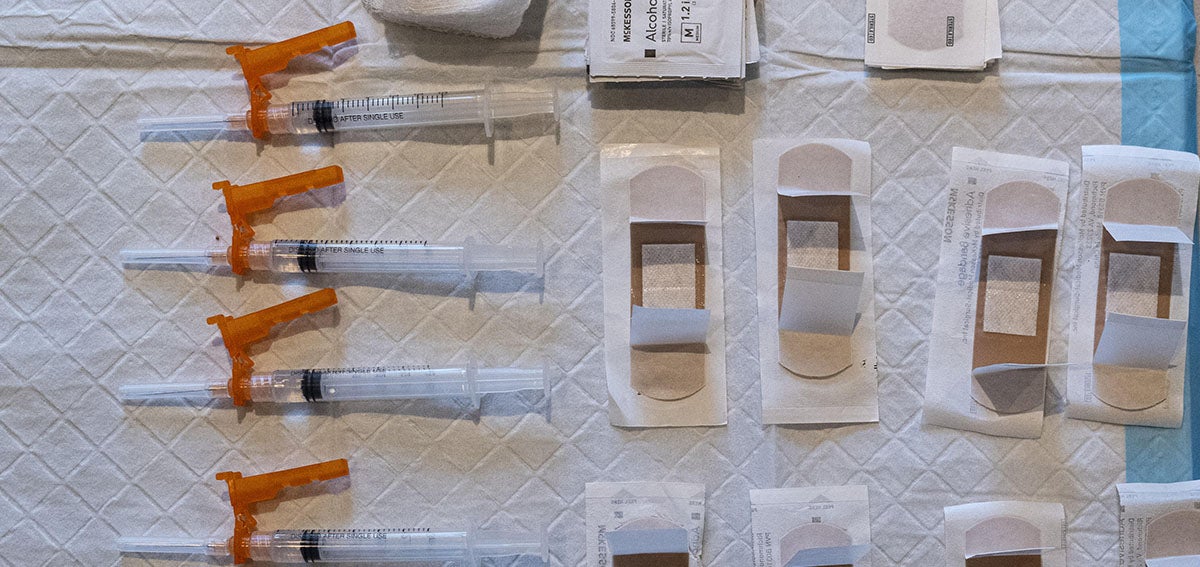
Syringes with prepared doses of the Johnson & Johnson Janssen Covid-19 vaccine and bandages

The COVID-19 pandemic revealed the need for substantial investment in public health. Journalist Anna Maria Barry-Jester, in an investigation published in California Healthline and the Los Angeles Times last week, reported that the need is pressing and that the time is ripe to formulate solutions.

“As we’ve continued to make progress in bringing the COVID-19 emergency under control, many California leaders are turning their attention to the future,” Barry-Jester wrote.

This year’s state budget set aside $3 million for an assessment of California’s public health infrastructure. “Public health leaders believe it will show that staffing and training are major issues,” Barry-Jester reported.

Starting in July 2022, annual state budgets will include $300 million to be spent to improve public health infrastructure.

The pandemic highlighted two significant public health needs in California. One is basic investment in public health infrastructure, as highlighted by Barry-Jester. The other is to address housing, diet, livable wages, and access to quality health care as part of an overarching public health strategy — a necessity highlighted by the stark racial, ethnic, and economic disparities among those who contracted and died from COVID-19.

Many Reasons for Staff Attrition

Before the pandemic, the state’s public health infrastructure already required shoring up. The COVID-19 crisis hammered the already underfunded and understaffed county and state public health systems.

In California, public health workers are leaving their jobs in droves. Counties are “losing experienced staffers to retirement, exhaustion, partisan politics, and higher-paying jobs,” Barry-Jester reported.

The exodus from public health predated this surge of resignations. Since the early days of the pandemic, experienced California public health leaders have been leaving the field, including 17 county public health officers and 27 county-level directors or assistant directors of public health. Both the director and the deputy director of the state’s department of public health resigned during the pandemic.

“Public health nurses, microbiologists, epidemiologists, health officers, and other staff members who fend off infectious diseases like tuberculosis and HIV, inspect restaurants, and work to keep communities healthy are abandoning the field,” Barry-Jester wrote. “The collective expertise lost with those departures is hard to overstate.”

Public health laboratories illustrate how much we rely on public health infrastructure for our everyday safety. The labs are largely invisible to the public but touch every aspect of daily life. “Public health labs sample shellfish to make sure it is safe for eating. They monitor drinking water and develop tests for emerging health threats such as antibiotic-resistant viruses. They also test for serious diseases, such as measles and COVID-19. And they typically do it at a fraction of the cost of commercial labs — and faster.”

Yet labs across the state are unable to hire and retain staff, and they are in danger of closing. “The biggest threat to [public health labs] right now is not the next emerging pathogen,” said Donna Ferguson, director of the public health lab in Monterey County, “but labs closing due to lack of staffing.”

Addressing Social Needs as Public Health Strategy

The pandemic highlighted the effects of income inequality and racial disparities on health in California. Data from the California Department of Public Health highlight the stark disparities in COVID-19 outcomes. The COVID-19 death rate for Latinx people is 19% higher than the statewide death rate, and the death rate for Black people is 16% higher. The case rate for Pacific Islanders is 45% higher than the statewide rate, while the rate of Pacific Islanders earning less than $40,000 annually is 33% higher than average.

Michael Goran, MD, professor of pediatric medicine at the University of Southern California, explained the connections among long-term health, social factors, and COVID-19 infection among Latinx people.

“There is an 80% higher rate of diabetes among Hispanics compared to non-Hispanic whites. We think early life nutrition is very important but also the environment where people live, which can include a combination of factors like poor access to healthy food, poor access to resources, air pollution, even chemical contaminants in the environment we found contribute to this disparity,” he told Los Angeles Times reporter Alejandra Reyes-Velarde.

These chronic diseases then put Latinx people at higher risk for worse COVID outcomes. “One of the most common recurring risk factors, not so much for rates of infection but the severity of the infection, is blood-glucose levels,” he said. “Individuals with higher blood-glucose levels seem to have a more severe response to COVID-19 infection, and of course, higher blood glucose is what contributes to diabetes.”

Health Affairs study from the early days of the pandemic, which drew on data from California’s Sutter hospitals, noted that Black people are similarly at higher risk from the chronic illnesses that make people more susceptible to poor outcomes from COVID infections, including type 2 diabetes and congestive heart failure, as do other populations disproportionately harmed by COVID-19.

“Underfunded and Neglected”

A recent New York Times investigation highlights that California is not alone in dealing with a public health system pushed to the edge by the pandemic.

“Already underfunded and neglected even before the pandemic, public health has been further undermined in ways that could resound for decades to come,” wrote journalists Mike Baker and Danielle Ivory. The Times investigation of hundreds of health departments in all 50 states revealed that “local public health across the country is less equipped to confront a pandemic now than it was at the beginning of 2020.”

Threats, harassment, and anger directed at public health officials and workers drove many out of the field since the beginning of the pandemic and was identified as an ongoing problem by Baker and Ivory. “We have learned all the wrong lessons from the pandemic,” Adriane Casalotti told them. Casalotti is the chief of public and government affairs for the National Association of County and City Health Officials, an organization representing the nearly 3,000 local health departments across the nation. “We are attacking and removing authority from the people who are trying to protect us.”

Officials interviewed by Baker and Ivory noted that while additional funds are crucial to rebuilding public health departments, they aren’t sufficient to address the problems that have long weighed down the system or those that emerged during the pandemic.

Melissa Lyon, public health director for Erie County, Pennsylvania, put it this way: “If a ship is sinking, throwing treasure chests of gold at the ship is not going to help it float.”

The M&A power behind the Blues

Featured image

Health insurers licensed by the Blue Cross Blue Shield Association face steep financial penalties from that organization if they merge with a competitor that doesn’t sell BCBS insurance, Axios’ Bob Herman writes.

Why it matters: Blue Cross Blue Shield is one of the most recognizable health insurance names in the country, and the powerful association behind that brand wants to keep its dominance in local markets.

Case in point: Triple-S Management, a BCBS affiliate in Puerto Rico, sold itself in August to the parent company of the Florida Blues for $900 million.

  • If Triple-S sold itself to a non-BCBS company, therefore terminating its license with the BCBSA, Triple-S would have faced a $96 million surcharge, according to merger documents filed by Triple-S.
  • The $96 million charge, based on a fee of $98.33 per member, was called a “re-establishment fee.”

What they’re saying: “The license agreements between the Blue Cross Blue Shield Association and its licensees include various financial and other provisions that apply to terminations, mergers and sales of licensees,” BCBSA said in a statement.

  • “BCBSA is unable to confirm the financial implications of any other transactions that Triple-S may have considered in deciding to enter into this transaction.”

The Association Between Continuity of Marketplace Coverage During Pregnancy and Receipt of Prenatal Care

The Association Between Continuity of Marketplace Coverage During Pregnancy  and Receipt of Prenatal Care | The Incidental Economist

Pregnancy is a significant life event, one that typically leads to substantially more interaction with the health care system than average. In the United States (US), pregnant people usually have about one health care visit per month of pregnancy, during which they receive a myriad of services. However, access to high quality prenatal care — and enough of it — is often limited by one’s health insurance coverage.

When the Affordable Care Act was enacted, it established the individual Marketplaces from which those who are ineligible for Medicaid, Medicare, and/or employer-sponsored insurance can purchase coverage. However, pregnancy is not considered a qualifying life event, so an individual cannot just sign up for coverage once they find out they’re pregnant; they must wait until the next open enrollment period or the birth of their child, whichever comes first. Thus, they may be stuck without coverage during pregnancy. This can have a significant impact on access to appropriate prenatal care.

New Research

recent study in Health Affairs looked at Marketplace enrollment patterns for pregnant people and the impact of Marketplace insurance coverage on their health and care utilization.

The authors are Sarah Gordon and Melissa Garrido from Boston University School of Public Health (BUSPH) Health, Law, Policy, and Management Department (HLPM) and VA Boston Healthcare System; Charlotte Alger from BUSPH HLPM; and Eugene Declercq from BUSPH Community Health Sciences Department.

The authors used data from the Pregnancy Risk Surveillance and Monitoring System (PRAMS) from 2016 to 2018. Developed by the Centers for Disease Control and Prevention, PRAMS is a self-reported survey within 40 states and New York City and is representative of 83 percent of all US births. State health departments pull a representative sample of recent births from birth certificate registries and reach out via mail and telephone to the selected mothers. The survey asks respondents about health status and behaviors, health care use, and insurance coverage.

With these data, they studied two questions. First, they assessed how likely pregnant people were to be enrolled in Marketplace insurance coverage preconception, during pregnancy, and/or postpartum. Sample size for this question was 6491 and the authors used simple descriptive analysis techniques.

Second, they studied how Marketplace enrollment impacted individuals’ receipt of prenatal care, such as the number of prenatal visits, receipt of care within the first trimester, and receipt of specific health care services like flu shots and screenings for intimate partner violence and depression. The sample size for this question was 3443, limited to individuals who reported Marketplace coverage during pregnancy. The authors used logistic regression models and inverse probability of treatment weights to conduct these analyses.

Findings

For enrollment, the authors found that about one third of respondents had continual Marketplace coverage, from preconception to postpartum. Of those who were only enrolled in the Marketplace preconception, over 70 percent reported Medicaid coverage during pregnancy. Of those who were only enrolled in the Marketplace postpartum, almost 50 percent reported Medicaid coverage and one third reported employer-sponsored insurance coverage during pregnancy.

For impact of enrollment during pregnancy, the authors compared those with continuous coverage (preconception to postpartum) to those who only enrolled in the Marketplace during pregnancy. Those with continuous Marketplace coverage were more likely to have “adequate” or “more than adequate” prenatal care use. (The authors defined these classifications using the Adequacy of Prenatal Care Utilization Index which measures timing and quantity of care.) Those with continuous coverage were also more likely to initiate prenatal care in the first trimester, though over 80 percent of respondents in both groups did so. The authors did not find any significant differences in the likelihood of receipt of particular prenatal services, such as flu shots or social/mental health screenings.

Limitations

There were several limitations to this study due to the nature of the PRAMS data set. For example, PRAMS is self-reported, subject to both recall bias and response bias. Plus, the survey is not conducted in all states and, thus, assumptions must be made about generalizability. Lastly, PRAMS simply includes a finite set of questions; this is certainly understandable but does limit researchers’ analyses.

Discussion

With the connection between insurance coverage and access to care clear, several notable policy questions arise from this study. Classifying pregnancy as a qualifying life event is perhaps the most obvious. As mentioned previously, pregnancy is not a qualifying life event, though the birth of a child is. (Only two states have implemented policies to the contrary.) Allowing an individual to sign up for health insurance coverage once pregnant, rather than waiting until birth or the next open enrollment period, could improve access to prenatal care and even improve maternal and child health outcomes.

Another related policy implication is determining what type of insurance is ideal for pregnant individuals. The authors found that individuals without Marketplace coverage often have other types of coverage, at least temporarily. What type of insurance is best or most cost-effective for pregnant people — and the benefits of coverage continuity regardless of type — could be studied further.

The study did not touch on the quality of prenatal care but that is also worth discussion. In the US, pregnant people tend to receive far more prenatal care than other countries but that doesn’t mean the quality is better, nor do maternal health outcomes suggest that’s true. In fact, the US’ maternal health outcomes are some of the worst in the industrial world.

Pregnancy is full of changes, expenses, and challenges. Determining how Marketplace insurance coverage — which has been around for a decade — access to care, and maternal and child health outcomes all interact from preconception to postpartum warrants more study.

Federal judge rules HHS’ efforts to punish pharma over 340B restrictions ‘arbitrary and capricious’

The pharmaceutical industry scored a muted win in its long-running feud with the Department of Health and Human Services (HHS) over 340B program discounts Friday when a federal court judge granted Eli Lilly’s bid to vacate two administrative actions aimed at drugmakers.

U.S. District Court Judge Sarah Evans Barker ruled that a December advisory opinion from HHS’ Office of the General Counsel and a May enforcement letter from the Health Resources and Services Administration (HRSA) were “arbitrary and capricious” and in violation of the Administrative Procedures Act.

But while Barker ordered the two actions to be set aside and vacated, she also specified that HHS did not exceed its statutory authority or act unconstitutionally in regard to the May enforcement letter.

“Lilly is encouraged by Friday’s opinion, which confirms that the government’s enforcement decision against it was improper,” the drugmaker said in an email statement.

Further, the judge determined that Lilly and other drug manufacturers are not permitted under the current 340B statute “to impose unilateral extra-statutory restrictions on its offer to sell 340B drugs to covered entities utilizing multiple contract pharmacy arrangements.”

HHS may have “suddenly” changed its views on whether the agency could enforce penalties against drugmakers restricting sales of the discounted products to contract pharmacies, but the law as written makes it impossible to discern whether Congress intended for drug manufacturers to have “unlimited delivery obligations … untethered to the particular covered entity’s actual distribution needs,” the judge wrote.

As such, Barker underscored the need for lawmakers to settle the ambiguity with new, explicit legislation.

“We have no insight into why there is apparently so much reluctance to promulgate a holistic legislative proposal to bring clarity to the scope of the regulated parties’ obligations and entitlements … rather than engage in piecemeal interpretations and after the fact patchwork characterizing the history of the agency’s attempts to manage this program,” Barker wrote in the Friday order.

“What we have come to see, however, is that the 340B program can no longer be held together and implemented fairly for all concerned with non-binding interpretive guidelines and mixed, sometimes inconsistent messaging by the agency regarding the source and extent of its authority to enforce statutory compliance in the area of contract pharmacies.”

Eli Lilly’s case against HHS is the latest in a lengthy dispute between the agency and a slew of pharmaceutical companies including AstraZeneca, Novartis, Novo Nordisk, Sanofi and United Therapeutics.

The 340B program requires drugmakers to offer discounted products to safety net hospitals, community health centers and other providers as a condition of participation in Medicare and Medicaid.

Beginning in July 2020, however, the drugmakers announced they would no longer provide 340B-discounted products to contract pharmacies or would be limiting sales unless a 340B-covered entity provided claims data ensuring there were no duplicative discounts being applied.

In response, HHS’ Office of the General Counsel issued the December advisory opinion, which stated that the restrictions violated federal law, and later through HRSA delivered enforcement letters threatening penalties to the six companies.

HHS’ pushback has generally taken a beating in the courtsIn June, the agency decided to pull the December advisory opinion to “avoid confusion and unnecessary litigation” after courts took the side of AstraZeneca and struck down a motion from HHS to dismiss the case.

The drugmakers have dug in their heels throughout the process, refusing to reverse their policies even as HRSA issued new (now remanded) warnings in late September.

Industry supporters of HHS’ position focused on the silver lining of Friday’s decision.

In a statement, Maureen Testoni, president and CEO of 340B Health, a membership organization of more than 1,400 340B participants, said the group was encouraged by Barker’s position on the “unilateral” restrictions on drug discounts for contract pharmacies.

“We are encouraged that the court upheld HRSA’s view that Lilly is violating the law as one that ‘best aligns with congressional intent’ of the 340B program,” she said in a statement. “We urge the government to continue its work to enforce the law and restore the statutory drug discounts that enable 340B hospitals to care for patients with low incomes and those living in rural parts of the country.”

Democrats Should Talk About Costs, Not Fairness, to Sell Drug Pricing to Voters

https://view.newsletters.time.com/?qs=ea318fe40822a16d35fd05551e26f48182b6d89aa3b6000b896a9ff2546a39caab4656832bb3a0c5bda16bcd6517859e00eba11282e80813fd45887b2c2398c865b7cca1f30f6315a7a3fb7a1b05cde6

Democrats Should Talk About Costs, Not Fairness, to Sell Drug Pricing to  Voters | Time

Here in Washington, the conversation about politics is often framed as a spectrum, a straight line with poles at the end that are hard-wired opposites. Team Blue to the left and Team Red to the right. But in reality, the chatter might more accurately be framed as a loop, with the far ends bending back on themselves like a lasso. Eventually, the far-right voices and the far-left voices meet at the weird spot where Rand Paul supporters find common ground with The Squad.

It’s often at the knot between the two ends of that scale that we find some of the loudest voices on any given issue: foreign aid, vaccine mandates, the surveillance state. Right now, as Congress is considering a massive spending package on roads and bridges, pre-K and paid family leave, lawmakers have been debating a point on which political opponents agree: drug prices are too high.

Drug pricing is one of those rare sweet spots where it seems everyone in Washington can agree that consumers are getting a raw deal. The motives behind that sentiment differ, of course: liberals want to make medical care more accessible and to curb the power of big pharma, and conservatives see drug prices divorced from pure capitalism. But everyone can rally around the end goal. No one gets excited to tuck away pennies on the paycheck to control acid reflux or prevent migraines.

The package under consideration tries to fix drug costs by ending the ban on feds negotiating with pharmaceutical companies. In a deal hashed out among Democrats, Medicare would be allowed to negotiate directly with drug companies on the prices of the 10 most expensive drugs by 2025. That number would double to 20 drugs three years later. Only established drugs that have been on the market at least nine years in most cases would be eligible, giving pharmaceutical companies almost a decade of unrestricted profitability. (Start-up biotech companies would be exempted from the process under the guise of giving newcomer innovators a leg-up.)

For individuals on private insurance, their drug costs would be tied to inflation, meaning no spiking costs if a drug becomes popular. Seniors, meanwhile, would have a $2,000 cap on what they’d be responsible for at the pharmacy.

Democrats have been working for years to make drug companies the enemy. In the current environment of woke capitalism, they’re an easy target for lawmakers in Washington to come after. Drugs, after all, aren’t luxury goods. They’re necessary. And for the government to give them a pass in ways few other industries enjoy, that just seems wrong to the far-left wing of the Democratic Party that has flirted with elements of socialism.

It turns out, maybe that messaging isn’t working. New polling, provided exclusively to TIME from centrist think tank Third Way, suggests the way the conversation is framed matters more than you’d think. In a poll of 1,000 likely voters in September, costs were their biggest hangup about the healthcare system, regardless of political identity. Almost 40% of respondents cited healthcare costs as the biggest flaw in the system.

What didn’t seem to bother people much? Fairness. That’s right. The spot where the far-right and the far-left tines of the political fork meet is usually seen as an objection to a system rigged against the consumers. But a meager 18% of respondents to the Third Way poll say profits were what’s wrong with the system. Grievance isn’t the most grievous of problems.

And if you dig a little deeper, you find other reasons Democrats might want to reconsider how they talk about drug prices in the twin infrastructure plans parked in Congress. In fact, there’s a 12-point gap in two competing reasons to address healthcare; lowering costs draws the support of 72% of respondents while making things fair wins backing from 60%.

“This is kitchen table economics and it’s not a morality play,” says Jim Kessler, a co-founder of Third Way and its policy chief who is advising the Hill on messaging on the twin bills. “Those are winning messages, especially on healthcare. You’re going to keep the exact same system, but you’re going to get some help with costs.”

In other words, the chatter in the purple knot might feel most fulsome when talking about justice and weeding out the super-rich exploiters of capitalism. But, really, people just want to hold onto their cash. Protections against healthcare bankruptcy are super popular, suggesting the fear of losing everything to a hospital visit is real. Capitalism may well be exploitative but it’s tough to argue that a few extra bucks in the bank can make falling asleep easier at the end of the day.

So as Congress gets ready to move forward with drug prices in its infrastructure talks, lawmakers can find some comfort that the whole of the political spectrum agrees costs need to come down. And they don’t really care if it’s done in a fair way — as long as their savings doesn’t take a hit every 90 days.