Chart of the Day: The Dire State of State Tax Revenues

https://www.thefiscaltimes.com/2020/06/02/Chart-Day-Dire-State-State-Tax-Revenues

Chart of the Day: The Dire State of State Tax Revenues | The ...

Lucy Dadayan of the Urban-Brookings Tax Policy Center breaks down the good, the bad and the ugly of the fiscal crisis facing states as the coronavirus pandemic crushes revenues and raises costs.

“Prior to the onset of the COVID-19 pandemic, most states were generating solid revenue growth. And many built up robust rainy day funds. But the pandemic has largely wiped out earlier revenue gains and most states now anticipate substantial revenue shortfalls for the current fiscal year and for fiscal year 2021,” she writes.

The good: Preliminary April tax revenue data show a steep drop in estimated and final annual tax payments as the tax-filing deadline got pushed back from April 15 to July 15. But taxes withheld from paychecks grew in 17 states compared to April 2019. “Tax withholding is usually a better indicator of the current strength of the economy and of the path for personal income tax revenue because it comes largely from current wages,” Dadayen explains. On the other hand, 16 states reported declines of less than 10%, while five states posted double-digits drops, so the bright spots are limited.

The bad: “Declines in sales tax revenues have been fast, steep, and widespread across the states,” Dadayen writes. How steep? April sales tax revenues fell by 16% across 42 states for which the Tax Policy Center has complete data. Twenty-three states reported double-digit declines, while just five states reported year-over-year growth. And since the April data mostly reflect March sales, the May numbers are likely to be even worse.

The ugly: For the fiscal year so far, total state tax revenue has fallen sharply — and next year is expected to be worse. “With two months remaining in the fiscal year for 46 states, total state tax revenues are now down about $57 billion, compared to last year,” Dadayen writes.

After the sharp pandemic-related plunge in April, tax revenues have fallen in 34 states compared to 2019 and risen in 12. (New York, the state hit hardest by the virus, is surprisingly among those dozen, but Dadayen says that’s only because its fiscal year 2020 ended in March, so April’s devastation isn’t reflected in the data. The state reported that net taxes and fees collected in April, the first month of its new fiscal year, fell by 69% compared with April 2019.)

Chart of the Day: The Dire State of State Tax Revenues | The ...


A Third of Unemployment Benefits Haven’t Been Paid Out: Report

https://www.thefiscaltimes.com/2020/06/02/Third-Unemployment-Benefits-Haven-t-Been-Paid-Out-Report

A Third of Unemployment Benefits Haven't Been Paid Out: Report

The U.S. Treasury paid out $146 billion in jobless benefits in the three months ending in May as tens of millions of Americans lost their jobs due to the coronavirus pandemic. Although the number is massive – larger than all of the unemployment benefits provided during the depths of the Great Recession in 2009 – it’s smaller than it should have been, according to a new analysis by Bloomberg News. Crunching the numbers on weekly unemployment filings and average claim size, Bloomberg found that total jobless benefits should have come to roughly $214 billion during that time.

“The estimated gap of some $67 billion shows how emergency efforts to boost payments, and deliver them via creaking state-level systems, are lagging the needs of a jobs crisis that’s seen more than 40 million people file for unemployment as the economy shut down,” Bloomberg’s Shawn Donnan and Catarina Saraiva wrote Tuesday.

A tough calculation: Although it’s hard to put a precise number on the shortfall – the Labor Department pushed back against the method used by Bloomberg to develop its estimate – there is general agreement that there are many people who still haven’t received the unemployment assistance they are entitled to. “There’s a lot more money that should have gone out that has not gone out,” said Jay Shambaugh, an economist at the Brookings Institution who has been studying the issue.

And Bloomberg says its analysis likely provides a conservative estimate of the shortfall. Some states are still working through backlogs of unemployment claims – Texas alone is waiting to verify nearly 650,000 cases – and more than 7 million people are still owed retroactive benefits under the Pandemic Unemployment Assistance program for independent contractors.

Why it matters: In addition to the unnecessary suffering the delays are causing, the shortfall is reducing the positive economic effect that unemployment benefits are intended to provide. “On paper the U.S. strategy is very generous,” Ernie Tedeschi, a former U.S. Treasury economist now at Evercore ISI, told Bloomberg. “But that generosity on paper is meaningless if it doesn’t translate into actual money in people’s pockets when they need it.”

Diane Swonk, chief economist at the accounting firm Grant Thornton, said she is worried that lawmakers are experiencing “fiscal fatigue” as the crisis wears on, risking a falloff in aid that could prolong the recession. “We’re really talking about an economy that is going to be operating at a fraction of its capacity for a long period of time,” she told Bloomberg.


The Value of Home Health Care

https://morningconsult.com/opinions/the-value-of-home-health-care/?utm_source=ActiveCampaign&utm_medium=email&utm_content=Does+the+US+Spend+Too+Much+on+Police%3F&utm_campaign=TFT+Newsletter+06042020
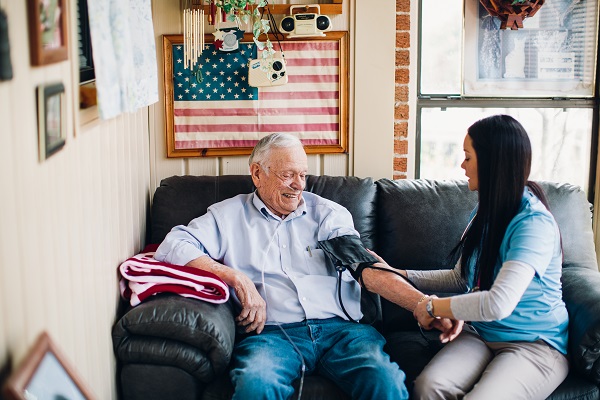
5 Truths About Home Health Care

For the first time in our modern history, staying at home has become a “new” normal. And with more than 1.5 million Americans now infected with COVID-19, never before in our lifetime has accessing care in a person’s home been so important.

Smartly, our federal and state policymakers quickly expanded reimbursement for telehealth and removed barriers that have now allowed more providers to care for patients virtually via video and phone, eliminating the risk of COVID-19 exposure during provider visits. But not all care can be provided through telehealth – and we would be shortsighted to not also address the growing need for home-based care.

Long before the COVID-19 emergency, health care policy experts have increasingly recognized the value of home-based health care. A recent AARP survey found that three in four adults 50 years and older would prefer to age in their homes and communities. And a growing body of evidence suggests it is less expensive to deliver care in the home. Indeed, for years we’ve seen hospitalized patients more quickly returning to their homes and communities to heal and recover safely, reducing costs for themselves and the health care system.

Home-based care addresses some of the negative health effects of social isolation and loneliness, which drive poorer health outcomes that annually cost billions of excess health care dollars. According to one study, those experiencing loneliness and social isolation had a more than 60 percent higher risk of developing dementia and a fourfold increase in hospital readmission rates within a year of discharge.

Despite its demonstrated value, our country has yet to fully integrate the support needed for home-based care. Instead, we have a collage of different reimbursement frameworks across state, federal, and private payers.

Traditionally, Medicare has paid only for home caregivers in very limited circumstances. But we’re now seeing small and promising changes. The Medicare Advantage program, for example, now allows plans to offer non-medical care services in the home as supplemental benefits. These benefits can include day care services, in-home support services including meals and support for caregivers.

We have also seen a surge of technologies to enable home-based care. From those receiving home infusion therapies, to home dialysis, to remote patient monitoring, the private sector has stepped up to meet the needs of those wanting to or needing to receive care at home.

Now is the time to expand on these promising changes with a more comprehensive approach to paying for home-based care delivery. With more thoughtful integration of caregiving services and improved care coordination across care settings, including the home, such models can drive down health care costs for patients and the system overall.

Whether caring for those impacted by our current public health crisis, or those who are medically homebound, or those who simply choose to age in place, policymakers should think beyond essential medical services and consider the non-medical drivers of health that are often as essential to good health outcomes. For example, many individuals needing to stay at home are ill-equipped to carry out their own basic needs. Daily tasks — such as getting in and out of a chair or bed, moving about the house, shopping and preparing meals, taking medications properly, bathing and dressing, and cleaning and laundry — can be a struggle for the elderly and those with serious health conditions.

Fortunately, we have millions of home health nurses and caregivers working on the front lines to care for vulnerable adults who should safely remain in their homes during this pandemic and beyond.

These workers are the foot soldiers who perform tasks such as shopping, meal preparation and assisting with mobility and personal care. Well-trained caregivers and nurses, sensitive to the time and place where patients actually live, can more readily identify and address issues that can exacerbate a person’s chronic, complex illness that may not otherwise be visible in a single visit to a traditional health care setting.

As we face record unemployment, federal, state and local policymakers should consider how best to utilize this untapped resource both now and in the future. With the appropriate testing, training, and reimbursement, individuals can have a choice in where they age and receive care.

While keeping people safe and healthy in their homes has always been appealing, now it is imperative. For our most vulnerable individuals — the elderly and those with chronic health conditions – home-based care can save their lives.


CDC director: US needs up to 100,000 contact tracers by September to fight coronavirus

https://thehill.com/policy/healthcare/501157-cdc-director-us-needs-30-to-100-thousand-contact-tracers-by-september-to?utm_source=ActiveCampaign&utm_medium=email&utm_content=Does+the+US+Spend+Too+Much+on+Police%3F&utm_campaign=TFT+Newsletter+06042020

CDC director: US needs up to 100,000 contact tracers by September to fight coronavirus

Centers for Disease Control and Prevention (CDC) Director Robert Redfield told Congress on Thursday that the country needs between 30,000 and 100,000 people working on contact tracing in order to help contain the next wave of the coronavirus.

The estimate shows the daunting challenge of hiring an army of people to interview those infected with coronavirus to identify who they have been in contact with so that those people can quarantine and help prevent the spread of the virus.

“I’ve estimated between 30 and 100,000” contact tracers are needed,” Redfield told the House Appropriations Committee during a hearing Thursday. He acknowledged the figure is “sizable,” though it is actually less than the 300,000 people former CDC director Tom Frieden has estimated the U.S. will need.

He said it is crucial to get the contact tracing system in place by September to try to keep the virus in check ahead of an expected surge in the fall and winter. That could help prevent the type of blunt stay-at-home orders that the U.S. had to implement this spring after missing the window to contain the virus earlier this year.

“We really have to get this built and we have to get it built between now and September,” Redfield said.

Redfield said his agency has met with all 50 states to discuss hiring contact tracers and is pleased that some states have already started to do so. New York City, for example, has hired 1,700 contact tracers. 

He said the CDC Foundation is working to hire personnel to augment state efforts and the CDC has distributed funding to states provided by Congress for the purpose. He added he hopes AmeriCorps is a source of additional staff.

“It is fundamental that we have a fully operational contact tracing workforce that every single case, every single cluster, can do comprehensive contact tracing within 24 to 36 hours, 48 hours at the latest, get it completed, get it isolated, so that we can stay in containment mode as we get into the fall and winter of 2020,” he said.


Cartoon – Let’s begin your exam with a simple coordination test

Difference Between Islamic Takaful and Conventional Insurance - ED ...

Cartoon – It remains to be seen which will get you first

Cartoon – It remains to be seen which will get you first | HENRY ...

Cartoon – Out of Pocket Experience

Cartoon – Out of Body Feeling vs Out of Pocket Experience | HENRY ...

Hospitals push for release of $50B more in COVID-19 funds

https://www.healthcaredive.com/news/hospitals-push-for-release-of-50b-more-in-covid-19-funds/579072/

COVID-19 Stimulus Bill: What It Means for States

Dive Brief:

  • The American Hospital Association is urging HHS to distribute at least $50 billion more in funding from the $175 billion allocated by Congress to hospitals as providers continue to wrestle with the challenges spurred by the outbreak of the novel coronavirus. 
  • More funds are “urgently needed” for the more than 5,000 hospitals and health systems AHA represents, the group wrote in a letter to HHS Secretary Alex Azar on Tuesday.
  • While AHA is calling for more money for all hospitals, it also wants a special focus paid to hospitals in hot spot areas and those serving a higher number of Medicaid and uninsured patients. 

Dive Insight:

AHA is requesting $10 billion for hot spot areas, $10 billion for hospitals with a larger share of Medicaid and uninsured patients and another $30 billion for all hospitals, including inpatient rehabilitation centers and inpatient psychiatric facilities.

Making substantial funds of money available will help facilities weather the pandemic and will “actually ensure they are able to keep their doors open,” AHA CEO Richard Pollack wrote. The second quarter is expected be the hardest hit to hospital operations.​

On Tuesday, the HHS Office of the Assistant Secretary for Preparedness and Response said it was making available another $225 million for health systems. That’s a drop in the bucket compared to the total federal funds that have already gone out the door. 

So far, the federal government has earmarked a total of $175 billion to disperse to hospitals and providers across the country. Only a portion of those funds have gone out. Initially, HHS sent out $30 billion directed to all eligible hospitals, based on Medicare fee-for-service. The criteria for funding faced criticism over seemingly giving an advantage to certain hospitals over others, such as those with many Medicaid patients.

Other more targeted tranches have followed, including $20 billion based on net patient service revenue. Disbursements of $10 and $12 billion were reserved for rural providers and hot spots, respectively.

AHA’s latest requests seems to acknowledge the concerns others have raised about providers with high Medicaid numbers.

Late last month, America’s Essential Hospitals, which represent safety net hospitals, said the administration should quickly move to dstribute more funding to facilities serving large shares of uninsured and Medicaid members.

“They continue to struggle with the heavy financial costs of this public health emergency and need relief now,” Bruce Siegel, CEO of AEH, said in a statement.

HHS developed funding formulas that rely heavily on a Medicare and net patient service revenue, so facilities that rely more on Medicaid as opposed to private insurers and Medicare, like pediatric hospitals, are at a disadvantage when it comes to receiving funds.

As such, AHA is calling for an additional $20 billion, divided evenly between hot spot hospitals and those with a large share of Medicaid patients.

“These hospitals care for the nation’s most vulnerable patients, who, largely as a result of underlying health conditions, have suffered disproportionately from the pandemic. They have been hospitalized at greater rates, and required more care and resources once hospitalized,” AHA said of hospitals with large shares of Medicaid patients.


29 hospital bankruptcies in 2020

https://www.beckershospitalreview.com/finance/29-hospital-bankruptcies-in-2020.html?utm_medium=email

Hospital Bankruptcy | HENRY KOTULA

From reimbursement landscape challenges to dwindling patient volumes, many factors lead hospitals to file for bankruptcy. At least 29 hospitals across the U.S. have filed for bankruptcy this year, and the financial challenges caused by the COVID-19 pandemic may force more hospitals to enter bankruptcy in coming months.

COVID-19 has created a cash crunch for many hospitals across the nation. They’re estimated to lose $200 billion between March 1 and June 30, according to a report from the American Hospital Association. More than $161 billion of the expected revenue losses will come from canceled services, including nonelective surgeries and outpatient treatment. Moody’s Investors Service said the sharp declines in revenue and cash flow caused by the suspension of elective procedures could cause more hospitals to default on their credit agreements this year than in 2019.

The hospitals that have filed for bankruptcy this year, which are part of the health systems listed below, have not cited the pandemic as a factor that pushed them into bankruptcy. Though most of the hospitals are operating as normal throughout the bankruptcy process, at least two of the hospitals that entered bankruptcy this year have shut down.

Quorum Health
Brentwood, Tenn.-based Quorum Health and its 23 hospitals filed for Chapter 11 bankruptcy April 7. The company, a spinoff of Franklin, Tenn.-based Community Health Systems, said the bankruptcy filing is part of a plan to recapitalize the business and reduce its debt load.

Randolph Health
Randolph Health, a single-hospital system based in Asheboro, N.C., filed for Chapter 11 bankruptcy March 6. Randolph Health leaders have taken several steps in recent years to improve the health system’s financial picture, and they’ve made progress toward that goal. Entering Chapter 11 bankruptcy will allow Randolph Health to restructure its debt, which officials said is necessary to ensure the health system continues to provide care for many more years.

Faith Community Health System
Faith Community Health System, a single-hospital system based in Jacksboro, Texas, filed for bankruptcy protection on Feb. 29. The health system, part of the Jack County (Texas) Hospital District, entered Chapter 9 bankruptcy — a bankruptcy proceeding that offers distressed municipalities protection from creditors while a repayment plan is negotiated.

Pinnacle Healthcare System
Overland Park, Kan.-based Pinnacle Healthcare System and its hospitals in Missouri and Kansas filed for Chapter 11 bankruptcy on Feb. 12. Pinnacle Regional Hospital in Boonville, Mo., formerly known as Cooper County Memorial Hospital, entered bankruptcy about a month after it abruptly shut down. Pinnacle Regional Hospital in Overland Park, formerly called Blue Valley Hospital, closed about two months after entering bankruptcy.

Thomas Health
South Charleston, W.Va.-based Thomas Health and its two hospitals filed for Chapter 11 bankruptcy on Jan. 10. In an affidavit filed in the bankruptcy case, Thomas Health President and CEO Daniel J. Lauffer cited several reasons the health system is facing financial challenges, including reduced reimbursement rates and patient outmigration. The health system said the bankruptcy process will help it address its long-term debt and pursue strategic opportunities.