‘Sadness’ and Disbelief From a World Missing American Leadership

Sadness' and Disbelief From a World Missing American Leadership ...

The coronavirus pandemic is shaking bedrock assumptions about U.S. exceptionalism. This is perhaps the first global crisis in more than a century where no one is even looking for Washington to lead.

As images of America’s overwhelmed hospital wards and snaking jobless lines have flickered across the world, people on the European side of the Atlantic are looking at the richest and most powerful nation in the world with disbelief.

“When people see these pictures of New York City they say, ‘How can this happen? How is this possible?’” said Henrik Enderlein, president of the Berlin-based Hertie School, a university focused on public policy. “We are all stunned. Look at the jobless lines. Twenty-two million,” he added.

“I feel a desperate sadness,” said Timothy Garton Ash, a professor of European history at Oxford University and a lifelong and ardent Atlanticist.

The pandemic sweeping the globe has done more than take lives and livelihoods from New Delhi to New York. It is shaking fundamental assumptions about American exceptionalism — the special role the United States played for decades after World War II as the reach of its values and power made it a global leader and example to the world.

Today it is leading in a different way: More than 840,000 Americans have been diagnosed with Covid-19 and at least 46,784 have died from it, more than anywhere else in the world.

As the calamity unfolds, President Trump and state governors are not only arguing over what to do, but also over who has the authority to do it. Mr. Trump has fomented protests against the safety measures urged by scientific advisers, misrepresented facts about the virus and the government response nearly daily, and this week used the virus to cut off the issuing of green cards to people seeking to emigrate to the United States.

“America has not done badly, it has done exceptionally badly,” said Dominique Moïsi, a political scientist and senior adviser at the Paris-based Institut Montaigne.

The pandemic has exposed the strengths and weaknesses of just about every society, Mr. Moïsi noted. It has demonstrated the strength of, and suppression of information by, an authoritarian Chinese state as it imposed a lockdown in the city of Wuhan. It has shown the value of Germany’s deep well of public trust and collective spirit, even as it has underscored the country’s reluctance to step up forcefully and lead Europe.

And in the United States, it has exposed two great weaknesses that, in the eyes of many Europeans, have compounded one another: the erratic leadership of Mr. Trump, who has devalued expertise and often refused to follow the advice of his scientific advisers, and the absence of a robust public health care system and social safety net.

“America prepared for the wrong kind of war,” Mr. Moïsi said. “It prepared for a new 9/11, but instead a virus came.”

“It raises the question: Has America become the wrong kind of power with the wrong kind of priorities?” he asked.

Ever since Mr. Trump moved into the White House and turned America First into his administration’s guiding mantra, Europeans have had to get used to the president’s casual willingness to risk decades-old alliances and rip up international agreements. Early on, he called NATO “obsolete” and withdrew U.S. support from the Paris climate agreement and the Iran nuclear deal.

But this is perhaps the first global crisis in more than a century where no one is even looking to the United States for leadership.

In Berlin, Germany’s foreign minister, Heiko Maas, has said as much.

China took “very authoritarian measures, while in the U.S., the virus was played down for a long time,” Mr. Maas recently told Der Spiegel magazine.

“These are two extremes, neither of which can be a model for Europe,” Mr. Maas said.

America once told a story of hope, and not just to Americans. West Germans like Mr. Maas, who grew up on the front line of the Cold War, knew that story by heart, and like many others in the world, believed it.

But nearly three decades later, America’s story is in trouble.

The country that helped defeat fascism in Europe 75 years ago next month, and defended democracy on the continent in the decades that followed, is doing a worse job of protecting its own citizens than many autocracies and democracies.

There is a special irony: Germany and South Korea, both products of enlightened postwar American leadership, have become potent examples of best practices in the coronavirus crisis.

But critics now see America failing not only to lead the world’s response, but letting down its own people as well.

“There is not only no global leadership, there is no national and no federal leadership in the United States,” said Ricardo Hausmann, director of the Growth Lab at Harvard’s Center for International Development. “In some sense this is the failure of leadership of the U.S. in the U.S.”

Of course, some countries in Europe have also been overwhelmed by the virus, with the number of dead from Covid-19 much higher as a percentage of the population in Italy, Spain and France than in the United States. But they were struck sooner and had less time to prepare and react.

The contrast between how the United States and Germany responded to the virus is particularly striking.

While Chancellor Angela Merkel has been criticized for not taking a forceful enough leadership role in Europe, Germany is being praised for a near-textbook response to the pandemic, at least by Western standards. That is thanks to a robust public health care system, but also a strategy of mass testing and trusted and effective political leadership.

Ms. Merkel has done what Mr. Trump has not. She has been clear and honest about the risks with voters and swift in her response. She has rallied all 16 state governors behind her. A trained physicist, she has followed scientific advice and learned from best practice elsewhere.

Not long ago, Ms. Merkel was considered a spent force, having announced that this would be her last term. Now her approval ratings are at 80 percent.

“She has the mind of a scientist and the heart of a pastor’s daughter,” Mr. Garton Ash said.

Mr. Trump, in a hurry to restart the economy in an election year, has appointed a panel of business executives to chart a course out of the lockdown.

Ms. Merkel, like everyone, would like to find a way out, too, but this week she warned Germans to remain cautious. She is listening to the advice of a multidisciplinary panel of 26 academics from Germany’s national academy of science. The panel includes not just medical experts and economists but also behavioral psychologists, education experts, sociologists, philosophers and constitutional experts.

“You need a holistic approach to this crisis,” said Gerald Haug, the academy’s president, who chairs the German panel. “Our politicians get that.”

A climatologist, Mr. Haug used to do research at Columbia University in New York.

The United States has some of the world’s best and brightest minds in science, he said. “The difference is, they’re not being listened to.”

“It’s a tragedy,” he added.

Some cautioned that the final history of how countries fare after the pandemic is still a long way from being written.

A pandemic is a very specific kind of stress test for political systems, said Mr. Garton Ash, the history professor. The military balance of power has not shifted at all. The United States remains the world’s largest economy. And it was entirely unclear what global region would be best equipped to kick-start growth after a deep recession.

“All of our economies are going to face a terrible test,” he said. “No one knows who will come out stronger at the end.”

Benjamin Haddad, a French researcher at the Atlantic Council, wrote that while the pandemic was testing U.S. leadership, it is “too soon to tell” if it would do long-term damage.

“It is possible that the United States will resort to unexpected resources, and at the same time find a form of national unity in its foreign policy regarding the strategic rivalry with China, which it has been lacking until now,” Mr. Haddad wrote.

There is another wild card in the short term, Mr. Moïsi pointed out. The United States has an election in November. That, and the aftermath of the deepest economic crisis since the 1930s, might also affect the course of history.

The Great Depression gave rise to America’s New Deal. Maybe the coronavirus will lead the United States to embrace a stronger public safety net and develop a national consensus for more accessible health care, Mr. Moïsi suggested.

“Europe’s social democratic systems are not only more human, they leave us better prepared and fit to deal with a crisis like this than the more brutal capitalistic system in the United States,” Mr. Moïsi said.

The current crisis, some fear, could act like an accelerator of history, speeding up a decline in influence of both the United States and Europe.

“Sometime in 2021 we come out of this crisis and we will be in 2030,” said Mr. Moïsi. “There will be more Asia in the world and less West.”

Mr. Garton Ash said that the United States should take an urgent warning from a long line of empires that rose and fell.

“To a historian it’s nothing new, that’s what happens,” said Mr. Garton Ash. “It’s a very familiar story in world history that after a certain amount of time a power declines.”

“You accumulate problems, and because you’re such a strong player, you can carry these dysfunctionalities for a long time,” he said. “Until something happens and you can’t anymore.”
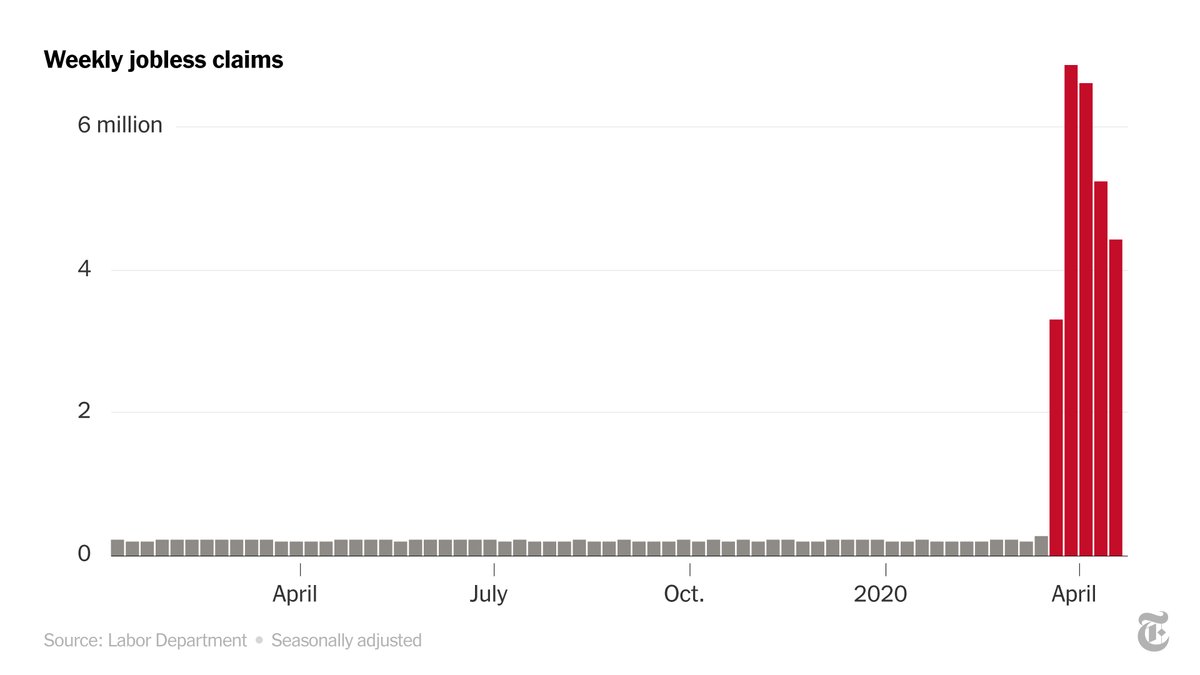


Jobless Numbers Are ‘Eye-Watering’ but Understate the Crisis

How the coronavirus created a U.S. unemployment crisis — in 3 graphics

With 4.4 million added last week, the five-week total passed 26 million. The struggle by states to field claims has hampered economic recovery.

Nearly a month after Washington rushed through an emergency package to aid jobless Americans, millions of laid-off workers have still not been able to apply for those benefits — let alone receive them — because of overwhelmed state unemployment systems.

Across the country, states have frantically scrambled to handle a flood of applications and apply a new set of federal rules even as more and more people line up for help. On Thursday, the Labor Department reported that another 4.4 million people filed initial unemployment claims last week, bringing the five-week total to more than 26 million.

“At all levels, it’s eye-watering numbers,” Torsten Slok, chief international economist at Deutsche Bank Securities, said. Nearly one in six American workers has lost a job in recent weeks.

Delays in delivering benefits, though, are as troubling as the sheer magnitude of the figures, he said. Such problems not only create immediate hardships, but also affect the shape of the recovery when the pandemic eases.

Laid-off workers need money quickly so that they can continue to pay rent and credit card bills and buy groceries. If they can’t, Mr. Slok said, the hole that the larger economy has fallen into “gets deeper and deeper, and more difficult to crawl out of.”

Hours after the Labor Department report, the House passed a $484 billion coronavirus relief package to replenish a depleted small-business loan program and fund hospitals and testing. The Senate approved the bill earlier this week.

Even as Congress continues to provide aid, distribution has remained challenging. According to the Labor Department, only 10 states have started making payments under the federal Pandemic Unemployment Assistance program, which extends coverage to freelancers, self-employed workers and part-timers. Most states have not even completed the system needed to start the process.

Ohio, for example, will not start processing claims under the expanded federal eligibility criteria until May 15. Recipients whose state benefits ran out, but who can apply for extended federal benefits, will not begin to have their claims processed until May 1.

Pennsylvania opened its website for residents to file for the federal program a few days ago, but some applicants were mistakenly told that they were ineligible after filling out the forms. The state has given no timetable for when benefits might be paid.

Reports of delays, interruptions and glitches continue to come in from workers who have been unable to get into the system, from others who filed for regular state benefits but have yet to receive them, and from applicants who say they have been unfairly turned down and unable to appeal.

Florida has paid just 17 percent of the claims filed since March 15, according to the state’s Department of Economic Opportunity.

“Speed matters” when it comes to government assistance, said Carl Tannenbaum, chief economist at Northern Trust. Speed can mean the difference between a company’s survival and its failure, or between making a home mortgage payment and facing foreclosure.

There is “a race between policy and a pandemic,” Mr. Tannenbaum said, and in many places, it is clear that the response has been “very uneven.”

Using data reported by the Labor Department for March 14 to April 11, the Economic Policy Institute, a liberal research group, estimated that seven in 10 applicants were receiving benefits. That left seven million other jobless workers who had filed claims but were still waiting for relief.

States manage their own unemployment insurance programs and set the level of benefits and eligibility rules. Now they are responsible for administering federal emergency benefits that provide payments for an additional 13 weeks, cover previously ineligible workers and add $600 to the regular weekly check.

So far, 44 states have begun to send the $600 supplement to jobless workers who qualified under state rules, the Labor Department said. Only two — Kentucky and Minnesota — have extended federal benefits to workers who have used up their state allotment.

With government phones and websites clogged and drop-in centers closed, legal aid lawyers around the country are fielding complaints from people who say they don’t know where else to turn.

“Our office has received thousands of calls,” said John Tirpak, a lawyer with the Unemployment Law Project, a nonprofit group in Washington.

People with disabilities and nonnative English speakers have had particular problems, he said.

Even those able to file initially say they have had trouble getting back into the system as required weekly to recertify their claims.

Colin Harris of Marysville, Wash., got a letter on March 31 from the state’s unemployment insurance office saying he was eligible for benefits after being laid off as a quality inspector at Safran Cabin, an aerospace company. He submitted claims two weeks in a row and heard nothing. When he submitted his next claim, he was told that he had been disqualified. He has tried calling more than 200 times since then, with no luck.

“And that’s still where I am right now,” he said, “unable to talk to somebody to find out what the issue is.” If he had not received a $1,200 stimulus check from the federal government, he said, he would not have been able to make his mortgage payment.

Last week’s tally of new claims was lower than each of the previous three weeks. But millions of additional claims are still expected to stream in from around the country over the next month, while hiring remains piddling.

States are frantically trying to catch up. California, which has processed 2.7 million claims over the last four weeks, opened a second call center on Monday. New York, which has deployed 3,100 people to answer the telephone, said this week that it had reduced the backlog that accumulated by April 8 to 4,305 from 275,000.

Florida had the largest increase in initial claims last week, although the state figures, unlike the national total, are not seasonally adjusted. That increase could be a sign that jobless workers finally got access to the system after delays, but it is impossible to assess how many potential applicants have still failed to get in.

The 10 states that have started making Pandemic Unemployment Assistance payments to workers who would not normally qualify under state guidelines are Alabama, Colorado, Iowa, Kentucky, Louisiana, Massachusetts, Rhode Island, Tennessee, Texas and Utah.

Pain is everywhere, but it is most widespread among the most vulnerable.

In a survey that the Pew Research Center released on Tuesday, 52 percent of low-income households — below $37,500 a year for a family of three — said someone in the household had lost a job because of the coronavirus, compared with 32 percent of upper-income ones (with earnings over $112,600). Forty-two percent of families in the middle have been affected as well.

Those without a college education have taken a disproportionate hit, as have Hispanics and African-Americans, the survey found.

An outsize share of jobless claims have also been filed by women, according to an analysis from the Fuller Project, a nonprofit journalism organization that focuses on women.

Josalyn Taylor, 31, learned that she was out of a job on March 16. “I clocked in at 3 o’clock, and by 3:30 my boss called me and told me we were going to shut down for three weeks,” said Ms. Taylor, an assistant manager at Cicis Pizza in Galveston, Tex. The restaurant has yet to reopen.

Two days later, she applied for unemployment insurance, but she kept receiving a message that a claim was already active for her Social Security number and that she could not file. She has tried to clear up the matter hundreds of times — online, by phone and through the Texas Workforce Commission’s site on Facebook — with no luck.

“I used my stimulus check to pay my light bill, and I’m using that to keep groceries and stuff in the house,” said Ms. Taylor, who is five months pregnant. “But other than that, I don’t have any other income, and I’m almost out of money.”

The first wave of layoffs most heavily whacked the restaurant, travel, personal care, retail and manufacturing industries, but the damage has spread to a much broader range of sectors.

At the online job site Indeed, for example, postings for software development jobs are down nearly 30 percent from last year, while listings for finance and banking openings are down more than 40 percent.

New layoffs are expected to ease over the next couple of months, but the damage to the economy is likely to last much longer. In a matter of weeks, the shutdown has more than erased 10 years of net job gains — more than 19 million jobs.

Health and education are going to revive relatively quickly, said Rick Rieder, chief investment officer for global fixed income at BlackRock, but leisure and hospitality are going to take a lot longer.

“A lot of the people who have been furloughed won’t come back,” he said. “Companies will either close or decide not to take back those workers.”

Over the past decade, the employment landscape has shifted substantially as new types of jobs have appeared and old categories have disappeared. The U.S. economy, Mr. Rieder said, is “going to go through another period of evolution.”


Tentative steps toward recovering from a deadly pandemic

https://mailchi.mp/0d4b1a52108c/the-weekly-gist-april-24-2020?e=d1e747d2d8

Baby Steps – Selah Someonetotalkto's Blog

The death toll from the novel coronavirus continued to mount this week, with more than 50,000 deaths reported in the US, and over 900,000 confirmed cases nationwide. Globally, the disease has infected more than 2.7M people and killed nearly 200,000. On Tuesday, public health officials in California announced that two people who died in Santa Clara County in early February were victims of COVID-19, making them the earliest known fatalities in the US, and altering experts’ understanding of how long the disease has been spreading in the country. New modeling from researchers at Northeastern University this week suggested that the virus may have been spreading widely in several cities by early February, but went undetected because of restrictions on testing.

National attention has remained focused on the subject of testing, as states and localities scramble to secure enough testing supplies and equipment to allow them to understand community spread and identify new cases. President Trump signed an emergency $484B relief bill on Friday that will provide $25B to ramp up testing, give additional aid to businesses forced to shutter, and send hospitals $75B in additional emergency funding.

The new money for hospitals is in addition to $100B already approved by Congress for a “provider relief fund” as part of the CARES Act. Having already distributed $30B of the initial grant money to hospitals, the Department of Health and Human Services (HHS) was expected to pay out an additional $20B today, this time according to a formula based on the net patient revenue of each hospital, rather than the earlier approach based on Medicare billings. The shift is expected to address concerns among children’s hospitals, safety-net providers, and others who were disadvantaged by the Medicare-based approach. It is unclear how the newly approved $75B of additional funding will be allocated.

Meanwhile, states began to plan for the reopening of their economies, with most governors taking a measured approach in coordination with neighboring states. A handful of states moved to loosen stay-at-home restrictions in advance of meeting the Trump administration’s “gating” criteria, including Florida, which reopened some beaches for recreational use, Oklahoma, and Georgia, which controversially allowed gyms, bowling alleys, hair and nail salons, and tattoo parlors to reopen on Friday.

Many states began to put in place plans to restart elective surgeries, which had been curtailed by a patchwork of differing state and local directives. The Centers for Medicare and Medicaid Services (CMS) released guidelines this week to help local officials decide when and how to restart surgeries. Whether for healthcare services or other types of economic activity, states will (and should) be guided by the ability to conduct widespread testing, robust contact tracing, and isolation of those infected with the virus. Ensuring that ability will likely make the next phase of the pandemic a protracted and frustrating “dance” of fits and starts, likely to last into the summer months and beyond.


Cartoon – At last a Sport We can Watch

KAL's cartoon | The world this week | The Economist

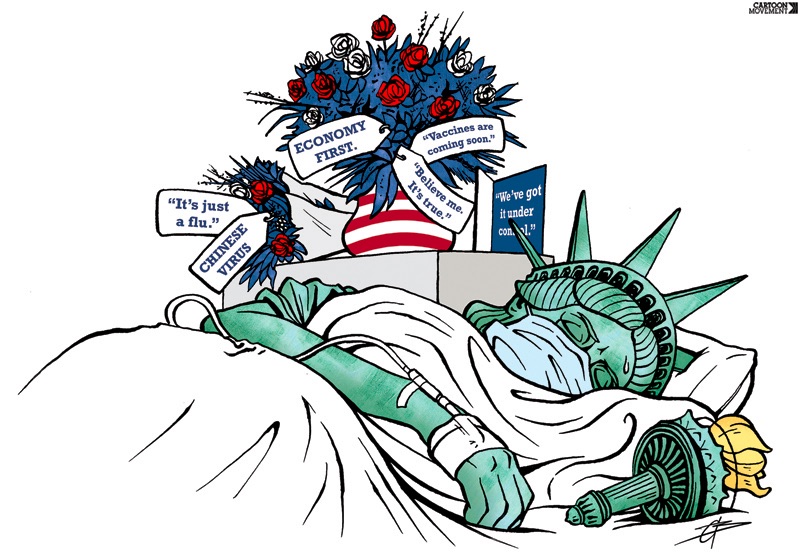
Cartoon – State of the Union

iroon.com: Cartoons


Cartoon – Coronavirus Prevention Today

College Signals Concern over Coronavirus Outbreak Cooks Adresses ...

Medicare trustees again sound alarm about looming depletion of hospital fund

https://www.fiercehealthcare.com/payer/medicare-trustees-again-sound-alarm-about-looming-depletion-hospital-fund?mkt_tok=eyJpIjoiTW1Gak1tTm1NMkZtTkdKaSIsInQiOiJGTGdcL1g2RWlXK2JRSmJQY29nZDZ6ZWszRlVxSnpHaEFwT1RaWkpITVRmTCtDeGpTeUVWWk9PYlZGdlZETFFBaVA1N2xRaXVLV2lpK0h1RVBrWk84dWw3RCtEUzZ5eXpSSkJlMHNYYzlURGYwcXZSY3BJYW9aYmsxRTJXUHpMbFAifQ%3D%3D&mrkid=959610

CMS Solicits Advice on New Medicare Payment Rules

The Medicare board of trustees held steady with its prediction on when the program’s hospital fund will run dry: 2026. 

In an annual report (PDF) released Wednesday, the trustees said hospital expenditures exceeded income by $5.8 billion last year. They expect similar trends to continue until the fund runs out in six years. The 2026 estimate has remained the same over the past several years of reports.

Medicare’s Hospital Insurance Trust Fund has missed the trustees’ tests of short-term financial adequacy every year since 2003, according to the report. It also marks the third year in a row that the trustees have issued a funding warning for the program. 

Total Medicare spending in 2019 was $796 billion, according to the report.

The trustees did say that despite the looming depletion of the fund, Congress has never allowed the hospital fund to fully run out. And the sooner policymakers act, the more time they have to roll out an extensive plan, the trustees said.

“The financial projections in this report indicate a need for substantial changes to address Medicare’s financial challenges,” the trustees said. “The sooner solutions are enacted, the more flexible and gradual they can be.”

“The early introduction of reforms increases the time available for affected individuals and organizations—including health care providers, beneficiaries, and taxpayers—to adjust their expectations and behavior,” they said.

While the fund backing Part A remains a risk, the funds for prescription drug coverage in Parts B and D are set to be stable for the foreseeable future, according to the report.  

That’s because these segments of the program are designed differently from the hospital benefit. Income and premium revenue reset annually, which allows the program to build a reserve for Part B contingencies and cover expected costs. 

The trustees also projected that Part B premiums will be about $153 in 2021. Premiums will be finalized in the fall.

The trustees caution, however, that the constant evolution in medicine makes it hard for long-term projections to be reliable. They also note that none of the projections account for any impacts related to the COVID-19 pandemic. 

“Projections of Medicare costs are highly uncertain, especially when looking out more than several decades,” the trustees said. “No one knows whether future developments will, on balance, increase or decrease costs.” 


70% Of Americans Want Officials To Prioritize Public Health Over Restarting Economy

https://www.forbes.com/sites/arielshapiro/2020/04/23/70-of-americans-want-officials-to-prioritize-public-health-over-restarting-economy-trump-kemp/?utm_source=newsletter&utm_medium=email&utm_campaign=news&utm_campaign=news&cdlcid=#74a9d5ce68d3

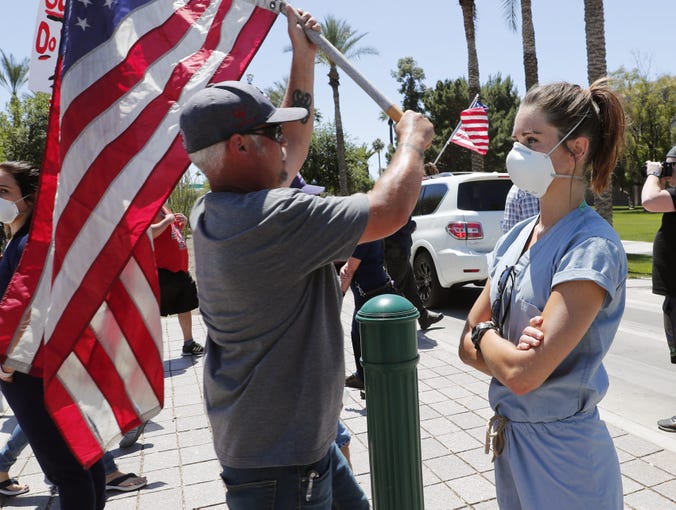
The ICU nurse who stood masked and silent at the rally to open Arizona

A wide majority of Americans are not ready to resume public life, according to a poll released Thursday by CBS News and YouGov, as governors in Georgia, Tennessee and South Carolina plan to allow stay-at-home orders to expire next week.

KEY FACTS

Only 30% of people surveyed said the government’s priority should be restarting the economy; 70% said the focus should be on slowing the virus through social distancing measures.

The polling shows a partisan divide—while 91% of Democrats and 69% of Independents favor focusing on public health, 52% of Republicans say the economy should take precedence.

29% of those polled said they would feel comfortable eating at a restaurant; Georgia Governor Brian Kemp will allow certain businesses, including restaurants, to open on April 27, 2020.

A minority of respondents said they would be comfortable going to work right now (44%) and even fewer said they would attend a large entertainment or sports event (13%), but the social isolation is taking its toll—54% said they would be willing to visit their friends.

KEY BACKGROUND

Protests against stay-at-home orders have cropped up around the country in states like California and Michigan, initially with President Donald Trump’s support. Although the movement is vocal, its support is limited. Less than a quarter of the poll’s respondents said they support the protests, and only 7% think that Trump should encourage them. The president is starting to change his tune, criticizing Georgia Governor Kemp’s plan to reopen businesses at the White House briefing on Wednesday.

WHAT TO WATCH FOR

Florida Governor Ron DeSantis said he is coordinating with neighboring governors on how to proceed, but has not yet announced whether he will extend the state’s stay-at-home order or let it expire. Florida has had more than 28,000 cases of COVID-19, more than any other southern state. A Quinnipiac poll released Wednesday shows that Florida residents’ opinions on reopening the economy reflect those of the country: Only 22% said that the state should loosen social distancing rules at the end of the month. As a first step, DeSantis allowed localities to reopen their beaches last week, and some, notably those in Jacksonville, were crowded.


Governor Cuomo, Bloomberg Announce Unprecedented New York COVID-19 Coronavirus Contact Tracing Program

https://www.forbes.com/sites/brucelee/2020/04/23/governor-cuomo-bloomberg-announce-unprecedented-new-york-covid-19-coronavirus-contact-tracing-program/?utm_source=newsletter&utm_medium=email&utm_campaign=career&cid=5d2c97df953109375e4d8b68#129e09243cd1

Coronavirus: Why are there doubts over contact-tracing apps? - BBC ...

New York is not going to let the COVID-19 coronavirus spread without a trace. Make that multiple traces. In fact, make that many, many, many traces.

New York State Governor Andrew Cuomo and former New York City Mayor Mike Bloomberg announced the launch of a massive contact tracing program in an effort to better contain the severe acute respiratory syndrome coronavirus 2 (SARS-CoV-2). How massive? How about larger-than-any-contact-tracing-effort-that’s-been-attempted-before-in-the-U.S. massive?

It is a sign of the times that Cuomo had to include a slide that said: “But we can’t be stupid.” After all, there are other people out there pushing to re-open businesses without at the same time providing a specific plan on how exactly to stop the virus when social distancing measures are relaxed.

Bloomberg Philanthropies, which was founded by Bloomberg, will contribute $10.5 million as well as technical support and assistance to the program. The Johns Hopkins Bloomberg School of Public Health will develop an online training program and certification process for those doing the contact tracing. Vital Strategies, via its Resolve to Save Lives initiative, will advise and assist the New York State Health Department staff in developing protocols and processes to help the whole contact tracing process.

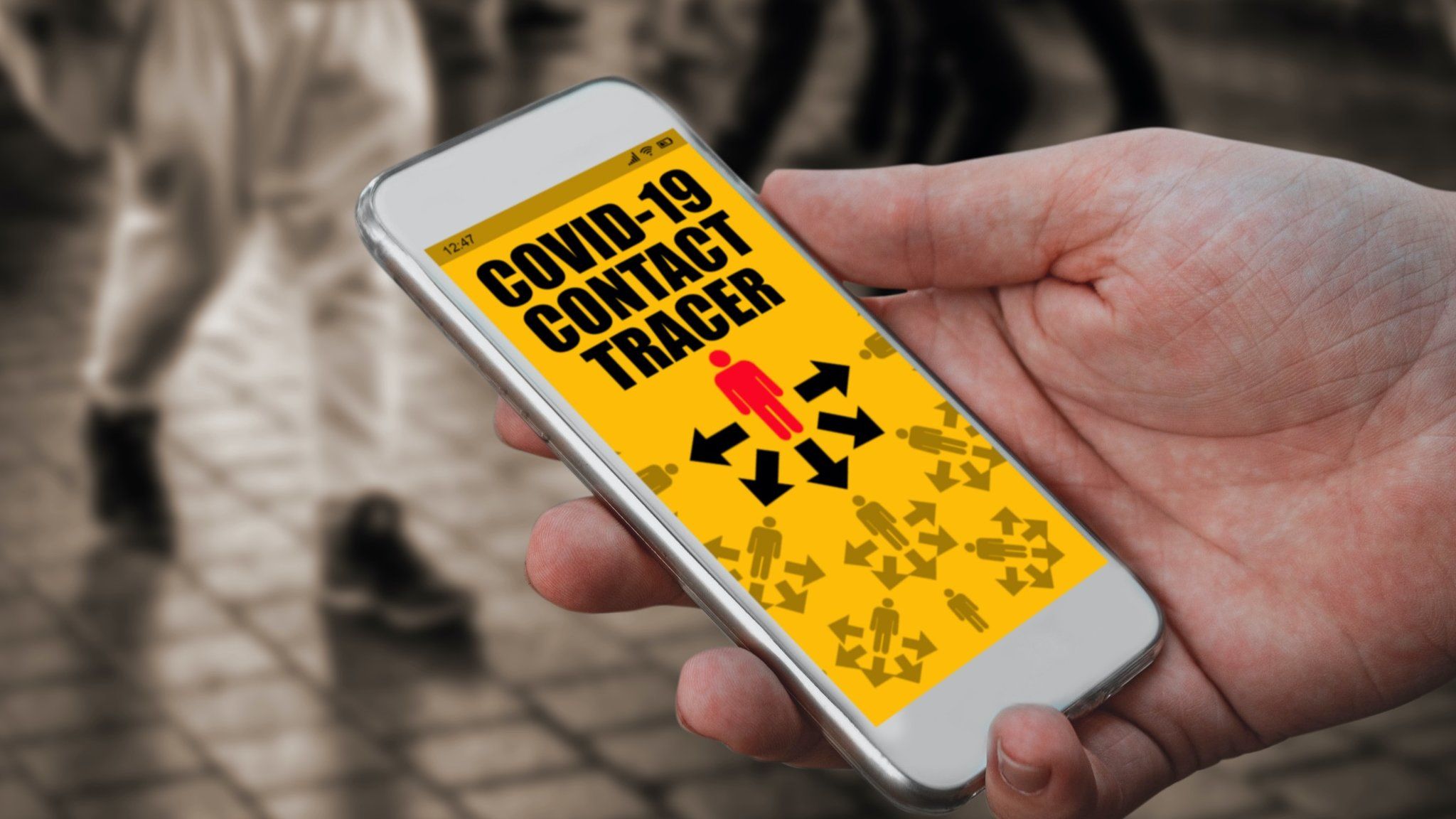
Speaking of vital strategies, “test-trace-isolate” is quite a vital strategy to try to contain the COVID-19 coronavirus so that social distancing measures can be relaxed and things can re-open, at least to some degree. Contact tracing is the “trace” part of that strategy. I’ve described previously for Forbes how to do contact tracing. When you’ve identified a person (an index case) infected with the SARS-Cov2 via testing, contact tracing is determining and locating every person that index case may have had contact with that was close enough to transmit the virus. This way you can isolate or quarantine all of those contacts as quickly as possible so that they can’t spread the virus any further. Essentially testing, tracing, and isolating or quarantining aims to contain the virus, to box it in, to give it no people to spread to, to surround it by nothing but toilet paper, fluffy pillows, Netflix videos, and whatever else people have in their houses and apartments.

Without a vaccine or specific treatment versus the SARS-Cov2, the virus could have spread much more widely without social distancing measures in place, because supplements, gargling salt water, Medieval chants or whatever bogus prevention measures have been offered weren’t going to stop the virus. Premature re-opening could send all of those efforts down the metaphorical toilet bowl. “While we start our work to re-open our economy we must ensure we are doing it in a way that does no harm and does not undo all of the work and sacrifice it has taken to get here,” said Cuomo in statement. “One of the most critical pieces of getting to a new normal is to ramp up testing, but states have a second big task – to put together an army of people to trace each person who tested positive, find out who they contacted and then isolate those people.”

Think about it. If you re-open places and relax social distancing measures, it could take only a small number of people spreading the virus to then cause another surge in COVID-19 cases. Therefore, a good contact tracing program needs to be in place to catch potentially infectious people quickly. Implementing large scale and coordinated contact tracing programs has been one way that Germany, Singapore and South Korea have been able to better control the COVID-19 coronavirus and its impact than the U.S. and U.K. have.

“We’re all eager to begin loosening restrictions on our daily lives and our economy,” said Bloomberg in a statement. “But in order to do that as safely as possible, we first have to put in place systems to identify people who may have been exposed to the virus and support them as they isolate.”

Putting appropriate systems in place before making a decision? Hear that sound? It’s the sound of science walking back into the ongoing “re-open America” conversation and saying, “what the heck have you been doing to the house while I’ve been away.” Deciding to re-open anything without first putting proper systems in place to monitor and contain the virus would be like going to a dinner party when you aren’t wearing any clothes. It would leave you quite exposed and basically put your butt on the line.

Although the program is launching immediately, it will take some time to recruit and train hundreds or perhaps thousands of tracers. Potential recruits will come from a variety of places such as the State Department of Health, various state agencies, the State University of New York (SUNY), and the City University of New York (CUNY). Henning indicated that the timeline for getting things in place will be in the order of “a number of weeks.”

This program will coordinate with contact tracing efforts in New Jersey and Connecticut. After all, this virus doesn’t respect borders or need an E-ZPass to spread to neighboring states. As Henning noted, “New York state has already been talking extensively with New Jersey and other states.”

If you live outside this tri-state area, try to pay attention to what’s going on here. After all, contact tracing will have to occur in other parts of the country as well. Otherwise, the virus can keep circulating in different parts of the country, which means that it could at any time readily spread to the rest of the U.S. After all, the virus is like a very bad house guest. It doesn’t respect boundaries. And it is unlikely to just disappear without a trace.