
Profits climb for major insurers as hospital volumes drop in Q2

All but two of the seven largest insurers saw profits climb in the second quarter as hospital operators continued to struggle with weak volumes and higher labor costs.

The nation’s top health insurers again raised financial targets for the year as revenues climbed on increased membership, while some signs indicated demand for medical services was tepid.   

All but two of the seven largest insurers saw profits climb in the second quarter compared with the prior-year period, as many saw a key metric for medical spending decrease. 

Many of the largest insurers saw profits climb in the second quarter

Industry observers have been closely watching for signals of pent-up demand as many patients delayed care amid the varying spikes in COVID-19 cases. 

That didn’t seem to materialize in the second quarter as insurance executives didn’t report a surge in care. Almost all insurers saw their medical loss ratios either decline or remain the same from the second quarter last year.   

Executives at Cigna, one of the nation’s largest insurers with nearly 18 million members, said there were fewer surgeries, fewer emergency room visits and fewer people admitted to the hospital in the second quarter compared to the prior-year period. 

Direct COVID-19 costs were also better-than-expected, Cigna executives told investors on the second-quarter earnings call. As fewer Cigna patients sought medical care, net income climbed 6% to $1.6 billion.

Cigna wasn’t alone in reporting lighter patient volumes

UnitedHealthcare, the insurer arm of UnitedHealth Group with more than 51 million members, reported a lower level of COVID-19 patient care and said usage of some medical services still fell below pre-pandemic levels, including pediatrics and the emergency department. UnitedHealth’s net income increased to $5.1 billion. 

Humana also noticed a dip in members utilizing medical services, noting fewer Medicare members were admitted to the hospital in the quarter. Humana’s net income also climbed 18% to $696 million.  

Q2 performances led insurers to raise their financial expectations for the full year. 

“The lower utilization trends and lack of COVID-19 headwinds seen to date, give us confidence in raising our full year adjusted [earnings per share] guide,” Humana CFO Susan Diamond said on a call with investors.

On the other hand, the nation’s for-profit hospital chains reported fewer admissions and a dip in profits as they continued to deal with labor and other expenses amid record high inflation. 

“U.S. hospitals and health systems are now halfway through an extremely challenging year,” Kaufman Hall said in a recent report that showed six consecutive months of negative operating margins.

Fitch Ratings revised its ratings outlook to negative from stable for Community Health Systems following the hospital chain’s second-quarter results. 

Fitch said the revision reflects “significant increases in labor costs and weakness in volume” throughout the first half of the year.

Nonprofit hospital operators have also faced challenges in the first half of the year.  

Both Kaiser Permanente and Sutter Health reported net losses in the second quarter of the calendar year as expenses grew and investment income declined.
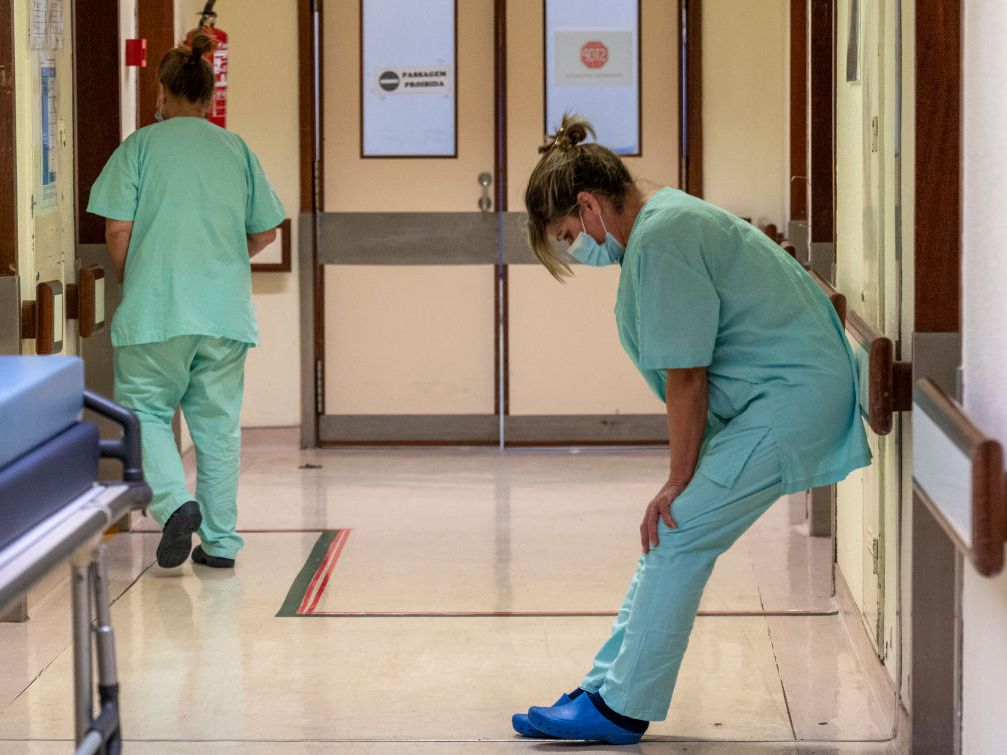
Why 67% of nurses want to quit—and what would make them stay

As RNs struggle to work through staffing shortages, their job satisfaction has sharply declined, with 67% saying they plan to leave their jobs within the next few years, according to a survey from the American Association of Critical-Care Nurses (AACN) published in Critical Care Nurse.

RNs cite poor work environments

For the survey, AACN collected responses from 9,862 nurses, 9,335 of which met the study criteria of being currently practicing RNs, in October 2021. The mean age was 46.5 years, and the mean years of experience was 17.8 years.

Of the participants, 78.3% worked in direct care, and 19.4% worked in a Beacon unit, meaning that their unit had been recognized by an AACN Beacon Award for Excellence. Half of the participants said they spent 50% or less of their time caring for Covid-19 patients, while the other half said they spent 50% or more.

To measure the health of a work environment, AACN looked at six standards:

  • Skilled communication
  • True collaboration
  • Effective decision-making
  • Meaningful recognition
  • Authentic leadership
  • Appropriate staffing

Overall, AACN found that nurses’ perceptions of quality on these six measures had declined across the board since the organization’s 2018 survey.

In particular, appropriate staffing was the lowest rated of all the standards at 2.33 out of 4, which is the lowest rating the standard has received since AACN first began the survey in 2006. Only 24% of RNs said their units had the right number of nurses with the right knowledge and skills more than 75% of the time—down from 39% who said the same in 2018.

In addition, there was a significant decline in how RNs rated the quality of care in their organizations and their units. Only 16% rated their organizations’ quality of care as excellent (compared to 24% in 2018), and 30% rated their units’ quality of care as excellent (compared to 44% in 2018). Over 50% of nurses said quality of care in their organization or unit has gotten somewhat or much worse over the last year.

Many nurses also reported difficulties with their physical and psychological well-being in the survey. For example, less than 50% of RNs said they felt their organization values their health and safety, a significant decline from 68% who said the same in 2018.

In addition, 40% of participants reported that they were not emotionally healthy. The percentage of RNs who reported experiencing moral distress also doubled from 11% in 2018 to 22% in 2021.

A significant portion of RNs also reported experiencing verbal abuse, physical abuse, sexual harassment, or discrimination over the past year. Of the 7,399 RNs who answered this question, 72% said they had experienced at least one negative incident, with verbal abuse being the most common at 65%, followed by physical abuse at 28%.

RN job satisfaction

Only 40% of RNs said they were “very satisfied” with their job, down from 62% who said the same in 2018. Further, a significant number of RNs in the survey reported planning to leave their jobs within the next few years.

Overall, 67% of RNs said they planned to leave their current position within the next three years, compared to 54% in 2018. Of this group, 36% said they planned to leave within the next year, with 20% planning to leave within the next six months.

According to the respondents, the top factors that could lead them to reconsider their decision to leave their job were a higher salary and more benefits (63%), better staffing (57%), and more respect from administration (50%).

“Without improvements in the work environment, the results of this study indicate that nurses will continue to exit the workforce in search of more meaningful, rewarding, and sustainable work,” the survey’s authors wrote. “It is time for bold action, and this study shows the way.” (Firth, MedPage Today, 8/3; Ulrich et al., Critical Care Nurse, 8/1)

Hard truths on the current and future state of the nursing workforce

image

Concerns about an imbalance in supply and demand in the nursing workforce have been around for years. The number of nursing professionals nationally may be healthy, but many nurses are not in the local areas, sites of care, or roles where they’re needed most. And many of today’s nurses don’t have the specialized skills they need, widening the existing gap between nurse experience and job complexity.

As a result, gaping holes in staffing rosters, prolonged vacancies, unstable turnover rates, and unchecked use of premium labor are now common.

Health care leaders need to confront today’s challenges in the nursing workforce differently than past cyclical shortages. In this report, we present six hard truths about the nursing workforce. Then, we detail tactics for how leaders can successfully address these challenges—stabilizing the nursing workforce in the short term and preparing it for the future.

Read More

Sutter Health’s rising expenses and rough investments yield a $457M net loss for Q2 2022

Updated on Aug. 5 with comments from Sutter Health.

A $457 million net loss for the quarter ended June 30 has brought Sutter Health even deeper into the red for 2022, according to new financial filings.

The Sacramento-based nonprofit health system brought in $3.49 billion in total operating revenues from the quarter, down slightly from the prior year’s $3.51 billion.

At the same time, the system’s operating expenses grew from $3.41 billion in the second quarter of 2021 to $3.55 billion in the most recent quarter, driven by $30 million and $151 million year-over-year increases in salaries and purchased services, respectively. The latter includes the increased professional fees being felt by labor-strapped systems across the country.

These led the system to report a $51 million operating loss for the quarter as opposed to the $106 million operating gain from last year’s equivalent quarter.

“Poorly” performing financial markets also took a toll on Sutter’s numbers. The system’s quarterly investment income dipped from $251 million to $56 million from 2021 to 2022. A $495 million downward change in net unrealized gains and losses on its investments was also a stark reversal from the prior year’s $270 million increase.

The new numbers cement what was already looking to be a tricky year for Sutter Health, which had previously reported a $184 million net loss for its opening quarter.

Despite a 1.5% year-over-year operating revenue increase to $7.05 billion for the opening six months, a 1.7% year-over-year operating revenue bump places the system’s year-to-date income at $44 million (0.6% operating margin), slightly below last year’s $57 million (0.8% operating margin).

However, market struggles through both quarters and a $208 million loss tied to the disaffiliation of Samuel Merritt University now has Sutter sitting at a $641 million net loss for the opening half of 2022. The system was up $825 million at the same time last year.

Sutter’s finances have stabilized, but our year-to-date numbers show we still have more affordability work ahead as we strive to best position Sutter Health to serve our patients and communities into the future,” the system wrote in an email statement. “We are grateful for our employees and clinicians who have worked diligently over the last several years to help bring our costs down—at the same time managing through the pandemic and continuing to provide high-quality, nationally recognized care.”

Sutter noted in the filing that it is or will be in labor negotiations with much of its unionized workforce, as 43% of its contract agreements have either expired or will be running their course within the year.

The filing also included notice of a handful of legal matters that have yet to be resolved. These include an antitrust verdict in favor of Sutter that is being appealed by the plaintiff, a lawsuit regarding an alleged privacy breach of two anonymous plaintiffs and two separate class-action complaints regarding employee retirement plan funding, among others.

“The organization continues to face financial headwinds like inflation and increased staffing costs, as evidenced by our near breakeven operating margin,” Sutter said in a statement. “Even still, we are encouraged that independent ratings agencies have recently acknowledged our efforts to date. In the second quarter, Moody’s, S&P and Fitch all affirmed the system’s existing ‘A’ category bond ratings.”

Much of Sutter’s pains are being felt across the industry. A recent Kaufman Hall industrywide report showed only marginal relief from expenses and middling non-COVID volume recovery through June, while a Fitch Ratings update on nonprofit hospitals warned that these challenges and broader inflation pressures will likely weigh down the sector through 2022.

Inpatient payment increase not enough, AHA says

https://www.healthcarefinancenews.com/news/inpatient-payment-increase-not-enough-aha-says?mkt_tok=NDIwLVlOQS0yOTIAAAGGA2hNPoWk8cdzEHcBC5xk1t_79ltx5DUnzCdiUWpAvrtC-_vON29agi9pNZf0kUGl9cKeinq1FXBXdCEr_RCHDNPIsIG9WjhKw1KLwH8

Hospitals are forced to absorb inflationary expenses, particularly related to supporting their workforce, AHA says.

The Centers for Medicare and Medicaid Services’ increase in the inpatient payment rate for 2023 is welcome but not enough to offset expenses, according to the American Hospital Association.

CMS set a 4.1% market basket update for 2023 in its final rule released Monday, calling it the highest in the last 25 years. The increase was due to the higher cost in compensation for hospital workers.

The final rule gave inpatient hospitals a 4.3% increase for 2023, as opposed to the 3.2% increase in April’s proposed rule.

WHY THIS MATTERS

CMS used more recent data to calculate the market basket and disproportionate share hospital payments, a move that better reflects inflation and labor and supply cost pressures on hospitals, the AHA said.

“That said, this update still falls short of what hospitals and health systems need to continue to overcome the many challenges that threaten their ability to care for patients and provide essential services for their communities,” said AHA Executive Vice President Stacey Hughes. “This includes the extraordinary inflationary expenses in the cost of caring hospitals are being forced to absorb, particularly related to supporting their workforce while experiencing severe staff shortages.”

The AHA would continue to urge Congress to take action to support the hospital field, including by extending the low-volume adjustment and Medicare-dependent hospital programs, Hughes said.

In late July, Senate and House members urged CMS to increase the inpatient hospital payment.

Premier, which works with hospitals, also said the 4.3% payment update falls short of reflecting the rising labor costs that hospitals have experienced since the onset of the pandemic. 

“Coupled with record high inflation, this inadequate payment bump will only exacerbate the intense financial pressure on American hospitals,” said Soumi Saha, senior vice president of Government Affairs for Premier.

THE LARGER TREND

Recent studies show hospitals remain financially challenged since the COVID-19 pandemic’s effect on revenue and supply chain and labor expenses. Piled onto that has been inflation that has added to soaring expenses.

Hospital margins were up slightly from May to June, but are still significantly lower than pre-pandemic levels, according to a Flash Report from Kaufman Hall.

The effects of the pandemic on the healthcare industry have been profound, resulting in the creation of new business models, according to a report from McKinsey.

Transformational change is necessary as hospitals have been hit hard by eroding margins due to cost inflation and expenses, Fitch found.

HOSPITALS SEE NEGATIVE MARGINS FOR SIXTH CONSECUTIVE MONTH

https://www.healthleadersmedia.com/finance/hospitals-see-negative-margins-sixth-consecutive-month

Expenses are still weighing heavily on hospitals, health systems, and physician’s practices as the cost of care continues to rise.

Hospitals, health systems, and physician’s practices are still struggling under the weight of significant financial pressure, that the rise in patient volume and revenue can’t seem to outweigh.

The increase in patient volume and revenue has not been able to offset the historically high operating margins these organizations are facing, according to data from Kaufman Hall’s National Hospital Flash Report and Physician Flash Report. Hospitals, health systems, and physician’s practices dealt with negative margins in June for the sixth consecutive month this year.

“To say that 2022 has challenged healthcare providers is an understatement,” Erik Swanson, a senior vice president of data and analytics with Kaufman Hall, said in an email report. “It’s unlikely that hospitals and health systems can undo the damage caused by the COVID-19 waves of earlier this year, especially with material and labor costs at record highs this summer.”

The median Kaufman Hall year-to-date operating margin index for hospitals was -0.09% through June, for the sixth month of cumulative negative actual operating margins. However, the median change in operating margin in June was up 30.8% compared to May, but down 49.3% from June 2021.

Hospital revenues for June continued to trend upward, even as volumes evened out, according to the Kauffman Hall data. Organizations saw a 2.1% drop in patient length of stay. Both patient days and emergency department visits each dropped by 2.6% in June when compared to May. Hospital’s gross operating revenue was up 1.2% in June from May.

Expenses have been dragging down hospital margins for months, however, June saw a slight month-over-month improvement as total hospital expenses dropped 1.3%, despite this, year-over-year expenses are still up 7.5% from June 2021. Physician practices saw a drop in provider compensation, according to the Kaufman Hall data, however, this wasn’t enough to offset expenses. The competitive labor market for healthcare support staff resulted in a new high for total direct expense per provider FTE in Q2 2022 of $619,682—up 7% from the second quarter of 2021 and 12% from the second quarter of 2020.

“Given the trends in the data, physician practices need to focus on efficiency in the second half of 2022,” Matthew Bates, managing director and Physician Enterprise service line lead with Kaufman Hall, said in the email report. “Amid historically high expenses, shifting some services away from physicians to advanced practice providers like nurse practitioners or physician assistants could help rein in the costs of treating an increased patient load while taking some of the weight off the shoulders of physicians.”

Large nonprofit health systems in the spotlight again for not providing enough charity care

https://mailchi.mp/ff342c47fa9e/the-weekly-gist-july-22-13699925?e=d1e747d2d8

A recent Wall Street Journal analysis, published this week, provides further evidence that large, nonprofit health systems often offer less charity care than their for-profit peers. It found that, on average, nonprofit systems spent 2.3 percent of their net patient revenue on financial aid for patients, whereas for-profit hospitals spent 3.4 percent.

The American Hospital Association criticized the analysis, arguing that it doesn’t fully capture the broader community benefits that nonprofit hospitals provide. Earlier this year the Lown Institute, a Boston-based think tank, also found that most nonprofit hospitals invest less in their communities and spend less on charity care than the amount they receive from tax exemptions.

The Gist: The issue of whether hospital systems should continue to enjoy tax-exempt status is a perennial stalking horse in the health policy community. The topic often gets conflated with whether nonprofit systems are truly “nonprofit”, since many larger systems make robust profits. 

There’s no question that nonprofit systems enjoy a huge economic advantage from not being subject to taxation, in return for which we should expect them to provide “community benefit” at a level commensurate with the status.

The difficulty is in defining and measuring community benefit— for example, should serving Medicaid patients count? Is it fair to count discounts for the uninsured as “charity care”, if we know prices are artificially inflated in the first place? These are thorny questions with no obvious answers, but ones that would benefit from clearer guidance and more transparency from policymakers.

For-profit hospital company earnings announcements show economic headwinds are mounting

https://mailchi.mp/ff342c47fa9e/the-weekly-gist-july-22-13699925?e=d1e747d2d8

While for-profit health system giants HCA Healthcare and Tenet Healthcare reported reductions in contract labor usage last quarter, sustained higher labor costs and sluggish demand resulted in both of them, along with Community Health Systems and Universal Health Services, seeing their net income decline in the second quarter.

Like many systems, the for-profit chains seem to have successfully weaned themselves from earlier reliance on expensive temporary nurses, but are facing more structural increases in labor costs as salaries have risen to remain competitive in a very tight labor market.

The Gist: The earnings reports from for-profit companies are a canary in the coal mine for the overall margin performance of the industry. Although investor-owned companies are vastly outnumbered by their not-for-profit peers, they often move more quickly, and with more vigor, to reduce costs in order to meet the earnings expectations of Wall Street investors. They also typically rely more heavily on volume growth—particularly emergency department visits—as a driver of earnings. 

If for-profits are now finding it more difficult to pull those levers, we’d expect that the broader universe of nonprofit systems is experiencing even tougher sledding. That’s consistent with what we’re hearing anecdotally from health systems we work with.

Washington hospitals report $929M loss over 3 months

Washington State Hospital Association reported a $929 million net loss due to an increase in operating expenses and nonoperating investment losses, The News Tribune reported July 21. 

The review reflected January through March 2022 and showed operating revenue increased by 5 percent; however, operating expenses increased by 11 percent. 

“This combined with non-operating investment losses, resulted in a total margin of negative 13 percent,” WSHA said in a briefing of the review July 21. 

The losses were mainly seen in urban Washington hospitals, though rural hospitals were also affected. 

“All 52 urban hospitals/health systems reported negative margins and account for 86 percent of the losses statewide,” WSHA said. “Of the independent rural hospitals responding, 18 out of 32 had negative margins.”

WSHA said lower Medicaid reimbursements were part of the problem. In the first quarter, Medicaid reimbursements covered 42 percent of the cost of care delivery. 

Pandemic pressures also had a negative effect, according to WSHA. It said federal COVID-19 relief funds have been depleted. 

Additionally, WSHA said labor costs have continued to rise because of a need to retain staff and a reliance on travel nurses with high wages. 

HCA, Tenet profits sink: 10 things to know

HCA Healthcare and Tenet Healthcare, two of the largest for-profit hospital operators in the U.S., reported lower net income in the second quarter of this year than in the same period of 2021. 

HCA Healthcare

1. Nashville, Tenn.-based HCA Healthcare, a 182-hospital system, reported revenues of $14.82 billion in the second quarter of this year, up from $14.44 billion in the same period last year. 

2. HCA’s net income totaled $1.16 billion in the second quarter of 2022, down from $1.45 billion in the same period a year ago. The second quarter of this year included $32 million in losses on the sales of facilities and and losses on retirement of debt of $78 million. 

3. HCA said same-facility admissions declined 1.2 percent year over year in the second quarter of this year. Emergency room visits were up 7.3 percent year over year. 

4. “Many aspects of our business were positive considering the challenges we faced with the labor market and other inflationary pressures on costs,” Sam Hazen, CEO of HCA, said in a July 22 earnings release. “Our teams executed well as they have in the past through other difficult environments. Again, I want to thank them for their dedication and excellent work.”

5. For the six months ended June 30, HCA reported net income of $2.43 billion on revenues of $29.77 billion. In the same period a year earlier, the company posted net income of $2.87 billion on revenues of $28.41 billion. 

Tenet Healthcare

1. Dallas-based Tenet Healthcare reported revenues of $4.64 billion in the second quarter of this year, down from $4.95 billion in the same period a year earlier. The decrease was primarily attributed to the sale of the company’s Miami-area hospitals in the third quarter of 2021 and the impact of a cybersecurity incident. 

2. The 60-hospital system ended the second quarter of this year with net income of $38 million, down from $119 million in the same quarter last year. 

3. Same-hospital admissions adjusted for outpatient activity were down 5.3 percent year over year in the second quarter of this year. Tenet said a cybersecurity incident in April that temporarily disrupted some acute care operations contributed to the decline. 

4. “We demonstrated resilience in the face of a disruptive cyber attack and discipline through challenging market conditions,” Saum Sutaria, MD, CEO of Tenet, said in a July 21 earnings release. “The ongoing diversification of Tenet driven by our capital efficient ambulatory expansion is a key differentiator that presents compelling opportunities for growth in earnings and free cash flows.”

5. Looking at the six months ended June 30, Tenet reported net income of $178 million on revenues of $9.38 billion. In the same period of 2021, the company reported net income of $216 million on revenues of $9.74 billion. 

10 health systems with strong finances

Here are 10 health systems with strong operational metrics and solid financial positions, according to reports from Fitch Ratings and Moody’s Investors Service.

1. AnMed Health has an “AA-” rating and stable outlook with Fitch. The Anderson, S.C.-based system has a leading market share in most service lines, strong operating performance and very solid EBITDA margins, Fitch said. 

2. Banner Health has an “AA-” rating and stable outlook with Fitch. The Phoenix-based health system’s core hospital delivery system and growth of its insurance division combine to make it a successful highly integrated delivery system, Fitch said. The credit rating agency said it expects Banner to maintain operating EBITDA margins of about 8 percent on an annual basis, reflecting the growing revenues from the system’s insurance division and large employed physician base. 

3. Franciscan Alliance has an “AA” rating and stable outlook with Fitch. The Mishawaka, Ind.-based health system has a very strong cash position and maintains leading market shares in seven of its nine defined primary service areas, Fitch said. The health system benefits from a good payer mix, the credit rating agency said. 

4. Gundersen Health System has an “AA-” rating and stable outlook with Fitch. The La Crosse, Wis.-based health system has strong balance sheet metrics and a leading market position and expanding operating platform in its service area, Fitch said. The credit rating agency expects the health system to return to strong operating performance as it emerges from disruption related to the COVID-19 pandemic. 

5. Hackensack Meridian Health has an “AA-” rating and stable outlook with Fitch. The Edison, N.J.-based health system has shown consistent year-over-year increases in market share and has a solid liquidity position, Fitch said. 

6. Falls Church, Va.-based Inova Health System has an “Aa2” rating and stable outlook with Moody’s. The health system has a consistently strong operating cash flow margin and ample balance sheet resources, Moody’s said. Inova’s financial excellence will remain undergirded by its favorable regulatory and economic environment, the credit rating agency said. 

7. Salt Lake City-based Intermountain Healthcare has an “Aa1” rating and stable outlook with Moody’s. The health system has exceptional credit quality, which will continue to benefit from its leading market position in Utah, Moody’s said. The credit rating agency said the health system’s merger with Broomfield, Colo.-based SCL Health will give Intermountain greater geographic reach. 

8. Fort Wayne, Ind.-based Parkview Health has an “Aa3” rating and stable outlook with Moody’s. The health system has a leading market position with expansive tertiary and quaternary clinical services in northeastern Indiana and northwestern Ohio, Moody’s said. The credit rating agency said the stable outlook reflects management’s ability to generate strong operating performance during the pandement and with less favorable reimbursement rates. 

9. UnityPoint Health has an “AA-” rating and stable outlook with Fitch. The Des Moines, Iowa-based health system has strong leverage metrics and cash position, Fitch said. The credit rating agency expects the health system’s balance sheet and debt service coverage metrics to remain robust. 

10. Yale New Haven (Conn.) Health has an “AA-” rating and stable outlook with Fitch. The health system’s turnaround efforts, brand recognition and market presence will help it return to strong operating