PBGH CEO ON SUTTER HEALTH ANTITRUST SETTLEMENT: ‘I DON’T THINK THIS ISSUE WILL GO AWAY’

https://www.healthleadersmedia.com/finance/pbgh-ceo-sutter-health-antitrust-settlement-i-dont-think-issue-will-go-away

Elizabeth Mitchell, CEO of the Pacific Business Group on Health, weighs in on the recent settlement between Sutter Health and the California Attorney General’s office.

Despite a recent settlement between Sutter Health and a group of self-funded employers along with the California Attorney General’s office, the issue of high healthcare costs and pricing concerns is likely to continue in the Golden State, according to an industry observer.

The Sutter Health antitrust case was settled in mid-October, bringing a sudden end to a healthcare trial that garnered widespread attention from provider organizations.

Sutter Health was accused of violating state antitrust laws by wielding its massive market power in Northern California to drive up prices. The Sacramento-based nonprofit health system, which reported an operating revenue of $13 billion in 2018, was expected to face up to $2.7 billion in damages before a settlement was reached just ahead of when opening arguments were slated to begin.

While the final details of the case have not been released yet, there is still interest in the healthcare industry about what concessions were made by each side in the case and how the settlement may impact the industry at large. 

Elizabeth Mitchell, CEO of the Pacific Business Group on Health (PBGH), told HealthLeaders that the case was another example of how important it is for employers to review pricing practices, especially for hospital services.

“We think that there will be a lot to be learned from this case when we understand what the injunctive release will include,” Mitchell said. “There is a need to ensure a functional marketplace for healthcare purchasing and this could create that opportunity for California and potentially the rest of the country.”

Provider consolidation has become a focus of California’s healthcare market in recent years, with several reports pointing to significant market concentrations in counties across the state.

A September 2018 study conducted by RAND Corporation and the Nicholas C. Petris Center on Health Care Markets and Consumer Welfare School of Public Health at the University of California, Berkeley found that more than a dozen California counties were deemed “hot spots,” or markets that deserve additional regulatory review.

Researchers urged state legislators to pass additional oversight measures to address the potential negative consequences of healthcare M&A activity.

As it relates to large employers, Mitchell said that businesses are continually looking for innovative arrangements that prioritize quality care options and affordability, which may require providers who have been “seeking to maximize prices” to rethink that approach.

She pointed to PBGH’s Employers Centers of Excellence Network, which has allowed businesses to contract with certain providers for affordable care options that improve health outcomes.

However, Mitchell said that some contracting practices from large integrated systems prohibit such approaches by employers to identify and discern quality variation, which ultimately impacts patients.

Despite the ruling in the Sutter case, Mitchell said that the larger issue around pricing for medical care in California is not fully resolved.  

“I don’t think this issue will go away, it will remain front and center for a lot of folks paying for medical care,” Mitchell said. “There’s a lot of interest in partnering with clinicians for high value care, but these anti-competitive practices really inhibit that.”



NY Local employers predict 3.6% increase in health benefit costs in 2020

https://www.crainsnewyork.com/health-pulse/local-employers-predict-36-increase-health-benefit-costs-2020?utm_source=health-pulse-tuesday&utm_medium=email&utm_campaign=20191028&utm_content=hero-readmore

Image result for chronic care management

Employers in the metro area expect their spending on benefits to rise 3.6% next year after accounting for changes designed to hold down costs, according to an analysis by Mercer.

That trend would be lower than the 3.9% increase employers experienced this year, with local organizations spending $16,059 per active employee. That’s more than 20% higher than the average cost per employee nationwide.

The benefits consultant broke out the responses of 170 employers in New York City, its surrounding counties, northern New Jersey and southern Connecticut for Crain’s from its 2019 National Survey of Employer-Sponsored Health Plans.

In the area, the average contribution to premiums for an individual employee is $199 a month in a PPO plan, $169 a month in an HMO and $107 a month in a consumer-directed health plan, which tends to have a higher deductible.

The median deductible for members in a PPO plan was $500 locally.

Nationwide, there was a split, with the average deductible for businesses between 10 and 499 employees increasing nearly 13%, to $2,285, while employers with 500 or more workers raised the average deductible in a PPO plan just $10, or 1%, to $992.

Companies are looking to telemedicine and management programs for their highest-cost members as ways to keep fees down, said Mary Lamattina, a senior consultant at Mercer. She said most clients she works with have at least one beneficiary with $1 million in annual medical expenses.

“Employers are getting away from cost shifting and looking at other ways to tackle affordability,” she said.

Nationwide, employers spent 3% more on health costs this year, driven in part by specialty drug spending. Costs for specialty drugs rose 10.5% this year.

Ninety percent of employers with 500 workers or more said they viewed monitoring or managing high-cost claimants as important or very important. One strategy companies reported using was introducing a tech-enabled chronic care management program for conditions such as diabetes.

About 88% of large employers said they offer telemedicine as an option, but only 9% of eligible employees had taken advantage of the programs.

Lamattina pointed out that utilization was nearly four times higher at organizations that waived a copay for telemedicine use, compared with employers that charged a $40 copay. “

“Utilization can be driven by the cost,” she said. “Convenience is really key to getting people to use the benefit.” —Jonathan LaMantia


Gainesville health system paying patients’ out-of-network costs

https://www.albanyherald.com/news/gainesville-health-system-paying-patients-out-of-network-costs/article_5a82d58a-f4f1-11e9-b7b5-8bebc4253708.html

gainesville hospital.jpg

With a contract impasse in its third week, a Gainesville-based health system is spending millions of dollars so that thousands of patients are not having to pay more when visiting the system’s doctors and hospitals.

Northeast Georgia Health System’s contract with Anthem ended Sept. 30, which means that since then, Georgians with Anthem insurance have been out of network for NGHS facilities and physicians.

But in an unusual move, the Northeast Georgia system is making up the financial difference between in-network and out-of-network prices through Dec. 31. That way, Anthem patients won’t pay higher fees when visiting NGHS medical providers, the system said.

“While it will cost millions of dollars per month to protect our patients from out-of-network costs, we’d rather do that than agree to a proposal that would jeopardize the health of our community for years to come,’’ Steve McNeilly, vice president of managed care for NGHS, said.

Most contract disputes between health systems and insurers get resolved before the end of the previous deal, although some agreements come just hours before the end of the expiring pact. The terminated contract between NGHS and Anthem is an exception, and this particular stalemate doesn’t show any sign of progress. Neither side has mentioned any negotiations or even indicated that talks are being scheduled.

The standoff comes at a time when many Georgians are entering their open enrollment period for the 2020 health plan year.

Anthem is by far the state’s biggest health insurer. Northeast Georgia’s hospitals in Gainesville, Braselton, Winder and Dahlonega, as well as its urgent care facilities and many physician group locations, are now out of network for Anthem patients.

“Anthem has only contacted NGHS once since the end of September – and that was only to inform us that they would be processing all claims as out-of-network,’’ McNeilly said. He said Northeast Georgia has proposed a contract with concessions, but that Anthem “refuses to take any meaningful action.’’

“Unfortunately, it appears that Anthem intends for us to be out of network for an extended period of time, so we’re urging patients to switch to a different health insurance plan during open enrollment,’’ McNeilly added.

Northeast Georgia said patients can call its Patient Access Service Center at (770) 219-7678 to get a personalized estimate of hospital charges for upcoming surgeries or procedures. If patients have questions about charges for physician office visits, they can call their physician’s office for more information, NGHS said.

Anthem said Monday that it is “standing firm for our consumers who need greater affordability.’’

The latest proposals from NGHS would increase costs “well above other health systems in the state,’’ Christina Gaines, an Anthem spokeswoman, said. “These increases place a significant burden on consumers because any substantial price increase in the services at these facilities would be directly reflected in increases in medical expenses covered by employer-sponsored group health plans, as well as to member premiums and cost share amounts.’’

What NGHS proposed “was simply not sustainable’’ for Anthem members, she said.

“We provided a revised proposal to them two days before the contract expired and did not receive a response,’’ Gaines said. “We are willing to resume talks so we can come to a new agreement that is fair, provides flexibility and protects affordability.”

Anthem said it can’t guarantee that Northeast Georgia will continue to charge patients the same rates as under the previous contract.

“To protect against unexpected balance billing, and other expenses associated with out-of-network providers, we are urging members to use in-network physicians and facilities,’’ Gaines said. “Anthem continues to have a broad, statewide provider network that delivers access to other quality health care options that remain in-network for our consumers.” Anthem directed consumers to visit www.anthem.com/nghs for information.

Craig Savage, a consultant with CMBC Advisors in North Carolina, said he had not heard previously of a hospital-based system covering the cost gap for patients who are forced out of network by a contract dispute.

“I think it’s a demonstration of good faith to patients,’’ Savage said. “It puts a little marketing pressure on Anthem.’’

But he added that even losing the business of 40,000 patients is “not going to have a huge [financial] impact on Anthem in Georgia.’’

And Savage said the contract standoff may put pressure on local physicians who could lose many patients to another insurer during open enrollment season.


5 WAYS HEALTHCARE ORGANIZATIONS CAN ADDRESS SOCIAL DETERMINANTS OF HEALTH

https://www.healthleadersmedia.com/clinical-care/5-ways-healthcare-organizations-can-address-social-determinants-health

The National Academies of Sciences, Engineering, and Medicine has published a detailed report on implementing efforts to address the social needs of patients.


KEY TAKEAWAYS

Social needs play a pivotal role in patient outcomes.

Before setting strategies to address social determinants of health, healthcare organizations should assess their level of existing social needs activities.

Partnerships are a crucial component of addressing the social needs of patients.

Healthcare providers can address social determinants of health through five approaches—awareness, adjustment, assistance, alignment, and advocacy, according to a report from the National Academies of Sciences, Engineering, and Medicine.

Social determinants of health (SDOH) such as housing, food security, and transportation can have a pivotal impact on the physical and mental health of patients. By making direct investments in initiatives designed to address SDOHs and working with community partners, healthcare organizations can help their patients in profound ways beyond the traditional provision of medical services.

“The consistent and compelling evidence concerning how social determinants shape health has led to a growing recognition throughout the healthcare sector that improvements in overall health metrics are likely to depend—at least in part—on attention being paid to these social determinants,” the National Academies report says.

The report outlines the “5As” strategies that healthcare organizations can implement to address SDOHs in the communities they serve. The strategies were developed by the National Academies’ Committee on Integrating Social Needs Care into the Delivery of Healthcare to Improve the Nation’s Health, Board on Health Care Services, Health and Medicine Division.

1. AWARENESS

The committee says awareness should focus on identifying the social risks and assets of specific patients and populations of patients.

“On the clinical side, patients visiting healthcare organizations are increasingly being asked to answer social risk screening questions in the context of their care and care planning. In some places, screening is incentivized by payers. As part of the MassHealth Medicaid program, for instance, Massachusetts accountable care organizations now include social screening as a measure of care quality,” the report says.

2. ADJUSTMENT

Instead of addressing social needs directly, healthcare organizations can pursue a strategy that focuses on adjusting clinical care to address social determinants of health.

“Many examples of adjustment strategies were identified in the literature, including the delivery of language- and literacy-concordant services; smaller doctor-patient panel sizes for cases with socially complex needs (e.g., teams caring for homeless patients in the U.S. Department of Veterans Affairs health system have panel sizes smaller than the size of other VA care teams); offering open-access scheduling or evening and weekend clinic access; and providing telehealth services, especially in rural areas,” the report says.

3. ASSISTANCE

Healthcare organizations can pursue strategies to connect patients with social needs to government and community resources.

“The literature contains descriptions of a variety of assistance activities that have been undertaken by health systems and communities. These assistance activities vary in intensity, from lighter touch (one-time provision of resources, information, or referrals) to longer and more intensive interventions that attempt to assess and address patient-prioritized social needs more comprehensively,” the report says.

Intensive interventions include relationship building, comprehensive biopsychosocial needs assessments, care planning, motivational interviewing, and long-term community-based supports.

4. ALIGNMENT

Healthcare providers can pursue an alignment strategy that assesses the social care assets in the community, organizes those assets to promote teamwork across organizations, and invests in assets to impact health outcomes.

“The committee defined alignment activities to include those undertaken by healthcare systems to understand existing social care assets in the community, organize them in such a way as to encourage synergy among the various activities, and invest in and deploy them to prevent emerging social needs and improve health outcomes,” the report says.

5. ADVOCACY

Healthcare providers can form alliances with social care organizations to advocate for policies that promote the creation and distribution of assets or resources to address social determinants of health. For example, healthcare organizations can call for policy changes to overhaul transportation services in a community.

“In both the alignment and advocacy categories, healthcare organizations leverage their political, social, and economic capital within a community or local environment to encourage and enable healthcare and social care organizations to partner and pool resources, such as services and information, to achieve greater net benefit from the healthcare and social care services available in the community,” the report says.

IMPLEMENTING THE FIVE STRATEGIES

Assessing the level of existing social needs activities should be a starting point for healthcare organizations that want to address social determinants of health, the chairperson of the National Academies committee told HealthLeaders.

One of the first steps healthcare organizations can take is identifying activities they may already have underway that fit the 5As, then expand or enhance those activities through greater commitment from leadership, investment of resources into supporting infrastructure, and strengthening of engagement with patients and community stakeholders, said Kirsten Bibbins-Domingo, PhD, MD, MAS, professor and chair, Department of Epidemiology and Biostatistics, UCSF School of Medicine, University of California, San Francisco.

“Healthcare organizations may not have activities in all of the 5As and should use this framework to develop strategies that will work within their local context. In all cases, it is critical to be aware that addressing health-related social needs of their patients is essential to achieving goals of high quality and high-value care,” she said.

“Partnerships are crucial,” Bibbins-Domingo said.

“Activities in the clinical setting should be designed and implemented in a way that engages patients, community partners, frontline staff, social care workers, and clinicians in planning and evaluation, as well as in incorporating the preferences of patients and communities. Establishing linkages and communication pathways between healthcare and social service providers is critical, including personal care aides, home care aides, and others who provide care and support for seriously ill and disabled patients.”


FTC to probe impacts of state antitrust protections for local hospital mergers

https://www.fiercehealthcare.com/hospitals-health-systems/ftc-to-probe-impacts-state-antitrust-protections-for-local-hospital?mkt_tok=eyJpIjoiT0RZNE4yTm1PV1psTmpNeSIsInQiOiJ5R3gxMEwrdUhPWUdZVlBTZ3NWWkdMV08xOCtObDdFaGdHaE1hN0o4Z2p5WnBaN3hjd2lDVm5ybnBhWUtUNFdlTW1LcndtaTN1WUtNVzg1NmUrQjJmWEhqTWpJR3BkUmVuZmVNS2FzdmRWdENuMEtNT0tJMXozUW93N0lVQmZ5WSJ9&mrkid=959610

The Federal Trade Commission (FTC) issued orders to five health insurance companies and two health systems seeking data to study the effects of state-level regulatory approvals known as certificates of public advantage (COPAs) that protect local hospital mergers from antitrust scrutiny.

Federal officials said they want to study the impact of COPAs and hospital consolidation on prices, quality, access, the innovation of healthcare services and employee wages.

The FTC issued orders to Aetna, Anthem, BlueCross BlueShield of Tennessee, Cigna and United Healthcare for patient-level commerical claims data. 

Orders were also issued to Ballad Health in Tennessee and Virginia as well as Cabell Huntington Hospital in West Virginia for aggregated patient billing and discharge data, along with health system employee wage data and other information relevant for analyzing the health systems’ prices, quality, access and innovation. Both health systems were approved for COPAs last year.

Ballad Health was formed in 2018 through the merger of Mountain States Health Alliance and Wellmont Health System. Under a COPA in Tennessee and a similar agreement in Virginia, officials said they agreed to serve oversight and enforceable commitments that include investing $308 million over 10 years to improve population health, expanding access to care and supporting health research and medical education.

Cabell Huntington Hospital was allowed to acquire nearby St. Mary’s Medical Center under a similar cooperative agreement with the state that was initially challenged by federal regulators.

Tennessee regulators describe COPAs as written approvals governing mergers among two or more hospitals that provide “state action immunity to the hospitals from state and federal antitrust laws by replacing competition with state regulation and active supervision. The goal of the COPA process is to protect the interests of the public in the region affected and the state.”

However, the feds say while COPAs “purport to immunize mergers and collaborations from antitrust scrutiny under the state action doctrine,” the approvals are in need of further study. As Kaiser Health News reported, the federal antitrust exemption dates back to a Supreme Court ruling in the 1940s and has been rarely used to allow hospital mergers. There has been little research (PDF) on the impacts of COPAs.

In June, the FTC held a public workshop examining research on the price effects of three COPAs approved in the 1990s—including Benefis Health System in Montana, Palmetto Health in South Carolina and Mission Health in North Carolina—to inform the current study design. Officials said they intend to collect information over the next several years to conduct retrospective analyses of the Ballad Health and Cabell COPAs.

Once the study is complete, the FTC intends to report publicly the study’s findings and will use them to help in future advocacy and enforcement by the agency and to better inform stakeholders about COPAs. 


A group of Republicans has unveiled its healthcare plan. Here is what’s new and what isn’t

https://www.fiercehealthcare.com/payer/a-group-republicans-have-a-new-healthcare-plan-here-what-new-and-what-isn-t?mkt_tok=eyJpIjoiT0RZNE4yTm1PV1psTmpNeSIsInQiOiJ5R3gxMEwrdUhPWUdZVlBTZ3NWWkdMV08xOCtObDdFaGdHaE1hN0o4Z2p5WnBaN3hjd2lDVm5ybnBhWUtUNFdlTW1LcndtaTN1WUtNVzg1NmUrQjJmWEhqTWpJR3BkUmVuZmVNS2FzdmRWdENuMEtNT0tJMXozUW93N0lVQmZ5WSJ9&mrkid=959610

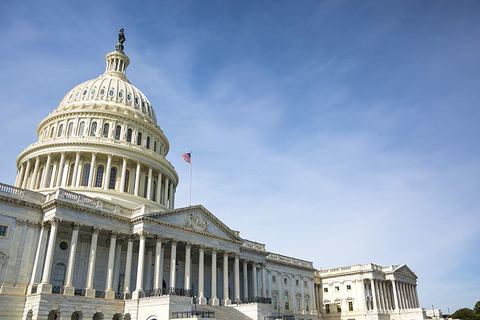
Capitol building in Washington

The Republican Study Committee (RSC), a group of 145 House GOP lawmakers, rolled out a new healthcare plan to counter Democrats’ call for “Medicare for All.”

However, the plan itself closely resembles the Affordable Care Act (ACA) repeal bill called the American Health Care Act (AHCA) that the House passed in 2017 and contributed greatly to the loss of the GOP House majority in 2018.

For the plan to become law, Republicans would have to retake the House in 2020, and President Donald Trump would need to be reelected. However, if those victories happen, the plan could be a blueprint for how a GOP-controlled Congress would move forward on healthcare, as the committee counts among its members both GOP leadership and rank and file.

Here are three takeaways from the plan:

Shifting to high-risk pools

The plan would retain the ACA’s requirement that individual market plans cover pre-existing conditions. However, it takes out provisions that ensure patients with pre-existing conditions get affordable coverage such as requirements that prevent plans from charging sicker people higher premiums than healthy customers.

The plan does introduce high-risk pools that would be used by people with high healthcare costs, a commonly deployed tactic by states for the individual market before the ACA. The high-risk pools would be funded by repackaging the funding used for the ACA’s subsidies and the Medicaid expansion.

However, the plan doesn’t identify the full amount that should be devoted to high-risk pools, which segregate high-cost customers on the individual market.

The plan cites a 2017 report from consulting firm Milliman that estimated a federally supported high-risk pool could require $3.3 billion to $16.7 billion a year. The AHCA also called for high-risk pools but only gave $2.5 billion a year to help states fund them.

While the “$17 billion annual price tag may not seem ideal, it sets up a sustainable path for the individual market,” the RSC report said.

The desire for more funding for high-risk pools is likely a nod to Democratic attacks during the 2018 midterms that the AHCA threatened pre-existing condition protections. The nonpartisan Congressional Budget Office said the AHCA, which let states waive pre-existing condition protections, would lead to people in those states not getting affordable coverage for their pre-existing conditions.

While the AHCA had funding for high-risk pools, experts across the healthcare spectrum said that it wasn’t enough. It would remain to be seen how much more funding would be needed.

Doubling down again on health savings accounts

Bolstering health savings accounts has been a very popular reform idea among Republicans, and that enthusiasm is clear in the RSC plan.

The plan proposes to increase how much an employee can contribute to a health savings account. Currently, an individual can contribute $3,500 and a family can contribute $7,000.

A 2018 bill that passed out of the House but didn’t make it through Congress increased the contribution cap to $6,650 for an individual and $13,300 for a family.

Now, the RSC plan wants to increase the figures again, this time to $9,000 per individual and $18,000 for families, in line with a proposal from libertarian think tank Cato Institute.

“The RSC plan would also expand health savings accounts so that they could be used for a number of health services and products that currently must be paid for with after-tax dollars,” the plan said.

Replace Medicaid expansion with a block grant

This is another common reform in ACA repeal plans. The bill would phase out the enhanced federal matching rate for the Medicaid expansion to pre-expansion levels.

In addition, the bill would replace the existing open-ended federal match with a fixed amount in a block grant.

But the plan has a new twist in a new “flex-grant” that would give more funding to states that adopt a work requirement. However, half of the funding for any flex-grant must go toward supporting the purchase of private plans for low-income individuals.

So far, 12 states have gotten approval from the Trump administration to install work requirements for their Medicaid expansion population. But of those 12 states, three have had their work requirement programs struck down by legal challenges.

Some states are also considering installing their own block grants. Tennessee has released a draft proposal for a block grant but has yet to get federal approval.


UnitedHealthcare’s policy will limit outpatient surgery payments to hospitals

https://www.beckershospitalreview.com/finance/unitedhealthcare-s-policy-will-limit-outpatient-surgery-payments-to-hospitals.html?oly_enc_id=2893H2397267F7G

Related image

UnitedHealthcare has expanded prior authorization requirements and site of service medical necessity reviews for certain surgeries in an effort to shift surgical procedures to less expensive locations, according to Modern Healthcare.

The outpatient surgery policy will limit the circumstances under which UnitedHealthcare will pay for certain surgeries in a hospital outpatient setting.

Taking effect in November for fully insured groups in most states, UnitedHealthcare will only pay for a surgical procedure performed in an outpatient hospital setting if the insurer determines the site of service for the procedure is medically necessary, UnitedHealthcare told Becker’s Hospital Review.

“Medical necessity reviews for site of service occur during our prior authorization process and are only conducted if the surgical procedure will be performed in an outpatient hospital setting,” UnitedHealthcare said. “We utilize our Outpatient Surgical Procedures – Site of Service Utilization Review Guideline to help make our site of service medical necessity determinations. Site of service medical necessity reviews are currently being conducted for certain surgical procedures and will apply to additional surgical procedures beginning on Nov. 1, 2019 for most states.”

In California, Colorado, Connecticut, New Jersey and New York, medical necessity reviews will begin for certain surgeries occurring on or after Dec. 1, according to a UnitedHealthcare bulletin. Site of service medical necessity reviews do not apply to providers in Alaska, Kentucky, Massachusetts, Maryland and Texas.  

With the outpatient surgery policy, the insurer said it hopes to reduce healthcare spending by guiding patients toward ambulatory surgery centers, where care may be cheaper when there isn’t a substantial medical reason for the surgery to be performed in a hospital outpatient setting.

Former CFO sues Texas hospital for defamation

https://www.beckershospitalreview.com/legal-regulatory-issues/former-cfo-sues-texas-hospital-for-defamation.html

Image result for defamation lawsuit

The former CFO of Huntsville (Texas) Memorial Hospital is suing the hospital for breach of contract and defamation, according to the SE Texas Record.

In his complaint, filed Aug. 28, Guy Gros claims he was hired as Huntsville Memorial’s CFO in February 2013. He was initially given a two-year contract and then a three-year contract with automatic renewals, according to the lawsuit.

Under the contract, the hospital could terminate Mr. Gros’s employment for cause. On Dec. 2, 2016 he was terminated for alleged cause. However, Mr. Gros asserts that he was fired for raising concerns about the hospital’s finances.  

Mr. Gros further alleges his reputation was damaged by false statements made by the hospital’s then CEO, who allegedly told a board member that Mr. Gros “did something illegal, something he should not have.”

Mr. Gros is seeking past and future wages, lost employment benefits and compensatory damages.


RWJBarnabas to acquire Trinitas

https://www.beckershospitalreview.com/hospital-transactions-and-valuation/rwjbarnabas-to-acquire-trinitas.html

Image result for RWJBarnabas to acquire Trinitas

After months of negotiations, Elizabeth, N.J.-based Trinitas Regional Health Network has signed a letter of intent to join Robert Wood Johnson Barnabas Health System in West Orange, N.J.

Under the agreement, RWJBarnabas will become the parent company of Trinitas, a 554-bed Catholic acute care teaching facility. Trinitas will remain a Catholic institution, and its board will maintain oversight of the day-to-day operations of the facility.

According to the letter of intent, RWJBarnabas plans to invest money into the medical center and its affiliates for expansion.

The two parties expect to reach a definitive agreement before the end of the year. 

RWJBarnabas is an academic medical system comprising 11 acute care hospitals, three acute care children’s hospitals and a pediatric rehabilitation hospital, among other physician practices and outpatient clinics. 


Health care’s fraud and abuse laws are getting overhauled

https://www.axios.com/health-care-fraud-abuse-stark-law-antikickback-changes-fd354212-9583-44c7-85e4-86e4690cc56e.html

Doctors dressed in blue operate on a patient in a surgical suite.

The Trump administration is proposing to loosen regulations that prohibit doctors from steering patients insured by federal programs to facilities where they have a financial interest and that outlaw health care companies from offering bribes and kickbacks in exchange for patient referrals.

Why it matters: The industry has long clamored for an overhaul to these laws, which companies say obstruct their goals of providing “value-based care.” But critics worry the broad and vague changes could engender more fraud and abuse than there already is.

Driving the news: The Department of Health and Human Services would create new exemptions for the physician self-referral law and the federal anti-kickback statute — decades-old, complex laws that forbid payments that encourage unnecessary care and increase taxpayer costs.

  • Hospitals, doctors, nursing homes and other entities would be able to create “value-based arrangements,” and those deals could include exchanging bonuses or other types of “remuneration” without running afoul of referral laws.
  • For example, under these exemptions, a hospital could provide a nursing home with a behavioral health nurse for certain discharged patients, or a hospital could donate cybersecurity technology to a physician’s office.
  • Many exemptions already exist, including for organizations called “accountable care organizations” that try to keep a patient’s care within a narrow set of hospitals and doctors, but these changes would go much further.

Between the lines: The overarching concern is everyone’s definition of “value” is different. How will regulators know whether providers are acting in good faith to coordinate care, or if they are using “value-based care” as a cover to control patient referrals and enrich themselves?

A major exclusion: Pharmaceutical companies, medical device firms, labs and medical equipment makers are cut out from the changes because the federal government is afraid those companies would “misuse the proposed safe harbors.”

  • Pharma lobbyists, in particular, have pushed hard to change the law so drug companies could directly subsidize drug copays for Medicare and Medicaid patients, even though federal officials have said that practice “masks the high prices those companies charge for their drugs.”
  • HHS Secretary Alex Azar told reporters the government may consider separate regulations for value-based drug contracts, even though the evidence of those deals’ effectiveness is limited at best.

The bottom line: These changes come at the same time that hospitals, physicians, pharmaceutical companies and others are paying out billions of dollars every year in fraud settlements.

  • Public comments are due Dec. 31, and if this comment process is anything like the initial requests that asked for guidance, the industry will be heavily involved.