On Tuesday, the Centers for Medicare and Medicaid Services (CMS) announced a proposed rule that aims to streamline the prior authorization process by requiring certain payers to establish a method for electronic transmission, shorten response time for physician requests, and provide a reason for denials. This rule replaces one proposed in December 2020 that was never finalized.
In addition to applying to Medicaid and Affordable Care Act exchange plans, the new rule would also apply to Medicare Advantage plans, which the previous rule did not. If finalized, it will take effect in 2026.
The Gist: Managing prior authorization requests is one of providers’ greatest sources of frustration, with over 80 percent of physicians rating it as “very or extremely burdensome” in a recent Medical Group Management Association survey.
Not only would patients would benefit from faster turnarounds, but even major payers agree that the status quo is suboptimal, and payer advocacy organization AHIP has signaled support for transmitting prior authorization requests electronically.
The challenge for regulators will be to strike a balance that satisfies the competing interests of payers and providers—turnaround time is likely to be a sticking point—but the one good thing about a system that no one likes is that there’s plenty of room for improvement.
Sustained high labor expenses and inflationary pressures will continue to affect the healthcare industry in 2023, keeping the outlook for nonprofit hospital systems negative, Moody’s said in a Dec. 7 report.
In addition to such pressures, persistent COVID-19 surges, supply chain disruptions and the need for continued cybersecurity investments will also increase expenses, the report said. And while operating revenue is expected to modestly improve next year, the ending of federal Coronavirus Aid, Relief and Economic Security Act funding, net Medicare cuts and the end of the public health emergency will negatively affect hospital revenues, Moody’s said.
“This level of operating cash flow production will likely prove insufficient over the long term to enable adequate reinvestment in facilities, maintain investment in programs, or support organizational growth — key considerations that drive our negative outlook,” said Brad Spielman, vice president, senior credit officer for Moody’s.
Some of the less well-funded healthcare systems could even face breaches of covenant amid such a challenging backdrop, Moody’s warned. Such covenants typically refer to issues like days of cash on hand or minimum coverage of debt.
Management in such challenged systems have taken measures to mitigate the danger of such breaches, the report said. These include liquidating investments and drawing on lines of credit as well as refinancing debt, an unfavorable option in the current economic situation.
“The present interest-rate environment, however, currently makes such a move relatively costly,” the report noted.
The Moody’s report follows quickly on the heels of a similar one from Fitch Ratings Dec. 1 that highlighted the “formidable challenge” of high labor expenses and inflationary pressures facing the industry.
Of these 18 million people, 3.8 million people will become completely uninsured, according to the Urban Institute’s report. The estimate is higher than HHS’ August prediction of 15 million people losing coverage after the public health emergency.
If the Covid-19 public health emergency expires in April, about 18 million people could lose Medicaid coverage, a new report concludes.
The Urban Institute, which published the report, found that of these 18 million people, 3.8 million people will become completely uninsured. About 3.2 million children will likely move from Medicaid to separate Children’s Health Insurance Programs. Additionally, about 9.5 million people will receive employer-sponsored insurance. Lastly, more than 1 million people will enroll in a plan through the nongroup market.
The Urban Institute’s estimates, published Monday, is higher than the U.S. Department of Health & Human Services’ (HHS) prediction of 15 million people losing coverage after the public health emergency ends. HHS’ report was published in August and stated that 17.4% of Medicaid and Children’s Health Insurance Program enrollees would leave the program. The Urban Institute’s report did not provide a percentage.
To conduct the study, researchers from the Urban Institute relied on the most recent administrative data on Medicaid enrollment, as well as recent household survey data on health coverage. It used a simulation model to estimate how many Americans will lose Medicaid insurance.
In 2020, Congress passed the Families First Coronavirus Response Act due to the Covid-19 pandemic. It barred states from disenrolling people during the public health emergency, and in return, states received a temporary increase in the federal Medicaid match rates. From February 2020 to June 2022, Medicaid enrollment increased by 18 million people, an unprecedented number, according to the Urban Institute.
Currently, the public health emergency is set to end in January. But since the government has to provide a 60-day notice before the expiration —and did not do so in November — it is expected to be extended to April.
Because many of the affected enrollees who will lose Medicaid coverage will be eligible for coverage through federal or state Marketplaces, the Urban Institute recommends coordination between the Marketplaces and state Medicaid agencies
Researchers called on the government to take action so Americans are prepared for the end of the public health emergency.
“State Medicaid officials and policymakers must continue to ensure that individuals currently enrolled in Medicaid are aware of the approaching end of the public health emergency, and that they have a plan to maintain or find new health coverage through their employer, the federal healthcare Marketplace, or Medicaid,” the Urban Institute said.
Instead of building new facilities, more and more health systems are now expanding their operations outside of traditional care settings by repurposing vacant retail spaces in malls, aiming to provide patients more convenient and accessible care, Lauren Berryman writes for Modern Healthcare.
The rise of ‘medical malls’
In recent years, shopping malls have struggled to stay in business and many big-city health systems have taken over available retail spaces in vacant malls.
These “medical malls” are established inside of converted shopping malls as either full medical centers or a combination of leased spaces offering outpatient health care services alongside leased retail spaces. The facilities offer convenience for patients and providers and cost significantly less than expanding an existing facility.
“Most of these hospitals are in areas where there’s just no room to grow. And if you do, it’s so expensive,” said Andrew McDonald, a former hospital administrator who leads health care consulting at LBMC. “These buildings are old. They’re antiquated. They’re very expensive to maintain.”
According to McDonald, malls are a good fit—especially for large health systems—because they allow providers to move everything short of the ED and ICU and keep them clustered. Typically, physicians’ offices are scattered across a hospital district, but in a mall setting, almost everything is under the same roof.
“It just creates a whole lot more efficient flow for the patient going through the health care system with whatever infirmity they may have,” he added.
How 2 health systems made the ‘mall-to-medicine’ transition
Currently, there are 32 enclosed malls in the United States that house health care services in some part of their footprint, according to a database created by Georgia Tech urban design professor Ellen Dunham-Jones.
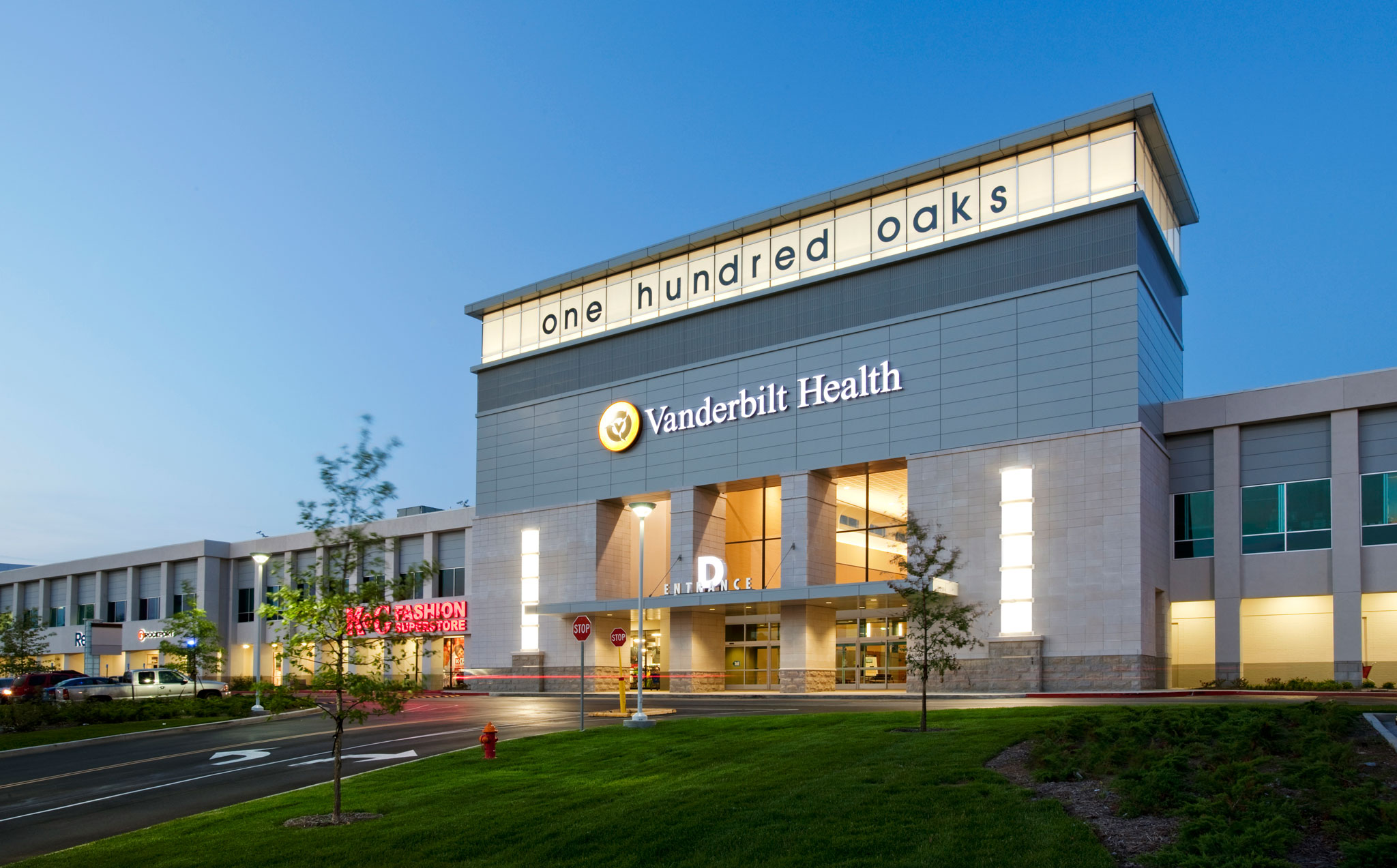
One health system that has taken advantage of available retail space is Vanderbilt University Medical Center (VUMC). Since 2009, VUMC has transformed 450,000 square feet of empty mall space, which formerly housed Reebok and JCPenney stores, into a women’s clinic, dermatology clinic, comprehensive spine clinic, and other specialty sites.
The health system also has several offsite clinics that work with the medical mall and offer telehealth options and free shuttle rides to and from the Monroe Carell Jr. Children’s Hospital and Vanderbilt Medical Center East.
In March, VUMC signed a letter of intent to negotiate a lease for 600,000 square feet in another mall just outside of Nashville and plans to add several new medical facilities there.
“I think that speaks to the success we experienced with our first foray,” said Janice Smith, an RN and VP of adult ambulatory operations at VUMC.
Another health system that has embarked on the “mall-to-medicine” transition is Medical University of South Carolina (MUSC) Health. According to hospital leaders, moving into the mall space makes sense because of its multiple entry points, ample parking, and interstate access.
“There were a lot of big wins for us, and it checked a lot of boxes from a care delivery standpoint,” said Tom Crawford, MUSC Health’s COO.
Originally, MUSC Health planned to break ground on a new piece of land, but then they decided to open new clinics inside of a former mall JCPenney in 2019. “It offered the bones that could be easily flipped into a healthcare facility,” Crawford said.
The facility, which is called the West Ashley Medical Pavilion, now houses an ambulatory surgery center, diagnostic imaging center, and infusion center. MUSC Health has also reached a deal with the mall’s owners to have first right of refusal to adjacent stores if it wants to continue expanding.
This proximity to a shopping mall has proven beneficial for visitors and family members who are waiting for patients. “Because that facility is hooked into the mall, it’s considered the same property,” said Ginger Davis, from Trademark Properties, a real estate company that handles leasing and development planning for Citadel Mall where the West Ashley Medical Pavilion is located. “Instead of having a waiting room full of people, they can go to Target.”
Medical malls have also helped their surrounding communities by generating new foot traffic and business that was not there before. “There’s been this resurgence in that area, and it’s wonderful that any organization can offer that back to the city,” Smith said.
VillageMD, which is majority owned by Walgreens Boots Alliance, plans to shell out nearly $9 billion to pick up medical practice Summit Health, the parent company of urgent care clinic chain CityMD.
The deal, announced Monday morning, is valued at $8.9 billion and includes investments from Walgreens Boots Alliance and Cigna Corp’s healthcare unit Evernorth, which will also become a minority owner in VillageMD. Bloomberg first reported on a potential deal back in late October.
The deal will expand Walgreen’s reach into primary, specialty and urgent care. The transaction creates one of the largest independent provider groups in the U.S., the organizations said. Combined, VillageMD and Summit Health will operate more than 680 provider locations in 26 markets. The two companies will have 20,000 employees.
Walgreens said Monday it will invest $3.5 billion through an even mix of debt and equity to support the acquisition, which is expected to close in the first quarter of 2023. The company will remain the largest and consolidating shareholder of VillageMD with about 53% stake.
Walgreens also raised its fiscal year 2025 sales goal for its U.S. healthcare business to between $14.5 billion and $16 billion from $11 billion to $12 billion previously. That business segment is now expected to achieve positive adjusted EBITDA by the end of fiscal year 2023.
Last year, Walgreens invested $5.2 billion in VillageMD and said it planned to open at least 600 Village Medical at Walgreens primary-care practices across the country by 2025 and 1,000 by 2027.
The deal comes amid a frenzy of M&A activity in the past two years. Major retailers like CVS, Walgreens and Amazon are ramping up their focus on providing medical services to gain bigger footholds in the healthcare market.
Drugstore rival CVS Health won the bidding war for home health and technology services company Signify Health and plans to shell out $8 billion to acquire the company. Amazon also plans to buy primary care provider One Medical for $3.9 billion.
The M&A move signals that Walgreens wants to become a “dominant entity in the overall healthcare services ecosystem,” according to David Larsen, healthcare IT and digital health analyst at financial services firm BTIG.
“Walgreens Boots Alliance is graduating up from being a drug retail store to owning the life-cycle of members’ health,” he wrote in an analyst’s note. “We view this transaction as being a statement by the market that primary care continues to be one of the key drivers of healthcare long-term.”
The deal also will put additional pressure on CVS Health to break into the primary care business “sooner rather than later,” Larsen wrote.
“I think at the most strategic level, I think there continues to be recognition that an integrated, coordinated, connected model of care is one that will ultimately deliver the best results. You see this through Optum’s acquisition of Kelsey-Seybold Clinic and VillageMD’s acquisition of Summit Health,” Tim Barry, CEO and chair of VillageMD, said in an interview with Fierce Healthcare.
“If we’re going to ultimately stem the rising tide of this fee-for-service healthcare system, we need a better solution, and that solution needs to have doctors working with other doctors in a coordinated way and trying to solve the unique problems that these patients have and making sure that the right doctors are accessing the patient at the right time, and doing it all underneath the umbrella of a risk-based contract,” Barry said.
He added, “We think that this is going to continue to be where healthcare goes. And, we have to do it in a way that is integrated and value-oriented. Any organization focused on doing that, and doing that at size and scale, is going to continue, I think, to be the successful winners of our healthcare system.”
In 2019, Summit Medical Group, a physician-owned and governed multispecialty group, merged with CityMD, a leading urgent care company in New York City. The combined organization, Summit Health, has more than 370 locations in New Jersey, New York, Connecticut, Pennsylvania and Oregon.
VillageMD provides value-based primary care for patients at traditional free-standing practices, Village Medical at Walgreens practices, at home and via virtual visits. VillageMD and Village Medical have grown to 22 markets and are responsible for more than 1.6 million patients, according to the company.
Barry said the combination of VillageMD and Summit Health-CityMD will enable the organizations to scale up value-based care and build out integrated primary and specialty care services.
“If you look at the long history of Summit Health, it’s an organization that has done some very innovative things. The way that they deliver multispecialty care, it is truly integrated, it’s truly connected and they are known as the preeminent brand in their marketplace. They also have CityMD, which is one of the more unique and differentiated urgent care models out there in the market. They really are a best-of-breed organization,” he said.
“When I look at what we’ve been able to do at VillageMD, we built this incredible model of value-based primary care delivery. The idea of bringing these two organizations together to bring those best-of-breed capabilities under one umbrella was just so compelling. We will soon be able to offer a more comprehensive, integrated and connected model by also offering other specialty services to our patients, but all still done through a value or risk-based reimbursement structure.”
Barry is bullish on the combined capabilities of the two companies in the primary and specialty care markets.
“We’ll be delivering a consistent value-based model of integrated, multispecialty care in a way that delivers the best clinical results on the planet,” he said.
Jeff Alter, CEO of Summit Health-CityMD, said in a statement that the deal adds Summit Health’s expertise and geographic coverage to VillageMD’s proven value-based primary care approach.
The acquisition also expands Walgreens’ reach into providing medical care directly to patients. “This transaction accelerates growth opportunities through a strong market footprint and wide network of providers and patients across primary, specialty and urgent care,” Roz Brewer, CEO of Walgreens Boots Alliance, said in a statement.
With Cigna’s investment, the combined company will be able to tap into Evernorth’s health services capabilities to potentially lower healthcare costs, Barry said. Evernorth encompasses Cigna’s health services businesses including pharmacy benefit manager Express Scripts
“In order to be a risk-based provider or a value-based provider, you have to have contracts with a payer that allows you to work in this value or risk-based construct. We learned over the years that Cigna has been a really good partner to us on that journey,” Barry said.
“There are companies that [Cigna] has purchased over the years that have different specializations and capabilities that we believe ultimately will allow us to deliver better care to our patients,” he noted. “Evernorth has some capabilities tied to behavioral health, and they have some capabilities tied to the management of specialty pharmaceutical spend, which everyone knows those costs continue to be soaring. We both liked the idea of supporting an organization like ours that’s going to continue to grow and continues to be focused on risk and value.”
With the investment in VillageMD and Summit Health, Cigna gets a leg up in the primary care space as it looks to build out its Evernorth division.
“Our collaboration with VillageMD accelerates our efforts to improve the way care is accessed and delivered,” said Eric Palmer, CEO of Evernorth, in a statement. “Harnessing the breadth of Evernorth’s health services capabilities and connecting them with physicians who provide care in a value-based model like VillageMD, helps more people to get the right care at the right time—driving better health and value.”
A growing number of health systems have begun to bill for certain electronic communications with patients via portals like MyChart. The systems instituting these practices, including Cleveland Clinic and Chicago-based Northwestern Medicine, have justified the billing based on the time demands placed on their providers to answer messages involving additional efforts, including extensive patient chart review. Northwestern shared that fewer than one percent of MyChart messages incurred fees, which are typically covered by insurance, and require patient consent before billing.
The Gist: In a time of significant margin pressure, we understand the instinct to seek additional revenue by collecting whatever reimbursement is available. However, in the ongoing transition to technology-enabled hybrid care, this practice has the potential to confuse, or even drive away, patients, who finally began to embrace virtual provider communication during the pandemic.
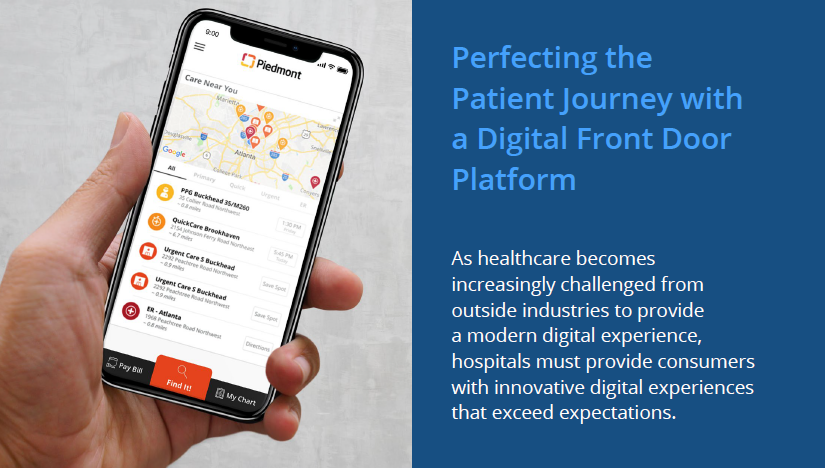
Viewing portal messaging as a “digital front door” for patients, rather than a revenue-generating service in and of itself, may prove more fruitful in the long run.
Hospitals are nearing the end of an exceptionally difficult year for finances with a slight downturn to their operating margins and smaller likelihood of ending the year in the black.
Kaufman Hall’s November “National Hospital Flash Report” — based on data from more than 900 hospitals — found hospitals’ median operating margin was -0.5 percent through October. Operating margins dropped 2 percent from September and 13 percent from October 2021.
High expenses continued to outpace revenues, particularly labor expenses. Total labor expenses are up 10 percent year to date and up 3 percent from September to October alone. Total non-labor expenses are up 5 percent year to date and held flat from September to October.
Hospitals saw a 3 percent boost in emergency department visits and 2 percent boost in operating room minutes in October, with a 2 percent increase in gross operating revenue from the month prior.
At the same time, hospitals struggled to discharge patients in October due to shortages of labor both internally and in post-acute settings, which resulted in a 3 percent increase in length of stay that did not translate to additional revenue.
Increased ED traffic could strain hospitals’ workers if staff shortages complicate or prevent patient admissions, leading to ED boarding. A dozen medical groups recently alerted President Joe Biden to ED boarding reaching a “crisis point” and becoming a public health emergency.
“Every aspect of patient care — from being admitted, to treatment, to discharge — is affected by the labor shortage and as we head into the virus season and potential new waves of COVID-19 the pressures on hospitals and their staff could mount,” Erik Swanson, senior vice president of data and analytics with Kaufman Hall, said.
In September, Kaufman Hall noted that expense pressures and volume and revenue declines could force hospitals to make “difficult decisions” about service reductions and cuts.
Daily COVID-19 cases in the U.S. are projected to jump 80% in the next 2 weeks, according to forecasts from the Mayo Clinic. (Becker’s Hospital Review)
Surgeons in Ukraine operated on a patient in the dark using only a flashlight after Russia unleashed a missile barrage on the nation’s power grid. (NBC News)
Pharma industry groups and CVS Health expressed skepticism over a plan proposed by the FDA that would allow certain generic drugs to pick up over-the-counter indications. (Endpoints News)
Marketing biosimilars with skinny labels — labels for biosimilars or generics that include a smaller set of indications than the brand-name drugs — saved Medicare $1.5 billion from 2015 to 2020, 5% of what it spent on five biologics during that period. (JAMA Internal Medicine)
Flu hospitalizations are up nearly 30% from last week, as scientists and public health experts express concern about the virus spreading during holiday gatherings. (CNBC)
As the CDC prepares to announce nearly $4 billion to improve public health infrastructure, most of which will be allocated to local health departments, community-based health groups say they’re being left out of funding. (CNN)
A doctor in the San Francisco area pleaded guilty to using misbranded products that she sold as genuine Botox and Juvederm, the Department of Justice announced.
Houston lifted the boil water notice it had issued after a power outage led water pressure levels to dip below safe levels. (Houston Chronicle)
Roche Pharmaceuticals has withdrawn the U.S. indication for atezolizumab (Tecentriq) to treat a form of bladder cancer, after a clinical trial failed and the drug could not move from accelerated to regular approval.
Consolidation continues across the healthcare industry with many hospitals and health systems looking to complete planned acquisitions or sales by the end of 2022 or early 2023.
Here are 15 planned hospital or health system sales that Becker’s Hospital Review has reported on in the last month:
1-2. El Segundo, Calif.-based Pipeline Health System, which filed for Chapter 11 bankruptcy in October, has agreed to sell two hospitals — Weiss Memorial Hospital in Chicago and West Suburban Medical Center in Oak Park, Ill. — to Princeton, N.J.-based Ramco Healthcare Holdings and Resilience Healthcare.
Pending approval of a motion submitted Nov. 22 to the U.S. Bankruptcy Court for the Southern District of Texas, Resilience is expected to assume operations of the two hospitals on Dec. 2.
Since acquiring ownership of the hospitals in 2019, Pipeline said it has invested $60 million to improve facilities, add technology and expand clinical programs. The hospitals employ a combined total of 1,700 employees.
3-4. The Centurion Foundation, an Atlanta-based nonprofit organization, has inked an asset purchase agreement to acquire the CharterCare Health Partners system from Los Angeles-based Prospect Medical Holdings.
Two hospitals are included in the transaction: Providence, R.I.-based Roger Williams Medical Center and Our Lady of Fatima Hospital. The change in control application process is expected to be submitted to the Rhode Island Department of Health and the state attorney general before the end of 2022.
5. West Reading, Pa.-based Tower Health plans to sell Chestnut Hill Hospital in Philadelphia to Temple University Health System for $28 million. The news comes less than a year after the health system closed two other hospitals: Brandywine Hospital in Coatesville, Pa., and Jennersville Hospital in West Grove, Pa.
Tower Health plans to rebuild around its flagship Reading Hospital and the two other hospitals it acquired for $423 million from Franklin, Tenn.-based Community Health Systems: Phoenixville Hospital and Pottstown Hospital. It also owns St. Christopher’s Hospital for Children in Philadelphia in a joint venture with Drexel University.
6. As of Nov. 14, potential buyers can submit offers for Singing River Health System, a three-hospital system with locations in Ocean Springs, Pascagoula and Gulfport, Miss.
Supervisors from Jackson County — which owns the health systems — gave the green light for proposals to sell Singing River Health System. Potential buyers have until March 10 to submit their bids.
7-9. New Orleans-based LCMC Health plans to acquire three Tulane University hospitals — New Orleans-based Tulane Medical Center; Covington, La.-based Lakeview Regional Medical Center; and Metairie, La.-based Tulane Lakeside Hospital — from Nashville, Tenn.-based HCA Healthcare.
LCMC Health will purchase the three hospitals for $150 million, expanding its portfolio to nine hospitals in the New Orleans area. The two parties hope to finalize the deal by the end of 2022 or early 2023.
10-12. Peoria, Ill.-based UnityPoint Health – Central Illinois and Des Moines, Iowa-based UnityPoint Health plans to spin off three Illinois hospitals to Urbana, Ill.-based Carle Health.
The transaction results in Carle Health taking over as the parent organization of UnityPoint Health – Central Illinois, which includes Peoria-based Methodist and Procter, and Pekin (Ill.) Hospitals and affiliated clinics, Peoria-based UnityPlace and Methodist College.
An April 1 closing date is anticipated, pending all regulatory approvals.
13. Hill Country Memorial Hospital in Fredericksburg, Texas, has entered into an agreement to become part of San Antionio-based Methodist Healthcare System.
Hill Country Memorial has 15 locations, including a hospital, an urgent care clinic, and primary and specialty care offices. Methodist Healthcare — a 50-50 co-ownership between HCA Healthcare and Methodist Healthcare Ministries of South Texas — has more than 30 facilities, including eight hospitals and nine freestanding emergency departments.
The transaction is expected to be completed in early 2023.
14. Orlando (Fla.) Health plans to acquire Sabanera Health Dorado, an acute care hospital in Puerto Rico.
The hospital will change its name to Doctors’ Center Hospital-Orlando Health Dorado, according to Orlando Health, which will team up with four additional hospitals operated by the Doctors’ Center Hospital team. The operation of all five hospitals will remain with the Doctors’ Center Hospital group.
15. Tacoma, Wash.-based MultiCare Health System and Yakima (Wash.) Valley Memorial reached an acquisition agreement, according to an Oct. 21 news release shared with Becker’s Hospital Review.
Terms of the agreement include Memorial becoming a wholly owned subsidiary of MultiCare, MultiCare investing in new programs, installing an integrated electronic health record, and providing a sustainable future for Yakima’s only hospital. The transaction is subject to routine regulatory approval and closing conditions.
Motley earnings numbers from more than a dozen major nonprofit health systems show third-quarter operating incomes landing on both sides of zero, though issues such as labor shortages, limited volume recovery and worsening payer mix look to be a constant across much of the sector.
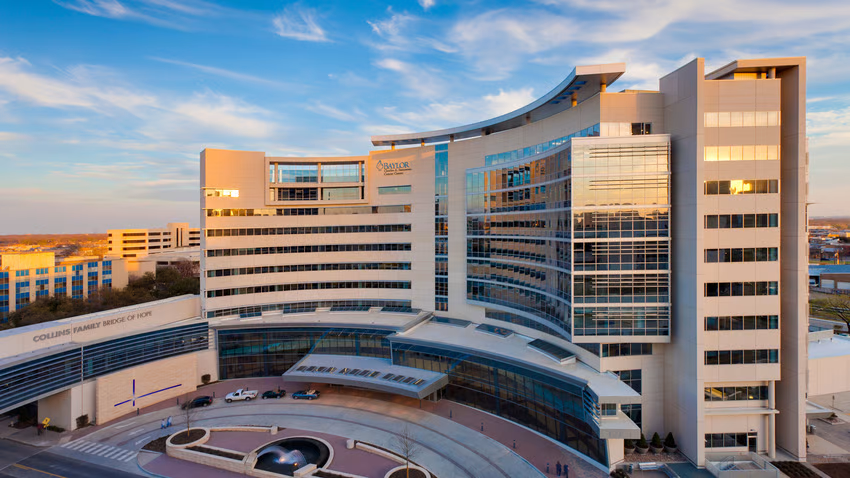
Baylor Scott & White led the pack with a $257 million operating income for the period ended Sept. 30, 2022, though it was closely followed by Sutter Health’s $244 million.
Baylor is among the outlier systems whose financials have been holding strong through the last few years, and the quarter’s 7.7% operating margin represents a slight improvement over the 7.4% of its 2022 fiscal year (ended June 30). It attributed the quarter’s 5.6% year-over-year (YoY) increase in consolidated total operating revenue to a blend of premium revenue increases, higher surgical volumes and favorable service mix that “returned to and/or exceeded pre-COVID levels.”
Sutter’s operations have been back and forth this year with a $91 million Q1 gain and a $51 million Q2 loss before the most recent quarter’s $244 million. Though it’s still well behind its numbers from last year, the organization’s leadership highlighted the quarter’s relatively flat salaries and progress toward long-term financial resiliency.
“Significant challenges remain, including inflationary pressures, supply chain uncertainties, increased labor costs and staffing shortages, and rising drug prices,” a spokesperson said regarding the numbers. “Our priorities include preparing for seismic infrastructure updates, reinvesting in our communities and supporting our clinicians in service to our mission.”
Topping the other end of the spectrum was Bon Secours Mercy Health and Providence’s respective $141 million and $164 million operating losses—though the latter’s could be viewed as an improvement in light of the $934 million it was down during the prior two quarters.
Both of those systems highlighted a continuation of the inflationary and labor trends that had increased their expenses during the year’s earlier quarters.
Providence, for instance, noted an additional $526 million of agency and overtime expenses during the past nine months in comparison to 2021. Bon Secours Mercy said in its filing that the economic pressures offset improvements to patient volumes that had “approached historical pre-pandemic levels.”
Other operating results of note included: UPMC, whose health services division logged a $103 million operating loss but was buoyed by the integrated system’s insurance services division; Intermountain Healthcare, which is fresh off a merger that helped boost its revenue by 28% and its expenses by 35%; and Advocate Aurora Health, which inched closer to its own pending merger with a narrow 0.2% operating margin.
Regardless of how they stuck the landing, virtually every system reported feeling the continued impact of labor shortages. Banner Health was among that list, reporting a 7% Year after Year increase in year-to-date contract labor costs and noting that understaffing in certain locations negatively impacted capacity and patient volumes.
The reports also suggest some heterogeneity across the patient volume metrics of different markets as demand for non-COVID care continued to recover. Several systems noted their surgical or elective volumes have yet to return to pre-pandemic levels, and some highlighted worsened case mixes that limited year-over-year revenue growth.
Similar to earlier quarters, across-the-board non-operating losses weighed heavily on the organizations’ bottom lines. Nearly every system posted a nine-figure investment loss during the quarter, though a nearly $1.7 billion net investment loss at Kaiser Permanente easily took the cake.
The investment losses led to 11 of the 13 nonprofits to notch a negative net income during the three months ended Sept. 30. See below for a breakdown of the numbers (and note that for systems reporting year-to-date results, third quarter numbers represent the difference between nine-month and six-month totals).
Total Operating Revenues
Total Operating Expenses
Operating Income
Net Income
Kaiser Permanente
24,253
24,328
-75
-1,550
CommonSpirit Health
9,011
8,988
23
-397
Providence
6,866
7,031
-164
-612
UPMC
6,376
6,449
114
-260
Mayo Clinic
4,117
3,960
157
-312
Sutter Health
3,985
3,741
244
103
AdventHealth
3,971
3,910
60
-305
Intermountain Healthcare
3,685
3,685
0
-582
Advocate Aurora Health
3,657
3,649
8
-311
Baylor Scott & White
3,335
3,078
257
135
Banner Health
3,069
3,096
-26
-198
Bon Secours Mercy Health
2,768
2,909
-141
-328
SSM Health
2,330
2,403
-73
-93
Nonprofit Health Systems’ Q3 Earnings ($ millions)









 HENRY KOTULA