66 hospitals postponing elective procedures amid the COVID-19 resurgence

Hospitals still scheduling elective surgery during coronavirus crisis

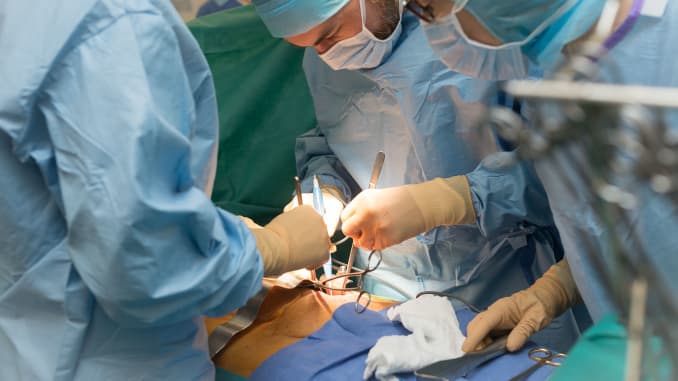
Hospitals across the U.S. are beginning to suspend elective procedures to respond to an uptick in hospitalized COVID-19 patients. 

Below is a breakdown of 66 hospitals postponing or canceling the procedures to free up space, ensure proper staffing or enough protective gear to care for COVID-19 patients:

1. Mercy Health Youngstown (Ohio) will indefinitely suspend elective procedures that require an inpatient admission starting Nov. 26, according to the Tribune Chronicle. 

2. Prescot, Ariz.-based Yavapai Regional Medical Center, which recently joined Dignity Health, will limit elective procedures effective Nov. 26 to Dec. 4, according to The Daily Courier. 

3. South Bend, Ind.-based Beacon Health System is suspending nonemergency surgeries to free up bed space and staff to care for a surge in COVID-19 cases, according to WSBT. The surgeries affected include those that require an inpatient stay. 

4. Citing a spike in COVID-19 cases, Goshen (Ind.) Health is suspending nonurgent surgeries, according to WSBT.

5. Stormont Vail Health in Topeka, Kan., is rescheduling some elective surgeries that require overnight stays to free up bed space, according to local news station WIBW. 

6. UW Medicine in Seattle will suspend nonemergency surgeries that require an inpatient hospital stay, effective Nov. 23 through Feb. 1.

7. Mercy Hospital South in St. Louis plans to delay some nonurgent procedures that require longer hospital stays amid a spike in COVID-19 hospitalizations, according to the St. Louis Post-Dispatch.  

8. Metro Health-University of Michigan Health in Wyoming, Mich., has delayed some surgeries that require an inpatient stay, according to MiBiz.

9. Albuquerque, N.M.-based Presbyterian Healthcare Services is canceling nonurgent surgeries that require hospitalization, according to local news station KBOB. The health system said it will postpone those surgeries that can be delayed for six weeks or longer safely.  

10. HSHS Sacred Heart Hospital in Eau Claire, Wis., is postponing electives on a case-by-case basis amid a surge in COVID-19 cases, according to The Leader-Telegram.

11. IU Health Methodist Hospital in Indianapolis has started to reduce the amount of elective procedures it will perform, while still trying to catch up on those that were postponed during the initial surge, according to MedPageToday.

12. Carson Tahoe Hospital in Carson City, Nev., has delayed non-time sensitive surgeries for a few weeks to free up space and staff to care for a surge in COVID-19 hospitalizations, according to local station News 4

13. The 267-bed Mercy Health Muskegon (Mich.) has begun to delay elective surgeries as needed amid an influx of COVID-19 cases, according to MiBiz.

14. Buffalo, N.Y.-based Catholic Health will halt all inpatient elective surgeries that require an overnight stay for two weeks amid a COVID-19 hospitalization surge, according to Buffalo News. The healthcare system will start rescheduling procedures Nov. 21, and reevaluate if an extension is needed Dec. 5. 

15. Chicago-based Northwestern Medicine will reduce the number of nonemergency surgeries it performs to help preserve bed capacity and staff to help care for a surge in COVID-19 cases, according to the Northwest Herald

16. Morris (Ill.) Hospital and Healthcare Centers postponed some inpatient surgeries requiring overnight stays the week of Nov. 16 due to a bed shortage exacerbated by the rise in COVID-19 cases, according to NBC Chicago. 

17. Memorial Community Hospital and Health System in Blair, Neb., is limiting elective surgeries requiring an overnight hospital stay for several weeks to preserve bed capacity and ensure proper staffing levels to care for the influx of COVID-19 cases, according to the Pilot-Tribune & Enterprise

18. Spectrum Health in Grand Rapids, Mich., is deferring elective surgeries requiring an overnight hospital stay, according to Michigan Radio. The deferral rate is about 10 percent, according to the report. 

19. Avera St. Mary’s Hospital in Pierre, S.D., is postponing nonemergency procedures so staff can care for the influx of COVID-19 cases and respond to emergent needs, according to DRGNews.

20. Salt Lake City-based Intermountain Healthcare will postpone some surgeries that require an inpatient admission to free up beds, preserve supplies and free up providers amid a surge in COVID-19 hospitalizations. The hospital system will only delay those that can be safely postponed. 

21. Froedtert Health in Wauwatosa, Wis., will delay non-urgent surgeries that require an inpatient admission post-surgery in an effort to free up staff and beds amid the coronavirus case surge in Wisconsin, according to local news station TMJ4. The hospitals are located in Wauwatosa, Menomonee Falls and West Bend. 

22. Memorial Hospital in Aurora, Neb., has suspended elective surgeries that take place at its Wortman Surgery Center to dedicate staff to inpatient and emergency care.

23. Minneapolis-based Allina Health is delaying some non-urgent procedures at three of its hospitals until at least Nov. 27, according to The Star Tribune. The delays will affect non-urgent procedures that require an overnight hospital stay. 

24. Bloomington, Minn.-based HealthPartners has started postponing some total joint surgeries, including hip or knee replacements, at three Minnesota hospitals, according to The Twin Cities Business Journal. The affected hospitals are Methodist Hospital in St. Louis Park, Regions Hospital in St. Paul and Lakeview Hospital in Stillwater. 

25. Southern Illinois Healthcare, a two-hospital system based in Carbondale, will reduce its elective surgery volume by about 50 percent as more people seek inpatient care for COVID-19, according to The Southern Illinoisan. The surgeries affected by the delay include those that require an overnight hospital stay.

26. University of Cincinnati Health activated surge operations Nov. 16, requiring a 50 percent reduction in elective inpatient surgeries and procedures across the health system, according to local news station WLWT.

27. Rochester, Minn.-based Mayo Clinic has started scaling back elective care to ensure it can care for patients with emergent needs and a high influx of COVID-19 patients, according to The Post Bulletin. 

28. Citing a 1,500 percent increase in COVID-19 hospitalizations between Nov. 1 and Nov. 17, Lake Health in Concord Township, Ohio, is pausing elective surgeries that require an overnight stay, according to The News-Herald. The pause will continue through Nov. 20, but the system will reevaluate if the pause needs to be extended on a weekly basis. 

29. Cook County Health, the public hospital system based in Chicago, is suspending elective surgeries requiring inpatient stays, according to WBEZ. The decision was made to ensure adequate staffing to care for an influx in COVID-19 cases.  

30. Urbana, Ill.-based Carle Foundation Hospital has canceled some elective procedures that require an overnight hospital stay in an effort to free up beds and staff to care for COVID-19 patients, according to The News Gazette.

31. Elkhart (Ind.) General Hospital stopped all elective surgeries Nov. 17 after more than 200 patients were admitted to its 144-bed hospital, according to The New York Times. Of those patients 90 were being treated with COVID-19. The hospital also diverted ambulances during this time.

32. Advocate Aurora Health, with dual headquarters in Milwaukee and Downers Grove, Ill., has started reducing elective procedures by 50 percent at some of its facilities, according to a Nov. 16 media briefing. The health system said that more hospitals will look into the option to postpone elective procedures later the week of Nov. 16. 

33. The University of Kansas Health System in Kansas City started postponing some elective surgeries to free up inpatient beds Nov. 12.

34. St. Luke’s Health System in Boise, Idaho, will stop scheduling certain elective surgeries and procedures through Dec. 25, according to a company news release. The temporary delay starts Nov. 16. St. Luke’s medical centers in Boise, Meridian, Magic Valley and Nampa will also cancel elective cases requiring an overnight stay scheduled for the week of Nov. 16, according to the news release. 

35. Citing an increased demand for inpatient beds, Ascension Genesys Hospital in Grand Blanc, Mich., will not schedule any new inpatient elective surgeries until at least Nov. 30. The hospital said it has asked surgeons to “thoughtfully examine” already scheduled cases requiring extended recovery through Nov. 30.

36. SSM Health St. Mary’s Hospital in Madison began rescheduling nonemergent surgeries to free up intensive care unit bed space, according to local news station NBC 15.

37. Cedar Rapids, Iowa-based Mercy Medical Center will reduce elective surgery cases through Nov. 20. It also temporarily stopped scheduling new elective procedures.

38. Columbia Memorial Hospital in Astoria, Ore., will reduce some elective procedures due to an increase in COVID-19 cases, according to the Cannon Beach Gazette.

39. St. Louis-based BJC HealthCare will postpone some elective surgery cases at all 15 of its hospitals and ambulatory care settings starting Nov. 16. The surgery postponement will last eight weeks. The announcement comes just one week after the health system started rescheduling nonemergency surgeries at four of its hospitals.

40. Citing a significant increase in COVID-19 hospitalizations, Cleveland Clinic said it will postpone some nonemergency surgeries. Cleveland Clinic said it will reschedule nonessential surgical cases that require an inpatient stay at its hospitals in Ohio through Nov. 20.  It will reassess its scheduled surgical cases daily to determine if more cases need to be delayed.

41. Baxter County Regional Medical Center in Mountain Home, Ark., said Nov. 11 it will begin postponing nonemergency surgeries. The hospital will only defer procedures requiring an overnight hospital stay in order to free up beds for COVID-19 patients. 

42. Portland, Ore.-based Legacy Health will reduce the number of elective procedures requiring an overnight hospital stay by 25 percent.

“We will monitor the situation and adjust as needed,” Trent Green, Legacy Health COO, wrote in an email to staff. “If the number of hospitalized patients continues to grow, we may cancel more surgeries. As hospital volumes lower, we will add back elective surgeries.”

43. Kaiser Permanente Northwest, which has hospitals in Oregon and southwest Washington state, is implementing a “scheduling pause” at some of its Oregon medical centers through Dec. 31.

44. Portland-based Oregon Health & Sciences University is implementing voluntary elective surgery deferrals. The hospital system will evaluate surgical cases daily to ensure it has the appropriate capacity to care for all patients.

45. Aurora, Colo.-based UCHealth began postponing some nonemergency surgeries due to a surge in COVID-19 hospitalizations. The health system will defer nonemergent surgeries that require inpatient admission. The health system began postponing some of those surgeries the week of Nov. 2.

46. As of Nov. 11, Grand Rapids, Mich.-based Spectrum Health has 14 hospitals nearing capacity amid a surge of COVID-19 cases. As a result it is starting to delay inpatient surgeries that require overnight stays.

47. Community Memorial Hospital in Cloquet, Minn., has halted some elective surgeries to free up beds amid a surge in hospitalizations.

48. Sarah Bush Lincoln, a 145-bed hospital in Mattoon, Ill., is postponing most inpatient elective surgeries due to bed capacity constraints. The hospital said it will make the decision on whether to postpone a surgery on a case-by-case basis. 

49. Memorial Health System in Springfield, Ill., will begin delaying some nonurgent surgeries Nov. 16.

50. Evanston, Ill.-based NorthShore University HealthSystemhas started evaluating elective surgeries on a case-by-case basis and delaying those that can be postponed safely.

51. UnityPoint Health Meriter in Madison, Wis., is rescheduling nonemergent surgeries that require overnight stays to save beds for COVID-19 patients. The hospital has seen a “significant” uptick in COVID-19-related hospitalizations, with about one-third of UnityPoint Meriter’s beds occupied by patients with the virus.

52. St. Luke’s, a two-hospital system in Duluth, Minn., is postponing nonemergency surgeries amid a surge in COVID-19 patients. The health system said it will only delay surgeries that require an overnight stay and can be rescheduled safely.

53. Omaha, Neb.-based Methodist Health System began postponing elective surgeries at its flagship hospital Oct. 29, president and CEO Steve Goeser told Becker’s. It is reviewing the surgery schedule to determine which ones can be postponed safely.

54. Omaha-based Nebraska Medicine is limiting nonurgent procedures due to a rise in COVID-19 hospitalizations. The health system said that it has enough beds, but high-level intensive care unit providers “aren’t an infinite resource.”

55. CHI Health in Omaha, Neb., said that some nonurgent procedures will be postponed amid the COVID-19 resurgence. By postponing some surgeries, CHI Health said it aims to free up beds and capacity for patients.

56. Sanford Health, a 46-hospital system based in Sioux Falls, S.D., will begin rescheduling some nonemergency inpatient surgeries that require an overnight hospital stay due to an influx of COVID-19 patients. 

57. Bryan Health, based in Lincoln, Neb., will begin scaling back elective surgeries requiring an overnight hospitalization due to a rise in COVID-19 cases. The system said it will decrease elective surgeries requiring overnight stay by 10 percent for the week of Nov. 2 to ensure it is able to care for COVID-19 patients and perform essential surgeries.

58. Mayo Clinic Health System began deferring elective procedures at its hospitals in Northwest Wisconsin Oct. 31 amid an escalation of COVID-19 cases. The health system did not say when elective procedures will restart. The Mayo Clinic Health System has clinics, hospitals and other facilities across Iowa, Minnesota and Wisconsin.

59. Madison, Wis.-based UW Health is postponing a small number of elective procedures to free up bed capacity to care for COVID-19 patients, according to WKOW. Jeff Pothof, MD, UW Health’s chief quality officer, said that patients may be asked to push back a non-emergency procedure by about a week. 

60. Saint Vincent Hospital in Erie, Pa., will postpone a small number of elective procedures after some patients and caregivers tested positive for COVID-19. The hospital did not specify the number of patients and staff who tested positive. 

61. Johnson City, Tenn.-based Ballad Health will begin deferring elective procedures at three of its Tennessee hospitals due to a spike in COVID-19 hospitalizations. On Oct. 26, Ballad began rescheduling up to 25 percent of elective services at Holston Valley Medical Center in Kingsport, Tenn. Procedures are also expected to begin being deferred at Bristol Regional Medical Center and Johnson City Medical Center. 

62. Maury Regional Medical Center in Columbia, Tenn., will suspend elective procedures requiring an overnight stay for two weeks. Hospital leadership will re-evaluate the feasibility of elective surgeries by Nov. 9.

63. Cookeville (Tenn.) Regional Medical Center said Oct. 26 it suspended elective procedures requiring an overnight stay after it was caring for a record high of 71 COVID-19 patients, according to WKRN.

64. Salt Lake City-based University of Utah Hospital canceled elective procedures after its intensive care unit hit capacity on Oct. 16. The hospital said it needed to postpone the elective care to allocate staff to care for critically ill patients. 

65. Sanford Health in Sioux Falls, S.D., will stop scheduling new elective surgery cases requiring an overnight stay, according to system CMO Mike Wilde, MD. New elective cases requiring an overnight stay were not scheduled for Oct. 19-23, but previously scheduled elective surgeries were performed.

66. Billings (Mont.) Clinic began evaluating each surgical case for urgency in late September. It is postponing those it says can wait, according to The Wall Street Journal.

CMS seeks to boost hospital capacity during COVID-19 surge

Troy Medicare Signs Contract with CMS for 2020 - Troy Medicare

CMS is giving hospitals facing a surge of COVID-19 patients expanded flexibility to care for Medicare patients in their homes, the department announced Nov. 25. 

The new Acute Hospital Care At Home program will require in-person screening protocols to assess both medical and non-medical factors, including working utilities, before care can begin at home. Medicare patients will be admitted into the program from emergency departments and inpatient hospital beds.

Once at-home care begins, a registered nurse will evaluate each patient every day either in person or remotely, and either registered nurses or mobile integrated health paramedics will have two in-person visits daily based on the patient’s nursing plan and hospital policies.

CMS approved the following six health systems with extensive experience providing acute hospital care at home to immediately participate in the program: 

  • Boston-based Brigham and Women’s Hospital
  • Salt Lake City-based Huntsman Cancer Institute
  • Boston-based Massachusetts General Hospital
  • New York City-based Mount Sinai Health System
  • Albuquerque, N.M.-based Presbyterian Healthcare Services
  • West Des Moines, Iowa-based UnityPoint Health. 

Other hospitals and health systems may submit a waiver request online. 

As thousands of athletes get coronavirus tests, nurses wonder: What about us?

On her day off not long ago, emergency room nurse Jane Sandoval sat with her husband and watched her favorite NFL team, the San Francisco 49ers. She’s off every other Sunday, and even during the coronavirus pandemic, this is something of a ritual. Jane and Carlos watch, cheer, yell — just one couple’s method of escape.

“It makes people feel normal,” she says.

For Sandoval, though, it has become more and more difficult to enjoy as the season — and the pandemic — wears on. Early in the season, the 49ers’ Kyle Shanahan was one of five coaches fined for violating the league’s requirement that all sideline personnel wear face coverings. Jane noticed, even as coronavirus cases surged again in California and across the United States, that Levi’s Stadium was considering admitting fans to watch games.

But the hardest thing to ignore, Sandoval says, is that when it comes to coronavirus testing, this is a nation of haves and have-nots.

Among the haves are professional and college athletes, in particular those who play football. From Nov. 8 to 14, the NFL administered 43,148 tests to 7,856 players, coaches and employees. Major college football programs supply dozens of tests each day, an attempt — futile as it has been — to maintain health and prevent schedule interruptions. Major League Soccer administered nearly 5,000 tests last week, and Major League Baseball conducted some 170,000 tests during its truncated season.

Sandoval, meanwhile, is a 58-year-old front-line worker who regularly treats patients either suspected or confirmed to have been infected by the coronavirus. In eight months, she has never been tested. She says her employer, California Pacific Medical Center, refuses to provide testing for its medical staff even after possible exposure.

Watching sports, then, no longer represents an escape from reality for Sandoval. Instead, she says, it’s a signal of what the nation prioritizes.

“There’s an endless supply in the sports world,” she says of coronavirus tests. “You’re throwing your arms up. I like sports as much as the next person. But the disparity between who gets tested and who doesn’t, it doesn’t make any sense.”

This month, registered nurses gathered in Los Angeles to protest the fact that UCLA’s athletic department conducted 1,248 tests in a single week while health-care workers at UCLA hospitals were denied testing. Last week National Nurses United, the country’s largest nursing union, released the results of a survey of more than 15,000 members. About two-thirds reported they had never been tested.

Since August, when NFL training camps opened, the nation’s most popular and powerful sports league — one that generates more than $15 billion in annual revenue — has conducted roughly 645,000 coronavirus tests.

“These athletes and teams have a stockpile of covid testing, enough to test them at will,” says Michelle Gutierrez Vo, another registered nurse and sports fan in California. “And it’s painful to watch. It seemed like nobody else mattered or their lives are more important than ours.”

Months into the pandemic, and with vaccines nearing distribution, testing in the United States remains something of a luxury. Testing sites are crowded, and some patients still report waiting days for results. Sandoval said nurses who suspect they’ve been exposed are expected to seek out a testing site on their own, at their expense, and take unpaid time while they wait for results — in effect choosing between their paycheck and their health and potentially that of others.

“The current [presidential] administration did not focus on tests and instead focused on the vaccine,” says Mara Aspinall, a professor of biomedical diagnostics at Arizona State University. “We should have focused with the same kind of ‘warp speed’ on testing. Would we still have needed a vaccine? Yes, but we would’ve saved more lives in that process and given more confidence to people to go to work.”

After a four-month shutdown amid the pandemic’s opening wave, professional sports returned in July. More than just a contest on television, it was, in a most unusual year, a symbol of comfort and routine. But as the sports calendar has advanced and dramatic adjustments have been made, it has become nearly impossible to ignore how different everything looks, sounds and feels.

Stadiums are empty, or mostly empty, while some sports have bubbles and others just pretend their spheres are impermeable. Coaches stand on the sideline with fogged-up face shields; rosters and schedules are constantly reshuffled. On Saturday, the college football game between Clemson and Florida State was called off three hours before kickoff. Dodger Stadium, home of the World Series champions, is a massive testing site, with lines of cars snaking across the parking lot.

Sports, in other words, aren’t a distraction from a polarized nation and its response to a global pandemic. They have become a constant reminder of them. And when some nurses turn to sports for an attempt at escape, instead it’s just one more image of who gets priority for tests and, often, who does not.

“There is a disconnect when you watch sports now. It’s not the same. Covid changed everything,” says Gutierrez Vo, who works for Kaiser Permanente in Fremont, Calif. “I try not to think about it.”

Sandoval tries the same, telling herself that watching a game is among the few things that make it feel like February again. Back then, the coronavirus was a distant threat and the 49ers were in the Super Bowl.

That night, Sandoval had a shift in the ER, and between patients, she would duck into the break room or huddle next to a colleague checking the score on the phone. The 49ers were playing the Kansas City Chiefs, and Sandoval would recall that her favorite team blowing a double-digit lead represented the mightiest stress that day.

Now during shifts, Sandoval sometimes argues with patients who insist the virus that has infected them is a media-driven hoax. She masks up and wears a face shield even if a patient hasn’t been confirmed with the coronavirus, though she can’t help second-guessing herself.

“Did I wash my hands? Did I touch my glasses? Was I extra careful?” she says.

If Sandoval suspects she has been exposed, she says, she doesn’t bother requesting a test. She says the hospital will say there aren’t enough. So instead she self-monitors and loads up on vitamin C and zinc, hoping the tickle in her throat disappears. If symptoms persist, which she says hasn’t happened yet, she plans to locate a testing site on her own. But that would mean taking unpaid time, paying for costs out of pocket and staying home — and forfeiting a paycheck — until results arrive.

National Nurses United says some of its members are being told to report to work anyway as they wait for results that can take three to five days. Sutter Health, the hospital system that oversees California Pacific Medical Center, said in a statement to The Washington Post that it offers tests to employees whose exposure is deemed high-risk and to any employee experiencing symptoms. Symptomatic employees are placed on paid leave while awaiting test results, according to the statement.

“As long as an essential healthcare worker is asymptomatic,” Sutter’s statement read, “they can continue to work and self-monitor while awaiting the test result.”

Sandoval said employees have been told the hospital’s employee health division will contact anyone who has been exposed. Though she believes she’s exposed during every shift, Sandoval says employee health has never contacted her to offer a test or conduct contact tracing.

“If you feel like you need to get tested, you do that on your own,” she says. Sandoval suspects the imbalance is economic. In September, Forbes reported NFL team revenue was up 7 percent despite the pandemic. Last week Sutter Health reported a $607 million loss through the first nine months of 2020.

Sandoval tries to avoid thinking about that, so she keeps heading back to work and hoping for the best. Though she says her passion for sports is less intense now, she nonetheless likes to talk sports when a patient wears a team logo. She asks about a star player or a recent game. She says she is looking forward to the 49ers’ next contest and the 2021 baseball season.

Sometimes, Sandoval says, patients ask about her job and the ways she avoids contracting the coronavirus. She must be tested most every day, Sandoval says the patients always say.

And she just rolls her eyes and chuckles. That, she says, only happens if you’re an athlete.

1,000 Cleveland Clinic workers sidelined due to COVID-19

Cleveland Clinic fires doctor who posted anti-semitic comments, threats on  social media | Healthcare Finance News

Cleveland Clinic has about 1,000 employees away from work due to COVID-19, the health system told Becker’s Nov. 23.

The count includes 925 workers in Ohio and other workers across the health system, which also has locations in Florida and Las Vegas. It is an increase from about 800 Cleveland Clinic employees in Ohio reported sidelined as of Nov. 16.

Cleveland Clinic spokesperson Andrea Pacetti said the increase in the number of employees affected by COVID-19 reflects more spreading of the virus in the community and in Ohio, and most affected employees are contracting the virus in the community. 

Due to a surge in cases, Cleveland Clinic has taken steps to ensure enough staffing to meet patients’ needs, said Ms. Pacetti. This includes shifting some employees to different areas of the health system to enable Cleveland Clinic to expand bed capacity for COVID-19 patients.

“We are also evaluating our surgical schedule weekly based on hospital occupancy and admissions of patients with COVID-19,” Ms. Pacetti said. “Our leadership meets every day and reviews our staffing to ensure we can provide the highest quality care to all our patients.”

Cleveland Clinic also urges the public to help reduce the spread of the virus so the health system can continue to care for COVID-19 patients and patients who need care but who don’t have the coronavirus. 

“This isn’t just a Cleveland Clinic issue, but true for the whole state. We are asking the community to follow guidelines — wear masks, social distance and wash your hands — so we can keep our medical teams healthy,” Ms. Pacetti said.

Cleveland Clinic has about 50,000 employees in Ohio. 

Now the U.S. Has Lots of Ventilators, but Too Few Specialists to Operate Them

A patient was placed on a ventilator in a hospital in Yonkers, N.Y., in April.

As record numbers of coronavirus cases overwhelm hospitals across the United States, there is something strikingly different from the surge that inundated cities in the spring: No one is clamoring for ventilators.

The sophisticated breathing machines, used to sustain the most critically ill patients, are far more plentiful than they were eight months ago, when New York, New Jersey and other hard-hit states were desperate to obtain more of the devices, and hospitals were reviewing triage protocols for rationing care. Now, many hot spots face a different problem: They have enough ventilators, but not nearly enough respiratory therapists, pulmonologists and critical care doctors who have the training to operate the machines and provide round-the-clock care for patients who cannot breathe on their own.

Since the spring, American medical device makers have radically ramped up the country’s ventilator capacity by producing more than 200,000 critical care ventilators, with 155,000 of them going to the Strategic National Stockpile. At the same time, doctors have figured out other ways to deliver oxygen to some patients struggling to breathe — including using inexpensive sleep apnea machines or simple nasal cannulas that force air into the lungs through plastic tubes.

But with new cases approaching 200,000 per day and a flood of patients straining hospitals across the country, public health experts warn that the ample supply of available ventilators may not be enough to save many critically ill patients.

“We’re now at a dangerous precipice,” said Dr. Lewis Kaplan, president of the Society of Critical Care Medicine. Ventilators, he said, are exceptionally complex machines that require expertise and constant monitoring for the weeks or even months that patients are tethered to them. The explosion of cases in rural parts of Idaho, Ohio, South Dakota and other states has prompted local hospitals that lack such experts on staff to send patients to cities and regional medical centers, but those intensive care beds are quickly filling up.

Public health experts have long warned about a shortage of critical care doctors, known as intensivists, a specialty that generally requires an additional two years of medical training. There are 37,400 intensivists in the United States, according to the American Hospital Association, but nearly half of the country’s acute care hospitals do not have any on staff, and many of those hospitals are in rural areas increasingly overwhelmed by the coronavirus.

“We can’t manufacture doctors and nurses in the same way we can manufacture ventilators,” said Dr. Eric Toner, an emergency room doctor and senior scholar at the Johns Hopkins Center for Health Security. “And you can’t teach someone overnight the right settings and buttons to push on a ventilator for patients who have a disease they’ve never seen before. The most realistic thing we can do in the short run is to reduce the impact on hospitals, and that means wearing masks and avoiding crowded spaces so we can flatten the curve of new infections.”

Medical association message boards in states like Iowa, Oklahoma and North Dakota are awash in desperate calls for intensivists and respiratory therapists willing to temporarily relocate and help out. When New York City and hospitals in the Northeast issued a similar call for help this past spring, specialists from the South and the Midwest rushed there. But because cases are now surging nationwide, hospital officials say that most of their pleas for help are going unanswered.

Dr. Thomas E. Dobbs, the top health official in Mississippi, said that more than half the state’s 1,048 ventilators were still available, but that he was more concerned with having enough staff members to take care of the sickest patients.

“If we want to make sure that someone who’s hospitalized in the I.C.U. with the coronavirus has the best chance to get well, they need to have highly trained personnel, and that cannot be flexed up rapidly,” he said in a news briefing on Tuesday.

Dr. Matthew Trump, a critical care specialist at UnityPoint Health in Des Moines, said that the health chain’s 21 hospitals had an adequate supply of ventilators for now, but that out-of-state staff reinforcements might be unlikely to materialize as colleagues fall ill and the hospital’s I.C.U. beds reach capacity.

“People here are exhausted and burned out from the past few months,” he said. “I’m really concerned.”

The domestic boom in ventilator production has been a rare bright spot in the country’s pandemic response, which has been marred by shortages of personal protective equipment, haphazard testing efforts and President Trump’s mixed messaging on the importance of masks, social distancing and other measures that can dent the spread of new infections.

Although the White House has sought to take credit for the increase in new ventilators, medical device executives say the accelerated production was largely a market-driven response turbocharged by the national sense of crisis. Mr. Trump invoked the wartime Defense Production Act in late March, but federal health officials have relied on government contracts rather than their authority under the act to compel companies to increase the production of ventilators.

Scott Whitaker, president of AdvaMed, a trade association that represents many of the country’s ventilator manufacturers, said the grave situation had prompted a “historic mobilization” by the industry. “We’re confident that our companies are well positioned to mobilize as needed to meet demand,” he said in an email.

Public health officials in Minnesota, Mississippi, Utah and other states with some of the highest per capita rates of infection and hospitalization have said they are comfortable with the number of ventilators currently in their hospitals and their stockpiles.

Mr. Whitaker said AdvaMed’s member companies were making roughly 700 ventilators a week before the pandemic; by the summer, weekly output had reached 10,000. The juggernaut was in part fueled by unconventional partnerships between ventilator companies and auto giants like Ford and General Motors.

Chris Brooks, chief strategy officer at Ventec Life Systems, which collaborated with G.M. to fill a $490 million contract for the Department of Health and Human Services, said the shared sense of urgency enabled both companies to overcome a thicket of supply-chain and logistical challenges to produce 30,000 ventilators over four months at an idled car parts plant in Indiana. Before the pandemic, Ventec’s average monthly output was 100 to 200 machines.

“When you’re focused with one team and one mission, you get things done in hours that would otherwise take months,” he said. “You just find a way to push through any and all obstacles.”

Despite an overall increase in the number of ventilators, some researchers say many of the new machines may be inadequate for the current crisis. Dr. Richard Branson, an expert on mechanical ventilation at the University of Cincinnati College of Medicine and an author of a recent study in the journal Chest, said that half of the new devices acquired by the Strategic National Stockpile were not sophisticated enough for Covid-19 patients in severe respiratory distress. He also expressed concern about the long-term viability of machines that require frequent maintenance.

“These devices were not built to be stockpiled,” he said.

The Department of Health and Human Services, which has acknowledged the limitations of its newly acquired ventilators, said the stockpile — nine times as large as it was in March — was well suited for most respiratory pandemics. “These stockpiled devices can be used as a short-term, stopgap buffer when the immediate commercial supply is not sufficient or available,” the agency said in a statement.

Projecting how many people will end up requiring mechanical breathing assistance is an inexact science, and many early assumptions about how the coronavirus affects respiratory function have evolved.

During the chaotic days of March and April, emergency room doctors were quick to intubate patients with dangerously low oxygen levels. They subsequently discovered other ways to improve outcomes, including placing patients on their stomachs, a protocol known as proning that helps improve lung function. The doctors also learned to embrace the use of pressurized oxygen delivered through the nose, or via BiPAP and CPAP machines, portable devices that force oxygen into a patient’s airways.

Many health care providers initially hesitated to use such interventions for fear the pressurized air would aerosolize the virus and endanger health care workers. The risks, it turned out, could be mitigated through the use of respirator masks and other personal protective gear, said Dr. Greg Martin, the chief of pulmonary and critical care at Grady Health Systems in Atlanta.

“The familiarity of taking care of so many Covid patients, combined with good data, has just made everything we do 100 times easier,” he said.

Some of the earliest data about the perils of intubating coronavirus patients turned out to be incomplete and misleading. Dr. Susan Wilcox, a critical care specialist at Massachusetts General Hospital, said many providers were spooked by data that suggested an 80 percent mortality rate among ventilated coronavirus patients, but the actual death rate turned out to be much lower. The mortality rate at her hospital, she said, was about 25 to 30 percent.

“Some people were saying that we should intubate almost immediately because we were worried patients would crash and have untoward consequences if we waited,” she said. “But we’ve learned to just go back to the principles of good critical care.”

Survival rates have increased significantly at many hospitals, a shift brought about by the introduction of therapeutics like dexamethasone, a powerful steroid that Mr. Trump took when he was hospitalized with the coronavirus. The changing demographics of the pandemic — a growing proportion of younger patients with fewer health risks — have also played a role in the improving survival rates.

Dr. Nikhil Jagan, a critical care pulmonologist at CHI Health, a hospital chain that serves Iowa, Kansas and Nebraska, said many of the coronavirus patients who were arriving at his emergency room now were less sick than the patients he treated in the spring.

“There’s a lot more awareness about the symptoms of Covid-19,” he said. “The first go-around, when people came in, they were very sick right off the bat and in respiratory distress or at the point of respiratory failure and had to be intubated.”

But the promising new treatments and enhanced knowledge can go only so far should the current surge in cases continue unabated. The country passed 250,000 deaths from the coronavirus last week, a reminder that many critically ill patients do not survive. The daily death toll has been rising steadily and is approaching 2,000.

“Ventilators are important in critical care but they don’t save people’s lives,” said Dr. Branson of the University of Cincinnati. “They just keep people alive while the people caring for them can figure out what’s wrong and fix the problem. And at the moment, we just don’t have enough of those people.”

For now, he said there was only one way out the crisis: “It’s not that hard,” he said. “Wear a mask.”

Striving to maintain normal operations in the third wave

https://mailchi.mp/4422fbf9de8c/the-weekly-gist-november-20-2020?e=d1e747d2d8

What Does 'Batten Down the Hatches' Mean?

In talking to our health system members from across the country in the past few weeks, we’ve heard that the COVID surge is happening everywhere. Nearly everyone we’ve talked to has told us that their inpatient census of COVID patients is as high or higher now than during the initial wave of the pandemic in March and April. And nearly everyone is expecting it to get much worse over the next few weeks, as hospitalizations increase in the wake of the explosion of cases we’re seeing now.

But there is something striking in our conversations in comparison to eight months ago: no one seems to be panicking. Crisis management processes that were developed and honed early in the pandemic are proving very helpful now. Normal patient care services are continuing despite the uptick in COVID volume, and protections are in place to keep the care environment segregated and COVID-free as possible.
 
While dozens of health systems, many in the hardest hit states in the Midwest and Great Plains, have announced plans to curtail elective care during this third wave, the decisions are based on individual hospital capacity and staffing, instead of being mandated by states. Having largely worked through the “COVID backlog” across the summer and early fall, system leaders want to avoid canceling surgeries again, and few are expecting state governments to force them to. 

Many of our members have drawn up plans for selective cancellations depending on capacity, but we’re not likely to see sweeping shutdowns again—unless the workforce becomes so overstretched that it impacts operations.

That’s good news, and will likely lead to less interrupted patient care. And it’s good news for hospitals’ and doctors’ economic survival, as many would not be able to absorb the body blow of another widespread shutdown. Fingers crossed.

Missouri’s COVID-19 data reports send ‘dangerous message to the community,’ say health systems

Marion County reports six additional COVID-19 cases | KHQA

A group of health system leaders in Missouri challenged state-reported hospital bed data, saying it could lead to a misunderstanding about hospital capacity, according to a Nov. 19 report in the St. Louis Business Journal.

A consortium of health systems, including St. Louis-based BJC HealthCare, Mercy, SSM Health and St. Luke’s Hospital, released urgent reports warning that hospital and ICU beds are nearing capacity while state data reports show a much different story.

The state reports, based on data from TeleTracking and the CDC-managed National Healthcare Safety Network, show inpatient hospital bed capacity at 35 percent and remaining ICU bed capacity at 29 percent on Nov. 19. However, the consortium reported hospitals are fuller, at 84 percent capacity as of Nov. 18, and ICUs at 90 percent capacity based on staffed bed availability. The consortium says it is using staffed bed data while the state’s numbers are based on licensed bed counts; the state contends it does take staffing into account, according to the report.

Stephanie Zoller Mueller, a spokesperson for the consortium, said the discrepancy between the state’s data and consortium’s data could create a “gross misunderstanding on the part of some and can be a dangerous message to the community.”

Medical groups implore Congress to extend moratorium on sequester cuts as COVID-19 ramps up

Congress building

A collection of provider and payer groups are imploring Congress to continue a moratorium on Medicare payment cuts instituted under the sequester.

The letter (PDF), sent Friday by more than 20 groups to congressional leaders, is concerned that the moratorium installed under the CARES Act expires on Jan. 1. The groups want the moratorium to extend through the COVID-19 public health emergency, which has been renewed by the federal government several times.

The groups said that the moratorium needs to be extended as healthcare facilities are under massive financial stress with new surges of COVID-19.

The surge has impacted the “financial health of medical professionals and facilities, including increased cost of labor to ensure adequate staffing, procurement of personal protective equipment, significant reductions in patient volume resulting from orders to cancel non-emergent procedures and the high cost of caring for COVID patients,” the letter said.

Some of the groups signing on to the letter include the American Medical Association, America’s Health Insurance Plans, Federation of American Hospitals and American College of Physicians.

The groups said that the moratorium on the sequester cuts installed as part of the CARES Act was an acknowledgment from Congress over the important role that Medicare reimbursement plays in “the financial well being of our healthcare system.”

The sequestration cut Medicare payments by 2% across the board to all Medicare providers back in 2013.

The letter comes as Congress is pondering another relief package for COVID-19 during the lame-duck period. Senate Majority Leader Mitch McConnell said after the presidential election that he was open to restarting talks on a new relief package and added that hospitals will need some additional relief.

But McConnell said earlier this week that the same issues that have held up a deal with House Speaker Nancy Pelosi are still there.

“I don’t think the current situation demands a multi-trillion dollar package,” McConnell told reporters. “I think it should be highly targeted.”

But Pelosi has endorsed a larger package. The House passed the HEROES Act, a $3 trillion relief bill, several months ago.

Appeals court sides with hospitals in latest challenge of DSH payment calculations

lady justice

A federal appeals court upheld a ruling that would allow hospitals to calculate their disproportionate share hospital (DSH) payments using Medicaid patients as well as patients eligible for treatment under experimental Medicaid “demonstration projects” approved by the Department of Health and Human Services (HHS).

The opinion, issued Friday, upheld the decision of a lower court that sided with 10 Florida hospitals seeking to include days of care funded by Florida’s Low Income Pool, an approved Medicaid demonstration project. Through the pool, the state and federal governments jointly reimbursed hospitals for care provided to uninsured and underinsured patients.

HHS argued against allowing the hospitals to include those patients in their Medicaid fraction on the ground that the patients were treated out of charity rather than as designated beneficiaries of a demonstration project.

“The district court found the Secretary’s arguments to the contrary unpersuasive. The Secretary argued the text of the regulation allows hospitals to include days of care provided under a demonstration project only if the project entitles specific patients to specific benefit packages,” the judges said (PDF). “As the court noted, however, this is not what the regulation says. Rather, a patient must have been ‘eligible for inpatient services,’ meaning the demonstration project enabled the patient to receive inpatient services, regardless whether the project gave the patient a right to these services or allowed the patient to enroll in an insurance plan that provided the services.”

DSH payments have traditionally been calculated using the costs incurred to treat Medicaid and uninsured patients. However, the Centers for Medicare & Medicaid’s 2017 rule says costs incurred treating other patients are applicable. For example, a dually eligible patient who’s admitted to the hospital will likely have their stay paid for by Medicare, the agency said, as Medicaid is treated as the “payer of last resort.” As such, those costs would be eligible to be subtracted from DSH payouts.

In backing the hospitals on the DSH dispute, the judges pointed to a similar case considered by the Fifth Circuit last year in which the agency sought to exclude from the Medicaid fraction days of care funded through an “uncompensated care pool” created by a demonstration project. That pool reimbursed hospitals in Mississippi for services provided to uninsured patients affected by Hurricane Katrina but did not entitle specific patients to specific services.

In that case, the Fifth Circuit held “plain regulatory text demands that such days be included—period.”

“We see no flaw in Judge Collyer’s analysis and therefore embrace the district court’s opinion as the law of this circuit,” the judges said.

Providence posts $214M loss during first 9 months of 2020 due to COVID-19 impact

Providence posts $214M loss during first 9 months of 2020 due to COVID-19  impact | FierceHealthcare

Providence health system reported a $214 loss for the first nine months of the year, as the system continues to recover patient volume that declined during the pandemic.

The 51-hospital not-for-profit system also gave an update on its patient volumes during a recent earnings release.

Providence posted operating revenues of $18.9 billion during the first nine months of 2020, but its operating expenses ballooned to $19.1 billion.

That was an increase of 4% compared to the same period in 2019.

“The increased expenses were largely driven by the higher cost of labor, supplies and pharmaceuticals needed to safely and effectively respond to COVID-19,” Providence said in a release.

But the system is also fighting a major decline in patient volumes.

Hospital systems across the country faced plummeting patient volumes in March and April as COVID-19 spread across the country and facilities were forced to cancel or postpone elective procedures.

But even as patients started to return to the hospital in the spring and summer, volumes continue to be below pre-pandemic levels.

“Year-to-date volumes as measured by case mix adjusted admissions were 10% lower than the same period last year,” Providence said.

But a bright spot for the system has been its pivot to virtual care.

“We’ve dramatically ramped up virtual care and are on track to log 1.4 million video visits by the end of the year,” said Providence President and CEO Rod Hochman, M.D.

The income loss also comes as Providence recognized $682 million in relief funding as part of a $175 billion fund passed by Congress as part of the CARES Act.

Providence also got help from a recovering stock market.

The system posted year-to-date, non-operating income of $263 million during the first nine months of the year, compared with $772 million during the same period in 2019.

“Non-operating income helps to recoup reimbursement shortfalls from Medicaid and Medicare coverage, allowing us to serve vulnerable populations while balancing our financial standing,” Providence said.