COVID-19 surge pushes US toward deadly cliff

COVID-19 surge pushes US toward deadly cliff

Archive

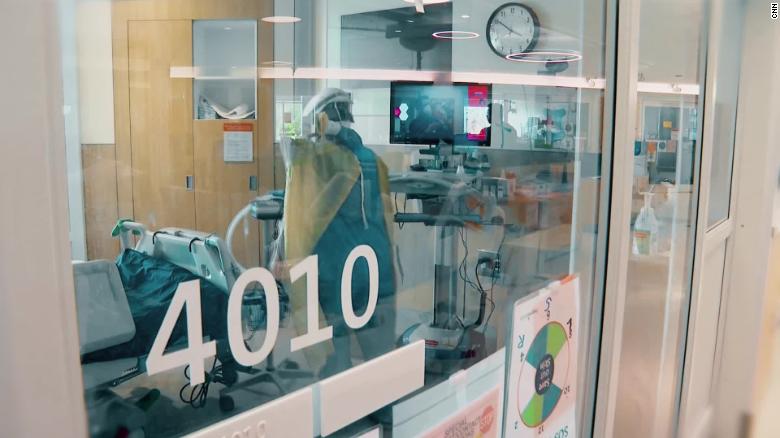
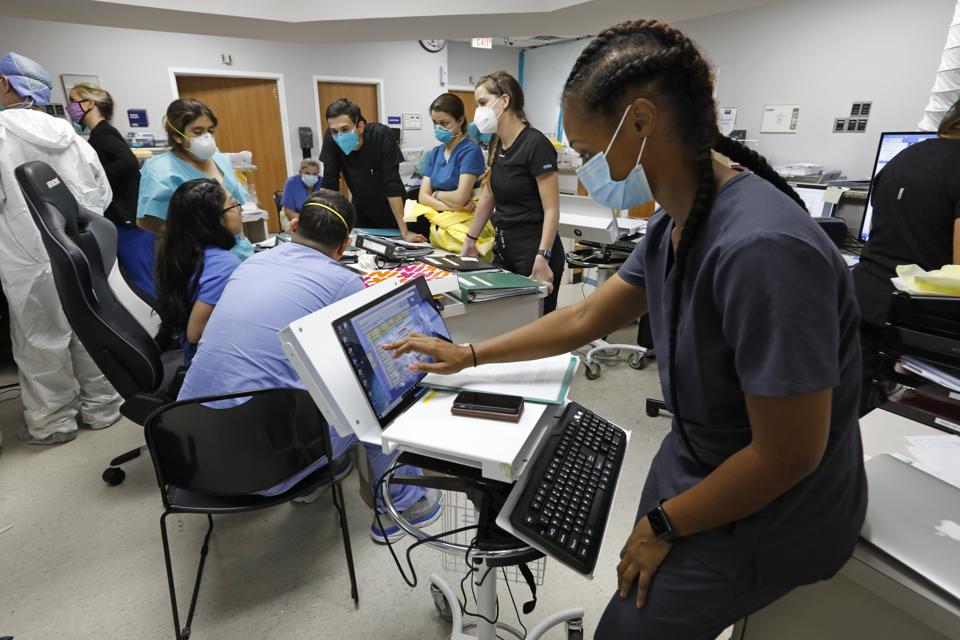
The coronavirus is spreading at ever-faster rates in a broad array of states, putting the U.S. on the precipice of an explosion of illness that threatens to overwhelm the nation’s health care system.

The painful economic lockdowns imposed in March gave the country time to flatten the epidemiological curve and contain the virus. But that window of opportunity, which came at great economic cost, is quickly slamming shut. Health experts say all signs point to a deadly summer and fall unless government leaders implement a much more robust national strategy.

The breadth of the spread is staggering. Forty-three states have seen the number of cases confirmed on an average day increase in the last two weeks. The number of patients in hospitals has risen over the same period in 29 states. More than 80 percent of intensive care beds are occupied in Alabama, Arizona and Georgia.

The same models that predicted surges in Phoenix, Houston and Miami now show a new and broader round of cities as the likely next epicenters. The number of confirmed cases is likely to rise substantially in places like Atlanta, Kansas City, Mo., Tulsa, Okla., and Greenville, S.C.

The virus also appears to be traveling north along the I-95 corridor. Cities like Philadelphia and Baltimore, which struggled through earlier peaks of viral transmission, are now seeing early signs of a second wave. Transmissions even appear to be rising in New York City.

On the other side of the country, outbreaks in California have grown to unprecedented proportions. The Golden State is now averaging more than 7,900 new cases a day, substantially more than its seven-day average just two weeks ago.

Public health experts warn that the U.S. has only a fleeting window in which to wrestle the virus back under some form of control. Without a stronger national response, including restrictions on large gatherings and requirements that people wear masks in public, the risk of a second peak could bring new lockdowns and more economic harm, derail the beginning of the new school year and even overwhelm local health systems.

“Our projections show that without immediate actions to significantly reduce travel and social distancing nationwide, this virus will not only threaten our ability to reopen schools in the coming weeks, but our capacity to care for the sickest individuals,” said David Rubin, director of PolicyLab at the Children’s Hospital of Philadelphia whose models forecast higher case counts.

More than 3.1 million Americans have tested positive for the virus, though the Centers for Disease Control and Prevention estimate that as many as 25 million people in the U.S. may have contracted it. More than 133,000 people have died, almost twice as many victims as in Brazil, the second-hardest hit country.

Cities that successfully avoided early explosions of cases are now in the crosshairs after the loosening of restrictions in some states and regions that helped avoid what studies have suggested would have been tens of millions of infections.

“I would be lying if I didn’t say I was concerned,” Kansas City, Mo., Mayor Quintin Lucas said in an interview. “We have looked at the trends out of Texas, Arizona and Florida. Those states kind of reflect the political choices that were made statewide in Missouri, and that does give us concern.”

The Kansas City metropolitan area has confirmed more than 10,000 coronavirus cases. The PolicyLab model shows Jackson County, Mo., is likely to experience more than 200 new cases every day by the beginning of August.

Rubin warned that smaller cities are likely to experience significant outbreaks in the coming weeks, potentially straining health systems that are not as prepared to handle a high volume of patients in need of intensive care. College towns like South Bend, Ind., and Tuscaloosa, Ala., are beginning to see case counts rise even with most students gone.

“We’re starting to see a mild uptick,” said James Mueller, South Bend’s mayor. “We’re in a much better position now than we were for the first increase or the first peak.”

At other levels of government, some who have sought to downplay the severity of the American outbreak have pointed to an increasing number of tests being conducted across the country, which they say will naturally lead to identification of those who have only minor symptoms or asymptomatic cases. But the number of cases is rising faster than would be accounted for by the increase in testing; the share of tests coming back positive is rising in 38 states.

More than a quarter of tests conducted in Arizona are coming back positive, according to state data. More than 15 percent of tests are coming back positive in Alabama, Florida, Mississippi, South Carolina and Texas.

Governors in 23 states have ordered residents to wear masks in public, though President Trump has refused to order a nationwide mask mandate. Trump has instead focused on reopening the economy, insisting that schools operate as normal in the months before he faces voters in November.

But public health experts argue action is needed now to avoid a second peak of tsunami-like proportions.

“We never gave communities a real chance at success as we lacked a national strategy around masking and limiting gathering sizes to act as a buffer as places reopened,” Rubin and his colleagues Gregory Tasian and Jing Huang wrote.

“So, do we admit that we’ve failed and try to salvage the reopening of our schools in fall by quickly enacting a national approach to pause all reopenings and try to get our country back onto stable footing?” he asked. “It may not be what people want to hear, but the situation is that dire that we need to consider this.”




Covid-19 has decimated independent US primary care practices—how should policymakers and payers respond?

Covid-19 has decimated independent US primary care practices—how should policymakers and payers respond? 

9 ways Covid-19 may forever upend the U.S. health care industry - STAT

The coronavirus pandemic has torn through the global economy, suppressing consumer demand and industrial production. As countries look to an eventual recovery, but in a very different environment characterized by continuing distancing measures and loss of public confidence, businesses in many sectors, such as hospitality and retail, are asking how they can adapt to survive these new economic conditions. Yet perhaps surprisingly, those feeling threatened include independent primary care practices in the United States. Despite the USA being one of the most expensive healthcare systems in the world, many primary care practices are now facing financial collapse. Some estimates suggest that primary care practices will lose up to $15 billion during 2020 as a consequence of the coronavirus pandemic.

Covid-19 has highlighted a fundamental weakness in how primary care is paid for in the USA. Many practices are financed by fee-for-service (FFS) reimbursement. Put bluntly, providers make money from office visits, diagnostic tests, and procedures. This has long been criticized for encouraging an expansion of what is considered disease and overtreatment, contributing to the high cost of the American health system. However, it can only work as long as patients keep coming, and they are no longer doing so, at least not in sufficient numbers for many primary care practices to remain viable. The imposition of social distancing policies has seen a severe reduction in office visits, and with it a substantial decline in revenue. The pandemic has taught Americans that the financial model that underpins primary care needs to be reformed. It needs to move from a per-visit reimbursement to a per-patient reimbursement, in other words primary care capitation, as used in many other countries, including the UK.

If the existing reimbursement model is not reformed, the clinical and financial implications for struggling primary care practices, which could play a key role in the continuing coronavirus pandemic, will be far-ranging. From a clinical standpoint, primary care practices that need to lay off staff or close will not be able to respond effectively to an influx of patients who have been delaying care since the pandemic began. Given that primary care is often the entry point into the healthcare system, this could lead to severe reductions in access to routine health care as well as referrals to specialty providers for advanced complaints. From a financial standpoint, many of these independent practices may consider consolidation with larger health systems, something that has been shown to increase prices without improving quality in the long run.

To overcome these issues, insurers and primary care practices could work together to construct capitated payment models. In capitated contracts, providers are paid a risk-adjusted sum for each patient enrolled in the practice. Payment to providers is not reliant on volume of office visits, but rather delivering cost-effective care focused on the health of primary care patients.

As we noted above, this system is already widely used internationally, but there are also good examples in the USA. For example, Iora Health is a venture-backed primary care company that partners with insurers to obtain a flat $150 per-member-per-month (PMPM) fee for taking care of its patients. They also receive bonuses for reducing total cost of care (TCOC). As a result, they have been able to use their dollars for health-related interventions, such as hiring health coaches. They have also demonstrated significant reductions in hospitalizations and health spending along with high patient satisfaction scores. Most importantly, they were able to quickly adapt to the needs of their patient population in the pandemic using alternative models of care, such as online consultations, without the added stress of losing revenue.

There are also many other promising examples of both public and private payers designing capitated contracts for independent primary care practices. In the public sector, the Centers for Medicare and Medicaid Services (CMS) introduced the multi-payer Primary Care First (PCF) Model. Under PCF, primary care practices will receive a risk-adjusted population-based payment for patients as well as a flat fee for any office visits performed. In addition, there are bonuses for practices to limit hospitalizations, an expensive component of delivering care. However, this is still an experimental program that is supposed to begin in 2021, which may be too late for primary care practices that are already facing financial strain from the pandemic.

In the private sector, Blue Cross Blue Shield of North Carolina (BCBS NC) has created the Accelerate to Value program for independent primary care practices. Through this program, BCBS NC is offering independent primary care practices a supplemental stabilization payment, based on the number of members a particular practice serves. In return, it is asking them to remain open for patients and deliver care appropriate to the circumstances created by the pandemic. In the longer term, it also asks them to join an accountable care organization (ACO) and consider accepting capitation for future reimbursement. 

While CMS and BCBS can offer blueprints for a path towards primary care capitation, there will be challenges to implement capitation at scale across the nation’s primary care system. A key defining aspect of the US healthcare system is its multitude of payers, from commercial to Medicaid to Medicare. For primary care capitation to succeed, practices will need to pursue multi-payer contracts that cover a critical mass of the patients they serve. Independent practices will also have to adapt to a fixed budget model where excess healthcare utilization could actually lead to financial losses, unlike in fee-for-service.

Ultimately, it is important to recognize that no payment model will be a panacea for healthcare providers during the pandemic and afterwards. However, the coronavirus pandemic has highlighted clear deficiencies in the American fee for service system that have existed for almost a century. Covid-19 has created an opportunity for policymakers and providers to look anew at a model that is already implemented widely in other countries, and in parts of the US. At some point there will have to be an inquiry into the many failures that have characterized the American response to covid-19. Given the magnitude of the catastrophe that has befallen the US, in stark contrast to the relative successes achieved in many other countries, it will be essential to challenge many things once taken for granted. One must be the fee for service system that has so clearly undermined the resilience of the US health system. Covid-19 has provided an almost unprecedented opportunity to create a healthcare system that rewards providers caring for patients in a coordinated manner, rather than prioritizing expensive and often wasteful healthcare provision.


More young people are getting — and spreading — the coronavirus

https://www.axios.com/coronavirus-young-people-spread-5a0cd9e0-1b25-4c42-9ef9-da9d9ebce367.html

More young people are getting — and spreading — the coronavirus ...

More young people are being infected with the coronavirus, and even though they’re less likely to die from it, experts warn the virus’ spread among young adults may further fuel outbreaks across the United States.

Why it matters: Some people in their 20s and 30s face serious health complications from COVID-19, and a surge in cases among young people gives the virus a bigger foothold, increasing the risk of infection for more vulnerable people.

  • We may see a pattern of younger people being affected initially, but then, in a number of weeks from now, we’re going to see a more deadly pandemic spreading to elderly people,” says Alison Galvani, an epidemiologist at Yale University.

People can transmit the virus without knowing they have it, and younger people, in particular, could be unknowingly spreading the disease.

  • A study in Italy, yet to be peer reviewed, found the probability of having symptoms increased with age and that among 20–39-year-olds only about 22% had a fever or respiratory symptoms (compared to about 35% of 60–79-year-olds).
  • About half of the clusters in a study in Japan were traced back to people ages 20–39 at karaoke bars, offices and restaurants — and 41% of them did not have symptoms at the time.
  • “Younger people are at lower risk for serious COVID outcomes but are disproportionately responsible for asymptomatic transmission,” says Galvani, who published a study earlier this week that found the majority of COVID-19 transmission is from silent carriers who are pre-symptomatic or asymptomatic.

By the numbers: From Arizona to Allegheny County, Pa., young people increasingly account for COVID-19 cases.

  • In the county of Los Angeles, nearly 50% of cases are now in people under 40 (compared to about 30% in April), per the LA Times.
  • In Harris County, Texas, home to Houston, 43% of the 40,000 cases are in people ages 20–39, as of yesterday.
  • In Florida, the median age of confirmed cases is hovering in the mid- to late-30s, compared to age 65 in March.

And the proportion of young people hospitalized for COVID-19 has also grown.

  • 40% of hospitalizations for COVID-19 at the end of June were for people 18–49-years-old, compared to 26% at the end of March, according to the COVID-NET database of hospitalizations in 14 states that represent about 10% of the U.S. population.

Between the lines: Yes, young people are going to bars and parties — but also to work.

  • 42% of people ages 18–39 said they had socialized without social distancing compared to 26% of people over 40, in a survey last month from the Democracy Fund + UCLA Nationscape.
  • 64% of frontline workers (grocery store clerks, health care workers, delivery drivers and other essential workers) are under 50.
  • There’s a need for better education so that young people choose to take steps to prevent infection, says Lauren Ancel Meyers, a mathematical epidemiologist at UT Austin.
  • “But it also might come down to policies or regulations that get employers to ensure they are providing a safe workplace or resources to protect 20, 30 and other age groups that are working for them.”

Where it stands: Young people are still much less likely to be hospitalized or die from the virus than people older than 60.

  • Yes, but: They can and do get very sick with the disease — from dangerous blood clots in their lungs to inflammation of the heart, lungs and even brain.
  • And the long-term consequences are unknown.
  • The risk is higher for young people of color: For example, the majority of coronavirus hospitalizations among Latino/Hispanic Americans are in people ages 18–49, my Axios colleague Caitlin Owens reported.

“The death rate among the young is not zero, and it is particularly not zero for people who have at least one co-morbid condition. This is not a completely benign disease of the young.”

— Joshua Schiffer, of the Fred Hutchinson Cancer Center

What to watch: “If hospitals are strained now dealing with younger cases, they are going to be all the more taxed when the age distribution of infections shifts to the elderly,” Galvani says.


Our new default coronavirus strategy: herd immunity

https://www.axios.com/newsletters/axios-vitals-8f089110-bdd3-440e-9f8a-d8e431e2e18e.html?utm_source=newsletter&utm_medium=email&utm_campaign=newsletter_axiosvitals&stream=top

The U.S.'s new default coronavirus strategy: herd immunity - Axios

By letting the coronavirus surge through the population with only minimal social distancing measures in place, the U.S. has accidentally become the world’s largest experiment in herd immunity.

Why it matters: Letting the virus spread while minimizing human loss is doable, in theory. But it requires very strict protections for vulnerable people, almost none of which the U.S. has established.

The big picture: Cases are skyrocketing, with hospitalizations and deaths following suit in hotspots. Not a single state has ordered another lockdown, even though per capita cases in Florida and Arizona have reached levels similar to New York and New Jersey’s in April.

  • Most states never built up the testing, contact tracing and isolation systems it would take to prevent the virus from spreading widely.
  • The Trump administration is generally ignoring or downplaying soaring caseloads across the South and West, and is pushing schools to fully reopen in the fall.
  • In Florida, where infections, hospitalizations and deaths are surging, Gov. Ron DeSantis “has repeatedly ruled out a sweeping mask mandate or taking the state back into a lockdown to stem the virus, although local governments have acted on their own,” per Bloomberg.

Between the lines: Separating older, sicker people from younger, healthier ones while the virus burns through the latter group could be a way to achieve herd immunity — assuming immunity exists — without hundreds of thousands of people dying.

  • But the U.S. hasn’t adopted such a strategy with any planning or foresight. Although younger people make up a larger portion of coronavirus cases now than they did earlier in the pandemic, vulnerable people still go to work or live with non-vulnerable people.

Yes, but: Some cities and states, particularly in the Northeast, are focused on containing the virus rather than living with it.


U.S. sets one-day record with more than 60,500 COVID cases; Americans divided

https://www.reuters.com/article/us-health-coronavirus-usa/u-s-sets-one-day-record-with-more-than-60500-covid-cases-americans-divided-idUSKBN24A28B?utm_source=Sailthru&utm_medium=email&utm_campaign=Issue:%202020-07-10%20Healthcare%20Dive%20%5Bissue:28416%5D&utm_term=Healthcare%20Dive

Texas, Florida and Arizona see increase in COVID-19 deaths | Daily ...

More than 60,500 new COVID-19 infections were reported across the United States on Thursday, according to a Reuters tally, setting a one-day record as weary Americans were told to take new precautions and the pandemic becomes increasingly politicized.

The total represents a slight rise from Wednesday, when there were 60,000 new cases, and marks the largest one-day increase by any country since the pandemic emerged in China last year.

As infections rose in 41 of the 50 states over the last two weeks, Americans have become increasingly divided on issues such as the reopening of schools and businesses. Orders by governors and local leaders mandating face masks have become particularly divisive.

“It’s just disheartening because the selfishness of (not wearing a mask) versus the selflessness of my staff and the people in this hospital who are putting themselves at risk, and I got COVID from this,” said Dr. Andrew Pastewski, ICU medical director at Jackson South Medical Center in Miami.

“You know, we’re putting ourselves at risk and other people aren’t willing to do anything and in fact go the other way and be aggressive to promote the disease. It’s really, it’s really hard,” he said.

Stephanie Porta, 41, a lifelong Orlando, Florida, resident, said only about half the shoppers at her grocery store wore masks, though that was more than she saw two weeks ago.

“They’re trying to make everything seem normal, when it’s not. People are dying, people are getting sick. It’s insane,” she said.

Florida on Thursday announced nearly 9,000 new cases and 120 new coronavirus deaths, a record daily increase in lives lost. Governor Ron DeSantis called the rising cases a “blip” and urged residents not to be afraid.

“I know we’ve had a lot of different blips,” DeSantis said. “We’re now at a higher blip than where we were in May and the beginning of June.”

Florida is one of the few states that does not disclose the number of hospitalized COVID patients. But more than four dozen Florida hospitals reported their intensive care units reached full capacity earlier this week.

In Texas a group of bar owners sued Governor Greg Abbott, a Republican, saying his June 26 order closing them down violates the state constitution, the Dallas Morning News reported.

Dr. Robert Redfield, director of the U.S. Centers for Disease Control and Prevention, said Thursday that keeping schools closed would be a greater risk to children’s health than reopening them.

California and Texas, the two most populous states, announced record increases in COVID deaths on Wednesday.

California has seen cases and hospitalizations surge, even though it imposed one of the strictest lockdowns. After several lawmakers and staffers at the state Capitol in Sacramento were infected, lawmakers said the legislature would not return from summer break until July 27.

Riverside University Health System, east of Los Angeles, expanded its 44-bed intensive care unit after it filled up with patients.

“It’s been very consistent every day in the last couple of weeks. Every day has been like a full moon,” Riverside emergency room physician Stephanie Loe said, referring to doctors’ beliefs that a full moon brings more patients to the emergency room.

Governors in California, Florida and Texas have either ruled out forced business closures and quarantines or called them a last resort. But Los Angeles Mayor Eric Garcetti warned he would impose a new stay-at-home order in two weeks if the latest surge did not ease.

The rise in infections also weighed on the stock market Thursday on fears of new lockdowns, which would take a toll on the economic recovery. The Dow .DJI and the S&P 500 .SPX ended down about 1%.


Trump sidelines public health advisers in growing rift over coronavirus response

https://www.washingtonpost.com/health/trump-sidelines-public-health-advisers-in-growing-rift-over-coronavirus-response/2020/07/09/ad803218-c12a-11ea-9fdd-b7ac6b051dc8_story.html?fbclid=IwAR0MI5VGiJQmUsyEpzYDj09Q0VVxxYMlHwx-UjfHdmMu1PdGD6uIzv8R2fM&utm_campaign=wp_main&utm_medium=social&utm_source=facebook

The Health 202: Health officials promise to ramp up pandemic ...

The June 28 email to the director of the Centers for Disease Control and Prevention was ominous: A senior adviser to a top Health and Human Services Department official accused the CDC of “undermining the President” by putting out a report about the potential risks of the coronavirus to pregnant women.

The adviser, Paul Alexander, criticized the agency’s methods, and said its warning to pregnant women “reads in a way to frighten women . . . as if the President and his administration can’t fix this and it is getting worse.”

As the country enters a frightening phase of the pandemic with new daily cases surpassing 62,000 on Wednesday, the CDC, the nation’s top public health agency, is coming under intense pressure from President Trump and his allies, who are downplaying the dangers in a bid to revive the economy ahead of the Nov. 3 election. In a White House guided by the president’s instincts, rather than by evidence-based policy, the CDC finds itself forced constantly to backtrack or sidelined from pivotal decisions.

The latest clash between the White House and its top public health advisers erupted Wednesday, when the president slammed the agency’s recommendation that schools planning to reopen should keep students’ desks six feet apart, among other steps to reduce infection risks. In a tweet, Trump — who has demanded schools at all levels hold in-person classes this fall — called the advice “very tough & expensive.”

“While they want them open, they are asking schools to do very impractical things. I will be meeting with them!!!” Trump tweeted Wednesday. Within hours, Vice President Pence had asserted the agency would release new guidance next week.

“The president said today we just don’t want the guidance to be too tough,” Pence told reporters. “And that’s the reason next week the CDC is going to be issuing a new set of tools.”

Analysts say the deepening divide is undermining the authority of one of the world’s premier public health agencies, which previously led fights against malaria, smallpox and HIV/AIDS. Amid the worst public health crisis in a century, the CDC has in recent months altered or rescinded recommendations on topics including wearing masks and safely reopening restaurants and houses of worship as a result of conflicts with top administration officials.

“At a time when our country needs an orchestrated, all-hands-on deck response, there is simply no hand on the tiller,” said Beth Cameron, former senior director for global health security and biodefense on the White House National Security Council.

In the absence of strong federal leadership, state and local officials have been left to figure things out for themselves, leading to conflicting messaging and chaotic responses. Trump’s decision to pull the U.S. out of the World Health Organization further undermined efforts to influence global strategies against the coronavirus, including how vaccines will be distributed.

The CDC, meanwhile, is increasingly isolated — a function both of its growing differences with the White House and of its own significant missteps earlier in the outbreak.

Those stumbles include the botched rollout of test kits likely contaminated at a CDC lab in late January, which led to critical delays in states’ ability to know where the virus was circulating. And the CDC’s initial decision to test only a narrow set of people gave the virus a head start spreading undetected across the country.

During a May lunch with Senate Republicans, Trump told the group the CDC “blew it” on the coronavirus test and that he’d installed a team of “geniuses” led by his son-in-law Jared Kushner to handle much of the response,” according to two people familiar with the lunch who spoke on the condition of anonymity.

“There is a view the CDC is staffed with deep state Democrats that are trying to tweak the administration,” said one adviser who also spoke on the condition of anonymity to reveal private conversations.

White House officials, who see the president’s reelection prospects tied to economic recovery, also say they’ve been deeply frustrated by what they view as career staffers at the agency determined “to keep things closed,” according to a senior administration official who spoke on the condition of anonymity to reveal internal deliberations.

Trump believes the CDC is “ineffective” and a “waste of time,” but doesn’t blame CDC Director Robert Redfield and generally likes him, said another official speaking on the condition of anonymity. “He just thinks he is a poor communicator,” the official added.

Joe Grogan, former head of the White House Domestic Policy Council, said Redfield had fans inside the White House who work on “addiction issues, on life issues, on HIV issues,” among other topics.

But he said Redfield has few political appointees to help him run a complex agency. “How do you run a place like that with … [few] appointees?” Grogan asked.

HHS Secretary Alex Azar called the director “a key scientific guide for the President and his administration, a trusted source for the American people, and a closely engaged partner of state and local governments.”

But Redfield is not a voice in coronavirus task force meetings, and “is never really in the Oval [Office] with the president,” said another senior administration official, who also spoke on the condition of anonymity to discuss the internal dynamics.

Even Redfield’s supporters say he has failed to be an effective advocate for the agency.

“Bob Redfield’s commitment to public health is completely strong,” said William Schaffner, a veteran infectious-disease specialist at Vanderbilt University. But he said Redfield lacks the standing, deftness, and communication capacity to persuade skeptical audiences, including those in the White House, that protecting public health and fostering economic recovery are not opposing goals.

Redfield, for his part, downplayed Trump’s criticism of the CDC school reopeniing guidelines after a coronavirus task force briefing Wednesday, saying the agency and the president were “totally aligned.”

“We’re both trying to open the schools,” he said.

White House spokesman Judd Deere also disputed big differences, saying in a statement the White House and the CDC “have been working together in partnership since the very beginning of this pandemic to carry out the President’s highest priority: the health and safety of the American public.

“The CDC is the nation’s trusted health protection agency and its infectious disease and public health experts have helped deliver critical solutions to save lives. We encourage all Americans to continue to follow the CDC’s guidelines and use best-practices they have learned, such as social distancing, face coverings, and good hygiene, to maintain public health and continue our Transition to Greatness.”

But some health experts were indignant the agency had been ordered to rewrite guidance to reopen schools to “make it easier and cost less” — a demand that effectively “turns science on its head,” said Tom Inglesby, director of Johns Hopkins University’s Center for Health Security.

“CDC should be giving their best judgments on how to lower risks to make schools safer,” he said. “That’s their job. If they aren’t allowed to do that, the public will lose confidence in the guidance.”

Why are they ‘not shouting “fire”?’

The diminished role of the 74-year-old agency has bewildered infectious-disease experts, as well as members of the public seeking guidance.

After six states set one-day case records on July 3, Carlos del Rio, executive associate dean at Emory University’s School of Medicine, tweeted at Tom Frieden, a former CDC director, “Tom, where is @CDCgov ? Why are they not out there shouting ‘fire’?”

Frieden shot back: “They are still there, still doing great work, just not being allowed to talk about it, not being allowed to guide policy, not being allowed to develop, standardize, and post information that would give, by state and county, the status of the epidemic and of our control measures.”

Jeffrey Duchin, the health officer at Seattle and King County health department, added: “Agree. Muzzled, neutered and exiled.”

The agency has been largely invisible. After more than three months of silence, it resumed briefings for the public last month. There have been two.

By comparison, when the H1N1 swine flu pandemic hit the United States in the spring of 2009, the CDC held briefings almost every day for six consecutive weeks.

During this outbreak, the agency’s regular briefings ended abruptly after White House officials were angered when a top CDC leader warned that Americans could face “significant disruption” to their lives as a result of the virus’s spread to the United States.

CDC officials say they are still getting their message out, pointing to more than 2,000 documents providing pandemic-related information about reopening and staying safe for dozens of groups and venues, including funeral home directors, amusement parks, and pet owners. Each Friday, the CDC also posts CovidView, a weekly report of selected data and trends on testing, hospitalizations, and reported deaths.

But the information is posted without additional explanation or analysis.

“I want to hear a real person give me three minutes based on these findings,” said del Rio, also a global health and infectious-disease professor at Emory. “I want to see them in the news, being interviewed, giving us the data.”

Scientists at the CDC and former colleagues speak of deep frustration and low morale over its inability to fully share and explain scientific and medical information.

Researchers are fearful for their jobs and want to protect the integrity of the data they release. “If you want to say something, you’re thinking, ‘what’s the White House going to say and how are they going to use it,’ ” said one longtime scientist who spoke on the condition of anonymity for fear of retaliation.

The lack of briefings has fostered misunderstandings at times. In early April, for instance, when the agency reversed its position and recommended the use of cloth face coverings, CDC scientists gave no public briefings explaining why they made the change.

“It’s not rocket science,” said Nancy Cox, a virologist and former CDC official who led the influenza program for 22 years and was part of the agency’s response during the 2009 H1N1 swine flu pandemic. “But the reasoning behind those changes should be explained as clearly as possible and then you can get everyone on board.”

In the CDC’s absence, academic medical centers, public health and professional disease groups have filled the void by holding coronavirus briefings and providing analysis of key issues, data and research studies. Frieden, the president of Resolve to Save Lives, a New York nonprofit, has also been posting long Twitter threads analyzing the weekly CDC data released on Fridays.

Speaking ‘with an unfettered voice’

Alarmed at the agency’s diminished role, nearly 350 public health organizations sent a letter Tuesday to Azar urging him to advocate for the CDC. The agency must be allowed to speak based on the best available science “and with an unfettered voice,” said John Auerbach, president and chief executive of Trust for America’s Health, a public health nonprofit that led the effort.

House Democrats echoed those concerns in a separate letter to Azar last month. Reps. Diana DeGette of Colorado and Frank Pallone Jr. of New Jersey, who chairs the House Energy and Commerce Committee, said they were troubled by reports that administration officials are considering narrowing the CDC’s mission and embedding more political appointees at the Atlanta-based agency.

Traditionally the CDC has one political appointee, the director. Now it has Redfield and five other political appointees, including two advisers who were added in recent weeks.

“Now more than ever, the American people need a robust and effective CDC that is not repeatedly undermined by others in the administration, including the President and the Vice President,” the letter said.

White House Chief of Staff Mark Meadows views the agency as a problem and has criticized the CDC repeatedly to other administration officials, said a senior administration official.

White House and HHS officials are discussing what the CDC’s “core mission needs to be,” said one adviser familiar with the talks who spoke on the condition of anonymity to comment on policy deliberations. The discussions were first reported by Politico.

Over the years, the agency that was founded to fight malaria now works on virtually every aspect of public health. “It has tried to be everything to everyone,” the adviser said, suggesting the agency might need to refocus more narrowly.

On the global front, administration officials are also weighing a $2.5 billion initiative called the President’s Response to Outbreaks that would move a significant portion of national and international pandemic responses to the State Department, according to a draft obtained by The Post. Details were first reported by Devex.

“There is no clear leadership role for CDC” in this plan, said Jennifer Kates, a senior vice president for global health and HIV policy at the Kaiser Family Foundation. “In global health, you need an engaged CDC.”

Taken together, the administration efforts seem “designed to position CDC to the margins,” said one federal health official who spoke on the condition of anonymity for fear of retaliation.

‘Boogeyman where there aren’t any’

The report that drew the email attack, accusing the agency of undermining the president, had provided detailed but incomplete information about pregnancy risks related to the coronavirus. It found pregnant women with covid-19 were more likely to be hospitalized, admitted to an intensive care unit, and to need ventilator support than infected women who are not pregnant.

The sender, Alexander, a specialist in health research methods, is a senior adviser to Michael Caputo, a longtime Trump ally who was recently appointed assistant HHS secretary for public affairs , which includes the CDC.

The email was directed to Redfield and Caputo.

Even amid the intense criticism of the agency, the email “crosses the line,” said the official, who was aware of the content.

Like all of the CDC’s reports, the analysis itself noted several limitations. One key one that researchers acknowledged was that they did not have data to indicate whether the pregnant women were hospitalized because of labor and delivery, or because they had covid-19.

Administration officials are “seeing political boogeymen where there aren’t any,” the federal health official said, adding that such narratives could further hamper the U.S. response.

“It could feed the fire to limit the flow of scientific data and communication to the general population,” the official said. “People are getting sick and dying. Can we just focus on the science?”

Alexander said in his email that the lack of data about why women were hospitalized was a “key issue.”

“The CDC is undermining the President by what they put out, this is my opinion and sense, and I am reading it and can see the subtle and direct hits,” he wrote.

Alexander, also a part-time assistant professor at McMaster University in Hamilton, Ontario, did not respond to emails and telephone calls seeking comment.

Caputo said in an interview that he agreed with Alexander. The CDC represents itself as the gold standard for public health agencies, he said, “but in the case of pregnancy analysis, it wasn’t even bronze.”

He called CDC’s track record “spotty” and “questionable,” pointing to Zika diagnostic testing errors in 2016.

“In many cases over the years, regardless of administration, the CDC has undermined presidents and themselves,” Caputo said, referring to leaked drafts of CDC guidances. “Who says the CDC is the sole font of wisdom when it comes to detecting and fighting deadly pathogens?”

Experts say that even with some big unanswered questions, the pregnancy findings represent the best available evidence and are important. The lack of data reflects decades of long-neglected national surveillance on pregnancy.

“I don’t think this is frightening women,” said Denise Jamieson, who heads the obstetrics and gynecology department at Emory University and Emory Healthcare. True, the report “suffers from completeness of data,” she said. But now doctors can be more confident that pregnant women are more likely to have severe disease and use “this really important information” to counsel patients, she said.


Merkel says pandemic reveals limits of ‘fact-denying populism’

Merkel says pandemic reveals limits of ‘fact-denying populism’

Covid-19 has exposed the limits of 'fact-denying populism', Merkel ...

German Chancellor Angela Merkel told European Union (EU) countries Wednesday that the coronavirus pandemic is showing the limits of “fact-denying populism” as she urged the bloc to reach an agreement on an economic recovery package.

Merkel said that the EU “must show that a return to nationalism means not more, but less control,” according to France 24.

Without naming any specific nations, Merkel said: “We are seeing at the moment that the pandemic can’t be fought with lies and disinformation, and neither can it be with hatred and agitation.”

“Fact-denying populism is being shown its limits,” she added. “In a democracy, facts and transparency are needed. That distinguishes Europe, and Germany will stand up for it during its presidency.”

The pandemic has killed more than 100,000 people in the 27 EU nations and sparked what is expected to be the largest recession the continent has experienced in decades.

On Tuesday the EU released a report predicting the bloc’s economy will contract more than initially expected due to coronavirus-related lockdowns.

Merkel on Wednesday joined EU Economy Commissioner Paolo Gentiloni in urging the commission to quickly reach an agreement on the 750 billion-euro stimulus package proposed earlier this year.

“The depth of the economic decline demands that we hurry,” Merkel told lawmakers, according to The Associated Press. “We must waste no time — only the weakest would suffer from that. I very much hope that we can reach an agreement this summer. That will require a lot of readiness to compromise from all sides — and from you too.


Texas and Arizona ER doctors say they are losing hope as hospitals reach capacity

https://www.cnn.com/2020/07/08/us/emergency-room-doctors-coronavirus-capacity/index.html?utm_source=Sailthru&utm_medium=email&utm_campaign=Issue:%202020-07-08%20Healthcare%20Dive%20%5Bissue:28354%5D&utm_term=Healthcare%20Dive

Texas and Arizona ER doctors say they are losing hope as hospitals ...

As concerns over the capacity of hospitals resurface amid surging Covid-19 cases, two emergency room doctors say they worry about where the pandemic could take them next.

Dr. Mina Tran, an emergency room doctor in Texas, said 70 to 80% of her patients have been admitted with upper respiratory or coronavirus complaints.
In Arizona, which saw its lowest-ever number of available ICU beds Tuesday, Dr. Murtaza Akhter told Lemon so many patients are coming in that he is already having to make tough decisions over resources.
“I’m trying not to be an alarmist. I’m an emergency physician — we’re prepped for this. Dr. Tran and I both trained very hard for this. But we can’t just build beds overnight. We can’t just hire staff overnight. And like I said, our numbers are only increasing,” he said. “It’s only going to get worse and that’s the scary part.”
With a rise in hospitalization rates across the US, doctors like Akhter are reporting waiting lists for ICU beds and having to decide who will be admitted for treatment and who will not.
Surges in hospitalization and infection rates have followed larger crowds gathering in newly reopened public spaces. Every state has started their plan to reopen, and 35 are currently seeing more new cases reported compared to last week.
Tran applauded Texas Gov. Greg Abbott closing down bars once again but said she does think the state was too quick to open back up.
While many states have paused or rolled back reopening in light of a resurgence of cases, Akhter said seeing individuals continue disregard safe practices as his emergency room treats coronavirus patients makes him feel like he is “losing hope.”
“I’m going through shifts making some very tough decisions and then I’m driving home and seeing people who are clearly not distancing, having their Fourth of July celebrations, being in big congregate settings, and it feels like what I’m doing is futile,” Akhter said. “I don’t know what more people need to hear.”
And California and Florida are feeling the strain as well.
In Florida, where cases have surged, ICUs at 56 hospitals have reached capacity. And California’s hospitalizations were at an all-time high on Tuesday with nearly 6,000 coronavirus patients.


IHME Model Projects 208,255 U.S. Deaths By November, But Estimate Falls Sharply If Mask Use Increases

https://www.forbes.com/sites/mattperez/2020/07/07/imhe-model-projects-208255-us-deaths-by-november-but-estimate-falls-sharply-if-mask-use-increases/?utm_source=newsletter&utm_medium=email&utm_campaign=dailydozen&cdlcid=5d2c97df953109375e4d8b68#453db3d56f2e

IHME Model Projects 208,255 U.S. Deaths By November, But Estimate ...

TOPLINE

The University of Washington’s influential Covid-19 model, extended out to November 1 for the first time, estimates that 208,255 Americans will die from the virus by then, though, the death toll could be reduced by nearly 22% if mask use were to become widespread, researchers said.

KEY FACTS

The university’s Institute for Health Metrics and Evaluation (IHME) forecasts 162,808 deaths by November if at least 95% of people were to wear face coverings in public.

A Gallup poll released Monday found that 86% of adults wore masks in the past week.

Masks have become a political issue, with only 66% of Republicans reporting mask use in the poll, while President Trump continues to refuse to wear one in public and his campaign has declared them optional at recent public campaign events and rallies.

“Mask mandates delay the need for re-imposing closures of businesses and have huge economic benefits,” said IHME Director Dr. Christopher Murray.

The model anticipates a surge in deaths in September and October, with the IHME noting Tuesday that, “Current data show a strong statistical relationship between Covid-19 transmission and pneumonia seasonality, which is included as a covariate in the model.”

While many of the people infected during the current surge in cases worldwide have been on the younger side, and therefore at lower risk of death, the university warns its current projection could increase if the virus is spread to at-risk populations.

The U.S. is currently experiencing a surge in cases following the easing of social distancing policies, particularly in Southern and Western states, a situation that Dr. Anthony Fauci, the country’s top infectious disease official, characterized as “really not good” during an interview Monday.

CHIEF CRITIC

President Trump, who pushed back against Fauci’s comments on Tuesday. “Well, I think we are in a good place. I disagree with him,”Trump said, according to CNN. “Dr. Fauci said don’t wear masks and now he says wear them. And he said numerous things. Don’t close off China. Don’t ban China. I did it anyway. I didn’t listen to my experts and I banned China. We would have been in much worse shape.”

BIG NUMBER

57,718. That’s the new daily record for confirmed cases of Covid-19 in the U.S., reached on July 2, according to the CDC. The toll has been broken several times since June, the previous high coming in early April with 43,438. The U.S. leads the world in cases of the coronavirus with 2,981,602, as well as reported deaths with 131,248.

TANGENT

Both Fauci and Murry at the IHME agree that the U.S. is still deep into its first wave, as exemplified by Texas, which broke its records for cases, hospitalizations and deaths on Tuesday. Because of the situation, Houston Mayor Sylvester Turner urged Texas’ GOP on Monday to cancel its in-person convention set for next week.


U.S. Tops Three Million Known Infections as Coronavirus Surges

https://www.usnews.com/news/top-news/articles/2020-07-07/us-coronavirus-cases-hit-3-million-stoking-fears-of-overwhelmed-hospitals

U.S. tops three million known infections as coronavirus surges ...

 The U.S. coronavirus outbreak crossed a grim new milestone of over 3 million confirmed cases on Tuesday as more states reported record numbers of new infections, and Florida faced an impending shortage of intensive care unit hospital beds.

Authorities have reported alarming upswings of daily caseloads in roughly two dozen states over the past two weeks, a sign that efforts to control transmission of the novel coronavirus have failed in large swaths of the country.

California, Hawaii, Missouri, Montana, Oklahoma and Texas on Tuesday shattered their previous daily record highs for new cases. About 24 states have also reported disturbingly high infection rates as a percentage of diagnostic tests conducted over the past week.

In Texas alone, the number of hospitalized patients more than doubled in just two weeks.

The trend has driven many more Americans to seek out COVID-19 screenings. The U.S. Department of Health and Human Services said on Tuesday it was adding short-term “surge” testing sites in three metropolitan areas in Florida, Louisiana and Texas.

In Houston, a line of more than 200 cars snaked around the United Memorial Medical Center as people waited for hours in sweltering heat to get tested. Some had arrived the night before to secure a place in line at the drive-through site.

“I got tested because my younger brother got positive,” said Fred Robles, 32, who spent the night in his car. “There’s so many people that need to get tested, there’s nothing you can do about it.”

Dean Davis, 32, who lost his job due to the pandemic, said he arrived at the testing site at 3 a.m. on Tuesday after he waited for hours on Monday but failed to make the cutoff.

“I was like, let me get here at three, maybe nobody will be here,” Davis said. “I got here, there was a line already.”

In Florida, more than four dozen hospitals across 25 of 67 counties reported their intensive care units had reached full capacity, according to the state’s Agency for Health Care Administration. Only 17% of the total 6,010 adult ICU beds statewide were available on Tuesday, down from 20% three days earlier.

Additional hospitalizations could strain healthcare systems in many areas, leading to an uptick in deaths from the respiratory illness that has killed more than 131,000 Americans to date.

A widely cited mortality model from the University of Washington’s Institute for Health Metrics and Evaluation (IHME) projected on Tuesday that U.S. deaths would reach 208,000 by Nov. 1, with the outbreak expected to gain new momentum heading into the fall.

A hoped-for summertime decline in transmission of the virus never materialized as previously predicted, the IHME said.

“The U.S. didn’t experience a true end of the first wave of the pandemic,” IHME Director Dr. Christopher Murray said in a statement. “This will not spare us from a second surge in the fall, which will hit particularly hard in states currently seeing high levels of infections.”

‘PRESSURE ON GOVERNORS’

U.S. President Donald Trump, who has pushed for restarting the U.S. economy and urged Americans to return to their normal routines, said on Tuesday he would lean on state governors to open schools in the fall.

Speaking at the White House, Trump said some people wanted to keep schools closed for political reasons. “No way, so we’re very much going to put pressure on governors and everybody else to open the schools.”

New COVID-19 infections are rising in 42 states, based on a Reuters analysis of the past two weeks. By Tuesday afternoon, the number of confirmed U.S. cases had surpassed 3 million, affecting nearly one of every 100 Americans and a population roughly equal to Nevada’s.

In Arizona, another hot spot, the rate of coronavirus tests coming back positive rose to 26% for the week ended July 5, leading two dozen states with positivity rates exceeding 5%. The World Heath Organization considers a rate over 5% to be troubling.

The surge has forced authorities to backpedal on moves to reopen businesses, such as restaurants and bars, after mandatory lockdowns in March and April reduced economic activity to a virtual standstill and put millions of Americans out of work.

The Texas state fair, which had been scheduled to open on Sept. 25, has been canceled for the first time since World War Two, organizers announced on Tuesday.

In Ohio, Governor Mike DeWine said the state was ordering people in seven counties to wear face coverings in public starting on Wednesday evening.