UPDATE: May 21, 2021: Late Thursday, drug manufacturing giant Eli Lilly filed a motion in an Indiana district court to halt 340B-related monetary penalties, scant days after the Biden administration set a June 1 deadline for biopharmaceutical companies to comply with new conditions in the drug discount program and allow hospital contract pharmacies access to discounted drugs.
The suit alleges a Monday letter from Diana Espinosa, acting head of the Health Resources and Services Administration, gives “no legal explanation or justification for the arbitrary June 1 deadline.”
Lilly previously filed an almost identical lawsuit January 2020. The Indianapolis-based biopharma said it expected the government to follow the briefing schedule outlined in that suit before mandating compliance with 340B and forcing it to pay “substantial and irretrievable sums of money.”
“If the Court ultimately decides Lilly was required to extend 340B pricing to contract pharmacies, Lilly will comply with that decision. Conversely, if the Court ultimately decides manufacturers are not required to extend 340B pricing to contract pharmacies, then we surely expect the government will comply with that decision. But there is no explanation or justification for the government’s attempt to make Lilly pay now, other than to evade this Court’s review and leave Lilly without recourse for such payments,” the motion reads.
In the petition, Lilly, which brought in $6.2 billion in profit last year, alleges the shifting terms of the program are due to HHS director Xavier Becerra bending to political pressure to “take action” against drug manufacturers, as pharmaceutical prices continue to climb.
Lilly asked the district court to temporarily block HHS from moving against Lilly until the drugmaker’s request for a preliminary injunction is resolved; and for an accelerated legal schedule to settle its claims before the looming June deadline.
An HRSA spokesperson declined to comment on the suit.
Dive Brief:
HHS’ Health Resources and Services Administration called out six pharmaceutical companies Tuesday for violating rules under the 340B drug discount program, ordering them to repay affected providers for previous overcharges and warning of more penalties if they don’t comply.
In July 2020 some drugmakers stopped giving the 340B ceiling price on their products sold to covered entities and dispensed through contract pharmacies, while others limited sales by requiring specific data or selling products only after a covered entity demonstrated 340B compliance, according to HRSA.
In letters from Diana Espinosa, acting administrator of HRSA, the agency requested AstraZeneca, Eli Lilly, United Therapeutics, Sanofi, Novo Nordisk and Novartis give an update on their plans to restart selling covered outpatient drugs at the 340B price to covered entities that dispense medications through contract pharmacies by June 1.
Dive Insight:
Providers and drugmakers have sparred for years over the 340B drug discount program that requires pharmaceutical companies to give discounts on outpatient drugs for providers serving low-income communities.
AHA along with five other provider groups in December filed a federal lawsuit against HHS, alleging the department failed to enforce 340B program requirements and allowed actions from drug companies that undermined the program. That lawsuit was later dismissed.
But with the change in administrations, providers now seem to have an ally in the fight.
Previously, as California’s Attorney General, newly minted HHS chief Xavier Becerra led a group of states pushing the agency to force drugmakers to comply with the law late last year.
Provider groups cheered the move after raising the alarm last year that an increasing number of drug companies were refusing to offer discounts to such eligible hospitals.
“The denial of these discounts has damaged providers and patients and must stop. It is vital that these companies immediately begin to repay the millions of dollars owed to these providers,” 340B Health CEO Maureen Testoni said in a statement.
In separate letters to drugmakers, HRSA outlines complaints against them and their actions, ultimately saying their policies violated the statute and resulted in overcharges that need to be refunded. The companies must work to ensure all impacted entities are contacted and efforts are made to pursue mutually agreed upon refund arrangements, according to the letters.
Any additional violations will be subject to a $5,000 penalty for each instance of overcharging under the program’s Ceiling Price and Civil Monetary Penalties final rule.
The American Hospital Association also praised the agency in a release for “taking the decisive action we’ve called for against drug companies that skirt the law by limiting the distribution of certain 340B drugs through community pharmacies.”
Hospitals in the 340B program provide 60% of all uncompensated care in the U.S. and 75% of all hospital care to Medicaid patients, according to 340B Health.
Surgical Care Affiliates, which is part of UnitedHealth Group’s Optum division, hit back at the Department of Justice’s defense of a federal case accusing SCA of agreeing with competitors to not poach senior-level employees.
In a May 14 proposed reply brief supporting its bid to dismiss the case, SCA argued the Justice Department’s defense is unlawful and violates due process rights.
“The government seeks to criminally prosecute as a per se Sherman Act violation an alleged agreement not to solicit another company’s employees, even though no court in history has ever definitively found such an agreement unlawful under any mode of analysis,” according to the proposed reply brief. “Not only is this kind of agreement not illegal per se, but subjecting a practice to per se condemnation for the first time in a criminal prosecution would violate bedrock guarantees of due process.” [emphasis in original]
In January, a federal grand jury charged SCA and its related entities, which own and operate outpatient medical care centers, with entering and engaging in conspiracies with other healthcare companies to suppress competition between them for the services of senior-level employees.
In an email statement to Becker’s Hospital Review, SCA said at the time of the charges: “This matter involves alleged conduct seven years before UnitedHealth Group acquired SCA and does not involve any SCA ambulatory surgery centers, their joint owners, physician partners, current leadership or any other UnitedHealth Group companies. SCA disagrees with the government’s position, and will vigorously defend itself against these unjustified allegations.”
The charges are the first from the department’s antitrust division in its ongoing investigation into employee allocation agreements. Violators of the Sherman Act can face a maximum $100 million fine, or twice the gain derived from the crime or twice the loss suffered by victims if the amount is greater than the maximum.
The Kansas Heart Hospital in Wichita filed a lawsuit against two former executives, claiming they stole money from the facility and improperly used CARES Act funds, according to ABC affiliate KAKE and court documents.
The lawsuit, filed April 29 in the U.S. District Court in Kansas,accuses the hospital’s former COO Joyce Heismeyer and former CFO Steve Smith of stealing funds between 2015 and 2020. During that time, Kansas Heart Hospital lost more than $31 million, according to the lawsuit.
Ms. Heismeyer and Mr. Smith abruptly stepped down from their roles in fall 2020. The hospital claims the former executives set up large severance payments for themselves before their departures, which prompted an internal investigation.
In its complaint, Kansas Heart Hospital alleges that Ms. Heismeyer and Mr. Smith conspired with the hospital’s former president, Gregory Duick, MD, to divert more than $6 million in hospital funds for undisclosed bonuses and benefits during the five-year period. Additionally, the hospital claims all three sent millions in hospital dollars to an investment account that Dr. Duick owned.
Kansas Heart Hospital also claims the three caused it to lose out on $4.4 million in CARES Act payments. The funds were returned to avoid a federal audit, the lawsuit alleges, but the former executives said the funds were returned because the hospital hadn’t treated any COVID-19 patients.
Dr. Duick also retired from his role in fall 2020. He is named in the lawsuit but is not a defendant, and did not immediately return KAKE‘s request for comment.
In a statement to KAKE, an attorney for Ms. Heismeyer and Mr. Smith said, “Joyce and Steve vehemently deny the allegations and will aggressively defend themselves and expect to clear their names in court.” Additionally, the statement said, “We are disappointed by the Kansas Heart Hospital’s plan to sue and tarnish the reputations of two long time employees.”
Several hospitals are looking to split from the health system they belong to, regain independence or partner with a different healthcare organization.
Below are five instances reported since Jan. 1, beginning with the most recent:
1. 2 hospitals to part ways with U of Kansas Health System HaysMed, a single-hospital system in Hays, Kan., and Pawnee Valley Community Hospital in Larned, Kan., will depart from the University of Kansas Health System in Kansas City. University of Kansas Health System and the two hospitals said they decided that working independently “best supports the long-term health and wellness of our communities.”
2. North Carolina system to sever ties with Atrium Carolinas HealthCare System Blue Ridge, a two-campus system in Morganton, N.C., plans to cut ties with Charlotte, N.C.-based Atrium Health. The hospital system said its board of directors approved a nonbinding letter of intent to instead become part of the Chapel Hill, N.C.-based UNC Health network through a management services agreement.
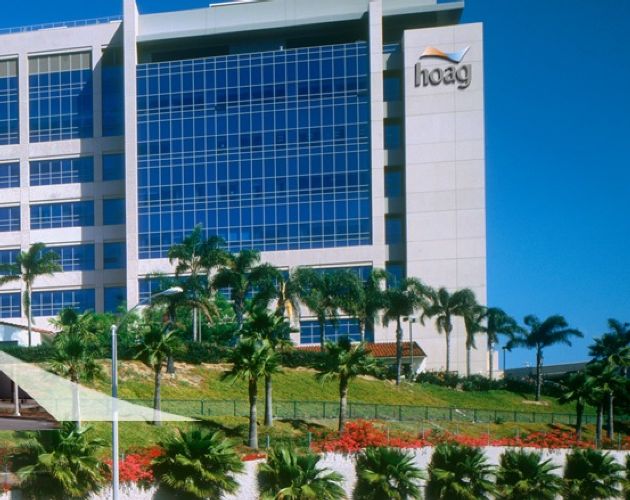
3. California hospital seeks split from Providence: 6 things to know Hoag Memorial Hospital Presbyterian in Newport Beach, Calif., is seeking to end its affiliation with Providence, a Catholic health system based in Renton, Wash. Hoag filed a lawsuit last year to split from the 51-hospital system.
5. Washington hospital splits from Virginia Mason Virginia Mason Memorial in Yakima, Wash., has transitioned back to an independent hospital and reverted to its old name. The board of Virginia Mason Memorial voted in late October to end its affiliation with Seattle-based Virginia Mason Health System. The hospital said it split from Virginia Mason because of the system’s merger with Tacoma, Wash.-based CHI Franciscan.
In early 2013, Hoag Memorial Hospital Presbyterian in Orange County, California, joined with St. Joseph Health, a local Catholic hospital chain, amid enthusiastic promises that their affiliation would broaden access to care and improve the health of residents across the community.
Eight years later, Hoag says this vision of achieving “population health” is dead, and it wants out. It is embroiled in a legal battle for independence from Providence, a Catholic health system with 51 hospitals across seven states, which absorbed St. Joseph in 2016, bringing Hoag along with it.
In a lawsuit filed in Orange County Superior Court last May, Hoag argues that remaining a “captive affiliate” of the nation’s 10th-largest health system, headquartered nearly 1,200 miles away in Washington state, constrains its ability to meet the needs of the local population.
Hoag doctors say that Providence’s drive to standardize treatment decisions across its chain — largely through a shared Epic electronic records system — often conflicts with their own judgment of best medical practices. And they recoil against restrictions on reproductive care they say Providence illegally imposes on them through its adherence to the Catholic health directives established by the United States Conference of Catholic Bishops.
“Their large widespread system is very different than the laser focus Hoag has on taking care of its community,” said Hoag CEO Robert Braithwaite. “When Hoag needed speed and agility, we got inadequate responses or policies that were just wrong for us. We found ourselves frustrated with a big health system that had a generic approach to health care.”
Providence insists it wants to stay with Hoag, a financial powerhouse — even as the two sides engage in secret settlement talks that could end the marriage.
“We believe we are better together,” said Erik Wexler, president of Providence South, which includes the group’s operations in California, Texas and New Mexico. “The best way to do that is to collaborate.” He cited joint investments in Hoag Orthopedic Institute and in Be Well OC, a kind of mental health collaborative, as fruits of the affiliation.
“If we are separate,” Wexler added, “there is a chance we may begin to cannibalize each other and drive the cost of care up.”
Research over the past several years, however, has shown that it is the consolidation of hospitals into fewer and larger groups, with greater bargaining clout, that tends to raise medical prices — often with little improvement in the quality of care.
“Mergers are a self-centered pursuit of stability by hospitals and hospital systems that hope to get so big that they can survive the anarchy of U.S. health care,” said Alan Sager, a professor at Boston University’s School of Public Health.
Wexler argued that price increases linked to consolidation are less of a worry in Orange County, geographically small but densely populated with 3.2 million residents and 28 acute care hospitals. Given the proximity of so many hospitals, Wexler said, counterproductive duplication of medical services is more of a concern.
Unlike many local community hospitals that seek larger partners to survive, Hoag, one of Orange County’s premier medical institutions, is financially robust and perfectly able to stand on its own. It has the advantage of operating in one of Orange County’s most affluent areas, with two acute care hospitals and an orthopedic specialty hospital in Newport Beach and Irvine. It is the beneficiary of numerous wealthy donors, including bond market billionaire Bill Gross and thriller novelist Dean Koontz.
In 2020, Hoag’s net assets, essentially its net worth, stood at about $3.3 billion — nearly 20% of the total for all Providence-affiliated facilities, even though Hoag has only three of the group’s 51 hospitals. Hoag generated operating income of $38 million last year, while Providence posted a $306 million operating loss.
But Providence is hardly a financial weakling. It is sitting on a mountain of unrestricted cash and investments worth $15.3 billion as of Dec. 31. And despite its hefty reserves, it received $1.1 billion in coronavirus relief grants last year under the federal CARES Act, and millions more from the Federal Emergency Management Agency.
Providence does not own Hoag, since no money changed hands and their assets were not commingled. But Providence is able to keep Hoag from walking away because it has a majority on the governing body that was set up to oversee the original affiliation with St. Joseph.
Hoag executives also express frustration at what they describe as efforts by Providence to interfere with their financial, labor and supply decisions.
Providence, in turn, worries that “if Hoag disaffiliates with Providence, it has the potential to impact our credit rating,”Wexler said.
Despite its insistence on the value of the affiliation, Providence officials are said to be willing to end the affiliation in exchange for payment of an undisclosed amount that Hoag considers unwarranted. Wexler and Hoag executives declined to comment on their discussions. A trial start date has not been set, but on April 26 the court will hear a motion from Hoag to expedite it.
While its financial fortitude distinguishes it from many other community hospitals tied to larger partners, Hoag’s experience with Providence is hardly uncommon amid widespread consolidation in the hospital industry and the growing influence of Catholic health care in the U.S.
“The bigger your parent organization becomes, the smaller your voice is within the system, and that’s part of what Hoag has been complaining about,” said Lois Uttley, director of the women’s health program at Community Catalyst, a Boston-based patient advocacy group that monitors hospital mergers.
“Compounding the problem is the fact that the system in this case is Catholic-run, because then, in addition to having an out-of-town system headquarters calling the shots, you also have to contend with governance from Catholic bishops,” Uttley said. “So you have two bosses, in a sense.”
Hoag is not the only hospital seeking to flee this dynamic. Last year, for example, Virginia Mason Memorial hospital in Yakima, Washington, said it would separate from its parent, Seattle-based Virginia Mason Health System, to avoid a pending merger with CHI Franciscan, part of the Catholic hospital giant CommonSpirit Health.
Mergers and acquisitions have led to the increasing dominance of mega hospital chains in U.S. health care over the past several years. From 2013 to 2018, the revenue of the 10 largest health systems grew 82%, compared with 45% for all other hospital groups, according to a recent study by Deloitte, the consulting and auditing firm.
Researchers expect the trend to accelerate as large health systems swallow smaller facilities economically weakened by the pandemic, and a growing trend toward outpatient care reduces demand for hospital beds.
Four of the 10 largest U.S. hospital systems are Catholic, including Chicago-based CommonSpirit Health, St. Louis-based Ascension, Livonia, Michigan-based Trinity Health and Providence. A study by Community Catalyst found that 1 in 6 acute care hospital beds are in Catholic facilities, and that 52 hospitals operating under Catholic restrictions were the sole acute care facilities in their regions last year, up from 30 in 2013.
“We need to make this a national conversation,” said Dr. Jeffrey Illeck, a Hoag OB-GYN.
He was among a group of Hoag OB-GYNs who signed a letter to then-California Attorney General Xavier Becerra in October, alleging that Providence frequently declined to authorize contraceptive treatments, such as intrauterine devices and tubal ligations — in breach of the conditions imposed by Becerra’s predecessor, Kamala Harris, when she approved the original affiliation with St. Joseph in 2013.
Wexler said he is confident the attorney general’s probe will provide “clarity that Providence has done nothing wrong.”
A particularly bitter disagreement between the two sides concerns a rupture last year within St. Joseph Heritage Healthcare, a physician group belonging to Providence that included both St. Joseph and Hoag doctors. In November, the group notified thousands of patients that their Hoag specialists were no longer part of the network and that they needed to choose new doctors.
Wexler said that was the inevitable result of a decision by the Hoag physicians to negotiate separate HMO contracts, an assertion Braithwaite contested. The move disrupted patient care just as the winter covid surge was gaining momentum, he said.
Perhaps the biggest frustration for most Hoag administrators and physicians is Providence’s desire to standardize care across all 51 hospitals through their shared Epic electronic records system.
Hoag doctors say Providence controls the contents of the Epic system and that the care protocols in it, often driven by cost considerations, frequently collide with their own clinical decisions. Any changes must be debated among all the hospitals in the system and adopted by consensus — a laborious undertaking.
Dr. Richard Haskell, a cardiologist at Hoag, recalled a dispute over intravenous Tylenol, which Hoag’s orthopedists prefer because they say it works well and furthered a concerted effort to reduce opioid addiction. Providence took IV Tylenol off its list of accepted drugs, and the Hoag orthopedists “were very upset,” Haskell said.
They eventually got it back on that list, but with the condition that they could order it only one dose at a time. That meant nurses had to call the doctor every four hours for a new order. “Doctors probably felt, ‘Screw it, I don’t want to get woken up every four hours,’ so they probably just gave them narcotics,’” Haskell said.
He said that before agreeing to adopt Providence’s Epic system, Hoag had received written assurances it could make changes that included its preferred treatment choices for various conditions. But it quickly became clear that was not going to happen, he said.
“We couldn’t make any changes at all, so we were stuck with their system,” Haskell said. “I don’t want to be in a system bogged down by bureaucracy that requires 51 hospitals to vote on it.”
Wexler said Hoag understood exactly what it had signed up for. “They knew full well that there would be a collaborative approach across all of Providence, including Hoag, to make decisions on what standardizations would happen across the entire system,” he said. “It is not easy if one hospital wants to create its own specific pathway.”
Despite Hoag’s concerns about lesser standards of care, Braithwaite could not cite an example of an adverse outcome that had resulted from it. And Hoag’s strong reputation seems untarnished, as reflected in the high rankings and awards it continues to garner — and tout on its website.
Still, the affiliation’s days seem numbered. Hoag is no longer on the Providence website or in its marketing materials, and in many cases — such as the St. Joseph Heritage schism — the two groups are already going their separate ways.
“They are certainly acting like we are competitors, and I assume that means they know the disaffiliation is imminent,” Braithwaite said.
Wexler, while reiterating that Providence wants to maintain the current arrangement, was nonetheless able to imagine a different outcome: “What we would do post-affiliation,” he said, “is to continue to look for opportunities to collaborate.”
Ohio Attorney General Dave Yost has filed suit against Centene and several of its subsidiaries, alleging that they schemed to misrepresent pharmacy costs and gain overpayments from the state’s Medicaid program.
According to the lawsuit, Centene subsidiary Buckeye Health Plan used sister companies Envolve Health Solutions and Health Net Pharmacy Solutions to administer its pharmacy benefit. Yost’s office said it began to investigate their business practices as the arrangement “raised questions.”
In a statement, Yost’s office said the investigation, which was conducted by outside counsel, found that the companies filed reimbursement requests for amounts that had already been paid by third parties, and failed to accurately represent costs to the Ohio Department of Medicaid.
In addition, the scheme led to artificially inflated dispensing fees, the AG’s office said.
“Corporate greed has led Centene and its wholly-owned subsidiaries to fleece taxpayers out of millions. This conspiracy to obtain Medicaid payments through deceptive means stops now,” Yost said in a statement. “My office has worked tirelessly to untangle this complex scheme, and we are confident that Centene and its affiliates have materially breached their obligations both to the Department of Medicaid and the state of Ohio.”
Yost has openly declared war on PBMs and has made investigating their business practices a critical initiative within his office. In March 2019, the AG filed suit against Optum, seeking to reclaim $16 million in what he says are drug overcharges.
In a statement, Centene called the claims in the lawsuit “unfounded” and said it will “aggressively defend” against the allegations.
“Envolve’s pharmacy contracts with the State are reviewed and pre-approved by state agencies before they ever go into effect. Furthermore, these services saved millions of tax-payer dollars for Ohioans from market-based pharmaceutical pricing,” Centene said.
“We look forward to answering any of the Attorney General’s questions. Our company is committed to the highest levels of quality and transparency,” the insurer said.
The payment gap was $63,000 for primary care doctors, $178,000 for medical specialists and $150,000 for surgeons.
Doctors who work for hospital outpatient facilities get much higher payments for their services from Medicare than doctors who practice independently, according to a new study.
The research, based on Medicare claims data from 2010-2016,found that the program’s payments for doctors’ work were, on average, $114,000 higher per doctor per year when billed by a hospital than when billed by a doctor’s independent practice.
Published in Health Services Research, results found that the amount Medicare would pay for outpatient care at doctors’ offices would have been 80% higher if the services had been billed by a hospital outpatient facility. In 2010, the average set of Medicare services independent doctors performed annually for patients was worth $141,000, but charging for the same group of services would have grossed $240,000 if a hospital outpatient facility billed for them.
The payment difference varied by specialty. The payment gap was $63,000 for primary care doctors, $178,000 for medical specialists and $150,000 for surgeons.
Moreover, the study found the differential grew over time. From 2010-2016, the average difference between hospital outpatient and private practice payments grew from 80% higher to 99% higher.
WHAT’S THE IMPACT?
The main reason for these large payment differences: facility fees. For each service a doctor performs, Medicare pays hospital outpatient facilities both a fee for the doctor’s work and a fee for the facility, whereas private practices receive only doctor fees.
Although the doctor fees are a bit lower in hospital outpatient locations, the facility fees more than make up for the difference, and the total payments to hospitals are reflected in higher doctor salaries and bonuses.
The Centers for Medicare and Medicaid Services has been trying to correct this imbalance for years with policies that would pay both sites the same amount. In 2015, the Bipartisan Budget Act authorized CMS to impose site-neutral payments but grandfathered existing hospital outpatient facilities. Later, CMS expanded the equal payments to other hospital outpatient facilities, but the American Hospital Association sued to overturn this regulation.
In July 2020, the Appeals Court sided with HHS. The American Hospital Association and the Association of American Medical Colleges said they would seek to have the ruling overturned.
The groups filed for a petition for a rehearing, which was denied.
In February, the Supreme Court acknowledged the AHA’s request for judicial review. The government response was due by March 15, but on March 3, Norris Cochran, acting Secretary of Health and Human Service asked for an extension until April 14 to file the government’s response, according to court documents.
The significant difference between Medicare payments to hospital outpatient facilities and independent offices has encouraged hospitals and health systems to buy doctor practices, but the study noted that good research about this has been lacking up to now.
It found little evidence of a direct relationship linking the size of the pay gap between hospital outpatient facilities and independent offices, with hospitals buying doctor practices, in particular medical specialties. But it did find that doctors whose services had larger pay gaps were more likely to have a hospital buy their practice than doctors whose services had a smaller pay gap.
In an accompanying commentary, Dr. Michael Chernew of Harvard Medical School in Boston said the study had found that the ability of hospitals and employed doctors to earn more from Medicare had resulted in a greater amount of integration.
THE LARGER TREND
However, the authors pointed out that the Medicare payment difference is only one of many factors that have contributed to the huge increase in the share of doctors employed at hospitals over the past decade. For example, they found a higher probability of a doctor going to work for a hospital in highly concentrated hospital markets and rural areas.
Other studies, they said, have established that some health systems use integration with doctors’ offices as a bargaining chip with commercial health insurance plans. Also, some doctors may find that independent practice is less viable than it used to be for a variety of reasons.
It has also been suggested that many younger doctors prefer hospital employment to private practice because they crave economic security and work-life balance.
It’s been estimated that even the payments to hospitals vs. doctors could save CMS $11 billion over 10 years. But the paper illustrates that the payment disparities can also create broader market distortions because consolidation of hospitals and doctors’ offices has been shown to lead to higher prices overall.
The Medicare Act “prohibits Medicare payment for services that are not furnished within the United States,” according to the filing.
RemoteICU, a telemedicine provider group, is suing the Department of Health and Human Services and the Centers for Medicare and Medicaid Services for not reimbursing telehealth services provided by physicians who are located outside the United States, according to a federal lawsuit filed last week in Washington.
RICU wants reimbursement for telehealth services provided within the U.S., but not necessarily by a physician who lives within its borders.
The company employs physicians who live outside the country, but are U.S. board-certified critical-care specialists and licensed in one or more U.S. jurisdictions. With RICU’s telecommunications system, these physicians can provide critical-care services in U.S. hospital ICUs, the lawsuit said.
“Although RICU’s physicians live abroad, they serve as full-time, permanent staff members of the U.S. hospitals at which they serve patients,” the company said in the court filing.
“By employing U.S.-licensed intensivists who live overseas, RICU has enabled the American healthcare system to recapture talent that would otherwise be lost to it – and this has helped to alleviate the ongoing shortage of intensivists in American hospitals.“
When CMS expanded the list of telehealth services for which it reimbursed in December 2020 to include critical care services, RICU began offering its physicians to hospitals that couldn’t afford ICU telehealth without Medicare reimbursement, the court filing said.
However, after the company reached out to several officials from HHS and CMS, it was notified that Medicare could not reimburse the client hospitals for RICU’s services, because the Medicare Act “prohibits Medicare payment for services that are not furnished within the United States,” according to the filing.
The company is seeking a preliminary injunction to stop HHS and CMS from denying Medicare reimbursement for telehealth services on the basis of a provider’s physical location outside of the United States at the time of service.
WHAT’S THE IMPACT?
RICU claims that, by failing to reimburse for the critical care telehealth services provided by its physicians, HHS and CMS are causing “immediate harm both to RICU and to the public.”
It argues that it’s filling a gap in critical care that has been exacerbated by the pandemic.
“There remains [a] significant unmet need for critical care services, as desperately sick patients have overwhelmed ICU resources across the country,” RICU said in the court filing.
“In some cases, lack of adequate care can mean the difference between life or death. And one of the groups most at risk from death and serious illness due to COVID-19 is the elderly – the very same population that relies upon Medicare.”
Without reimbursement, RICU says that some of its current clients, as well as potential customers, will not be able to offer its services.
The company argues that this causes “significant, unrecoverable monetary damages” because tele-ICU providers that use physicians located within the U.S. are eligible for reimbursement and therefore have a competitive edge over RICU.
Further, it says that it has already begun losing business because of hospitals’ inability to receive Medicare reimbursement.
THE LARGER TREND
CMS has widely expanded the list of telehealth services it will reimburse for during the pandemic to include services such as emergency department visits, initial inpatient and nursing facility visits, and discharge-day management.
While only 14 states currently have true “payment parity” for telehealth, 43 states and D.C. have implemented a telemedicine coverage law, according to Foley & Lardner report.
That report, among others, claims telehealth will continue to grow as an integral part of healthcare as time goes on.
Last year, Geisinger health system in Danville, Pennsylvania, implemented telehealth ICU technology in several of its hospitals to support its in-person clinical staff.
ON THE RECORD
“The Critical Care Ban is causing irreparable harm to RICU, which is suffering ongoing financial and reputational harms that cannot be remedied in the future,” the court filing said.
“The balance of the equities favors an injunction, because Defendants have already admitted that there is a desperate medical need for the critical care that RICU would provide but for the Critical Care Ban.
“And, finally, preliminary injunction would be in the public interest because, across the United States, Americans stricken by the COVID-19 pandemic are in desperate need of critical care – a need that RICU can help meet. It is not hyperbole to say that the requested injunctive relief is in the public interest because it could save lives.”
After filing a lawsuit in May to end its affiliation with Renton, Wash.-based Providence, Hoag Memorial Hospital in Newport Beach, Calif., is alleging it is now the target of retaliation, according to theLos Angeles Times.
Hoag Memorial said that Providence removed Hoag Memorial’s three facilities from its website of Southern California locations and terminated Hoag Memorial’s specialists from St. Joseph Heritage Healthcare, a network of medical providers for managed care plans in Southern California. Additionally, Hoag Memorial said that Providence informed Heritage members they would lose access to Hoag’s 13 urgent care centers by Dec. 31.
According to the report, Providence’s notice to patients that Hoag facilities and physicians would be dropped from its network all came in the fall of 2020, amid the COVID-19 pandemic.
“It was the most inappropriate, inexplicable and harsh thing to do to a lot of patients,” Hoag President and CEO Robert Braithwaite told the Los Angeles Times. “Finding a new physician or new specialist is particularly hard on seniors and any patient who has a chronic condition and has established a long-term relationship with an endocrinologist or rheumatologist or cancer doctor.”
Providence told the Los Angeles Times it disagrees that patients have been disadvantaged.
“We are committed to the well-being of our communities and to serving patients with high quality and compassionate care,” a Providence spokesperson told the Los Angeles Times.
Hoag Memorial has been affiliated with Providence, a Catholic health system, since 2016.
Hoag Memorial said the changes all came after the hospital sought to end its affiliation with Providence by filing a lawsuit. Hoag Memorial said in its lawsuit it is seeking to end the affiliation because Providence is undermining local decision-making and Catholic Church restrictions are expanding.
Providence has fought Hoag’s lawsuit to end the affiliation. The health system claims Hoag doesn’t have the right to unilaterally dissolve the affiliation, and its board members don’t have the authority to file the lawsuit. An Orange County Superior Court judge rejected Providence’s argument Feb. 1 and scheduled another court hearing for March.
Four companies that agreed to pay a combined $26 billion to settle claims about their roles in the opioid crisis plan to deduct some of those costs from their taxes and recoup around $1 billion apiece.
In recent months, as details of the blockbuster settlement were still being worked out, pharmaceutical giant Johnson & Johnson and the “big three” drug distributors — McKesson, AmerisourceBergen and Cardinal Health —all updated their financial projections to include large tax benefits stemming from the expected deal, a Washington Post analysis of regulatory filings found.
In one example, Dublin, Ohio-based drug distributor Cardinal Health said earlier this month it planned to collect a $974 million cash refund because it claimed its opioid-related legal costs as a “net operating loss carryback” — a tax provision Congress included in last year’s coronavirus bailout package as a way of helping companies struggling during the pandemic.
The deductions may deepen public anger toward companies prosecutors say played key roles in a destructive public health crisis that kills tens of thousands of Americans every year. In lawsuits filed by dozens of states and local jurisdictions, public officials have argued that the companies, among other corporate defendants, flooded the country with billions of highly addictive pills and ignored signs they were being steered to people who abused them.
Under the terms of the proposed settlement— which is being finalized and will ultimately be subject to federal court approval — the four companies would pay between $5 billion and $8 billion each to reimburse communities for the costs of the health crisis. Plaintiffs who support the proposal say it will resolve a highly complex litigation process and make funds available to communities and individuals still struggling with addiction.
Others including Greg McNeil, whose son became addicted to opioids and died from an overdose, have said $26 billion is only a small fraction of the epidemic’s financial toll and argue the proposal doesn’t include what many family members of opioid victims want the most: an admission of guilt.
All four firms disavow any wrongdoing or legal responsibility. The companies have said they produced government-approved prescription pills, distributed them to registered pharmacies and took steps to try to prevent their misuse.
U.S. tax laws generally restrict companies from deducting the cost of legal settlements from their taxes, with one major exception: Damages paid to victims as restitution for the misdeeds can usually be deducted. Still, Congress has placed stricter limits on such deductions in recent years, and some tax experts say the Internal Revenue Service could challenge the companies’ attempts to deduct opioid settlement costs.
Harry Cullen, a Brooklyn-based activist who has worked to hold drug companies accountable for the epidemic, said it is “incredibly insulting” that companies would try deduct the settlement payments. “As if they are donating it to these people who they harmed in the first place.”
Erich Timmerman, a spokesman for Cardinal Health, said in a statement that the company’s tax deductions are permissible under federal law. He also pointed to a statement chief executive Mike Kaufmann made in November, when he said Cardinal takes its role in the pharmaceutical supply chain seriously and remains “committed to being part of the solution to this epidemic.”
AmerisourceBergen declined to comment on its taxes but said in a statement the company takes steps to mitigate the diversion of prescription drugs, including by refusing service to customers it sees as a risk and by making daily reports to federal drug officials.
Johnson & Johnson declined to comment on the opioid settlement and tax deductions beyond its regulatory filings.A spokeswoman for McKesson did not respond to multiple requests for comment.
Cardinal Health’s use of the “carryback” tax break draws attention to what some see as a shortcoming of the $2 trillion U.S. coronavirus bailout known as the Cares Act. In their haste to funnel cash benefits to businesses facing economic peril, lawmakers made billions of dollars in tax breaks broadly available to any company, regardless of whether it suffered during the pandemic.
Cardinal, a company with a $15 billion market capitalization and $4 billion in available cash, surpassed Wall Street expectations for its most recent earnings period. Last week, CEO Kaufmann told investors a rebound in medical treatments and procedures had revived demand for Cardinal’s health devices and drugs. He said the company was boosting its investment in sophisticated supply-chain technology.
On the same day, Cardinal said it was filing for a tax break using the Cares Act provision and expected a nearly $1 billion cash refund from the IRS within the next 12 months. The company plans to pay $6.6 billion in the settlement.
Francine J. Lipman, a tax professor at the University of Nevada at Las Vegas, said Cardinal Health appears to be “getting a bit of a windfall from laws that Congress intended to help companies that are suffering due to a pandemic.”
The “carryback” tax break permits any company that lost money in 2018, 2019 or 2020 to apply those losses to previous, more profitable years. Some form of this provision has been permitted by the U.S. tax code for over a century to help businesses that face ups and downs to even out their taxes.
The Cares Act raised the limit on the amount of losses companies can use to offset taxes and permitted them to apply those losses to earlier periods. Because the corporate tax rate was higher before 2018, companies with recent losses can increase tax refunds they received before that year by up to 67 percent.
Cardinal estimated in August it expected to deduct $488 million from the expected opioid legal settlement. But in its Feb. 5 filing, the company said the amount probably would be higher in part because the Cares Act permitted it to carry back losses related to the opioid litigation to previous years when the tax rate was higher.
UNLV’s Lipman said Cardinal’s decision to apply for a tax refund before any legal settlement has been finalized could face scrutiny from the IRS. Deductions must be made against business expenses that are shown to have “economic effect,” she said, which may preclude deductions against future, unpaid legal settlements.
Timmerman, Cardinal’s spokesman, said the company has already recorded a loss related to the opioid litigation because Cardinal insures itself through a wholly-owned insurance subsidiary. The opioid litigation caused a loss to the insurance company’s reserve, and that is the loss that Cardinal is deducting, he said.
“Tax and accounting rules applicable to insurance companies, including self-insurance companies, require recognition of loss when an insurance reserve is set, thus establishing economic effect, even if the underlying settlement is not final,” Timmerman said.
The three other companies involved in the $26 billion settlement have estimated the tax benefits of the deal but have not filed for tax refunds. They all said the tax benefits could be lower if courts or regulators determined some or all of the payments are not tax-deductible.
McKesson, which expects to pay $8.1 billion in the settlement, said in a Feb. 2 filing that the actual cost of the deal would be $6.7 billion after taxes, implying a $1.4 billion tax benefit. The company also said $497 million in tax benefits were “uncertain” because of the “uncertainty in connection with the deductibility of opioid related litigation and claims.”
AmerisourceBergen, which anticipates a $6.6 billion settlement payment, said in November it expects a $1.1 billion tax benefit. The company said an additional $371.5 million tax benefit was possible but “uncertain.”
“A settlement has not been reached, and, therefore, we applied significant judgment in estimating the ultimate amount of the opioid litigation settlement that would be deductible,” the company said.
Matthew Gardner, a senior fellow at the nonprofit Institute on Taxation and Economic Policy, said these disclaimers suggest the companies are making conservative estimates. “That’s one way of saying they are likely going to claim even bigger tax benefits in their tax returns than they are showing on their financial statements,” he said.
Whether the payments will be deductible may hinge on specific word choices in the final terms of the settlement. Though recent changes to the tax code have attempted to close loopholes that permit companies to deduct taxes when they have committed wrongdoing, many companies now push to make sure their settlements include a “restitution” payment for victims — the “magic word” that often qualifies them for deductions, Gardner said.
In previous opioid-related settlements local governments reached with McKesson, Purdue Pharma and Teva Pharmaceuticals, the companies admitted no fault and agreed to restitution payments that appeared to qualify them for tax deductions, USA Today reported in 2019.
Johnson & Johnsonhas said it expects it could deduct as much as 21.4 percent of its $5 billion share of the settlement, which would mean a roughly $1.1 billion tax benefit. However, the company said last summer that the deductible amount may be lower if a regulation proposed by the IRS last year came into effect.
The rule, which did take effect Jan. 20, requires companies to meet a long list of specific criteria to qualify government settlements for tax deductions.
Faces on pills are seen at the Provocative Opioid Memorial in 2018 in Washington, D.C. There are 22,000 pills that represent the number of people who died of an opioid overdose in 2015.
In 2019, The Post analyzed a database maintained by the Drug Enforcement Administration that tracks the path of every pain pill sold in the United States. The database shows that America’s largest drug companies distributed 76 billion oxycodone and hydrocodone pain pills across the country between 2006 and 2012 as the nation’s deadliest drug epidemic spun out of control.
McKesson, Cardinal Health and AmerisourceBergen distributed 44 percent of the nation’s oxycodone and hydrocodone pills — the two most abused prescription opioid drugs — during that time.
An investigation by The Post last year found that near the peak of U.S. opioid production, a Johnson & Johnson subsidiary was manufacturing enough oxycodone and hydrocodone to capture half or more of the U.S. market. The company also lobbied for years to help persuade regulators to loosen a narcotics import rule, allowing Johnson & Johnson’s U.S. subsidiary to produce rising amounts of opioids out of potent poppies harvested by its Tasmanian subsidiary, The Post found.
Attorneys for Johnson & Johnson have said its opioid-producing subsidiaries did not cause the United States’ addiction crisis, that the companies were heavily regulated, and that such companies play only a “peripheral role in the multibillion-dollar market for prescription opioids.”







 HENRY KOTULA