


Cartoon – Leadership is more than

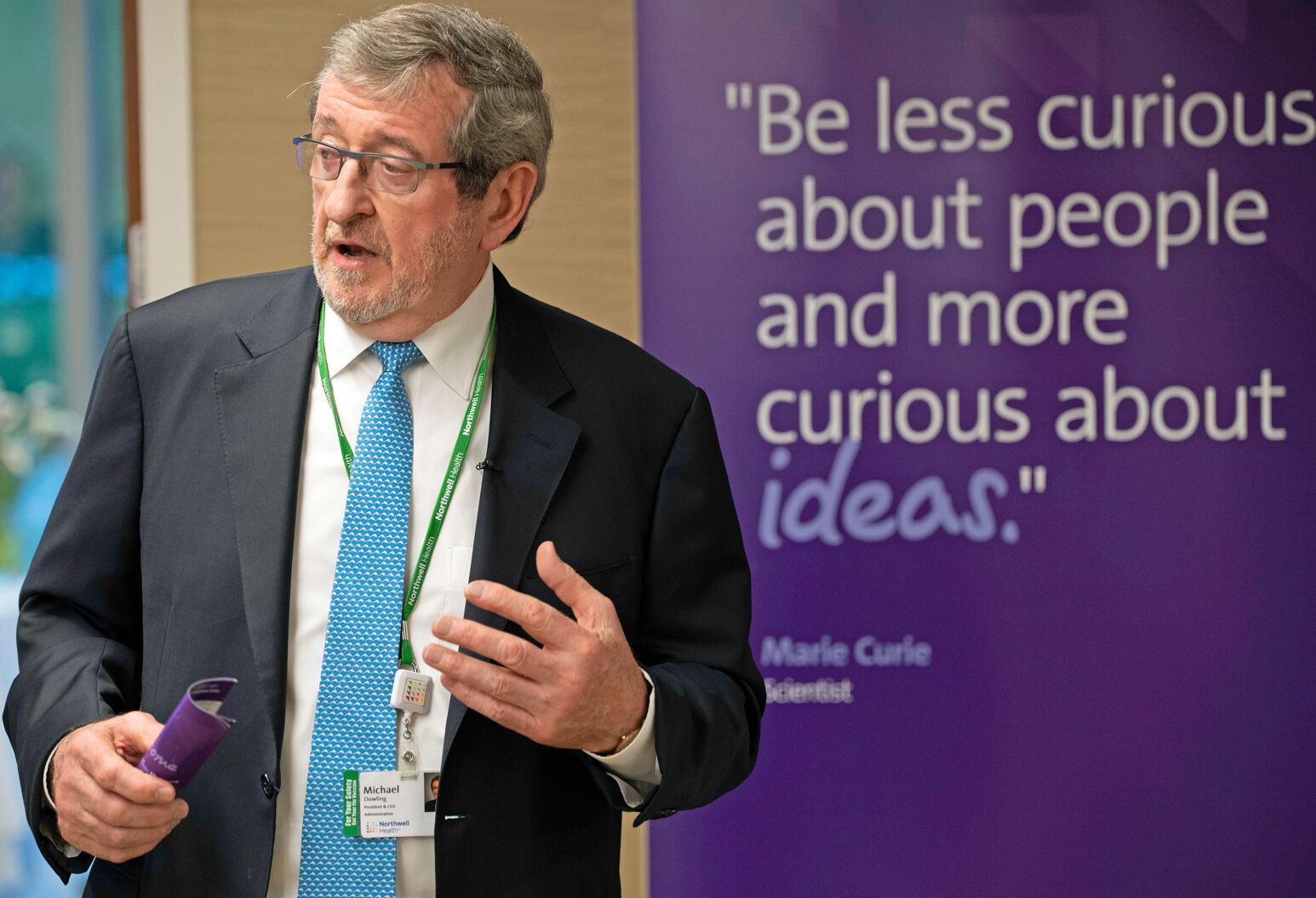
Hardly one month into 2021, the pressing priorities facing healthcare leaders are abundantly clear.
First, we will be living in a world preoccupied by COVID-19 and vaccination for many months to come. Remember: this is a marathon, not a sprint. And the stark reality is that the vaccination rollout will continue well into the summer, if not longer, while at the same time we continue to care for hundreds of thousands of Americans sickened by the virus. Despite the challenges we face now and in the coming months in treating the disease and vaccinating a U.S. population of 330 million, none of us should doubt that we will prevail. Despite the federal government’s missteps over the past year in managing and responding to this unprecedented public health crisis, historians will recognize the critical role of the nation’s healthcare community in enabling us to conquer this once-in-a-generation pandemic.
While there has been an overwhelming public demand for the vaccine during the past couple of weeks, there remains some skepticism within the communities we serve, including some of the most-vulnerable populations, so healthcare leaders will find themselves spending time and energy communicating the safety and efficacy of vaccines to those who may be hesitant. This is a good thing. It is our responsibility to share facts, further public education and influence public policy. COVID-19 has enhanced public trust in healthcare professionals, and we can maintain that trust if we keep our focus on the right things — namely, how we improve the health of our communities.
And as healthcare leaders diligently balance this work, we also have a great opportunity to reimagine what our hospitals and health systems can be as we emerge from the most trying year of our professional lifetimes. How do you want your hospital or system organized? What kind of structural changes are needed to achieve the desired results? What do you really want to focus on? Amid the pressing priorities and urgent decision-making needed to survive, it is easy to overlook the great reimagination period in front of us. The key is to forget what we were like before COVID-19 and reflect upon what we want to be after.
These changes won’t occur overnight. We’ll need patience, but here are my thoughts on five key questions we need to answer to get the right results.
1. How do you enhance productivity and become more efficient? Throughout 2021, most systems will be in recovery mode from COVID’s financial bruises. Hospitals saw double-digit declines in inpatient and outpatient volumes in 2020, and total losses for hospitals and health systems nationwide were estimated to total at least $323 billion. While federal relief offset some of our losses, most of us still took a major financial hit. As we move forward, we must reorganize to operate as efficiently as possible. Does reorganization sound daunting? If so, remember the amount of reorganization we mustered to work effectively in the early days of the pandemic. When faced with no alternative, healthcare moved heaven and earth to fulfill its mission. Crises bring with them great clarity. It’s up to leaders to keep that clarity as this tragic, exhausting and frustrating crisis gradually fades.
2. How do you accelerate digital care? COVID-19 changed our relationship with technology, personally and professionally. Look at what we accomplished and how connected we remain. We were reminded of how high-quality healthcare can go unhindered by distance, commutes and travel constraints with the right technology and telehealth programs in place. Health system leaders must decide how much of their business can be accommodated through virtual care so their organizations can best offer convenience while increasing access. Oftentimes, these conversations don’t get far before confronting doubts about reimbursement. Remember, policy change must happen before reimbursement catches up. If you wait for reimbursement before implementing progressive telehealth initiatives, you’ll fall behind.
3. How will your organization confront healthcare inequities? In 2020, I pledged that Northwell would redouble its efforts and remain a leader in diversity and inclusion. I am taking this commitment further this year and, with the strength of our diverse workforce, will address healthcare inequities in our surrounding communities head-on. This requires new partnerships, operational changes and renewed commitments from our workforce. We need to look upstream and strengthen our reach into communities that have disparate access to healthcare, education and resources. We must push harder to transcend language barriers, and we need our physicians and medical professionals of color reinforcing key healthcare messages to the diverse communities we serve. COVID-19’s devastating effect on communities of color laid bare long-standing healthcare inequalities. They are no longer an ugly backdrop of American healthcare, but the central plot point that we can change. If more equitable healthcare is not a top priority, you may want to reconsider your mission. We need leaders whose vision, commitment and courage match this moment and the unmistakable challenge in front of us.
4. How will you accommodate the growing portion of your workforce that will be remote? Ten to 15 percent of Northwell’s workforce will continue to work remotely this year. In the past, some managers may have correlated remote work and teams with a decline in productivity. The past year defied that assumption. Leaders now face decisions about what groups can function remotely, what groups must return on-site, and how those who continue to work from afar are overseen and managed. These decisions will affect your organizations’ culture, communications, real estate strategy and more.
5. How do you vigorously hold onto your cultural values amid all of this change? This will remain a test through 2021 and beyond. Culture is the personality of your organization. Like many health systems and hospitals, much of Northwell’s culture of connectedness, awareness, respect and empathy was built through face-to-face interaction and relationships where we continually reinforced the organization’s mission, vision and values. With so many employees now working remotely, how can we continue to bring out the best in all of our people? We will work to answer that question every day. The work you put in to restore, strengthen and revitalize your culture this year will go a long way toward cementing how your employees, patients and community come to see your organization for years to come. Don’t underestimate the power of these seemingly simple decisions.
While we’ve been through hell and back over the past year, I’m convinced that the healthcare community can continue to strengthen the public trust and admiration we’ve built during this pandemic. However, as we slowly round the corner on COVID-19, our future success will hinge on what we as healthcare organizations do now to confront the questions above and others head-on. It won’t be quick or easy and progress will be a jagged line. Let’s resist the temptation to return to what healthcare was and instead work toward building what healthcare can be. After the crisis of a lifetime, here’s our opportunity of a lifetime. We can all be part of it.
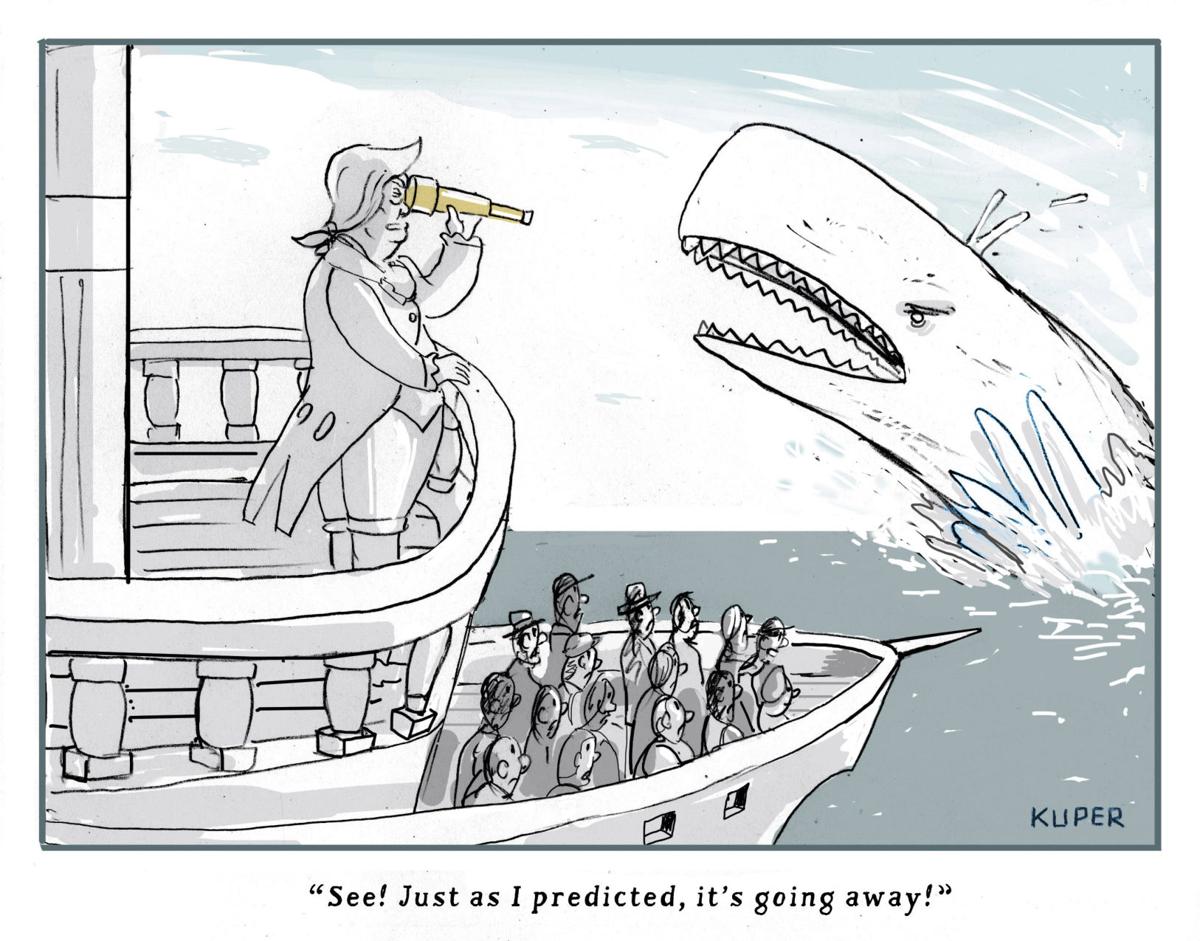
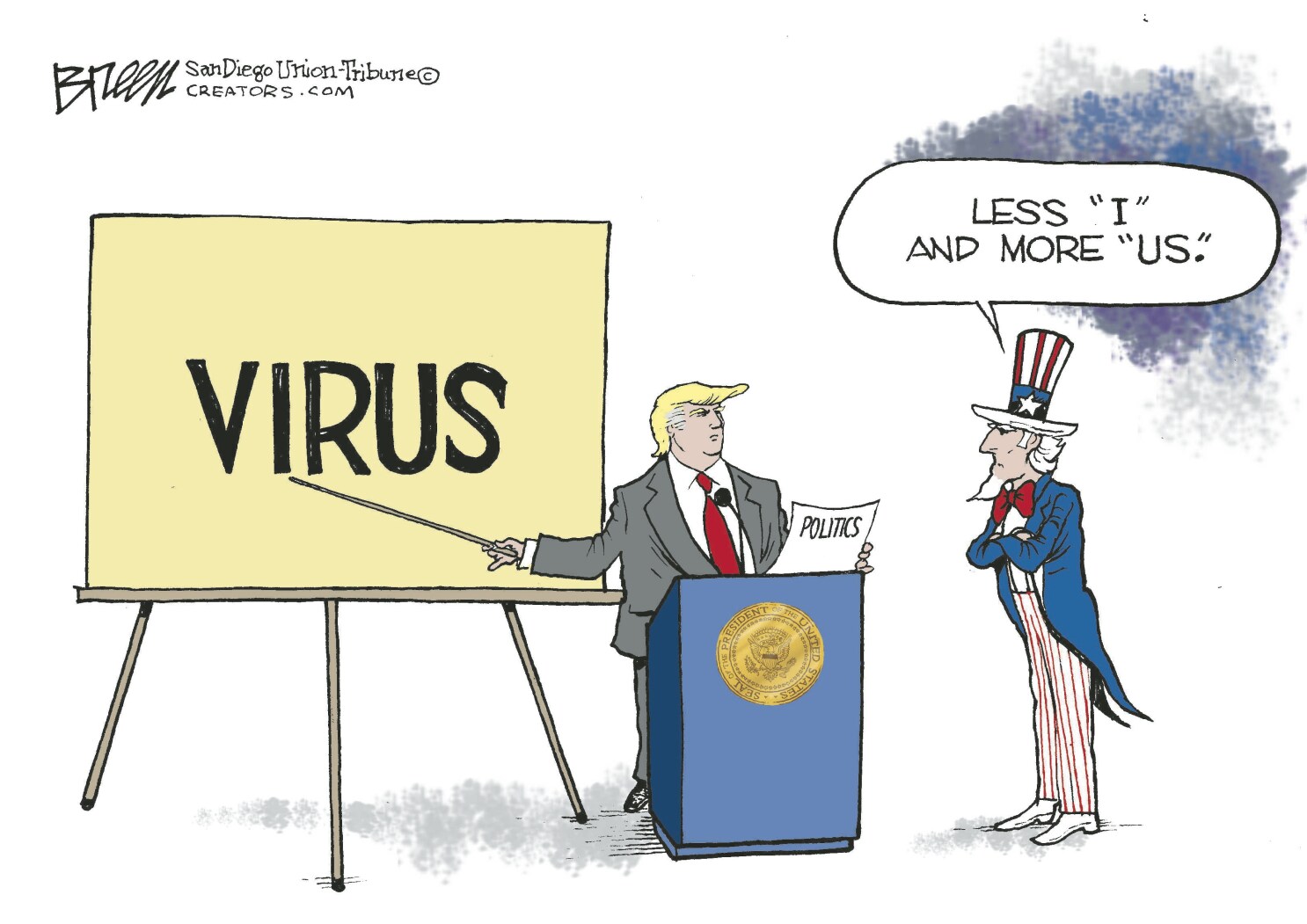
The former White House coronavirus response coordinator told CBS News’s “Face The Nation” that she saw Trump presenting graphs about the coronavirus that she did not help make. Someone inside or outside of the administration, she said, “was creating a parallel set of data and graphics that were shown to the president.”
Birx also said that there were people in the White House who believed the coronavirus was a hoax and that she was one of only two people in the White House who routinely wore masks.
Birx was often caught between criticism from Trump, who at one point called her “pathetic” on Twitter when she contradicted his more optimistic predictions for the virus, and critics in the scientific community who thought she did not do enough to combat false information about the virus from Trump, The Post’s Meryl Kornfield reports.
“Colleagues of mine that I’d known for decades — decades — in that one experience, because I was in the White House, decided that I had become this political person, even though they had known me forever,” she told CBS. “I had to ask myself every morning, ‘Is there something that I think I can do that would be helpful in responding to this pandemic?’ And it’s something I asked myself every night.”
Anthony Fauci, director of the National Institute of Allergy and Infectious Diseases, told the New York Times that Trump repeatedly tried to minimize the severity of the virus and would often chide him for not being positive enough in his statements about the virus.
Fauci also described facing death threats as he was increasingly vilified by the president’s supporters. “One day I got a letter in the mail, I opened it up and a puff of powder came all over my face and my chest,” he said. The powder turned out to be benign.


At the last minute, President Donald Trump granted pardons to several individuals convicted in huge Medicare swindles that prosecutors alleged often harmed or endangered elderly and infirm patients while fleecing taxpayers.
“These aren’t just technical financial crimes. These were major, major crimes,” said Louis Saccoccio, chief executive officer of the National Health Care Anti-Fraud Association, an advocacy group.
The list of some 200 Trump pardons or commutations, most issued as he vacated the White House this week, included at least seven doctors or health care entrepreneurs who ran discredited health care enterprises, from nursing homes to pain clinics. One is a former doctor and California hospital owner embroiled in a massive workers’ compensation kickback scheme that prosecutors alleged prompted more than 14,000 dubious spinal surgeries. Another was in prison after prosecutors accused him of ripping off more than $1 billion from Medicare and Medicaid through nursing homes and other senior care facilities, among the largest frauds in U.S. history.
“All of us are shaking our heads with these insurance fraud criminals just walking free,” said Matthew Smith, executive director of the Coalition Against Insurance Fraud. The White House argued all deserved a second chance. One man was said to have devoted himself to prayer, while another planned to resume charity work or other community service. Others won clemency at the request of prominent Republican ex-attorneys general or others who argued their crimes were victimless or said critical errors by prosecutors had led to improper convictions.
Trump commuted the sentence of former nursing home magnate Philip Esformes in late December. He was serving a 20-year sentence for bilking $1 billion from Medicare and Medicaid. An FBI agent called him “a man driven by almost unbounded greed.” Prosecutors said that Esformes used proceeds from his crimes to make a series of “extravagant purchases, including luxury automobiles and a $360,000 watch.”
Esformes also bribed the basketball coach at the University of Pennsylvania “in exchange for his assistance in gaining admission for his son into the university,” according to prosecutors.
Fraud investigators had cheered the conviction. In 2019, the National Health Care Anti-Fraud Association gave its annual award to the team responsible for making the case. Saccoccio said that such cases are complex and that investigators sometimes spend years and put their “heart and soul” into them. “They get a conviction and then they see this happen. It has to be somewhat demoralizing.”
Tim McCormack, a Maine lawyer who represented a whistleblower in a 2007 kickback case involving Esformes, said these cases “are not just about stealing money.”
“This is about betraying their duty to their patients. This is about using their vulnerable, sick and trusting patients as an ATM to line their already rich pockets,” he said. He added: “These pardons send the message that if you are rich and connected and powerful enough, then you are above the law.”
The Trump White House saw things much differently.
“While in prison, Mr. Esformes, who is 52, has been devoted to prayer and repentance and is in declining health,” the White House pardon statement said.
The White House said the action was backed by former Attorneys General Edwin Meese and Michael Mukasey, while Ken Starr, one of Trump’s lawyers in his first impeachment trial, filed briefs in support of his appeal claiming prosecutorial misconduct related to violating attorney-client privilege.
Trump also commuted the sentence of Salomon Melgen, a Florida eye doctor who had served four years in federal prison for fraud. That case also ensnared U.S. Sen. Robert Menendez (D-N.J.), who was acquitted in the case and helped seek the action for his friend, according to the White House.
Prosecutors had accused Melgen of endangering patients with needless injections to treat macular degeneration and other unnecessary medical care, describing his actions as “truly horrific” and “barbaric and inhumane,” according to a court filing.
Melgen “not only defrauded the Medicare program of tens of millions of dollars, but he abused his patients — who were elderly, infirm, and often disabled — in the process,” prosecutors wrote.
These treatments “involved sticking needles in their eyes, burning their retinas with a laser, and injecting dyes into their bloodstream.”
Prosecutors said the scheme raked in “a staggering amount of money.” Between 2008 and 2013, Medicare paid the solo practitioner about $100 million. He took in an additional $10 million from Medicaid, the government health care program for low-income people, $62 million from private insurance, and approximately $3 million in patients’ payments, prosecutors said.
In commuting Melgen’s sentence, Trump cited support from Menendez and U.S. Rep. Mario Diaz-Balart (R-Fla.). “Numerous patients and friends testify to his generosity in treating all patients, especially those unable to pay or unable to afford healthcare insurance,” the statement said.
In a statement, Melgen, 66, thanked Trump and said his decision ended “a serious miscarriage of justice.”
“Throughout this ordeal, I have come to realize the very deep flaws in our justice system and how people are at the complete mercy of prosecutors and judges. As of today, I am committed to fighting for unjustly incarcerated people,” Melgen said. He denied harming any patients.
Faustino Bernadett, a former California anesthesiologist and hospital owner, received a full pardon. He had been sentenced to 15 months in prison in connection with a scheme that paid kickbacks to doctors for admitting patients to Pacific Hospital of Long Beach for spinal surgery and other treatments.
“As a physician himself, defendant knew that exchanging thousands of dollars in kickbacks in return for spinal surgery services was illegal and unethical,” prosecutors wrote.
Many of the spinal surgery patients “were injured workers covered by workers’ compensation insurance. Those patient-victims were often blue-collar workers who were especially vulnerable as a result of their injuries,” according to prosecutors.
The White House said the conviction “was the only major blemish” on the doctor’s record. While Bernadett failed to report the kickback scheme, “he was not part of the underlying scheme itself,” according to the White House.
The White House also said Bernadett was involved in numerous charitable activities, including “helping protect his community from COVID-19.” “President Trump determined that it is in the interests of justice and Dr. Bernadett’s community that he may continue his volunteer and charitable work,” the White House statement read.
Others who received pardons or commutations included Sholam Weiss, who was said to have been issued the longest sentence ever for a white collar crime — 835 years. “Mr. Weiss was convicted of racketeering, wire fraud, money laundering, and obstruction of justice, for which he has already served over 18 years and paid substantial restitution. He is 66 years old and suffers from chronic health conditions,” according to the White House.
John Davis, the former CEO of Comprehensive Pain Specialists, the Tennessee-based chain of pain management clinics, had spent four months in prison. Federal prosecutors charged Davis with accepting more than $750,000 in illegal bribes and kickbacks in a scheme that billed Medicare $4.6 million for durable medical equipment.
Trump’s pardon statement cited support from country singer Luke Bryan, said to be a friend of Davis’.
“Notably, no one suffered financially as a result of his crime and he has no other criminal record,” the White House statement reads.
“Prior to his conviction, Mr. Davis was well known in his community as an active supporter of local charities. He is described as hardworking and deeply committed to his family and country. Mr. Davis and his wife have been married for 15 years, and he is the father of three young children.”
CPS was the subject of a November 2017 investigation by KHN that scrutinized its Medicare billings for urine drug testing. Medicare paid the company at least $11 million for urine screenings and related tests in 2014, when five of CPS’ medical professionals stood among the nation’s top such Medicare billers.


 HENRY KOTULA