NIH director says it will take ‘weeks’ to understand omicron severity

https://thehill.com/homenews/sunday-talk-shows/583272-nih-director-says-it-will-take-two-three-weeks-to-better

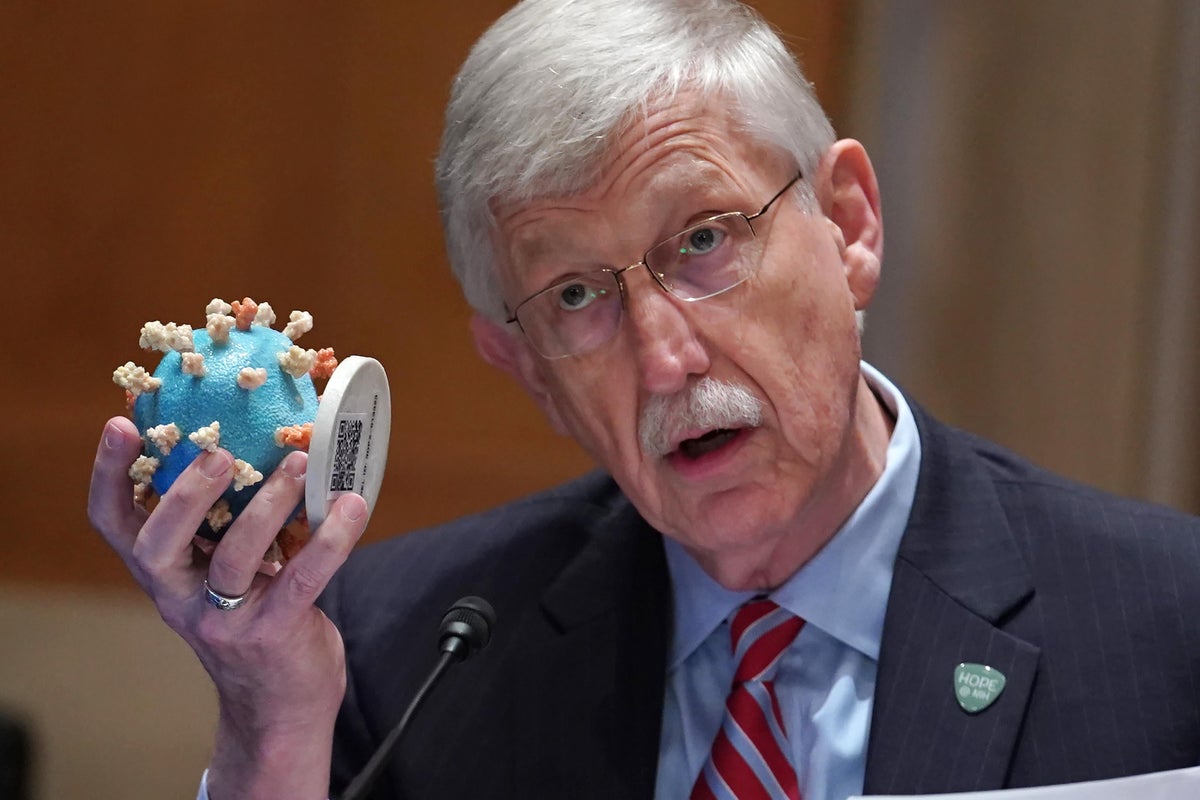
NIH Director Francis Collins: “There's no reason to panic” over omicron yet.

National Institutes of Health (NIH) Director Francis Collins offered caution about the new omicron variant of the coronavirus in a Sunday interview, saying it will take weeks to understand whether it can evade COVID-19 vaccines.

Appearing on “Fox News Sunday,” Collins explained that omicron has more than 30 mutations on its spike protein, which raises the question of how effective the antibodies created by vaccines are against the variant.

“If you’ve raised antibodies against [COVID-19] from previously being infected or from being vaccinated, the question is, will those antibodies still stick to this version of the spike protein, or will they evade that protection? We need to find that out, to be honest, though that’s gonna take two, three weeks in both laboratory and field studies to figure out the answer. And that’s what all of us as scientists want to know,” said Collins.

Collins stressed that the COVID-19 vaccines available in the U.S. have been shown to be effective against previous variants, such as delta, saying that was a good indication they also will work against omicron.

“Given that history, we expect that most likely the current vaccines will be sufficient to provide protection. And especially the boosters will give that additional layer of protection because there’s something about the booster that causes your immune system to really expand its capacity against all kinds of different spike proteins, even ones it hasn’t seen before,” he said.

“Please, Americans, if you’re one of those folks who are sort of waiting to see, this would be a great time to sign up get your booster. Or if you haven’t been vaccinated already, get started. Omicron is one more reason to do this,” he added.

NIH director says omicron variant a ‘great reason’ to get booster

NIH director says omicron variant a ‘great reason’ to get booster

NIH director: "No reason to panic" yet about Omicron variant - Axios

National Institutes of Health (NIH) director Francis Collins said the emergence of a new variant of the coronavirus presents a “great reason” for people in the United States to seek a booster shot. 

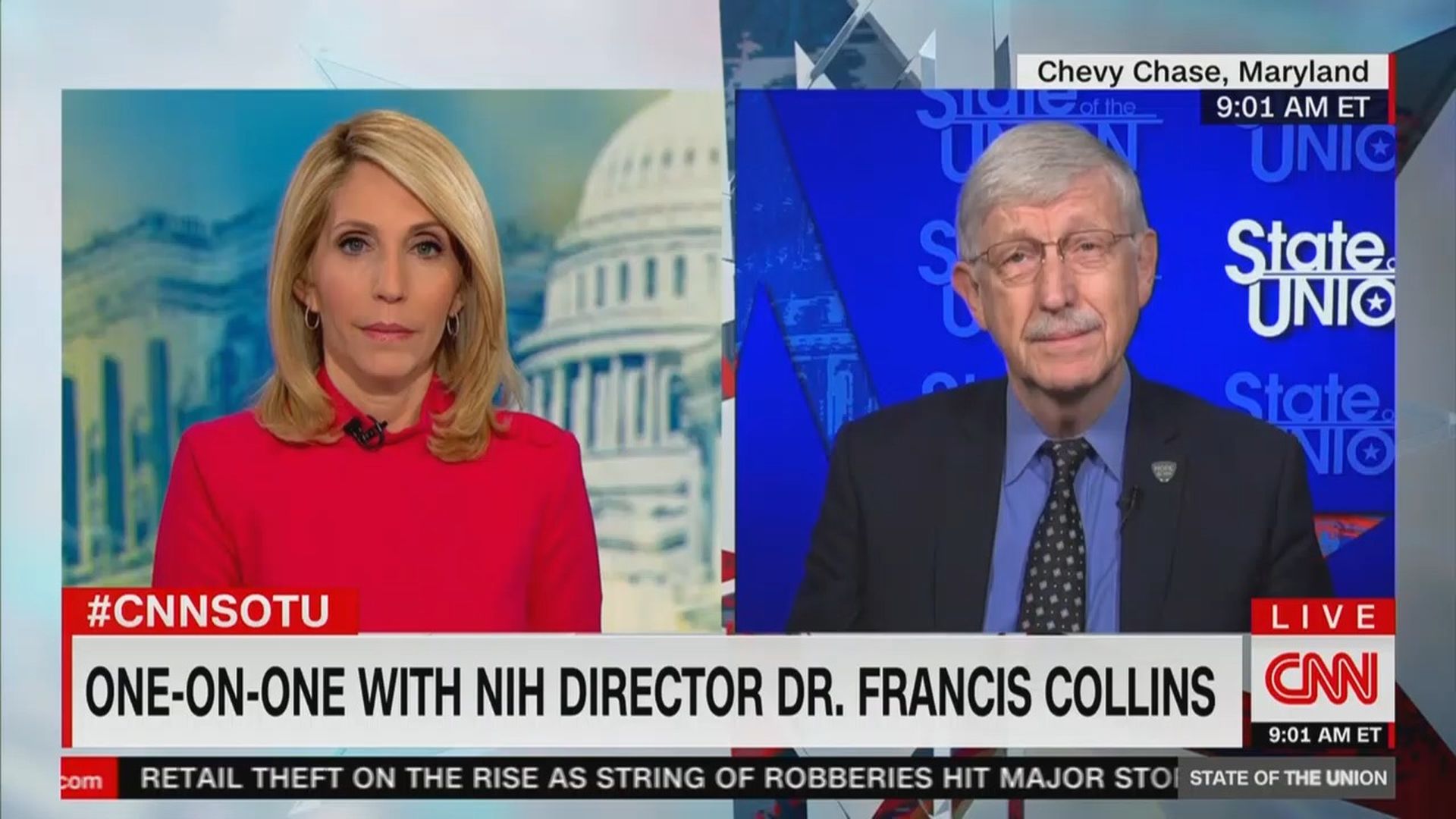
“There’s no reason to panic, but it’s a great reason to get boosted,” Collins said Sunday during an appearance on CNN.

The World Health Organization over the weekend held an emergency meeting regarding the new coronavirus strain first identified in South Africa, and classified it as being “of concern,” due to the variant’s large number of mutations and an increased risk of re-infection.

Several nations around the world, including the United States, have limited travel to several south African countries in recent days in an attempt to keep the variant from spreading more rapidly. 

During an earlier appearance on Fox News Sunday, Collins said it may take weeks before world health officials can determine how effective vaccines being used in the United States are against the new variant, which has been dubbed “omicron.” 

“Given that history, we expect that most likely the current vaccines will be sufficient to provide protection,” he said. “And especially the boosters will give that additional layer of protection because there’s something about the booster that causes your immune system to really expand its capacity against all kinds of different spike proteins, even ones it hasn’t seen before.” 

Collins said on CNN that the emergence of the new variant is “another reason” for people who have not received a coronavirus booster shot to do so once they are eligible. 

“The booster basically enlarges the capacity of your immune system to recognize all kinds of spike proteins its never seen,” Collins explained. “This is a great day to go and get boosted or find out how to do so.” 

Vaccine Development, Covid-19, and mRNA vaccines

Vaccine Development, Covid-19, and mRNA vaccines | The Incidental Economist

In this last episode of our six-part series on vaccinations, supported by the National Institute for Health Care Management Foundation, we cover vaccine development – particularly in the context of the current global pandemic. We discuss the timeline of Covid-19 vaccine development and the mRNA vaccine approach.

3 major health items included in Biden’s budget request

President Joe Biden proposed an ambitious budget for the next federal fiscal year that includes more money for fighting the opioid epidemic, bolstering public health and several other healthcare items.

The budget request to Congress, released Friday, acts as essentially a wish list of priorities for the administration for the next year.

It is doubtful how much would get approved by Congress but sends a message of what the administration prioritizes.

Here are three healthcare priorities outlined in the request:

  • The opioid epidemic: $10.7 billion was requested for fighting the opioid epidemic, $3.9 billion over the 2021 enacted level. The money will help support research, prevention and recovery services. The administration also is calling for targeted investments for “populations with unique needs, including Native Americans, older Americans and rural populations,” according to a release from the Office of Management and Budget on Friday.
     
  • Public health infrastructure: $8.7 billion was requested for the Centers for Disease Control and Prevention to boost public health capacity in states and territories. OMB calls the budget increase the largest in nearly two decades for the agency at the frontlines of combating COVID-19. The Biden administration hopes to use the new money to train new epidemiologists and public health experts and “build international capacity to detect, prepare for and respond to emerging global threats.” A letter sent Friday to congressional leaders from the White House said that CDC funding was 10% lower than the previous decade after adjusting for inflation.
     
  • Research funding boosts: $6.5 billion to launch a new agency called the Advanced Research Projects Agency for Health. The new agency would provide major increases in federal research and development spending on cancer and other diseases such as diabetes and Alzheimer’s. The goal of the investment is to “drive transformational innovation in health research and speed application and implementation of health breakthroughs,” OMB’s letter to Congress said. The funding is rolled into a $51 billion request for funding to the National Institutes of Health.

How basic research leads to future job growth

https://www.axios.com/basic-science-research-fuels-job-growth-fcf7723b-b701-4ed2-8b2b-699d28dd1fbd.html

Illustration of a hand in a medical glove holding a beaker full of liquid

A new report out later today concludes that basic scientific research plays an essential role in creating companies that later produce thousands of jobs and billions in economic value.

Why it mattersThe report uses the pandemic — and especially the rapid development of new mRNA vaccines — to show how basic research funding from the government lays the necessary groundwork for economically valuable companies down the road.

By the numbers: The Science Coalition — a nonprofit group that represents 50 of the nation’s top private and public research universities — identified 53 companies that have spun off from federally funded university research.

  • Those companies — which range from pharmaceutical startups to agriculture firms — have contributed more than $1.3 billion to U.S. GDP between 2015 and 2019, while supporting the creation of more than 100,000 jobs.

What they’re saying: “The COVID-19 pandemic has shown that the need for the federal government to continue investing in fundamental research is far from theoretical,” says John Latini, president of the Science Coalition. “Consistent, sustained, robust federal funding is how science evolves.”

DetailsLatini praised the Biden administration’s first budget proposal to Congress, released last week, which includes what would be a $9 billion funding boost for the National Institutes of Health (NIH) — the country’s single biggest science research funding agency.

  • The National Oceanic and Atmospheric Administration would see its budget rise to a record high of $6.9 billion, including $800 million reserved for climate research.

The catch: The Biden budget proposal is just that, and it will ultimately be up to Congress to decide how much to allocate to research agencies.

Context: Government research funding is vital because private money tends to go to applied research. But without basic research — the lifeblood of science — the U.S. risks missing out on potentially world-changing innovations in the future.

  • The long-term value of that funding can be seen in the story of Katalin Kariko, an obscure biomedical researcher who labored for years on mRNA with little reward — until the pandemic, when her work helped provide the foundation for mRNA COVID-19 vaccines.

The bottom line: Because its ultimate payoff might lay years in the future, it’s easy to see basic research funding as a waste — until the day comes when we need it.

Experts Slam The White House’s ‘Herd Immunity’ Plan

Experts warn Trump's misinformation about coronavirus is dangerous

The White House is reportedly embracing a herd-immunity approach focused on “protecting the elderly and the vulnerable” but experts are calling the plan dangerous, “unethical”, and equivalent to “mass murder”.

The news comes following a petition titled The Great Barrington Declaration, which argued against lockdowns and school and business closures and got almost 500,000 signatures – although some of them were fake.

“Current lockdown policies are producing devastating effects on short and long-term public health,” the declaration states, adding, “The most compassionate approach that balances the risks and benefits of reaching herd immunity, is to allow those who are at minimal risk of death to live their lives normally to build up immunity to the virus through natural infection, while better protecting those who are at highest risk. We call this Focused Protection.”

Essentially, herd immunity is when enough people are immune to a disease, like Covid-19, that the disease can’t be transmitted as easily and thus provides indirect protection.

It’s been rumoured that the government has been leaning towards this plan of action for some time now, although this is the first real admission.

In response to today’s news, experts around the world have been voicing their concerns.

And this isn’t the first time we’ve heard experts say herd immunity is not a good idea.

For example, the head of the World Health Organization said Monday that allowing the novel coronavirus to spread in an attempt to reach herd immunity was “simply unethical.”

Similarly, the National Institutes of Health (NIH) director Francis Collins also denounced herd immunity as a viable plan.

“What I worry about with this is it’s being presented as if it’s a major alternative view that’s held by large numbers of experts in the scientific community. That is not true. This is a fringe component of epidemiology. This is not mainstream science. It fits into the political views of certain parts of our confused political establishment,” he said in an interview.

Not to mention studies continue to show that Sweden’s attempts at herd immunity have failed and have resulted in a higher Covid-19 death toll than expected.

As more research comes out, scientists are starting to learn that Covid-19 immunity, even in those who were severely infected, can fade after a few weeks.

This is why we’ve seen cases of reinfection and why many experts are advising against a herd immunity plan.  

Currently less than 10% of the population in the U.S. are immune to Covid-19 but for herd immunity to be achieved most experts estimate between 40% to 80% of the population would need to be infected.

To put that into context, that means around 197 million people would need to be infected in America. And assuming that the Covid-19 fatality rate is somewhere between 0.5% and 1%, based on numbers from the World Health Organization (WHO), more than 1 million people would die – at minimum.

William Haseltine, Chair and President of ACCESS Health International, told CNN “herd immunity is another word for mass murder. We are looking at two to six million Americans dead – not just this year but every year.”  

This is an unmitigated disaster for our country – to have people at the highest levels of our government countermanding our best public health officials. We know this epidemic can be put under control. Other countries have done it. We are doing the opposite.”

Major coronavirus vaccine trial is paused to investigate unexplained illness

https://www.washingtonpost.com/health/2020/09/09/astrazeneca-covid-vaccine-safety-trial/?utm_campaign=wp_main&utm_medium=social&utm_source=facebook&fbclid=IwAR2gomNZclHdUubRHKRqa3u5a6b06VEM2-wwNYFHitq9pK8_5ya8XflTFI0

The halt shows that safety protections are working, experts say

A major coronavirus vaccine trial is on hold as an independent committee investigates whether a case of spinal inflammation in a single British participant is linked to the vaccine — a step that several experts said is a sign of the protections in place to ensure the safety of products ultimately used in millions of healthy people.

The hold on human testing of the vaccine candidate being developed by the pharmaceutical company AstraZeneca and the University of Oxford was confirmed by the company in a statement Tuesday evening, calling it a “routine action.”

“The announcement yesterday about the AstraZeneca vaccine is a concrete example of how even a single case of an unexpected illness is sufficient to require a clinical hold for the trial in multiple counties,” said Francis Collins, director of the National Institutes of Health, at a Senate hearing.

The announcement comes as scientists and a growing numbers of Americans express concern about the politicization of the vaccine approval process during a presidential election campaign. President Trump has made approval of a coronavirus vaccine a cornerstone of his campaign and repeatedly said it could be greenlighted before the Nov. 3 election.

But Collins and other scientists pointed to AstraZeneca’s decision as evidence that scientists, rather than politicians, are running the process. The experts said that it was hard to estimate how long the investigation would take, but that the pause was a good sign and not unexpected in trials of this size and scale, where many thousands of people are closely followed.

Collins testified that while minimal information is available about the adverse event, he has heard it described as transverse myelitis, rare inflammation of the spinal cord that has been associated with vaccinations, but has also been documented in a few cases of covid-19 and can occur in immune system disorders such as multiple sclerosis.

A study in the journal Lupus reported that between 1970 and 2009, there were 37 cases of transverse myelitis associated with various vaccines.

“The event is being investigated by an independent committee, and it is too early to conclude the specific diagnosis,” said AstraZeneca spokesman Brendan McEvoy.

Serious adverse events are closely monitored in clinical trials to determine whether they are likely to be linked to the drug or vaccine being administered. In trials with many thousands of people, sicknesses are likely to occur, and they may have no connection to the drug or vaccine being tested.

Collins also said he was not worried that the delay or even possible elimination of the AstraZeneca vaccine candidate would limit the eventual availability of vaccines to Americans.

“The reason we’re investing not in one, but in six different vaccines is because of the expectation that they won’t all work,” he told members of the Senate Health, Education, Labor and Pensions Committee.

“To have a clinical hold as has been placed on AstraZeneca as of yesterday because of a single serious adverse effect is not at all unprecedented,” Collins said.

He said that if after a thorough investigation, the adverse reaction is traced back to the vaccine candidate, then all the doses of that vaccine being manufactured would be thrown away. The United States has committed up to $1.2 billion to AstraZeneca to support development of the vaccine and to purchase 300 million doses.

A hold on a trial is not common, but is also not cause for alarm — it is a sign the system in place to protect participants is working, said Susan Ellenberg, a biostatistician at the University of Pennsylvania who has served on the independent data safety monitoring boards that investigate such incidents.

“The process is when something unusual develops, they might want to put a hold on things — and given the incredible attention that’s being given to these vaccines, and the recognition of how fast we’re trying to go, I think people are bending over backwards to show safety is really the top priority,” Ellenberg said.

This is the second pause for the trial. An information sheet for study participants from July noted that the trial had been put on hold after a participant developed neurological symptoms, but those were determined to be caused by an “unrelated neurological illness.”

“I think the company is being prudent to stop and look and to determine whether this severe adverse event, whatever it is, was a coincidence that followed vaccination, or was caused by the vaccine,” said Paul Offit, director of the Vaccine Education Center at Children’s Hospital of Philadelphia. “The vaccine is designed to prevent covid-19, not everything else” that adults might develop.

The pause came a day after the leaders of nine drug companies signed a highly unusual pledge that they would be guided by science and prioritize safety in their effort to develop a coronavirus vaccine, amid worries that political pressure could lead to an unsafe or ineffective vaccine to be used in millions of healthy people.

“This temporary pause is living proof that we follow those principles while a single event at one of our trial sites is assessed by a committee of independent experts,” Pascal Soriot, the AstraZeneca chief executive, said in a statement. “We will be guided by this committee as to when the trials could restart, so that we can continue our work at the earliest opportunity to provide this vaccine broadly, equitably and at no profit during this pandemic.”

“Even if it turns out this is causally related to the vaccine, that doesn’t automatically mean this is something you might not carry on,” said Naor Bar-Zeev, deputy director of the International Vaccine Access Center at Johns Hopkins Bloomberg School of Public Health. “The benefit versus risk needs to be evaluated with the likelihood of each of these things and is clearly context dependent. If there was no covid in the world, you’d not want to take a vaccine.”

But Collins underscored at the hearing that the safety review and pause was just another reason that the United States was spreading its bets so widely, investing in six different vaccines. The United Kingdom has also made purchasing agreements for six vaccines in the final stages of human testing.

At a news conference at 10 Downing Street on Wednesday, United Kingdom chief scientific adviser Patrick Vallance said it was not unusual for a large Phase 3 trial test of effectiveness and safety of vaccines to be paused.

This is precisely why a Phase 3 trial is undertaken, he said.

“A pause is obviously not good,” Vallance said. “But it is sensible to look closely to see what is going on.”


U.S. advisory group lays out detailed recommendations on how to prioritize Covid-19 vaccine

U.S. advisory group lays out detailed recommendations on how to prioritize Covid-19 vaccine

A new report that aims to prioritize groups to receive Covid-19 vaccine lays out detailed recommendations on who should be at the front of the line, starting with health care workers in high-risk settings, followed by adults of any age who have medical conditions that put them at significantly higher risk of having severe disease.

Also toward the front of the line would be older adults living in long-term care homes or other crowded settings.

The draft report, which runs 114 pages, was released Tuesday by the National Academies of Sciences, Engineering, and Medicine, which was tasked with the work by Francis Collins, director of the National Institutes of Health, and Robert Redfield, director of the Centers for Disease Control and Prevention.

A virtual public meeting on the recommendations will be held Wednesday afternoon, and the committee’s final report will be submitted later in September.

When Covid-19 vaccines are approved for use, initial supplies will be tight — potentially in the tens of millions of doses. Most of the vaccines under development will require two doses per person: a priming dose followed by a booster either three or four weeks later.

The report suggests that a second phase of vaccinations should involve critical risk workers — people in industries essential to the functioning of society — as well as teachers and school staff; people of all ages with an underlying health problem that increases the risk of severe Covid-19; all older adults not vaccinated in the first phase; people in homeless shelters and group homes, and prisons; and staff working in these facilities.

Young adults, children, and workers in essential industries not vaccinated previously would make up the third priority group. Remaining Americans who were not vaccinated in the first three groups would be offered vaccine during a fourth and final phase.

The report is meant to serve as a guide for more detailed prioritization plans on the order in which Americans will be offered vaccine. That more granular work is already being conducted by the Advisory Committee on Immunization Practices, an expert panel that crafts vaccination guidance for the CDC, and by state, local, and tribal health authorities, who must identify the actual people in their regions who fall into the priority groups.

There has been discussion of prioritizing people of color, who have been disproportionately badly hit in this pandemic. But the report does not recommend that Black, Hispanic, Latinx people, or American Indians or Alaskan natives be treated as a distinct priority group.

The committee suggested that there does not appear to be a biological reason for why these communities are more seriously affected by the pandemic. Instead, it argues, the high rates of infections and deaths in these communities are due to systemic racism that leads to higher levels of poor health and socioeconomic factors such as working in jobs that cannot be done from home or living in crowded settings.

The report therefore prioritized other factors — people with underlying medical problems, people living in crowded environments, for instance — rather than creating priority categories for racial or ethnic groups.

The ACIP’s recommendations will go to the CDC. It remains unclear, however, whether the CDC, Operation Warp Speed — the task force set up to fast-track development of Covid-19 vaccines, drugs and diagnostics — or the White House will make the final determinations on who will be vaccinated first.

The task of determining who should be at the front of the vaccines line is not an easy one, and must be made without key pieces of information. It’s not yet known how many vaccines will prove to be successful, when they will be approved for use and in what quantities. Critically, some vaccines may prove to be more effective in key groups — the elderly, for instance — than others. Knowing that in advance could influence the recommendations, but people working on the priority groups cannot wait for that information to become available.

Initial discussions suggest large numbers of Americans would qualify as members of priority groups, a reality that will likely require additional tough decisions to be made.

CDC estimates that there are between 17 million and 20 million health care workers in the country, and roughly 100 million people with medical conditions that put them at increased risk of severe illness if they contract Covid-19. There are roughly 53 million Americans aged 65 and older and 100 million people in jobs designated as essential services. There is some overlap among these groups — health workers, for instance, are also essential workers.

report released last month by the Johns Hopkins Center for Health Security recommended dividing priority groups into two tiers, with health workers and others essential to the Covid-19 response in the first tier and other health workers in the second.

In that report, people at greatest risk and their caregivers, and workers most essential to maintaining core societal functions would also be designated to be in the first tier.


2005 chloroquine study had nothing to do with COVID-19 and the drug wasn’t given to humans

https://www.politifact.com/factchecks/2020/jul/29/facebook-posts/2005-chloroquine-study-had-nothing-do-covid-19-and/?fbclid=IwAR2e4j_lb10FWa5Cyuokzo3pbjlty_ffvwsEfVT_2iQ6ki8a9z-TpzDm9DQ

PolitiFact | 2005 chloroquine study had nothing to do with COVID ...

IF YOUR TIME IS SHORT

  • The 2005 study wasn’t published by the NIH and didn’t prove chloroquine was effective against “COVID-1” because that’s not a real disease.
  • The study found that chloroquine could inhibit the spread of Severe Acute Respiratory Syndrome in animal cell culture, and the authors said more research was needed.
  • There are currently no approved medications or treatments for COVID-19.


Chloroquine is back.

The anti-malarial drug first showed up as a possible COVID-19 treatment around May 2020, when President Donald Trump said he had been taking its chemical cousin, hydroxychloroquine, to prevent getting infected with the virus.

Since then, some studies have found that the drugs could help alleviate symptoms associated with COVID-19, but the research is not conclusive. There are currently no FDA-approved medicines specifically for COVID-19. (Chloroquine is chemically similar to hydroxychloroquine, but it is a different drug that’s primarily used to treat malaria. Both carry a particular risk for people with heart problems, plus other possible side effects.)

Now, hydroxychloroquine and chloroquine have been thrust back into the spotlight as misinformation about the drugs’ effectiveness and safety recently reappeared online.

One such post on Facebook falsely claims that Americans have been deceived because health officials at the National Institutes of Health have known all along that chloroquine is effective against “COVID.”

The post reads:

“N.I.H. 15 years ago published a study on chloroquine. It is effective against COVID-(1). We are being lied to America!”

The post was flagged as part of Facebook’s efforts to combat false news and misinformation on its News Feed. (Read more about our partnership with Facebook.) 


This is flawed. 

First, there’s no such thing as “COVID-1.” COVID-19 was named for the year it was discovered, not because it’s the 19th iteration. 

Second, the 2005 study found that chloroquine was effective on primate cells infected with severe acute respiratory syndrome, known as SARS, which is caused by a coronavirus. But while the two share similarities, SARS-CoV and COVID-19 are different diseases, and primate cells are far from human patients.

Third, the study was indexed by the NIH’s National Library of Medicine, but the NIH was not involved. It was published in the peer-reviewed Virology Journal and conducted by researchers from the Centers for Disease Control and Prevention and the Montreal Clinical Research Institute.


What the study says

The study was published in August 2005 and found that chloroquine has “strong antiviral effects on SARS-CoV infection of primate cells” and that it was effective on cells treated with the drug before and after exposure to the virus.

The drug was not administered to actual SARS patients, and the study’s authors wrote that more research was needed on how the drug interacts with SARS in animal test subjects.

“Cell culture testing of an antiviral drug against the virus is only the first step, of many steps, necessary to develop an antiviral drug,” Kate Fowlie, a spokesperson for the CDC previously told PolitiFact in an email. “It is important to realize that most antivirals that pass this cell culture test hurdle fail at later steps in the development process.”

Dr. Alex Greninger, assistant director of clinical virology at the University of Washington School of Medicine, told us that a problem in virology is trying to determine the difference of how drugs work in cell culture in comparison to humans.

“Data on chloroquine is largely taken from these cell culture studies, but we now have trials in people on hydroxychloroquine that show it’s not as effective,” Greninger said, “and there’s new data out in the last week that suggests that some of the reasons could be because of the cell types that SARS coronaviruses grow in, and this original experiment was done on African green monkey kidney cells, which is not the tissue we are really worried about.”


What officials say about the drugs now

The Food and Drug Administration granted emergency use authorizations for some medicines to be used for certain patients hospitalized with COVID-19, but it revoked the authorization for hydroxychloroquine and chloroquine in mid-June due to concerns over the drugs’ serious side effects. There are currently no FDA-approved medicines for COVID-19.

“It is no longer reasonable to believe that oral formulations of HCQ and CQ may be effective in treating COVID-19, nor is it reasonable to believe that the known and potential benefits of these products outweigh their known and potential risks,” FDA Chief Scientist Denise M. Hinton wrote.

The NIH’s COVID-19 treatment guidelines, which were developed to inform clinicians on how to care for patients with COVID-19, also currently recommend against the use of chloroquine or hydroxychloroquine for COVID-19 treatment, except in a clinical trial.

But even those trials have been halted. The World Health Organization and the NIH announced in mid-June that they would stop hydroxychloroquine patient trials, citing safety concerns that include serious heart rhythm problems, blood and lymph system disorders, kidney injuries, and liver problems and failure.


Our ruling

A Facebook post says that the NIH published a study 15 years ago that showed chloroquine was effective against “COVID-(1)” and that health officials have been lying to the American people.

This is wrong. There’s no such thing as “COVID-1” and the study cited was not published by the NIH and had to do with animal cells infected with SARS, not COVID-19. The drug was not given to human patients and the study’s authors said more research was needed.

Health officials caution against the use of chloroquine or hydroxychloroquine to treat COVID-19 patients, citing the possibility of serious side effects. There are currently no approved treatments for the virus.

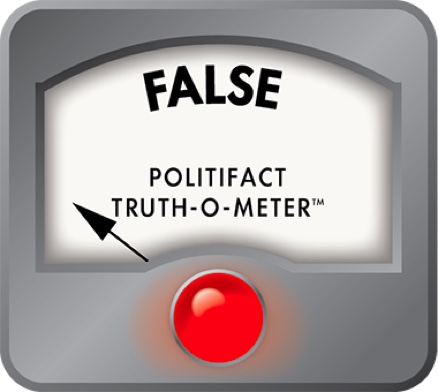
We rate this False. 


Three Predictable Covid Nightmares — and How Congress Can Help Prevent Them

https://www.politico.com/news/agenda/2020/07/29/states-congress-covid-nightmare-vaccine-385217?mkt_tok=eyJpIjoiTVRNNU0yWXpNMlk1TVRsaiIsInQiOiJ1Vlg3dlBCYytaWTdtcGtMd3ZaUVh6TTBZRlMxXC9MaW9UMk9MRHhpdkFpSFFJMHFVWWpocUhWR1ZEZTM2NFBXb0xOVUZTSXNJMzYxWk90Yld

Opinion | Three Predictable Covid Nightmares — and How Congress ...

The good news is that they aren’t partisan, and they’re fixable.

In our response to the Covid-19 pandemic, the United States has all too often been caught flat-footed. Our public officials have tried to avoid or deny problems until they have been right on top of us, and legislative measures have tended to react to major challenges rather than avert them.

That has left policymakers with a lot to react to. And the relief and assistance bill now being worked out in the Senate will need to do that on several fronts. But to do better in the future, that bill should also take on several predictable problems that will face our country over the remainder of the year and which could benefit enormously from some advance attention and action.

Three sets of such predictable problems stand out above all, and in all three cases there are measures that can be taken now that should be able to attract bipartisan support.

First, states are going to face a monumental fiscal crisis.

The pandemic and the ensuing shutdowns of economic activity have left state governments with immense revenue shortages. Balanced-budget amendments in all but one state severely restrict their capacity to run deficits, in many cases even in major emergencies. That means states will have to either find other ways to raise revenue quickly or make major cuts to basic services. Such cuts in spending, jobs and public assistance would exacerbate the deep recession we are in and leave millions who need help in the lurch.

Most state fiscal years begin in July, so in many cases budgets designed or enacted before the severity of the crisis was clear are now starting to take effect, leaving states facing gaps they can easily predict but haven’t formally accounted for. In fact, 16 states are now starting the second year of biennial budgets enacted in 2019, before anyone could have imagined the sort of crisis we now face. Over the coming months, there will be no avoiding the fiscal crunch.

The states have already begun pleading with Congress for help, and sooner or later Congress will need to provide it. Taking steps sooner rather than later would make an enormous difference. The federal government has often been called on to serve as a fiscal backstop for states in extreme emergencies, since its borrowing power vastly exceeds that of the states. And that role is particularly appropriate in a truly national—indeed global—crisis of this magnitude.

But to provide such help responsibly, Congress will need to clearly delineate what kinds of assistance it can offer and on what terms. Congressional Republicans are not wrong to be wary of state efforts to use the emergency to fill fiscal holes dug over decades of irresponsible state policies. Yet that can’t mean that they deny state governments the help they need to contend with this crisis. Rather, it means they must draw some distinctions.

As I’ve argued elsewhere, Congress would do well to divide state needs into three tranches: direct pandemic spending (which should be covered by federal dollars), lost state revenue (which states should be given the opportunity to make up with federally guaranteed loans on favorable terms), and longstanding obligations like pension and retiree health costs made untenable by the recession (for which affected states should be given options only for strictly conditional support, like a new state bankruptcy code or federal support conditioned on major pension reforms).

To be effective, that sort of response would need to take shape now, before states have truly hit the wall. It should be part of the bill the parties are now beginning to negotiate.

Second, this fall’s election is going to be seriously complicated by the pandemic.

There is pretty much no way around that. We’ll be voting while the virus is still spreading, which means that far more people than usual will vote by mail. Only a few states have real experience with voting by mail in large numbers, and the logistics involved are not simple. Primary elections in many states have already made the challenge clear.

To take just one example among many, mailed ballots require signature verification. In states that haven’t spent years building the required infrastructure, such verification will probably need to be done by hand, creating huge risks of confusion and error. States will need to develop new processes to handle this, to train election workers to use unfamiliar equipment, and to take on problems in real time. Signature verification also requires a process for notifying voters whose handwriting is challenged and giving them time to respond. All that, and similar challenges on other election administration fronts, makes it easy to imagine that many races will be impossible to call on election night, and perhaps for quite some time afterward.

Particularly in an era already overflowing with cynical mistrust and conspiracy mongering, such problems raise the prospect of a legitimacy crisis around the election. And policymakers need to take steps now to reduce the risk of such a crisis.

The first step must be to prepare the public. Elected officials, candidates, journalists and others must start speaking plainly about the likelihood of logistical challenges around the election so that voters are not shocked if things don’t go smoothly. People must know in advance that we should not expect every race to be called straight away and that results which take days or even weeks to determine are not therefore illegitimate.

But beyond setting voter expectations, policymakers should also be looking for ways to reduce the strain on the system and to deal with predictable problems. One simple step Congress could take now is to push back the deadlines involved in the work of the Electoral College, to give the states more time to count votes in the presidential race if they need it. A simple change in the federal law governing these dates, which wouldn’t give either party an advantage, could give every state about three more weeks to count. Such a change would be essentially impossible after the election—when partisans looking at partial results would argue over which side it would advantage. But it could easily be done today, it would just take a few sentences of legislative language, and it too should be part of the relief bill now being worked out.
Opinion | Three Predictable Covid Nightmares — and How Congress ...

Finally, if we’re lucky, we’re going to need to figure out how to distribute a Covid-19 vaccine early next yearThat would be a good problem to have, of course, but a huge problem nonetheless. And getting it wrong could catastrophically undermine the effort to defeat the virus.

Vaccine development itself is one area where our country has not been behind the curve: The federal government has invested heavily in the effort, the National Institutes of Health has played a key coordinating role, and the administration is prepared to pay for “at risk” manufacturing of millions of doses of any vaccine that makes it into Phase III trials, so that if a vaccine is found to be safe and effective there will immediately be doses to provide to high-risk individuals. But who will be first in line to get these early doses? And who will decide?

Here, too, there is an enormous danger of a legitimacy crisis. Both public fear about the safety of a vaccine (building on decades of anti-vaccine conspiracy theories on the right and left alike) and the danger of corruption, or at least perceived corruption, in the distribution of doses could undermine the potential of effective vaccination to end the nightmare of this pandemic.

Widespread uptake is essential to the effectiveness of any vaccine. It is not so much by protecting each vaccinated individual as by vaccinating enough Americans to achieve broad-based communal (or “herd”) immunity that a vaccine could truly change the game. That means public trust in the process and wholesale vaccination across our society will be crucial.

To achieve that, it is essential that both the safety of the vaccine-development process and the basic fairness of the ultimate distribution formula be established in advance, and in a very public way. Congress has a crucial role to play here, too. Hearings should begin very soon to put before the public all available information about the efforts taken by the Food and Drug Administration to ensure the safety of the vaccine-development process, even as that process proceeds with unprecedented speed. And Congress should establish, ideally in this next relief bill, a public commission to develop a formula for equitable distribution of early vaccine doses: setting out tiers of priority (for front-line health workers, vulnerable populations, the elderly, and those with particular preexisting conditions), and seeking out ways to make sure that economic and other disadvantages do not translate into lesser or later access to vaccination.

The work of such a group should be reasonably transparent and would need to begin very soon if it is to bear fruit in time to be useful. Policymakers must not underestimate the danger of a loss of public confidence in a Covid-19 vaccine, and must take steps now to avoid such a foreseeable disaster.

The same is true on all three of these fronts. These may not be the greatest problems we confront in the remainder of this dark and difficult year, but they share some features that ought to make them high priorities: All three are predictable and serious, each would amount to a disaster if left unchecked, but each could be made much easier to handle with some straightforward preparation. The relief bill being negotiated this summer could easily, without sparking a partisan war, take concrete steps on all three fronts.

Leadership in a crisis demands a combination of planning for foreseeable difficulties and responding to the unexpected. Getting the former right can make the latter far more doable. To make the rest of this year less disastrous, our leaders need to look ahead.