A Wall Street Giant Tapped $1.5 Billion in Federal Aid for Its Hospitals

https://www.bloomberg.com/news/articles/2020-09-14/a-wall-street-giant-tapped-1-5-billion-in-federal-aid-for-its-hospitals

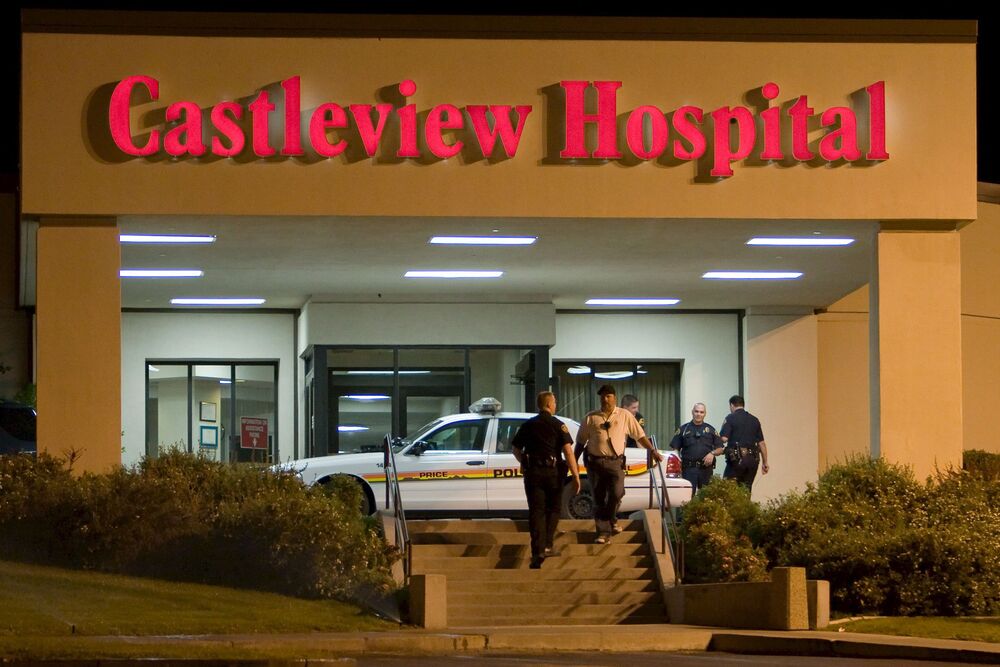
LifePoint’s Castleview Hospital in Price, Utah.

Private equity firm, flush with cash, sees ‘upside’ and more acquisitions.

Like hospital chains across the U.S., LifePoint Health tapped federal relief money to blunt the cost of the Covid-19 pandemic. It was a potent lifeline, a total of $1.5 billion.

But LifePoint is unusual in one respect, its owner: private equity firm Apollo Global Management, led by billionaire Leon Black.

LifePoint was certainly eligible for the money. But the extent of the federal assistance could contribute to concern in Washington over whether private equity-backed hospitals should have been. In July, the U.S. House passed a bill that would require health-care companies to disclose any private equity backing when seeking short-term loans from the federal Medicare program.

The reason for lawmakers’ concern: Private equity firms have ample access to cash. As recently as June, the Apollo fund that owns LifePoint had more than $2 billion to support its investments. Apollo, which manages $414 billion, recently told investors in an internal document that LifePoint was in such a strong market position that it was planning to make acquisitions of less fortunate hospitals.

The relief flowing to LifePoint illustrates a drawback of a government program designed to send out money quickly to every hospital, regardless of financial circumstances, according to Gerard Anderson, a health policy professor at Johns Hopkins University.

“This particular hospital system does not appear to need the money,” he said.

LifePoint and Apollo say they absolutely did. In their view, taxpayer money helped cover the soaring cost of treating Covid-19 patients and lost revenue because of the loss of fees from lucrative elective procedures. The assistance enabled the chain to retain all of its workers and provide essential service to its communities, they said.

“No health-care provider, including LifePoint, is immune to this, regardless of their ownership,” said LifePoint spokesperson Michelle Augusty.

Said an Apollo spokesperson: “Apollo is proud of LifePoint’s response to the Covid pandemic as they continue to provide vital care for both Covid and non-Covid patients.’’

LifePoint owns a far-flung collection of small-town hospitals, from Western Plains Medical Complex in Dodge City, Kansas, to Bourbon Community Hospital in Paris, Kentucky. For years, private equity has been pushing into every corner of American health care. Many medical professionals worry that these Wall Street-style investors will inevitably put profits before patients – something private equity denies.
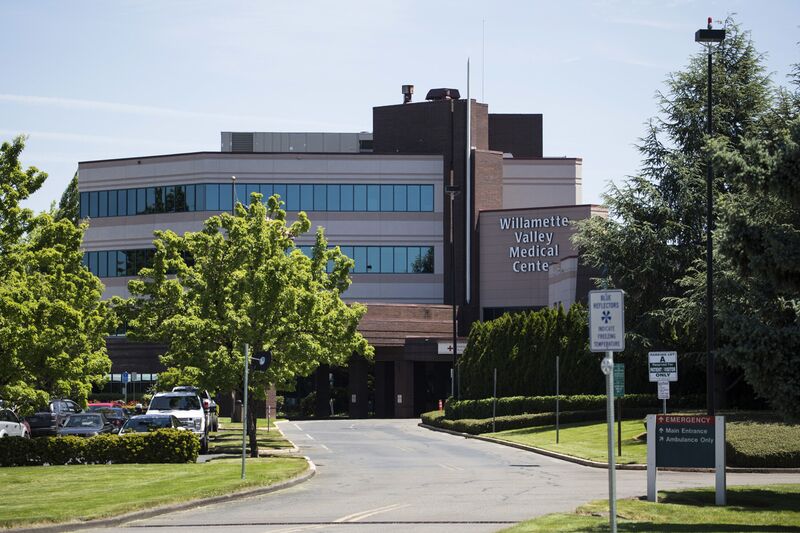
LifePoint’s Willamette Valley Medical Center in McMinnville, Oregon.

In April, LifePoint Chief Executive Officer David Dill and other hospital officials met with President Donald Trump. Dill urged Trump to keep helping hospitals, noting that LifePoint’s medical centers tend to be in the middle of the country, “smaller communities, which I know are communities very important to you,’’ according to a transcript of the meeting.

Rural hospitals are a very important part of the infrastructure in this country and also treating the uninsured and the Medicaid population as well,’’ Dill said.

Trump pointed out that the hospitals didn’t appear to be in the “hot spots.” Dill acknowledged they were handling only “a couple hundred Covid patients.” (The company said it has now cared for almost 20,000.)

In April, the month the government started distributing assistance, LifePoint borrowed $680 million in the capital markets. It also had access to $900 million in cash and an $800 million credit line, according to Moody’s Investors Service

By Apollo’s own account, LifePoint was doing just fine when the pandemic struck. In fact, it was thriving – and looking to expand. As of March 31, shortly before LifePoint got taxpayer dollars, Apollo’s investors were on track to double their money, internal documents show. On paper, they were sitting on a gain of more than $800 million.

“Independent hospital systems have greater difficulty weathering prolonged periods of financial stress,’’ Apollo wrote to its investors in May. “A  consolidation strategy will provide meaningful upside for Apollo funds’ investment.’’

Apollo said the crisis represented an opportunity: “The coronavirus pandemic will serve as a catalyst for additional M&A opportunities given the attractive scale and overall position of the LifePoint platform.”
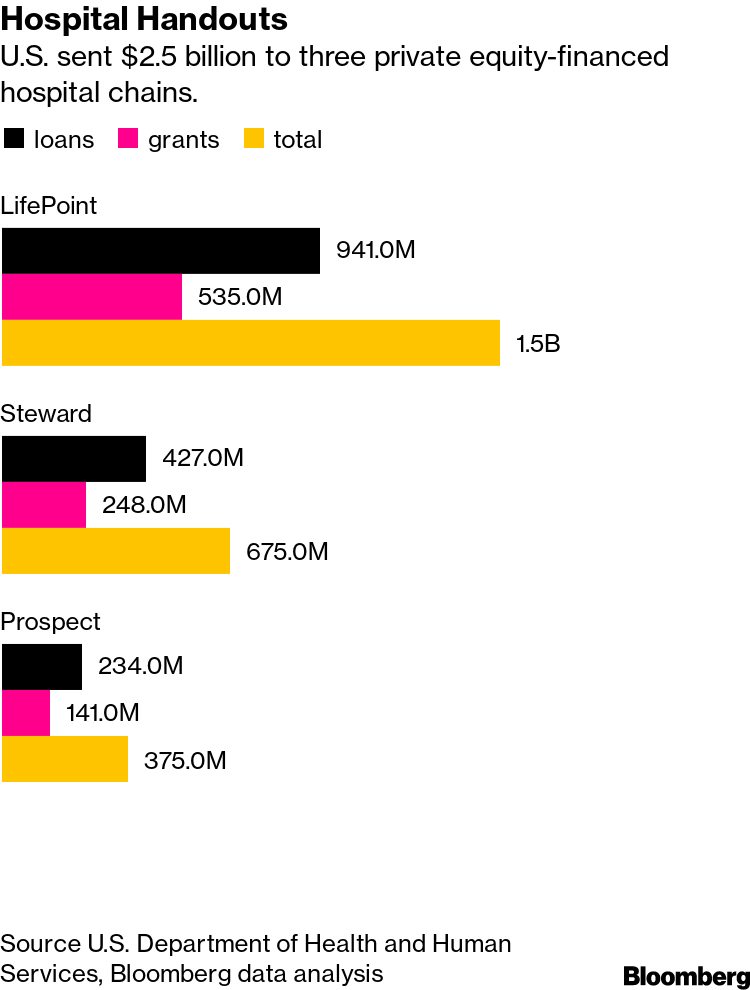
Apollo is one of three private equity firms whose hospitals, as a group, received a total of about $2.5 billion in bailout grants and loans, according to an analysis of the latest federal records. That’s a conservative figure because it doesn’t count the many smaller sums distributed to subsidiaries.
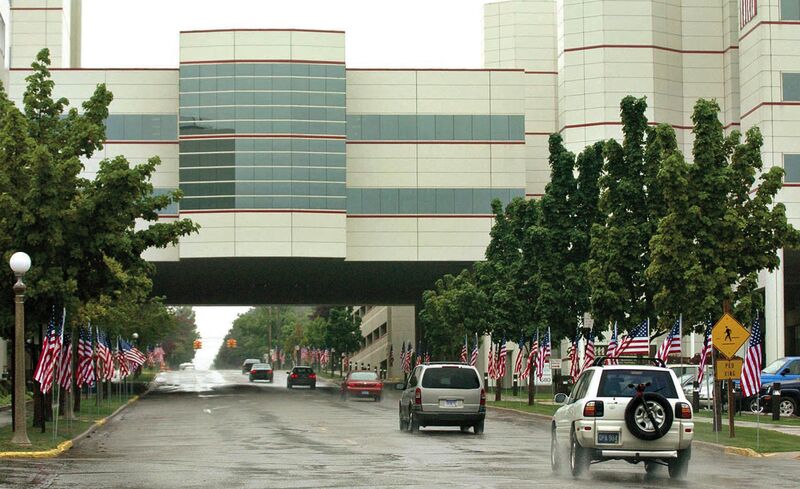
LifePoint’s UP Health System-Marquette in Michigan.
Steward Health Care, a hospital  chain financed by private equity firm Cerberus Capital Management, received $675 million in grants and loans. In May, Cerberus transferred ownership of Steward to a group of doctors in exchange for a note that can be converted into a 37.5% equity stake. Another hospital company, Prospect Medical Holdings, owned by private equity firm Leonard Green & Partners, took in $375 million.
Apollo’s LifePoint hospitals received the most: $941 million in subsidized loans and $535 million in outright grants. 
While Democratic lawmakers have said such firms could have instead tapped their own cash stockpiles, private equity industry representatives have said they have a duty to manage that money in the best interests of their investors, which include public pension plans.
A Wall Street Giant Tapped $1.5 Billion in Federal Aid for Its Hospitals -  Bloomberg

Apollo built its rural hospital empire through the acquisition of three regional hospital chains in 2015, 2016 and 2018.  Apollo Investment Fund VIII LP owns 76% of LifePoint, which is based in Brentwood, Tennessee.

Even though many individual rural hospitals are struggling, Apollo says it can operate them more efficiently by merging them together. LifePoint now owns 88 hospitals in 29 states. It had almost $9 billion of annual revenue last year.

Apollo says that on its watch, the chain has improved its infrastructure and technology, recruited care providers and built new centers.

And for rural hospitals, Apollo argues, bigger is better.

“We continue to believe that rural hospitals can benefit from being part of a larger well-run system that enables access to greater resources and infrastructure for improved patient care,” the Apollo spokesperson said.


Cartoon – National Pandemic Strategy

Head For The Hills Cartoons and Comics - funny pictures from CartoonStock

Fauci Says It Will Be ‘Well Into 2021’ Before U.S. Returns To Normal From Coronavirus

https://www.forbes.com/sites/sarahhansen/2020/09/11/fauci-says-it-will-be-well-into-2021-before-us-returns-to-normal-from-coronavirus/#4eb5a0862f7c

Dr Anthony Fauci disagrees with Trump over the coronavirus says US has not  turned the final corner | Daily Mail Online

TOPLINE

Dr. Anthony Fauci, the country’s top infectious disease official, told MSNBC on Friday that because of the timeline for manufacturing and distributing a coronavirus vaccine, it will be well into next year before American life returns to normal.


KEY FACTS

President Trump suggested this week that a vaccine will be ready in time for November’s election, but Fauci has said such an accelerated timeline is not realistic. 

Fauci said Friday it’s possible that a vaccine could be available by the end of this year or early 2021.

Manufacturing the vaccine in large quantities and distributing it to the majority of the population will take significantly longer, however, meaning that returning to “normal” life—including indoor and enclosed activities like movie theaters—won’t happen until the middle or end of next year. 

Fauci on Friday also refuted Trump’s comments Thursday that the U.S. is “rounding the corner” on coronavirus, characterizing the current data on the virus, which shows about 40,000 new cases and 1,000 deaths a day, as “disturbing.”

During a discussion with doctors from Harvard Medical School on Thursday, Fauci said the U.S. needs to prepare to “hunker down” this fall and winter and warned against looking only at the “rosy side of things,” CNBC reported


CRUCIAL QUOTE

“If you’re talking about getting back to a degree of normality, which resembles where we were prior to COVID, it’s gonna be well into 2021,” Fauci said. “Maybe even towards the end of 2021.”


KEY BACKGROUND

According to a New York Times tracker, there are 38 coronavirus vaccine candidates being tested on humans in clinical trials. This week, pharma giant AstraZeneca announced it had paused a late-stage vaccine trial after a participant developed what is suspected to be an adverse reaction to the drug. The heads of nine pharma companies have also pledged that they would not submit their coronavirus vaccine candidates to regulators until they are shown to be safe and effective in large critical trials. 


The Pandemic’s Most Treacherous Phase

https://www.project-syndicate.org/commentary/us-pandemic-crisis-will-worsen-in-october-by-barry-eichengreen-2020-09?utm_source=Project+Syndicate+Newsletter&utm_campaign=d57658f7c7-sunday_newsletter_13_09_2020&utm_medium=email&utm_term=0_73bad5b7d8-d57658f7c7-105592221&mc_cid=d57658f7c7&mc_eid=5f214075f8

The most dangerous phase of the COVID-19 crisis in the US may actually be now, not last spring. If the economy falters a second time, whether because of inadequate fiscal stimulus or flu season and a second COVID-19 wave, it will not receive the additional monetary and fiscal support that protected it in the spring.

April marked the most dramatic and, some would say, dangerous phase of the COVID-19 crisis in the United States. Deaths were spiking, bodies were piling up in refrigerated trucks outside hospitals in New York City, and ventilators and personal protective equipment were in desperately short supply. The economy was falling off the proverbial cliff, with unemployment soaring to 14.7%.

Since then, supplies of medical and protective equipment have improved. Doctors are figuring out when to put patients on ventilators and when to take them off. We have recognized the importance of protecting vulnerable populations, including the elderly. The infected are now younger on average, further reducing fatalities. With help from the Coronavirus Aid, Relief, and Economic Security (CARES) Act, economic activity has stabilized, albeit at lower levels.

Or so we are being told.

In fact, the more dangerous phase of the crisis in the US may actually be now, not last spring. While death rates among the infected are declining with improved treatment and a more favorable age profile, fatalities are still running at roughly a thousand per day. This matches levels at the beginning of April, reflecting the fact that the number of new infections is half again as high.

Mortality, in any case, is only one aspect of the virus’s toll. Many surviving COVID-19 patients continue to suffer chronic  and impaired mental function. If 40,000 cases a day is the new normal, then the implications for morbidity – and for human health and economic welfare – are truly dire.

And, like it or not, there is every indication that many Americans, or at least their current leaders, are willing to accept 40,000 new cases and 1,000 deaths a day. They have grown inured to the numbers. They are impatient with lockdowns. They have politicized masks.

This is also a more perilous phase for the economy. In March and April, policymakers pulled out all the stops to staunch the economic bleeding. But there will be less policy support now if the economy again goes south. Although the Federal Reserve can always devise another asset-purchase program, it has already lowered interest rates to zero and hoovered up many of the relevant assets. This is why Fed officials have been pressing the Congress and the White House to act.

Unfortunately, Congress seems incapable of replicating the bipartisanship that enabled passage of the CARES Act at the end of March. The $600 weekly supplement to unemployment benefits has been allowed to expire. Divisive rhetoric from President Donald Trump and other Republican leaders about “Democrat-led” cities implies that help for state and local governments is not in the cards.

Consequently, if the economy falters a second time, whether because of inadequate fiscal stimulus or flu season and a second COVID-19 wave, it will not receive the additional monetary and fiscal support that protected it in the spring.

The silver bullet on which everyone is counting, of course, is a vaccine. This, in fact, is the gravest danger of all.

There is a high likelihood that a vaccine will be rolled out in late October, at Trump’s behest, whether or not Phase 3 clinical trials confirm its safety and effectiveness. This specter conjures memories of President Gerald Ford’s rushed swine flu vaccine, also prompted by a looming presidential election, which resulted in cases of Guillain-Barré syndrome and multiple deaths. This episode, together with a fraudulent scientific paper linking vaccination to autism, did much to help foster the modern anti-vax movement.5

The danger, then, is not merely side effects from a flawed vaccine, but also widespread public resistance even to a vaccine that passes its Phase 3 clinical trial and has the support of the scientific community. This is especially worrisome insofar as skepticism about the merits of vaccination tends to rise anyway in the aftermath of a pandemic that the public-health authorities, supposedly competent in such matters, failed to avert.

Studies have shown that living through a pandemic negatively affects confidence that vaccines are safe and disinclines the affected to vaccinate their children. This is specifically the case for individuals who are in their “impressionable years” (ages 18-25) at the time of exposure, because it is at this age that attitudes about public policy, including health policy, are durably formed. This heightened skepticism about vaccination, observed in a variety of times and places, persists for the balance of the individual’s lifetime.

The difference now is that Trump and his appointees, by making reckless and unreliable claims, risk aggravating the problem. Thus, if steps are not taken to reassure the public of the independence and integrity of the scientific process, we will be left only with the alternative of “herd immunity,” which, given COVID-19’s many known and suspected comorbidities, is no alternative at all.

All this serves as a warning that the most hazardous phase of the crisis in the US will most likely start next month. And that is before taking into account that October is also the beginning of flu season.


Fauci: Downplaying coronavirus threat is ‘not a good thing’


Anthony Fauci, director of the National Institute of Allergy and Infectious Diseases, told MSNBC on Friday that it’s unlikely life in the U.S. will go back to normal by the end of 2020, saying pre-coronavirus conditions may not return until “well into 2021, maybe even towards the end of 2021.”


Mednax sells off its radiology division

https://mailchi.mp/365734463200/the-weekly-gist-september-11-2020?e=d1e747d2d8

M&A Analysis: Mednax to Sell its Radiology and Teleradiology Business -

National physician staffing firm Mednax announced the sale of its radiology practice—which includes teleradiology company Virtual Radiologic, known as vRad—to venture-backed Radiology Partners for $885M.

Publicly-traded Mednax has been hit hard by both contracting disputes with UnitedHealthcare, as well as pandemic-related volume declines. Both its anesthesiology and radiology businesses suffered big losses with the halt of elective procedures in the spring, and saw volumes decline between 50-70 percent compared to the prior year.

The company began divesting in May with the sale of its anesthesiology division to investor-backed North American Partners in Anesthesia. Mednax leaders say these decisions to sell were made independent of the pandemic, and that they have been planning to return to the company’s roots of focusing exclusively on obstetrics and pediatric subspecialty care, including changing its name back to Pediatrix.

Acquiring firm Radiology Partners is the largest radiology practice in the country, working with 1,300 hospitals and healthcare facilities. With this acquisition, it will have 2,400 radiologists practicing in all 50 states and the District of Columbia.

Hospital-based physician staffing firms have been especially hard hit by COVID-induced volume declines. This has created a softening in valuations and opened the door for investment firms to accelerate practice purchases.

We expect the pace of deals to quicken as independent practices experience continued financial strain—with large national groups leading the way, taking advantage of lower practice prices to build large-scale specialty enterprises.


Losing the edge on telemedicine?

https://mailchi.mp/365734463200/the-weekly-gist-september-11-2020?e=d1e747d2d8

What8217s Missing in the Health Care Tech Revolution

At the beginning of the pandemic, physicians and health systems implemented telemedicine solutions with unprecedented speed. In doing so, they went from mostly lagging behind payers and disruptors in digital medicine, to becoming the anchors who kept patients and doctors connected during the greatest health crisis in a century.

But over the past few weeks, we’ve detected a marked shift in the tone and focus of conversations around telemedicine with doctors and executives. Universally, systems have seen a drop in virtual visits as in-person care has returned—and most agree that today’s levels of telemedicine visits are lower than ideal.

“We peaked at 45 percent of outpatient visits delivered virtually in early May. Now telemedicine accounts for just five percent,” one physician leader told us. “I don’t know what ‘percent virtual’ is ideal, but I’m pretty sure it’s more than five percent.” Another leader described a shift from “rally to reality”.

At the height of the crisis, the entire system was singularly focused on keeping patients connected to care, bolstered by a loosening of regulatory and payment restrictions.

As systems now plan for a long-term virtual care strategy, we’re sensing a shift in focus to pre-COVID challengesoperations (centralization is needed to create a sustainable model, but each doctor wants to do virtual visits his own way), payment (should we really invest before we’re sure health plans will continue to pay at parity?), and turf battles (reemerging political discussions of who “owns” virtual care strategy).

Health plans, retailers and disruptors recognize the power of virtual care to build relationships and loyalty with consumers—and will invest heavily behind it. Providers have the advantage today. But to keep it, they’ll have to get out of their own way and continue to build, scale and refine their virtual care platforms.


Nearly half of Americans hesitant to get a COVID vaccine

https://mailchi.mp/365734463200/the-weekly-gist-september-11-2020?e=d1e747d2d8

The race for a COVID-19 vaccine is well underway, with dozens of vaccine candidates being tested worldwide. Because vaccines typically take a decade to get to market, the pace of Operation Warp Speed—which aims to deliver a COVID vaccine by January 2021—has raised concerns that the government will sacrifice vaccine safety and efficacy for speed.

Shown in the graphic above, a survey conducted by Jarrard Phillips Cate & Hancock and Public Opinion Strategies found nearly half of American adults are on the fence about getting a COVID-19 vaccine, with over 20 percent saying they are unlikely to get one at all.

This hesitancy is greater among both female and Black respondents—with the latter doubly concerning given that Blacks have been disproportionately impacted by the disease. The top reasons given for skepticism include concerns about side effects (47 percent) and the risk of becoming infected by the vaccine (22 percent).

A related survey from STAT and the Harris Poll found that 78 percent of Americans worry the vaccination approval process is being driven more by politics than science.

Whom do consumers trust for information? Their doctors. Physicians must be prepared to answer questions about how they have evaluated a vaccine, why they believe it to be safe and effective, and whether they have chosen to take it themselves.

As providers prepare to deliver millions of vaccine doses once one is approved and available, leveraging the trust inherent in physician-patient relationships will be essential, especially among vaccine-hesitant populations.


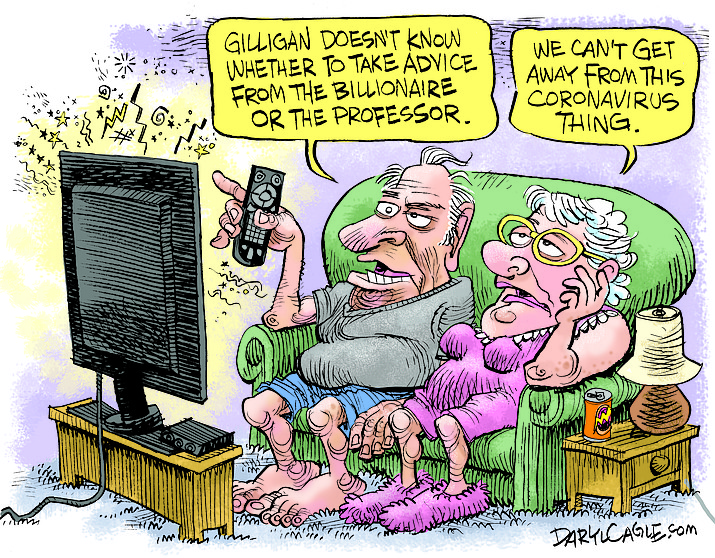
Cartoon – Gilligan’s Island

Editorial cartoon (2): June 6, 2020 | The Daily Courier | Prescott, AZ

Cartoon – Containing Your Hot Spot?

Editorial cartoons for Sunday, June 21 | HeraldNet.com