Sanford Health CEO out after two decades following mask controversy

Sanford Health, CEO Kelby Krabbenhoft part ways
  • Sanford Health’s CEO Kelby Krabbenhoft is leaving the top exec role after almost 25 years, according to a Tuesday announcement from the Sioux Falls, South Dakota-based system, following controversial statements the outgoing CEO made about mask wearing during the coronavirus pandemic.

Krabbenhoft, who has served as CEO since 1996, sent an internal memo to Sanford’s 50,000 employees on Wednesday arguing wearing a mask would defeat its purpose, as he’d already contracted COVID-19 and was therefore immune for at least seven months, as first reported by Forum News Service.

Experts dispute, however, that people previously infected with the novel coronavirus are entirely immune, as the data is not yet definitiveOther Sanford executives sent an email to employees Friday recommending mask wearing and contradicting Krabbenhoft’s claims.

On the heels of the news, Sanford’s board of trustees and Krabbenhoft have now “mutually agreed to part ways,” according to the release. The turnover comes at an acutely crucial time for the major Midwest health system, as it signed a letter of intent last month to merge with Salt Lake City-based Intermountain Healthcare.

If the deal closes, the two would operate 70 hospitals and 435 clinics — many of which will be located in rural communities across the country — and insure 1.1 million people. The merger would form one of the nation’s largest nonprofit health systems with more than $13 billion in combined annual revenue. It’s expected to close in 2021, pending regulatory approvals.

While Intermountain CEO Marc Harrison is slated to lead the combined organization, Krabbenhoft was poised to serve as president emeritus. It’s unclear what the plans are now after Krabbenhoft’s exit.

Sanford, which operates 46 hospitals in 26 states, did not reply to requests for comment by time of publication.

States split on COVID-19 responses as cases surge

https://thehill.com/homenews/state-watch/525952-states-split-on-covid-19-responses-as-cases-surge?rnd=1605382007

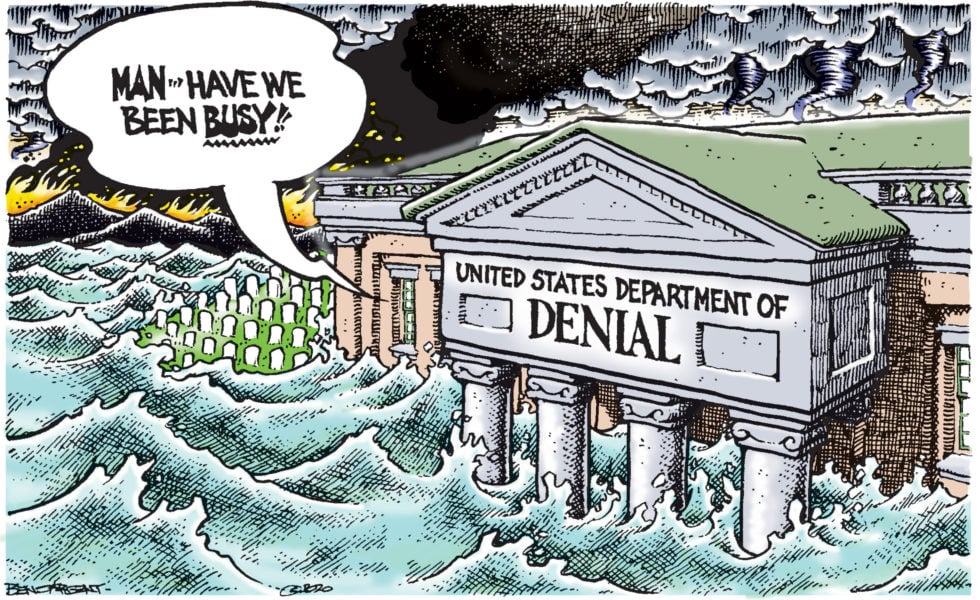
Ben Sargent

Governors across the country are grappling with an alarming surge of coronavirus cases and hospitalizations, so far putting forward a fractured response.

Despite the escalating public health crisis, many governors have taken only modest actions; most states still allow major sources of spread such as bars and indoor restaurants to remain open.

President Trump on Friday touted progress on a vaccine but did not announce any major new steps aimed at slowing the spread of the virus in the short term, and he is leaving most of those decisions to states.

Experts are urging governors to impose stronger measures such as closing bars and gyms, prohibiting indoor dining, mandating masks, and advising people to limit in-person gatherings.

“There are many very troubling warning signs in outbreaks across the U.S.,” said Anita Cicero, deputy director of the Johns Hopkins Center for Health Security. “I do feel that more immediate action is required.”

While most state actions have been relatively minor, stricter rules are starting to pop up, particularly from states with Democratic officials, underscoring the red versus blue divide on public health measures reminiscent of earlier this year.

New Mexico Gov. Michelle Lujan Grisham (D) on Friday instructed residents to stay home except for essential business, and Chicago Mayor Lori Lightfoot (D) issued a similar advisory. More such orders could be coming as the situation worsens.

Experts for the most part are not calling for a return to full-scale lockdowns, saying much has been learned since the spring about how the virus spreads, and there is little reason to stop low-risk activities such as curbside pickup from a store.

But significant sources of spread such as bars, indoor restaurants and gyms should be closed in hard-hit areas, they said.

Many states have not taken those steps, despite the ever-mounting case counts.

The country is now recording an unprecedented 150,000 new cases every day, with hospitalizations at record levels of more than 60,000 and deaths at around 1,000 per day and starting to rise. Hospitals in some areas are reaching capacity and becoming overwhelmed.

These trends show no signs of slowing as temperatures get colder and more activity moves indoors.

Just 13 states have closed their bars, according to a tracker from the Kaiser Family Foundation.

But there’s bipartisan pressure for states to do more.

A Washington Post op-ed on Wednesday — authored by Richard Danzig, Navy secretary under former President Clinton; James Lawler, an infectious disease doctor at the University of Nebraska; and Tom Bossert, a former homeland security adviser to President Trump — called on states to take three specific actions: limit indoor gatherings to no more than 10 people, close indoor restaurants and bars, and require masks in public.

The authors said those steps should be taken in any region where there are more than 20 new cases per 100,000 people per day. Forty states are already above that threshold, according to the COVID Exit Strategy tracking site.

Still, governors in some of the hardest-hit states have resisted actions such as statewide mask mandates and bar closures.

Iowa Gov. Kim Reynolds (R) has long opposed a statewide mask mandate, but amid the worsening outbreak, she issued an order last week requiring masks at businesses such as barbershops and at large gatherings.

At the same time, she emphasized that she did not want to close businesses.

“You can still eat in a restaurant, you can still go to a movie and work out at a gym, and in many states you can’t do that,” she said at a press conference on Tuesday. “Iowa is open for business, and we intend to keep it that way.”

Mississippi Gov. Tate Reeves (R) struck a similar note in an address on Thursday.

“We’re trying to open things up but to do it in a safe, responsible way,” he said. “We’re not going to shut down businesses. We’re not going to have long term mandates with no end in sight.”

On Capitol Hill, congressional leaders have been deadlocked over a new round of economic aid, which could provide relief for businesses such as bars and restaurants and allow them to temporarily close to slow the spread of the virus without taking a major financial hit.

“There needs to be a policy lever to help support and maintain those small businesses,” said Preeti Malani, chief health officer and professor of medicine at the University of Michigan.

In New York City, bars and restaurants are still open, with a new 10 p.m. curfew. But the prospect of schools closing has sparked criticism about the city’s priorities.

“If NYC closes schools and continues to allow indoor dining our priorities are totally backwards,” tweeted New York City Council member Mark Levine.

Malani said schools have been a “good-news situation” and have not been a significant source of transmission.

“If the balance is between keeping the bars open and keeping the schools open, that’s an easy decision in my mind,” she said.

Celine Gounder, a coronavirus adviser to President-elect Joe Biden, made a similar point on Friday.

“Some of those higher-risk places are, for example, restaurants, bars and gyms, whereas schools are not zero risk, but they’re much much lower risk, and they’re an essential service really,” she told CNBC. “So I think we need to close only those things that really are contributing to the spread and really try to let as much as possible remain open, like schools, if they’re not contributing to spread.”

Anthony Fauci, the government’s top infectious disease expert, said at an event hosted by the think tank Chatham House on Thursday that the news that Pfizer’s vaccine candidate was more than 90 percent effective in an interim analysis provides something of a light at the end of the tunnel.

That promising news, he said, should encourage people to take some tough steps for a few months until the vaccine is widely available.

“Ever since it became clear a few days ago that we have a really quite effective vaccine getting ready to deploy, [the message] is rather than ‘Hey. Don’t worry. You’re OK,’ it’s ‘Don’t stop shooting. The cavalry is coming. But don’t put your weapons down. You better keep fighting because they’re not here yet,'” Fauci said.

Cartoon – Covid Denialism

Cartoons

Cartoon – State of the Union on Covid

Hands on Wisconsin: Listen to doctors about COVID-19, not politicians |  Opinion | Cartoon | madison.com

America’s most prestigious medical journal makes a political statement

https://mailchi.mp/45f15de483b9/the-weekly-gist-october-9-2020?e=d1e747d2d8

In Rare Step, Esteemed Medical Journal Urges Voters To Oust Trump | KPCW

For its first 208 years, the New England Journal of Medicine has never endorsed a political candidate. But this week the journal published an editorial outlining its political position in the upcoming Presidential election, signed unanimously by all editors who are US citizens.

The editors did not explicitly endorse former Vice President Biden, but rather offered a scathing condemnation of the current administration’s performance during the COVID pandemic: “Reasonable people will certainly disagree about the many political positions taken by candidates.

But truth is neither liberal nor conservative. When it comes to the response to the largest public health crisis of our time, our current political leaders have demonstrated that they are dangerously incompetent. We should not abet them and enable the deaths of thousands more Americans by allowing them to keep their jobs.” (Formally endorsing Biden last month, Scientific American also made the first political endorsement in its 175-year history.)
 
Much of the media coverage of the NEJM statement has centered on the question of whether medicine should involve itself in politics, or “live above it”

Medicine has been drawn into political disputes before, but now the nature of the involvement has changed. In the past, debates largely centered around regulation, payment or policy—but now the science itself has become a fundamentally political issue. 

The very nature of the coronavirus has become a matter of political belief, not just an indisputable scientific fact.

Public trust in both scientific institutions and the government, and their ability to work together, has been damaged. We fear this will lead to poorer health outcomes regardless of who wins the upcoming election.

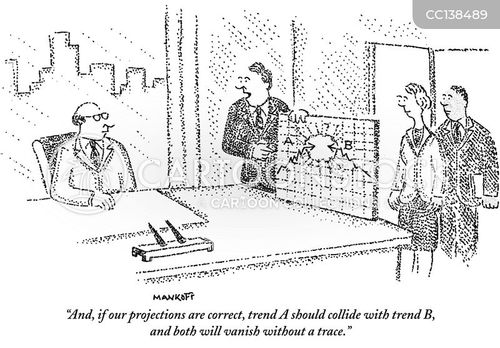
Cartoon – Coronavirus Projections

Cartoon – Coronavirus Projections | HENRY KOTULA

CDC pulls revised guidance on coronavirus from website

https://thehill.com/policy/healthcare/517387-cdc-says-revised-guidance-on-airborne-coronavirus-transmission-posted-in

National coronavirus updates: CDC provides detailed guidance on reopening -  ExpressNews.com

The Centers for Disease Control and Prevention (CDC) said Monday pulled revised guidance from its website that had said airborne transmission was thought to be the main way the coronavirus spreads, saying it was “posted in error.”

The sudden change came after the new guidance had been quietly posted on the CDC website on Friday.

“CDC is currently updating its recommendations regarding airborne transmission of SARS-CoV-2 (the virus that causes COVID-19),” the CDC wrote. “Once this process has been completed, the update language will be posted.”

The CDC guidance on the coronavirus is now the same as it was before the revisions.

The change and the the reversal comes as the CDC comes under extensive scrutiny over whether decisions by and guidance from government scientists are being affected by politics.

Just last week, President Trump contradicted CDC Director Robert Redfield on the timing of a vaccine and the necessity of wearing masks. 

Public health experts were pleased with the updated guidance, saying evidence shows COVID-19 can be spread through the air and that the public should be made aware of that fact. 

The World Health Organization issued a warning in July, saying that coronavirus could be spread through people talking, singing and shouting after hundreds of scientists released a letter urging it to do so.

The CDC said the guidance posted Friday was a “draft version of proposed changes.”

It is not clear if that draft will eventually become the CDC’s guidance, or if it will go through additional changes.

CNN first reported the new guidance on Sunday.

The now-deleted guidance had noted that the coronavirus could spread through airborne particles when an infected person “coughs, sneezes, sings, talks or breaths.”

“There is growing evidence that droplets and airborne particles can remain suspended in the air and be breathed in by others, and travel distances beyond 6 feet (for example, during choir practice, in restaurants, or in fitness classes),” the agency had written. “In general, indoor environments without good ventilation increase this risk.”

“These particles can be inhaled into the nose, mouth, airways, and lungs and cause infection,” the deleted guidance said. “This is thought to be the main way the virus spreads.”


A New Front in America’s Pandemic: College Towns

The coronavirus is spiking around campuses from Texas to Iowa to North Carolina as students return.

Last month, facing a budget shortfall of at least $75 million because of the pandemic, the University of Iowa welcomed thousands of students back to its campus — and into the surrounding community.

Iowa City braced, cautious optimism mixing with rising panic. The university had taken precautions, and only about a quarter of classes would be delivered in person. But each fresh face in town could also carry the virus, and more than 26,000 area residents were university employees.

“Covid has a way of coming in,” said Bruce Teague, the city’s mayor, “even when you’re doing all the right things.”

Within days, students were complaining that they couldn’t get coronavirus tests or were bumping into people who were supposed to be in isolation. Undergraduates were jamming sidewalks and downtown bars, masks hanging below their chins, never mind the city’s mask mandate.

Now, Iowa City is a full-blown pandemic hot spot — one of about 100 college communities around the country where infections have spiked in recent weeks as students have returned for the fall semester. Though the rate of infection has bent downward in the Northeast, where the virus first peaked in the U.S., it continues to remain high across many states in the Midwest and South — and evidence suggests that students returning to big campuses are a major factor.

In a New York Times review of 203 counties in the country where students comprise at least 10 percent of the population, about half experienced their worst weeks of the pandemic since Aug. 1. In about half of those, figures showed the number of new infections is peaking right now.

Despite the surge in cases, there has been no uptick in deaths in college communities, data shows. This suggests that most of the infections are stemming from campuses, since young people who contract the virus are far less likely to die than older people. However, leaders fear that young people who are infected will contribute to a spread of the virus throughout the community.

The surge in infections reported by county health departments comes as many college administrations are also disclosing clusters on their campuses.

*Brazos County, Tex., home to Texas A&M University, added 742 new coronavirus cases during the last week of August, the county’s worst week so far, as the university reported hundreds of new cases.

*Pitt County, N.C., site of East Carolina University, saw its coronavirus cases rise above 800 in a single week at the end of August. The Times has identified at least 846 infections involving students, faculty and staff since mid-August.

*In South Dakota’s Clay and Brookings counties, ballooning infections in the past two weeks have reflected outbreaks at the state’s major universities. In McLean County, Ill., the virus has been spreading as more than 1,200 people have contracted the virus at Illinois State University.

*At Washington State University and the University of Idaho, about eight miles apart, combined coronavirus cases have risen since early July to more than 300 infections. In the surrounding communities — rural Whitman County, Wash., and Latah County, Idaho — cases per week have climbed from low single-digits in the first three months of the pandemic, to double-digits in July, to more than 300 cases in the last week of August.

The Times has collected infection data from both state and local health departments and individual colleges. Academic institutions generally report cases involving students, faculty and staff, while the countywide data includes infections for all residents of the county.

It’s unclear precisely how the figures overlap and how many infections in a community outside of campus are definitively tied to campus outbreaks. But epidemiologists have warned that, even with exceptional contact tracing, it would be difficult to completely contain the virus on a campus when students shop, eat and drink in town, and local residents work at the college.

The potential spread of the virus beyond campus greens has deeply affected the workplaces, schools, governments and other institutions of local communities. The result often is an exacerbation of traditional town-and-gown tensions as college towns have tried to balance economic dependence on universities with visceral public health fears.

In Story County, Iowa, a local outcry following a burst of new Iowa State University cases pressured the university on Wednesday to reverse plans to welcome 25,000 football fans for its Sept. 12 opener against the University of Louisiana at Lafayette. In Monroe County, Indiana, the health department quarantined 30 Indiana University fraternity and sorority houses, prompting the university to publicly recommend that members shut them down and move elsewhere.

In Johnson County, where the University of Iowa is located, cases have more than doubled since the start of August, to more than 4,000. Over the past two weeks, Iowa City’s metro area added the fourth-most cases per capita in the country. The university has recorded more than 1,400 cases for the semester.

With a population of roughly 75,000, Iowa City relies on the university as an economic engine. The University of Iowa is by far the community’s largest employer, and its approximately 30,000 students are a critical market. Hawkeye football alone brings $120 million a year into the community, said Nancy Bird, executive director of the Iowa City Downtown District.

When the pandemic first hit in March, the university sent students home and pivoted to remote instruction, like most of the country’s approximately 5,000 colleges and universities. That exodus, heightened by health restrictions, has been an existential challenge for many downtown businesses, Ms. Bird said.

Jim Rinella, who owns The Airliner bar and restaurant, said the 76-year-old landmark across the street from campus “had zero revenue the whole month of April.” May was almost as scant, he said, and in June, he shut down after a couple of employees became infected.

By the time he reopened after July 4, too few students were in town to come close to making up the losses. He and his wife, Sherry, had hoped the campus reopening in August might be a lifeline.

The Rinellas live in Detroit, where they have other businesses, and Mr. Rinella said he was out of town when crowds jammed downtown on the weekend before the Aug. 24 start of classes. He said he immediately called his manager to make sure they were following state and local health rules.

But the photos taken by the local press from outside his establishment and others were damning. In an open letter, the university president lashed out, saying he was “exceedingly disappointed” in the failure of local businesses to keep students masked and socially distanced. Days later, the governor cited high infection rates among young people as she closed bars and restricted restaurants in Johnson County and five other counties with high concentrations of students.

Now The Airliner — where a booth is named for the University of Iowa’s most famous dropout, Tom Brokaw, and a modeling scout is said to have discovered Ashton Kutcher — has to close at 10 p.m. as well as require customers to buy a meal and sit far apart if they want to drink there.

“I’m at a pain point,” Mr. Rinella said. “If my grandfather hadn’t started the place, I’d question whether I want to be in the restaurant business.” A recent lunch hour visit found one customer at the bar drinking a beer.

The rise in local case counts reverberated at the county’s community college, which decided to start its fall semester with continued online instruction. Iowa City’s K-12 schools followed suit, which also meant canceling extracurricular activities, including sports, until students come back to the classroom in person.

“This is one of our last chances for college coaches to see us play or to get recent films sent out to college coaches. For some of us, playing in college is a goal we have been working toward since we were 11 or 12,” Lauren Roman, a 17-year-old high school volleyball player, told the school board last month. She burst into tears as she explained that she has waited since March for college recruiters to see her play. “Some of us really do need that scholarship money.”

“This sucks,” the board vice-president Ruthina Malone, agreed at the same meeting, choking up as she described emails she had received from families of children whose education relies on in-person instruction. But, she told the board, “we do not operate in isolation.” Her husband, she said, is an art teacher who would like nothing more than to teach again in person, and she works at the university.

The pandemic has hurt colleges’ finances in multiple ways, adding pressure on many schools to bring students back to campus. It has caused enrollment declines as students have opted for gap years or chosen to stay closer to home, added substantial costs for safety measures, reduced revenue from student room and board and canceled money-generating athletic events.

Governments have not always stepped into the breach: In Iowa, the state cut $8 million from its higher education appropriation even after the Board of Regents, which oversees the state’s universities, requested an $18 million increase. Over the summer, the University of Iowa announced a salary freeze and other significant cuts. This was before the Big Ten Conference postponed fall competition, erasing more than $60 million from the university’s athletics program.

When the university announced its plans for reopening with a combination of in-person and virtual instruction, it did not mention its finances as a factor, though it froze tuition rather than reduce it, as some universities have done. It also mandated mask wearing inside buildings and said it would test students with symptoms or who had been exposed to the virus.

Still, its decision to hold in-person classes drew criticism from some faculty. “We’re scared for our health and yours,” one group of instructors wrote in an open letter to students in July.

And its decision not to test asymptomatic students unless they had been exposed unnerved some city officials. Dr. Dan Fick, the campus health officer, said the university wanted to avoid a false sense of security.

But Janice Weiner, who represented the City Council in meetings with the business community and campus, questioned the approach. “We have a robust and capable medical community, we have good public health officials, we have everything we need,” she said. “But then the university didn’t require everyone coming back to campus to be tested.”

Iowa City is a blue town in a state with a pro-Trump Republican governor, Kim Reynolds, who has clashed with the state’s cities over masks and Covid policies.

Though the governor in March restricted large gatherings, closed Iowa schools and banned indoor operations of many businesses, she began relaxing those orders in May and has argued that face-mask mandates couldn’t be legally enforced.

Several municipalities have nonetheless passed ordinances requiring face masks, including Johnson County and Iowa City — largely in preparation for the return of students. But because state health rules have become a patchwork, not all returning students come from places where mask wearing is required, said Ms. Weiner. And, she said, the inconsistency offers an excuse to those who don’t want to wear them.

Interviews with students suggested that concern had at least some justification.

“If people get sick, they get sick — it happens,” Mady Hanson, a 21-year-old exercise science major, said last week on campus. She added that she and her family had survived Covid-19 and that she resented the city’s “ridiculous” restrictions.

“We’re all farmers and don’t really care about germs, so if we get it, we get it and we have the immunity to it.”

Both university and city officials said they believe the spike in cases has been a wake-up. “When we look back,” said Dr. Fick, “I think we’ll be proud that when students got the message, a majority stepped up.”

On the City Council, Ms. Weiner was less upbeat.

“There’s not a whole use in placing blame — we have to figure out a way forward,” she said. “But it’s going to take a herculean effort here for our numbers to start to go down.”


Unemployed struggle to cover basic expenses following CARES expiration: poll

Unemployed struggle to cover basic expenses following CARES expiration: poll

The number of jobless people saying that unemployment insurance does not cover basic expenses including food, clothing, housing and transportation nearly doubled after key benefits expired in July.

new survey from Morning Consult found that 50 percent of unemployed people said their benefits fell short of covering basic expenses, up from 27 percent in July.

The $600 in extra weekly benefits that Congress passed in March expired at the end of July, leaving many with significantly lower payments.

Republicans argued the $600 increase was too high and discouraged people from returning to work. Democrats countered that at a time of record high unemployment and limited job openings, the extra pay was unlikely to prevent jobs from getting filled.

A month later, negotiations between the White House and congressional Democrats remain stalled. Senate Republicans are setting a goal of voting on a more limited package of COVID-19 relief measures next week, though Speaker Nancy Pelosi (D-Calif.) has dismissed the idea of approving a limited bill.

An executive order by President Trump to provide $300 in additional benefits to a more limited pool of recipients has lagged in implementation, with only a handful of states able to start making new payments.

In the meantime, the pandemic continues to stifle the economy.

CNBC poll found that 14 percent of those surveyed had completely wiped out their emergency savings during the pandemic, and 39 percent were forced to take some sort of emergency measures to shore up their finances.

Among those who took emergency measures, 17 percent tapped into savings, 11 percent borrowed money, 6 percent stopped retirement contributions and 4 percent moved in with a family member.