Insurers and Private Equity Look to Join Forces to Further Consolidate Control of Americans’ Access to Health Care

With both Republicans and Democrats taking on these Goliaths individually, this could be a watershed moment for bi-partisan action.

The push and pull between providers and insurance companies is as old as our health payment system. Doctors have long argued insurers pay too little and that they too often interfere in patient care.

Dramatic increases in prior authorization, aggressive payment negotiations and less-generous reimbursement to doctors by Medicare Advantage plans show there’s little question the balance of power in this equation has swung toward payers.

These practices have led some doctors to look for outside investment, namely private equity, to keep their cash flow healthy and their operations functional. The trend of private equity acquisitions of physician practices is worthy of the federal scrutiny it has attracted. Insurers have noticed this trend, too, and appear ready to propose a profitable partnership.

Bloomberg recently reported that CVS/Aetna is looking for a private equity partner to invest in Oak Street Health, the primary care business CVS acquired for $9.5 billion last year. Oak Street is a significant player in primary care delivery, particularly for Americans on Medicare, with more than 100 clinics nationwide. CVS is said to be exploring a joint venture with a private equity firm to significantly expand Oak Street’s footprint and therefore also expand the parent corporation’s direct control over care for millions of seniors and disabled Americans across hundreds of communities.

Republicans have led scrutiny of pharmacy benefit managers on Capitol Hill. And Democratic attacks on private equity in health care have recently intensified. I hope, then, that both parties would find common ground in being watchful of a joint venture between private equity and one of the country’s largest PBMs, Caremark, also owned by CVS/Aetna.

The combination of health insurers and PBMs over the last decade – United Healthcare and Optum; CVS/Aetna and Caremark, and Cigna and Express Scripts – has increasingly handed a few large corporations the ability to approve or deny claims, set payment rates for care, choose what prescriptions to dispense, what prescriptions should cost, and how much patients must pay out-of-pocket for their medications before their coverage kicks in.

As enrollment in Medicare Advantage plans has grown to include a majority of the nation’s elderly and disabled people, we have seen insurers source record profits off the backs of the taxpayer-funded program. But in recent months, insurers have told investors they have had higher than expected Medicare Advantage claims – in particular CVS/Aetna, which took a hammering on Wall Street recently because its Medicare Advantage enrollees were using more health care services than company executives had expected.

It is natural, then, that one of the largest insurer-owned PBMs is looking to expand its hold on primary care for older Americans. Primary care is often the gateway to our health care system, driving referrals to specialists and procedures that lead to the largest claims insurers and their employer customers have to pay. By employing a growing number of primary care providers, CVS/Aetna can increasingly influence referrals to specialists and therefore the care or pharmacy benefit costs those patients may incur.

Control of primary care doctors holds another benefit for insurers: determination of what primary care doctor a patient sees.

People enrolled in an Aetna Medicare Advantage or employer-sponsored plan may find that care is easier to access at Oak Street clinics. Unfortunately, while that feels monopolistic and ethically alarming, this vertical integration has received relatively little scrutiny by lawmakers and regulators.

No law prevents an insurance company or PBM from kicking doctors it does not own out of network while creating preferential treatment for doctors directly employed by or closely affiliated with the corporate mothership.

In fact, the system largely incentivizes this. And shareholders expect insurers to keep up with their peers. As UnitedHealth Group has become increasingly aggressive in its acquisitions of physician practices – now employing or affiliated with about one in ten of the nation’s doctors – it has also become increasingly aggressive in its contract negotiations with physicians it does not control, particularly the specialists who depend on the referrals that come from primary care physicians.

That’s another area where looking to expand Oak Street Health makes smart business sense for CVS/Aetna. Specialist physicians are historically accustomed to higher compensation than primary care doctors and are used to striking hard-fought deals with insurers to stay in-network.

By controlling the flow of primary care referrals to specialists, CVS/Aetna can control what insurers have long-desired greater influence over: patient utilization. As a key driver of referrals to specialists in a specific market, CVS/Aetna will have even more power in contract negotiations with specialists.

As Oak Street’s clinics grow market share in the communities they serve, specialists in that market will feel even more pressured to stay in-network with Aetna and to refer prescriptions to CVS pharmacies. That has the dual benefit for CVS/Aetna of helping to predict what patients will be treated for once they go to a specialist and control over what the insurer will have to pay that specialist.

With different corporate owners, this sort of model could easily run afoul of the federal Anti-Kickback Statute and Stark Law.

No doctor or physician practice is allowed to receive anything of value for the referral of a patient. But that law only applies when there is separate ownership between the referring doctor and the specialist.

CVS/Aetna would clearly be securing value – in the form of lower patient utilization and effective reimbursement rates – under this model. But with Oak Street owned by CVS/Aetna and specialists forced to agree to lower reimbursement rates through negotiations with an insurer that appears separate from Oak Street, there’s no basis for a claim under the Stark Law. There may be antitrust implications, but those are more difficult and take longer to prove – and the fact the federal government cleared CVS/Aetna to acquire Oak Street Health last year wouldn’t help that argument.

This model is already of concern, which is why I continue to urge examination of increasing insurer control of physicians across the country. Their embrace of private equity to accelerate this model is truly alarming. And given Democrats’ recent focus on private equity in health care, they should work with their Republican colleagues who are rightly alarmed about the increasingly anti-competitive, monopolistic health insurance industry.
UnitedHealth Group’s Optum grows to 90K employed or affiliated physicians

https://mailchi.mp/9b1afd2b4afb/the-weekly-gist-december-1-2023?e=d1e747d2d8

At UnitedHealth Group’s (UHG’s) 2023 investor conference, Optum Health CEO Amar Desai, MD, revealed that Optum has added nearly 20K physicians in 2023, bringing its total physician count to nearly 90K.

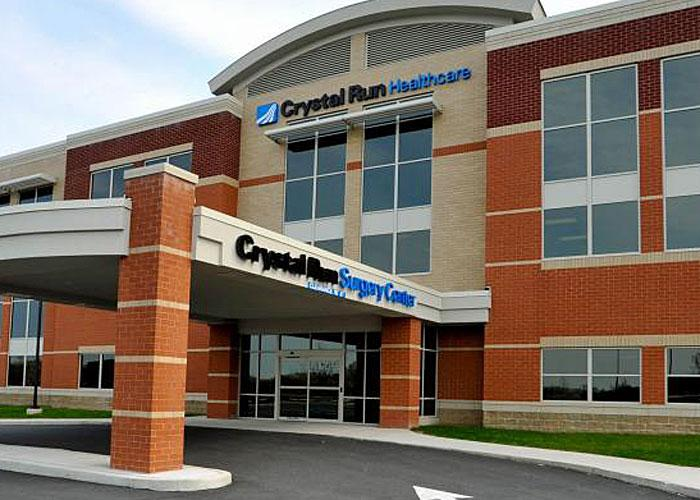
None of these acquisitions were formally disclosed, including this year’s largest known pickup, Crystal Run Healthcare—a Middletown, NY-based group with over 400 doctors—which only became public after an internal email was shared with the press. Optum was already the nation’s largest employer of physicians by far, and its nearly 30 percent growth in 2023 only extends its lead.

The next two largest physician employers, Ascension and HCA Healthcare, manage a combined total of around 100K. Optum also employs or affiliates with an additional 40K advanced practice clinicians.

The Gist: Optum’s physician acquisition binge continues at a stunning pace: it has tripled its physician ranks since 2017, and now controls nearly 10 percent of all physicians in the US. But now that it has amassed a veritable physician army, there are emerging signs that it’s turning attention to right-sizing and rationalizing this massive portfolio. 

Recent layoffs at the Everett Clinic and the Polyclinic in greater Seattle suggest an end to Optum’s more hands-off initial approach to integration. While each of Optum’s myriad medical group acquisitions has been too small, relative to total company revenue, to trigger regulatory review, the proposed updates to federal merger reporting requirements could put a damper on its unfettered provider buying spree.   

Private equity-backed practices flexing market share muscle 

https://mailchi.mp/d0e838f6648b/the-weekly-gist-september-8-2023?e=d1e747d2d8

This week we showcase data from a recent American Antitrust Institute study on the growth of private equity (PE)-backed physician practices, and the impact of this growth on market competition and healthcare prices. 

From 2012 to 2021, the annual number of practice acquisitions by private equity groups increased six-fold, especially in high-margin specialties. During this same time period, the number of metropolitan areas in which a single PE-backed practice held over 30 percent market share rose to cover over one quarter of the country. 

These “hyper-concentrated” markets are especially prevalent in less-regulated states with fast-growing senior populations, like Arizona, Texas, and Florida. 

The study also found an association between PE practice acquisitions and higher healthcare prices. In highly concentrated markets, certain specialties, like gastroenterology, were able to raise prices rise by as much as 18 percent. 

While new Federal Trade Commission proposals demonstrate the government’s renewed interest in antitrust enforcement, it may be too little, too late to mitigate the impact of specialist concentration in many states.  

Searching for new hope in primary care

https://mailchi.mp/377fb3b9ea0c/the-weekly-gist-august-4-2023?e=d1e747d2d8

A physician who has led the primary care enterprise for a large health system for over twenty years told us he’s never seen physician morale as low as it is now:

Burnout is bad across the board for all specialties, but I’m having a really hard time finding the bright spots for primary care”.

We recalled a recent survey of primary care physicians that confirmed his observations, with 61 percent of doctors stating that primary care is “crumbling”. But it struck us that we’ve been seeing these kinds of dire surveys about the state of primary care for the entire quarter-century we’ve been doing this work.

What’s different now?


He posited one critical change. Ten years ago, during the heyday of accountable care, primary care was central to health system strategy. Systems were devoting resources to converting practices to patient-centered medical homes. “We felt like primary care was at the heart of transforming health systems, and that we were finally getting resources to help patients,” he shared.

Now it feels like the health system has moved away from ‘value’, the focus is all on specialists and growing procedure volume again, and we’re being treated as a cost center and told to cut staff and up our referral targets.”

We agree. Although large independent primary care groups continue to command record valuations, overall, the transition to value has slowed, and work burden has increased given staffing shortages.

Where could optimism come from now?

We both agreed that workflow innovations to ease documentation burden and help the transition to virtual care appear closer to reality than ever before.

And the increased focus on “consumerism” has many systems recognizing that primary care is the first—and principal—touchpoint for most patients and will be key to winning consumer loyalty.

Quantifying private equity’s takeover of physician practices

https://mailchi.mp/cc1fe752f93c/the-weekly-gist-july-14-2023?e=d1e747d2d8

A detailed report, published by a group of organizations including the American Antitrust Institute, provides one of the highest-quality examinations of the growth of private equity (PE)-backed physician practices, and the impact of this growth on market competition and healthcare prices.

From 2012 to 2021, the annual number of practice acquisitions by private equity groups increased six-fold, and the number of metropolitan areas in which a single PE-backed practice held over 30 percent market share rose to cover over one quarter of the country. (Check out figure 3B at the bottom of page 20 in the report to see if you live in one of those markets.)

The study also found an association between PE practice acquisitions and higher healthcare prices and per-patient expenditures. In highly concentrated markets, certain specialties, like gastroenterology, saw prices rise by as much as 18 percent.

The Gist: As the report highlights, one of the greatest barriers to assessing PE’s impact on physician practices is the lack of transparency around acquisitions and ownership structures. This analysis brings us closer to understanding the scope of the issue, and makes a strong case for regulatory and legislative intervention. 

Recent proposed changes to federal premerger disclosure requirements offer a good start, but many practice acquisitions are still too small to flag review, and slowing future acquisitions will do little to unwind the market concentration already emerging. 

PE is also not the sole actor contributing to healthcare consolidation, and proposed remedies may target the activities of payers and health systems considered anti-competitive as well.

Conditions are right for physicians to seize the moment in US healthcare but are they ready?

Here’s where we are:

Physician income has not kept pace with inflation and administrative costs prompting 70% to leave private practice. Half are now employed by hospitals and another 20% by private equity-backed practice managers. Both trends began before the pandemic in response to tougher financial conditions for physicians across all specialties. While hospitals held their own at the sector level, physicians lost ground. Per CMS’ NHE analysis, from 2000 to 2021:

  • Spending in hospitals increased from 30.4% of total spending to 31.4%
  • Spending for prescription drugs was essentially unchanged from 8.95% to8.88%
  • Public health spending. increased slightly from 3.2% of total spending to 4.4%.
  • But spending for physician services shrank from 21.1% to 15.6%.

In tandem with the erosion of finances for medical practices, investments in medical practices by private equity grew. Per Pitchbook, there have been 874 practice acquisitions by PE/Venture backed sponsors in the last 12 years with 20 in the first half of this year alone. Most of these are small ($7.53 million/transaction) and most involve a tuck-in to an existing PE backed platform (i.e., Privia, Sheridan, et al). Rightfully, physicians point out that while hospitals and drug companies have protected their piece of the health care pie successfully for 20 years while physicians have lost ground.

Physicians are not happy and burnout is pervasive. The employment of physicians in hospital and private equity settings has not made life happier for physicians. Per Medscape’s most recent assessment, burnout increased to 53% in 2022–up from 47% in 2021 and 26% since 2018. More than one in five physicians (22%) reported experiencing depression—up from 15% since 2018. They’re anxious about the future and increasingly sensitive to compensation comparisons with professions that require less training and earn more. They’re suspicious of consultants, lawyers and bankers whose experience is limited but fees inexplicably high They’re incensed by executive compensation in hospitals, drug companies, and health insurer settings they deem overpaid and overhyped. And they resent execs in for-profit and private equity companies who achieve astronomical wealth via their stock-option packages earned on the backs of the physicians they control.

The realities are these:

Physicians lack a strong voice. The American Medical Association’s membership includes less than a third of active-practice physicians. It is increasingly under-fire for under-representing primary and preventive health providers in its government-authorized monopoly on coding, its lobbying efforts against scope of practice expansion for APNs and pharmacists, its opposition to medical training innovations that could significantly improve the readiness and effectiveness of the physician workforce and more. The AMA’s influence is strong on a shrinking number of issues and increasingly resonate out of touch on issues that resonate with voters and lawmakers (expanded scope of practice for nurses and pharmacists, price and outcome transparency, et al).

Physicians operate in a buyers’ market but behave like it’s a sellers’ market. Physicians are trained to think of themselves as the hub of a system in which what they say determines what everyone else does…including patients. They are conditioned in medical school, residency and practice to be self-centered and resist efforts via data, clinical practice redesign or even “value-based incentives” to change their behaviors. They despise the notions of price transparency, cost effectiveness and outcome-based comparisons to their peers while calling for more accountability from hospitals, insurers and drug companies. They discount notions of consumerism and self-care and believe report cards over-rate patient experiences since medical practice is uniquely complicated.

Most live in a buyers’ market mentality unwilling/unable to see the sellers’ market healthcare has become. Otherwise, price transparency would be prevalent, operating hours and support services more conducive to the needs of patients and digital investments to maintain connectivity significant…but most don’t.

My take:

The U.S. economy will be testy for the 12 months: bringing down inflation will require interest rate hikes. Unemployment will increase slightly, wage inflation will slow, and the 2024 election cycle will draw unwelcome attention to healthcare spending and its affordability as root causes of growing financial insecurity in American households

Given this backdrop, the profession of medicine faces a tipping point: become an integral part of the system’s solution or a vestige of its past. That solution should address medicine’s role in…

  • Addressing affordability for households and patients and the direct role it plays.
  • Integrating generative AI into more accurate diagnostics and more accessible, efficient treatment methods.
  • Embracing transparency about medical services pricing, costs, outcomes, business relationships and conflicts of interest.
  • Creating care plans around individualized social determinants of health and distinctions in populations.
  • Streamlining medical training toward competency-based lifelong learning, data-driven technology support, a team-based delivery and ‘whole person’ orientation to individuals.
  • Accepting full accountability for their effectiveness in reducing unnecessary costs and spending, increasing equitable access and engaging consumers in self-care.

How value-based and alternative payment models figure into this is anyone’s guess. Some physician organizations (AAPG, NAACO, et al) are all-in for expansion of these while others note their lackluster results to date. And physician calls for a replacement to RVU-based conversion-factor will grow louder as Congress revisits MACRA and how Medicare pays physicians.

These are important and require urgent attention, but they do not elevate the profession to its rightful place at the center of system transformation.

I hold the profession of medicine in high regard. I respect and trust my physicians—Ben, Ben and Blake are trusted friends in my personal journey to health. But their profession as a whole appears stuck in the past and unable to play a central role in the health system transformation. Until and unless new physician leaders with fresh thinking about the entire system step up, the profession’s role will continue to erode.

Playing the victim card and blame game against Medicare, hospitals, insurers, drug companies and everyone else they deem unworthy will not solve the health system’s problems.

I believe conditions are right for physicians to seize the moral high ground and lead the needed reset of the health system but most aren’t ready.

“Be careful what you wish for.”

https://mailchi.mp/3ed7bdd7f54b/the-weekly-gist-june-2-2023?e=d1e747d2d8

A recent chat with a former physician entrepreneur who recently sold his practice to a large health system highlighted the fact that “hospital-physician integration” can sometimes be a misnomer. “I feel like we were sold a bill of goods,” he told us, referring to his ten-person primary care group.

“We worked hard to build this practice, and the health system CEO made a lot of promises about the value of bringing us in, and the investments they’d make in our growth.” Instead, the group has experienced a different reality: little meaningful integration, an unclear bureaucracy to navigate, zero transparency into the finances of the medical group or system, leadership turnover, and a lack of strategic vision. 

“We would never sign this deal again,” he said, “and we’re not the only ones—they might not realize it, but this system is on the precipice of a full-on physician mutiny.”

Of course, there are two sides to every story, but the anecdote reinforced in our minds the importance of careful planning and attention to integration following practice acquisitions. There needs to be a plan, it needs to be clear, and it needs to be resourced. 

Otherwise, systems risk ending up with unhappy, disengaged doctors—a situation to be avoided at all costs.

UnitedHealth Group (UHG) quietly acquired Crystal Run Healthcare

https://mailchi.mp/5e9ec8ef967c/the-weekly-gist-april-14-2023?e=d1e747d2d8

 In late February, Crystal Run Healthcare, a Middletown, NY-based physician group with nearly 400 providers, became part of UHG’s Optum division. 

A local paper broke the news after obtaining an email from Crystal Run’s CEO, as neither company issued a press release, though UHG has since confirmed the acquisition. In addition to pandemic-related financial difficulties, Crystal Run recently shuttered its health plan after large losses, and its Medicare accountable care organization failed to earn savings in 2021.

Crystal Run expands Optum’s footprint in the Hudson Valley region north of New York City, following the acquisition of Mount Kisco, NY-based Caremount Medical in 2022. The company’s broader New York metro area footprint includes Connecticut-based ProHEALTH and New Jersey-based Riverside Medical Group, the three of which Optum has since integrated into a single tri-state medical group. 

The Gist: Optum continues to secure its place as the country’s largest aggregator of physicians, now employing or aligning with over 70,000 doctors nationwide. 

Not only does every new deal by UHG bolster its vertical integration strategy, but they also shine a light on gaps in federal antitrust regulations. UHG must only disclose deals that comprise a “significant” portion of its business, a threshold that excludes physician groups as large as Crystal Run—making it difficult to fully examine transactions that are subscale according to regulations, but may be significant for healthcare delivery in a local market. 

Some state governments, including New York, are exploring ways to increase state antitrust scrutiny of provider acquisitions. But in multi-state markets where only the federal government has the authority for full oversight, UHG’s acquisition strategies are proving difficult to even monitor, much less intervene.

Walgreens healthcare division boosts retail giant’s second-quarter earnings

Dive Brief:

  • Walgreens’ growing U.S. healthcare segment is continuing to bolster the retail health chain’s financial performance. The business, which includes value-based provider VillageMD, recorded $1.6 billion in sales in the second quarter, an increase of $1.1 billion from last year.
  • VillageMD sales were up 30%, including a boost from its recent acquisition of medical group Summit Health. Specialty pharmacy Shields Health Solutions grew sales 41%, while at-home care provider CareCentrix’s sales were up 25%.
  • Thanks in part to a jump in revenue in its healthcare segment, Walgreens’ results beat Wall Street expectations even as profit declined more than 20% amid lower COVID-19 vaccine volumes and test sales, higher salary costs, opioid litigation charges and costs associated with its $3.5 billion investment in its Summit acquisition.

Dive Insight:

Walgreens has been working to expand its business scope beyond pharmacies to more consumer-centric healthcare, and has acquired a number of companies to build out its growing U.S. healthcare division.

In its earnings results for the second quarter ended Feb. 28, the business reported gross profit of $32 million, as income from Shields and CareCentrix was offset by VillageMD expansion costs. VillageMD added 133 clinics compared to the second quarter last year.

In November, Walgreens agreed to acquire healthcare provider Summit through VillageMD. The almost $9 billion deal closed in January and included investments from Cigna’s health services division Evernorth.

“With the closing of VillageMD’s acquisition of Summit Health, [Walgreens] is now one of the largest players in primary care,” CEO Roz Brewer said in the company’s earnings release on Tuesday.

VillageMD also acquired a Connecticut-based medical group in March for an undisclosed amount. That group, called Starling Physicians, operates more than 30 primary care and multi-specialty practices across the state.

Starling “will contribute heavily to revenue and EBITDA growth in the second half of 2023,” said Walgreens CFO James Kehoe on a Tuesday morning call with investors. “Overall, the primary care business and the specialty care business is doing really, really well.”

Despite the recent deals, Walgreens is moving beyond its peak investment period in healthcare, management said on the call. VillageMD, for example, plans to concentrate growth and investments in specific markets where it can be “hyper-relevant” moving forward, according to Walgreens President John Standley.

Physician burnout reaches record levels 

https://mailchi.mp/3a7244145206/the-weekly-gist-december-9-2022?e=d1e747d2d8

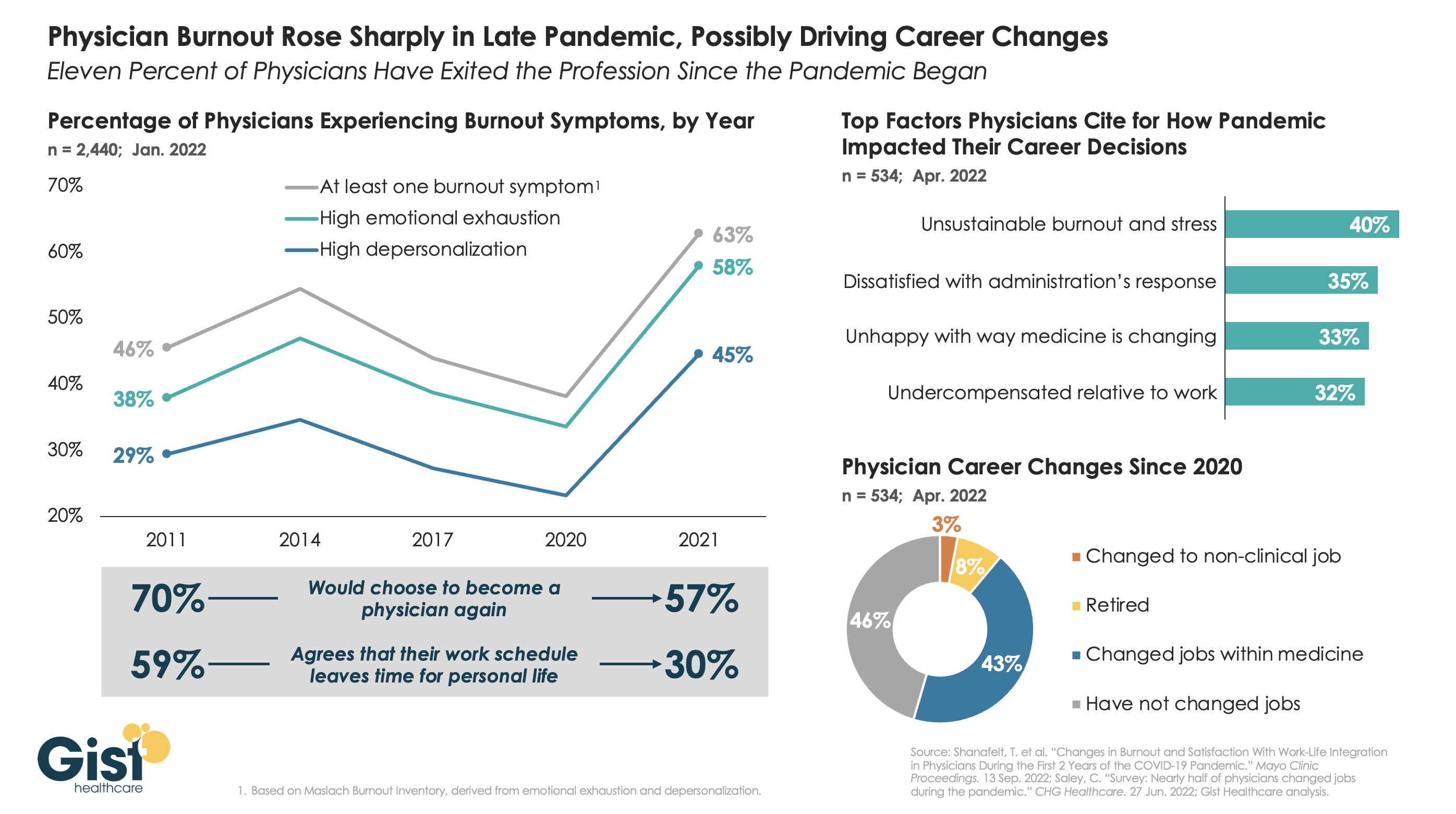
The long hours, stressful conditions, and labor shortages brought on by the pandemic have done serious harm to the physician workforce. The graphic above tracks physician burnout, a combination of emotional exhaustion, loss of agency, and depersonalization that has become the primary measure of the pandemic’s toll on workers, to reveal that physicians are demoralized like never before. 

Physician burnout levels had been decreasing since 2014, in part due to practice consolidation and the expansion of team-based care models. Burnout reached its lowest levels in 2020—perhaps explained by a pandemic-induced sense of purpose—but 2021 then saw a dramatic spike in every measure of physician dissatisfaction, as the heroic glow of the early pandemic faded, and an overtaxed and understaffed delivery system became the new norm.

In explaining how the pandemic has impacted their career decisions, surveyed physicians list unsustainable burnout and stress as their top concern, and 11 percent say they have exited the profession, either for retirement or a non-clinical job, in the past two years. Four in ten surveyed physicians report changing jobs since 2020, mainly within similar or different practice settings, citing a desire for better work-life balance as their primary motivation. (It should be caveated that these data are from a smaller survey of 534 physicians, 40 percent of whom identified as “early career”.) 

While the solutions here aren’t new, they are challenging: we must continue to implement team-based care models that provide physicians top-of-license practice and improved work-life balance, remove administrative tasks wherever possible, and ensure that we are communicating and engaging physicians—employed and independent alike—in organizational strategy and decision-making.