

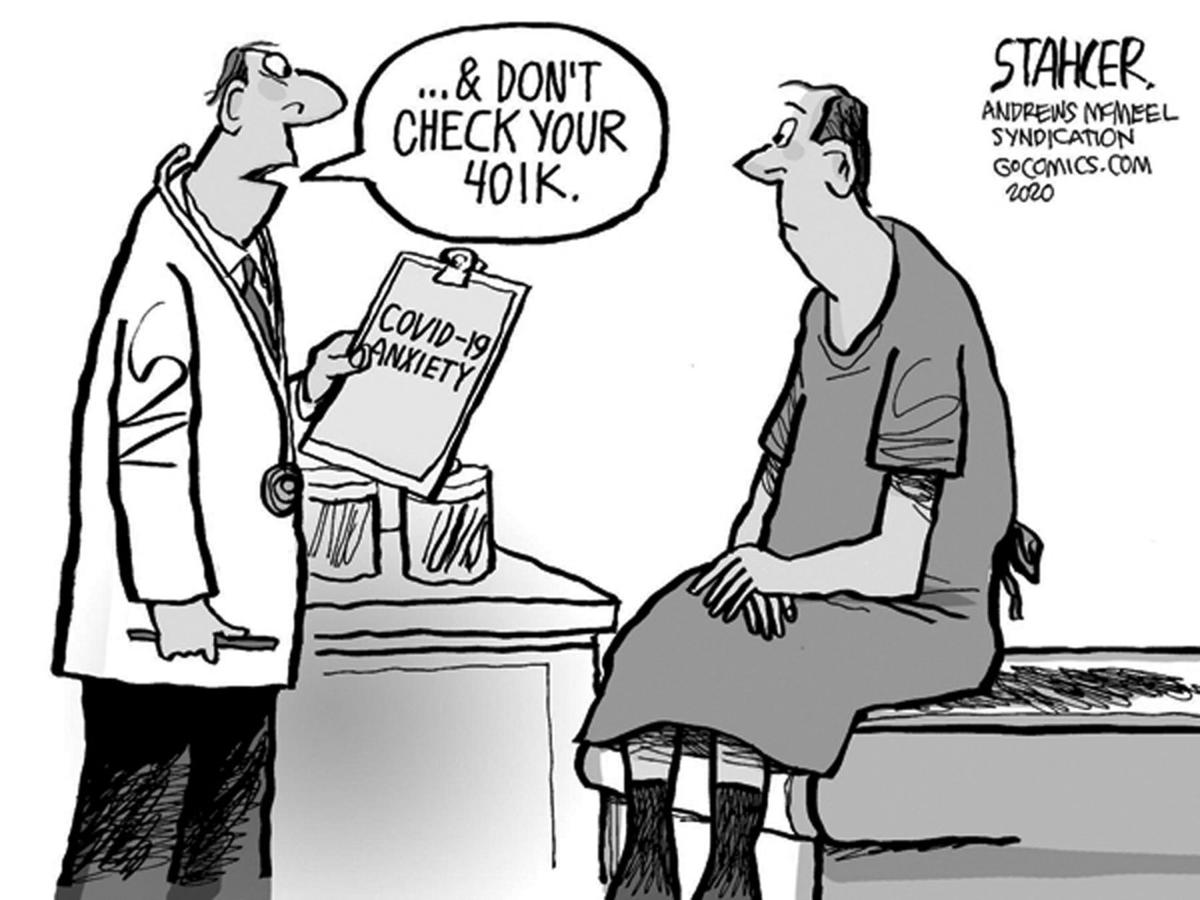
Cartoon – Covid-19 Anxiety

Years ago, anthropologist Margaret Mead was asked by a student what she considered to be the first sign of civilization in a culture. The student expected Mead to talk about fishhooks or clay pots or grinding stones.
But no. Mead said that the first sign of civilization in an ancient culture was a femur (thighbone) that had been broken and then healed. Mead explained that in the animal kingdom, if you break your leg, you die. You cannot run from danger, get to the river for a drink or hunt for food. You are meat for prowling beasts. No animal survives a broken leg long enough for the bone to heal.
A broken femur that has healed is evidence that someone has taken time to stay with the one who fell, has bound up the wound, has carried the person to safety and has tended the person through recovery. Helping someone else through difficulty is where civilization starts, Mead said.”
We are at our best when we serve others. Be civilized.
– Ira Byock.
/posttv-thumbnails-prod.s3.amazonaws.com/03-24-2020/t_8a8c5e491d224704beec957580f758f3_name_032420_AmericanDoctors_Thumb_v02.png)
The conversations are driven by the realization that the risk to staff amid dwindling stores of protective equipment — such as masks, gowns and gloves — may be too great to justify the conventional response when a patient “codes,” and their heart or breathing stops.
Northwestern Memorial Hospital in Chicago has been discussing a do-not-resuscitate policy for infected patients, regardless of the wishes of the patient or their family members — a wrenching decision to prioritize the lives of the many over the one.
Richard Wunderink, one of Northwestern’s intensive-care medical directors, said hospital administrators would have to ask Illinois Gov. J.B. Pritzker for help in clarifying state law and whether it permits the policy shift.
“It’s a major concern for everyone,” he said. “This is something about which we have had lots of communication with families, and I think they are very aware of the grave circumstances.”
Officials at George Washington University Hospital in the District say they have had similar conversations, but for now will continue to resuscitate covid-19 patients using modified procedures, such as putting plastic sheeting over the patient to create a barrier. The University of Washington Medical Center in Seattle, one of the country’s major hot spots for infections, is dealing with the problem by severely limiting the number of responders to a contagious patient in cardiac or respiratory arrest.
Several large hospital systems — Atrium Health in the Carolinas, Geisinger in Pennsylvania and regional Kaiser Permanente networks — are looking at guidelines that would allow doctors to override the wishes of the coronavirus patient or family members on a case-by-case basis due to the risk to doctors and nurses, or a shortage of protective equipment, say ethicists and doctors involved in those conversations. But they would stop short of imposing a do-not-resuscitate order on every coronavirus patient. The companies declined to comment.
Lewis Kaplan, president of the Society of Critical Care Medicine and a University of Pennsylvania surgeon, described how colleagues at different institutions are sharing draft policies to address their changed reality.
“We are now on crisis footing,” he said. “What you take as first-come, first-served, no-holds-barred, everything-that-is-available-should-be-applied medicine is not where we are. We are now facing some difficult choices in how we apply medical resources — including staff.”
The new protocols are part of a larger rationing of lifesaving procedures and equipment — including ventilators — that is quickly becoming a reality here as in other parts of the world battling the virus. The concerns are not just about health-care workers getting sick but also about them potentially carrying the virus to other patients in the hospital.
R. Alta Charo, a University of Wisconsin-Madison bioethicist, said that while the idea of withholding treatments may be unsettling, especially in a country as wealthy as ours, it is pragmatic. “It doesn’t help anybody if our doctors and nurses are felled by this virus and not able to care for us,” she said. “The code process is one that puts them at an enhanced risk.”
Wunderink said all of the most critically ill patients in the 12 days since they had their first coronavirus case have experienced steady declines rather than a sudden crash. That allowed medical staff to talk with families about the risk to workers and how having to put on protective gear delays a response and decreases the chance of saving someone’s life.
A consequence of those conversations, he said, is that many family members are making the difficult choice to sign do-not-resuscitate orders.
Health-care providers are bound by oath — and in some states, by law — to do everything they can within the bounds of modern technology to save a patient’s life, absent an order, such as a DNR, to do otherwise. But as cases mount amid a national shortage of personal protective equipment, or PPE, hospitals are beginning to implement emergency measures that will either minimize, modify or completely stop the use of certain procedures on patients with covid-19.
Some of the most anxiety-provoking minutes in a health-care worker’s day involve participating in procedures that send virus-laced droplets from a patient’s airways all over the room.
These include endoscopies, bronchoscopies and other procedures in which tubes or cameras are sent down the throat and are routine in ICUs to look for bleeds or examine the inside of the lungs.
Changing or eliminating those protocols is likely to decrease some patients’ chances for survival. But hospital administrators and doctors say the measures are necessary to save the most lives.
The most extreme of these situations is when a patient, in hospital lingo, “codes.”
When a code blue alarm is activated, it signals that a patient has gone into cardiopulmonary arrest and typically all available personnel — usually somewhere around eight but sometimes as many as 30 people — rush into the room to begin live-saving procedures without which the person would almost certainly perish.
“It’s extremely dangerous in terms of infection risk because it involves multiple bodily fluids,” explained one ICU physician in the Midwest, who did not want her name used because she was not authorized to speak by her hospital.
Fred Wyese, an ICU nurse in Muskegon, Mich., describes it like a storm:
A team of nurses and doctors, trading off every two minutes, begin the chest compressions that are part of cardiopulmonary resuscitation or CPR. Someone punctures the neck and arms to access blood vessels to put in new intravenous lines. Someone else grabs a “crash cart” stocked with a variety of lifesaving medications and equipment ranging from epinephrine injectors to a defibrillator to restart the heart.
As soon as possible, a breathing tube will be placed down the throat and the person will be hooked up to a mechanical ventilator. Even in the best of times, a patient who is coding presents an ethical maze; there’s often no clear cut answer for when there’s still hope and when it’s too late.
In the process, heaps of protective equipment is used — often many dozens of gloves, gowns, masks, and more.
Bruno Petinaux, chief medical officer at George Washington University Hospital, said the hospital has had a lot of discussion about how — and whether — to resuscitate covid-19 patients who are coding.
“From a safety perspective you can make the argument that the safest thing is to do nothing,” he said. “I don’t believe that is necessarily the right approach. So we have decided not to go in that direction. What we are doing is what can be done safely.”
However, he said, the decision comes down to a hospital’s resources and “every hospital has to assess and evaluate for themselves.” It’s still early in the outbreak in the Washington area, and GW still has sufficient equipment and manpower. Petinaux said he cannot rule out a change in protocol if things get worse.
GW’s procedure for responding to coronavirus patients who are coding includes using a machine called a Lucas device, which looks like a bumper, to deliver chest compressions. But the hospital has only two. If the Lucas devices are not readily accessible, doctors and nurses have been told to drape plastic sheeting — the 7-mil kind available at Home Depot or Lowe’s — over the patient’s body to minimize the spread of droplets and then proceed with chest compressions. Because the patient would presumably be on a ventilator, there is no risk of suffocation.
In Washington state which had the nation’s first covid-19 cases, UW Medicine’s chief medical officer, Tim Dellit, said the decision to send in fewer doctors and nurses to help a coding patient is about “minimizing use of PPE as we go into the surge.” He said the hospital is monitoring health-care workers’ health closely. So far, the percentage of infections among those tested is less than in the general population, which, he hopes, means their precautions are working.
Bioethicist Scott Halpern at the University of Pennsylvania is the author of one widely circulated model guideline being considered by many hospitals. In an interview, he said a blanket stop to resuscitations for infected patients is too “draconian” and may end up sacrificing a young person who is otherwise in good health. However, health-care workers and limited protective equipment cannot be ignored.
“If we risk their well-being in service of one patient, we detract from the care of future patients, which is unfair,” he said.
Halpern’s document calls for two physicians, the one directly taking care of a patient and one who is not, to sign off on do-not-resuscitate orders. They must document the reason for the decision, and the family must be informed but does not have to agree.
Wyese, the Michigan ICU nurse, said his own hospital has been thinking about these issues for years but still is unprepared.
“They made us do all kinds of mandatory education and fittings and made it sound like they are prepared,” he said. “But when it hits the fan, they don’t have the supplies so the plans they had in place aren’t working.”
Over the weekend, Wyese said, a suspected covid-19 patient was rushed in and put into a negative pressure room to prevent the virus spread. In normal times, a nurse in full hazmat-type gear would sit with the patient to care for him, but there was little equipment to spare. So Wyese had to monitor him from the outside. Before he walked inside, he said, he would have to put on a face shield, N95 mask, and other equipment and slather antibacterial foam on his bald head as the hospital did not have any more head coverings. Only one powered air-purifying respirator or PAPR was available for the room and others nearby that could be used when performing an invasive procedure — but it was 150 feet away.
While he said his hospital’s policy still called for a full response to patients whose heart or breathing stopped, he worried any efforts would be challenging, if not futile.
“By the time you get all gowned up and double-gloved the patient is going to be dead,” he said. “We are going to be coding dead people. It is a nightmare.”

Lobbyists are racing to grab a piece of the stimulus package lawmakers are still trying to hammer out on Capitol Hill, Bob writes.
Driving the news: Hospitals and physicians want at least $100 billion and significant Medicare payment hikes, partially because they’ve had to cancel lucrative elective procedures.
The intrigue: The chance for federal bailouts has motivated small players to make bigger investments, and some nontraditional parties are spending their first lobbying dollars.

Hospitals are asking retired doctors and nurses to come back and help with operations as they prepare for a rush of severe coronavirus cases, Axios’ Bob Herman reports.
The bottom line: Retired clinicians likely won’t be placed in intensive care units or coronavirus testing stations, because older adults are at higher risk of falling ill and dying from the virus. But they could help stabilize hospitals that will need as many hands on deck as possible over the coming months.
Where it stands: The Association of American Medical Colleges floated this idea last week with hospitals and federal agencies.
What they’re saying: Some retired clinicians are willing to take on other necessary care, while residents and other doctors funnel into coronavirus cases.
By the numbers: 41% of doctors are 55 or older, according to American Medical Association data provided to Axios, and 38% of nurses are 55 or older.

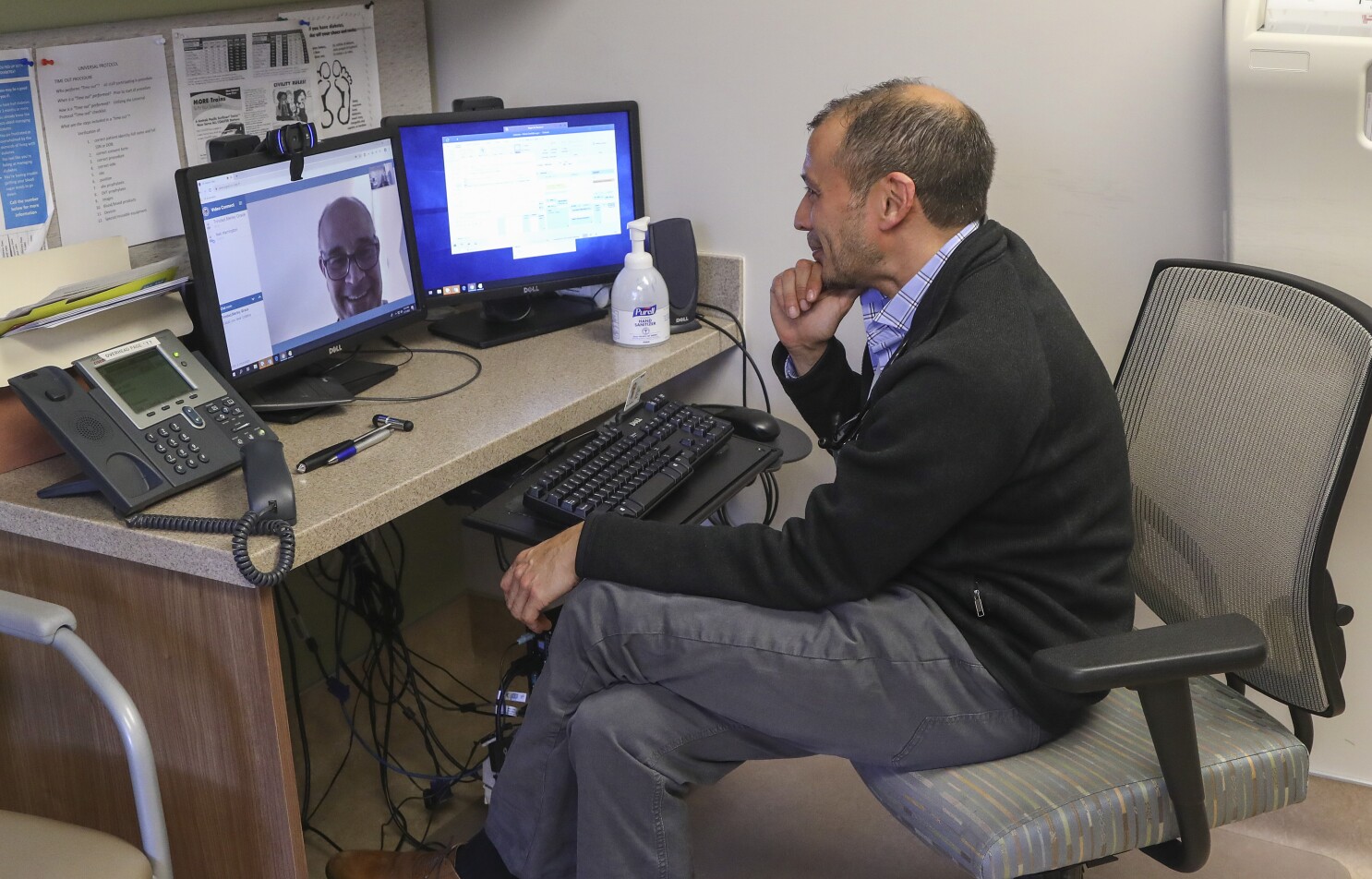
As a physician, waiting for the worst of coronavirus to hit, I see a lot to fear. It seems increasingly likely that this will be one of the most significant pandemics in modern human history, and that it will change our approach to healthcare going forward. But not all of its legacy will be negative. Here’s one thing I hope will come out of the crisis: an increased reliance on telemedicine, something that should have happened long ago.
A few months ago, when I was between jobs, I took a part-time job in a rural hospital serving a county of more than 150,000 people. On the verge of bankruptcy, the hospital was unable to attract many specialists to join its ranks, and in desperation, had turned to telemedicine to cover many services. So, for example, if a patient was rushed to the emergency room after a stroke, there was unlikely to be a neurologist in the room. Instead, a neurologist would assess the patient on a mobile screen from far away, with local nursing staff and doctors aiding him or her.
I had been skeptical of telemedicine going in. Physical exams are the bedrock of how doctors and nurses assess patients. We look patients and their loved ones in the eye, palpate sore spots with our fingers and offer comfort with a hand on a shoulder. Physical contact, I’d always thought, was at the heart of how doctors and patients communicate.
It was with this skepticism that I found myself next to a young man who been brought to the emergency room after attempting to take his own life. Again. This time, instead of seeing a psychiatrist in person, he saw one on a screen with wheels. The psychiatrist was in some distant location, but she had been in touch with the local doctors and had access to his medical records. Despite her physical remoteness, she connected with him, and he opened up. She knew of all the local resources to refer him to, and at the end of her conversation, she had developed a real rapport with him. After the visit ended and the nurse wheeled the monitor out of the room, I asked the young man what he thought, and to my surprise, he told me he was more comfortable with this than an in-person visit. He wasn’t the only one — many patients say they prefer a virtual doc to one sitting across from them.
Over the past few decades, medical care has been transformed by technology. Whenever a new drug becomes available, or a medical procedure is approved by the FDA, the medical community is quick to deploy it. Yet, when it comes to how we see patients, our current practices haven’t changed much since the time of Hippocrates. If a patient is sick they either have to come see us in clinic, urgent care, the emergency room or the hospital. Despite the internet transforming every aspect of our lives, from how we find love to how we order groceries, the way we deliver medical care has stagnated.
In the United States, not only are doctors often inaccessible for those living in rural areas, hospitals everywhere have huge economic challenges. One healthcare executive jokingly told me his hospital made more money from its parking lots than its clinics.
The response to COVID-19 might help change that.
One of the main reasons China has been able to slow coronavirus transmission has been because of a dramatic increase in virtual visits. In fact, China has moved half of all medical care online, allowing patients to consult with their doctors and get prescriptions from the comfort of their homes. Hospitals have been notorious petri dishes for deadly bugs since long before COVID-19, and this pandemic has brought that risk into crystal-clear focus. On Tuesday, Medicare announced that it will greatly expand coverage for telemedicine visits, previously sharply restricted. And at a White House briefing, the government announced it was urging states to similarly expand Medicaid coverage to include telemedicine visits by Skype, Facetime or other platforms. Some insurers have also said they will cover telehealth visits at parity with in-person visits.
These measures are commendable, but policies need to be put in place to ensure that the expansion of telemedicine is not temporary. Of course, in-person visits will still be necessary in many cases. But supporting telemedicine on a par with such visits has the potential to protect patients and healthcare personnel and allow for much more efficiency in the system. That said, physicians and nurses will need high-quality training to provide compassionate and thorough care to a patient from across a computer screen. Technology that allows patients to be “examined” remotely needs to be better studied and made more accessible. And since the backbone of telemedicine is reliable high-speed internet, Congress should consider Elizabeth Warren’s plan to bring broadband internet to the remotest parts of this country, to ensure broad access to these services.
This week my team converted most of our clinic visits from face to face to virtual visits. Some were over the phone, others were over video, often with a family member present as well. While there were some patients that still needed to be seen in person, we were able to minimize the risk of viral transmission not only for patients, but also for valuable members of our clinical team. Even before this crisis, as part of my job at the Veterans Affairs Health System in Boston, I often consulted with patients I had never seen as part of an “E Consult” system. While I was initially nervous when I first started doing this, it allowed me to expand my footprint far beyond what I could manage if I were seeing every patient in person.
At some point, I fervently hope the coronavirus will be a thing of the past. But I hope it leaves behind a legacy. I hope it changes how well we wash our hands, how well we fund public health and how well we protect the healthcare workers caring for our sickest patients. And, most of all, I hope it pushes us to embrace telemedicine.

Rationing of care for novel coronavirus patients has been reported in China and Italy.
Medical utility based on scientific patient profiles should guide decisions to ration critical care resources such as ventilators, medical ethicist James Tabery says.
In a pandemic, public health considerations should drive decisions on prioritizing who is tested for disease, he says.
The novel coronavirus (COVID-19) pandemic is raising thorny medical ethics dilemmas.
In China and Italy, there have been reports of care rationing as the supply of key resources such as ventilators has been outstripped by the number of hospitalized COVID-19 patients. China, the epicenter of the pandemic, has the highest reported cases of COVID-19 at more than 80,800 as of March 17, according to worldometer. Italy has the second-highest number of COVID-19 cases at nearly 28,000 cases.
The severest form of COVID-19 includes pneumonia, which can require admission to an ICU and mechanical ventilation. “Those are not just things, there are expertly trained healthcare workers who man those domains. There just isn’t enough of these resources than what we anticipate needing,” says James Tabery, PhD, associate professor in the University of Utah Department of Philosophy and the University of Utah School of Medicine’s Program in Medical Ethics and Humanities.
He says the COVID-19 outbreak poses four primary ethical challenges in the healthcare sector.
In the United States, caring for the anticipated surge of seriously ill COVID-19 patients is likely to involve heart-wrenching decisions for healthcare professionals, Tabery says. “The question is how do you ration these resources fairly? With treatment—we are talking about ICUs, ventilators, and the staff—the purpose is you are trying to save the severely sick. You are trying to save as many of the severely sick as you can.”
The first step in managing critical care resources is screening out patients who are unlikely to need critical care and urging them to self-quarantine at home, he says.
“But eventually, you bump up to a place where you not only have screened out all of the folks who are at low risk of serious illness, but you have millions of people across the country who fall into high-risk groups. If they get infected, many are going to need access to ventilators, and the way you do that ethically is you screen patients based on medical utility,” Tabery says.
Medical utility is based on scientific assessments, he says. “You basically look at the cases and try to evaluate as quickly and efficiently as possible the likelihood that you can improve a patient’s condition quickly.”
Rationing of critical care resources would be jarring for U.S. clinical staff.
Under most standard scenarios, a patient who is admitted to an ICU and placed on mechanical ventilation stays on the machine as long as the doctors think the patient is going to get better, Tabery says.
However, the COVID-19 pandemic could drive U.S. caregivers into an agonizing emergency scenario.
“When there are 10 people in the emergency room waiting to get on a ventilator, it is entirely feasible that you would be removing people from ventilators knowing that they are going to die. But you remove people from ventilators when your evaluation of the medical situation suggests that patients are not improving. If a patient is not improving, and it doesn’t look like using this scarce resource is a wise investment, then you try it out on another patient who might have better luck,” he says.
There has been rationing of COVID-19 testing in the United States since the first novel coronavirus patient was diagnosed in January.
While there are clinical benefits to COVID-19 testing such as determining what actions should be taken for low- and high-risk patients, the primary purpose of testing during a pandemic is advancing public health, Tabery says.
“The primary purpose of the test is pure public health epidemiology. It’s about keeping track of who has COVID-19 in service of trying to limit the spread of the disease to other people. When that is the purpose, the prioritization isn’t so much about who is at greatest risk. It’s about who is more likely to interact with lots of people, or who is more likely to have interacted with more people.”
A classic example of rationing COVID-19 testing based on public health considerations is the first reported infection of an NBA player, he says.
“For the Utah Jazz player who had symptoms, it made sense to test him very quickly because it was clear that he had interacted with a lot of people. Once he tested positive, the testing of the other players was not because public health officials thought the players were more valuable than the average person on the street. It was because the players had come into contact with more people than the average person on the street.”
The COVID-19 pandemic involves competing obligations for healthcare workers, Tabery says. “On the one hand, they have a set of obligations that inclines them to go to work when they get the call. On the other hand, healthcare workers have their own interests—they don’t want to get sick, which can incline them not to work,” he says.
“The punchline is there is an ethical consensus that healthcare workers have a prima facie duty to work because of everything that has been invested in them, because of their unique position where not just anybody can replace them, because society looks to them to serve this function, and because they went into this profession and are expected to go into work,” he says.
However, the obligation of healthcare workers to show up for their jobs is not absolute, Tabery says. “If hospitals don’t have personal protective equipment, they are in no position to tell their staff to show up and work. If a hospital cannot provide even a basic level of safety for their employees to do their job, then they are turning their hospital not into a place to treat patients—they are turning it into a hub to exacerbate the problem.”
When a vaccine becomes available, policymakers, public health officials, and healthcare providers will face rationing decisions until there is sufficient supply to treat the entire U.S. population, Tabery says.
“When the vaccine comes out, the first group you are going to want to prioritize are healthcare workers, who are at risk of getting infected by doing their jobs and saving lives. You would also want to prioritize people who serve essential functions to keep society going—the people who keep the water running, the lights on, police, and firefighters. Then you want to start looking at the high-risk groups,” he says.

One doctor dreamed he was surrounded by coughing patients. “Most physicians have never seen this level of angst and anxiety in their careers,” a veteran emergency room doctor said.
SEATTLE — After her shifts in the emergency room, one doctor in Utah strips naked on her porch and runs straight to a shower, trying not to contaminate her home. In Oregon, an emergency physician talks of how he was recently bent over a drunk teenager, stapling a head wound, when he realized with a sudden chill that the patient had a fever and a cough. A doctor in Washington State woke up one night not long ago with nightmares of being surrounded by coughing patients.
“Most physicians have never seen this level of angst and anxiety in their careers,” said Dr. Stephen Anderson, a 35-year veteran of emergency rooms in a suburb south of Seattle. “I am sort of a pariah in my family. I am dipping myself into the swamp every day.”
As the coronavirus expands around the country, doctors and nurses working in emergency rooms are suddenly wary of everyone walking in the door with a cough, forced to make quick, harrowing decisions to help save not only their patients’ lives, but their own.
The stress only grew on Sunday, when the American College of Emergency Physicians revealed that two emergency medicine doctors, in New Jersey and Washington State, were hospitalized in critical condition as a result of the coronavirus. Though the virus is spreading in the community and there was no way of ascertaining whether they were exposed at work or somewhere else, the two cases prompted urgent new questions among doctors about how many precautions are enough.
“Now that we see front-line providers that are on ventilators, it is really driving it home,” Dr. Anderson said.
Doctors, nurses and other staff members in a variety of hospital departments face new uncertainty. In intensive care units, for example, health care providers must have extended exposure to people who have contracted the virus. But they know in advance of the risk they face.
In emergency departments, the danger comes from the unknown.
Patients arrive with symptoms but no diagnosis, and staff members must sometimes tend to urgent needs, such as gaping wounds, before they have time to screen a patient for Covid-19, the disease caused by the virus. At times, the protocols they must follow are changing every few hours.
“Many of us have trained for disasters, like Ebola and hurricanes,” said Dr. Adam Brown, the president of emergency medicine for Envision Healthcare, the largest provider of contract physicians to emergency rooms. “This is different because of the scale and scope of the disease.”
Add to that the shortage of protective gear and delays in testing, and health care workers fear they are flying blind.
Though the numbers are still low, Envision, which employs 11,000 emergency clinicians across the United States, has five times as many doctors under quarantine as it did a week ago, Dr. Brown said.
Several providers spoke on the condition of anonymity because their employers have told them not to talk to the news media.
The personal strain is cascading as the virus reaches new parts of the country. “Everybody feels the stress, but everybody is pulling together,” said Dr. K. Kay Moody, an emergency room doctor in Olympia, Wash., who runs a Facebook group with 22,000 emergency physicians. “That is what is keeping us OK.”
A few doctors said they were talking about bunking up in Airbnbs to create “dirty doc” living quarters to avoid endangering their children when they go home. Some are showing their partners where to find their passwords and insurance, should they end up in intensive care. Dr. Moody said she knew of at least one doctor whose former spouse was threatening to take their children away if the doctor went to work.
Many emergency physicians work as contractors, not hospital staff, so they will not necessarily be paid if they are quarantined. “As it stands, that is one of the most anxiety-provoking things,” Dr. Moody said, “on top of fear for your life.”
Nurses face similar challenges, though with less pay and support. An emergency nurse in Milwaukee said she bought her own goggles after hearing that protective gear was running low. A nurse at a rural hospital near Lake Tahoe in California said that the hospital was providing physicians with shower facilities as well as clean scrubs to wear, but that nurses had to wash their work clothes at home. She said that the physicians she worked with lobbied the hospital to provide clean scrubs for the nurses, but that the hospital concluded it would cost too much.
One doctor, who spoke on condition that the identity of the veterans hospital where she worked was not revealed, said the protocols have not kept up with the changing reality on the ground. When determining if a patient should get a separate room, she said, the emergency department still asks patients if they have been to high-risk countries, like China and Italy, even though community transmission of the virus has been well established.
Doctors have begun building plans for how they will ration supplies when there are more patients than their hospitals can handle. Emergency room doctors have experience sitting families down to advise discontinuing care because it would be futile. But in the United States, they are not used to making such calls based on resources alone.
Some said they were looking to Italy, where doctors on the front line have sometimes had to ration care in favor of younger patients, or those without other complicating conditions, who are more likely to benefit from it.
“If we get it all at once, we don’t have the resources, we don’t have the ventilators,” said Dr. William Jaquis, chair of the American College of Emergency Physicians.
Last week, Italian media reported that Bergamo, a city northeast of Milan, saw roughly 50 doctors test positive for the virus. In the region of Puglia in the south, local media reported that 76 employees had been quarantined after being exposed to patients who contracted Covid-19.
After the coronavirus broke out at a nursing facility near Seattle, Dr. Anderson sat with the leaders of his hospital, MultiCare Auburn Medical Center, to talk about how urgently they should prepare. Their hospital is ringed by nursing homes and other care facilities, and he rattled off those most at risk for fatal cases of the virus: males over 60, and those with cardiac and pulmonary problems. “I literally stopped what I was saying and realized that that was me,” he said.
He said his hospital was down to a two-day supply of surgical masks — he wears one per shift. “Those are supposed to be disposable,” he said. Now he must carefully remove and clean the mask each time he takes it off and on. “That may sound just like a nuisance, but when you’re potentially touching something that has the virus that could kill you on it, and you’re doing it 25 times a shift, it’s kind of nerve-racking,” he said.
His wife has moved to their mountain cabin, and they have given up on their retirement cruise in Europe. “I haven’t slept for longer than three hours in the past two weeks,” he said.
In the early hours of Monday morning, he could not sleep. More than 200 emails had come into his inbox since he went to bed, including news that three other health care providers had been admitted to a hospital overnight, he said.
But he plans to be at his next shift nonetheless.
“I have been doing this for 35 years,” he said, “and I’m not going to stop now.”

The Medicare Payment Advisory Commission released its March 2020 report on Medicare payment policy to Congress, which includes a chapter analyzing the effects of hospital and physician consolidation in the healthcare sector.
Here are seven takeaways:
1. Medicare’s Insurance Trust Fund is likely to run out without changes. Trustees from Medicare estimate that the program’s Hospital Insurance Trust Fund, mostly funded through a payroll tax, will be depleted by 2026. To keep the fund solvent for the next 25 years, Medicare trustees advise that the payroll tax immediately be raised from 2.9 percent to 3.7 percent, or Part A spending to be reduced by 18 percent.
2. MedPAC recommends boosting payment rate for three sectors:
3. MedPAC recommends unchanged payment rates for four sectors:
4. MedPAC recommends payment rate reductions for two sectors:
5. MedPAC builds on its recommendation to revamp quality programs. MedPAC is furthering its recommendation to replace Medicare’s four current hospital quality programs with a single hospital value incentive program. MedPAC said it believes that this recommendation would provide hospitals higher aggregate payments than they would get under current law.
6. MedPAC’s findings on hospital and physician consolidation. MedPAC said that consolidation gives providers greater market power, which has a statistically significant association with higher profit margins for treating non-Medicare patients. Higher non-Medicare margins also are associated with higher standardized costs per discharge. But the direct association between market power and standardized costs per discharge is statistically insignificant, the commission found.
“The effect of consolidation on hospitals’ costs is not clear in theory or from our current analysis. From a theoretical standpoint, the merger of two hospitals could initially create some efficiencies and bargaining power with suppliers. But over time, higher prices from commercial payers could loosen hospitals’ budget constraints and lead to higher cost growth, thus offsetting any efficiency gains,” MedPAC’s report states.
7. MedPAC’s findings on the 340B Drug Discount Program. MedPAC was asked to analyze whether the availability of 340B drug discounts creates incentives for hospitals to choose more expensive products than they would without the program. MedPAC studied the effect of 340B market share on higher drug spending on cancer treatments between 2009 and 2017. The commission found that for two of the five cancer types studied, 340B participation boosted prices by about $300 per patient per month. However, the boost in spending attributed to 340B was much smaller than the general increase in oncology spending, which includes rising prices and the launch of new products with high drug prices. For example, cancer drug spending grew by more than $2,000 per patient month for patients with breast cancer, lung cancer, and leukemia/lymphoma.
“The MedPAC report released today uses rigorous analysis and finds little evidence 340B participation influences cancer drug spending. Modest differences may be attributable to the types of patients treated in 340B facilities. The safety-net hospitals that participate in the 340B drug-pricing program are essential providers of cancer care in this nation, especially to patients who are living with low incomes, those living with disabilities, and patients requiring more complex oncology care,” said Maureen Testoni, president and CEO of 340B Health, an association that represents more than 1,400 hospitals participating in the 340B program.
Access MedPAC’s full report here.
 HENRY KOTULA