Winners and losers of the HHS interoperability final rule

https://www.beckershospitalreview.com/ehrs/winners-and-losers-of-the-hhs-interoperability-final-rule.html?utm_medium=email

Image result for HHS interoperability final rule

HHS released its much-anticipated final rules on EHR interoperability, ruling against “information blocking” tactics by EHR vendors and giving patients more control over their medical records.

The new rule will be applied over the next two years and will make patient records downloadable to smartphones using consumer apps. Overall, members of the healthcare industry applaud these efforts to make patient information more accessible to improve healthcare delivery. However, there are privacy concerns around how patient data can be used once downloaded to third-party consumer apps that weren’t addressed in the final rule.

Here is a brief list of a few potential winners and losers of the new rule.


WINNERS

Patients. Patients now have more control over their medical records and will be able to access them through third-party apps for free, which will make it easier for them to take their medical records to new providers outside of their previous provider’s system. As a result, they will have more choice in where they go for healthcare.

Hospitals and physicians. The lengthy process of trying to convert a patient’s medical records will be unnecessary. Patients will no longer need to have their medical records faxed between healthcare facilities in different networks and the rule will streamline workflow around gathering patient data to provide the best possible care. Hospitals participating in Medicare and Medicaid will also be able to send electronic notifications to other facilities or providers when a patient is admitted, transferred or discharged under its new “Coordination of Participation” rule.

App developers and health IT startups. App developers that allow patients to store their health data and medical information will have access to that data, a virtual gold mine. The federal privacy protections limiting how providers and insurers share medical records do not apply when patients transfer data to consumer apps, according to the New York Times.

Apple and Microsoft. Healthcare providers will be required to send medical data in a format that is compatible on third-party apps including Apple Health Records. Microsoft is also working to sell technology in the health sector, and the new rule will make it easier, according to CNBC.


LOSERS

Patients. While the rule has many benefits to patients, there is also potential for disaster. Patients who download their medical information on consumer apps may find their information shared or sold. There could also be additional security issues if those apps are hacked. Finally, some patients may become confused by their medical records and notes if the information isn’t stated clearly, causing further anxiety around their care.

Hospitals and clinics. Patient leakage may become more common if it’s easier for patients to take their medical records with them. Healthcare organizations will also need to prepare for an influx of patient data and have strong governance procedures in place as they partner with payers and other organizations to incorporate clinical data with patient-gathered data and potentially social determinants of health data.

EHR vendors. EHR companies must now adopt application programming interfaces so their systems can communicate with third-party apps. EHR companies have two years to comply and face up to $1 million per violation for engaging in “information blocking.” The new focus on interoperability may also pave the way for competitors to gain market share over the two most dominant players, Epic and Cerner.

Epic. Epic was a notable opponent to the HHS interoperability rules, citing patient privacy concerns. If forced to collaborate with other companies, Epic could potentially lose its edge over competitors, according to an op-ed written by former HHS Secretary Tommy Thompson in the Wisconsin State Journal. He contended Epic would have to “give its trade secrets away to venture capitalists, Big Tech, Silicon Valley interests and overseas competitors for little or no compensation.” Epic is also the most dominant EHR, holding 28 percent of the acute care hospital market, which could be threatened by greater interoperability. However, in response to the final rule’s release, Epic issued a statement saying that it would focus on “standards-based scope for meaningful interoperability.”


 

Health plans ramp up physician practice acquisitions

https://mailchi.mp/9e118141a707/the-weekly-gist-march-6-2020?e=d1e747d2d8


Health systems and private equity firms aren’t the only ones aggregating physician practices—many large insurers are rapidly acquiring or affiliating with physician groups, especially to support their Medicare Advantage (MA) strategies.

As the map below shows, most insurers are focusing this vertical integration in states like Florida, Texas, and California—places where they also have large populations of MA beneficiaries. Astonishingly, UnitedHealth Group—through its Optum division—is likely the largest employer of physicians in the US, employing or affiliating with 50,000 physicians—roughly 5,000 more than HCA Healthcare and nearly double the number of Kaiser Permanente. The number of Optum-controlled physicians has increased rapidly in recent years, the result of many large-scale deals, including the $4.3B acquisition of DaVita Medical Group.

When it comes to leveraging this growing physician network, United is setting its sights well beyond Medicare Advantage, as demonstrated by its recent introduction of Harmony, a commercial narrow network health plan in Southern California based almost exclusively on a network of Optum physicians.

Meanwhile, Humana’s physician strategy has focused more on affiliations with non-traditional groups serving MA patients, including Iora Health and Oak Street Health—though Humana also has two large primary care groups, Conviva and Partners in Primary Care, the latter of which just secured a $600M private equity investment to expand.

Notably absent from this map is Aetna, which has been pursuing a different strategy, focused around steering its MA population to its advanced practice provider-run HealthHUBs in CVS pharmacies.

This trend of insurer acquisition of physicians is obviously worrisome for health systems, as the health plans they negotiate with for payment are now directly competing with them at the front end of the delivery system.  


Supreme Court Will Hear First Major Abortion Case Since Two Trump Appointees Joined

https://www.wsj.com/articles/supreme-court-will-hear-first-major-abortion-case-since-two-trump-appointees-joined-11583192925?mod=hp_lista_pos2

Image result for Supreme Court Will Hear First Major Abortion Case Since Two Trump Appointees Joined

Case will test new conservative makeup’s approach to precedent.

The Supreme Court hears its first major abortion case Wednesday since two Trump nominees joined the bench, potentially signalling whether—and how much——reproductive rights may change under a bolstered conservative majority.

“There’s a lot on the line in this case, and more than most people realize,” said Mary Ziegler, a law professor at Florida State University and author of the forthcoming book “Abortion and the Law in America.”

Most prominently, the case involves the Supreme Court’s approach to precedent, since it largely is a replay of an issue the court decided in 2016, when by a 5-3 vote it struck down a Texas law requiring that abortion providers obtain admitting privileges at a nearby hospital.

The case also tests the strategy for antiabortion forces, who have been divided over the best way to roll back court precedents recognizing women’s constitutional right to end pregnancy. While some advocates seek to reverse outright Roe v. Wade, the 1973 decision recognizing abortion rights, others believe a more prudent approach is to carve away at the precedent through increasingly restrictive regulations that would spare the Supreme Court the controversy of directly overruling a landmark case.

The law in question, known as the Louisiana Unsafe Abortion Protection Act, isn’t based on a state policy to protect potential life, an interest that the Supreme Court has recognized as valid justification for some abortion restrictions.

Instead, it is based on the argument that abortion itself can be harmful to women, and that restricting access to the procedure therefore is beneficial to women. For that reason, the state’s brief contends that abortion providers shouldn’t be permitted to challenge the law on behalf of their patients, arguing that “a serious conflict of interest” exists between them and Louisiana’s women.

In striking down the Texas law in 2016, the court found the admitting-privilege requirement provided no health benefits to women while forcing many of the state’s abortion clinics to close.

The opinion, by Justice Stephen Breyer, cited evidence that admitting privileges do little to ensure continuity of care, as the state maintained, because when abortion has complications, they generally arise not at the clinic but days after the procedure, when the patient would visit her regular physician or local hospital. The court also observed that hospital admitting privileges aren’t a general credential but are granted for other purposes, such a doctor’s ability to bring in patients for treatment.

Statistically, however, only a tiny number of women require hospitalization after abortion, the court said. “In a word, doctors would be unable to maintain admitting privileges or obtain those privileges for the future, because the fact that abortions are so safe meant that providers were unlikely to have any patients to admit,” Justice Breyer wrote.

But that decision, Whole Woman’s Health v. Hellerstedt, hinged on since-retired Justice Anthony Kennedy, a maverick conservative who joined more liberal justices in the majority. With the late Justice Antonin Scalia’s seat vacant, three conservatives dissented, contending that the majority skirted procedural rules to throw out the Texas law.

President Trump, who appointed Justice Brett Kavanaugh to the vacancy, had as a candidate predicted his Supreme Court picks would vote to overrule Roe v. Wade.

In September 2018, three months after Justice Kennedy’s retirement, the Fifth U.S. Circuit Court of Appeals, in New Orleans, upheld a Louisiana admitting-privileges law that critics argue is identical to the Texas measure struck down two years earlier. The appellate court found the Louisiana Unsafe Abortion Protection Act wouldn’t burden abortion rights in Louisiana to the degree the Texas law did in its state.

An abortion clinic in Shreveport, La., June Medical Services LLC, and three doctors who perform the procedure appealed to the Supreme Court.

That puts the spotlight particularly on Justice Kavanaugh, whose remarks and writings, which have praised the dissent in Roe and supported a Trump administration policy to prevent an underage illegal immigrant from obtaining an abortion, have given hope to abortion opponents.

However, the focus may equally fall on Chief Justice John Roberts, who typically has voted against abortion-rights positions in Supreme Court cases—but he also has stressed an institutional interest in distinguishing the courts from political bodies, where outcomes on legislation can swing wildly based on the latest election results. For that reason, he may be hesitant to overrule even a decision he opposed simply because Justice Kennedy’s retirement presents an opportunity.

In February 2019, he joined the court’s liberal wing to block implementation of the Louisiana law while the appeal proceeded; four other conservatives dissented, although Justice Kavanaugh appended a statement suggesting he was taking a middle ground. He said he wasn’t persuaded that the Louisiana doctors had fully explored opportunities to obtain hospital-admitting privileges.

Should a frontal assault on recent precedent alienate the chief justice or another conservative justice, it probably would end prospects for similar admitting-privilege laws.

But the door could remain open for other abortion restrictions that aren’t covered by existing precedent, particularly if the court signals a readiness to pare back the ability of abortion providers to challenge regulations, or suggests it is more inclined to defer to legislative judgments regarding the safety of abortions rather than evidence, such as scientific research or the views of the medical profession, presented at trial court.


Ochsner to pay tuition for future physicians, nurses who pledge to 5 years with system

https://www.beckershospitalreview.com/hospital-physician-relationships/ochsner-to-pay-tuition-for-future-physicians-nurses-who-pledge-to-5-years-with-system.html%20?utm_medium=email

Image result for Ochsner Health System

New Orleans-based Ochsner Health System created a $10 million tuition fund to grow its own workforce amid current labor market challenges, according to The Advocate, a Louisiana news outlet.

The system will begin by paying tuition for a cohort of 30 primary care physicians and psychiatrists. The physicians must commit to working in Louisiana with the health system for at least five years to receive the funding.

Ochsner has plans to offer similar scholarship opportunities for employees who want to become licensed practical nurses or registered nurses. It plans to ultimately cover tuition for about 1,000 employees, according to the report.

Read the full story here.


President Trump’s budget cuts target Medicaid, Medicare

https://www.healthcarefinancenews.com/news/president-trumps-budget-cuts-target-medicaid-medicare?mkt_tok=eyJpIjoiWVRnM01UZzNaR0V6TTJFNSIsInQiOiJ6aXpsQnNCRjhHdCs4SnN0UytlZnJVUlZUeFdreEZyQ2V6RWE0YklvYmFMOGJnbWpXT3ZHeG0rOHMwNkJPcE9rMUlGb3NzVkpId3NrZHNkZmR2VlZISXZCVGgrbU94cFV3aVlNR1NYamlhazF1R1kzaXd3RXVISm9OSGJoYmVrVCJ9

Image result for medicaid cuts

Blueprint includes cuts for care in hospital outpatient departments, teaching hospitals and post-acute care providers, AHA says.

President Trump’s proposed $4.8 trillion budget slashes billions of dollars from Medicaid, food stamps and other safety net programs in an attempt to shrink the federal deficit.

Medicaid and the Affordable Care Act see about $1 trillion in cuts over the next decade, according to The Hill. The budget eliminates the enhanced federal match for Medicaid expansion enrollees. An additional $150 billion is expected to be shaved off of Medicaid from the implementation of work requirements, which is expected to result in people losing their healthcare coverage.

The “President’s health reform vision” to ax the Affordable Care Act takes $844 billion over 10 years from the ACA, the report said.

The decrease in federal spending on Medicare would total about $750 billion over 10 years, but that includes shifting two programs out of the budget. After accounting for those changes, the reduction is just over $500 billion, according to CNN. Much of that cut comes from reducing payments to providers.

The budget needs Congressional approval and is not expected to get past a Democratic-controlled House without changes.

House Speaker Nancy Pelosi tweeted: “The budget is a statement of values. Once again, the #TrumpBudget makes it painfully clear how little the President values the good health, financial security and well-being of America’s hard-working families.”

Ways and Means Committee Chairman Richard E. Neal, D-MA, said, “When I saw the President’s proposed budget today, I felt an immense sense of relief – relief that there is absolutely no chance of his ruthless cuts to critical programs ever becoming law. Slashing billions from Medicare and Medicaid will only make it harder for Americans to access the healthcare they need.

Cutting nutrition assistance and Social Security benefits for the disabled won’t enable people to get back on their feet financially.”

Senator Lamar Alexander, R-Tenn said, “Under the Constitution, it is Congress’ job to set spending priorities and pass appropriations bills, and as a member of the Senate Appropriations Committee, my priorities will continue to be making sure our national defense, national laboratories, the National Institutes of Health and national parks have the resources they need. I am encouraged to see the president is calling to end surprise medical billing.”

The budget adds money to the National Institutes of Health. The NIH will invest $50 million for new research on chronic diseases, using AI and related approaches, according to the White House briefing. It adds $7 billion over 10 years to fight opioid abuse and for mental health in the Medicaid program.

WHY THIS MATTERS

Cuts to Medicare and Medicaid mean uncompensated care to providers, or a reduction in the government payments.

The American Hospital Association said, “The budget request, which is not binding, proposes hundreds of billions of dollars in reductions to Medicare and Medicaid over 10 years.”

AHA President and CEO Rick Pollack said, “Every year, we adapt to a constantly changing environment, but every year, the Administration aims to gut our nation’s healthcare infrastructure. The proposals in this budget would result in hundreds of billions of dollars in cuts that sacrifice the health of seniors, the uninsured and low-income individuals. This includes the one in five Americans who depend on Medicaid, of which 43% of enrollees are children.

“In addition to the hundreds of billions in proposed reductions to Medicare, the blueprint includes cuts we strongly oppose for care in hospital outpatient departments, teaching hospitals and post-acute care providers. These cuts fail to recognize the crucial role hospitals serve for their communities, such as providing 24/7 emergency services. Post-acute cuts threaten care for patients with the most medically complex conditions.”


The health system “black market” for care

https://mailchi.mp/192abb940510/the-weekly-gist-february-7-2020?e=d1e747d2d8

Image result for black market

Recently we’ve been working with one of our member health systems to build a comprehensive plan for ambulatory access. As we were brainstorming a list of success metrics, one physician leader made an interesting comment: “I’ll know we’re successful at improving access when people stop calling me asking to get their mom or husband or friend into a specialist.”

The other leaders in the room all nodded in agreement. While we’re all happy to assist friends and family with finding the best doctor for their problem, or getting in more quickly, these leaders recognized that these informal channels represent yet another level of inequality in our healthcare system: patients and families who can tap into “insider” provider connections have access to a “black market” of enhanced access and information that can expedite treatment, assuage worry, and potentially provide better outcomes.

Thinking about eliminating the need for the healthcare black market broadened our discussion of a successful access solution. Getting a quick appointment doesn’t fully solve the problem, patients want to be assured they’re seeing the “best” doctor for their problem—meaning the system needs to have a better process for matching new patients to the most appropriate provider.

One call to tap into the “black market” can eliminate a dozen frustrating calls and dead ends; any solution must also address the many friction points in finding the right care. A tall order for sure, but one that could address one large inequity in our healthcare system: the difference between people who know someone on the inside and those who don’t.


The growth of private equity investment in physician practice

https://mailchi.mp/192abb940510/the-weekly-gist-february-7-2020?e=d1e747d2d8

Private equity (PE) investment in US healthcare has ballooned over the past decade—2018 and 2019 saw record numbers of deals, representing more than $100 billion in total value. As we show below, in 2018 just under a fifth of these transactions were in the physician practice space, with the largest number of deals in dermatology and ophthalmology.

While these two specialties remain active areas of PE investment, a growing number of recent deals have focused on women’s health, gastroenterology, and urology practices.

Across all these areas, PE firms see an opportunity to grow revenue from high-margin ancillary services, cash procedures, and retail products.

Physician groups are pursuing PE investment as an alternative to joining health systems or large payer-owned physician organizations to access capital and fund buyouts of legacy partners. Doctors’ heads are increasingly being turned by the current sky-high multiples PE firms are offering, often up to 10 or even 12 times EBITA.

Private equity roll-ups of physician practices are far from over. Recent activity suggests that the behavioral health market is heating up, as it remains very fragmented in a time of increasing consumer demand.

And we predict a rush for further investment in cardiology and orthopedic practices, as investors look to profit from the shift of lucrative joint and heart valve replacement procedures to outpatient facilities.


Bipartisan Ways and Means leaders unveil measure to stop surprise medical bills

https://thehill.com/policy/healthcare/481985-bipartisan-ways-and-means-leaders-unveil-measure-to-stop-surprise-medical?utm_source=&utm_medium=email&utm_campaign=27536

Image result for surprise medical bills

The bipartisan leaders of the House Ways and Means Committee on Friday released their legislation to protect patients from getting massive, surprise medical bills as congressional action on the subject intensifies.

The legislation is backed by the panel’s chairman, Rep. Richard Neal (D-Mass.), and its top Republican, Rep. Kevin Brady (Texas). It would protect patients from getting bills for thousands of dollars when they go to the emergency room and one of their doctors happens to be outside their insurance network.

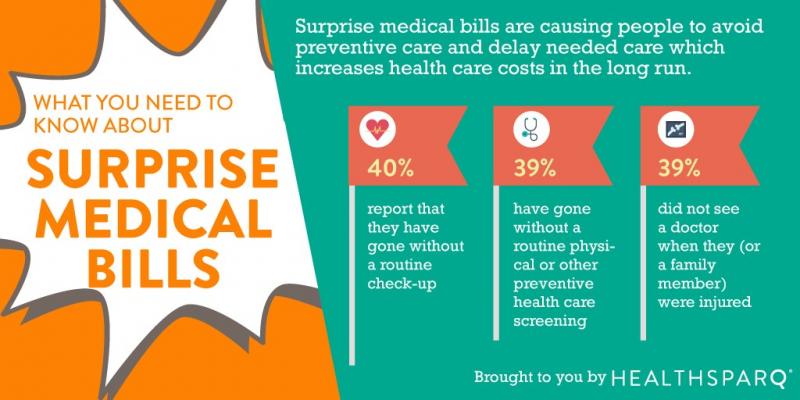
Surprise billing is seen as a rare area of possible bipartisan action this year and has support from President Trump.

But the effort has been slowed by varying approaches and intense lobbying from doctor and hospital groups.

The Ways and Means bill is a rival approach to the bipartisan bill passed out of committee last year by the House Energy and Commerce Committee.

The divide between those two committees will have to be overcome for any bill to move forward.

Neal and Brady said in a statement Friday that their approach “differs” from others because “we create a more balanced negotiation process.”

“Our priority throughout the painstaking process of crafting our legislation has been to get the policy right for patients, and we firmly believe that we have done that,” Neal and Brady said. “We look forward to working with our Democratic and Republican colleagues in Congress, as well as the Administration, to advance this measure swiftly.”

The Ways and Means Committee is planning to vote on the legislation next week.

While all sides in the surprise billing fight agree the patient should be protected, the main dispute has been how much the insurer will pay the doctor once the patient is taken out of the middle. 

Doctors and hospitals have lobbied hard against the Energy and Commerce approach, which they fear would lead to damaging cuts to their payments. That approach sets the payment based on the median rate in that geographic area, with the option of going to arbitration for some high-cost bills.

The Ways and Means approach has generally been seen as more favorable to doctors and hospitals, but industry groups have not yet responded to the details on Friday morning.

The Ways and Means bill gives the decision on how much the insurer should pay the doctor to an outside arbiter, although that arbiter will have to consider the median rate usually paid for that service in making its decision.

The House Education and Labor Committee is also planning to vote on legislation next week, and released a bill on Friday that closely reflects the Energy and Commerce and Senate Health Committee legislation, isolating Ways and Means.

Shawn Gremminger, senior director of federal relations at the liberal health care advocacy group Families USA, said it is “disappointing” that Ways and Means is using an approach that will not lower health costs as much, but he said it is good the process is moving forward.

The Energy and Commerce leaders, along with leaders of the Senate Health Committee, who also back their bill, released a conciliatory statement on Friday about the Ways and Means bill.

“Protecting innocent patients has been our top goal throughout this effort, and we appreciate that the other two House committees share this priority,” said Reps. Frank Pallone Jr. (D-N.J.) and Greg Walden (R-Ore.) and Sens. Lamar Alexnader (R-Tenn.) and Patty Murray (D-Wash.). “We look forward to working together to deliver a bill to the president’s desk that protects patients and lowers health care costs for American consumers.”