Surprise billing ban leads to cuts at PE-backed staffing firms

https://mailchi.mp/31b9e4f5100d/the-weekly-gist-june-03-2022?e=d1e747d2d8

 When Congress passed the “No Surprises Act” in 2021, credit rating agencies like Moody’s warned that the bill would hurt physician staffing firms, especially those that provide emergency department (ED) services, which result in a surprise bill in roughly one in five visits. A piece from investigative outlet The Lever highlights how one private equity-backed physician staffing firm, Nashville-based American Physician Partners, is responding to the resultant cash flow challenges by cutting ED physician pay, after already reducing staffing levels. As the article describes, this is possible in an otherwise tight labor market because, unlike many other specialties, there’s an oversupply of ED physicians, due to the rapid growth in emergency medicine residency programs over the last decade.  

The Gist: With two-thirds of hospitals outsourcing at least some ED physician labor, the potential insolvency of large physician staffing firms could bring a crisis in access and coverage. 

In addition to revenue cuts tied to the surprise billing ban, rising interest rates also mean that PE firms may soon find it more difficult to fund their aggressive growth strategies. 

Health systems should proactively evaluate their partnerships with PE-backed physician staffing groups, with an eye toward anticipating potential staffing problems and service quality shortfalls.

The 18 health systems Walmart sends its employees to for care in 2022

In an effort to rein in healthcare costs for its employees, Walmart sends them directly to health systems that demonstrate high-quality care outcomes, otherwise known as Centers of Excellence.

Through the COE program, Walmart will cover the travel and treatment costs for employees seeking a range of services, but only with providers the company is contracted with. Walmart then reimburses with bundled payments negotiated with the providers.

To determine which providers get access to its 1.6 million employees, Walmart starts by examining health systems. Lisa Woods, vice president of physical and emotional well-being at Walmart, and her team analyze public data, distribute requests for information and conduct detailed on-site visits.

Below are the 18 health systems or campuses to which Walmart will refer patients for defined episodes of care in 2022. (See how COE participants have evolved since 2019 or 2021.)

Cardiac

Cleveland Clinic 

Geisinger Medical Center (Danville, Pa.)

Virginia Mason Medical Center (Seattle)

Weight loss surgery

Emory University Hospital (Atlanta)

Geisinger Medical Center (Danville, Pa.)

Intermountain Healthcare (Salt Lake City)

Northeast Baptist Hospital (San Antonio)

Northwest Medical Center (Springdale, Ark.)

Ochsner Medical Center (New Orleans)

Scripps Mercy Hospital (San Diego)

University Hospital (Cleveland)

Spine surgery

Emory University Hospital (Atlanta)

Geisinger Medical Center (Danville, Pa.)

Carolina NeuroSurgery & Spine Associates (Charlotte, N.C.)

Mercy Hospital Springfield (Mo.)

Mayo Clinic Arizona (Phoenix)

Mayo Clinic Florida (Jacksonville)

Mayo Clinic Minnesota (Rochester)

Memorial Hermann-Texas Medical Center (Houston)

Ochsner Medical Center (New Orleans)

Virginia Mason Medical Center (Seattle)

Breast, lung, colorectal, prostate

or blood cancer

Mayo Clinic Arizona (Phoenix)

Mayo Clinic Florida (Jacksonville)

Mayo Clinic Minnesota (Rochester)

Hip and knee replacements

Emory University Hospital (Atlanta)

Geisinger Medical Center (Danville, Pa.)

Johns Hopkins Bayview Medical Center (Baltimore)

Kaiser Permanente Irvine (Calif.) Medical Center

Mayo Clinic Florida (Jacksonville)

Mayo Clinic Minnesota (Rochester)

Mercy Hospital Springfield (Mo.)

Northeast Baptist Hospital (San Antonio)

Ochsner Medical Center (New Orleans)

Scripps Mercy Hospital (San Diego)

University Hospital (Cleveland)

Virginia Mason Medical Center (Seattle)

Organ and tissue transplants

(except cornea and intestinal)

Mayo Clinic Arizona (Phoenix)

Mayo Clinic Florida (Jacksonville)

Mayo Clinic Minnesota (Rochester)

Hospitals performed 100,000 unnecessary surgeries in the first year of COVID-19, Lown Institute says

https://www.fiercehealthcare.com/providers/hospitals-performed-100000-surgeries-elderly-2020-lown-institute

U.S. hospitals performed more than 100,000 surgeries on older patients during the first year of the pandemic, according to a new Lown Institute analysis. 

The healthcare think tank relied on Medicare claims data and analyzed eight common low-value procedures. It called the 100,000 procedures unnecessary and potentially harmful in a press release. It found that between March and December 2020, among the most-performed surgeries were coronary stents and back surgeries. 

The procedures either offered little to no clinical benefit, according to the institute, or were more likely to harm patients than help them. 

“You couldn’t go into your local coffee shop, but hospitals brought people in for all kinds of unnecessary procedures,” Vikas Saini, M.D., president of the Lown Institute, said in a statement. “The fact that a pandemic barely slowed things down shows just how deeply entrenched overuse is in American healthcare.”
 
Here is the volume of each procedure analyzed, for a total of 106,474 procedures identified:

1. Stents for stable coronary disease: 45,176
2. Vertebroplasty for osteoporosis: 16,553
3. Hysterectomy for benign disease: 14,455
4. Spinal fusion for back pain: 13,541
5. Inferior vena cava filter: 9,595
6. Carotid endarterectomy: 3,667
7. Renal stent: 1,891
8. Knee arthroscopy: 1,596

Among the “U.S. News & World Report” 20 top-ranked hospitals, all had rates of coronary stent procedures above the national average in what the Lown Institute called “overuse.” Four had at least double the national average, including the Cleveland Clinic, Houston Methodist Hospital, Mt. Sinai and Barnes Jewish Hospital. The procedures and overuse criteria were based on previous Lown research.

“We’ve known for over a decade that we shouldn’t be putting so many stents into patients with stable coronary disease, but we do it anyway,” Saini said. “As a cardiologist, it’s frustrating to see this behavior continue at such high levels, especially during the pandemic.”

In response to the Lown analysis, the American Hospital Association said in a statement Tuesday that delays or cancelations in non-emergency care may have negative outcomes on patients. “Lown may define these services as ‘low value,‘ but they can be of tremendous value to the patients who receive them,” the statement read.

It also pointed to its response to last year’s Lown analysis, which it criticized as being based “on data that are not only incomplete, but also not current.” The organization argued the services surveyed only represent a portion of the care hospitals provide. It added that procedures are determined by physicians based on an evaluation of the patient’s medical needs. 

‘We have turned to AI to disrupt the future,’ Michael Dowling says

Hospital systems can employ artificial intelligence to reduce the types of health inequities that have made communities of color more vulnerable to COVID-19, the leader of one of the nation’s largest health systems says.

“At Northwell Health, New York’s largest health system, we know health disparities will only grow worse if we don’t move more quickly to identify and correct them,” Michael Dowling, president and CEO of New Hyde Park-based Northwell Health, wrote in a May 11 news release with Tom Manning, chair of Ascertain, an AI venture between Northwell and Aegis Ventures. “To do that, we have turned to AI to disrupt this future.”

For instance, health systems can utilize AI to forecast which expectant mothers could benefit from early intervention and specialized care to treat preeclampsia, a pregnancy complication characterized by high blood pressure that affects Black women at three times the rate of white women, the executives wrote.

Organizations can also use health screenings and predictive models to determine which patients are most likely to develop chronic health conditions such as obesity, diabetes and hypertension, the men wrote. In addition, systems should diligently research AI health care applications, such as the National Institutes of Health’s All of Us initiative, which seeks to obtain health data from a representative sample of the U.S. population.

Dowling and Manning noted that health systems must also commit to high standards of data integrity outlined by the U.S. Food and Drug Administration and apply the Hippocratic oath to AI to make sure it does not widen health inequities.

Physician departures from Mission Health continue years after HCA Healthcare takeover

Since the for-profit system acquired six-hospital, Asheville, NC-based Mission Health in February 2019, there has been a series of reports about cascading community impacts, including a large physician exodus from the system. Local news outlet Asheville Watchdog counts 223 doctors who are no longer included in the system’s online directory, which currently lists about 1,600 physicians; HCA has also reportedly reduced health system staff by over 12 percent since the acquisition. Former Mission doctors say that patient care at the system is suffering, and that HCA doesn’t place the same value on primary care that Mission Health physicians historically did.

The Gist: The cultural shift from 130 years as a nonprofit community fixture to for-profit health system subsidiary has been rocky for Mission. Even before the HCA deal had been finalized, Mission physicians expressed concerns about how the company would implement its lean staffing and operational “playbook”. These expected changes were surely compounded by COVID-related staffing challenges. 

Physician stakeholders who feel uncertain about the impact of an impending merger can sometimes use their voice to stymie health system combinations (see Beaumont Health’s failed merger with Advocate Aurora Health), but may also vote with their feet when dissatisfied with new ownership, leaving critical gaps in patient care

Higher prices correlated with lower mortality in competitive hospital markets

https://mailchi.mp/f6328d2acfe2/the-weekly-gist-the-grizzly-bear-conflict-manager-edition?e=d1e747d2d8

A National Bureau of Economic Research working paper found that higher-priced hospitals in competitive markets were associated with lower patient mortality—flying in the face of the common policy narrative that higher-priced care is not higher quality. However, in more concentrated, less-competitive healthcare markets (in which over two-thirds of the nation’s hospitals are located), the study found no correlation between price and quality. Authors of the study analyzed patient outcomes from more than 200K admissions among commercially insured patients, transported by ambulance to about 1,800 hospitals between 2007 and 2014.   

The Gist: As hospitals have consolidated, prices have risen by about 30 percent between 2015 to 2019, leading policy experts and regulators to search for ways to rein in price inflation. 

While there continues to be widespread consensus that industry consolidation has resulted in unsustainable cost growth, the new study’s findings bring a bit of welcome nuance around impact on quality and outcomes to an otherwise one-sided, price-centric policy narrative.

Medicare is penalizing the same hospitals it highlights as having high quality

Understanding the Hospital-Acquired Condition (HAC) Reduction Program |  Interventional Radiology

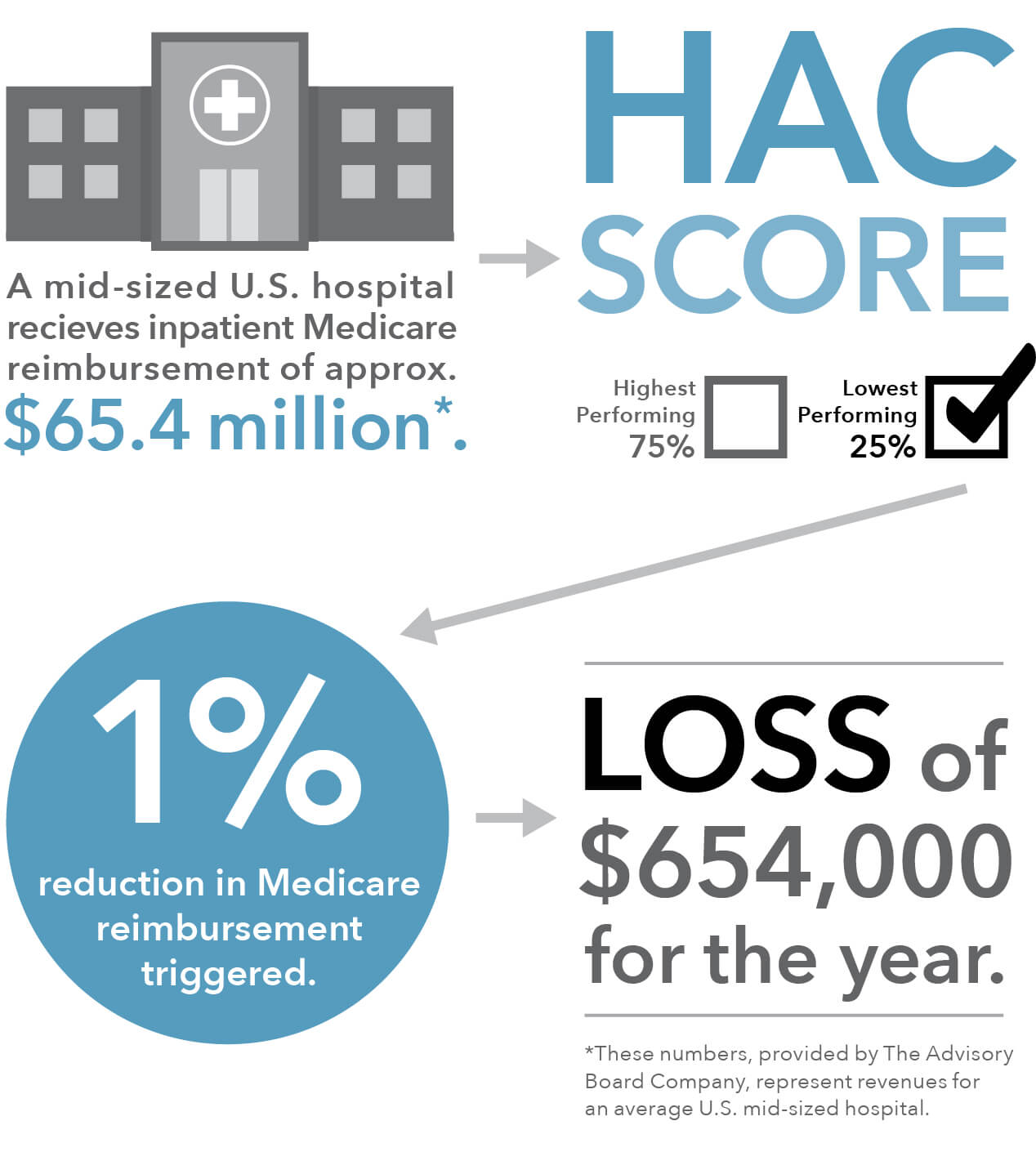
Of the 764 hospitals the Centers for Medicare and Medicaid Services (CMS) is penalizing this year with a one percent reduction in Medicare payments for scoring in the bottom quartile in the Hospital-Acquired Condition Reduction (HAC) Program, 38 also earned a five-star rating from CMS for overall quality of care.

This paradox is in part because Medicare’s star ratings compare a hospital’s safety and quality to a calculated average, whereas the HAC program requires Medicare to penalize the lowest-performing quartile of hospitals each year, even if they are showing improvement, or if the difference between low- and high-performing hospitals is miniscule.

The Gist: The promise of Medicare’s pay-for-performance incentive programs has not materialized, and is unlikely to be driving true clinical improvement. In addition to being confusing and tedious to comply with, the programs lack impact because penalties and rewards are too small to impact a hospital’s bottom line—the benefits don’t justify the costs of redesigning care processes or changing behavior. With years of evidence that many of these ACA-era quality programs aren’t producing the desired results, it’s time to find more effective ways of improving patient outcomes.

Nurses accuse PeaceHealth of retaliation after raising safety concerns

Responding to reports of retaliation against nurses - American Nurse

Nurses who worked at hospitals owned or operated by Vancouver, Wash.-based PeaceHealth are accusing the health system of retaliating against them when they raised concerns about patient and worker safety, NBC News reported Feb. 6.

Nurses spoke to the news division about their experiences, including Marian Weber, a travel nurse who was contracted to work at PeaceHealth Ketchikan (Alaska) Medical Center. She told NBC News that she raised concerns about critically ill COVID-19 patients who were placed in a unit with no central monitoring system and spoke up against the hospital’s suggestion of keeping a nurse in the room for 12 hours.

She said PeaceHealth terminated her contract in August 2021.

Ms. Weber filed a complaint with the National Labor Relations Board after her contract was terminated, and a hearing is scheduled for June 7, according to radio station KRBD. She seeks reimbursement for travel expenses, among other things.

In addition to Ms. Weber, Sarah Collins told NBC News that she lost her staff nursing job at PeaceHealth Southwest Medical Center in Vancouver after raising safety concerns, specifically regarding staffing and nurse-to-patient ratios.

According to the news division, Ms. Collins was put on a three-month leave in September after giving a local news interview. She told NBC News she was terminated for “operating outside her scope of practice” and “failing to follow policy.” She also has a complaint pending with the National Labor Relations Board.

Separately, NBC News reported, there is an ongoing lawsuit, filed in April 2020, claiming that PeaceHealth Southwest prevented workers from taking required meal and rest breaks allowed under law and that workers were discouraged from reporting missed breaks.

In a statement shared with Becker’s, PeaceHealth declined to comment on personnel issues or pending cases but said it emphasizes ensuring safety of employees and patients.

“We can wholeheartedly reinforce that the voices and opinions of our caregivers matter, and any concern brought forward is thoroughly reviewed,” the statement said. “We have hardwired safety into all our processes, including a longstanding ‘safe to share’ platform that empowers every caregiver — no matter their role — with the ability to confidentially raise opportunities to ensure safer care. This best-practice approach is part of our commitment to continuously improve and vision to ensure 100 percent safe care.”

“PeaceHealth medical centers’ overall quality and safety outcomes have been maintained in spite of the challenges presented by the pandemic, and our approach continues to ensure top-tier care in the communities we serve,” the health system added.

Read the NBC News report here. Read the KRBD report here