The U.S. coronavirus recovery is way behind Europe

https://www.axios.com/newsletters/axios-vitals-a8ccd48c-549e-4b89-957d-eee60dc3490c.html?utm_source=newsletter&utm_medium=email&utm_campaign=newsletter_axiosvitals&stream=top

Nathan Newman 🧭 (@nathansnewman) | Twitter

Other countries — even some hit hard by the coronavirus — are beating back their outbreaks more successfully than the U.S., Axios’ Dave Lawler and I report.

Why it matters: The number of new cases every day is holding steady in the U.S., but it’s not going down — a key benchmark many other countries achieved before loosening their lockdowns and social distancing measures.

In some of Europe’s hardest-hit countries, case counts seemed to skyrocket uncontrollably even amid some of the world’s strictest lockdowns.

  • Italy and Spain followed a similar pattern. New cases climbed over about a month from under 100 per day to terrifying peaks of roughly 8,000 per day in Spain and 6,000 per day in Italy.
  • The fall was nearly as sharp. Within two weeks of the peak, the rates of daily recorded cases had been halved. They’ve continued to fall since.

America’s daily rate climbed faster and higher (due in part to its larger population), but appears to have peaked at around 30,000 new cases per day in the first week of April.

  • But rather than falling, the rate stagnated. Outside of New York (which has bent its curve) the rate is actually continuing to climb.

Between the lines: The U.S. didn’t lock down as tightly as some of those countries, and made a host of mistakes early in the response.

  • Italy and Spain issued strict nationwide lockdowns that forced most people to remain inside except to shop for necessities. Spain didn’t allow children outside at all.
  • “Our economic shutdown … wasn’t as broad as some of the other countries’, so there was more opportunity for the virus to spread,” said Amesh Adalja, a senior scholar at the John Hopkins Center for Health Security.

The big picture: “It seems that this is a controllable pandemic without it having to run its natural course,” says Columbia University economist Jeffrey Sachs.


Home of the Brave

Image may contain: 8 peopleImage may contain: 8 people

Cartoon – Poor Safety and False Hopes

The False Hope Comics And Cartoons | The Cartoonist Group

Grim and getting worse: US set for historic unemployment surge

https://news.yahoo.com/grim-getting-worse-us-set-historic-unemployment-surge-015532438.html

Grim and getting worse: US set for historic unemployment surge

Like a global tsunami, the coronavirus pandemic has caused a huge loss of life and taken a massive economic toll.

In the US economy, skyrocketing unemployment is the most-visible sign of the devastation: almost overnight, at least 30 million workers lost their jobs.

The April employment report, due out Friday, is expected to show the jobless rate soaring into double digits, perhaps as high as 20 percent, far surpassing the worst of the global financial crisis and reaching levels not seen since the Great Depression last century.

The US government and central bank worked at a stunning pace to rush out aid and financing to workers and businesses to try to prevent a complete economic collapse, but there is a growing fear that the temporary shutdowns imposed to contain the spread of the virus will become permanent for many companies.

The coronavirus has infected nearly 1.2 million people in the United States and killed around 70,000, according to a count from Johns Hopkins University, and analysts fear some of the economic damage may be permanent.

“We took the elevator down, but we’re going to need to take the stairs back up,” Tom Barkin, president of the Federal Reserve Bank of Richmond, said in a recent speech.

Despite nearly $3 trillion in financial aid approved by Congress in March alone and trillions more in liquidity provided by the Federal Reserve, the US economy contracted by 4.8 percent in the first three months of the year — a period that included only a couple of weeks of the strict business shutdowns.

The second quarter could see the economy plunge by twice that amount.

– The worst is yet to come –

The data on the jobs market has become so bad so fast that there are no comparisons.

Statisticians in the Labor Department’s Bureau of Labor Statistics (BLS), which produces the monthly unemployment report, are using natural disasters as a point of reference.

“The closest that we have in terms of what was in our playbook has been usually hurricanes, because they tend to be large and impact significant periods of time, or areas,” BLS Associate Commissioner Julie Hatch Maxfield told AFP.

But even devastating events, like Hurricane Katrina in 2005, were regional — not national and certainly not global.

The job losses spread from airlines and hotels to restaurants and factories as states ordered lockdowns and then closed schools, sending initial claims for unemployment insurance surging from mid-March, with 20 million posted in the four weeks of April alone.

But those figures could underestimate the true size of the shock, since many people have not been able to file for benefits, and others do not qualify.

The official unemployment rate in March jumped from a historic low of 3.5 percent to 4.4 percent, with 701,000 jobs lost.

But the monthly data, which are separate from the jobless claims reports, are calculated only during the pay period that includes the 12th day of each month, so they too missed the real picture. BLS said the survey of households likely underestimated the jobless rate, which should have been 5.4 percent.

April will be far worse, with some economists projecting jobs losses at 28 million and a 17 percent unemployment rate. And as more businesses report their data, job losses in March are expected to be revised higher as well.

Employment in the private sector alone collapsed 20.2 million last month, US payroll services firm ADP said Wednesday. But ADP acknowledges the data do not present the complete picture.

“Job losses of this scale are unprecedented. The total number of job losses for the month of April alone was more than double the total jobs lost during the Great Recession,” said Ahu Yildirmaz, co-head of the ADP Research Institute.

– False rebound, slow comeback –

Job losses during the global financial crisis in 2008 and 2009 totaled 8.6 million and the unemployment rate peaked at 10 percent.

Even among workers who are still employed, many have seen their hours cut.

“It’s now clear the economy was in a downdraft much more rapidly than anyone expected,” Diane Swonk, chief economist at Grant Thornton, told AFP.

The expansive government aid programs mean the US might see a temporary pickup in hiring in May and June, Swonk said.

But if small businesses aren’t fully back to normal by July, which depends on consumers feeling safe enough to go back to restaurants and shops, “they’re going to have to lay them off again,” she said.


New Studies Add to Evidence that Children May Transmit the Coronavirus

New Studies Add to Evidence that Children May Transmit the ...

Experts said the new data suggest that cases could soar in many U.S. communities if schools reopen soon.

Among the most important unanswered questions about Covid-19 is this: What role do children play in keeping the pandemic going?

Fewer children seem to get infected by the coronavirus than adults, and most of those who do have mild symptoms, if any. But do they pass the virus on to adults and continue the chain of transmission?

The answer is key to deciding whether and when to reopen schools, a step that President Trump urged states to consider before the summer.

Two new studies offer compelling evidence that children can transmit the virus. Neither proved it, but the evidence was strong enough to suggest that schools should be kept closed for now, many epidemiologists who were not involved in the research said.

Many other countries, including Israel, Finland, France, Germany, the Netherlands and the United Kingdom have all either reopened schools or are considering doing so in the next few weeks.

In some of those countries, the rate of community transmission is low enough to take the risk. But in others, including the United States, reopening schools may nudge the epidemic’s reproduction number — the number of new infections estimated to stem from a single case, commonly referred to as R0 — to dangerous levels, epidemiologists warned after reviewing the results from the new studies.

In one study, published last week in the journal Science, a team analyzed data from two cities in China — Wuhan, where the virus first emerged, and Shanghai — and found that children were about a third as susceptible to coronavirus infection as adults were. But when schools were open, they found, children had about three times as many contacts as adults, and three times as many opportunities to become infected, essentially evening out their risk.

Based on their data, the researchers estimated that closing schools is not enough on its own to stop an outbreak, but it can reduce the surge by about 40 to 60 percent and slow the epidemic’s course.

“My simulation shows that yes, if you reopen the schools, you’ll see a big increase in the reproduction number, which is exactly what you don’t want,” said Marco Ajelli, a mathematical epidemiologist who did the work while at the Bruno Kessler Foundation in Trento, Italy.

The second study, by a group of German researchers, was more straightforward. The team tested children and adults and found that children who test positive harbor just as much virus as adults do — sometimes more — and so, presumably, are just as infectious.

“Are any of these studies definitive? The answer is ‘No, of course not,’” said Jeffrey Shaman, an epidemiologist at Columbia University who was not involved in either study. But, he said, “to open schools because of some uninvestigated notion that children aren’t really involved in this, that would be a very foolish thing.”

The German study was led by Christian Drosten, a virologist who has ascended to something like celebrity status in recent months for his candid and clear commentary on the pandemic. Dr. Drosten leads a large virology lab in Berlin that has tested about 60,000 people for the coronavirus. Consistent with other studies, he and his colleagues found many more infected adults than children.

The team also analyzed a group of 47 infected children between ages 1 and 11. Fifteen of them had an underlying condition or were hospitalized, but the remaining were mostly free of symptoms. The children who were asymptomatic had viral loads that were just as high or higher than the symptomatic children or adults.

“In this cloud of children, there are these few children that have a virus concentration that is sky-high,” Dr. Drosten said.

He noted that there is a significant body of work suggesting that a person’s viral load tracks closely with their infectiousness. “So I’m a bit reluctant to happily recommend to politicians that we can now reopen day cares and schools.”

Dr. Drosten said he posted his study on his lab’s website ahead of its peer review because of the ongoing discussion about schools in Germany.

Many statisticians contacted him via Twitter suggesting one or another more sophisticated analysis. His team applied the suggestions, Dr. Drosten said, and even invited one of the statisticians to collaborate.

“But the message of the paper is really unchanged by any type of more sophisticated statistical analysis,” he said. For the United States to even consider reopening schools, he said, “I think it’s way too early.”

In the China study, the researchers created a contact matrix of 636 people in Wuhan and 557 people in Shanghai. They called each of these people and asked them to recall everyone they’d had contact with the day before the call.

They defined a contact as either an in-person conversation involving three or more words or physical touch such as a handshake, and asked for the age of each contact as well as the relationship to the survey participant.

Comparing the lockdown with a baseline survey from Shanghai in 2018, they found that the number of contacts during the lockdown decreased by about a factor of seven in Wuhan and eight in Shanghai.

“There was a huge decrease in the number of contacts,” Dr. Ajelli said. “In both of those places, that explains why the epidemic came under control.”

The researchers also had access to a rich data set from Hunan province’s Center for Disease Control and Prevention. Officials in the province traced 7,000 contacts of 137 confirmed cases, observed them over 14 days and tested them for coronavirus infection. They had information not just for people who became ill, but for those who became infected and remained asymptomatic, and for anyone who remained virus-free.

Data from hospitals or from households tend to focus only on people who are symptomatic or severely ill, Dr. Ajelli noted. “This kind of data is better.”

The researchers stratified the data from these contacts by age and found that children between the ages of 0 and 14 years are about a third less susceptible to coronavirus infection than those ages 15 to 64, and adults 65 or older are more susceptible by about 50 percent.

They also estimated that closing schools can lower the reproduction number — again, the estimate of the number of infections tied to a single case — by about 0.3; an epidemic starts to grow exponentially once this metric tops 1.

In many parts of the United States, the number is already hovering around 0.8, Dr. Ajelli said. “If you’re so close to the threshold, an addition of 0.3 can be devastating.”

However, some other experts noted that keeping schools closed indefinitely is not just impractical, but may do lasting harm to children.

Jennifer Nuzzo, an epidemiologist at Johns Hopkins University’s Bloomberg School of Public Health, said the decision to reopen schools cannot be made based solely on trying to prevent transmission.

“I think we have to take a holistic view of the impact of school closures on kids and our families,” Dr. Nuzzo said. “I do worry at some point, the accumulated harms from the measures may exceed the harm to the kids from the virus.”

E-learning approaches may temporarily provide children with a routine, “but any parent will tell you it’s not really learning,” she said. Children are known to backslide during the summer months, and adding several more months to that might permanently hurt them, and particularly those who are already struggling.

Children also need the social aspects of school, and for some children, home may not even be a safe place, she said.

“I’m not saying we need to absolutely rip off the Band-aid and reopen schools tomorrow,” she said, “but we have to consider these other endpoints.”

Dr. Nuzzo also pointed to a study in the Netherlands, conducted by the Dutch government, which concluded that “patients under 20 years play a much smaller role in the spread than adults and the elderly.”

But other experts said that study was not well designed because it looked at household transmission. Unless the scientists deliberately tested everyone, they would have noticed and tested only more severe infections — which tend to be among adults, said Bill Hanage, an epidemiologist at the Harvard T.H. Chan School of Public Health.

“Assumptions that children are not involved in the epidemiology, because they do not have severe illness, are exactly the kind of assumption that you really, really need to question in the face of a pandemic,” Dr. Hanage said. “Because if it’s wrong, it has really pretty disastrous consequences.”

A new study by the National Institutes of Health may help provide more information to guide decisions in the United States. The project, called Heros, will follow 6,000 people from 2,000 families and collect information on which children get infected with the virus and whether they pass it on to other family members.

The experts all agreed on one thing: that governments should hold active discussions on what reopening schools looks like. Students could be scheduled to come to school on different days to reduce the number of people in the building at one time, for example; desks could be placed six feet apart; and schools could avoid having students gather in large groups.

Teachers with underlying health conditions or of advanced age should be allowed to opt out and given alternative jobs outside the classroom, if possible, Dr. Nuzzo said, and children with underlying conditions should continue to learn from home.

The leaders of the two new studies, Dr. Drosten and Dr. Ajelli, were both more circumspect, saying their role is merely to provide the data that governments can use to make policies.

“I’m somehow the bringer of the bad news but I can’t change the news,” Dr. Drosten said. “It’s in the data.”


The coronavirus is outlasting the stimulus

https://www.axios.com/newsletters/axios-vitals-7038a5b1-74fa-44e3-ba7e-43c87052e1c5.html?utm_source=newsletter&utm_medium=email&utm_campaign=newsletter_axiosvitals&stream=top

The coronavirus is outlasting the stimulus - Axios

The coronavirus pandemic is lasting longer than Congress and the White House anticipated when it committed hundreds of billions of dollars to individuals and small businesses, Axios’ Dan Primack and Alayna Treene report.

Why it matters: These bailouts were meant to stop the bleeding, to buy time while the wound cauterizes. Unfortunately, the injury was more severe than originally diagnosed.

Treasury Secretary Steve Mnuchin told CBS that “the entire package provides economic relief overall for about 10 weeks.”

  • The CARES Act was signed by President Trump on March 27.
  • Mnuchin’s 10-week window expires on June 5.
  • No one expects to see a Phase 4 stimulus by that date, nor a full-scale economic reopening.

Paycheck Protection Program (PPP) loans require that small businesses maintain staffing levels for eight weeks. For early recipients, that means their payroll obligations could run out by month’s end.

  • Direct checks of up to $1,200 to individuals were only expected to help cover expenses for one month, even though many states already are well into their second month of locking down.

All of this makes economic reopening even more complicated.

  • The federal government has effectively created a “back to normal” deadline for small businesses, even though such decisions are supposed to be made by the states.

The bottom line: The small business loans and individual checks were designed as bridges to reopening, but if they only delayed layoffs and economic pain by a couple of months, then they may end up being remembered as bridges to nowhere.


Where the virus is spreading

https://www.axios.com/newsletters/axios-vitals-7038a5b1-74fa-44e3-ba7e-43c87052e1c5.html?utm_source=newsletter&utm_medium=email&utm_campaign=newsletter_axiosvitals&stream=top

Axios

The Trump administration’s reopening guidelines detail that in order to start lifting restrictions and reopening the economy, a state needs to report 14-day trends of fewer cases or fewer positive tests (though local officials do get some leeway in adjusting the metrics).

  • Not a lot of states meet that criteria, Axios editor-in-chief Nick Johnston writes.

Our chart compares each state’s seven-day average of new cases from Monday and the seven-day average from a week prior, April 27.

  • By this metric, Minnesota, Nebraska and Puerto Rico have the most worrisome trends, while Arkansas and Wyoming have the most positive trends. Twelve states are moving in the right direction.
  • But more than a third of the nation still has growing numbers of cases. And that includes states such as Texas and Virginia, where Republican and Democratic governors are beginning to unveil re-opening plans.

Yes, but: These trends only tell us so much.

  • Some states may see their case counts rise not necessarily because their outbreaks are getting dramatically worse, but because their testing is getting better, so they’re catching more cases.
  • That’s why health officials are also pulling in other metrics — including the number of deaths, the number of hospitalizations and the percentage of tested patients who test positive. A higher percentage means you’re probably missing people.
  • Still, public-health guidance calls for a steady decrease in cases before opening up, and few states have achieved that.

The bottom line: The virus isn’t just some other states’ problem. It’s everyone’s problem.


The next phase of America’s coronavirus failure

https://www.axios.com/newsletters/axios-vitals-7038a5b1-74fa-44e3-ba7e-43c87052e1c5.html?utm_source=newsletter&utm_medium=email&utm_campaign=newsletter_axiosvitals&stream=top

The next phase of America's coronavirus failure has begun - Axios

The evidence is mounting that America is steamrolling toward a nightmarish failure to control the coronavirus.

Where it stands: We made a lot of mistakes at the beginning, and despite a month of extreme social distancing to try to hit “reset,” a hurried reopening now raises the risk that we’ll soon be right back where we started.

Driving the news: The Trump administration is in “preliminary discussions” to wind down its coronavirus task force, possibly in early June, Vice President Mike Pence told reporters yesterday.

  • The formal existence of a task force isn’t necessarily going to make or break the coronavirus response, but its dissolution is yet another sign that the administration is ready to move on — despite all of the indications that we’re not prepared.

What we’re watching: The U.S. is still seeing around 30,000 new coronavirus cases a day — and those are just the ones that we’re catching, because we are still not testing enough people.

  • Even with a robust contact tracing workforce, which we don’t have, tracking down the interactions of 30,000 people a day would be an impossible task.
  • And even if it weren’t, we have no system in place for isolating those people to prevent them from infecting their family members, coworkers or other contacts.
  • Once we lift social distancing measures and people start interacting with one another again, the number of cases will inevitably spike, making containment even more impossible.

We don’t have a treatment or a vaccine, and we’re about to loosen the reins on a virus whose reach, symptoms and long-term effects we are still learning.

Yes, but: Some cities and states have been more proactive in building up their public health infrastructure, and have said they’ll continue with social distancing until their caseloads indicate it’s safe to begin returning to normal.


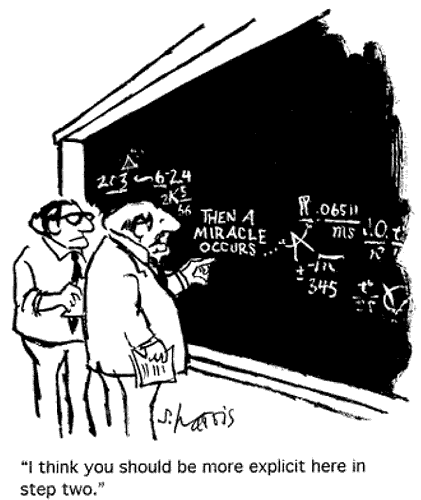
Cartoon – Coronavirus Recovery Plan

Then a Miracle Occurs | HENRY KOTULA

Coronavirus Dashboard

https://www.axios.com/coronavirus-latest-news-quick-highlights-57a186a3-7547-45bf-852a-83019849d8d5.html

Photo collage of newspaper clippings with cutout of a red virus in the middle

  1. Global: Total confirmed cases as of 3:30 p.m. ET: 3,630,942 — Total deaths: 254,592 — Total recoveries — 1,184,625 — Map.
  2. U.S.: Total confirmed cases as of 3:30 p.m. ET: 1,193,027 — Total deaths: 70,110 — Total recoveries — 187,180 — Total tested: 7,285,178 — Map.
  3. Trump administration: Whistleblower alleges HHS failed to act quickly on coronavirus — Pence says the White House is considering disbanding the coronavirus task force.
  4. World: U.K. reports highest coronavirus death toll in Europe.
  5. States: New York reports 1,700 new coronavirus deaths in nursing homes.
  6. 🎓 Commencement: Barack and Michelle Obama to take part in virtual commencement ceremonies for class of 2020.
  7. What should I do? Hydroxychloroquine questions answered — Traveling, asthma, dishes, disinfectants and being contagious — Masks, lending books and self-isolating — Exercise, laundry, what counts as soap — Pets, moving and personal health — Answers about the virus from Axios experts — What to know about social distancing — How to minimize your risk.
  8. Other resources: CDC on how to avoid the viruswhat to do if you get itthe right mask to wear.