Essential workers get lost in the vaccine scrum as states prioritize the elderly

Norma Leiva, a Food 4 Less warehouse manager, waits Saturday to be let into work in Panorama City, Calif. The state’s decision to expand vaccine eligibility to millions of older residents has stark consequences for communities of color disproportionately affected by the pandemic.

As a warehouse manager at a Food 4 Less in Los Angeles, Norma Leiva greets delivery drivers hauling in soda and chips and oversees staff stocking shelves and helping customers. At night, she returns to the home she shares with her elderly mother-in-law, praying the coronavirus isn’t traveling inside her.

A medical miracle at the end of last year seemed to answer her prayers: Leiva, 51, thought she was near the front of the line to receive a vaccine, right after medical workers and people in nursing homes. Now that California has expanded eligibility to millions of older residents — in a bid to accelerate the administration of the vaccines — she is mystified about when it will be her turn.

The latest I’ve heard is that we’ve been pushed back. One day I hear June, another mid-February,” said Leiva, whose sister, also in the grocery business, was sickened last year with the virus, which has pummeled Los Angeles County — the first U.S. county to record 1 million cases. “I want the elderly to get it because I know they’re in need of it, but we also need to get it, because we’re out there serving them. If we’re not healthy, our community’s not healthy.”

Delaying vaccinations for front-line workers, especially food and grocery workers, has stark consequences for communities of color disproportionately affected by the pandemic. “In the job we do,” Leiva said, “we are mostly Blacks and Hispanics.”

Many states are trying to speed up a delayed and often chaotic rollout of coronavirus vaccines by adding people 65 and older to near the front of the line. But that approach is pushing others back in the queue, especially because retired residents are more likely to have the time and resources to pursue hard-to-get appointments. As a result, workers who often face the highest risk of exposure to the virus will be waiting longer to get protected, according to experts, union officials and workers.

The shifting priorities illuminate political and moral dilemmas fundamental to the mass vaccination campaign: whether inoculations should be aimed at rectifying racial disparities, whether the federal government can apply uniform standards and whether local decision-making will emphasize more than ease of administration.

Speed has become all the more critical with the emergence of highly transmissible variants of the virus. Only by performing 3 million vaccinations a day — more than double the current rate — can the country stay ahead of the rapid spread of new variants, according to modeling conducted by Paul Romer, a Nobel Prize-winning economist.

People with appointments wait in line to receive coronavirus vaccine in Los Angeles. 

But low-wage workers without access to sick leave are among those most likely to catch and transmit new variants, said Richard Besser, president of the Robert Wood Johnson Foundation and former acting director of the Centers for Disease Control and Prevention. Because there are not enough doses of the vaccines to immunize front-line workers and everyone over 65, he said, officials should carefully weigh combating the pernicious effects of the virus on communities of color against the desire to expedite the rate of inoculation.

“If the obsession is over the number of people vaccinated,” Besser said, “we could end up vaccinating more people, while leaving those people at greatest risk exposed to ongoing rates of infection.”

The move to broaden vaccine availability to a wider swath of the elderly population — backed by Trump administration officials in their final days in office and members of President Biden’s health team — marks a departure from expert guidance set forth in December, as the vaccine rollout was getting underway.

A panel of experts advising the CDC recommended that the second priority group include front-line essential workers, along with adults 75 and older. The guidance represented a compromise between the desire to shield people most likely to catch and transmit the virus — because they cannot socially distance or work from home — and the effort to protect people most prone to serious complications and death.

People of color and immigrants are overrepresented not just in grocery jobs but also in meatpacking, public transit and corrections facilities, where outbreaks have taken a heavy toll. Black and Latino Americans are three to four timesmore likely than White people to be hospitalized and almost three times more likely to die of covid-19, the illness caused by the coronavirus, according to the CDC.

The desire to make vaccine administration equitable was central to recommendations from the Advisory Committee on Immunization Practices.

“We cannot abandon equity because it’s hard to measure and it’s hard to do,” Grace Lee, a committee member and a pediatrics professor at Stanford University’s School of Medicine, said at the time.

On Wednesday at a committee meeting, Lee said officials need both efficiency and equity to “ensure that we are accountable for how we’re delivering vaccine.”

“Absolutely agree we do not want any doses in freezers or wasted in any way,” Lee said.

But efficiency has won out in most places.

Some state leaders, such as Florida Gov. Ron DeSantis (R) and Texas Gov. Greg Abbott (R), acted on their own, lowering the age threshold to 65 soon after distribution began last year. Others followed with the blessing of top federal officials.

Biden’s advisers have said equity will be central to their efforts, calling access in underserved communities a “moral imperative” and promising, in a national vaccination strategy document, “we remain focused on building programs to meet the needs of hard-to-reach and high-risk populations.” In the meantime, they have similarly encouraged states to broaden vaccine availability to a larger segment of their older populations without providing guidance about how to ensure front-line workers remain a priority.

Experts studying health disparities say prioritizing people over 65 disproportionately favors White people, because people of color, especially Black men, tend to die younger, owing to racism’s effect on physical health. Twenty percent of White people are 65 or over, while just 9 percent of people of color are in that age group, according to federal figures.

“People are thinking about risk at an individual level as opposed to at a structural level. People are not understanding that where you work and where you live can actually bring more risks than your age,” said Camara Phyllis Jones, a family physician, epidemiologist and past president of the American Public Health Association. “It’s worse than I thought.”

The constantly changing priorities have made the uneven rollout all the more difficult to navigate. There is confusion over when, where and how to get shots, with different jurisdictions taking different approaches in an illustration of the nation’s decentralized public health system.

While praising the effort to expand access and speed up the administration of shots, Marc Perrone, president of the United Food and Commercial Workers International Union, said increasing reliance on age-based eligibility “must not come at the expense of the essential workers helping families put food on the table during this crisis.

“Public health officials must work with governors in all 50 states to end the delays and act swiftly to distribute the vaccine to grocery and meatpacking workers on the front lines, before even more get sick and die,” he said.

Mary Kay Henry, president of the Service Employees International Union, said the only way to ensure front-line workers get the vaccines they need is to involve them and their union representatives in decisions about eligibility and access. Unions, she said, could also be tapped to conduct outreach in hard-to-reach communities, including those not conversant in English.

“Essential workers who’ve been on the front lines both in health care but also across the service and care sectors — child care, airline, janitorial, security — face extraordinary risk,” she said.

Leiva, a 33-year member of UFCW Local 770, said the celebration of essential workers should come with recognition of their sacrifice, which is unevenly felt across racial groups. When the virus tore through the grocery store, she said, “every single one of them in that cluster was Hispanic.”

But with hospitals dangerously full in recent weeks, and less than half of distributed vaccine doses administered, many states broadened their top priority groups to include older adults, hoping to lessen the burden on hospitals and expedite vaccine administration.

Leiva is concerned about bringing the coronavirus into the home she shares with her elderly mother-in-law. She wants the elderly to receive the vaccine, “but we also need to get it, because we’re out there serving them. If we’re not healthy, our community’s not healthy.”

Protecting people 65 and older, officials say, saves the lives of those who face the gravest consequences and reduces the stress on intensive care units. Risk for severe covid-19 illness increases with age; 8 out of 10 deaths reported in the United States have been in people 65 and older.

Older people in the United States have also encountered enormous hurdles in gaining access to the vaccines. Faced with overloaded sign-up websites and jammed phone lines, they have sometimes spent nights waiting in line.

In more than half the states — at least 28, by one count — people 65 and older are in the top two priority groups, behind health-care workers and residents in long-term care facilities. As a result, front-line workers either fall behind the older group or are squeezed into the same pool, according to a Kaiser Family Foundation analysis.

“When you make that pool of eligible people much bigger, you’re creating much longer wait times for some of these groups,” said Jennifer Kates, a senior vice president at the foundation.

Front-line workers often labor in crowded conditions. Some live in multigenerational households. By contrast, many older adults are retired, have greater access to sign-up portals and have more time to wait in lines outside of clinics, health officials said.

People wait in line for coronavirus vaccine at a Sarasota, Fla., health department clinic.

“The 65-year-old person who is wealthier and can stay home and isn’t working and is retired and can ride it out for another two months … is less likely to get infected than the person who has to go outside every day for work,” said Roberto B. Vargas, assistant dean for health policy at Charles R. Drew University of Medicine and Science in Los Angeles.

In California, Gov. Gavin Newsom (D) announced Jan. 13 that the state was “significantly increasing our efforts to get these vaccines administered, get them out of freezers and get them into people’s arms” by increasing the number of people eligible to receive shots. “Everybody 65 and over — about 6.6 million Californians — we are now pulling into the tier to make available vaccines.”

On Jan. 25, Newsom said the state would move to an age-based eligibility system after vaccinating those now at the front of the line, including health-care workers, food and agriculture workers, teachers, emergency personnel and seniors 65 and older.

The abrupt changes confused local health officials.

Julie Vaishampayan, public health officer in San Joaquin Valley’s Stanislaus County, said the county had just finished vaccinating health-care workers and was getting ready to reach out to farm laborers at a tomato-packing company and food-processing workers. When the state added those 65 and older, the county had to pivot abruptly,as it faced a quintessential supply-and-demand dilemma.

“There isn’t enough vaccine to do it all, so how do we balance?” she said in an email. “This is really hard.”

In Tennessee, teachers were initially promised access but then were told to wait until people 70 and older got their shots. The state’s health commissioner, Lisa Piercey, said she was moving more gradually through the age gradations so as not to crowd out workers, treating the federal framework as guidance, which is often how officials have characterized it. “It’s not an either/or situation,” she said in an interview this month.

Keyona Simms puts a hat on Nylah Cooper, 2, at a day-care center in Baltimore. Day-care staff are considered essential workers in many states.

But with vaccine supply sharply limited, priorities had to be narrowed. By vaccinating older residents, she said, the state was also protecting its medical infrastructure by reducing the likelihood that older people, who are more likely to be hospitalized, would fall ill. Once there is more supply, she said, she would be able to amplify aspects of the state’s planning geared toward underserved and hard-to-reach populations. “I can’t wait to manifest that equity plan.”

In Nebraska, the health department in Douglas County, which includes Omaha, prioritized older residents over “critical industry workers who can’t work remotely” after the state expanded eligibility to residents 65 and older, according to a January news release. Meatpacking workers, grocery store employees, teachers and public transit workers were bumped lower in line.

Omaha’s teachers union had wanted its approximately 4,100 members to get shots before the district resumes full-time, in-person instruction for elementary and middle school students Tuesday. Now, they must wait until late spring, said Robert Miller, president of the Omaha Education Association.

The fear, it goes hand in glove with going back to school five days a week,” he said, despite CDC reports that schools operating in person have seen scant transmission. “We’ve had some teachers who have multigenerational homes, who live in the basement, … and they can’t interact with their parents. We have some teachers who are staying at a different apartment away from their elder loved ones.”

Some state leaders sought to defend broadening eligibility to more of the elderly population, saying it was consistent with efforts to address racial disparities. Illinois had reduced the age requirement to 65, Gov. J.B. Pritzker (D) said recently, “in order to reduce covid-19 mortality and limit community spread in Black and Brown communities.” His office did not respond to a request for comment about how lowering the age threshold would have that effect.

In Massachusetts, state leaders announced Jan. 25 that people 65 and older and those with at least two high-risk medical conditions were next in line, ahead of educators and workers in transit, utility, food and agriculture, sanitation, and public works and public health.

That means Dorothy Williams, who runs a day-care center in a predominantly Black community where the infection rate is among the highest in Boston, has to wait. Her center stayed open throughout the pandemic, caring for children of essential workers, many of them in low-wage jobs in hospitals or nursing homes.

She recognizes the long hours and the exposure risks of those health-care aides. That means “we’re exposed,” she said, “each and every single day.” She has been able to keep the coronavirus at bay, but two weeks ago, she had a scare that forced her to close and get everyone tested after a child became ill. The tests came back negative, but the fear remains.

“We are at risk,” she said.

‘Really difficult nut to crack’: MedPAC torn over telehealth regs post-COVID-19

https://www.healthcaredive.com/news/really-difficult-nut-to-crack-medpac-torn-over-telehealth-regs-post-covi/593466/

Dive Brief:

  • Members of an influential congressional advisory committee on Medicare are torn on how best to regulate telehealth after the COVID-19 public health emergency, hinting at the difficulty Washington faces as it looks to impose guardrails on virtual care without restricting its use after the pandemic ends.
  • During a Thursday virtual meeting, the Medicare Payment Advisory Commission expressed its support of telehealth broadly, but many members noted snowballing use of the new modality could create more fraud and abuse in the system down the line.
  • Key questions of how much Medicare reimburses for telehealth visits and what type of visits are paid for won’t be easily answered, MedPAC commissioners noted. “This is a really, really difficult nut to crack,” Michael Chernew, MedPAC chairman and a healthcare policy professor at Harvard Medical School, said.

Dive Insight:

Virtual care has kept much of the industry running during the coronavirus pandemic, allowing patients to receive needed care at home. Much of this was possible due to the declaration of a public health emergency early 2020, allowing Medicare to reimburse for a greater swath of telehealth services and nixing other restrictions on virtual care.

However, much of that freedom is only in place for the duration of the public health emergency, leaving regulators and legislators scrambling to figure which new flexibilities they should codify, and which perhaps are best left in the past along with COVID-19.

It’s a tricky debate as Washington looks to strike a balance between keeping access open and costs low.

In a Thursday meeting, MedPAC debated a handful of policy proposals to try and navigate this tightrope. Analysts floated ideas like making some expansions permanent for all fee-for-service clinicians; covering certain telehealth services for all beneficiaries that can be received in their homes; and covering telehealth services if they meet CMS’ criteria for an allowable service.

But many MedPAC members were wary of making any concrete near-term policy changes, suggesting instead the industry should be allowed to test drive new telehealth regulations after COVID-19 without baking them in permanently. 

I don’t think what we’ve done with the pandemic can be considered pilot testing. I think a lot of this is likely to go forward no matter what we do because the gate has been opened, and it’s going to be really hard to close it,” Marjorie Ginsburg, founder of the Center for Healthcare Decisions, said. But “I see this just exploding into more fraud and abuse than we can even begin imagining.”

Paul Ginsburg, health policy chair at the Brookings Institution, suggested a two-year pilot of any changes after the public health emergency ends.

However, it would be “regressive” to roll back all the gains virtual care has made over the past year, according to Jonathan Perlin, CMO of health system HCA.

“These technologies are such a part of the environment that at this point, I fear [it] would be anachronistic not to accept that reality,” Perlin said.

Among other questions, commissioners were split on how much Medicare should pay for telehealth after the pandemic ends. 

That parity debate is perhaps the biggest question mark hanging over the future of the industry. Detractors argue virtual care services involve lower practice costs, as remote physicians not in an office don’t need to shell out for supplies and staff. Paying at parity could distort prices, and cause fee-for-service physicians to prioritize delivering telehealth services over in-person ones, some commissioners warned.

Other MedPAC members pointed out a lower payment rate could stifle technological innovation at a pivotal time for the healthcare industry.

MedPAC analysts suggested paying lower rates for virtual care services than in-person ones, and paying less for audio-only services than video.

Commissioners agreed audio-only services should be allowed, but that a lower rate was fair. Commissioner Dana Gelb Safran, SVP at Well Health, suggested CMS should consider outlining certain services where video must be used out of clinical necessity.

Previously, telehealth services needed a video component to be reimbursed. Proponents argue expanded access to audio-only services will improve care access, especially for low-income populations that might not have the broadband access or technology to facilitate a video visit.

Another major concern for commissioners is how permanently expanding telehealth access would affect direct-to-consumer telehealth giants like Teladoc and Amwell. If all telehealth services delivered at home are covered, that could allow the private companies to “really take over the industry,” Larry Casalino, health policy chief in the Weill Cornell Department of Healthcare Policy and Research, said.

Because of the lower back-end costs for virtual care than in-office services, paying vendors the same rate as in-office physicians could drive a lot of brick-and-mortar doctors out of business, commissioners warned.

Biden ramps up vaccine distribution to 200 million doses by the end of summer

https://www.healthcarefinancenews.com/news/biden-ramps-vaccine-distribution-200-million-doses-end-summer

Biden administration to buy 200 million more doses of Covid vaccine -  POLITICO

The death toll from the pandemic is projected to climb to 500,000 by the end of  February.

President Joe Biden yesterday announced he is ramping up COVID-19 vaccine distribution to have 200 million doses delivered by the end of the summer.

This is an additional 100 million doses Biden set as his goal for his first 100 days in office.

In remarks yesterday, Biden directed COVID-19 Response Coordinator Jeff Zeints to work with the Department of Health and Human Services to increase the nation’s total supply. 

“And we believe that we’ll soon be able to confirm the purchase of an additional 100 million doses for each of the two FDA-authorized vaccines: Pfizer and Moderna,” Biden said. “That’s 100 million more doses of Pfizer and 100 million more doses of Moderna — 200 million more doses than the federal government had previously secured. Not in hand yet, but ordered. We expect these additional 200 million doses to be delivered this summer.”

After review of the current vaccine supply from manufacturing plants, the federal government believes it can increase overall weekly vaccination distribution to states, tribes, and territories from 8.6 million doses to a minimum of 10 million doses, starting next week.  

But the pandemic is expected to get worse before it gets better, Biden said, with experts predicting the death toll as likely to top 500,000 by the end of  February.

But the brutal truth is: It’s going to take months before we can get the majority of Americans vaccinated. Months. In the next few months, masks — not vaccines — are the best defense against COVID-19,” he said.

WHY THIS MATTERS

The increases in the total vaccine order in the United States from 400 million ordered to 600 million doses will be enough vaccine to fully vaccinate 300 Americans by the end of the summer or the beginning of fall, Biden said.  

“It’ll be enough to fully vaccinate 300 [million] Americans to beat this pandemic — 300 million Americans,” he said. “And this is an aggregate plan that doesn’t leave anything on the table or anything to chance, as we’ve seen happen in the past year.”

Biden’s team said they found the vaccine program to be in worse shape than they thought it would be and that they were starting from scratch.

“But it’s also no secret that we have recently discovered, in the final days of the transition — and it wasn’t until the final days we got the kind of cooperation we needed — that once we arrived, the vaccine program is in worse shape than we anticipated or expected,” Biden said. 

Governors have been guessing at what they’ll receive for vaccine shipments, the president said.

The federal  government is working with the private industry to ramp up production of vaccine and protective equipment such as syringes, needles, gloves, swabs and masks. The team has already identified suppliers and is working with them to move the plan forward.

Also, the Federal Emergency Management Agency is being directed to to stand up the first federally-supported community vaccination centers and to make  vaccines available to thousands of local pharmacies beginning in early February.

THE LARGER TREND

Last week, Biden signed a declaration to begin reimbursing states 100% for the use of their National Guard to help the COVID-19 relief effort, both in getting sites set up and in using some of their personnel to administer the vaccines. 

Biden has also said he wants to expand testing, which will help reopen schools and businesses.

He has formalized the Health Equity Task Force to ensure that the most vulnerable populations have access to vaccines. 

He is also pushing for a $1.9 trillion relief package.

Early evidence on disparities in vaccine acceptance

https://mailchi.mp/128c649c0cb4/the-weekly-gist-january-22-2021?e=d1e747d2d8

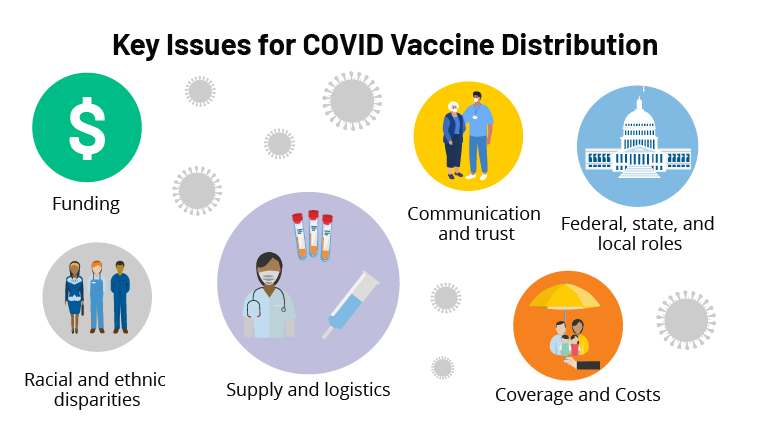
Distributing a COVID-19 Vaccine Across the U.S. – A Look at Key Issues –  Issue Brief – 9563 | KFF

Although only 17 states are currently reporting data on the racial and ethnic breakdown of vaccine recipients, the early data indicate that there are significant disparities in who is getting vaccinated, with the share of Black and Latino people among vaccinees lower than their share of the total population in those states.

Alarmingly, in our recent conversations with health system executives, those same disparities seem to be present among healthcare workers employed by hospitals and health systems. Anecdotally, across a half-dozen health systems we’ve spoken with in the past week, most report that they’ve had about 70 percent of their workers agree to get the first dose of the COVID-19 vaccine.

However, that number looks significantly different when broken down by race and ethnicity: on average, the uptake rate among White, Asian, and Pacific Islander workers has been closer to 90-95 percent, while among Black and Latino workers, it’s been closer to 30-40 percent. Bear in mind these are employees of health systems—in many cases they’re frontline caregivers—and given their work environments you might expect them to be less hesitant to get the vaccine.

That 30-40 percent uptake rate is very worrisome, in two ways: caregivers outside of hospital settings, especially home care and nursing home workers, likely include a larger number of workers hesitant to get vaccinated. And in the general population, among whom health literacy is presumably much lower than among healthcare workers, it’s precisely those populations who are at highest risk of COVID infection, hospitalization, and death. (A further complication: health systems made it easy for their employees to get the shot. With vaccines for the general population still scarce, at-risk populations will inevitably have the most difficult time getting signed up, even if they want the vaccine.)

If health systems are the canary in the coal mine for vaccine hesitancy rateswe’re in for a tough challenge in getting the most vulnerable populations vaccinated in the months to come.

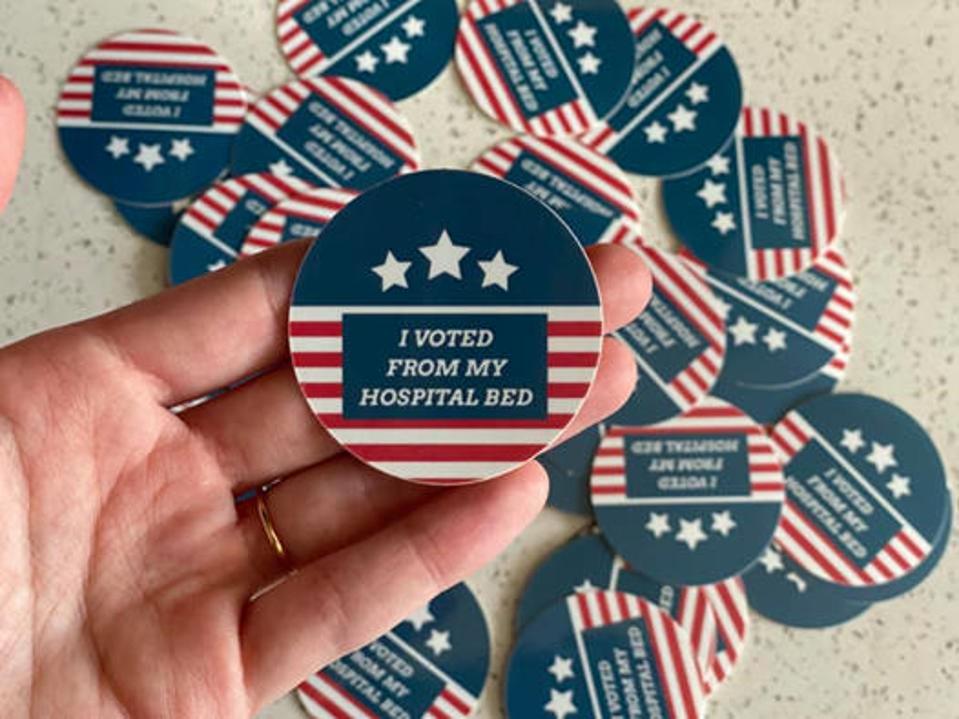
It’s 2020. Now You Can Vote From Your Hospital Room.

While voter suppression efforts are making it harder to vote in places like Texas, Georgia and Florida, one strategy makes voting during the pandemic a little easier: voting from your hospital bed.

State rules and deadlines vary, but at least 38 states allow emergency absentee ballots for registered voters who unexpectedly cannot vote in person, including patients who are suddenly hospitalized. 

With Covid-19 cases and hospitalizations spiking, hospital-room voting has become especially relevant in 2020. 

Patients and family members staying with them are often surprised to learn that they can vote from the hospital, said Dr. Kelly Wong, resident physician in emergency medicine at the Warren Alpert Medical School of Brown University and founder of Patient Voting, a nonpartisan organization that helps hospitalized patients and family members vote. 

As a medical student in her home state of South Dakota during the 2016 election, Wong noticed a surprising and potentially dangerous pattern: sick patients were delaying trips to the emergency room or arguing against being admitted to the hospital because they didn’t want to miss the chance to vote. 

Wong thought patients shouldn’t have to choose between voting and their health. 

But she didn’t know the process for registered voters to vote from the hospital; she didn’t even know there was a process. When she found it was possible, she realized how difficult it was to figure out how to do it.

She was not alone. 

“The biggest barrier to patient voting is that they don’t know they can,” Wong said. 

In 2018, she founded Patient Voting to close the knowledge gap—just in time for the midterm elections. 

The group now publishes state-specific processes for all 50 states, and operates with volunteers in 38 states. They partner with 25 medical schools and 15 hospitals in eight states—including battleground states of Florida, Michigan and Pennsylvania where the 2020 presidential candidates are fighting for every vote.

Wong keeps the organization staunchly nonpartisan. Her motivation is to safeguard patients’ health. 

“I joke that in a selfish way, this is a way that patients don’t have to leave the hospital,” Wong said. “If they can accomplish their priorities while staying in the hospital, that’s good for their health.” 

This year, voting is a priority for many Americans. 

“This is a really defining moment in our history,” said Dr. Sarah Welsh, medical director of the pediatric intensive care unit at Hasbro Children’s Hospital in Rhode Island. “It is our duty as citizens not only to vote ourselves, but to lift our heads up and realize that there are others around us that we interact with on a daily basis that would have limitations.”

Hospitalized patients, or those who are in and out of hospitals with chronic illnesses, may be especially vulnerable to being disenfranchised, according to Dr. Alison Hayward, faculty advisor and board member of Patient Voting and assistant professor of emergency medicine at Brown. “Those people need to have their voices heard because there are huge issues at stake that will really affect their lives.”

A Small Army

In June, Brown University medical students Katie Barry and Meghan McCarthy, both 23, signed on as national medical student coordinators for Patient Voting. 

“We are really interested in helping to empower patients, especially those who otherwise might have their voices not heard or overlooked,” said Barry. She realized Covid-19 was not going to be gone by November. “I wanted to help out in any way I could.”

According to Barry and McCarthy, the current generation of doctors in training are especially focused on social determinants of health such as civil rights, housing, and food.

“Along with biology and science, there’s a big emphasis on the social factors that affect some patients’ health,” McCarthy said. “It’s hard to ignore once we get into the hospitals how all these factors affect your patients’ health.”

Barry agreed. “We realize now that in order to care for people, we need to do more than provide the medical care.” 

Going Digital

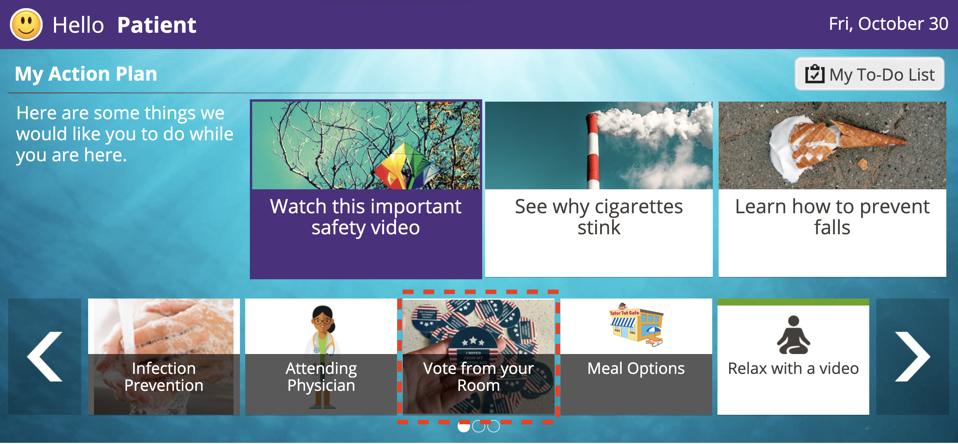
Patient Voting is getting some help to spread the word about hospital-room voting. At Hasbro Children’s Hospital, Patient Voting is newly embedded into the interface patients use to watch TV and get health and hospital information. 

GetWellNetwork, a patient engagement company that provides digital health technology and serves 10 million patients a year in 700 hospitals and clinics nationwide, operates that platform.

The company jumped on the opportunity to help enable parents vote so they wouldn’t have to leave their child’s bedside. GetWellNetwork incorporated Patient Voting into the platform within a day of hearing about the program.

“Our whole philosophy is to help people take an active role in their journey,” said Michael O’Neil, Jr., GetWellNetwork’s founder and CEO. 

The company takes what is a typically powerless human experience and uses digital tools to “put the patient in the pilot’s seat,” O’Neil said. 

Partnering to enable patient voting fits their philosophy. “It’s a perfect opportunity to spring into action and follow this notion of empowerment,” O’Neil said. “It just happens to be in the context of voting in this case.” 

It’s Not Too Late

In the run-up to the election, Patient Voting has experienced a frenzy of requests for help, though it’s not clear how many people vote this way. After the 2018 midterms, Wong and her team contacted state boards of elections to gather such data; they found that most states do not track the number of ballots from hospitalized voters. 

Wong herself is spending part of Monday requesting an emergency absentee ballot on behalf of a patient in Rhode Island. She wouldn’t be allowed to do that everywhere; in North Carolina, for example, healthcare employees are prohibited from witnessing emergency absentee ballots. 

“I see how thankful people are when they’re able to get the information they needed to be able to vote,” said Hayward, who has been responding to patient and family inquiries. “It feels really good to be involved in a nonpartisan effort in this time…Everyone wants to be able to vote and to have their voice heard.”

10 healthcare execs share predictions for nursing in the next 5 years

https://www.beckershospitalreview.com/nursing/10-healthcare-execs-share-predictions-for-nursing-in-the-next-5-years.html?utm_medium=email

The future of nursing infographic | Cipherhealth

The pandemic put nurses on the front lines of the battle against COVID-19 and caused shifts in the way they provide care.

During this year, nurses have adapted to increased adoption of telehealth and virtual patient monitoring, as well as constantly evolving staffing needs. 

These factors — and others, such as the physical and emotional conditions nurses have faced due to the public health crisis — are sure to affect nursing in the years to come. Here, 10 healthcare executives and leaders share their predictions for nursing in the next five years.

Editor’s note: Responses were edited lightly for length and clarity.

Beverly Bokovitz, DNP, RN. Vice President and Chief Nurse Executive of UC Health (Cincinnati): In the next five years, as we continue to encounter a national nursing shortage, I expect to see additional innovative strategies to complement the care provided at the bedside. 

One of these strategies will be some type of robot-assisted care. From delivery of medications to answering call lights — and completing simple tasks like needing a blanket or requesting that the heat be adjusted — we will see more electronic solutions. These solutions will allow for a better patient experience and help to exceed the expectations of our patients as customers.

Of course, nothing can take the place of skilled and compassionate bedside care, but many tasks could be automated — and will be — to supplement the professional nursing shortage.

Natalia Cineas, DNP, RN. Senior Vice President and Chief Nurse Executive of NYC Health + Hospitals (New York City): Nurses will continue to play a vital role in addressing the health inequities and social determinants of health among vulnerable populations as the nursing workforce itself becomes more diverse and inclusive. As the largest segment of the healthcare workforce — with some 4 million nurses active in the U.S. — nurses represent the faces of the communities in which they serve. As America becomes a more diverse and inclusive society, so too will the nursing profession become more diverse and inclusive. Currently, industry estimates indicate that between one quarter to one-third of all U.S. nurses identify as a member of a minority group, with between 19 percent and 24 percent of U.S. nurses identifying themselves as Black/African-American; 5 percent to 9 percent identifying themselves as Hispanic; and about 3 percent identifying themselves as Asian. The percentage of minority nurses has been rising steadily for the past two decades and is expected to continue to climb in the coming years.

Blacks and underserved minority populations face numerous genetic, environmental, cultural and socioeconomic factors that account for health disparities, and the impact is particularly visible in the areas of cardiovascular disease, diabetes, pregnancy and childbirth mortality, and cancer outcomes, as well as the enormous toll of the current novel coronavirus global pandemic, where communities of color have been among the hardest hit populations. 

In New York City alone, statistics compiled by the city’s health department show Blacks and Hispanics together account for 65 percent of all COVID-19 cases; represented 70 percent of all hospitalizations due to COVID-19; and, sadly, 68 percent of all deaths caused by COVID-19. As demonstrated during this pandemic, in the future, technology such as telehealth and virtual patient monitoring will play a major role in the care of patients. There will be a vast need to address social determinants of health by educating and providing resources to allow utilization of this technology such as using “wearable tech” to monitor ongoing health issues, such as high blood pressure, diabetes, heart conditions and other chronic illnesses.

Ryannon Frederick, MSN, RN. Chief Nursing Officer of Mayo Clinic (Rochester, Minn.): Nursing research will experience extraordinary demand and growth driven by a realization that both complex and unmet patient needs can often be best served by the role of a professional registered nurse. Nurses are uniquely positioned to implement symptom and self-management interventions for patients and their caregivers. Significant disruption in healthcare, including increasing use of technology, will lead to a dramatic shift to understand the role of the RN in improving patient outcomes and implementing interventions using novel approaches. Nursing researchers will provide a scientific body of evidence proving equivalent, if not better, patient care outcomes that can be obtained at a lower cost than traditional models, leading to an even greater demand for the role of the professional nurse in patient care. 

Karen Higdon, DNP, RN, Vice President and Chief Nursing Officer of Baptist Health Louisville (Ky.): The value of nursing has never been more apparent. Nurses have led the front line during this pandemic. In the next five years, we must be flexible and creative in establishing new models of care, specifically around roles that support nursing, such as assistant and tech roles. Creating roles with clear role definition, that are attractive and meaningful for nursing support will help build consistent, high-quality models for nursing to lead. This consistency, along with IT capabilities that enhance workflow, will better allow nurses to work at the top of their scope.

Karen Hill, DNP, RN. COO and Chief Nursing Officer of Baptist Health Lexington (Ky.): 2020 was declared the “Year of the Nurse” and this reality has never been more true than realizing the personal and professional sacrifices of nurses in dealing with issues surrounding the pandemic. The next five years will require nursing professionals to be flexible to address new, unknown emerging issues in all settings, to be open to new opportunities for leadership in hospitals, schools and communities and to use technology and telehealth to provide safer care to patients. Nurses need to evaluate our practices and traditions that are value-added and leave behind the task orientation of the past. We need to honor our legacy and create our path.

Therese Hudson-Jinks, MSN, RN. Chief Nursing Officer and Chief Patient Experience Officer at Tufts Medical Center and Tufts Children’s Hospital (Boston): Over the next five years, I expect that the support and retention of clinical nurses will become the top priority of every CNO and executive team, given nurses’ direct impact on supporting the business of healthcare. This will be particularly critical because there will be a concerning shortage of experienced clinical nurses as a result of advancing technologies increasing complexity in care, additional nurse roles created outside traditional areas, fierce competition for talent between large healthcare systems, aging baby boom workforce retiring at higher rates year over year, and a lack of sufficient numbers of PhD-prepared nurses working in academia and supporting higher enrollments.

I also believe that CNOs will be laser-focused on creating the practice environment that enhances retention of top, talented clinical nurses, and we will put a greater emphasis on the influence of effective nursing leadership in reaching that goal. In addition, I fully expect that nurses will be seen more as individuals with talents and experience than ever before — not just a number on a team, but rather a professional with specific, unique, talents that are highly sought after in competitive markets.

Finally, I anticipate that nursing innovation will blossom, given the exposure of the “innovation/solutionist superpower” within nurses during the pandemic. Philanthropy will grow exponentially in support of nursing innovation as a result.

Carol Koeppel-Olsen, MSN, RN. Vice President of Patient Care Services at Abbott Northwestern Hospital (Minneapolis): During the COVID-19 pandemic nurses have been working in difficult physical and emotional conditions, which may lead to significant turnover after the pandemic resolves. Nurses have a commitment to serving others and will persevere until the crisis is past; however, when conditions improve, many nurses may decide to pursue careers outside acute care settings. A possible turnover, coupled with a service economy that has been devastated, may result in large numbers of former service workers seeking stable jobs in nursing. Hospitals will have to be nimble and creative to onboard an influx of new nurses that are not only new to the profession but new to healthcare. Tactics to onboard these new nurses may include the use of retired RNs as mentors, instructor-model clinical groups in the work setting, job shadowing and aptitude testing to determine the best clinical fit.

Jacalyn Liebowitz, DNP, RN. Senior Vice President and System Chief Nurse Officer of Adventist Health (Roseville, Calif.): Over the next five years, I see nurses providing more hospital-based care in the home using remote technology. Based on that shift, we will see lower-acuity patients move into home-based care, and higher-acuity care in hospitals will increase. With that, hospital beds will be used at a different level. My bold prediction is that we will not need as many beds, but we will need higher acute care in the hospitals.

Nurses will learn differently. As we are seeing now, nurses have not been able to train in the traditional way. They are already using more remote technology to educate, onboard and orient to their roles. It looks and feels vastly different, and nurses need to be comfortable with that.

As for patient care, I think data that can be gleaned from wearable biometrics, and the use of artificial intelligence will help predict patient care on a patient-by-patient basis. Nurses will work with AI as part of their thought process, instead of completely focusing on their own judgment and assessment. 

I also believe we are going to face a nursing shortage post-COVID for a few reasons. Due to the emotional and physical toll of responding to a pandemic, some nurses will decide to retire, and another group will leave based on the risks that go hand-in-hand with the profession. 

As for patient care, we are going to collaborate differently. There will be more video conferencing regarding collaboration around the patient. And I think in the future we will see that the full continuum of care will include a wellness plan.

Debi Pasley, MSN, RN. Senior Vice President Chief Nursing Officer of Christus Health (Irving, Texas): I believe the demand for nurses will become increasingly visible and newsworthy throughout the pandemic. This could drive increases in salaries and numbers of qualified candidates seeking nursing as a profession in the medium and long term. The shortage will, however, continue to be a factor, leading to more remote work options to both supplement nursing at the bedside and substitute for in-person care.

Denise Ray, RN. Chief Nursing Executive of Piedmont Healthcare (Atlanta): Nursing schools will need to focus on emergency management and critical care training utilizing a team nursing model. While nursing has become very specialty-driven, the pandemic has demonstrated gaps in our ability to adapt as quickly utilizing a team model where nurses lead and direct care teams. By implementing a team model and enhancing education in the areas of emergency management and critical care, nursing can adapt quickly to the ever-changing environment.

Also, communication with patients and families will take on different dimensions with wider use of tele-therapeutic communication. Nurses will be leaders and liaisons in the process, connecting physicians, patients and patient families virtually. Nurses will play a key role in integrating patient family members as true patient care partners — making sure they have the information they need to serve an active caregiving role for their family members during and after hospitalization. We’ll also see more nurses becoming advanced nurse practitioners, playing an expanded role in all healthcare settings.

An early pardon for overweight turkeys?

https://mailchi.mp/f2794551febb/the-weekly-gist-october-23-2020?e=d1e747d2d8

Thanksgiving's new leftovers: Turkeys too big for farmers to sell - The  Washington Post

Overweight patients infected with COVID-19 have a higher risk of severe disease—but it turns out the pandemic may have brought a reprieve for overweight turkeys. According to a recent Washington Post piece, turkey farmers are facing a glut of, ahem, larger birds, as social distancing and reduced travel are expected to result in fewer people around the Thanksgiving dinner table, and fewer families springing for a 20-pound bird.

Farmers commit to their chicks as early as January, making a bet on the ratio of larger (male) toms versus smaller (female) hens to meet holiday demand, so many were locked into their plans before the pandemic hit. Demand for larger birds has also been hit by fewer orders for piece parts: with fall Renaissance festivals canceled, demand for turkey legs cratered. (Spare a thought for mead brewers as well.) Sadly, these soon-to-be-spared holiday heavyweights are unlikely to spend the winter roaming free—look for a rise in ground turkey supply a few months down the road. 

How to safely celebrate Thanksgiving during the pandemic

Smaller birds for smaller gatherings: just another way our “Pandemic Thanksgiving” will look like none we’ve experienced before.

Experts Slam The White House’s ‘Herd Immunity’ Plan

Experts warn Trump's misinformation about coronavirus is dangerous

The White House is reportedly embracing a herd-immunity approach focused on “protecting the elderly and the vulnerable” but experts are calling the plan dangerous, “unethical”, and equivalent to “mass murder”.

The news comes following a petition titled The Great Barrington Declaration, which argued against lockdowns and school and business closures and got almost 500,000 signatures – although some of them were fake.

“Current lockdown policies are producing devastating effects on short and long-term public health,” the declaration states, adding, “The most compassionate approach that balances the risks and benefits of reaching herd immunity, is to allow those who are at minimal risk of death to live their lives normally to build up immunity to the virus through natural infection, while better protecting those who are at highest risk. We call this Focused Protection.”

Essentially, herd immunity is when enough people are immune to a disease, like Covid-19, that the disease can’t be transmitted as easily and thus provides indirect protection.

It’s been rumoured that the government has been leaning towards this plan of action for some time now, although this is the first real admission.

In response to today’s news, experts around the world have been voicing their concerns.

And this isn’t the first time we’ve heard experts say herd immunity is not a good idea.

For example, the head of the World Health Organization said Monday that allowing the novel coronavirus to spread in an attempt to reach herd immunity was “simply unethical.”

Similarly, the National Institutes of Health (NIH) director Francis Collins also denounced herd immunity as a viable plan.

“What I worry about with this is it’s being presented as if it’s a major alternative view that’s held by large numbers of experts in the scientific community. That is not true. This is a fringe component of epidemiology. This is not mainstream science. It fits into the political views of certain parts of our confused political establishment,” he said in an interview.

Not to mention studies continue to show that Sweden’s attempts at herd immunity have failed and have resulted in a higher Covid-19 death toll than expected.

As more research comes out, scientists are starting to learn that Covid-19 immunity, even in those who were severely infected, can fade after a few weeks.

This is why we’ve seen cases of reinfection and why many experts are advising against a herd immunity plan.  

Currently less than 10% of the population in the U.S. are immune to Covid-19 but for herd immunity to be achieved most experts estimate between 40% to 80% of the population would need to be infected.

To put that into context, that means around 197 million people would need to be infected in America. And assuming that the Covid-19 fatality rate is somewhere between 0.5% and 1%, based on numbers from the World Health Organization (WHO), more than 1 million people would die – at minimum.

William Haseltine, Chair and President of ACCESS Health International, told CNN “herd immunity is another word for mass murder. We are looking at two to six million Americans dead – not just this year but every year.”  

This is an unmitigated disaster for our country – to have people at the highest levels of our government countermanding our best public health officials. We know this epidemic can be put under control. Other countries have done it. We are doing the opposite.”

Covid-19 has killed more police officers this year than all other causes combined, data shows

https://www.washingtonpost.com/business/2020/09/02/coronavirus-deaths-police-officers-2020/?utm_campaign=wp_main&utm_medium=social&utm_source=facebook&fbclid=IwAR3KWZcuMmVXy_R7mDh_m58_BLdQkz6rw5iU9nsii950Bx46lwc0nbfC3p4

By one estimate, coronavirus deaths among law enforcement are likely to surpass those of 9/11.

In a speech this week in Pittsburgh, Joe Biden linked the Trump administration’s mismanagement of the coronavirus to its handling of protests and riots with a surprising statistic: “More cops have died from covid this year than have been killed on patrol,” he said.

The Democratic presidential nominee’s claim is true, according to data compiled by the Officer Down Memorial Page and the National Law Enforcement Officers Memorial Fund, two nonprofits that have tracked law enforcement fatalities for decades.

As of Sept. 2, on-the-job coronavirus infections were responsible for a least 100 officer deaths, more than gun violence, car accidents and all other causes combined, according to the Officer Down group. NLEOMF reported a nearly identical number of covid-related law enforcement deaths.

NLEOMF reported a nearly identical number of covid-related law enforcement deaths. It also noted that fatalities due to non-covid causes are actually down year-over-year, undermining President Trump’s claims that “law enforcement has become the target of a dangerous assault by the radical left.”

Both organizations only count covid deaths “if it is determined that the officer died as a result of exposure to the virus while performing official duties,” as the National Law Enforcement Officers Memorial Fund put it. “Substantive evidence will be required to show the death was more than likely due to the direct and proximate result of a duty-related incident.”

In addition to the 100 confirmed coronavirus fatalities listed on the Officer Down website, the nonprofit said it is in the process of verifying an additional 150 officer deaths due to covid-19 and presumed to have been contracted in the line of duty, said Chris Cosgriff, executive director of ODMP, in an email.

“By the end of this pandemic, it is very likely that COVID will surpass 9/11 as the single largest incident cause of death for law enforcement officers,” he wrote. Seventy-one officers were killed in the attacks on the twin towers, one officer was killed on United Flight 93, and more than 300 have passed away since then as a result of cancer contracted in the wake of the attacks, according to ODMP.

At the state level, Texas stands out for having the highest number of law enforcement covid fatalities with at least 21, according to NLEOMF. At least 16 of those represent officers with the Texas Department of Criminal Justice, which manages the state’s correctional facilities. Louisiana has 12 covid-related officer deaths. Florida, New Jersey and Illinois round out the top five with eight each.

According to both organizations, officers in correctional facilities account for a substantial number of covid-related law enforcement deaths, reflecting the dire epidemiological situation in many of the nation’s prisons and jails.

“Corrections officers and Corrections Departments have been hit harder than regular police agencies,” Cosgriff said. According to the Marshall Project, a nonprofit criminal justice news site, more than 100,000 U.S. prison inmates have tested positive for coronavirus and at least 928 have died. There have been an additional 24,000 cases and 72 deaths among prison staff.

ODMP’s tally includes police officers, sheriff’s deputies, correctional officers, federal law enforcement officers and military police officers killed outside of military conflict. NLEOMF’s inclusion criteria are similar.

This year, Trump signed the Safeguarding America’s First Responders Act of 2020, which guarantees law enforcement officers and their survivors federal benefits if the officer is killed or disabled by covid. For legal purposes, the legislation presumes that covid cases among officers were contracted in the line of duty.


San Francisco’s lonely war against Covid-19

https://www.vox.com/future-perfect/2020/7/30/21331369/london-breed-coronavirus-covid-san-francisco-california-trump

On June 25, San Francisco Mayor London Breed was excited the city’s zoo would finally reopen after closing down for months in response to Covid-19. She visited the facilities, posting photos on social media with a mask on and giraffes in the background.

“I know people are eager to get back to some sense of normalcy, especially families and children,” she tweeted. And it looked like her city was taking a step toward it.

The day after the visit, Breed had to announce the sad news: San Francisco’s reopening plan — for the zoo and various other facilities, including hair salons and indoor museums — would have to be put on hold.

“COVID-19 cases are rising throughout CA. We’re now seeing a rise in cases in SF too. Our numbers are still low but rising rapidly,” she tweeted. “As a result, we’re temporarily delaying the re-openings that were scheduled for Monday.”

While state and local leaders nationwide were pushing ahead with reopening, Breed pulled back. “I listened to our public health experts,” she told me. “It’s hard. The last thing I want to do is go out there and say one thing and then have to say something else. But I think it’s important that people understand things can change. This is a fluid situation.”

The decision — taken weeks before California Gov. Gavin Newsom’s move to shut down risky indoor venues statewide in July — was emblematic of San Francisco’s cautious approach throughout the coronavirus crisis. The city joined a regional stay-at-home order in March, before the rest of the state and New York, which became a Covid-19 epicenter, imposed their own orders. It was also slower to reopen: When California started to close down indoor venues again, the order largely didn’t affect San Francisco — because the city never reopened bars and indoor dining, among other high-risk venues, in the first place.

By and large, the approach — aided by regional cooperation, with leadership from Santa Clara County Health Officer Sara Cody, and widespread social distancing and mask-wearing by the public — has kept cases of Covid-19 manageable. In the spring, California and the Bay Area saw some of the first coronavirus cases, but quick action since then has let San Francisco and the surrounding region avoid turning into a major hot spot.

The increase in cases this summer has exceeded the April peak and fallen particularly hard on marginalized groups, especially Latin communities. But that, too, seems to be turning around: New cases started to fall by July 20 — almost a week before the state as a whole began to plateau. San Francisco has maintained less than 60 percent the Covid-19 cases per capita as California, and less than 30 percent the deaths per capita. Its caseload and death toll are lower than other large cities, including Washington, DC, and Columbus, Ohio, and far lower than current hot spots like Arizona and Florida.

“It’s doing as well as it can, given what’s going on around it,” Peter Chin-Hong, an infectious disease expert at the University of California San Francisco, told me.

Experts and local officials say the summer increase in cases doesn’t take away from what San Francisco has done. What it shows, instead, is the limits of what a local government can do — and the risk of relying on a county-by-county, state-by-state approach to a truly national crisis.

“We have to accept that we are all interrelated in a pandemic,” Kirsten Bibbins-Domingo, an epidemiologist at UCSF, told me. “We have to help each other out.”

The city’s leaders agree, pointing to some of the problems that have addled their response to the pandemic as the federal government did little — from a lack of personal protective equipment for health care workers to continued shortfalls in tests for Covid-19.

“We are not isolated; we are interconnected,” Grant Colfax, director of the San Francisco Department of Public Health, told me. “The virus exploits that very interconnectedness of our society. Without a consistent, robust, and sustained federal response that is driven by science … eventually things cannot be sustained.

This is why, experts argue, federal leadership is so key: The federal government is the one entity that could address these problems on a large scale. But President Donald Trump has ceded his role to the states and private actors — what his administration called the “state authority handoff” and the New York Times described as “perhaps one of the greatest failures of presidential leadership in generations.”

That’s left cities and states to fend for themselves. San Francisco has made the best of it, with the kind of model that experts argued could have prevented the current coronavirus resurgence if it had been followed nationally.

“There’s a value to being cautious,” Bibbins-Domingo said. “Any type of reopening is going to come with some increase in cases. That’s what we are learning in the pandemic. That’s what the infectious disease experts told us was going to happen. Places that thought they could just reopen without caution have really paid the price for it.”

San Francisco’s leaders were ahead on Covid-19

Breed started to really worry about the coronavirus in February, when she saw a glimpse of the future.

Stories of overwhelmed hospitals in Wuhan, China, showed that Covid-19 could cripple health care systems. But Breed believed, she said, that San Francisco’s larger, more advanced health care system could handle the blow. Then her advisers and experts told her differently — that a situation like Wuhan’s really could happen in San Francisco if she didn’t act.

“The shock I got,” Breed said. “We have all these hospitals, all these places where we have some of the most incredible doctors and research institutions. So in my mind, I’ve always thought this is where you want to be if something happens. To be told that here’s what our capacity is, here’s what happens if we do nothing, and what we need to prepare for, it really did blow my mind.”

At that point, she concluded, “We need to shut the city down to make sure this doesn’t happen.”

The virus has been the biggest challenge yet for Breed, who first became mayor in 2017 when her predecessor died, before she was elected to the role in 2018, having previously served on the Board of Supervisors.

But Breed, with the guidance of the Bay Area’s public health officials, has consistently kept the city ahead on Covid-19. The day before Trump claimed, falsely, that coronavirus cases would go from 15 to nearly zero in the US, Breed on February 25 declared a local state of emergency over the virus. Three days before California imposed a stay-at-home order and nearly a week before New York state did, San Francisco County, with Breed’s full backing, on March 16 joined the five other Bay Area counties in issuing the country’s first regional stay-at-home order.

Breed was ahead of not just much of the nation, but her progressive peers as well. On March 2, she warned on Twitter that the public should “prepare for possible disruption from an outbreak,” advising people to stock up on essential medications, make a child care plan in case a caregiver gets sick, and plan for school closures. The same day, New York City Mayor Bill de Blasio, a fellow Democrat, tweeted that he was “encouraging New Yorkers to go on with your lives + get out on the town despite Coronavirus.”

New York City would go on to suffer one of the worst coronavirus outbreaks in the world, with its total death rate standing, as of July 29, at 272 per 100,000 people — more than 45 times as high as San Francisco’s rate of 6 per 100,000. (De Blasio’s office didn’t respond to a request for comment.)

San Francisco’s death toll is also fairly low compared to that of some other areas in California — a fraction of Los Angeles County’s 45 per 100,000 and Imperial County’s 103. San Mateo County, a Bay Area county that reopened more aggressively, has more than double the death rate, at 15 per 100,000. San Francisco looks even better compared to cities and counties beyond California — with less than a tenth the deaths per capita as Washington, DC, and about a sixth as many as Franklin County, Ohio, where Columbus is, and Fulton County, Georgia, where most of Atlanta is.

At the time of the initial stay-at-home order, Chin-Hong said, people wondered if Breed was overreacting. “Of course, in hindsight, she was very prescient. She knew what was coming.”

There’s good reason to believe that San Francisco’s early action, particularly its lockdown, helped. The research indicates that stay-at-home orders and similar measures worked, with one preliminary Health Affairs study concluding:

Adoption of government-imposed social distancing measures reduced the daily growth rate by 5.4 percentage points after 1–5 days, 6.8 after 6–10 days, 8.2 after 11–15 days, and 9.1 after 16–20 days. Holding the amount of voluntary social distancing constant, these results imply 10 times greater spread by April 27 without SIPOs (10 million cases) and more than 35 times greater spread without any of the four measures (35 million).

That’s not to say San Francisco performed flawlessly.

Even the experts who praised Breed simultaneously raised alarms about how the virus had disproportionately affected minority populations — with about half of confirmed Covid-19 cases affecting Latin people, even though they comprise about 15 percent of the local population. The city’s large homeless population is also a major point of concern, with a big outbreak at the largest local homeless shelter. These are the kinds of blind spots with Covid-19 that have shown up across the country — as minority groups, in particular, are more likely to work in the kind of job deemed “essential” — and San Francisco isn’t immune to them.

“Myself, just taking care of patients, I know that some of those patients are going back to work sick if they don’t have to be hospitalized,” Yvonne Maldonado, an infectious disease expert at Stanford, told me. “They can’t afford not to work.”

Local officials point out they have taken aggressive action to shield marginalized populations — creating support programs for them, fielding contact tracing calls in Spanish, and setting up more than 2,500 hotel rooms for the vulnerable, including homeless people. And the disproportionate case count for Latin people is from a baseline of cases that’s lower than other parts of the state and country with similar disparities. Out of 57 Covid-19 deaths in the city, only one was a homeless person.

Breed acknowledged the challenge, describing the city’s response to Covid-19 as a work in progress as she and other officials struggle with the uncertainty that surrounds a virus that’s still relatively new to humans.

“That’s hard,” Breed said. “We have to make the hard decisions. What we hope people will understand is why. We keep trying to call attention to what’s happening or could happen to any of us. It’s a constant struggle.”

That’s especially compounded by the massive sacrifices that people have to make as they’re forced to stay at home, potentially giving up income, child care, and social connections.

Breed is aware this is no easy task. On a personal level, she said, “I’m tired of being in the house. I’ll tell you that much.” She acknowledged that the shutdown has left many people struggling, “because their livelihoods are at stake, their ability to take care of themselves is at stake.”

But the alternative, she suggested, is much worse. It’s not just more Covid-19 cases, hospitalizations, and deaths — but harm to the economy if a major outbreak forces cities and states to shut down all over again. As a preliminary study of the 1918 flu pandemic found, the cities that came out economically stronger back then took more aggressive action that hindered economies in the short term but better kept infections and deaths down overall.

Experts echoed a similar sentiment. “Dead people don’t shop. They don’t spend money. They don’t invest in things,” Jade Pagkas-Bather, an infectious disease expert and doctor at the University of Chicago, told me. “When you fail to invest in the health of your population, then there are longitudinal downstream effects.”

Breed had a key ally in San Francisco: The public

Chin-Hong, who lives and works in the Bay Area, recalled a recent experience he had at the grocery store. With the place at full capacity, people were waiting outside the store in a line. One person joined the line without a mask on. People began to eye him disapprovingly. He grew visibly nervous, at one point pulling his shirt over his mouth. After a while, a store staff member came out and gave him a mask, which he quickly put on.

The story is emblematic of one of Breed’s key advantages as she has pushed forward with aggressive actions against the coronavirus: San Francisco’s public is by and large on board, with a lot of solidarity built around social distancing and masking.

“The politician is only as good as her constituents,” Chin-Hong said. “It’s a key factor in all of this.”

In some ways, the public was even ahead of Breed. In the weeks before Bay Area counties issued a stay-at-home order, major tech companies in the region, like Google and Microsoft, told employees to work from home. That partly reflects tech employees’ ability to work from home with fewer disruptions, but also a greater sense of vigilance for an industry with close ties to the countries in East Asia that saw Covid-19 cases earlier.

It wasn’t just the tech sector. Restaurant data from OpenTable shows San Francisco was starting to avoid dining out by the first week of March, while most other cities in the US saw at best small decreases, if any changes: On March 1, dining out via OpenTable was down 18 percent in San Francisco, compared to down 3 percent in Los Angeles, down 2 percent in New York City, up 2 percent in Houston, and up 21 percent in Philadelphia. From that point forward, San Francisco’s numbers steadily dropped, while much of the US fluctuated before the depth of the outbreak became clearer nationwide.

San Francisco has also been better than much of the country about mask-wearing.New York Times analysis found there’s a roughly 60 to 90 percent chance, depending on the part of the city, that everyone is masked in five random encounters in San Francisco. In other parts of the US, including cities, the percent chance can drop to as low as 20, 10, or the single digits.

Even in California, it wasn’t guaranteed things would go like this. Orange County’s chief health officer resigned in June due to public resistance against a mask-wearing order. Sheriffs in Orange, Riverside, Fresno, and Sacramento counties said they wouldn’t enforce Gov. Newsom’s June order requiring masks in public and high-risk areas. With Trump and other Republicans suggesting that social distancing and masking requirements were part of a broader overreaction to the pandemic and an attempt at government overreach, and people genuinely suffering due to the economic downturn, San Francisco could have taken a very different direction.

We don’t know for certain why San Francisco’s public is more aggressive about precautions against Covid-19. One advantage San Franciscans have is many of them, particularly those in the tech sector and other office jobs, can work from home much more easily than, say, “essential” agricultural employees. The city also has close ties to East Asia, including China, potentially offering personal connections — and an early warning — to the first coronavirus outbreaks and the value of masking. San Francisco is also very progressive and Democratic, which helps as physical distancing, masking, and related measures have become politically polarized. Perhaps Breed’s more aggressive communication paid off.

Whatever the cause, there’s good reason to believe the public embrace of precautions helped the city. A review of the research published in The Lancet found that “evidence shows that physical distancing of more than 1 m is highly effective and that face masks are associated with protection, even in non-health-care settings.”

Again, it’s not perfect. Breed told me of a recent trip to a local store that was clearly far above the city’s reduced standards of capacity, with some of the staff and customers not wearing masks. “I was like, ‘What the heck is this? This is ridiculous,’” she said. “I called [the San Francisco Department of] Public Health, and they put a stop to it.”

More recently, Breed had to get tested for coronavirus after she went to an event attended by someone who reportedly knew they were positive. She used the moment to lightly admonish those who didn’t follow the recommended precautions: “I know people want to be out in public right now, but this disease is killing people. It’s simply reckless for those who have tested positive [to] go out and risk the lives of others,” she tweeted. “I cannot stress this enough: if you test positive, it’s on you to stay home and not expose others.” (Breed tested negative.)

But San Francisco’s public is seemingly better than much of the country at following the recommended precautions. Beyond Breed’s actions, that’s a potent explanation for why San Francisco has done relatively well — and why other parts of the state and country haven’t.

Local governments can only do so much about a pandemic

As successful as San Francisco has been relative to other parts of California and the US, it hasn’t escaped the recent rise in Covid-19 cases untouched. As of July 22 (the most recent reliable local data available), the city hit a seven-day average of 98 new cases a day — down from a peak of 120 several days prior but up from the previous peak of 48 in mid-April.

More than reflecting San Francisco’s own failures, experts said the upward swing in cases reflects the limits of what a local government can do when a virus spreads nationally and globally. When a virus can cross borders, there’s only so much San Francisco can do if its residents can drive an hour or two to a county where bars and indoor dining are open for service, or to meet with family members in an area that’s hit much harder by Covid-19.

“When you have different rules for different counties, it’s very confusing,” Maldonado said. “People lose the message.”

There are similar limitations to what even California can do. It can impose its own lockdown, but it has less control over cases from Arizona, Nevada, Mexico, or other parts of the globe. While the state has taken steps to build up its testing capacity — surpassing the benchmark of 150 tests per 100,000, which is the equivalent of 500,000 tests nationwide — it can only go so far if there are constraints around the country for testing.

The testing problem is especially acute now: With new outbreaks across the US, demand for tests climbed as supply constraints reappeared. That’s led to waiting periods of up to weeks for getting results back — making tests practically useless for confirming, tracing, and containing infections before they have time to spread.

But there are limits to what San Francisco or California can do if the bottlenecks for testing are originating in other parts of the country or world — whether they’re due to epidemics in Arizona and Florida, or because factories in the Northeast and South can’t produce enough swabs to collect samples or reagents to run tests.

“We need a national plan,” Cyrus Shahpar, a director at the global health advocacy group Resolve to Save Lives, told me. “In terms of the structures to improve the supply chain or procure more stuff for the whole country, that’s a federal level of support. You need that to be in place.”

The Trump administration, however, has explicitly left most of these issues for states to solve. The White House’s testing plan declared that the federal government is merely a “supplier of last resort,” leaving it to local and state governments and private actors to fix choke points along the testing supply chain. The New York Times explained this was part of a broader “state authority handoff” plan that would “shift responsibility for leading the fight against the pandemic from the White House to the states.”

To the extent the federal government has provided support, Trump has actively undermined it. When the federal government released a phased plan for state reopenings, Trump called on states to reopen faster — to supposedly “LIBERATE” them from economic calamity. After the Centers for Disease Control and Prevention recommended people in public wear masks, Trump said it was a personal choice, refused for months to wear a mask in public, and even suggested that people wear masks to spite him (although a recent tweet seemed to support masking). (The White House didn’t return a request for comment.)

In my interviews, local officials, health care workers, and experts repeatedly complained about the problems caused by federal inaction. Breed lamented that San Francisco, and California, couldn’t rely on federal support to get personal protective equipment for health care workers, particularly in the early stages of the pandemic. A San Francisco Department of Public Health spokesperson told me that testing took time to scale up while the federal government did little to address supply constraints, commenting that the mixed messaging and inaction from the federal government “are hampering local efforts to be as effective as we would like to be.”

Over time, even the once-proactive California let its guard down. As Gov. Newsom faced pressure from local governments and businesses to reopen the state quickly, he allowed counties to reopen at a quicker pace if they met certain metrics. That led to new outbreaks, particularly in Central and Southern California — each of which presented a risk of bleeding over to the Bay Area. As Bibbins-Domingo said, county-by-county variations “have not been helpful” for suppressing the virus in San Francisco or statewide.

California Health and Human Services Secretary Mark Ghaly said that, like everyone else, the state was still learning how to properly combat the pandemic. But he argued it does make sense to tailor local responses to Covid-19 to what’s happening locally — and that’s what the state tried to do as it let some counties move quicker than others, while keeping some oversight by enforcing certain criteria before counties moved ahead.

The state is still “figuring out … the balance between hundreds of different things,” Ghaly told me. That includes, he added, “how you support counties making local decisions while maintaining some level of cohesiveness at a regional and statewide level so we don’t erode gains.”

Still, the fractured nature of federalism doesn’t help for fighting a virus that ignores local, state, and national borders.

A recent study in Science backed that up. Running simulations for Europe, researchers concluded that better-coordinated action within the European Union can help suppress Covid-19 better than different countries acting in different ways. Drawing on that finding, the authors concluded:

The implications of our study extend well beyond Europe and COVID-19, broadly demonstrating the importance of communities coordinating easing of various [non-pharmaceutical interventions] for any potential pandemic. In the United States, [non-pharmaceutical interventions] have been generally implemented at the state-level, and because states will be strongly interconnected, our results emphasize national coordination of pandemic preparedness efforts moving forward.

That the US has by and large stuck to a state-by-state and county-by-county approach to public health — an approach that predates the coronavirus pandemic — can help explain, then, why the country has continued to fail to control Covid-19 in the same way countries with strong national plans and, in some cases, international cooperation haven’t. To this day, America reports among the highest rates of coronavirus cases and deaths in the world.

In that context, with outbreaks raging around San Francisco and California, there’s only so much any single local or state government could do. “When you look at success stories of countries on Covid, you had a strong central voice,” Chin-Hong said.

So while San Francisco has done a lot right, it will take the rest of the country adopting a similar approach for the city, the broader Bay Area, or anywhere else in the US to really be safe from the coronavirus.