As the economic situation has worsened over the past few months, we’ve been working with several health systems to recalibrate strategy. For many, the anticipated “post-COVID recovery” period has turned into a struggle to reverse declining (often negative) margins, while still scrambling to address mounting workforce shortages. All this amid continued pressure from disruptive competitors and ever-rising consumer expectations.
In the graphic above, we’ve pulled together some of the most important changes we believe health systems need to make. These range from improvements to the operating model (shifting to a team-based approach to staffing, greater use of automation where appropriate, and moving to asset-light capital strategies) to transformations of the clinical model (moving care into lower-cost outpatient and community settings, integrating virtual care into clinical delivery, and creating tighter alignment with key physicians).
In general, the goal is to deliver lower-cost care in less expensive settings, using less expensive staff.
But those cost-saving strategies will need to be coupled with a new go-to-market approach, including new payment models that reward systems for shifting away from high-cost (and highly reimbursed) care models.
Employers and consumers will expect more solution-based offerings, which integrate care across the continuum into coherent bundles of service. This will require a more deliberate focus on service line strategies, moving away from a fragmented, inpatient-centric model.
Contracting approaches must align payment with this shift, changing incentives to reward coordinated, cost-effective, outcomes-driven care.
A key insight from our discussions with health system leaders: short-term cost-cutting initiatives to “stop the bleed” won’t suffice—instead, more permanent solutions will be required that address not only the core operating model, but also the approach to revenue generation.
The post-COVID environment is turning out to be a lot tougher than many had expected, to say the least.
In states with laws that criminalize performing abortions, physicians are facing the dilemma of having to wait until a pregnant patient’s death is imminent to perform a potentially lifesaving procedure. Reporting from STAT Newsreveals how these laws are disrupting care. A physician in Missouri, which outlaws all abortions unless the life of the mother is in danger, described having to spend hours getting clearance from a hospital ethics team to perform the procedure on a patient with an ectopic pregnancy.
Even non-pregnancy care is being impacted. An arthritis patient taking methotrexate, which can also be used for abortion, was told by her doctor that all prescriptions for the drug are on pause due to legal uncertainty.
The Gist: Doctors and hospital legal counsel are dealing with a new legal landscape, marked by restrictive, ill-defined anti-abortion laws that fail to clarify what constitutes a medical emergency.
Physicians are forced to interpret unclear laws, often written without help from medical professionals, and many feel compelled to wait until patients are in dangerous, life-threatening situations to provide care—the opposite of what was instilled in them during years of training.
As part of the 2023 Physician Fee Schedule proposed rule, the Centers for Medicare & Medicaid Services (CMS) outlined major changes to the Medicare Shared Savings Program (MSSP), with the goals of increasing participation in the program and improving health equity.
The agency hopes their revisions to the benchmarking methodology, which will advantage smaller accountable care organizations (ACOs) and those enrolling large numbers of underserved beneficiaries, will change the trajectory of the program.
With participation among providers stagnating in recent years, the new rules represent a recognition from CMS that MSSP, in its current form, is likely to increase spending rather than generate significant savings. The rule also includes a 3.9 percent decrease in the “conversion factor” for physician payment, which has already drawn outrage from the American Medical Association and other physician groups.
The Gist:There is little reason to expect that these modifications—as significant as they are—will be meaningful to beneficiaries or to the Medicare program’s overall sustainability. Although it is heartening to see CMS admit that ACOs are on course to violate the statutory requirement that the program not increase spending, the proposed changes would net only $14.8B in savings over a twelve-year period—a rounding error for a program that spent $830B in 2020 alone. Meanwhile the 11M beneficiaries attributed to MSSP ACOs are dwarfed by the 28M enrolled in MA.
For many health systems and physician groups—particularly those who are most progressive in managing risk—MSSP is now a sideshow to their Medicare Advantage (MA) strategies. The federal government has made two “bets” on how to lower health spending for seniors, and the dollars spent on enticing insurers to grow their MA businesses (in the form of subsidies) far outweigh the effort to encourage provider participation in ACOs—a clear sign of Medicare’s priorities.
But with MA currently not generating savings compared to fee-for-service Medicare, cuts in per-beneficiary spending in MA will be necessary to achieve savings in the long term.
As this summer heats up, so has the spread of the hot new version of COVID-19.
Why it matters: This subvariant of Omicron called BA.5 — the most transmissible subvariant yet — quickly overtook previous strains to become the dominant version circulating the U.S. and much of the world.
BA.5 is so transmissible — and different enough from previous versions — that even those with immunity from prior Omicron infections may not have to wait long before falling ill again.
What they’re saying: “I had plenty of friends and family who said: ‘I didn’t want to get it but I’m sort of glad I got it because it’s out of the way and I won’t get it again’,” Bob Wachter, chairman of the University of California, San Francisco Department of Medicine told Axios. “Unfortunately that doesn’t hold the way it once did.”
“Even this one bit of good news people found in the gloom, it’s like, ‘Sorry’,” Wachter said.
State of play: This week, the CDC reported BA.5 became the dominant variant in the U.S., accounting for nearly 54% of total COVID cases. Studies show extra mutations in the spike protein make the strain three or four times more resistant to antibodies, though it doesn’t appear to cause more serious illness.
Hospital admissions are starting to trend upward again, CDC data shows, though they’re still well below what was seen during the initial spread of Omicron.
It’s unclear whether that could be indicating an increase in patients in for COVID, or patients who happen to have COVID, Wachter said. “We’re up in hospitalizations around 20% but with a relatively small number of ICU patients,” Wachter said about COVID cases at UCSF.
In South Africa, the variant had no impact on hospitalizations while Portugal saw hospitalizations rise dramatically, Megan Ranney, academic dean at the Brown University School of Public Health told Axios.
“So the big unknown is what effect it’s going to have on the health care system and the numbers of folks living with long COVID,” she said.
Yes, but: “I’m certainly hearing about more reinfections and more fairly quick reinfections than at any other time in the last two and a half years,” Wachter said.
Zoom in: That is also largely the experience of the surge seen firsthand in New York City by Henry Chen, president of SOMOS Community Care, who serves as a primary care physician across three boroughs of the city.
With this particular variant, he said: “The symptoms are pretty much the same but a little bit more severe than the last wave. It’s more high fever, body ache, sore throat and coughing,” Chen said, adding his patient roster is mostly vaccinated.
But it is occurring among patients who’d gotten the virus only three or four months ago, he said.
The big picture: Another summertime wave of cases could prolong the pandemic, coming after many public health precautions were lifted and with available vaccines losing their efficacy against the ever-evolving virus.
The bottom line: The messaging isn’t to panic, but to understand the virus is likely spreading in local communities much more than individuals realize due to shrinking testing programs — and without the level of protection they might assume they have.
“If you don’t want to get sick, you still need to be taking at least some precautions,” Ranney said. “[COVID] is still very much among us.”
The U.S. economy added 372,000 jobs last month, while the unemployment rate held at 3.6%, close to the lowest level in a half-century, the government said on Friday.
Why it matters: Jobs growth remains healthy, even as the Federal Reserve tries to slam the brakes on the economy to contain decades-high inflation.
Forecasts called for 270,000 payrolls to have been added in June.
By the numbers: Job gains in April and May were 74,000 lower than initially estimated.
The labor force participation rate — the share of the population employed or looking for a job — ticked down slightly to 62.2%.
Wages grew 5.1% from the prior year, compared to 5.2% in May.
The backdrop: There has been a spate of companies announcing layoffs, rescinding job offers and pausing hiring, though these developments have largely been concentrated in sectors like housing and technology.
The Fed, meanwhile, delivered its biggest interest rate hike since 1994 last month — the latest move in its aggressive bid to chill the economy and the labor market to choke off inflation.
Sunny Balwani, the former president and chief operating officer of bankrupt blood-testing company Theranos, on Thursday was found guilty of 12 counts of conspiracy and fraud against certain investors and patients.
It’s a similar verdict to one handed down in January to Theranos founder and ex-CEO Elizabeth Holmes, who once dated Balwani.
Why it matters: Balwani isn’t a household name like Holmes, but he was instrumental in building a billion-dollar house of cards that duped both investors and patients.
Courtroom drama: Balwani’s attorneys tried to pin the blame for Theranos’ failures on Holmes, much as her attorneys had tried to blame Balwani.
As we wrote when the trial began: Holmes tried to thread an incredibly narrow rhetorical needle, denying the existence of fraud while also redirecting blame. Balwani seems to be attempting something similar; claiming he was a savvy executive with lots of past success, but also a naif who was bamboozled by Holmes.
But prosecutors, who originally wanted to try the pair together, often used Balwani’s own words against him. For example, they presented a text message from Balwani to Holmes that read: “I am responsible for everything at Theranos.”
One big difference between the trials, however, was that Balwani didn’t testify in his own defense.
Details: Balwani was convicted on all 12 counts brought against him, after nearly five days of jury deliberations. This includes a wire fraud charge related to a $100 million investment in Theranos from the family of former U.S. Education Sec. Betsy DeVos.
Holmes had been convicted on four of seven counts, each one related to investors and carrying a maximum sentence of 20 years in prison.
Look ahead: Expect Balwani to appeal the verdict, as has Holmes already has done.
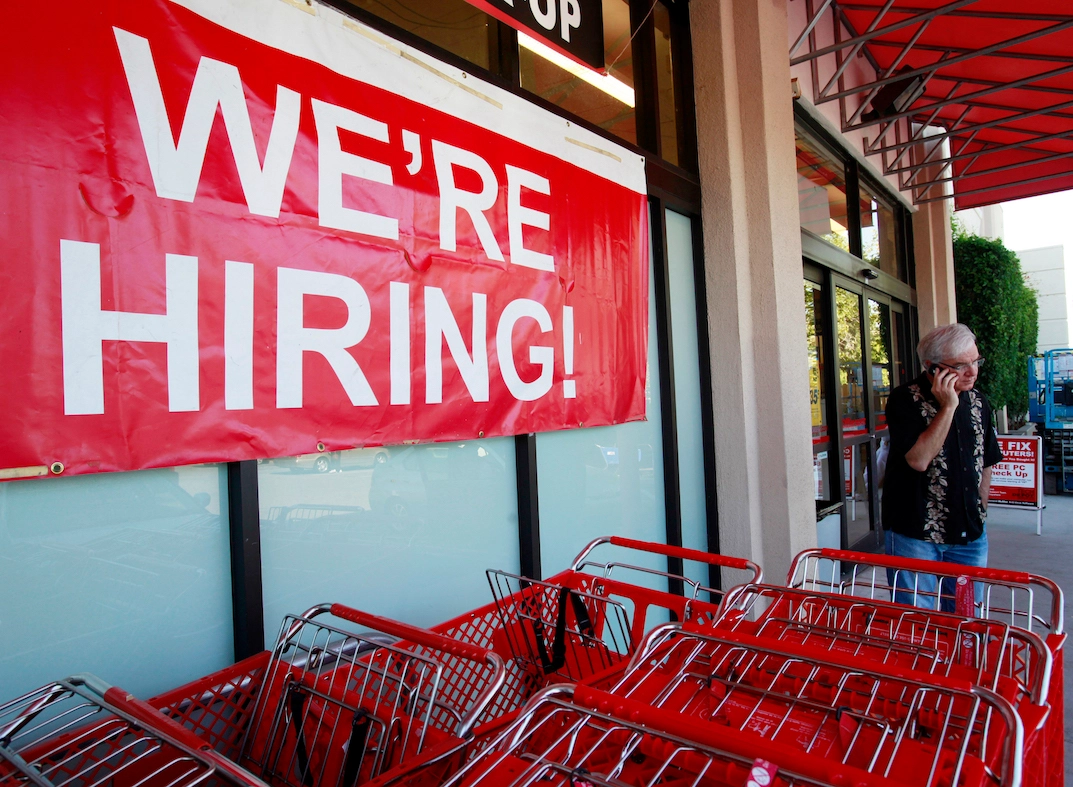
Job openings fell slightly in May as demand for workers remained near record highs, according to data released Wednesday by the Labor Department, even amid growing concerns of a potential recession.
The number of open jobs listed in the U.S. on the final business day of May totaled 11.3 million, dropping from 11.7 million in April after seasonal adjustments. Though job openings fell in May, hires, layoffs and quits stayed roughly even with their April numbers, according to the May Job Openings and Labor Turnover Survey (JOLTS) report.
The JOLTS report showed a labor market still stacked strongly for workers in May, a month when the U.S. added 390,000 jobs and saw the jobless rate hold strong at 3.6 percent. Despite the decline in job openings, there were still almost two open gigs for each unemployed American.
That mismatch can give workers many opportunities to find new jobs with better compensation and career opportunities than their current ones.
“This is not what a recession looks like. The May 2022 JOLTS data obviously lags what’s happening in the labor market presently, but all signs are that it remains strong,” wrote Nick Bunker, research director at Indeed.com, in a Wednesday analysis.
“If the labor market were quickly and suddenly taking a downturn, we would see employers’ demand for new hires drop and their willingness to let workers go increase. For now, we aren’t seeing a sudden move in either direction.”
Businesses hired roughly 6.5 million workers and lost 6 million in May, both in line with April totals. The percentage of the workers who quit their jobs in May fell to 2.8 percent, just 0.1 percentage points from a record high of 2.9 percent set earlier this year.
With ample jobs available and people still eager to leave in search of better work, businesses have avoided laying off employees over fears they could be hard to replace. Roughly 1.4 million workers were laid off in May, slightly higher than April’s total of 1.3 million. But the percentage of the workforce laid off by their employers held even at 0.9 percent, which is below pre-pandemic levels.
“Despite continued headlines about layoffs, particularly in the tech sector, the layoff rate remains low,” Bunker explained. “This is the 15th straight month that the layoff rate has been below its pre-pandemic bottom.”
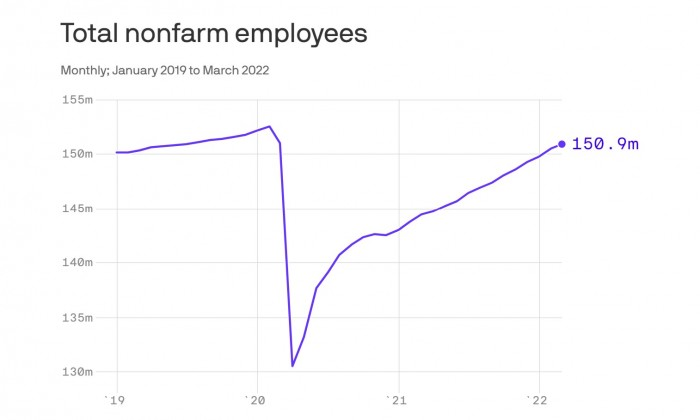
The steady strength of the U.S. job market helped propel a rapid recovery from the depths of the COVID-19 recession through much of 2020 and 2021. The U.S. is fewer than 1 million new jobs away from replacing the 21 million jobs lost to the onset of the pandemic, and the speed of the pandemic recovery has helped fuel rapid wage growth, particularly for low-earning workers.
Even so, many economists — including Federal Reserve officials — fear the strength of the job market could add further fuel to inflation already at four-decade highs. While steady job gains are good for the economy, the intense competition for workers has made it difficult for many firms to stay adequately staffed and keep up with both higher wage demands and rising prices.
Fed Chairman Jerome Powelland many economists are hopeful that higher interest rates and the fading effects of fiscal stimulus can help reduce job openings — and the pressure they put on wages — without wiping out job gains.
The Fed has boosted its baseline interest rate range by 1.5 percentage points from near-zero levels in January and is expected to hike by another 2 percentage points by the end of the year. Higher interest rates are meant to reduce inflation by slowing the economy enough to force businesses to stop raising prices and wages.
Even so, he has acknowledged it will be difficult for the Fed to avoid slowing down the labor market into a standstill as the central bank boosts interest rates to fight inflation.
“The labor market conditions [Powell] has described as ‘extremely, historically’ tight and ‘unsustainably hot’ persisted in May,” wrote Julia Pollak, chief economist at ZipRecruiter, in a Wednesday analysis.
“Employers are hanging onto the workers they have in a tight labor market where replacing them is unusually costly.”
The June jobs report, set to be released Friday, will give a most recent view into how well the labor market has held up amid Fed rate hikes. Economists expect the U.S. to have added roughly 268,000 jobs last month, according to consensus estimates.
“There will be a time when the US labor market takes a downturn, jobs are shed at a higher rate, and workers stop quitting their jobs. But that time has yet to come. The labor market remains very tight and very hot. That may change, but it hasn’t yet,” Bunker wrote.
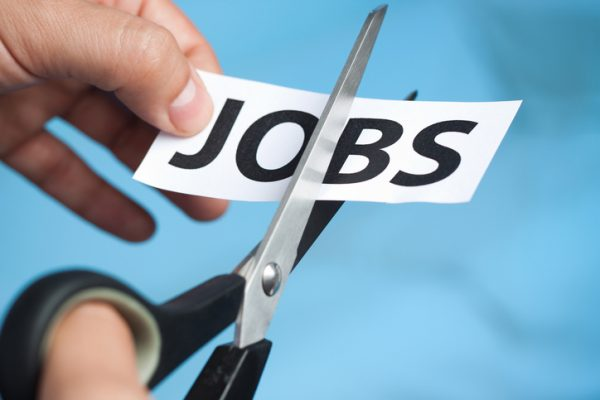
U.S.-based employers announced 32,517 cuts in June 2022, a 58.8 percent increase from 20,476 cuts announced in the same month last year, according to a new job report from Challenger, Gray & Christmas.
June marks the highest month since February 2021, when 34,531 cuts were announced. It is the second time this year that cuts were higher in 2022 than the corresponding month a year earlier.
Healthcare/products manufacturers and providers announced the most job cuts this year with 19,390, which is up 54 percent from the 12,620 announced through June 2021. The automotive industry posted the second-highest cuts with 15,578, a number that is up from the 6,111 cuts in the previous year.
Andrew Challenger, senior vice president of executive search firm Challenger, Gray & Christmas, said the numbers demonstrate increasing economic strain.
“Employers are beginning to respond to financial pressures and slowing demand by cutting costs. While the labor market is still tight, that tightness may begin to ease in the next few months,” Mr. Challenger said.
Locations suffering the highest losses include California with 28,692, New York at 15,952, and Pennsylvania at 9,310.







 HENRY KOTULA