New jobless claims totaled 184,000 last week, reaching lowest since 1969

https://finance.yahoo.com/news/weekly-unemployment-claims-week-ended-dec-4-2021-192034644.html

Weekly U.S. jobless claims fell to 184,000, lowest level since 1969

New initial jobless claims improved much more than expected last week to reach the lowest level in more than five decades, further pointing to the tightness of the present labor market as many employers seek to retain workers. 

The Labor Department released its weekly jobless claims report on Thursday. Here were the main metrics from the print, compared to consensus estimates compiled by Bloomberg:

  • Initial unemployment claims, week ended Dec. 4: 184,000 vs. 220,000 expected and an upwardly revised 227,000 during prior week 
  • Continuing claims, week ended Nov. 27: 1.992 million vs. 1.910 million expected and a downwardly revised 1.954 million during prior week

Jobless claims decreased once more after a brief tick higher in late November. At 184,000, initial jobless claims were at their lowest level since Sept. 1969. 

“The consensus always looked a bit timid, in light of the behavior of unadjusted claims in the week after Thanksgiving in previous years when the holiday fell on the 25th, but the drop this time was much bigger than in those years, and bigger than implied by the recent trend,” Ian Shepherdson, chief economist for Pantheon Macroeconomics, wrote in an email Thursday morning. “A correction next week seems likely, but the trend in claims clearly is falling rapidly, reflecting the extreme tightness of the labor market and the rebound in GDP growth now underway.”

After more than a year-and-a-half of the COVID-19 pandemic in the U.S., jobless claims have begun to hover below even their pre-pandemic levels. New claims were averaging about 220,000 per week throughout 2019. At the height of the pandemic and stay-in-place restrictions, new claims had come in at more than 6.1 million during the week ended April 3, 2020. 

Continuing claims, which track the number of those still receiving unemployment benefits via regular state programs, have also come down sharply from pandemic-era highs, and held below 2 million last week. 

“Beyond weekly moves, the overall trend in filings remains downward and confirms that businesses facing labor shortages are holding onto workers,” wrote Rubeela Farooqi, chief U.S. economist for High Frequency Economics, in a note on Wednesday. 

Farooqi added, however, that “the decline in layoffs is not translating into faster job growth on a consistent basis, which was evident in a modest gain in non-farm payrolls in November.” 

“For now, labor supply remains constrained and will likely continue to see pandemic effects as the health backdrop and a lack of safe and affordable child care keeps people out of the workforce,” she added. 

Other recent data on the labor market have also affirmed these lingering pressures. The November jobs report released from the Labor Department last Friday reflected a smaller number of jobs returned than expected last month, with payrolls growing by the least since December 2020 at just 210,000. And the labor force participation rate came in at 61.8%, still coming in markedly below its pre-pandemic February 2020 level of 63.3%. 

And meanwhile, the Labor Department on Wednesday reported that job openings rose more than expected in October to top 11 million, coming in just marginally below July’s all-time high of nearly 11.1 million. The quits rate eased slightly to 2.8% from September’s record 3.0% rate. 

“There is a massive shortage of labor out there in the country that couldn’t come at a worst time now that employers need workers like they have never needed them before. This is a permanent upward demand shift in the economy that won’t be alleviated by companies offering greater incentives to their new hires,” Chris Rupkey, FWDBONDS chief economist, wrote in a note Wednesday. “Wage inflation will continue to keep inflation running hot as businesses fall all over themselves in a bidding war for talent.”

Omicron variant ‘almost certainly’ not more severe than Delta, Fauci tells AFP

https://www.france24.com/en/live-news/20211207-omicron-variant-almost-certainly-not-more-severe-than-delta-fauci-tells-afp

 Top US scientist Anthony Fauci said Tuesday that while it would take weeks to judge the severity of the new Covid-19 variant Omicron, early indications suggested it was not worse than prior strains, and possibly milder.

Speaking to AFP, President Joe Biden’s chief medical advisor broke down the knowns and unknowns about Omicron into three major areas: transmissibility, how well it evades immunity from prior infection and vaccines, and severity of illness.

The new variant is “clearly highly transmissible,” very likely more so than Delta, the current dominant global strain, Fauci said.

Accumulating epidemiological data from around the world also indicates re-infections are higher with Omicron.

Fauci, the long-time director of the National Institute of Allergies and Infectious Diseases (NIAID), said lab experiments that tested the potency of antibodies from current vaccines against Omicron should come in the “next few days to a week.”

On the question of severity, “it almost certainly is not more severe than Delta,” said Fauci.

“There is some suggestion that it might even be less severe, because when you look at some of the cohorts that are being followed in South Africa, the ratio between the number of infections and the number of hospitalizations seems to be less than with Delta.”

But he added it was important to not over-interpret this data because the populations being followed skewed young, and were less likely to become hospitalized.

“I think that’s going to take another couple of weeks at least in South Africa,” where the variant was first reported in November, he said.

“As we get more infections throughout the rest of the world, it might take longer to see what’s the level of severity.”

Fauci said a more transmissible virus that doesn’t cause more severe illness and doesn’t lead to a surge of hospitalizations and deaths was the “best case scenario.”

“The worst case scenario is that it is not only highly transmissible, but it also causes severe disease and then you have another wave of infections that are not necessarily blunted by the vaccine or by people’s prior infections,” he added.

“I don’t think that worst case scenario is going to come about, but you never know.”

PFIZER AND BIONTECH PROVIDE UPDATE ON OMICRON VARIANT

https://www.pfizer.com/news/press-release/press-release-detail/pfizer-and-biontech-provide-update-omicron-variant

Pfizer shot provides partial omicron shield, study finds | The Japan Times
  • Preliminary laboratory studies demonstrate that three doses of the Pfizer-BioNTech COVID-19 Vaccine neutralize the Omicron variant (B.1.1.529 lineage) while two doses show significantly reduced neutralization titers
  • Data indicate that a third dose of BNT162b2 increases the neutralizing antibody titers by 25-fold compared to two doses against the Omicron variant; titers after the booster dose are comparable to titers observed after two doses against the wild-type virus which are associated with high levels of protection
  • As 80% of epitopes in the spike protein recognized by CD8+ T cells are not affected by the mutations in the Omicron variant, two doses may still induce protection against severe disease
  • The companies continue to advance the development of a variant-specific vaccine for Omicron and expect to have it available by March in the event that an adaption is needed to further increase the level and duration of protection – with no change expected to the companies’ four billion dose capacity for 2022

NEW YORK & MAINZ, Germany–(BUSINESS WIRE)– Pfizer Inc. (NYSE: PFE) and BioNTech SE (Nasdaq: BNTX) today announced results from an initial laboratory study demonstrating that serum antibodies induced by the Pfizer-BioNTech COVID-19 Vaccine (BNT162b2) neutralize the SARS-CoV-2 Omicron variant after three doses. Sera obtained from vaccinees one month after receiving the booster vaccination (third dose of BNT162b2 vaccine) neutralized the Omicron variant to levels that are comparable to thoseobserved for the wild-type SARS-CoV-2 spike protein after two doses.

This press release features multimedia. View the full release here: https://www.businesswire.com/news/home/20211208005542/en/

Sera from individuals who received two doses of the current COVID-19 vaccine did exhibit, on average, more than a 25-fold reduction in neutralization titers against the Omicron variant compared to wild-type, indicating that two doses of BNT162b2 may not be sufficient to protect against infection with the Omicron variant. However, as the vast majority of epitopes targeted by vaccine-induced T cells are not affected by the mutations in Omicron, the companies believe that vaccinated individuals may still be protected against severe forms of the disease and are closely monitoring real world effectiveness against Omicron, globally.

A more robust protection may be achieved by a third dose as data from additional studies of the companies indicate that a booster with the current COVID-19 vaccine from Pfizer and BioNTech increases the antibody titers by 25-fold. According to the companies’ preliminary data, a third dose provides a similar level of neutralizing antibodies to Omicron as is observed after two doses against wild-type and other variants that emerged before Omicron. These antibody levels are associated with high efficacy against both the wild-type virus and these variants. A third dose also strongly increases CD8+ T cell levels against multiple spike protein epitopes which are considered to correlate with the protection against severe disease. Compared to the wild-type virus, the vast majority of these epitopes remain unchanged in the Omicron spike variant.

“Although two doses of the vaccine may still offer protection against severe disease caused by the Omicron strain, it’s clear from these preliminary data that protection is improved with a third dose of our vaccine,” said Albert Bourla, Chairman and Chief Executive Officer, Pfizer. “Ensuring as many people as possible are fully vaccinated with the first two dose series and a booster remains the best course of action to prevent the spread of COVID-19.”

“Our preliminary, first dataset indicate that a third dose could still offer a sufficient level of protection from disease of any severity caused by the Omicron variant,” said Ugur Sahin, M.D., CEO and Co-Founder of BioNTech. “Broad vaccination and booster campaigns around the world could help us to better protect people everywhere and to get through the winter season. We continue to work on an adapted vaccine which, we believe, will help to induce a high level of protection against Omicron-induced COVID-19 disease as well as a prolonged protection compared to the current vaccine.”

While these results are preliminary, the companies will continue to collect more laboratory data and evaluate real-world effectiveness to assess and confirm protection against Omicron and inform the most effective path forward. On November 25, the companies started to develop an Omicron-specific COVID-19 vaccine. The development will continue as planned in the event that a vaccine adaption is needed to increase the level and duration of protection against Omicron. First batches of the Omicron-based vaccine can be produced and are planned to be ready for deliveries within 100 days, pending regulatory approval. Pfizer and BioNTech have tested other variant-specific vaccines as well, which have produced very strong neutralization titers and a tolerable safety profile. Based on this experience the companies have high confidence that if needed they can deliver an Omicron-based vaccine in March 2022. The companies have also previously initiated clinical trials with variant-specific vaccines (Alpha, Beta, Delta & Alpha/Delta Mix) and data from these studies will be submitted to regulatory agencies around the world to help accelerate the process of adapting the vaccine and gaining regulatory authorization or approval of an Omicron-specific vaccine, if needed. The companies have previously announced that they expect to produce four billion doses of BNT162b2 in 2022, and this capacity is not expected to change if an adapted vaccine is required.

About the Pfizer-BioNTech Laboratory Studies

To evaluate the effectiveness of BNT162b2 against the Omicron variant, Pfizer and BioNTech immediately tested a panel of human immune sera obtained from the blood of individuals that received two or three 30-µg doses of the current Pfizer-BioNTech COVID-19 vaccine, using a pseudovirus neutralization test (pVNT). The sera were collected from subjects 3 weeks after receiving the second dose or one month after receiving the third dose of the Pfizer-BioNTech COVID-19 vaccine. Each serum was tested simultaneously for its neutralizing antibody titer against the wild-type SARS-Cov-2 spike protein, and the Omicron spike variant. The third dose significantly increased the neutralizing antibody titers against the Omicron strain spike by 25-fold. Neutralization against the Omicron variant after three doses of the Pfizer-BioNTech COVID-19 vaccine was comparable to the neutralization against the wild-type strain observed in sera from individuals who received two doses of the companies’ COVID-19 vaccine: The geometric mean titer (GMT) of neutralizing antibody against the Omicron variant measured in the samples was 154 (after three doses), compared to 398 against the Delta variant (after three doses) and 155 against the ancestral strain (after two doses). Data on the persistence of neutralizing titers over time after a booster dose of BNT162b2 against the Omicron variant will be collected.

The Pfizer-BioNTech COVID-19 vaccine, which is based on BioNTech’s proprietary mRNA technology, was developed by both BioNTech and Pfizer. BioNTech is the Marketing Authorization Holder in the United States, the European Union, the United Kingdom, Canada and other countries and the holder of emergency use authorizations or equivalents in the United States (jointly with Pfizer) and other countries. Submissions to pursue regulatory approvals in those countries where emergency use authorizations or equivalent were initially granted are planned.

Supreme Court hears 340B rate cut case

https://mailchi.mp/016621f2184b/the-weekly-gist-december-3-2021?e=d1e747d2d8

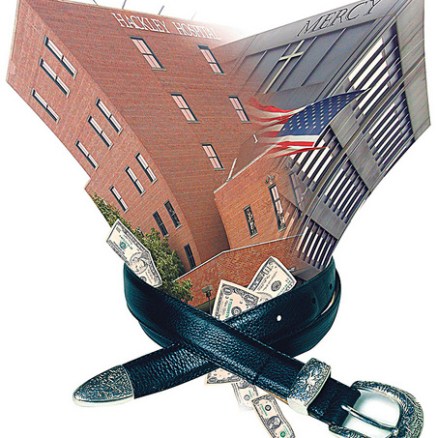
Earlier this week, the American Hospital Association (AHA) made its case before the US Supreme Court, in opposition to Medicare reimbursement cuts to hospitals that participate in the 340B Drug Pricing Program. The program allows hospitals that serve low-income patients to purchase outpatient drugs at a discount.

In the graphic above, we look at what’s at stake for hospitals in the case. Beginning in 2018, Medicare cut reimbursement for 340B-eligible drugs purchased by most hospitals by 28.5 percentage points, amounting to roughly $1.6B annually—which was a significant hit to hospitals’ 340B revenue. As we recently discussed, that revenue has become essential for many hospitals’ financial sustainability. However, the true impact on hospital bottom lines is more nuanced, as the savings from 340B rate cuts are being redistributed to all hospitals that participate in the Outpatient Prospective Payment System (OPPS), regardless of their 340B status, via a 3.2 percent payment bump for non-drug Part B services. While the cut negatively impacts those with large 340B programs—generally larger hospitals located in urban areas—the resulting redistribution actually provides a net benefit to about four in five hospitals.

Although 340B program revenues are at stake, the broader legal question before the Court centers on the level of authority federal agencies like the Centers for Medicare & Medicaid Services (CMS) have to create regulations to interpret ambiguous laws. (If the justices rule against CMS, it will overturn a key legal doctrine known as the Chevron Defense, which compels courts to defer to an agency’s interpretation of unclear statutes.)

A ruling isn’t expected until next spring, but regardless of the outcome, the 340B program faces other threats, chiefly from several lawsuits involving large pharmaceutical manufacturers’ moves to restrict discounted product sales to contract pharmacies. Undoubtedly, the ongoing scrutiny of the 340B program will continue to raise questions about whether there are better ways to subsidize the operations of hospitals serving low-income patients and ensure that underserved patients have access to lifesaving treatments.