This week, the Supreme Court declined to hear an appeal challenging Medicare’s 2019 regulation calling for “site-neutral payment” for services provided by hospitals in outpatient settings, clearing the way for the rule’s implementation. The appeal was filed by the American Hospital Association (AHA), along with numerous hospitals and health systems, after a lower court ruling last year upheld the change to Medicare’s reimbursement policies.
The rule aims to level the playing field betweenindependent providers and hospital-owned clinics by curtailing hospitals’ ability to charge higher “facility fees” for services provided in locations they own. Site-neutral payment has been a longstanding target of criticism by health economists and policymakers, who cite the pricing advantage as a driver of consolidation in the industry, which has tended to push the cost of care upward.
The AHA expressed disappointment in the Court’s decision not to hear the appeal,saying that the changes to payment policy “directly undercut the clear intent of Congress to protect them because of the many real and crucial differences between them and other sites of care.” The primary difference, of course, is hospitals’ need to fully allocate their costs across all the services they bill for, making care in lower-acuity settings more expensive than similar care delivered by practices that don’t have to subsidize inpatient hospitals and other costly assets.
Over the years that legitimate business need has turned into adeliberate business model—purchasing independent practices in order to take advantage of higher hospital pricing. As Medicare looks to manage Baby Boomer-driven cost growth, and employers and consumers grapple with rising health spending, expect increasingly rigorous efforts to push back against these kinds of pricing strategies.
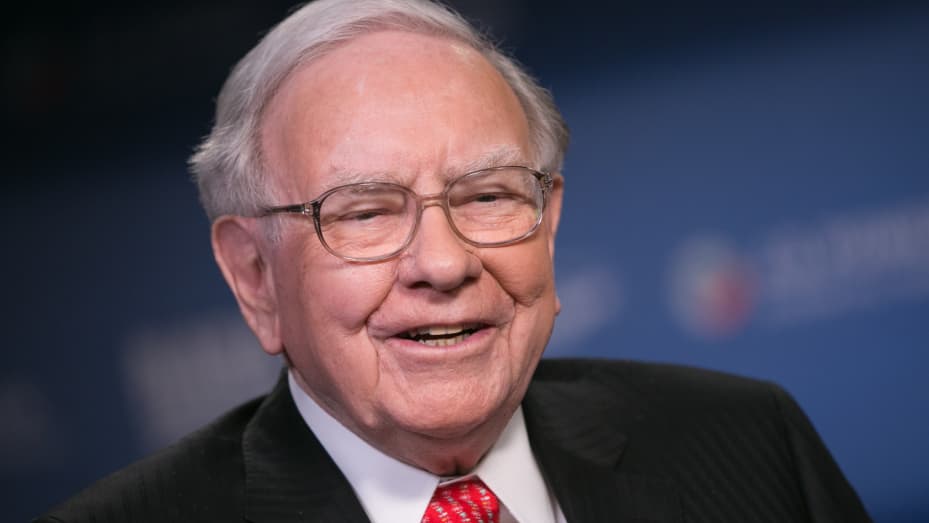
Warren Buffett is no doubt one of the few business icons who can deliver the gift of wisdom and truth when we need it most. And those truths, when you really stop and consider them, are always spot-on.
When you’re nearing your end of life, your only measure of success should be the number of “people you want to have love you actually do love you,” he answered.
“I know people who have a lot of money, and they get testimonial dinners and they get hospital wings named after them. But the truth is that nobody in the world loves them,” said Buffett. “If you get to my age in life and nobody thinks well of you, I don’t care how big your bank account is, your life is a disaster.”
That’s right, a self-made billionaire says that the amount you are loved — not your wealth or accomplishments — is the ultimate measure of success in life.
To give and receive
Love is one of the most powerful emotions a human being can feel, and yet, we still live in an individualistic society of keeping up with the Joneses: We forge ahead with our business ventures and strategically plan our career paths in hopes of finding fame and fortune. We feel we’ve finally arrived at the top when we’re able to vacation twice a year to exotic islands and drop a European luxury car (or two) in the garage. We dream about having all of these things, love be damned.
“The problem with love is that it’s not for sale,” Buffett told the students. “The only way to get love is to be lovable. It’s very irritating if you have a lot of money. You’d like to think you could write a check: I’ll buy a million dollars’ worth of love. But it doesn’t work that way. The more you give love away, the more you get.”
So how can we follow Buffett’s principle of success in a way where we can truly leave behind a legacy? The path of putting love into motion is a daring and courageous one, but here are a few ways to do it:
1. Be selfless and don’t expect anything in return
The laws of love are reciprocal. When we choose to love someone unconditionally by encouraging and believing in them, love comes back in full force through respect, admiration, trust and loyalty.If you get to my age in life and nobody thinks well of you, I don’t care how big your bank account is, your life is a disaster.Warren BuffettCHAIRMAN AND CEO, BERKSHIRE HATHAWAY
What’s more, when we receive those things, we become more self-compassionate. A 2011 study conducted by the University of California found that self-compassion can increase motivation, willpower and the ability to recover from failure. Another study, published in 2007 in the Journal of Research in Personality, concluded that people who have self-compassion are more likely to be happy, optimistic and show personal initiative.
2. Be empathetic
Empathy is one of most common traits of likable (or, as Buffett prefers to say, “lovable”) people. True empathy occurs when you’re able to step into someone else’s shoes and see their perspective.
Empathy also plays a major role in a person’s potential to influence others. In a DDI study of more than 15,000 leaders across 20 industries, researchers found that the ability to listen and respond with empathy was the most critical driver of a team’s overall performance.
3. Make work enjoyable and fun
When you enjoy work, you enjoy life. In Carol J. Loomis’ biography of Buffett, “Tap Dancing to Work: Warren Buffett on Practically Everything,” she mentions a quote from Buffett: “I love every day. I mean, I tap dance in here and work with nothing but people I like. There is no job in the world that is more fun than running Berkshire, and I count myself lucky to be where I am.”
The evidence here is clear: In positive and uplifting cultures where people share the same values, beliefs and norms, you’ll find a high-performing group of people who attract folks of the same kind.
4. Treat others the way they want to be treated
As children, we’re often taught the Golden Rule: “Treat others as you want to be treated.” But the Platinum Rule takes it to a whole new level: “Treat others the way they want to be treated.”
When we follow the Platinum Rule, we can be more certain that we’re respecting what they want, instead of projecting our own values and preferences. That doesn’t mean we should ignore the Golden Rule altogether, but we should realize its limitations given that every person and every situation is so different.
5. Follow your passion
If you want to have your dream career, you must follow your passion. It’s that simple. Many of us take our cushy paychecks and job security for granted, even though we might hate our jobs and would rather be doing something else — something we actually love.
As humans, doing what we love is a major contributor to true happiness in life. So if you don’t know what your passion is, it’s time to figure that out.
What makes someone extraordinary? As a retired FBI agent with more than 40 years of studying human behavior and performance, no question has captivated me more.
Extraordinary people have a wisdom and way of being that inspires and commands respect. They energize you with their wisdom and empathy. You want them to be your friend, neighbor, co-worker, manager, mentor or community leader.
The 5 traits of extraordinary people
Surprisingly, the qualities that make these people stand out aren’t related to their level of education, income or talents (say, in athletics or art or business).
As it turns out, based on thousands of observations, there are five traits that set exceptional individuals apart from everyone else — but you must have the entire set, and not just one or a few.
Self-mastery brings out your best in whatever you do through dedication, curiosity and adaptability.
Usain Bolt, the fastest human to ever live, didn’t achieve that status merely through athletic ability. He achieved it through self-mastery: He learned, sacrificed, worked hard and remained diligently focused. Michael Jordan, the greatest basketball player of all time, did the same.
But another side to self-mastery is knowing our emotions, strengths and, more importantly, our weaknesses. By understanding ourselves, we know things like when others should take the lead, when today is not our day or when we need to confront our demons.
Start attaining self-mastery by asking:
What areas need attention?
What knowledge, training or skills will help me pursue my goals?
What can I do now to initiate change?
How can I better myself through books, mentors, organizations, video tutorials or online classes?
2. Observation
We’re taught to look, but not to observe. We look to see if we can cross the street safely or what supermarket line is moving the fastest. It’s a passive experience that’s useful, but may not provide complete information.
Observing, on the other hand, is active; it requires effort, but the results are more enlightening. It’s about using all our senses to decode the world in real time for a more informed understanding of our environment and of others.
By working as an FBI agent and as an ethologist, I’ve developed my sensitivity for reading the needs, wants, desires, concerns and preferences of others — all crucial information for understanding and communicating with people.
The most observational people have a skill set that many lack. They instantly know:
What they are seeking and whether there may be multiple explanations.
How context and/or culture factors in.
How they can validate their observations and conclusions.
How to prioritize, separating the inconsequential from the essential.
3. Communication
We communicate constantly. Do it right and people will adore you. Do it wrong and you create doubt, indifference, even anger.
Exceptional communication skills elevate the quality of your relationships. It’s not about communicating perfectly, but rather effectively — and that builds trust. Here’s how:
Address emotions first. We cannot think or communicate clearly until emotions are dealt with. This is where reading body language is helpful.
Build rapport through caring and kindness. It can be verbal or nonverbal: a wave or an outstretched hand to acknowledge or welcome. Mirroring your companion’s gestures goes far.
Be prompt. Answering emails and calls promptly shows that you value others. Bad news shouldn’t be delayed, nor should gratitude and affirmation.
Listen to validate. Listen not only for what is said, but also in what order and how often certain words are mentioned. Repetition of a topic, for example, can shed light on unresolved or underlying problems.
4. Action
Our actions are the nonverbals that show who we are, what’s important to us and how we feel about others.
You can’t fully master this trait without the previous three: Self-mastery prepares us for possible actions to take based on what’s happening; observation allows us to understand the situation in context so we can act appropriately; communication allows us to give and receive the information and support to act.
Exceptional individuals weigh four major factors when making decisions:
Do my actions build trust?
Do my actions add value?
Do my actions positively influence or inspire?
Do my actions benefit others?
5. Psychological Comfort
Psychological comfort is a state where our biological and emotional needs and preferences are met.
It forms the bedrock of our mental and physical health, driving everything from our relationship choices to the brands we buy. We thrive when we have psychological comfort, and it’s especially essential in difficult times.
Since we’re primed to receive psychological comfort, it doesn’t take a grand gesture — it just takes the right one. It could be a calm voice, a kind word, an acknowledgment, a thank you note, a welcoming smile or suggesting a break.
Psychological comfort is where self-mastery, observation, communication and action join forces, helping you recognize and provide what best reduces unwanted emotions like stress, fear or apprehension.
It’s simple: In the 21st century, whoever provides the most psychological comfort wins.
Health officials are grappling with how to prevent potential COVID-19 outbreaks from the delta variant that is spreading rapidly across the U.S.
Concern over the highly transmissible delta strain prompted Los Angeles County this week to recommend that all people wear masks indoors, even if they’re vaccinated. The World Health Organization (WHO) has also encouraged fully vaccinated people to continue using masks.
But the Centers for Disease Control and Prevention (CDC) has not signaled any plans to revise its mask guidance, with Biden administration officials and some experts say that fully vaccinated Americans are safe from all existing COVID-19 variants.
“If you have been vaccinated, the message we’re conveying is you’re safe,” White House press secretary Jen Psaki said Wednesday. “Vaccines are effective, and that is something we want to be very clear with the public about.”
Still, the move by officials in Los Angeles County raises the prospect that mask recommendations and even mandates could make a return to certain parts of the country.
The CDC projected the delta variant made up more than a quarter of cases in the U.S. in the most recent two-week period, ending June 19 — a jump from 10 percent the previous two weeks.
Los Angeles County issued a statement Monday saying it “strongly recommends” all people wear masks in indoor settings where they don’t know everyone’s vaccination status.
Barbara Ferrer, director of the county’s Department of Public Health, told The Hill that officials want to take time to get more people vaccinated as research is conducted on delta variant transmission from the fully vaccinated.
“While we’re doing that work with building confidence, we’re going to go ahead and offer as much protection as possible for everyone,” she said.
Leana Wen, an emergency physician and public health professor at George Washington University, praised the county’s decision as the “right move,” saying she hopes other jurisdictions follow suit to protect both vaccinated and unvaccinated residents.
“People who are fully vaccinated are still at risk, albeit a low risk, from those who are unvaccinated,” Wen said.
“Fully vaccinated people can be around others who are fully vaccinated without any limitations,” she added. “However, if they’re going to be around unvaccinated people or vaccination status is not being checked, then those could be high-risk settings” where masks should be worn.
For now, Los Angeles County is an outlier as cities and states continue to loosen mask requirements. Washington’s King County, home to Seattle, and Pennsylvania were the latest jurisdictions to end their mandates, taking that step this week.
CDC Director Rochelle Walensky told NBC’s “Today” on Wednesday that the agency’s guidance that fully vaccinated people don’t need masks in most settings has not changed. She said the WHO has given conflicting instructions, saying the international organization is focused on the global community, which has a lower vaccination rate than the U.S.
“We have always said that local policymakers need to make policies for their local environment,” Walensky said. “But those masking policies are not to protect the vaccinated, they’re to protect the unvaccinated.”
So far, the delta strain has not led to any changes in masking policies at the White House or the Capitol.
The White House does not require masks if a person is vaccinated, although the administration is not checking to see whether all maskless people have gotten their COVID-19 shots.
In recent weeks, the House has ended its universal mask requirement, and few people in the Capitol continue to wear them. The overwhelming majority of lawmakers in both parties have shed masks and freely gather in large groups on the House floor.
The Senate, which never had a mask requirement since nearly all senators voluntarily wore facial coverings when it was recommended, has also relaxed its pandemic restrictions.
But the delta variant threat is influencing other activities in the House. Speaker Nancy Pelosi (D-Calif.) announced this week that proxy voting would be extended through Aug. 17, and House Majority Leader Steny Hoyer (D-Md.) said that was due to the global spread of the delta variant.
“As we know, there are some countries in the world that are seeing a virulent resurgence of this new variant of the COVID-19. Israel is a perfect example of that,” Hoyer told reporters, referring to Israel reimposing its indoor mask mandate despite having one of the world’s highest vaccination rates. “But even in Israel, where they have the vaccine available, they’re seeing a resurgence.”
“So, the Speaker correctly, along with the medical advice that she’s gotten, determined that there was still justification for staying on guard,” Hoyer said.
Recent studies have found that COVID-19 vaccines are effective against the strain. Both doses of Pfizer-BioNTech were found to be 88 percent effective against symptomatic disease.
There is “less data” on how Johnson & Johnson performs, Walensky said Wednesday, but “right now we have no information to suggest that you need a second shot after J&J, even with the delta variant.”
Jen Kates, senior vice president and director of global health & HIV policy at the Kaiser Family Foundation, said research shows the CDC guidance “still stands,” although she acknowledged the agency needs to be prepared to adjust.
Kates expressed concern that the resurgence of the mask debate could affect the vaccination effort, noting the variant is spreading mostly among unvaccinated people.
“The worst outcome, I think, is that people choose not to get vaccinated because they think the vaccines aren’t as effective against variants,” she said.
As most Americans have gotten vaccinated, COVID-19 cases, hospitalizations and deaths have declined significantly. But the U.S. is expected to fall short of President Biden’s goal to have 70 percent of adults receiving at least one vaccine dose by the Fourth of July.
The White House still plans to move forward with Independence Day festivities. The administration sent 1,000 invitations for people to gather at 1600 Pennsylvania Ave. on Sunday, with vaccinated people allowed to go without masks. All guests were instructed to get tested one to three days before arriving.
“We certainly feel comfortable and confident moving forward with our event here at the White House and individuals having barbecues in their backgrounds this week to celebrate the Fourth of July,” Psaki said on Wednesday.






 HENRY KOTULA