


Cartoon – Invest for Success



On July 7, 2020, Lenny Mendonca, the former chief economic and business advisor to California governor Gavin Newsom, went public with why he had suddenly resigned from that position on April 10. Mendonca, a former McKinsey senior partner, revealed his struggles with debilitating depression in a deeply personal column that also probed the pervasiveness of mental health issues among the general population and the public-policy implications of untreated mental illness.
Three weeks prior to his resignation, suffering severe depression, Mendonca had checked into a hospital for an overnight stay. But, acting in his position of great responsibility, in the middle of the COVID-19 crisis, Mendonca had “told myself and my team that we all have to operate at 120 percent. . . . This meant 80-hour work weeks and barely sleeping.” Reflecting on his diagnosis and months-long process of recovery, Mendonca wrote: “What does it say about me that I have a mental health issue? It says that I am human.”
Mendonca is right: mental health issues are pervasive. According to the Substance Abuse and Mental Health Services Administration (SAMHSA), one in four Americans has a mental or substance use disorder. The National Center for Health Statistics noted a suicide-rate increase of some 35 percent between 1999 and 2018, with the rate growing approximately 2 percent a year since 2006. Suicide is now the tenth-leading cause of death in the United States. Depression increases suicide risk—about 60 percent of people who die by suicide have had a mood disorder. The Health Care Cost Institute’s 2018 report disclosed that per-person spending on mental health admissions increased 33 percent between 2014 and 2018, while outpatient spending on psychiatry grew 43 percent. Between 2007 and 2017, the percentage of medical claims associated with behavioral health (both mental illnesses and addictions) more than doubled.
Preexisting mental health challenges have been exacerbated by the impact of the COVID-19 crisis. Based on analysis by McKinsey, COVID-19 could result in a potential 50 percent increase in the prevalence of behavioral health conditions. A new survey by the Kaiser Family Foundation reported that 45 percent of Americans felt that the COVID-19 crisis is harming their mental health; while 19 percent felt that it is having a “major impact.” In a recent poll from the Pew Research Center, 73 percent of Americans reported feeling anxious at least a few days per week since the onset of the pandemic. Between mid-February and mid-March 2020, prescriptions for antianxiety medications increased 34 percent. During the week of March 15, when stay-at-home orders became pervasive, 78 percent of all antidepressant, antianxiety, and anti-insomnia prescriptions filled were new (versus refills).
Lenny Mendonca had the resources to get as much help in whatever form he needed, and he recognized how rare his situation indeed was. Obtaining treatment for behavioral health issues remains much too difficult. A 2018 survey cosponsored by the National Council for Behavioral Health reported that 42 percent of respondents cited cost and poor insurance coverage as key barriers to accessing mental healthcare, with one in four people reporting having to choose between obtaining mental health treatment and paying for necessities. Because of cost, coverage, and the social stigma still associated with mental and substance use disorders, most people with behavioral health issues do not receive treatment. A study of more than 36,000 people found that this was true of 62 percent of people with mood disorders, 76 percent of people with anxiety disorders, and 81 percent of people with substance use disorders.
Access to mental health resources and attitudes about mental health are almost certainly poised to improve. First, young people are both more likely to have behavioral health issues—young adults between the ages of 18 and 25 had the highest prevalence of any mental illness—and more willing to talk openly about psychological well-being and to seek assistance. Second, companies are recognizing the costs associated with not addressing employees’ mental health issues. Third, the growing emphasis that companies place on controlling their self-insured healthcare costs points directly to investing in mental health interventions. That’s because mental health prospectively predicts the incidence of serious—and expensive—medical conditions such as diabetes, cancer, and coronary artery disease. What has effectively been a “don’t ask, don’t tell” approach to mental health in the workplace is becoming instead “do ask, do tell, let’s talk.” There is a coming revolution in how companies (and public-policy makers) think about, talk about, and cope with all forms of mental health issues.
In this article, we argue that mental and substance use disorders—sometimes referred to as behavioral health conditions—are real, pervasive, and expensive. They cost companies money directly for treatment expenses and indirectly, and more expensively, from increased healthcare expenditures, turnover, and diminished productivity. Employees need, and increasingly demand, resources to help them cope with mental health problems. If companies make mental health services more accessible and intervene in the workplace in ways that improve well-being, they will simultaneously make investments that will provide real improvements in employee outcomes and consequently in company performance. Examples from companies that are taking the lead in addressing mental health illustrate what to do and how to do it.
Employees need, and increasingly demand, resources to help them cope with mental health problems. If companies make mental health services more accessible and intervene in the workplace in ways that improve well-being, they will simultaneously make investments that will provide real improvements in employee outcomes and consequently in company performance.
Even before the COVID-19 crisis, behavioral health problems such as anxiety, stress, and depression were widespread, constituting a leading cause of diminished well-being and exacting an enormous toll in the form of absenteeism, reduced productivity, and increased healthcare costs. In 2019, the World Health Organization labeled employee burnout a medical condition, noting that its cause is chronic workplace stress.
Research shows that workplace stressors such as long hours, economic insecurity, work–family conflict, and high job demands coupled with low job control are as harmful to health as secondhand smoke. Together, they cost the United States approximately $180 billion and 120,000 unnecessary deaths annually.
A 2015 peer-reviewed study estimated the total cost of major depressive disorder in the United States to be $210 billion, a figure that had increased 153 percent since 2000. About half of the economic impact was attributable to costs of treatment, with the rest attributable to absenteeism and presenteeism (being physically at work but not at full productivity) costs incurred in the workplace.
A 2019 Mind Share Partners report noted that almost 60 percent of the 1,500 employed respondents sampled across for-profit, nonprofit, and government sectors reported experiencing symptoms of a mental health condition in the past year, with half saying that the symptoms had persisted for more than a month. Sixty-one percent said that their productivity at work was affected by their mental health. More than a third of the group—50 percent of millennials and 75 percent of Gen Z respondents—reported that they had actually left jobs at least partly because of mental health.
Mental health is also a diversity and inclusion issue. The Mind Share Partners study found that Black and Latinx respondents reported experiencing more symptoms of mental disorders than their white counterparts, and were more likely to have left a previous job for mental health reasons.
The pandemic has only made the situation worse. A McKinsey survey of approximately 1,000 employers found that 90 percent reported that the COVID-19 crisis was affecting the behavioral health and often the productivity of their workforce. Gallup reported that almost half of US workers were concerned about one or more of four possible job setbacks—reduced hours, reduced benefits, layoffs, or wage cuts.
Even before the COVID-19 crisis, behavioral health problems such as anxiety, stress, and depression were widespread, constituting a leading cause of diminished well-being and exacting an enormous toll in the form of absenteeism, reduced productivity, and increased healthcare costs.
Companies and countries are appropriately obsessed with bending the curve of healthcare costs. Starbucks paid more for health insurance than for coffee, and the three domestic automakers spent more on healthcare than on steel.
What is less recognized is that stress and depression increase not just the costs associated with treating behavioral health problems but also the incidence of other costly physical diseases. At least two mechanisms help explain this connection between mental and physical health.
First, psychological well-being and social determinants of health can directly affect the likelihood of an individual engaging in healthful behaviors and self-care such as eating and drinking alcohol in moderation, regular exercise, and avoiding smoking and drug use. People with mental and substance use disorders, as well as those who have experienced psychological trauma, are at higher risk for chronic diseases such as diabetes, heart disease, and musculoskeletal problems.
Second, research shows that stress and depression cause physiological changes, such as metabolic, endocrinal, and inflammatory shifts, that are markers and predictors of disease. The idea that the mind affects the body is scarcely new, but the emerging science of psychoneuroimmunology is revealing in detail the pathways that link changes in the brain to effects on the immune system (see sidebar, “The promise of precision psychiatry”). A paper linking stress, depression, the immune system, and cancer noted that “many studies” showed “that psychological stress can down-regulate various parts of the cellular immune response. Communication between the CNS [central nervous system] and the immune system occurs through chemical messengers secreted by nerve cells, endocrine organs, or immune cells, and psychological stressors can disrupt these networks.”1
As an example of the effect of depression on other diseases, we used a large longitudinal Optum prescription data set to explore the prospective effects of depression. Receiving an antidepressant prescription was used as a marker for depression, and obtaining prescriptions for drugs used to treat diabetes, cardiovascular disease, and cancer as markers for those diseases. We found that obtaining an antidepressant increased the odds of subsequently receiving a drug for diabetes by 30 percent, cancer by 50 percent, and heart disease by almost 60 percent. People who received antidepressants were more than 300 percent more likely to later use sedatives and 400 percent more likely to obtain an amphetamine prescription.
Simply put, the path to reducing healthcare costs goes through the brain.
Today’s workforce expects employers to take mental health issues seriously and provide appropriate support and assistance. Senior executives consistently tell us that discussions of mental health issues have become much more frequent and open in workplaces. The head of mergers and acquisitions for BP noted that in the last 18 months there had been a striking shift in the willingness of people to disclose struggles with behavioral health issues.
Ginger, a company providing an on-demand mental health platform to employers, conducted a 2019 survey using a random sample of US employees. The study found that employees were more likely to seek help with stress, anxiety, and depression now than they were five years ago. More importantly, 91 percent of employees surveyed believed that their employers should care about their emotional health, and 85 percent said that behavioral health benefits were important when evaluating a new job. In fact, the respondents said that when evaluating the benefits of a new job offer, on-demand mental health support came second after corporate wellness initiatives, ahead of financial advising, gym memberships, and free meals.
While the vast majority of employers see mental health as a priority, they struggle to meet increasing employee need and demand for behavioral health services. The Ginger survey found that one-third of respondents had to pay out of pocket for behavioral health services. Twenty percent fear that they’d harm their careers if their employers found out, 20 percent worry that they don’t have time to get help, and 15 percent find that the providers listed in their company’s plan were too limited, not available, or didn’t actually provide services under the plan.
These concerns are not confined to the United States. A Deloitte study conducted in the United Kingdom reported, among other things, that just 22 percent of line managers had received some form of training on mental health at work, even though 49 percent said that even basic training would be useful. In the absence of such training and support, more than a third of employees did not approach anyone the last time they experienced poor mental health, while 86 percent noted that they would think twice before offering help to a colleague whose mental health concerned them.
According to the 2008 Mental Health Parity and Addiction Equity Act, mental health benefits in health plans in the United States should be comparable to physical health benefits. They are not. A 2017 report by Milliman noted that an office visit with a therapist was about five times as likely to be out of network—and therefore more expensive—than an office visit with a primary-care practitioner. The CEO of a company providing mental health benefits to companies noted that in some instances insurance-mandated networks of mental health providers are filled with professionals who are not accepting new clients and do not respond to inquiries. Network adequacy and accessibility of behavioral health services pose serious problems for health insurers, employers, and workers nationwide. Given the economic toll of mental and substance use disorders, employers should be highly motivated to invest in behavioral health else risk increased healthcare costs and employee attrition.
Another constraint on accessing mental healthcare is that for many years mental health providers have been undercompensated for their work, leading, not surprisingly, to a great shortage. One study showed that 60 percent of US counties did not have one psychiatrist. One SAMHSA report noted that 55.2 percent of adults with mental illness received no treatment in the previous year.
It will take years to overcome the underinvestment in mental health. But if employers begin now, they can earn the appreciation and loyalty of their employees.
It’s cheaper, easier to distribute, and relies on very different tech than its competitors.
The United Kingdom became the first country to approve AstraZeneca’s COVID-19 vaccine for emergency use on Dec. 30, just weeks after Pfizer’s and Moderna’s vaccine candidates received a green light from the Food and Drug Administration in the United States. The approval is another promising sign in the global immunization rollout—especially because this option, developed by Oxford University and biopharmaceutical company AstraZeneca, could be key to reaching people in rural and underfunded areas.
Unlike its competitors, the AstraZeneca COVID-19 vaccine can be stored at higher temperatures, costs less per dose, and uses different technology to immunize people. Although the vaccine hasn’t been approved for use in the U.S. yet, it could reach arms stateside in February at the earliest, The New York Times reports. Here’s what we know about the vaccine so far, and how it stacks up against Pfizer’s and Moderna’s.
AstraZeneca’s vaccine uses adenovirus-vectored technology. Translation: It’s a harmless, modified version of a common cold virus that usually only spreads among chimpanzees. This altered virus can’t make you sick, but it carries a gene from the novel coronavirus’ spike protein, the portion of the virus that triggers an immune response. This allows the immune system to manufacture antibodies that work against COVID-19, teaching your body how to respond should you become infected.
In other words, AstraZeneca’s vaccine mimics a COVID-19 infection without its life-threatening side effects, per a release from the company. The reason researchers chose a chimpanzee adenovirus is simple: The modified virus needs to be new to the people being vaccinated—otherwise, the body won’t create those all-important antibodies. Anyone could already have antibodies for a cold spread among humans, but far fewer people have been exposed to a cold spread among chimps.
The Pfizer-BioNTech and Moderna vaccines, meanwhile, rely on mRNA technology, which essentially introduces a piece of genetic code that tricks the body into producing COVID-19 antibodies, no virus required. All three vaccines require two shots spaced about a month apart. Although no adenovirus-vectored vaccine has been approved for human use before, companies like Johnson & Johnson, CanSino, and NantKwest are all working on their own versions.
AstraZeneca’s vaccine is the easiest to transport so far—it can be stored for up to six months between 36 and 46°F, normal refrigerator temperatures. The Moderna and Pfizer options, meanwhile, must be stored at subzero temperatures until they’re ready to be used, at -4°F and -94°F, respectively. (mRNA technology is relatively fragile compared to adenovirus-vectored tech, meaning it must be kept at much lower temperatures to remain effective and stable.)
AstraZeneca’s higher storage temperature could make distribution much easier. “A clinic, a nursing home, or even [regional] health departments may not have freezers that can hold things at -94°F,” says Kawsar Talaat, M.D., an infectious disease doctor, vaccine researcher, and assistant professor in the department of International Health at Johns Hopkins University. Being able to use a typical fridge “allows time for distribution, allows the vaccine time to get to more rural areas, [and allows vaccines] to be kept at a clinic for a longer period of time.”
The new vaccine also beats its competitors on price: AstraZeneca’s vaccine costs providers about $4 per dose, while Pfizer’s costs $20 and Moderna’s costs $33, Al Jazeera reports. These prices will most likely fluctuate as time goes on and the vaccines evolve.
The two mRNA vaccines have a slight edge in efficacy; both Pfizer and Moderna report being about 95% effective against COVID-19 after the second shot in clinical trials, while AstraZeneca has reported an average efficacy of 70%, and up to 90% if the dosing is adjusted. (For comparison, the annual flu shot is usually between 40 and 60% effective, per the CDC.)
All three vaccines’ side effects are similar, including potential injection site pain and flu-like symptoms, including fever, fatigue, headaches, and muscle pain, which are to be expected as your immune system is primed.
There’s no “best” vaccine option, as there’s not enough research to confirm that yet. Vaccines aren’t a silver bullet, especially as the pandemic rages on: They must be combined with masks, hand-washing, and social distancing to work as effectively as possible, per the CDC. No matter which COVID-19 vaccine becomes available to you first, you can feel confident in its ability to protect you, as long as you continue being cautious until positive cases, hospitalizations, and deaths are significantly reduced nationwide.
In the meantime, it’s likely “that all the manufacturers are working on making their vaccines more stable at easier-to-manage temperatures,” Dr. Talaat explains. As their formulations change, their pros and cons will, too.
For now, we can be thankful that AstraZeneca’s vaccine is nearing worldwide clearance. “The next generation of vaccines, like AstraZeneca’s, which is kept at refrigerator temperatures, is a major advancement,” Dr. Talaat says. “When you’re talking about distribution to the entire world, it’s much easier to do because we already keep vaccines cold. It’s a lot harder to keep things frozen.”
https://mailchi.mp/a40e674b8d4a/the-weekly-gist-2021-special-edition?e=d1e747d2d8

Throughout 2020, we spent much of our time working with members to think through what the world beyond COVID would look like, and what that would mean for health system strategy. We came to believe in what we described as a “90 Percent Healthcare Economy”, in which a protracted downturn in the economy and persistently high unemployment, caused by the pandemic, would lead to a secular decrease in demand for care.
Our hypothesis was that economic instability and pressured household and business budgets would force a broader rethink of how much and what kind of care services consumers and employers would be willing to purchase—as a host of lower-cost virtual and outpatient care offerings proved viable substitutes for higher-cost care. Just as retailers, airlines, hotels, and commercial real estate firms would be left short of the levels of demand required to maintain pre-COVID operations, we anticipated the same to be true for traditional hospitals and physician practices. Not all the business would be coming back, and what did return would come with higher expectations for care in safer, more convenient settings (including virtual).
On balance, we’d still argue that’s the most likely future scenario. But some of the environmental factors driving that hypothesis have changed. Vaccines have arrived sooner and with more promise of immunity than earlier anticipated. A change in control of the White House and the Senate looks likely to usher in a more forceful response to COVID, with more robust stimulus to the ailing economy. And—for better or worse—consumers have proven more eager to return to the public square than economic forecasts (and common sense) would have dictated.
Given the level of pent-up demand for “living a normal life”, the extraordinary amount of government money being pumped into the economy, and the real possibility of achieving herd immunity later this year, we may be headed into “The Roaring ‘20s” instead of “The 90 Percent Economy”. Rather than constrained economic activity, we could well be in for a period of explosive economic growth across the next several years.
Only time will tell which vision of the future is correct—indeed, both may be true, or may alternate as the COVID situation shifts. Best then, to plan for either outcome, and the strategies and approaches that will enable success in either world. Foremost among them: a relentless focus on delivering real healthcare value to patients and consumers, with care that is accessible, affordable, reliable, and personalized to each individual’s needs. That’s a future world we’d love to live in.
https://mailchi.mp/a40e674b8d4a/the-weekly-gist-2021-special-edition?e=d1e747d2d8

With many deals delayed by the pandemic, 2020 turned out to be slower than anticipated for hospital mergers and acquisitions. But we’d expect the pace of mergers to quicken this year as health systems emerge from the winter COVID surge. The calculus centers on both strategy and security.
Having weathered the pandemic better than expected, many larger systems approach the market as opportunists, looking expand their reach and capabilities. And systems of all sizes are seeking scale to enable better access to capital and greater risk mitigation—now viewed as essential should they once again face a pandemic-sized shock.
As systems contemplate new combinations, they would be wise to learn from the high-profile combinations that fell apart last year. In our experience, many mergers are felled by the “social” issues: board seat allocation, leadership structures, or cultural mismatches. These types of challenges appeared to be behind the stalling of Advocate Aurora Health’s merger with Beaumont Health (which faced pushback from doctors and community stakeholders) and the demise of the combination of Intermountain Healthcare and Sanford Health (called off amid leadership turnover).
Any successful merger must not only present the financial rationale for partnership, but also make a clear case as to how a combined system will bring new capabilities that will improve care, access and experience for local consumers.
Expect scrutiny on deals to rise in the Biden administration with the likely confirmation of Department of Health and Human Services (HHS) Secretary nominee Xavier Becerra, who took a strict antitrust posture in reviewing hospital mergers and contracting during his tenure as California’s attorney general.
https://thehill.com/policy/finance/533242-december-jobs-report
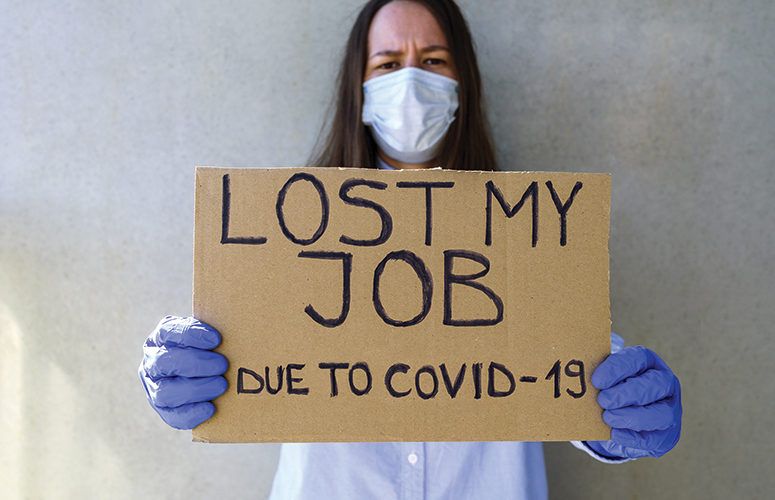
The economy lost 140,000 jobs in December, the first reported losses since April, as the unemployment rate remained steady at 6.7 percent.
Economists expected a small jobs gain of nearly 50,000. The drop is the latest sign of a weakening economy amid the ongoing COVID-19 crisis. All in all, the economy remains about 10 million jobs below its pre-pandemic levels.
“There’s not much comfort to be taken from the stable unemployment rate, given that millions of Americans have left the labor force with nearly 11 million listed as officially out of work,” said Mark Hamrick, senior economic analyst at Bankrate.com.
“Between the human and economic tolls taken by the pandemic, these are some of the darkest hours of this soon-to-be yearlong tragedy.”
The biggest losses were concentrated in leisure and hospitality, a sector particularly vulnerable to the effects of the pandemic, which lost an astonishing 498,000 jobs.
State and local government payrolls shed 51,000 jobs. Congress deferred passing state and local aid in its latest COVID-19 relief bill.
But the overall loss would have been worse had it not been for gains in professional and business services, which added 161,000 jobs; retail trade, which added 120,500 jobs; and construction, which added 51,000.
Some demographic groups have been hit harder by the economic downturn.
The unemployment rate for Hispanics rose to 9.3 percent in December, while Black unemployment remained elevated at 9.9 percent. The rate for whites was 6 percent, and for Asians it was 5.9 percent.
Over a third of jobless people have been unemployed for over 27 weeks.

In the first week of 2021, roughly two people died from Covid-19 in the U.S. every minute, amid a struggling national vaccination effort, soaring coronavirus cases and the deadliest day of the pandemic yet.
According to data from the Covid Tracking Project, 19,418 people died from the disease in the first seven days of 2021.
The U.S. is the country hardest hit by the novel coronavirus — more than 4,000 people died on Thursday, the deadliest day yet of the pandemic, and over 355,000 people have died from the disease since the pandemic began.
Experts warn that things are likely to get worse before they get better as hospitals across the country are stretched to breaking point — hospitals in LA are reportedly rationing oxygen and many are running out of beds.
More than 132,000 Americans are currently admitted in hospitals for Covid-19-related care.
Widespread vaccination, which could help turn the tide against the virus, has failed to gain momentum and the U.S. is way behind its inoculation targets.
The Centers for Disease Control and Prevention says that only 28% of the more than 21 million vaccines it has distributed have been used — many are reportedly languishing in storage.
President-elect Joe Biden has said he will release all available Covid-19 vaccine doses for immediate use upon taking office, ending Trump’s strategy of saving doses to ensure people have access to a recommended second shot. Some countries, such as the U.K., have decided to space out doses beyond what manufacturers recommend in a bid to provide as many people as possible with some degree of immunity. Experts are torn on the strategy. The U.S. Food and Drug Administration recommends the vaccines are distributed as intended, with a second shot after a 21 or 28 day gap. The British medical regulator, and more recently the World Health Organization, say the second shot can be delayed, although they do not agree on how long this should be.
Biden warned that the U.S. is falling “far behind” what is needed to control the pandemic. Trump’s approach would take “years,” he said.
A highly infectious variant of coronavirus, first discovered in the U.K., could be circulating in the U.S.. At least 52 cases have been reported so far. Fortunately, scientists do not believe the variant is able to evade the recently-developed vaccines.
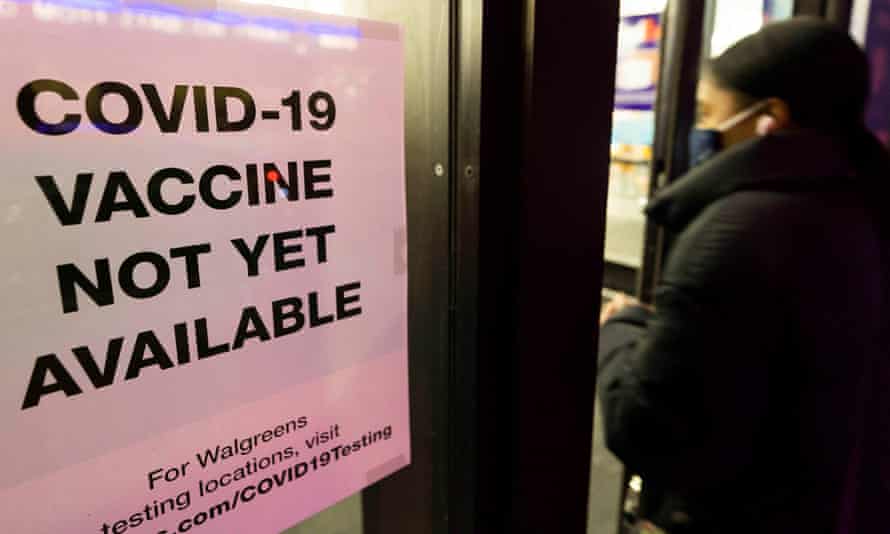
The United States on Friday surpassed 300,000 daily coronavirus cases, the second alarming record this week. The number, which roughly equates to the population of St. Louis, Pittsburgh or Cincinnati, comes about two months after the country reported 100,000 coronavirus cases a day for the first time, and one day after more than 4,000 people died from the virus, also a record.
The United States has reported 21.8 million infections and 367,458 deaths.

