What to expect in US healthcare in 2024 and beyond

A new perspective on how technology, transformation efforts, and other changes have affected payers, health systems, healthcare services and technology, and pharmacy services.

The acute strain from labor shortages, inflation, and endemic COVID-19 on the healthcare industry’s financial health in 2022 is easing. Much of the improvement is the result of transformation efforts undertaken over the last year or two by healthcare delivery players, with healthcare payers acting more recently. Even so, health-system margins are lagging behind their financial performance relative to prepandemic levels. Skilled nursing and long-term-care profit pools continue to weaken. Eligibility redeterminations in a strong employment economy have hurt payers’ financial performance in the Medicaid segment. But Medicare Advantage and individual segment economics have held up well for payers.

As we look to 2027, the growth of the managed care duals population (individuals who qualify for both Medicaid and Medicare) presents one of the most substantial opportunities for payers. On the healthcare delivery side, financial performance will continue to rebound as transformation efforts, M&A, and revenue diversification bear fruit. Powered by adoption of technology, healthcare services and technology (HST) businesses, particularly those that offer measurable near-term improvements for their customers, will continue to grow, as will pharmacy services players, especially those with a focus on specialty pharmacy.

Below, we provide a perspective on how these changes have affected payers, health systems, healthcare services and technology, and pharmacy services, and what to expect in 2024 and beyond.

The fastest growth in healthcare may occur in several segments

We estimate that healthcare profit pools will grow at a 7 percent CAGR, from $583 billion in 2022 to $819 billion in 2027. Profit pools continued under pressure in 2023 due to high inflation rates and labor shortages; however, we expect a recovery beginning in 2024, spurred by margin and cost optimization and reimbursement-rate increases.

Several segments can expect higher growth in profit pools:

  • Within payer, Medicare Advantage, spurred by the rapid increase in the duals population; the group business, due to recovery of margins post-COVID-19 pandemic; and individual
  • Within health systems, outpatient care settings such as physician offices and ambulatory surgery centers, driven by site-of-care shifts
  • Within HST, the software and platforms businesses (for example, patient engagement and clinical decision support)
  • Within pharmacy services, with specialty pharmacy continuing to experience rapid growth

On the other hand, some segments will continue to see slow growth, including general acute care and post-acute care within health systems, and Medicaid within payers (Exhibit 1).

Exhibit 1

Several factors will likely influence shifts in profit pools. Two of these are:

Change in payer mix. Enrollment in Medicare Advantage, and particularly the duals population, will continue to grow. Medicare Advantage enrollment has grown historically by 9 percent annually from 2019 to 2022; however, we estimate the growth rate will reduce to 5 percent annually from 2022 to 2027, in line with the latest Centers for Medicare & Medicaid Services (CMS) enrollment data.1 Finally, the duals population enrolled in managed care is estimated to grow at more than a 9 percent CAGR from 2022 through 2027.

We also estimate commercial segment profit pools to rebound as EBITDA margins likely return to historical averages by 2027. Growth is likely to be partially offset by enrollment changes in the segment, prompted by a shift from fully insured to self-insured businesses that could accelerate as employers seek to cut costs if the economy slows. Individual segment profit pools are estimated to expand at a 27 percent CAGR from 2022 to 2027 as enrollment rises, propelled by enhanced subsidies, Medicaid redeterminations, and other potential favorable factors (for example, employer conversions through the Individual Coverage Health Reimbursement Arrangement offered by the Affordable Care Act); EBITDA margins are estimated to improve from 2 percent in 2022 to 5 to 7 percent in 2027. On the other hand, Medicaid enrollment could decline by about ten million lives over the next five years based on our estimates, given recent legislation allowing states to begin eligibility redeterminations (which were paused during the federal public health emergency declared at the start of the COVID-19 pandemic2).

Accelerating value-based care (VBC). Based on our estimates, 90 million lives will be in VBC models by 2027, from 43 million in 2022. This expansion will be fueled by an increase in commercial VBC adoption, greater penetration of Medicare Advantage, and the Medicare Shared Savings Program (MSSP) model in Medicare fee-for-service. Also, substantial growth is expected in the specialty VBC model, where penetration in areas like orthopedics and nephrology could more than double in the next five years.

VBC models are undergoing changes as CMS updates its risk adjustment methodology and as models continue to expand beyond primary care to other specialties (for example, nephrology, oncology, and orthopedics). We expect established models that offer improvements in cost and quality to continue to thrive. The transformation of VBC business models in response to pressures from the current changes could likely deliver outsized improvement in cost and quality outcomes. The penetration of VBC business models is likely to lead to shifts in health delivery profit pools, from acute-care settings to other sites of care such as ambulatory surgical centers, physician offices, and home settings.

Payers: Government segments are expected to be 65 percent larger than commercial segments by 2027

In 2022, overall payer profit pools were $60 billion. Looking ahead, we estimate EBITDA to grow to $78 billion by 2027, a 5 percent CAGR, as the market recovers and approaches historical trends. Drivers are likely to be margin recovery of the commercial segment, inflation-driven incremental premium rate rises, and increased participation in managed care by the duals population. This is likely to be partially offset by margin compression in Medicare Advantage due to regulatory pressures (for example, risk adjustment, decline in the Stars bonus, and technical updates) and membership decline in Medicaid resulting from the expiration of the public health emergency.

We estimate increased labor costs and administrative expenses to reduce payer EBITDA by about 60 basis points in 2023. In addition, health systems are likely to push for reimbursement rate increases (up to about 350 to 400 basis-point incremental rate increases from 2023 to 2027 for the commercial segment and about 200 to 250 basis points for the government segment), according to McKinsey analysis and interviews with external experts.3

Our estimates also suggest that the mix of payer profit pools is likely to shift further toward the government segment (Exhibit 2). Overall, the profit pools for this segment are estimated to be about 65 percent greater than the commercial segment by 2027 ($36 billion compared with $21 billion). This shift would be a result of increasing Medicare Advantage penetration, estimated to reach 52 percent in 2027, and likely continued growth in the duals segment, expanding EBITDA from $7 billion in 2022 to $12 billion in 2027.

Exhibit 2

Profit pools for the commercial segment declined from $18 billion in 2019 to $15 billion in 2022. We now estimate the commercial segment’s EBITDA margins to regain historical levels by 2027, and profit pools to reach $21 billion, growing at a 7 percent CAGR from 2022 to 2027. Within this segment, a shift from fully insured to self-insured businesses could accelerate in the event of an economic slowdown, which prompts employers to pay greater attention to costs. The fully insured group enrollment could drop from 50 million in 2022 to 46 million in 2027, while the self-insured segment could increase from 108 million to 113 million during the same period.

Health systems: Transformation efforts help accelerate EBITDA recovery

In 2023, health-system profit pools continued to face substantial pressure due to inflation and labor shortages. Estimated growth was less than 5 percent from 2022 to 2023, remaining below prepandemic levels. Health systems have undertaken major transformation and cost containment efforts, particularly within the labor force, helping EBITDA margins recover by up to 100 basis points; some of this recovery was also volume-driven.

Looking ahead, we estimate an 11 percent CAGR from 2023 to 2027, or total EBITDA of $366 billion by 2027 (Exhibit 3). This reflects a rebound from below the long-term historical average in 2023, spurred by transformation efforts and potentially higher reimbursement rates. We anticipate that health systems will likely seek reimbursement increases in the high single digits or higher upon contract renewals (or more than 300 basis points above previous levels) in response to cost inflation in recent years.

Exhibit 3

Measures to tackle rising costs include improving labor productivity and the application of technological innovation across both administration and care delivery workflows (for example, further process standardization and outsourcing, increased use of digital care, and early adoption of AI within administrative workflows such as revenue cycle management). Despite these measures, 2027 industry EBITDA margins are estimated to be 50 to 100 basis points lower than in 2019, unless there is material acceleration in performance transformation efforts.

There are some meaningful exceptions to this overall outlook for health systems. Although post-acute-care profit pools could be severely affected by labor shortages (particularly nurses), other sites of care might grow (for example, non-acute and outpatient sites such as physician offices and ambulatory surgery centers). We expect accelerated adoption of VBC to drive growth.

HST profit pools will grow in technology-based segments

HST is estimated to be the fastest-growing sector in healthcare. In 2021, we estimated HST profit pools to be $51 billion. In 2022, according to our estimates, the HST profit pool shrank to $49 billion, reflecting a contracting market, wage inflation pressure, and the drag of fixed-technology investment that had not yet fulfilled its potential. Looking ahead, we estimate a 12 percent CAGR in 2022–27 due to the long-term underlying growth trend and rebound from the pandemic-related decline (Exhibit 4). With the continuing technology adoption in healthcare, the greatest acceleration is likely to happen in software and platforms as well as data and analytics, with 15 percent and 22 percent CAGRs, respectively.

Exhibit 4

In 2023, we observed an initial recovery in the HST market, supported by lower HST wage pressure and continued adoption of technology by payers and health systems searching for ways to become more efficient (for example, through automation and outsourcing).

Three factors account for the anticipated recovery and growth in HST. First, we expect continued demand from payers and health systems searching to improve efficiency, address labor challenges, and implement new technologies (for example, generative AI). Second, payers and health systems are likely to accept vendor price increases for solutions delivering measurable improvements. Third, we expect HST companies to make operational changes that will improve HST efficiency through better technology deployment and automation across services.

Pharmacy services will continue to grow

The pharmacy market has undergone major changes in recent years, including the impact of the COVID-19 pandemic, the establishment of partnerships across the value chain, and an evolving regulatory environment. Total pharmacy dispensing revenue continues to increase, growing by 9 percent to $550 billion in 2022,4 with projections of a 5 percent CAGR, reaching $700 billion in 2027.5 Specialty pharmacy is one of the fastest growing subsegments within pharmacy services and accounts for 40 percent of prescription revenue6; this subsegment is expected to reach nearly 50 percent of prescription revenue in 2027 (Exhibit 5). We attribute its 8 percent CAGR in revenue growth to increases in utilization and pricing as well as the continued expansion of pipeline therapies (for example, cell and gene therapies and oncology and rare disease therapies) and expect that the revenue growth will be partially offset by reimbursement pressures, specialty generics, and increased adoption of biosimilars. Specialty pharmacy dispensers are also facing an evolving landscape with increased manufacturer contract pharmacy pressures related to the 340B Drug Pricing Program. With restrictions related to size and location of contract pharmacies that covered entities can use, the specialty pharmacy subsegment has seen accelerated investment in hospital-owned pharmacies.

Exhibit 5

Retail and mail pharmacies continue to face margin pressure and a contraction of profit pools due to reimbursement pressure, labor shortages, inflation, and a plateauing of generic dispensing rates.7 Many chains have recently announced8 efforts to rationalize store footprints while continuing to augment additional services, including the provision of healthcare services.

Over the past year, there has also been increased attention to broad-population drugs such as GLP-1s (indicated for diabetes and obesity). The number of patients meeting clinical eligibility criteria for these drugs is among the largest of any new drug class in the past 20 to 30 years. The increased focus on these drugs has amplified conversations about care and coverage decisions, including considerations around demonstrated adherence to therapy, utilization management measures, and prescriber access points (for example, digital and telehealth services). As we look ahead, patient affordability, cost containment, and predictability of spending will likely remain key themes in the sector. The Inflation Reduction Act is poised to change the Medicare prescription Part D benefit, with a focus on reducing beneficiary out-of-pocket spending, negotiating prices for select drugs, and incentivizing better management of high-cost drugs. These changes, coupled with increased attention to broad-population drugs and the potential of high-cost therapies (such as cell and gene therapies), have set the stage for a shift in care and financing models.


The US healthcare industry faced demanding conditions in 2023, including continuing high inflation rates, labor shortages, and endemic COVID-19. However, the industry has adapted. We expect accelerated improvement efforts to help the industry address its challenges in 2024 and beyond, leading to an eventual return to historical-average profit margins.

1 hospital operator among Bloomberg’s ‘Companies to Watch’

HCA Healthcare is the single hospital operator that Bloomberg identifies as one of “50 Companies to Watch in 2024.” 

“From Alphabet and BYD to Eli Lilly and Vivendi, keep an eye on these global stocks this year,” the outlet proposes for the 50 companies out of the 2,000 firms assessed. Bloomberg analysts highlighted the companies as those warranting a closer look, based on “contrarian views and upcoming catalysts for change such as new leadership, asset sales or acquisitions, and plans for new products and services.” 

With 182 hospitals and more than 37,000 hospital bedsBloomberg analyst Glen Losev said HCA “faces cost and revenue challenges that point to a reduction in its operating margin. Wages are increasing, especially for nurses, as are non-labor costs because of general inflation. And fewer physician visits indicate softening demand for care in areas such as elective surgeries.”

HCA is tied to an estimated 5% increase to its revenue in 2024 with a market cap of $72 billion. 

The company posted $47.66 billion in revenue for the first nine months of 2023 compared to $44.73 billion in the same period of 2022. Its fourth quarter earnings are due later this month. 

Other healthcare companies recognized by Bloomberg as worth watching are Novo Nordisk, BeiGene, Boston Scientific and Eli Lilly. Weight loss drug possibilities drive potential for Novo Nordisk and Eli Lilly, with estimated revenue increases of 22% and 16%, respectively. 

One System; Two Divergent Views

Healthcare is big business. That’s why JP Morgan Chase is hosting its 42nd Healthcare Conference in San Francisco starting today– the same week Congress reconvenes in DC with the business of healthcare on its agenda as well. The predispositions of the two toward the health industry could not be more different.

Context: the U.S. Health System in the Global Economy


Though the U.S. population is only 4% of the world total, our spending for healthcare products and services represents 45% of global healthcare market. Healthcare is 17.4% of U.S. GDP vs. an average of 9.6% for the economies in the 37 other high-income economies of the world. It is the U.S.’ biggest private employer (17.2 million) accounting for 24% of total U.S. job growth last year (BLS). And it’s a growth industry: annual health spending growth is forecast to exceed 4%/year for the foreseeable future and almost 5% globally—well above inflation and GDP growth. That’s why private investments in healthcare have averaged at least 15% of total private investing for 20+ years. That’s why the industry’s stability is central to the economy of the world.

The developed health systems of the world have much in common: each has three major sets of players:

  • Service Providers: organizations/entities that provide hands-on services to individuals in need (hospitals, physicians, long-term care facilities, public health programs/facilities, alternative health providers, clinics, et al). In developed systems of the world, 50-60% of spending is in these sectors.
  • Innovators: organizations/entities that develop products and services used by service providers to prevent/treat health problems: drug and device manufacturers, HIT, retail health, self-diagnostics, OTC products et al. In developed systems of the world, 20-30% is spend in these.
  • Administrators, Watchdogs & Regulators: Organizations that influence and establish regulations, oversee funding and adjudicate relationships between service providers and innovators that operate in their systems: elected officials including Congress, regulators, government agencies, trade groups, think tanks et al. In the developed systems of the world, administration, which includes insurance, involves 5-10% of its spending (though it is close to 20% in the U.S. system due to the fragmentation of our insurance programs).

In the developed systems of the world, including the U.S., the role individual consumers play is secondary to the roles health professionals play in diagnosing and treating health problems. Governments (provincial/federal) play bigger roles in budgeting and funding their systems and consumer out-of-pocket spending as a percentage of total health spending is higher than the U.S. All developed and developing health systems of the world include similar sectors and all vary in how their governments regulate interactions between them. All fund their systems through a combination of taxes and out-of-pocket payments by consumers. All depend on private capital to fund innovators and some service providers. And all are heavily regulated. 

In essence, that makes the U.S. system unique  are (1) the higher unit costs and prices for prescription drugs and specialty services, (2) higher administrative overhead costs, (3) higher prevalence of social health issues involving substance abuse, mental health, gun violence, obesity, et al (4) the lack of integration of our social services/public health and health delivery in communities and (5) lack of a central planning process linked to caps on spending, standardization of care based on evidence et al.

So, despite difference in structure and spending, developed systems of the world, like the U.S. look similar:

The Current Climate for the U.S. Health Industry


The global market for healthcare is attractive to investors and innovators; it is less attractive to most service providers since their business models are less scalable. Both innovator and service provider sectors require capital to expand and grow but their sources vary: innovators are primarily funded by private investors vs. service providers who depend more on public funding.  Both are impacted by the monetary policies, laws and political realities in the markets where they operate and both are pivoting to post-pandemic new normalcy. But the outlook of investors in the current climate is dramatically different than the predisposition of the U.S. Congress toward healthcare:

  • Healthcare innovators and their investors are cautiously optimistic about the future. The dramatic turnaround in the biotech market in 4Q last year coupled with investor enthusiasm for generative AI and weight loss drugs and lower interest rates for debt buoy optimism about prospects at home and abroad. The FDA approved 57 new drugs last year—the most since 2018. Big tech is partnering with established payers and providers to democratize science, enable self-care and increase therapeutic efficacy. That’s why innovators garner the lion’s share of attention at JPM. Their strategies are longer-term focused: affordability, generative AI, cost-reduction, alternative channels, self-care et al are central themes and the welcoming roles of disruptors hardwired in investment bets. That’s the JPM climate in San Franciso.
  • By contrast, service providers, especially the hospital and long-term care sectors, are worried. In DC, Congress is focused on low-hanging fruit where bipartisan support is strongest and political risks lowest i.e.: price transparency, funding cuts, waste reduction, consumer protections, heightened scrutiny of fraud and (thru the FTC and DOJ) constraints on horizontal consolidation to protect competition. And Congress’ efforts to rein in private equity investments to protect consumer choice wins votes and worries investors. Thus, strategies in most service provider sectors are defensive and transactional; longer-term bets are dependent on partnerships with private equity and corporate partners. That’s the crowd trying to change Congress’ mind about cuts and constraints.

The big question facing JPM attendees this week and in Congress over the next few months is the same: is the U.S. healthcare system status quo sustainable given the needs in other areas at home and abroad? 

Investors and organizations at JPM think the answer is no and are making bets with their money on “better, faster, cheaper” at home and abroad. Congress agrees, but the political risks associated with transformative changes at home are too many and too complex for their majority.

For healthcare investors and operators, the distance between San Fran and DC is further and more treacherous than the 2808 miles on the map. 

The JPM crowd sees a global healthcare future that welcomes change and needs capital; Congress sees a domestic money pit that’s too dicey to handle head-on–two views that are wildly divergent.

Healthcare 2024: The 10 Themes that will Dominate Discussion

The U.S. health system has experienced three major shifts since the pandemic that set the stage for its future:

  • From trust to distrust: Every poll has chronicled the decline in trust and confidence in government: Congress, the Presidency, the FDA and CDC and even the Supreme Court are at all-time lows. Thus, lawmaking about healthcare is met with unusual hostility.
  • From big to bigger: The market has consistently rewarded large cap operators, giving advantage to national and global operators in health insurance, information technology and retail health. In response, horizontal consolidation via mergers and acquisitions has enabled hospitals, medical practices, law firms and consultancies to get bigger, attracting increased attention from regulators. Access to private capital and investor confidence is a major differentiator for major players in each sector.
  • From regulatory tailwinds to headwinds: in the last 3 years, regulators have forced insurers, hospitals and drug companies to disclose prices and change business practices deemed harmful to fair competition and consumer choice. Incumbent-unfriendly scrutiny has increased at both the state and federal levels including notable bipartisan support for industry-opposed legislation. It will continue as healthcare favor appears to have run its course.

Some consider these adverse; others opportunistic; all consider them profound. All concede the long-term destination of the U.S. health system is unknown. Against this backdrop, 2024 is about safe bets.

These 10 themes will be on the agenda for every organization operating in the $4.5 trillion U.S. healthcare market:

  1. Not for profit health: “Not-for-profit” designation is significant in healthcare and increasingly a magnet for unwelcome attention. Not-for-profit hospitals, especially large, diversified multi-hospital systems, will face increased requirements to justify their tax exemptions. Special attention will be directed at non-operating income activities involving partnerships with private equity and incentives used in compensating leaders. Justification for profits will take center stage in 2024 with growing antipathy toward organizations deemed to put profit above all else.
  2. Insurer coverage and business practices: State and federal regulators will impose regulatory constraints on insurer business practices that lend to consumer and small-business affordability issues.
  3. Workforce wellbeing: The pandemic hangover, sustained impact of inflation on consumer prices, increased visibility of executive compensation and heightened public support for the rank-and-file workers and means wellbeing issues must be significant in 2024.
  4. Board effectiveness: The composition, preparedness, compensation and independent judgement of Boards will attract media scrutiny; not-for-profit boards will get special attention in light of 2023 revelations in higher education.
  5. Employer-sponsored health benefits: The cost-effectiveness of employee health benefits coverage will prompt some industries and large, self-insured companies to pursue alternative strategies for attracting and maintaining a productive workforce. Direct contracting, on-site and virtual care will be key elements.
  6. Physician independence: With 20% of physicians in private equity-backed groups, and 50% in hospital employed settings, ‘corporatization’ will encounter stiff resistance from physicians increasingly motivated to activism believing their voices are unheard.
  7. Data driven healthcare: The health industry’s drive toward interoperability and transparency will will force policy changes around data (codes) and platform ownership, intellectual property boundaries, liability et al. Experience-based healthcare will be forcibly constrained by data-driven changes to processes and insights.
  8. Consolidation: The DOJ and FTC will expand their activism against vertical and horizontal consolidation that result in higher costs for consumers. Retrospective analyses of prior deals to square promises and actual results will be necessary.
  9. Public health: State and federal funding for public health programs that integrate with community-based health providers will be prioritized. The inadequacy of public health funding versus the relative adequacy of healthcare’s more lucrative services will be the centerpiece for health reforms.
  10. ACO 2.0: In Campaign 2024, abortion and the Affordable Care Act will be vote-getters for candidates favoring/opposing current policies. Calls to “Fix and Repair” the Affordable Care Act will take center stage as voters’ seek affordability and access remedies.

Every Board and C suite in U.S. healthcare will face these issues in 2024.

Sam Altman’s wild year offers 3 critical lessons for healthcare leaders in 2024

https://www.linkedin.com/pulse/sam-altmans-wild-year-offers-3-critical-lessons-2024-pearl-m-d–sj1kc/?trackingId=G7JzFhoHSvuK7BRMyo4gcQ%3D%3D

What a wild end to the year it was for Sam Altman, CEO of OpenAI.

In the span of five white-knuckle days in November, the head of Silicon Valley’s most advanced generative AI company was fired by his board of directors, replaced by not one but two different candidates, hired to lead Microsoft’s AI-research efforts and, finally, rehired back into his CEO position at OpenAI with a new board.

A couple weeks later, TIME selected him “CEO of the Year.” Altman’s saga is more than a tale of tech-industry intrigue. His story provides three valuable lessons for not only aspiring and current healthcare leaders, but also everyone who works with and depends on them.

1. Agree On The Goal, Define It, Then Pursue It Tirelessly

OpenAI’s governance structure presented a unique case: a not-for-profit board, whose stated mission was to protect humanity, found itself overseeing an enterprise valued at more than $80 billion. Predictably, this setup invited conflict, as the company’s humanitarian mission began to clash with the commercial realities of a lucrative, for-profit entity.

But there’s little evidence the bruhaha resulted from Altman’s financial interests. According to IRS filings, the CEO’s salary was only $58,333 at the time of his firing, and he reportedly owns no stock.

While Altman clearly knows the company needs to raise money to fund the creation of ever-more-powerful AI tools, his primary goal doesn’t appear to revolve around maximizing shareholder value or his own wealth.

In fact, I believe Altman and the now-disbanded board shared a common mission: to save humanity. The problem was that the parties were 180 degrees apart when it came to defining how exactly to protect humanity.

Altman’s path to saving humanity involved racing forward as fast as possible. As CEO, he understands generative AI’s potential to radically enhance productivity and alleviate threats like world hunger and climate change.

By contrast, the board feared that breakneck AI development could spiral out of control, posing a threat to human existence. Rather than perceiving AGI (artificial general intelligence) as a savior, much of the board worried that a self-learning system might harm humanity.

This dichotomy pitted a CEO intent on changing the world against a board intent to progress at a cautious, incremental pace.

For Healthcare Leaders: Like OpenAI, American healthcare leaders share a common goal. Be they doctors, insurers or government health agencies, all tout the importance of “value-based care” (VBC), which in general terms, constitutes a financial and care-delivery model based on paying healthcare professionals for the quality of clinical outcomes they achieve rather than the quantity of services they provide. But despite agreeing on the target, leaders differ on what it means and how best to accomplish it. Some think of VBC as “pay for performance,” whereby doctors are paid small incentives based on metrics around prevention and patient satisfaction. These programs fail because clinicians ignore the metrics without incentives and total health suffers.

Other leaders believe VBC means paying insurers a set, annual, upfront fee to provide healthcare to a population of patients. This, too, fails since the insurers turn around and pay doctors and hospitals on a fee-for-service basis, and implement restrictive prior authorization requirements to keep costs down.

Instead of making minor financial tweaks that keep falling short of the goal, leaders who want to transform American medicine must play to win. This will require them to move quickly and completely away from fee-for-service payments (which rewards volume of care) to capitation at the delivery-system level (rewarding superior results by prepaying doctors and hospitals directly without insurers playing the part of middlemen).

Like OpenAI’s former board members, today’s healthcare leaders are playing “not to lose.” They avoid making big changes because they fear the backlash of risk-averse providers. But anything less than all in won’t make a dent given the magnitude of problems. To be effective, leaders must make hard decisions, accept the risks and be confident that once the changes are in place, no one will want to go back to the old ways of doing things.

2. Hire Visionary Leaders Who Inspire Boldly

Many tech-industry commentators have drawn comparisons between Altman and Steve Jobs. Both leaders possess(ed) the rare ability to foresee a better future and turn their visions into reality. And both demonstrate(d) passion for exceeding people’s wants and expectations—not for their own benefit but because they believe in a greater mission and purpose.

Altman and Jobs are what I call visionary leaders, who push their organizations and people to accomplish remarkable outcomes few could’ve believed possible. These types of leaders always challenge conservative boards.

When the OpenAI board realized it’s hard to constrain a CEO like Sam Altman, they fired him.

On day one of that decision, the board might have assumed their action would protect humanity and, therefore, earn the approval of OpenAI’s employees. But the story took a sharp turn when nearly all the company’s 770 workers signed a letter to the board in support of Altman, threatening to quit unless (a) their visionary leader was brought back immediately and (b) the board resigned.

Five days after the battle began, the board was facing a rebellion and had little choice but to back down.

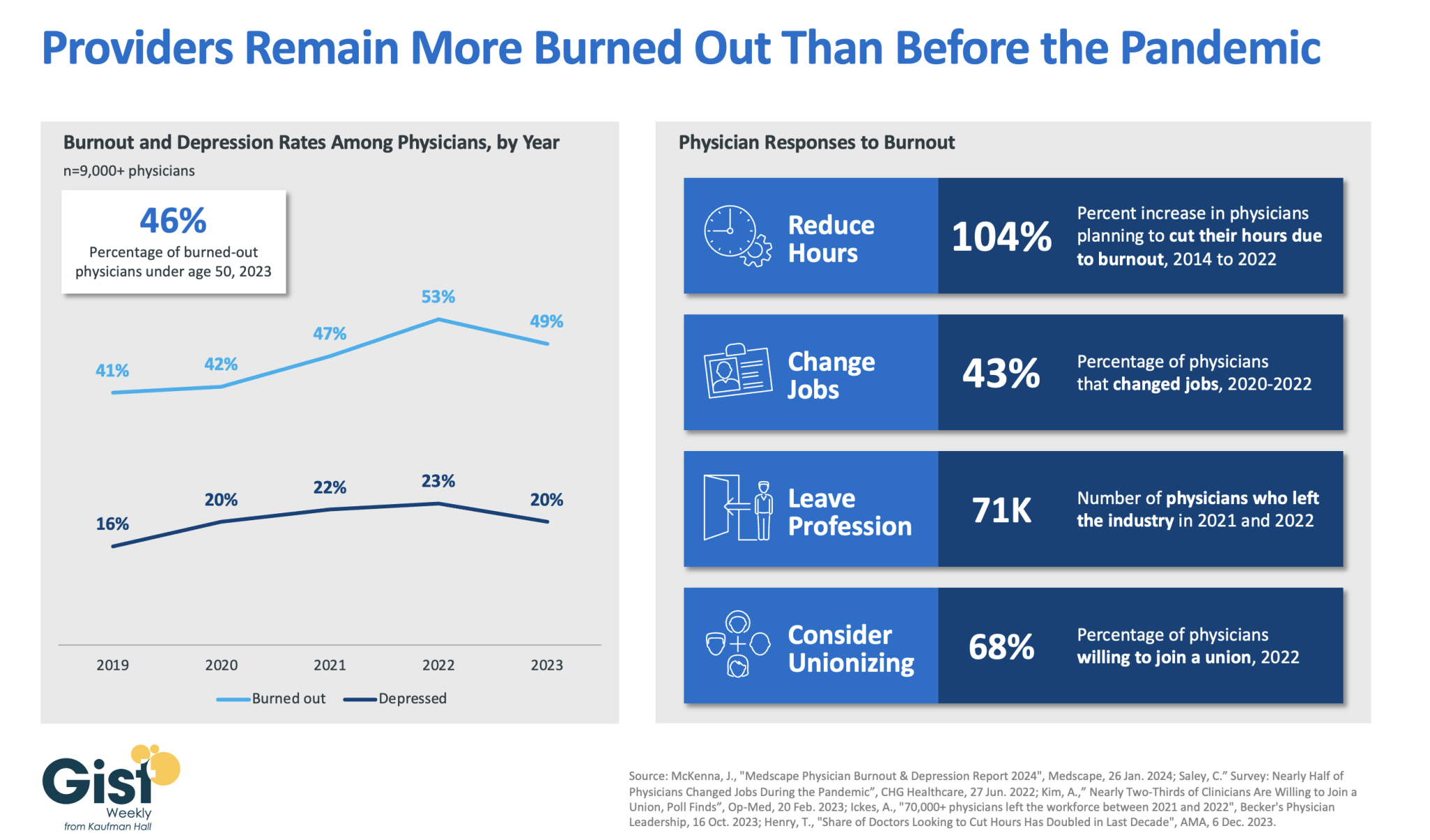
For Healthcare Leaders: The American healthcare system is struggling. Half of Americans say they can’t afford their out-of-pocket expenses, which max out at $16,000 for an insured family. American health is languishing with average life expectancy virtually unchanged since the start of this century. Maternal and infant mortality rates in the U.S. are double what they are in other wealthy nations. And inside medicine, burnout runs rampant. Last year, 71,000 physicians left the profession.

Visionary leadership, often sidelined in favor of the status quo, is crucial for transformative change. In healthcare, boards typically prioritize hiring CEOs with the ability to consolidate market control and achieve positive financial results rather than the ability to drive excellence in clinical outcomes. The consequence for both the providers and recipients of care proves painful.

Like OpenAI’s employees, healthcare professionals want leaders who are genuine, who have the courage to abandon bureaucratic safety in favor of innovative solutions, and who can ignite their passion for medicine. For a growing number of clinicians, the practice of medicine has become a job, not a mission. Without that spark, the future of medicine will remain bleak.

3. Embrace Transformative Technology

OpenAI’s board simultaneously promoted and feared ChatGPT’s potential. In this era of advanced technology, the dilemma of embracing versus restraining innovation is increasingly common.

The board could have shut down OpenAI or done everything in its power to advance the AI. It couldn’t, however, do both. When organizations in highly competitive industries try to strike a safe “balance,” choosing the less-contentious middle ground, they almost always fail to accomplish their goals.

For Healthcare Leaders: Despite being data-driven scientists, healthcare professionals often hesitate to embrace information technologies. Having been burned by tools like electronic healthcare records, which were designed to maximize revenue and not to facilitate medical care, their skepticism is understandable.

But generative AI is different because it has the potential to simultaneously increase quality, accessibility and affordability. This is where technology and skilled leadership must combine forces. It’s not enough for leaders to embrace generative AI. They must also inspire clinicians to apply it in ways that promote collaboration and achieve day-to-day operational efficiency and effectiveness. Without both, any other operational improvements will be incremental and clinical advances minimal at best.

If the boards of directors and other similar decision-making bodies in healthcare want their organizations to lead the process of change, they’ll need to select and support leaders with the vision, courage, and skill to take radical and risky leaps forward. If not, as OpenAI’s narrative demonstrates, they and their organizations will become insignificant and be left behind.

Possibly the Most important thing you’ll read this Year

The following is the philosophy of Charles Schulz, the creator of the ‘Peanuts’ comic strip.

You don’t have to actually answer the questions. Just ponder on them. Just read it straight through, and you’ll get the point.

1. Name the five wealthiest people in the world.

2. Name the last five Heisman trophy winners.

3. Name the last five winners of the Miss America pageant.

4. Name ten people who have won the Nobel or Pulitzer Prize.

5. Name the last half dozen Academy Award winners for best actor and actress.

6. Name the last decade’s worth of World Series winners.

How did you do?

The point is, none of us remember the headliners of yesterday.

These are no second-rate achievers.

They are the best in their fields.

But the applause dies.

Awards tarnish …

Achievements are forgotten.

Accolades and certificates are buried with their owners.

Here’s another quiz. See how you do on this one:

1. List a few teachers who aided your journey through school.

2. Name three friends who have helped you through a difficult time.

3. Name five people who have taught you something worthwhile.

4. Think of a few people who have made you feel appreciated and special.

5. Think of five people you enjoy spending time with.

Easier?

The lesson:

The people who make a difference in your life are not the ones with the most credentials, the most money or the most awards. They simply are the ones who care the most.