Amid an international string of cases, a Massachusetts man has been infected with the first case of monkeypox in the United States this year. And while the virus isn’t likely to cause a pandemic like Covid-19, experts say the outbreak is still concerning.
What is monkeypox?
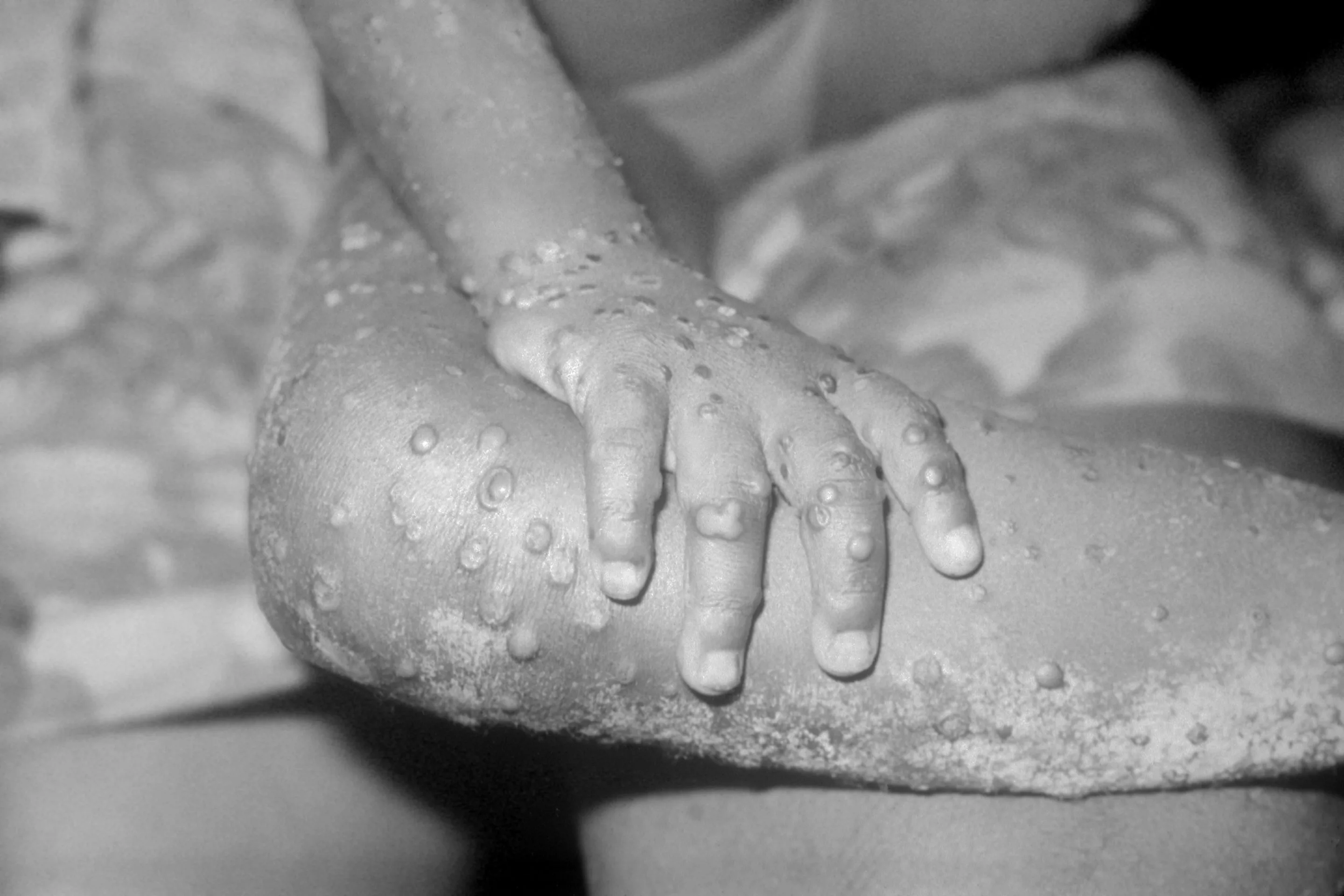
Monkeypox—so called because it was first identified in laboratory monkeys—is a rare viral infection that begins with flu-like symptoms and progresses to a distinctive rash on the face and body. Most infections resolve within weeks, but some cases can be fatal, according to the World Health Organization (WHO).
People can catch monkeypox through contact with infected animals or animal products. Human-to-human transmission, meanwhile, can occur via contact with bodily fluid, sores, or items contaminated by bodily fluid, but most often occurs via large respiratory droplets, which rarely travel more than a few feet.
According to WHO, “There is no evidence, to date, that person-to-person transmission alone can sustain monkeypox infections in the human population.”
Symptoms of monkeypox are typically mild, including headaches, muscle pain, chills, and swollen lymph nodes, The Hill reports. Patients can also develop rashes on their face and body that then turn into skin lesions that eventually fall off.
Although there are no specific treatments for monkeypox, at least one vaccine has been approved in the United States to protect against both monkeypox and smallpox.
Monkeypox cases pop up around the world
On Wednesday, the Massachusetts Department of Public Health (MDPH) reported the first confirmed case this year of monkeypox in the United States in a man who had recently traveled to Canada.
According to MDPH, “The case poses no risk to the public, and the individual is hospitalized and in good condition.”
MDPH said it’s “working closely with the CDC, relevant local boards of health, and the patient’s health care providers to identify individuals who may have been in contact with the patient while he was infectious. This contact tracing approach is the most appropriate given the nature and transmission of the virus.”
Generally, monkeypox cases are very rare in the United States, however two cases were reported in the United States last year—one in Texas and one in Maryland.
Monkeypox cases have also been popping up recently around the world. The United Kingdom has reported nine monkeypox cases, Spain has reported 23 suspected cases, Portugal has reported five and is investigating another 15, and Canadian health officials are investigating at least 15 potential cases in Montreal.
British officials noted that four of the nine cases it identified were among men who have sex with men, suggesting that the virus could be spreading through sexual contract.
What experts are saying
According to Jimmy Whitworth, a professor of international public health at the London School of Hygiene and Tropical Medicine, the monkeypox virus isn’t likely to follow a similar path to Covid-19.
“This isn’t going to cause a nationwide epidemic like COVID did, but it’s a serious outbreak of a serious disease—and we should take it seriously,” he said.
Still, experts said they are concerned by the monkeypox outbreaks. Typically, monkeypox doesn’t spread easily between humans, but the fact that multiple cases are emerging in different countries at the same time is concerning, said Aris Katzourakis, a professor of evolution and genomics at the University of Oxford.
“It’s either a lot of bad luck or something quite unusual happening here,” he said.
“The fact that it’s in the U.K. in multiple unrelated clusters, plus Spain, plus Portugal, is a surprise,” said Tom Inglesby, director of the Johns Hopkins Center for Health Security at the Bloomberg School of Public Health.
According to Mateo Prochazka, an epidemiologist at the U.K. Health Security Agency, the fact that the virus appears to be spreading through sexual contact is especially strange.
“What is even more bizarre is finding cases that appear to have acquired the infection via sexual contact,” he said. “This is a novel route of transmission that will have implications for outbreak response and control.”
While experts aren’t worried about the virus being a global threat as of now, Jay Hooper, a monkeypox expert from the U.S. Army Medical Research Institute of Infectious Diseases, noted that “[e]very time there’s an outbreak—and the more people get infected—the more chances monkeypox has to adapt to people.”
“With viruses that spill over from animals, you just never know what’s going to happen,” he added.