Justice Department welcomes passage of the Competitive Health Insurance Reform Act of 2020

https://www.healthcarefinancenews.com/news/justice-department-welcomes-passage-competitive-health-insurance-reform-act-2020

Competitive Health Insurance Reform Act of 2020 (2021; 116th Congress H.R.  1418) - GovTrack.us

Health insurers are no longer immune from federal antitrust scrutiny for conduct considered the business of insurance.

The Competitive Health insurance Reform Act of 2020 became law on January 13, a move praised by the Department of Justice but opposed by health insurers.

Health insurers are no longer immune from federal antitrust scrutiny for conduct considered the business of insurance and regulated by state law.

With enactment of the Competitive Health Insurance Reform Act, the DOJ and Federal Trade Commission have expanded authority to prosecute alleged anticompetitive behavior, including data sharing between insurers. 

The McCarran-Ferguson Act previously afforded immunity by exempting from federal antitrust laws certain conduct considered the “business of insurance.” This exemption has sometimes been interpreted by courts to allow a range of what the Justice Department considered “harmful” anticompetitive conduct in health insurance markets.

The new law aims to promote more competition in health insurance markets by limiting the scope of conduct that’s exempt from antitrust laws. This move was praised by the Trump Justice Department shortly before the former president left office.

WHAT’S THE IMPACT?

The antitrust scrutiny is coming at a time when insurers are under a deadline to meet interoperability standards to share information with patients that meet Fast Healthcare Interoperability Resources, or FHIR, standards.

Eliminating the exemption undermines the goal of affordable coverage by adding administrative red tape and reducing market competition, according to Matt Eyles, president and CEO of America’s Health Insurance Plans

“The McCarran-Ferguson Act recognized that all healthcare is local, and that states should be able to govern their own health insurance markets,” Eyles said in December. “Removal of this exemption adds tremendous administrative costs while delivering absolutely no value for patients and consumers. It will unnecessarily add layers of bureaucracy, destabilize markets, create conflicting federal and state oversight requirements, and lead to costly litigation.” 

The National Association of Insurance Commissioners sent a letter to Senate leaders on December 2 voicing its concern for the bill’s passage.

“The premise of the Competitive Health Insurance Reform Act is that collusion among health insurance companies is permitted under state law and that the McCarran-Ferguson Act somehow currently protects these practices. This is not true. The McCarran-Ferguson antitrust exemption for health insurance does not allow or encourage conspiratorial behavior but simply leaves oversight of insurance, including health insurance, to the states – and state laws do not allow collusion,” commissioners said.

“The potential for bid rigging, price-fixing and market allocation is of great concern to state insurance regulators and we share your view that such practices would be harmful to consumers and should not be tolerated. However, we want to assure you that these activities are not permitted under state law,” commissioners wrote.

While insurers have not been thrilled with the move, Consumer Reports said the legislation is good for providers who have felt pressured into contract terms that benefit insurers.

THE LARGER TREND

The Justice Department has a track record of successfully enforcing the antitrust laws against health insurers. Over the past five years, the department has enforced the antitrust laws against health insurers involved in transactions valued at over $160 billion.

The Act will help the department build on those successes by requiring health insurers to play by the same rules as competitors in other industries. It will clarify when health insurers qualify for the McCarran-Ferguson exemption, and it will enable the Antitrust Division to spend resources more efficiently to achieve desired results, the Justice Department said.

On January 13, Trump signed into law the Competitive Health Insurance Reform Act of 2020, which limits the antitrust exemption available to health insurance companies under the McCarran-Ferguson Act. The act, sponsored by Rep. Peter DeFazio (D-Ore), passed the House of Representatives on Sept. 21, 2020 and passed the Senate on Dec. 22.

Pediatrician shot and killed at medical office in Austin

https://www.healthcarefinancenews.com/news/pediatrician-shot-and-killed-medical-office-austin

Rep. Joe Courtney (D-Ct.) is reintroducing a bill to help curb workplace violence in the healthcare sector to the 117th Congress next week.

In the latest incidence of workplace violence within the healthcare industry, a 43-year old female doctor was shot and killed by another physician at Children’s Medical Group in Austin, Texas on Tuesday afternoon.

Pediatrician Dr. Katherine Lindley Dodson, 43, died from a gunshot wound that Austin police believe was inflicted by Dr. Bharat Narumanchi, 43. Narumanchi died from an apparent self-inflicted gunshot wound, according to the police report. No motive was given for the attack.

When Austin Police SWAT officers made entry to the medical office building, they found the bodies of Drs. Dodson and Narumanchi inside.

Narumanchi did not work at Children’s Medical Group, but had been there a week earlier to apply for a volunteer position that he reportedly did not get. He was a pediatrician who had been recently diagnosed with terminal cancer, according to the police report. 

Other than the visit to the office the week before, there did not appear to be any relation or other contact between Dr. Dodson and Dr. Narumanchi, police said.  
 
In the 911 call, Austin police received a report that a male subject had entered the medical building with a gun and was holding hostages inside. As the incident began to unfold, it was learned that several hostages were being held. Several hostages initially escaped and others were later allowed to leave with the exception of Dr. Dodson. 
 
Hostages told officers that Narumanchi was armed with a pistol and what appeared to be a shotgun and had two duffel bags.   
 
Hostage negotiators arrived on scene and attempted to make contact with Dr. Narumanchi, to no avail, police said. After several attempts, it was decided to make entry into the building. It appeared that Dr. Narumanchi shot himself after shooting Dr. Dodson. The case is under investigation.

WHY THIS MATTERS

Workplace violence in healthcare is an ongoing issue, and the loss of Dodson is particularly tragic. 

In a 2015 report the Occupational Safety and Health Administration stated that “healthcare and social assistance workers experienced 7.8 cases of serious workplace violence injuries per 10,000 full-time equivalents in 2013. Other large sectors such as construction, manufacturing, and retail all had fewer than two cases per 10,000 FTEs.”

Another report released by the American Hospital Association called the 2020 Environmental Scan, showed the rate of intentional injuries by others in 2017 to be 9.1 per 10,000 for healthcare and social assistance workers and 1.9 per 10,000 for all private industry.

One statistic that stands out is that nearly half of ER physicians said they’ve been physically assaulted at work and 71% have personally witnessed others being assaulted during their shifts. Since the most recent data is from 2017, the effect of COVID-19 is not included in these figures.

Most incidents of physical and verbal assaults are from patients to staff, according to National Nurses United head Michelle Mahon, assistant director of nursing practice for the professional association of registered nurses. 

The issue has been exacerbated by the challenges of COVID-19, according to Mahon, who has said much of it could be prevented by ending staffing shortages.

EFFORTS

Rep. Joe Courtney (D-Ct.) is reintroducing a bill to curb workplace violence in the healthcare sector to the 117th Congress next week, according to information released by his office.

HR 1309, the Workplace Violence Prevention for Health Care and Social Service Workers Act proposed by Courtney, was passed in the House in 2019 after seven years of effort. It did not pass the Senate. 

“Joe is confident about our prospects headed into this year,” his spokesman said. 

National Nurses United supports the legislation that would create federal prevention standards not only for hospitals, but also for facilities such as Veterans’ Affairs, the Indian Health Service and home-based hospice. The law would require OSHA to develop workplace-violence-prevention standards that would include, among other mandates, that IV poles be stationary so they’re not able to be used as weapons.

The bill directs OSHA to issue new standards requiring healthcare and social service employers to write and implement a workplace-violence-prevention plan to prevent and protect employees from violent incidents and assaults at work.

As fraud rises, CFOs must approach numbers skeptically, report finds

https://www.cfodive.com/news/Center-Audit-Quality-financial-reporting-fraud/593123/

Executives might be committed to accuracy, but middle managers and others throughout the organization must be on board, too.

The pandemic is increasing financial reporting fraud, putting the onus on CFOs to create an organization-wide system that prevents wrongdoing, a coalition of auditing and other oversight groups said in a report released today.

Financial statement fraud in public companies is real and that risk has only increased during the Covid-19 pandemic,” said Julie Bell Lindsay, executive director of the Center for Audit Quality, one of four groups to release the report.

To help ensure the integrity of their company’s financial reporting, CFOs can’t rely on external auditors as their bulwark against fraud; they must weave protection into the fabric of the organization and exercise the same skepticism toward numbers auditors are trained to do.

“The strongest fraud deterrent and detection program requires extreme diligence from all participants in the financial reporting system,” Lindsay said. “Certainly, you have internal and external auditors, but you also have regulators, audit committees and, especially, public company management.”

Heightened stress

The report looks at SEC enforcement data from 2014 to 2019, a period of relative calm Linsday said can help set a baseline for assessing how much in pandemic-caused fraud regulators will find when they do their post-crisis analysis.

“The timing of this report is really a great way to … remind all the folks in the financial reporting ecosystem that … the pressures for fraud to happen are strong right now,” she said. 

Improper revenue recognition comprises about 40% of wrongdoing in financial reporting, more than any other type, a finding that tracks an SEC analysis released last August. 

Companies tend to manipulate revenue in four ways:

  1. The timing of recognition
  2. The value applied
  3. The source
  4. The percentage of contract completion claimed

The report singles out revenue-recognition manipulation by OCZ Technology Group, a solid-state drive manufacturer that went bankrupt in 2013, as a typical case.

The company had to restate its revenues by more than $100 million after it was caught mis-characterizing sales discounts as marketing expenses, shipping more goods to a large customer than it could be expected to sell, and withholding information on product returns.

The CEO was charged with fraud and the CFO with accounting, disclosure, and internal accounting controls failures.

The report lists three other common types of fraudmanipulation of financial reserves, manipulation of inventories, and improper calculation of impairment.

Reserve issues involve how, and when, balances are changed, and how expenses are classified; inventory issues involve the amounts that are listed and how much sales cost; and impairment issues involve the timing and accuracy of the calculation. 

Increase expected

More of these kinds of problems will likely be found to be happening because of the pandemic, the report said. 

“This is where all of this comes to a head,” Lindsay said. “You certainly can see pressure, because some companies are struggling right now and there can be pressure to meet numbers, analysts expectations.”

The pressure finance professionals face is part of what the report calls a “fraud triangle,” a convergence of three factors that can lead to fraud: pressure, opportunity and rationalization.

In the context of the pandemic, pressure comes as companies struggle with big drops in revenue; opportunity arises as employees work remotely; and the rationalization for fraud is reinforced by the unprecedented challenges people are facing. 

“It could be anything,” said Lindsay. “‘My wife just lost her job, so I need to make up for it.'”

The report lists fraud types that analysts expect are rising because of the pandemic:

  • Fabrication of revenue to offset losses.
  • Understatement of accounts receivable reserves as customers delay payments. 
  • Manipulation of compliance with debt covenants. 
  • Unrecognized inventory impairments.
  • Over- or understated accounting estimates to meet projection.

About a dozen types in all are listed. 

“Past crises have proven that at any time of large-scale disruption or stress on an economy or industry, companies should be prepared for the possibility of increased fraud.” the report said. 

Lindsay stressed three lessons she’d like to see CFOs take away from the report.

First, the potential for fraud in their companies shouldn’t be an afterthought. Second, protection against it is management’s responsibility but there’s also a role for company’s audit committee, its internal auditors and it’s external auditors. Third, CFOs and the finance executives they work with, including at the middle management level, must bring that same skepticism toward the numbers that auditors are trained to bring.

“Professional skepticism is a core competency of the external auditor and, quite frankly, the internal auditor,” she said. “Management and committee members are not necessarily trained on what it is, but it doesn’t mean you shouldn’t be exercising skepticism, [which is] asking questions about the numbers that are being reported. Is this exactly what happened? Do we have weaknesses? Do we have areas of positivity? It’s really about drilling down and having a dialogue and not just taking the numbers at face value.”

In addition to the Center for Audit Quality, Mitigating the Risks of Common Fraud Schemes: Insights From SEC Enforcement Actions was prepared by Financial Executives International, The Institute of Internal Auditors and the National Association of Corporate Directors.

After serving time, fraudster cautions against PPP, other emergency loans

Taking money hastily can create more problems than it solves if the additional resources aren’t tethered to need.

Taking a paycheck protection program (PPP) loan or other federally backed assistance to get through the pandemic will make your problem worse if you don’t have a realistic plan for the money, a former business owner convicted of federal loan fraud says in a White Collar Week podcast.

Jeff Grant, whose 20-person law firm was struggling when the federal government made emergency loans available after the 9/11 terrorist attacks, said he rushed to get the money without thinking through how best to use it. The result was a 13-month jail stint.

“It was raw desperation,” said Grant, who today focuses on helping other white collar criminals navigate a post-crime life. “At that point I was losing my business. I would have done anything for any gasp of air to try to save my business.”

EIDL loan

Grant applied for a $250,000 loan under the Small Business Administration’s (SBA) Economic Injury Disaster Loan (EIDL) program, a resource that, along with the Paycheck Protection Program (PPP), the federal government has once more made available, this time for pandemic-hit businesses.

To increase his chances of getting the money, he said on his application that his business was located across the street from Ground Zero in Manhattan, when it wasn’t — a form of wire fraud — and he used the money to pay off his personal debt — a form of money laundering, because the program’s debt covenants restricted the money for use only in the business.

“I had run up [my credit card debt] in the months prior [to 9/11], trying to save my business,” he said. “I was paying 24% interest on the credit cards. The EIDL loan was about 3%. It seemed to make sense: replace the 24% money with 3% money.”

For two years afterward, Grant said, he had no idea he was being investigated

“Risk of an audit never entered my mind,” he said. “It was immediately after 9/11: a huge problem for the nation. I was just this little guy who was never going to have to account for anything.”

In addition to his business struggles, Grant was wrestling with personal problems that had jeopardized his law license. Facts emerging from bar association proceedings related to his practice may have led the government to investigate him, he said. 

“I just got a phone call from two federal agents who told me there was a warrant out for my arrest,” he said. 

Rather than fight the charges, he admitted his crime.

“Just like a business decision, you work from the end-result back,” he said. “I knew I had done something wrong. I wanted to pay for my crime. I made full restitution. A lot of people spend a lot of time and money trying to wriggle out of it, but we’re in a world where over 95% of criminal prosecutions result in plea bargains. There are virtually no trials. The government gives you a disincentive to defend yourself at trial and an incentive to resolve it quickly.”

Vast sums of money

Against the pandemic backdrop, Grant said, the kind of fraud he committed after 9/11 is probably much greater today, with hundreds of billions of federal loan funds available to struggling businesses, essentially on an honor system, since applicants simply check a box to certify their eligibility. 

“One of my concerns is, people are just kind of wading in [to these programs],” he said.

Unlike EIDL loans, PPP loans don’t have to be paid back if the proceeds are used for eligible purposes, like payroll and operating expenses. 

The government is making almost $300 billion in PPP assistance available under the latest funding round, enacted in December. Applications close at the end of the first quarter. Prior to this latest round, the program had made some $500 billion available, so more than $800 billion could be circulating by the end of the first quarter.

Grant advises against using the funds, even though they’re easy to access, to shore up a business that was either struggling before the pandemic or doesn’t have a realistic plan for getting through it, because the cash infusion can’t solve a systemic problem. 

“You fall prey to magical thinking,” he said. “Money usually exacerbates problems without a good plan.”

He later worked with a nonprofit that, to attract customers, charged less than it recouped to provide services. As a result, the more services it provided, the more money it lost. It took out a $1 million state grant.

“Without fixing the business model, it blew through the $1 million in 18 months,” he said. 

Economy shrank 3.5 percent in 2020

https://thehill.com/policy/finance/536247-economy-shrank-35-percent-in-2020

How fish and shrimps could be recruited as underwater spies | | News For  Tomorrow

The U.S. economy shrank 3.5 percent in 2020 as the coronavirus pandemic shuttered businesses, schools and events, marking the first annual contraction since the Great Recession, according to data released by the Commerce Department on Thursday.

U.S. gross domestic product (GDP) suffered its largest annual decline since 1946 due to the coronavirus pandemic, according to the Commerce Department release. The outbreak of COVID-19 caused the steepest economic collapse since the Great Depression, wiping out more than 20 million jobs and years of economic growth within two months.

U.S. GDP increased by an annualized rate of 4 percent in the final three months of 2020, according to the data released Thursday, following an annualized gain of 33.4 percent in the third quarter and a 31.4 percent annualized decline in the second quarter. But the economic rebound staged in the second half of 2020 has been dampened by the continued rapid spread of COVID-19 throughout the country.

The U.S. economy came into 2020 remarkably strong. Unemployment reached a 50-year low of 3.5 percent in the previous year, inflation remained low and the U.S. had just set a record for the longest economic expansion in its modern history. While the U.S. was likely to face some headwinds from slowing economies overseas, the stunning emergence of the coronavirus pandemic shattered the strong labor market and forced thousands of businesses to shutter.

Consumer spending — which makes up nearly two-thirds of the U.S. economy — fell 2.6 percent in 2020, driven mainly by a 3.4 percent decline in spending on services. Spending on goods rose 0.8 percent, however, as purchases shifted from gatherings to products that could be used during lockdowns.

Economists expect the U.S. economy to bounce back quickly in the second half of 2021, assuming enough Americans are vaccinated to prevent large coronavirus outbreaks. Both economists and health experts insist that a full return to normal is not possible until the pandemic is defeated. 

Roughly 9 million jobs lost during the onset of the pandemic have yet to be recovered, and those without work have struggled to get by with swaths of the economy still largely shut down by the virus. The federal government approved more than $4 trillion to fund pandemic response and economic rescue in 2020, though Democratic lawmakers and many economists say more is still needed.

President Biden and congressional Democrats are pushing to pass another $1.9 trillion COVID-19 bill meant to ramp up vaccine distribution and offer more economic relief to those in the greatest need.

Republican lawmakers have not ruled out passing another relief bill, but most object to the size and scope of Biden’s proposal after approving a $900 billion measure in December.

Treasury Secretary Janet Yellen and Federal Reserve Chairman Jerome Powell have both warned lawmakers that the risks of holding back on necessary fiscal relief are far greater than adding more to the national debt or risking an increase in inflation.

“I’m much more worried about falling short of a complete recovery and losing peoples’ careers and lives and the damage that will do to productive capacity than about the possibility of higher inflation,” Powell said Wednesday.

‘Really difficult nut to crack’: MedPAC torn over telehealth regs post-COVID-19

https://www.healthcaredive.com/news/really-difficult-nut-to-crack-medpac-torn-over-telehealth-regs-post-covi/593466/

Dive Brief:

  • Members of an influential congressional advisory committee on Medicare are torn on how best to regulate telehealth after the COVID-19 public health emergency, hinting at the difficulty Washington faces as it looks to impose guardrails on virtual care without restricting its use after the pandemic ends.
  • During a Thursday virtual meeting, the Medicare Payment Advisory Commission expressed its support of telehealth broadly, but many members noted snowballing use of the new modality could create more fraud and abuse in the system down the line.
  • Key questions of how much Medicare reimburses for telehealth visits and what type of visits are paid for won’t be easily answered, MedPAC commissioners noted. “This is a really, really difficult nut to crack,” Michael Chernew, MedPAC chairman and a healthcare policy professor at Harvard Medical School, said.

Dive Insight:

Virtual care has kept much of the industry running during the coronavirus pandemic, allowing patients to receive needed care at home. Much of this was possible due to the declaration of a public health emergency early 2020, allowing Medicare to reimburse for a greater swath of telehealth services and nixing other restrictions on virtual care.

However, much of that freedom is only in place for the duration of the public health emergency, leaving regulators and legislators scrambling to figure which new flexibilities they should codify, and which perhaps are best left in the past along with COVID-19.

It’s a tricky debate as Washington looks to strike a balance between keeping access open and costs low.

In a Thursday meeting, MedPAC debated a handful of policy proposals to try and navigate this tightrope. Analysts floated ideas like making some expansions permanent for all fee-for-service clinicians; covering certain telehealth services for all beneficiaries that can be received in their homes; and covering telehealth services if they meet CMS’ criteria for an allowable service.

But many MedPAC members were wary of making any concrete near-term policy changes, suggesting instead the industry should be allowed to test drive new telehealth regulations after COVID-19 without baking them in permanently. 

I don’t think what we’ve done with the pandemic can be considered pilot testing. I think a lot of this is likely to go forward no matter what we do because the gate has been opened, and it’s going to be really hard to close it,” Marjorie Ginsburg, founder of the Center for Healthcare Decisions, said. But “I see this just exploding into more fraud and abuse than we can even begin imagining.”

Paul Ginsburg, health policy chair at the Brookings Institution, suggested a two-year pilot of any changes after the public health emergency ends.

However, it would be “regressive” to roll back all the gains virtual care has made over the past year, according to Jonathan Perlin, CMO of health system HCA.

“These technologies are such a part of the environment that at this point, I fear [it] would be anachronistic not to accept that reality,” Perlin said.

Among other questions, commissioners were split on how much Medicare should pay for telehealth after the pandemic ends. 

That parity debate is perhaps the biggest question mark hanging over the future of the industry. Detractors argue virtual care services involve lower practice costs, as remote physicians not in an office don’t need to shell out for supplies and staff. Paying at parity could distort prices, and cause fee-for-service physicians to prioritize delivering telehealth services over in-person ones, some commissioners warned.

Other MedPAC members pointed out a lower payment rate could stifle technological innovation at a pivotal time for the healthcare industry.

MedPAC analysts suggested paying lower rates for virtual care services than in-person ones, and paying less for audio-only services than video.

Commissioners agreed audio-only services should be allowed, but that a lower rate was fair. Commissioner Dana Gelb Safran, SVP at Well Health, suggested CMS should consider outlining certain services where video must be used out of clinical necessity.

Previously, telehealth services needed a video component to be reimbursed. Proponents argue expanded access to audio-only services will improve care access, especially for low-income populations that might not have the broadband access or technology to facilitate a video visit.

Another major concern for commissioners is how permanently expanding telehealth access would affect direct-to-consumer telehealth giants like Teladoc and Amwell. If all telehealth services delivered at home are covered, that could allow the private companies to “really take over the industry,” Larry Casalino, health policy chief in the Weill Cornell Department of Healthcare Policy and Research, said.

Because of the lower back-end costs for virtual care than in-office services, paying vendors the same rate as in-office physicians could drive a lot of brick-and-mortar doctors out of business, commissioners warned.

Here’s which Trump-era health policies Biden could roll back — without help from Congress

https://www.healthcaredive.com/news/heres-what-trump-era-health-policies-biden-could-roll-back-without-help/592912/

How To Roll-Back Data in a Temporal Table

The nearest-term 2021 actions will likely center on bolstering the ACA and Medicaid, after the Trump administration took aim at both.

Even with Democrats’ surprise flipping of the Senate, enacting big healthcare policies in Congress will be a heavy lift given the razor-thin margin in that body and division within the party on strategy.

A clearer path for incoming president Joe Biden is to focus on reversing policies enacted by President Donald Trump at the executive level. Trump’s tenure has been defined in large part by a chipping away at key tenets of the Affordable Care Act, curtailing the Medicaid program and sweeping deregulations critics allege harm consumer protections.

The nearest-term actions the incoming administration is likely to take will center on bolstering the landmark health law and Medicaid, both of which has drawn more bipartisan backing in recent years. Below are what the Biden health administration is likely to roll back quickly after inauguration Wednesday.

Boosting Affordable Care Act marketplace

One of Biden’s first moves may be to open a special enrollment period to sign up for coverage during COVID-19, combined with more outreach and enrollment assistance, Cynthia Cox, director of the ACA program at the Kaiser Family Foundation, said.

Beyond COVID-19, it’s likely the Biden administration will restore federal spending on navigation, marketing and outreach for exchange plans. For example, the Trump administration reduced the minimum number of navigator programs in each state using the federal marketplace to one. Biden could return it to two, and might also bring back the requirement that navigators have a physical presence in their service area.

Biden is also likely to unilaterally shore up standards for brokers, and take steps to bolster the exchange website healthcare.gov.

The Trump administration in December proposed a rule encouraging states to privatize their health insurance marketplaces instead of using healthcare.gov, which will make it more difficult for consumers to shop between plans and could divert people to subpar coverage, Tara Straw, senior policy analyst at the Center on Budget and Policy Priorities, wrote in a December blog post.

The rule doubles down on the administration’s approval of a Georgia waiver to privatize its marketplace in November, but would allow states to follow suit and rely entirely on third-party brokers without a waiver.

That rule is not yet final, so Biden’s HHS will likely remove it from the Federal Register to avoid fragmenting marketplace functions.

Biden could also beef up consumer protections and standards for web brokers, which also sell skimpy short-term health insurance and other non-ACA-compliant coverage.

Biden is also likely to re-expand the annual enrollment period. In 2017, the Trump administration shortened the annual enrollment period to 45 days. Biden’s HHS could use rulemaking to return that period to three full months.

The incoming administration could also reverse previous CMS guidance on Section 1332 waivers that let states subvert or sidestep ACA protections on coverage and cost. The Trump administration proposed a rule in November to codify the waiver standards in regulation but — despite a recent wave of proposed and final regulations as the Trump administration hustles to preserve its health agenda — the rule has not yet been finalized, so HHS could remove it from the Federal Register as well.

By nixing the rule, Biden could also help reverse Trump administration cuts from 2018 that slashed user fees on healthcare.gov plans. The November proposed rule would further decimate the fees, which finance a large swath of marketplace operating expenses, to 2.25% in 2022, versus 3% in 2021 and 3.5% last year.

One key tenet of Biden’s health agenda is to expand ACA subsidies to more low-income Americans, something he can’t do without Congress. However, Biden could use administrative processes to reverse a Trump-era method for indexing marketplace subsidies that kicked in for the 2020 plan year, which led to a small reduction in the financial aid.

Dialing back short-term and association health plans

Biden’s HHS could also roll back the controversial expansion of short-term health plans, bare-bones coverage that isn’t required to cover the 10 essential health benefits under the ACA.

Short-term plans were created as inexpensive stop-gap insurance that could last for up to three months, giving consumers peace of mind while they shopped more comprehensive coverage. However, in 2018, the Trump administration expanded the duration of the plans to 12 months, with a three-year renewal period, and also allowed all consumers — not just those who couldn’t afford other options — to purchase them.

HHS touted the expansion as giving consumers more options, while noting they weren’t meant for everyone. yearlong investigation by House Democrats found the plans widely discriminate against women and people with pre-existing conditions, and had major coverage limitations leaving unwitting consumers susceptible to surprise medical bills.

The Biden administration could enact stricter limits against the sale of the plans. Through additional rulemaking, HHS could limit future enrollment or make it harder to renew short-term coverage, enact stronger consumer protections or beef up standards to limit their sale.

Though actions around limiting new people coming into the plans are likely, Biden may wait to see if Congress takes up the issue, experts say.

A growing number of Americans in the individual healthcare market have subscribed the inexpensive coverage amid skyrocketing medical costs. Roughly 3 million consumers bought the plans in 2019, a 27% growth from 2018, the investigation found. The explosive growth in use makes it a bit less likely Biden’s HHS would pursue immediate, unilateral movement in the space, for fear of kicking Americans off their coverage.

Biden could also reverse Trump’s regulatory changes that have been friendly to association health plans, which allow small businesses or groups to band together to offer coverage. Though the ACA enhanced oversight of the coverage, the Trump administration in June 2018 issued a rule exempting them from rules regulating individual and small-group employer coverage.

As a result, association health plans were allowed to exclude or charge more on the basis of gender, age or other factors.

A federal court invalidated the rule later that year, and some states took legislative or regulatory actions to discourage the use of association health plans. However, the plans —which cover an estimated 3 million Americans — are still not required to cover all essential health benefits, making them a likely target for the Biden administration.

“It is something that we’re going to see some action on pretty soon, but it’s challenging. You don’t want to take those plans away from people, especially during a pandemic,” Cox said.

Expanding Medicaid coverage, eligibility

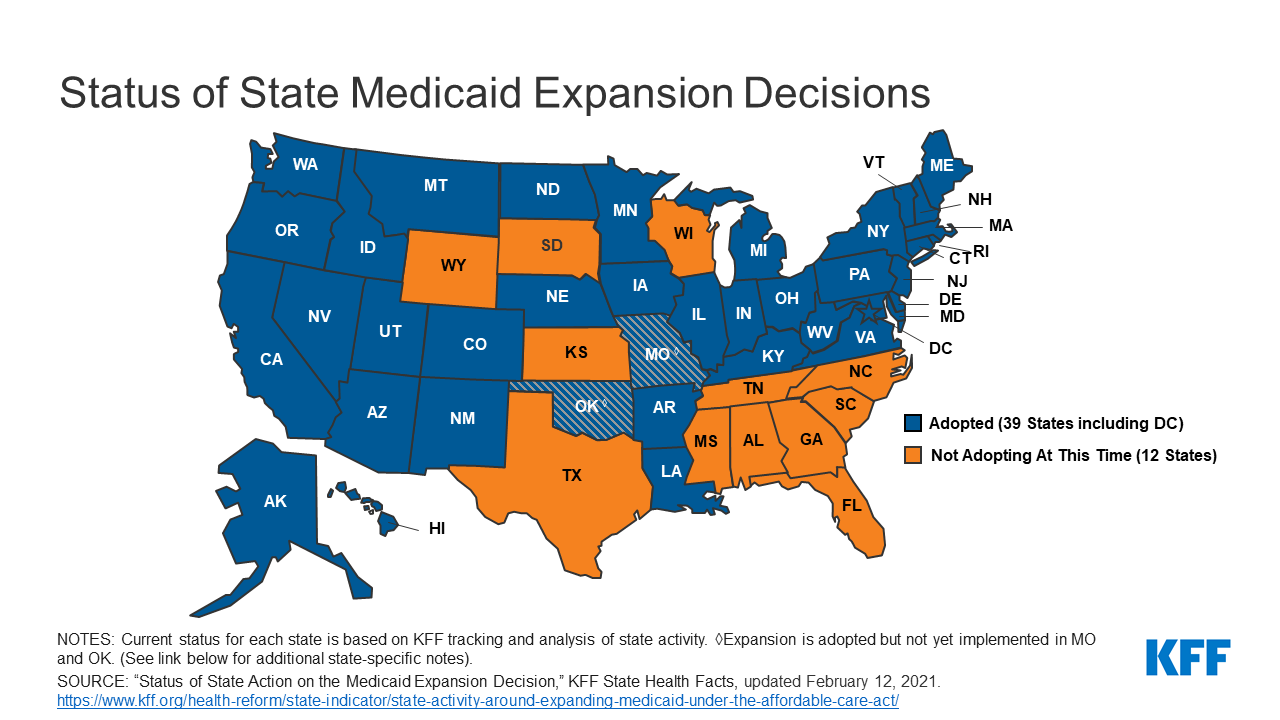
The Trump administration has given red states new avenues to constrict their Medicaid programs, which provide safety-net health insurance to some 75 million Americans.

Biden will likely first revise state demonstration waiver policies to expand coverage. Among other measures, Biden could get rid of past CMS guidance allowing states to play with Medicaid eligibility through work requirements, controversial programs tying coverage eligibility to work or volunteering hours, and to cap program funding.

Tennessee this month became the first state to receive a federal green light to convert its Medicaid funding to a block grant, following controversial CMS guidance issued early last year. Republicans tout block grants as a way to lower costs, while Democrats oppose the models as capped funding could lead to restricted benefits down the line, especially during times of emergency like a pandemic or natural disaster.

It’s more difficult to roll back a waiver if it’s already been approved, but Biden could put restrictions on it or reverse the decision before it goes into effect, experts say, though Tennessee would have an opportunity to object.

There are also actions Biden could take to reinstate certain beneficiary protections, which would require regulatory changes, KFF researchers say. Those include revising or stopping pending proposals that would change how Medicaid eligibility is determined in a way that would probably result in previously eligible people losing coverage by enacting more documentation requirements; change the government’s methodology for recouping improper payments; and reduce enhanced federal funding for eligibility workers.

Biden’s administration could also tweak regulations that have already been finalized, including the final Medicaid managed care rule for 2020 that relaxed network adequacy, beneficiary protections and quality oversight.

Hospital Uncompensated Care Costs Grew to $41.61B in 2019

Uncompensated Care Costs Fell in Nearly Every State as ACA's Major Coverage  Provisions Took Effect | Center on Budget and Policy Priorities

Hospital uncompensated care costs were up from $41.3B in 2018 and $38.4B in 2017, revealing an upward trend, according to AHA data.

Hospital uncompensated care costs increased right before the COVID-19 pandemic hit, according to new data from the American Hospital Association (AHA).

AHA data showed that hospitals incurred a new high of $41.61 billing in uncompensated care costs in 2019, the most recent year for which the group had complete data.

Uncompensated care costs in 2019 were up from $41.3 billion in 2018 and $38.4 billion in 2017 and were the second-highest per AHA records. Hospitals reported the most uncompensated care costs in 2013 when they incurred $46.8 billion.

Hospital uncompensated care costs decreased after the all-time high in 2013, but have recently started to tick back up after holding steady at $38.4 in 2016 and 2017.

In just the last 20 years, hospitals of all types have provided more than $660 billion in uncompensated care to patients, AHA reported. And that figure does not fully account for other ways in which provides provide financial assistance to patients of limited means, the group stated.

Each year, AHA aggregates data on uncompensated care, or care provided for which no reimbursement is received by hospitals from patients or payers. The data comes from the group’s Annual Survey of Hospitals, a comprehensive report of hospital financial data.

Uncompensated care is the sum of a hospital’s bad debt and financial assistance it provides, AHA explained.

Bad debt occurs when a hospital does not expect to obtain reimbursement for care provided, such as when patients are unable to pay their financial responsibility and do not qualify for financial assistance or are unwilling to pay their bills.

Hospitals also provide varying levels of financial assistance, AHA added. Financial assistance supports patients who cannot afford to pay and qualify for support from the hospital based on policies it has established based on the facility’s mission, financial condition, and geographic location, among other factors.

Combined, bad debt and financial assistance charges total a hospital’s uncompensated care charges, which is then multiplied by a hospital’s cost-to-charge ratio to determine total uncompensated care costs.

AHA noted that it expressed uncompensated care in costs versus charges because of significant variations in hospital payer mixes. Publishing the information as costs rather than charges enables better comparison across hospitals, the group said.

Nearly half of hospitals (48 percent) have seen bad debt and uncompensated care increase recently as a result of the ongoing COVID-19 pandemic, an analysis from consulting firm Kaufman Hall revealed.

More than 40 percent of hospitals also reported increases in percentage of uninsured or self-pay patients (44 percent) and the percentage of Medicaid patients (41 percent), which both contribute to unfunded or underfunded care at hospitals.

“The challenges brought on by the COVID-19 pandemic have affected nearly every aspect of hospital financial and clinical operations,” Lance Robinson, a managing director at Kaufman Hall, said at the time. “Organizations have responded to the challenge by adjusting their operations and strengthening important community relationships.”

Hospital uncompensated care costs – and bad debt as a result – are likely to increase in 2020 as hospitals come to terms with the impact COVID-19 has had on their financial health.

Already, hospitals have lost an estimated $323 billion in 2020 as a result of the COVID-19 pandemic, according to earlier projections from AHA.

About half of US hospitals also started the year in the red, AHA and Kaufman Hall stated in a recent report. The organizations predicted that hospital margins would sink to -7 percent in the second half of 2020 without comprehensive financial support from the government, but could decrease to a low of -11 percent if COVID-19 continued to periodically surge as it has.