Some teachers don’t want to return to the classroom until they’ve been vaccinated — setting up potential clashes with state and local governments pushing to reopen schools.
Why it matters:Extended virtual learning is taking a toll on kids, and the Biden administration is pushing to get them back in the classroom quickly. But that will only be feasible if teachers are on board.
Where it stands:Although the rise of new, more contagious variants has scrambled the calculus on school reopening, for now the expert consensus is that vaccinations aren’t essential to safely reopening schools.
A pair of studies from the CDC this week reiterated the agency’s stance that schools can operate safely with the proper precautions, along with other mitigation measures in the broader community.
Most states haven’t put teachers at the front of the line for vaccines. Only 18 have included teachers in the early priority groups that can get vaccinated now, and in all but four of those states, teachers are competing for shots with other higher-risk populations, including the elderly.
Yes, but: Teachers in some large school districts don’t want to return to the classroom without being vaccinated — which could mean several more months of virtual classes.
The Chicago teachers union has asked to delay reopening until teachers receive at least the first dose of the vaccine, but the city’s public health commissioner has said it could take months for teachers to be vaccinated, the Chicago Tribune reports.
“If you are required to work with students in person — which thousands of educators have been doing for months now — you should be vaccinated as soon as possible,” Jessica Tang, president of the Boston Teachers Union, said in statement after teachers were bumped behind the elderly in the state’s priority line, per Boston.com.
What they’re saying:“The issue is that we should be aligning vaccination with school opening. That doesn’t mean every single teacher has to be vaccinated before you open one school, it means there has to be that alignment,” Randi Weingarten, the president of the American Federation of Teachers, told ABC News.
Teachers should be eligible for vaccination by “late January,” she wrote in a USA Today op-ed over the weekend.
The other side: Ohio Gov. Mike DeWine has said school staff will be prioritized for vaccination, with the goal of having students return to classrooms by March 1.
But prioritizing teachers can be controversial. Oregon Gov. Kate Brown has been criticized for the decision to vaccinate teachers ahead of the elderly, high-risk essential workers and other vulnerable communities.
In a rural county in Georgia and at a private school in Philadelphia, teacher vaccine clinics were shut down by their state health departments, which said that educators were not yet eligible.
The bottom line:“It’s challenging to make those decisions about how to prioritize different populations, all of whom are at significant risk,” the Kaiser Family Foundation’s Jennifer Tolbert said.
Thursday was healthcare day at the Biden White House, the latest in a series of themed days during which the President has issued executive orders on topics ranging from COVID response to climate change to racial equity.
Facing a closely divided Congress, the new administration has focused so far on actions it can take unilaterally to advance its agenda, and as President Biden described it at a signing ceremony yesterday, his healthcare agenda is centered on “restoring the Affordable Care Act and restoring Medicaid to the way it was” prior to the Trump administration.
The new executive order reopens the HealthCare.gov insurance marketplace for a “special enrollment period”, lasting from mid-February to mid-May, allowing approximately 15M uninsured Americans in 36 states (including 3M who lost employer-based insurance due to COVID) to sign up for coverage, many subsidized by the federal government.
The order also instructs agencies to review many of the regulatory changes made by the Trump administration, including loosening restrictions on short-term insurance plans, and allowing states to use waivers to implement Medicaid work requirements. (Also included in Thursday’s action was a measure to immediately rescind the ban on taxpayer funding for abortion-related counseling by international nonprofits, the so-called “Mexico City rule”.)
Actually unwinding those Trump-era changes will take months (or possibly years) of regulatory work to accomplish, but Biden’s executive order puts that work in motion. Attention now turns to Congress, which the Biden team hopes will provide funding for increased subsidies for coverage on the Obamacare exchanges, along with allocating money for the administration’s aggressive COVID response plan.
Yesterday’s executive order is best understood as the starting gun for the lengthy legislative and regulatory process that lies ahead, as the Biden administration tries to bolster the 2010 health reform law, and stamp its mark on American healthcare.
As the oft-cited 10,000 Baby Boomers continue to age into Medicare each day, Medicare Advantage (MA) enrollment keeps accelerating. The graphic above highlights growth in the MA ranks across the last decade, showing that enrollment has more than doubled since 2010. By the end of this year, an estimated 42 percent of Medicare beneficiaries will get their benefits through a private health insurer.
While seniors like MA plans for the growing number of supplemental benefits they can offer—which now include adult day care services, home-based palliative care, and in-home support services—health insurers are gravitating to these plans due to their attractive economics.
Health insurers’ average gross margin per member, per month (PMPM) for MA plans is significantly higher than in individual or group market plans, a spread that increased in 2020 due to reduced utilization. PMPM margins for MA plans were up an average of 35 percent through September 2020 compared to 2019.
Payers have been blanketing the market with plan options in recent years;the number of MA plans offered has increased 49 percent since 2017, although the MA market is increasingly concentrated. In spite of numerous headlines about venture-backed startups like Oscar, Bright Health Plan, and Devoted Health posting double- or triple-digit growth numbers, the MA market is still dominated by UnitedHealthcare and Humana, which together account for 44 percent of all MA enrollees nationwide.
Faced with the urgent need to protect nurses and other frontline workers, labor organizations are pushing hospitals to do more.
The unions representing the nation’s health care workers have emerged as increasingly powerful voices during the still-raging pandemic.
With more than 100,000 Americans hospitalized and many among their ranks infected, nurses and other health workers remain in a precarious frontline against the coronavirus and have turned again and again to unions for help.
“It’s so overwhelming. It’s unlike anything I’ve ever seen before,” said Erin McIntosh, a nurse at Riverside Community Hospital in Southern California, a part of the country that has been among the hardest hit by a surge in cases. “Every day I’m waist-deep in death and dying.”
In her hospital’s intensive care unit, Mrs. McIntosh said, nurses have sometimes cared for twice as many patients. “We’re being told to take on more than we safely can handle.”
Her union, the Service Employees International Union, and another union, National Nurses United, which has a powerful presence in California, have pushed back against the state’s decision to let hospitals assign nurses more patients during the crisis.
HCA Healthcare, the for-profit hospital chain that owns Riverside, responded that it had recruited additional nurses and was keeping its employees safe.
Health care workers say they have been bitterly disappointed by their employers’ and government agencies’ response to the pandemic. Dire staff shortages, inadequate and persistent supplies of protective equipment, limited testing for the virus and pressure to work even if they might be sick have left many workers turning to the unions as their only ally.The virus has claimed the lives of more than 3,300 health care workers nationwide, according to one count.
A patient arrived in March at the University of Illinois Hospital in Chicago.
“We wouldn’t be alive today if we didn’t have the union,” said Elizabeth Lalasz, a Chicago public hospital nurse and steward for National Nurses United. The country’s largest union of registered nurses, representing more than 170,000 nationwide, National Nurses was among the first to criticize hospitals’ lack of preparation and call for more protective equipment, like N95 masks.
Despite the decades-long decline in the labor movement and the small numbers of unionized nurses, labor officials have seized on the pandemic fallout to organize new chapters and pursue contract talks for better conditions and benefits. National Nurses organized seven new bargaining units last year, compared to four in 2019. The S.E.I.U. also says it has seen an uptick in interest.
Nurses across the country from various unions have participated in dozens of strikes and protests. National Nurses held a “day of action” on Wednesday with demonstrations in more than a dozen states and Washington, D.C., as it starts negotiations at hospitals owned by big systems like HCA, Sutter Health and CommonSpirit Health.
Hospitals claim the unions are playing politics during a public health emergency and say they have no choice but to ask more of their workers. “We are in a moment of crisis that we’ve never seen before, and we need flexibility to care for patients,” said Jan Emerson-Shea, a spokeswoman for the California Hospital Association.
At the University of Illinois Hospital in Chicago, the deaths of two nurses from the virus helped galvanize employees to strike for the first time last fall, said Paul Pater, an emergency room nurse and union official with the Illinois Nurses Association. “People really took that to heart, and it really fomented a lot of disdain for the current administration at the hospital.”
In their most recent contract, nurses there won provisions ensuring the hospital would hire more staff and keep sufficient supplies of protective equipment, Mr. Pater said. “We’ve been able to make, honestly, just huge strides in protecting our people.”
The hospital did not respond to requests for comment.
A yard sign in Asheville, N.C., supporting Mission Hospital’s nurses, who voted to unionize last September.
Some nurses remain highly skeptical of the unions’ efforts, and even those who favor organizing acknowledge there are serious limits to what they can accomplish. “I’m not sure that the union is enough, because it can only take us so far” since staffing conditions remain overwhelming, said Mrs. McIntosh, the Riverside nurse.
Many health care workers view vaccines as the beginning of the end of the pandemic. But large numbers — especially those who work in nursing homes and outside hospitals, who tend to have higher rates of vaccine hesitancy — are refusing to be immunized. During a crisis that disproportionately threatens health care workers of color, one recent analysis found that they are getting vaccinations at rates far below those of their white colleagues.
The unions find themselves treading a fine line between encouraging their members to get vaccinated and protecting them against policies that would force them to do so.
“There are still unanswered questions,” said Karine Raymond, a nurse at Montefiore Medical Center in the Bronx and a New York State Nurses Association official. “The union believes that all nurses should seriously consider being vaccinated,” said Ms. Raymond, who would not say whether she personally would accept the vaccine. “But, again, it’s the individual’s choice.”
The nurses and their unions do want to keep pressuring employers to safeguard workers and patients. “Just because a vaccine is rolling out doesn’t mean that we can let up on other important protections,” said Michelle Mahon, a National Nurses United official, during a Facebook Live event last month.
The past year has created conditions ripe for organizing to address longstanding issues like inadequate wages, benefits and staffing, a problem exacerbated by health care workers falling ill, burning out or retiring early for fear of getting sick. The unions “have successfully been able to use the pandemic to rebrand those same conflicts as very urgent safety concerns,” said Jennifer Stewart, a senior vice president at Gist Healthcare, a consulting firm that advises hospitals.
They have also shifted many nurses’ view of their employers, she said. “The perceptions and the experiences are being crystallized and starting to be viewed through a certain lens. And I think that lens is very favorable to unions.”
At Mission Hospital in Asheville, N.C., safety concerns created by the pandemic added urgency to the nurses’ push to join forces with National Nurses United.
Some questioned the union’s ability to deliver better working conditions and raised concerns about the union creating divisions within the hospital. A group of 25 Mission nurses signed a letter before the vote saying “an outside third party, like the N.N.U., is not the solution.”
But last September, 70 percent of nurses approved the union, one of the largest wins at a hospital in the South in decades. Susan Fischer, a Mission nurse who helped lead the organizing drive, called National Nurses United “instrumental in helping us find our voice.”
She said the union was already proving its worth, pushing management in bargaining talks this month to provide better access to protective equipment and to assign nurses fewer patients.
In a statement, HCA, which owns Mission Hospital, said its highest priority was to protect workers and that the unions were “exploiting the situation in an attempt to gain publicity and organize new dues-paying members.”
In addition to staging protests and strikes, unions have defended workers who are speaking up against their employers. Some unions have sued hospitals, including one lawsuit against Riverside by the S.E.I.U. Similarcases have been dismissed in court, and HCA called the Riverside suit a publicity stunt.
Industry executives say the unions are unfairly blaming hospitals for the horrors of the pandemic. While some had difficulty providing protective equipment early on, hospitals have done their best to follow government guidelines and to protect workers, said Chip Kahn, the president of the Federation of American Hospitals, which represents for-profit hospitals.
Mr. Kahn said the unions were leveraging the crisis to achieve their agenda of organizing workers. “They’ll push whatever pressure points they can to try to force their way into hospitals, because that’s what they do.”
Nurses protesting outside Good Samaritan Hospital in San Jose.Credit…
About 17 percent of nurses and 12 percent of other U.S. health care workers are covered by a union, according to an analysis of government data, and rates of union coverage have remained largely unchanged during the pandemic. The share of hospital workers with union representation has declined from above 22 percent in 1983 to below 15 percent in 2018, reflecting a decades-long decline in organized labor.
Some unions, including the outspoken National Nurses, have often seemed to occupy the fringes of the labor movement. For years it was better known for advocating proposals like Medicare for All, which would replace private insurance with government-run health care, and for enthusiastically backing Senator Bernie Sanders of Vermont for president.
The pandemic, and the union’s decision to endorse Joseph R. Biden Jr. after Senator Sanders left the race last year, have tempered that reputation. Mission nurses said that politics was not part of the allure of National Nurses United. “Of all the unions we could’ve gone to, they had the best track record,” Ms. Fischer said.
The Biden presidency may give the unions an opportunity to flex their newfound muscle. Mary Kay Henry, the international president of the S.E.I.U., was among the labor leaders who met virtually with Mr. Biden last year.
“In my 40 years of organizing health care workers, I have never experienced a time when people are more willing to take risks and join together to take collective action,” Ms. Henry said. “That’s a sea change.”
Norma Leiva, a Food 4 Less warehouse manager, waits Saturday to be let into work in Panorama City, Calif. The state’s decision to expand vaccine eligibility to millions of older residents has stark consequences for communities of color disproportionately affected by the pandemic.
As a warehouse manager at a Food 4 Less in Los Angeles, Norma Leiva greets delivery drivers hauling in soda and chips and oversees staff stocking shelves and helping customers. At night, she returns to the home she shares with her elderly mother-in-law, praying the coronavirus isn’t traveling inside her.
A medical miracle at the end of last year seemed to answer her prayers: Leiva, 51, thought she was near the front of the line to receive a vaccine, right after medical workers and people in nursing homes. Now that California has expanded eligibility to millions of older residents — in a bid to accelerate the administration of the vaccines — she is mystified about when it will be her turn.
“The latest I’ve heard is that we’ve been pushed back. One day I hear June, another mid-February,” said Leiva, whose sister, also in the grocery business, was sickened last year with the virus, which has pummeled Los Angeles County — the first U.S. county to record 1 million cases. “I want the elderly to get it because I know they’re in need of it, but we also need to get it, because we’re out there serving them. If we’re not healthy, our community’s not healthy.”
Delaying vaccinations for front-line workers, especially food and grocery workers, has stark consequences for communities of color disproportionately affected by the pandemic. “In the job we do,” Leiva said, “we are mostly Blacks and Hispanics.”
Many states are trying to speed up a delayed and often chaotic rollout of coronavirus vaccines by adding people 65 and older to near the front of the line. But that approach is pushing others back in the queue, especially because retired residents are more likely to have the time and resources to pursue hard-to-get appointments. As a result, workers who often face the highest risk of exposure to the virus will be waiting longer to get protected, according to experts, union officials and workers.
The shifting priorities illuminate political and moral dilemmas fundamental to the mass vaccination campaign: whether inoculations should be aimed at rectifying racial disparities, whether the federal government can apply uniform standards and whether local decision-making will emphasize more than ease of administration.
Speed has become all the more critical with the emergence of highly transmissible variants of the virus. Only by performing 3 million vaccinations a day — more than double the current rate — can the country stay ahead of the rapid spread of new variants, according to modeling conducted by Paul Romer, a Nobel Prize-winning economist.
People with appointments wait in line to receive coronavirus vaccine in Los Angeles.
But low-wage workers without access to sick leave are among those most likely to catch and transmit new variants, said Richard Besser, president of the Robert Wood Johnson Foundation and former acting director of the Centers for Disease Control and Prevention. Because there are not enough doses of the vaccines to immunize front-line workers and everyone over 65, he said, officials should carefully weigh combating the pernicious effects of the virus on communities of color against the desire to expedite the rate of inoculation.
“If the obsession is over the number of people vaccinated,” Besser said, “we could end up vaccinating more people, while leaving those people at greatest risk exposed to ongoing rates of infection.”
The move to broaden vaccine availability to a wider swath of the elderly population — backed by Trump administration officials in their final days in office and members of President Biden’s health team — marks a departure from expert guidance set forth in December, as the vaccine rollout was getting underway.
A panel of experts advising the CDC recommended that the second priority group include front-line essential workers, along with adults 75 and older. The guidance represented a compromise between the desire to shield people most likely to catch and transmit the virus — because they cannot socially distance or work from home — and the effort to protect people most prone to serious complications and death.
People of color and immigrants are overrepresented not just in grocery jobs but also in meatpacking, public transit and corrections facilities, where outbreaks have taken a heavy toll. Black and Latino Americans are three to four timesmore likely than White people to be hospitalized and almost three times more likely to die of covid-19, the illness caused by the coronavirus, according to the CDC.
The desire to make vaccine administration equitable was central to recommendations from the Advisory Committee on Immunization Practices.
“We cannot abandon equity because it’s hard to measure and it’s hard to do,” Grace Lee, a committee member and a pediatrics professor at Stanford University’s School of Medicine, said at the time.
On Wednesday at a committee meeting, Lee said officials need both efficiency and equity to “ensure that we are accountable for how we’re delivering vaccine.”
“Absolutely agree we do not want any doses in freezers or wasted in any way,” Lee said.
But efficiency has won out in most places.
Some state leaders, such as Florida Gov. Ron DeSantis (R) and Texas Gov. Greg Abbott (R), acted on their own, lowering the age threshold to 65 soon after distribution began last year. Others followed with the blessing of top federal officials.
Biden’s advisers have said equity will be central to their efforts, calling access in underserved communities a “moral imperative” and promising, in a national vaccination strategy document, “we remain focused on building programs to meet the needs of hard-to-reach and high-risk populations.” In the meantime, they have similarly encouraged states to broaden vaccine availability to a larger segment of their older populations without providing guidance about how to ensure front-line workers remain a priority.
Experts studying health disparities say prioritizing people over 65 disproportionately favors White people, because people of color, especially Black men, tend to die younger, owing to racism’s effect on physical health. Twenty percent of White people are 65 or over, while just 9 percent of people of color are in that age group, according to federal figures.
“People are thinking about risk at an individual level as opposed to at a structural level. People are not understanding that where you work and where you live can actually bring more risks than your age,” said Camara Phyllis Jones, a family physician, epidemiologist and past president of the American Public Health Association. “It’s worse than I thought.”
The constantly changing priorities have made the uneven rollout all the more difficult to navigate. There is confusion over when, where and how to get shots, with different jurisdictions taking different approaches in an illustration of the nation’s decentralized public health system.
While praising the effort to expand access and speed up the administration of shots, Marc Perrone, president of the United Food and Commercial Workers International Union, said increasing reliance on age-based eligibility “must not come at the expense of the essential workers helping families put food on the table during this crisis.
“Public health officials must work with governors in all 50 states to end the delays and act swiftly to distribute the vaccine to grocery and meatpacking workers on the front lines, before even more get sick and die,” he said.
Mary Kay Henry, president of the Service Employees International Union, said the only way to ensure front-line workers get the vaccines they need is to involve them and their union representatives in decisions about eligibility and access. Unions, she said, could also be tapped to conduct outreach in hard-to-reach communities, including those not conversant in English.
“Essential workers who’ve been on the front lines both in health care but also across the service and care sectors — child care, airline, janitorial, security — face extraordinary risk,” she said.
Leiva, a 33-year member of UFCW Local 770, said the celebration of essential workers should come with recognition of their sacrifice, which is unevenly felt across racial groups. When the virus tore through the grocery store, she said, “every single one of them in that cluster was Hispanic.”
But with hospitals dangerously full in recent weeks, and less than half of distributed vaccine doses administered, many states broadened their top priority groups to include older adults, hoping to lessen the burden on hospitals and expedite vaccine administration.
Leiva is concerned about bringing the coronavirus into the home she shares with her elderly mother-in-law. She wants the elderly to receive the vaccine, “but we also need to get it, because we’re out there serving them. If we’re not healthy, our community’s not healthy.”
Protecting people 65 and older, officials say, saves the lives of those who face the gravest consequences and reduces the stress on intensive care units. Risk for severe covid-19 illness increases with age; 8 out of 10 deaths reported in the United States have been in people 65 and older.
Older people in the United States have also encountered enormous hurdles in gaining access to the vaccines. Faced with overloaded sign-up websites and jammed phone lines, they have sometimes spent nights waiting in line.
In more than half the states — at least 28, by one count — people 65 and older are in the top two priority groups, behind health-care workers and residents in long-term care facilities. As a result, front-line workers either fall behind the older group or are squeezed into the same pool, according to a Kaiser Family Foundation analysis.
“When you make that pool of eligible people much bigger, you’re creating much longer wait times for some of these groups,” said Jennifer Kates, a senior vice president at the foundation.
Front-line workers often labor in crowded conditions. Some live in multigenerational households. By contrast, many older adults are retired, have greater access to sign-up portals and have more time to wait in lines outside of clinics, health officials said.
People wait in line for coronavirus vaccine at a Sarasota, Fla., health department clinic.
“The 65-year-old person who is wealthier and can stay home and isn’t working and is retired and can ride it out for another two months … is less likely to get infected than the person who has to go outside every day for work,” said Roberto B. Vargas, assistant dean for health policy at Charles R. Drew University of Medicine and Science in Los Angeles.
In California, Gov. Gavin Newsom (D) announced Jan. 13 that the state was “significantly increasing our efforts to get these vaccines administered, get them out of freezers and get them into people’s arms” by increasing the number of people eligible to receive shots. “Everybody 65 and over — about 6.6 million Californians — we are now pulling into the tier to make available vaccines.”
On Jan. 25, Newsom said the state would move to an age-based eligibility system after vaccinating those now at the front of the line, including health-care workers, food and agriculture workers, teachers, emergency personnel and seniors 65 and older.
The abrupt changes confused local health officials.
Julie Vaishampayan, public health officer in San Joaquin Valley’s Stanislaus County, said the county had just finished vaccinating health-care workers and was getting ready to reach out to farm laborers at a tomato-packing company and food-processing workers. When the state added those 65 and older, the county had to pivot abruptly,as it faced a quintessential supply-and-demand dilemma.
“There isn’t enough vaccine to do it all, so how do we balance?” she said in an email. “This is really hard.”
In Tennessee, teachers were initially promised access but then were told to wait until people 70 and older got their shots. The state’s health commissioner, Lisa Piercey, said she was moving more gradually through the age gradations so as not to crowd out workers, treating the federal framework as guidance, which is often how officials have characterized it. “It’s not an either/or situation,” she said in an interview this month.
Keyona Simms puts a hat on Nylah Cooper, 2, at a day-care center in Baltimore. Day-care staff are considered essential workers in many states.
But with vaccine supply sharply limited, priorities had to be narrowed. By vaccinating older residents, she said, the state was also protecting its medical infrastructure by reducing the likelihood that older people, who are more likely to be hospitalized, would fall ill. Once there is more supply, she said, she would be able to amplify aspects of the state’s planning geared toward underserved and hard-to-reach populations. “I can’t wait to manifest that equity plan.”
In Nebraska, the health department in Douglas County, which includes Omaha, prioritized older residents over “critical industry workers who can’t work remotely” after the state expanded eligibility to residents 65 and older, according to a January news release. Meatpacking workers, grocery store employees, teachers and public transit workers were bumped lower in line.
Omaha’s teachers union had wanted its approximately 4,100 members to get shots before the district resumes full-time, in-person instruction for elementary and middle school students Tuesday. Now, they must wait until late spring, said Robert Miller, president of the Omaha Education Association.
“The fear, it goes hand in glove with going back to school five days a week,” he said, despite CDC reports that schools operating in person have seen scant transmission. “We’ve had some teachers who have multigenerational homes, who live in the basement, … and they can’t interact with their parents. We have some teachers who are staying at a different apartment away from their elder loved ones.”
Some state leaders sought to defend broadening eligibility to more of the elderly population, saying it was consistent with efforts to address racial disparities. Illinois had reduced the age requirement to 65, Gov. J.B. Pritzker (D) said recently, “in order to reduce covid-19 mortality and limit community spread in Black and Brown communities.” His office did not respond to a request for comment about how lowering the age threshold would have that effect.
In Massachusetts, state leaders announced Jan. 25 that people 65 and older and those with at least two high-risk medical conditions were next in line, ahead of educators and workers in transit, utility, food and agriculture, sanitation, and public works and public health.
That means Dorothy Williams, who runs a day-care center in a predominantly Black community where the infection rate is among the highest in Boston, has to wait. Her center stayed open throughout the pandemic, caring for children of essential workers, many of them in low-wage jobs in hospitals or nursing homes.
She recognizes the long hours and the exposure risks of those health-care aides. That means “we’re exposed,” she said, “each and every single day.” She has been able to keep the coronavirus at bay, but two weeks ago, she had a scare that forced her to close and get everyone tested after a child became ill. The tests came back negative, but the fear remains.
Two members of Congress from Massachusetts have tested positive for the coronavirus, one after receiving both doses of the vaccine, a reminder that people can still be vulnerable to infection after being vaccinated, particularly in the two weeks after receiving the second dose.
Rep. Stephen F. Lynch (D-Mass.) tested positive for the virus on Friday afternoon after a staff member in his Boston office tested positive earlier in the week, his spokeswoman Molly Rose Tarpey said.
Lynch received a second dose of the Pfizer-BioNTech vaccine before the inauguration of President Biden on Jan. 20, but his office declined to specify the date it was administered. Lynch had tested negative for the virus before attending the inaugural ceremonies, Tarpey said.
“While Mr. Lynch remains asymptomatic and feels fine, he will self-quarantine and will vote by proxy in Congress during the coming week,” she said.
Tarpey added that Lynch “has followed CDC guidelines and continues to do so since he received the vaccine.”
Another Democrat from Massachusetts, Rep. Lori Trahan,announced Thursday that she had tested positive for the virus and was asymptomatic. Trahan, whose staff members have been working remotely, also said she planned to vote by proxy next week.
“I encourage everyone to continue taking this virus seriously and to follow the science and data-driven guidance to wear a mask, maintain a safe social distance from others, avoid large gatherings and stay home whenever possible,” Trahan said.
Trahan received her first shot of one of the vaccines last week, spokeswoman Francis Grubar told The Washington Post.
Occasional cases of people testing positive after receiving one or both doses are not unexpected, medical experts say. Clinical trial data published by Pfizer show that the vaccine is about 52 percent effective at preventing illness after the first shot, compared to 95 percent effectiveness seven days after the second dose.
A small number of patients can still become mildly sick even after they are fully vaccinated. But only one of the roughly 20,000 people who received both doses in the clinical trial developed severe covid-19, suggesting the vaccine is powerful protection against the most dangerous cases of the disease.
Members of Congress began getting vaccinated as early as Dec. 18, but Lynch at the time said he was “waiting for the vaccine to be first offered to health care personnel, first responders and vulnerable seniors” in his district, the Boston Herald reported. It is unclear when Lynch ultimately received his first dose of the vaccine; he would have received the second dose of the Pfizer-BioNTech vaccine about three to four weeks after the first.
Public health experts have emphasized that it usually takes one week after the second dose of the Pfizer-BioNTech vaccine to reach 95 percent efficacy and two weeks after the second dose of the Moderna vaccine to reach 94 percent efficacy.
“There’s no vaccine that I know that protects you the same day you get it,” Onyema Ogbuagu, the principal investigator for Pfizer’s vaccine trial at Yale University, told The Post’s Allyson Chiu. “On a population level, 95% efficacy still translates to 5/100, or 50/1,000, or 500/10,000 vaccinated persons still being vulnerable to symptomatic disease and maybe even more having asymptomatic carriage.”
At least 23.2 million people in the United States have received one or both doses of the vaccine. The Centers for Disease Control and Prevention recommends that vaccinated people continue to wear masks, socially distance, avoid poorly ventilated spaces and wash their hands frequently to prevent the spread of the virus.
“We also don’t yet know whether getting a covid-19 vaccine will prevent you from spreading the virus that causes covid-19 to other people, even if you don’t get sick yourself,” CDC guidelines state. “While experts learn more about the protection that covid-19 vaccines provide under real-life conditions, it will be important for everyone to continue using all the tools available to help stop this pandemic.”
Mask-wearing in particular has become politicized, including in the hallways of Congress. After the Jan. 6 siege at the Capitol, several Democrats said they feared they had been exposed to the virus after sheltering with Republican lawmakers who refused to wear masks. In the following, at least three lawmakers tested positive for the virus.
On Friday, Rep. Cori Bush (D-Mo.) accused Rep. Marjorie Taylor Greene (R-Ga.) of berating her in the hallways after she told Greene to put on a mask. The incident, coupled with other hostile rhetoric and Greene’s refusal to abide by rules and protocols put in place because of the pandemic, prompted Bush to decide to move her office away from Greene’s for safety reasons, the Missouri lawmaker said.
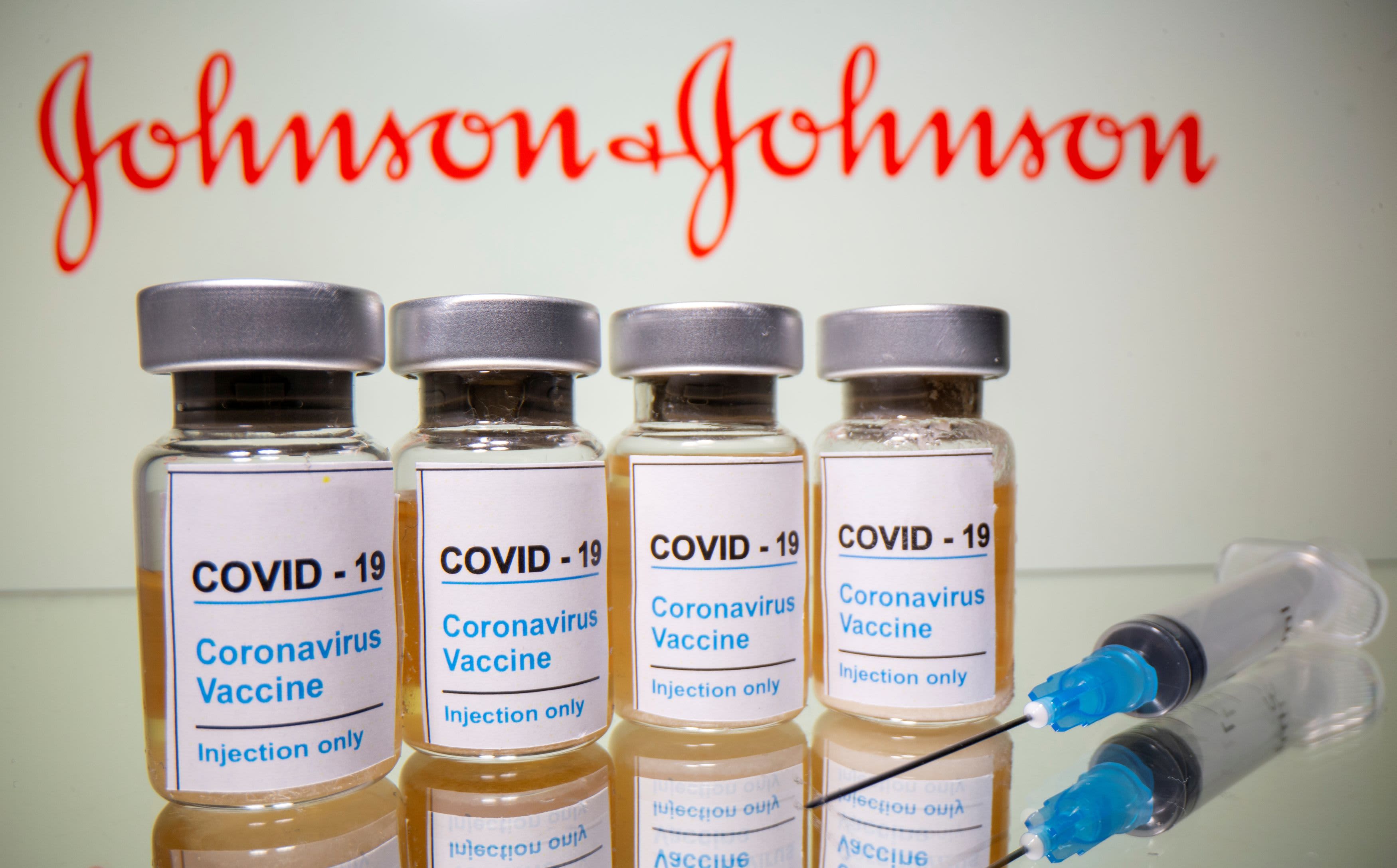
The Johnson & Johnson coronavirus vaccine prevented 100% of hospitalizations and deaths in clinical trials, the company said today.
Why it matters:The single-dose vaccine could speed up the vaccinations of America’s vulnerable populations, as new variants spread.
By the numbers:
Overall: 66% effective in preventing moderate to severe COVID in nearly 44,000 participants in Phase 3 trials across eight countries.
In the U.S.: 72% effective.
In South Africa, home of a more aggressive variant: 57% effective.
What they’re saying:
Former CDC director Tom Frieden on the Axios Re:Cap podcast: “It has a lot of advantages, easier to store, easier to make.”
Former FDA commissioner Scott Gottlieb: “The J&J vaccine turns in a fantastic result. We now have three highly effective vaccines. This vaccine showed sustained (and increasing!) immune protection over time, perhaps from a robust early induction of memory immune cells (CD4 and CD8).”
What’s next:J&J is expected to apply for an emergency use authorization next week, the N.Y. Times reports.
“Federal regulators are also still waiting on data from Johnson & Johnson’s new manufacturing facility in Baltimore that prove it can mass-produce the vaccine. The company is counting on that factory to help reach its contractual pledge to the federal government of 100 million doses by the end of June.”
Johnson & Johnson announced Friday that its single-shot coronavirus vaccine was 66% effective in protecting against moderate to severe COVID-19 disease in Phase 3 trials, which was comprised of nearly 44,000 participants across eight countries.
Between the lines: The vaccine was 72% effective in the U.S., but only 57% effective in South Africa, where a more contagious variant has been spreading. It prevented 85% of severe infections and 100% of hospitalizations and deaths, according to the company.
The big picture: The vaccine is not as effective as some of its two-dose competitors, but still provides strong protection against the most serious COVID-19 symptoms.
J&J’s vaccine, which results in development of neutralizing antibodies, is long-lasting and doesn’t require freezing like Moderna and Pfizer-BioNTech’s shots,per Bloomberg. The vaccine can be stored at refrigerator temperatures for three months.
The company said it will file for emergency use authorization from the FDA within a week. The U.S. has purchased 100 million vaccine doses from J&J.
What they’re saying: “The J&J vaccine turns in a fantastic result. We now have 3 highly effective vaccines. This vaccine showed sustained (and increasing!) immune protection over time, perhaps from a robust early induction of memory immune cells (CD4 and CD8),” tweeted former FDA commissioner Scott Gottlieb.
“This one shot vaccine was highly effective at preventing severe disease, even with new variants. The milieu of disease now is more complex; even in U.S. – trials done today are running into more mutated cases. Make no mistake: this is an important and wonderful development.”