After criticism, HHS directs $25B in CARES funding to Medicaid providers, safety net hospitals

https://www.healthcaredive.com/news/after-criticism-hhs-directs-25b-in-cares-funding-to-medicaid-providers-s/579496/

Dive Brief:

  • HHS announced Tuesday it will deliver $25 billion to providers and hospitals that serve the nation’s most vulnerable patients, or those with Medicaid and Children’s Health Insurance Program coverage. Of that, $15 billion will go to providers that primarily serve Medicaid and CHIP patients while the other $10 billion is reserved for safety net hospitals that usually operate on razor-thin margins. A total of 758 safety net hospitals will receive direct deposits, and the administration noted that many of these facilities are operating in the red with an average profit margin of -7%.
  • Not all Medicaid providers received Coronavirus Aid, Relief, and Economic Security funding from the initial general distribution. This targeted allocation is designed to make up for that by distributing money to the remaining 38% of Medicaid and CHIP providers who were left out of the first tranche.
  • These Medicaid providers will receive at least 2% of reported gross patient revenue, but could receive more depending on how many patients they serve. HHS will make a final determination once providers start submitting data to the relief portal.

Dive Insight:

The industry has been clamoring for HHS to target funding to Medicaid providers amid the COVID-19 pandemic and the downturn in business, noting these organizations are already on fragile ground.

Last week the American Hospital Association pleaded for the administration to release $50 billion more for all hospitals, with $10 billion reserved for providers with a heavy caseload of Medicaid patients.

HHS answered the hospital lobby’s call — in part. HHS will distribute funds to safety net providers — more than AHA asked for — but disclosed no plans Tuesday to broaden that funding to all hospitals. America’s Essential Hospitals, which represents safety net providers, had also called for the quick release of targeted funding.

“Our goal for all these distributions has been to get the money to the providers who need it most as soon as possible,” Eric Hargan, HHS deputy secretary, said Tuesday during a call with reporters.

However, some have been critical of how the administration decided to allocate the first few waves of funding.

Congress has earmarked a total of $175 billion in funding for providers through two pieces of legislation, including the CARES Act.

To get the money out the door quickly, the first tranche was sent to providers based on the Medicare fee-for-service business, and later on the net patient service revenue.

These formulas put certain providers at an advantage, which tend to be for-profit hospitals with higher-margins, or those who were already well off heading into the pandemic, according to a recent Kaiser Family Foundation analysis.

This targeted funding was not swift, one reason for the delay was the challenge in getting a list of Medicaid providers from the states to validate and authenticate those who came to the portal to apply for funds, according to a senior HHS official.​

Still, providers that have already received funds have noted that it comes with its own set of headaches. Some have decided to return the funds as navigating the legal and compliance issues may not be worth the hassle.

Though, that’s likely not the case for these safety net hospitals and providers.


Protests essential despite risk of coronavirus spread, healthcare workers say

https://www.beckershospitalreview.com/public-health/protests-essential-despite-risk-of-coronavirus-spread-healthcare-workers-say.html?utm_medium=email

After months of pleading for social distancing, health officials ...

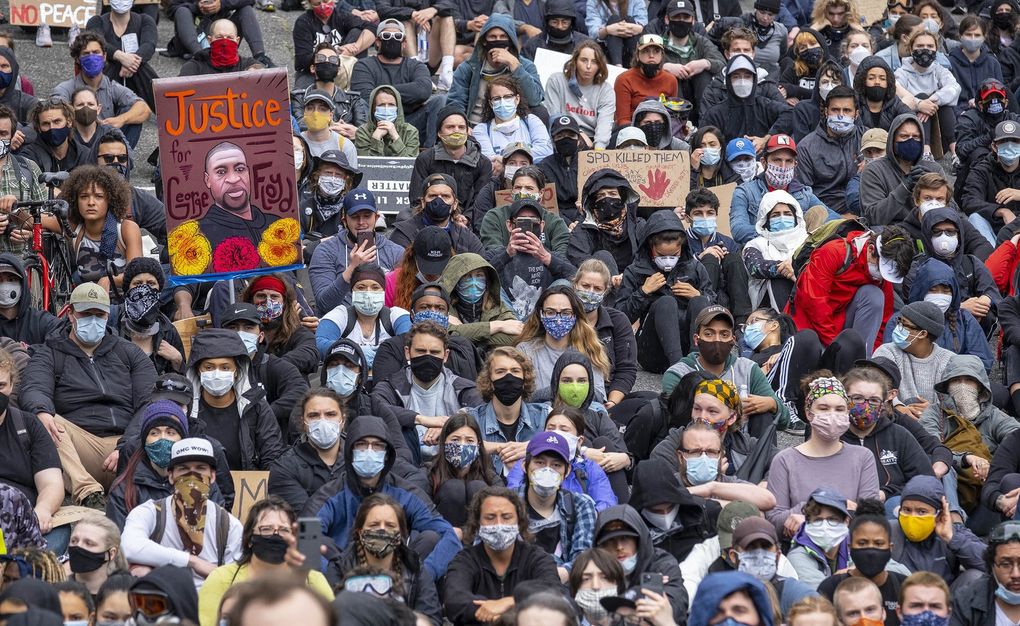
Though the protests that erupted after a black man died in police custody might result in spikes of COVID-19, some healthcare workers say that they are important, as racial disparities in healthcare is also a public health issue, according to The Wall Street Journal.

Public health experts and healthcare workers across the country are joining in the protests that began after George Floyd died at the hand of police in Minneapolis in late May. He is the most recent example of police brutality against black people and joins a long list of deaths of African Americans in police custody.

Healthcare experts and workers are saying though the protests may result in a new wave of coronavirus cases, the issue at hand is more important and the potential benefits outweigh the risks, especially since the risk of transmission is lower outside than inside when precautions are taken.

Darrell Gray, MD, a black gastroenterologist at the Ohio State University Wexner Medical Center in Columbus, has been attending protests, telling the Journal, “I prioritize being at protests and peaceful demonstrations because I strongly believe that they can be leveraged to produce change.” He said that he is taking precautions, wearing a face mask and distancing himself as much as possible.

Dr. Gray also said that the pandemic has disproportionately affected black communities, as the underlying conditions that are linked to more severe COVID-19 illness, such as diabetes and high blood pressure, are more rampant in those communities.

Jennifer Nuzzo, DrPH, an epidemiologist and senior scholar at the Johns Hopkins Center for Health Security in Baltimore, also supports the protests, though she has not been able to attend one in person as yet due to time constraints.

She told the Journal although she is worried about virus transmission, “there are some categories of risk that are, for me, completely worth it.” These protests are in those categories, she said.

Dr. Nuzzo and other health experts have also said protesters can reduce the risk of transmission by wearing masks, trying to maintain 6 feet of social distance when possible and making sure they are washing their hands often or using hand sanitizer.

More than 1,000 public health and infectious disease experts and community stakeholders signed an open letter last week saying that demonstrations were important for combating race-based health inequities, largely a result of racism, the Journal reports.


Pennsylvania orders stricter COVID-19 protections for all hospital workers

https://www.beckershospitalreview.com/workforce/pennsylvania-orders-stricter-covid-19-protections-for-all-hospital-workers.html?utm_medium=email

8,420 infected, 102 dead from COVID-19 in Pennsylvania to date | ABC27

Pennsylvania’s state health secretary issued an order June 9 requiring all hospitals to better protect staff from COVID-19. 

“I have heard from nurses and staff, and this order responds directly to many of their safety concerns,” said Secretary of Health Rachel Levine, MD.

The order requires hospitals to develop, implement and adhere to the following measures by June 15: 

  • Notify staff who have been in close contact with a confirmed or probable COVID-19 case within 24 hours of the known contact; provide instruction for quarantine and work exclusion
  • Provide testing for symptomatic and asymptomatic hospital staff members who have received notice of a close contact with a confirmed or probable COVID-19 case upon request
  • Equip staff with nationally approved respirators when staff determine the mask is soiled, damaged or otherwise ineffective
  • Require universal masking for all individuals entering the hospital facility, except for people for whom wearing a mask would create a further health risk, or individuals under age 2

In addition to medical staff, the measures apply to staff members in therapeutic services, social services, housekeeping services, dietary services and maintenance.


Duke Health pitches $3B deal for North Carolina hospital

https://www.beckershospitalreview.com/hospital-transactions-and-valuation/duke-health-pitches-3b-deal-for-north-carolina-hospital.html?utm_medium=email

Duke Clinic... - Duke University Health System Office Photo ...

Duke Health presented its proposal on June 9 to purchase New Hanover Regional Medical Center in Wilmington, N.C. The Durham, N.C.-based system is one of three organizations trying to secure the deal.  

During the presentation, Duke Health officials proposed purchasing the hospital for $1.4 billion and investing $1.9 billion in capital improvements over the next five years, according to TV station WWAY. The health system would also bring its graduate medical school programs to New Hanover Regional and keep all hospital employees on staff for at least one year, according to the report.

The other two health systems interested in acquiring the hospital — Winston-Salem, N.C.-based Novant Health and Charlotte, N.C.-based Atrium Health — will present their proposals on June 10 and June 11. 

Access the full WWAY article here.


COVID-19 activity by region: Cases ramp up in rural areas

https://www.beckershospitalreview.com/public-health/covid-19-activity-by-region-cases-ramp-up-in-rural-areas.html?utm_medium=email

Coronavirus Timeline: March 2020 | WATE 6 On Your Side

Progress on containing COVID-19’s spread continues to vary drastically across regions, states and cities.

As the incubation period for COVID-19 is up to 14 days, most states have yet to report a potential surge in cases linked to nationwide protests against police violence.

What’s clear is the pandemic is loosening its grasp on major urban areas and ramping up in more rural areas, according to The Washington Post. Cases have increased in at least 22 states over the past two weeks, according to a June 9 analysis by The New York Times. Fourteen states have also had a record-high seven-day average of new coronavirus cases since June 1, according to data tracked by the Post.

Below is a snapshot of what COVID-19’s spread looks like across the U.S., as of June 9.

West

More COVID-19 cases have been confirmed in Oregon over the past week than any other time since the pandemic began, according to data from the Oregon Health Authority. The state reported 620 confirmed or presumed infections in the past week, with the state’s largest daily case total reported June 7 at 146 cases. The spike began the week ending May 31, when new COVID-19 cases in Oregon increased by 18 percent (353 cases) compared to the previous week. Between June 5-8, 26 counties in Oregon were able to enter Phase 2 of reopening, KGW reported.

COVID-19 cases in California hit 3,094 new daily cases June 5, the state’s second highest daily count after 3,705 cases reported May 30. Recently, some counties have resisted Gov. Gavin Newsom’s distancing orders and reopened sections of the economy, according to The Guardian.

Washington reported 442 new confirmed cases of COVID-19 on June 6, the most daily cases since April 10, according to KOMO News. The state has acquired sufficient supplies to expand COVID-19 testing and better monitor Washington’s 39 counties as they ease social distancing restrictions, Gov. Jay Inslee said June 4, according to The Seattle Times. As of June 8, all employees in the state must wear face coverings, with some exceptions for certain jobs or individuals with medical conditions, according to King 5.

Southwest

COVID-19 cases hit record-high numbers in Arizona in late May. The state reported more than 700 cases daily between May 26-29, the largest single-day increases seen since the pandemic started. However, known deaths have been decreasing since late May, with less than 10 deaths occurring daily between May 29 and June 2. On June 6, Cara Christ, MD, Arizona Department of Health Services director, sent a letter to hospitals urging them to “fully activate” emergency plans, according to AZ Central.

Meanwhile, COVID-19 cases and deaths are steadily increasing in Texas. The state reported 1,949 new cases May 31, marking the highest single-day increase seen since the pandemic’s start. Texas also reported a record number of related hospitalizations, with 1,935 people admitted June 8. Ten counties are reporting increased case counts because of testing at prisons or meatpacking plants, according to the Texas Department of State Health Services. On June 3, Gov. Greg Abbott announced the third phase of reopening, which includes increasing capacity and opening additional businesses and activities.

Nevada reported 194 new cases June 5, marking the largest single-day increase seen since May 22, when the state saw a record 255 cases. The cumulative death toll has also been rising since the start of the pandemic, although the state reported no new deaths between June 5 and June 7.

Northeast

New York reported 35 COVID-19 deaths June 5 — the lowest figure seen in eight weeks, according to The New York Times. The daily death toll has been steadily declining since New York reported nearly 800 deaths daily in late March and early April, according to state data. New York also reported a record-low number of hospitalizations last week.

The number of new cases, deaths and hospitalizations have significantly fallen in New Jersey since April. The state reported 356 new cases June 8, representing the 10th consecutive day in which new cases remained under 1,000. The state is set to enter phase 2 of its reopening June 15, which will allow restaurants to offer outdoor dining and nonessential businesses to open at half capacity, according to nj.com.

Massachusetts reported a large spike in new COVID-19 cases June 1 after conducting a retrospective review of state data since March 1. Of the 3,840 new cases reported, 3,514 were newly probable and 326 were newly confirmed, according to Boston 7 News. Overall, the state has seen a sustained decline in new cases throughout May, according to a New York Times analysis.

Southeast

Florida saw a large spike in new COVID-19 infections last week amid a steady increase in testing capacity. After reporting just 606 cases June 1, Florida had more than 1,000 new infections daily between June 3 and June 7. This marks the state’s longest sustained increase since early April. The state also reported 1,419 new infections June 4 — the largest single-day increase seen since the Florida health department started publishing COVID-19 data in March, according to the Miami Herald.

COVID-19 hospitalizations started falling in Mississippi in early June. However, the state reported a record 498 new cases June 8, the highest single-day increase seen since May 30 when 439 cases were reported, according to the Sun Herald.

North Carolina reported 1,370 new cases June 6, the highest daily increase seen during the pandemic, according to WSOC-TV. The previous record was set just a day prior when the state saw 1,289 new cases. North Carolina also reported 739 hospitalizations June 8, surpassing the previous record of 717 hospizaltions reported June 5, according to The News & Observer.

Midwest

Wisconsin reported no new COVID-19 deaths June 8 for the first time since May 17, reports CBS affiliate WSAW-TV. The number of people hospitalized with the virus also fell to a three-week low June 3, according to Urban Milwaukee. The state reported 203 new cases June 8, down from 733 on May 29. Wisconsin also performed a record 16,451 tests June 3, of which 483 were positive.

The rate of new COVID-19 cases and the number of people requiring intensive care continues to decline in Minnesota. The state reported 388 new infections June 7, the second-lowest daily increase since April 28, according to the StarTribune. In addition, 199 patients were being treated for COVID-19 in ICUs, marking the lowest total since May 13.


ThedaCare physicians, advanced practice clinicians take pay cuts

https://www.beckershospitalreview.com/compensation-issues/thedacare-physicians-advanced-practice-clinicians-take-pay-cuts.html?utm_medium=email

ThedaCare pay cuts: Doctors, advanced practice clinicians affected

ThedaCare physicians and advanced practice clinicians will take a 10 percent pay cut to help reduce the Appleton, Wis.-based health system’s financial hit due to the COVID-19 pandemic, the organization confirmed to The Post-Crescent.

The physicians and advanced practice clinicians — which include physician assistants and nurse practitioners — will see their pay reduced beginning in June, Cassandra Wallace, a ThedaCare spokesperson, told the newspaper.

ThedaCare is projecting a $70 million loss this year after temporarily postponing revenue-generating elective surgeries and nonurgent clinic visits due to the COVID-19 pandemic. The health system began a phased approach to reinstate services last month, but the recommended suspension and the costs associated with COVID-19 preparation resulted in net revenue dropping 40 percent in April, ThedaCare said in a June 4 news release.

The salary reductions are part of the health system’s plan to narrow its projected loss to $30 million, said Imran A. Andrabi, MD, ThedaCare president and CEO.

Dr. Andrabi has also agreed to take a 50 percent pay cut, and other executive leaders will take a 40 percent cut to improve the health system’s financial picture.

Additionally, ThedaCare leaders will not be eligible for incentive compensation for 2020, the health system said.

The health system’s plan does not include mass layoffs.


Coronavirus Live Updates: W.H.O. Walks Back Claim That Asymptomatic Transmission is Rare

Virus spreaders who never show symptoms 'very rare,' WHO says ...

Seven million people have been infected worldwide, and new cases hit a high globally on Sunday, according to the W.H.O. Central banks are seeking new tools to offset the downturn.

RIGHT NOW

New Jersey’s governor said on Tuesday that he was lifting the stay-at-home order that he issued in March. “With more and more of our businesses reopening, we’re no longer requiring you to stay at home,” he said.

The W.H.O. walked back an earlier assertion that asymptomatic transmission is ‘very rare.’

A top expert at the World Health Organization on Tuesday walked back her earlier assertion that transmission of the coronavirus by people who do not have symptoms is “very rare.”

Dr. Maria Van Kerkhove, who made the original comment at a W.H.O. briefing on Monday, said that it was based on just two or three studies and that it was a “misunderstanding” to say asymptomatic transmission is rare globally.

“I was just responding to a question, I wasn’t stating a policy of W.H.O. or anything like that,” she said.

Dr. Van Kerkhove said that the estimates of transmission from people without symptoms come primarily from models, which may not provide an accurate representation. “That’s a big open question, and that remains an open question,” she said.

Scientists had sharply criticized the W.H.O. for creating confusion on the issue, given the far-ranging public policy implications. Governments around the world have recommended face masks and social distancing measures because of the risk of asymptomatic transmission.

A range of scientists said Dr. Van Kerkhove’s comments did not reflect the current scientific research.

“All of the best evidence suggests that people without symptoms can and do readily spread SARS-CoV-2, the virus that causes Covid-19,” scientists at the Harvard Global Health Institute said in a statement on Tuesday.

“Communicating preliminary data about key aspects of the coronavirus without much context can have tremendous negative impact on how the public and policymakers respond to the pandemic.”

A widely cited paper published in April suggested that people are most infectious about two days before the onset of symptoms, and estimated that 44 percent of new infections are a result of transmission from people who were not yet showing symptoms.

Dr. Van Kerkhove and other W.H.O. experts reiterated the importance of physical distancing, personal hygiene, testing, tracing, quarantine and isolation in controlling the pandemic.

The debate over transmission erupted a day after the W.H.O. said that cases had reached a new single-day global high — 136,000 on Sunday, with three-quarters in just 10 countries, mostly in the Americas and South Asia. The coronavirus has already sickened more than seven million people worldwide and killed at least 405,400, according to a New York Times database.

The Pan American Health Organization said on Tuesday that 3.3 million people in South and Central America have been infected with the coronavirus. Dr. Carissa F. Etienne, the agency’s director, said that many areas are experiencing exponential growth in infections and death.

In India, health experts are warning of a looming shortage of hospital beds and doctors to treat patients as the country grapples with a sharp surge of infections. India reported 10,000 new infections in the past 24 hours, fortotal of at least 266,500, and has surpassed Spain to become one of the five countries with the highest caseloads.

Rajnish Sinha, the owner of an event management company in Delhi, struggled to find a hospital bed for his 75-year-old father-in-law, who tested positive for the virus on Tuesday.

“This is just the beginning of the coming disaster,” Mr. Sinha said. “Only God can save us.”


Health system financial results for Q1

https://www.beckershospitalreview.com/finance/health-system-financial-results-for-q1-2020.html?utm_medium=email

The health systems listed below recently released financial results for the quarter ended March 31. 

Health system Revenue Operating income Net income
Indiana University Health $1.6 billion $77.6 million -$631.3 million
Allina Health $1 billion -$67.5 million -$342.5 million
Kaiser Permanente $22.6 billion $1.3 billion -$1.1 billion
Beaumont Health $1.1 billion -$54.1 million -$278.4 million
BayCare  $1.1 billion $50 million -$656.4 million
CommonSpirit Health $7.8 billion -$145 million -$1.4 billion
Mayo Clinic $3.2 billion $29 million -$623 million
Henry Ford Health System $1.5 billion -$36.2 million -$234.5 million
Intermountain Healthcare  $2.3 billion $115 million -$1 billion
Advocate Aurora Health $3.1 billion -$85.6 million -$1.3 billion
Texas Health Resources $1.1 billion -$13.8 million -$802.9 million
Banner Health $2.4 billion $30.6 million -$683.5 million
Ascension $6.1 billion -$429.4 million -$2.7 billion
AdventHealth $2.9 billion $35.7 million -$578.5 million
Ochsner Health $965 million -$32.8 million -$143.6 million
Providence  $6.3 billion -$276 million -$1.1 billion
Cleveland Clinic $2.6 billion -$39.9 million -$830.6 million
Sutter Health  $3.2 billion -$236 million -$1.1 billion
Dartmouth-Hitchcock Health $563 million -$59.3 million -$150.3 million
UPMC $5.5 billion -$41 million -$653 million
Montefiore Health System $1.5 billion -$116.1 million -$96.7 million
Allegheny Health Network $891 million -$59.5 million -$98.5 million
SSM Health $1.9 billion -$78 million -$471.1 million
Northwell Health $3.1 billion -$141 million -$710 million
MedStar Health $1.5 billion $32.2 million -$246.8 million
Scripps Health $899.6 million $47.1 million -$296 million
NewYork-Presbyterian $2.2 billion -$128.5 million -$569.4 million