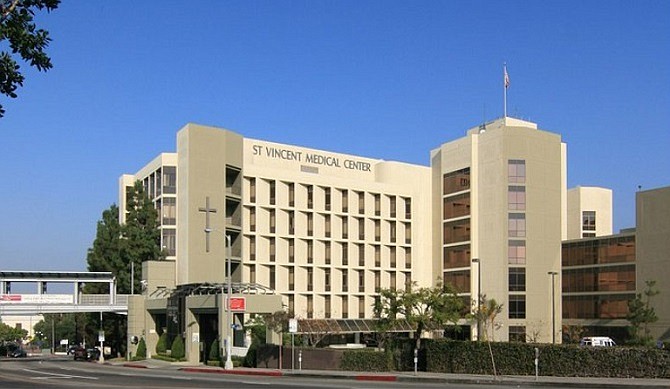
Billionaire Dr. Patrick Soon-Shiong buys California hospital for $135M

https://www.beckershospitalreview.com/hospital-transactions-and-valuation/billionaire-dr-patrick-soon-shiong-buys-california-hospital-for-135m.html?utm_medium=email

Not just the richest man in LA, he is also a humanitarian

Patrick Soon-Shiong, MD, the billionaire owner of the Los Angeles Times, has purchased a Los Angeles hospital out of bankruptcy for $135 million. 

Dr. Soon-Shiong acquired St. Vincent Medical Center in Los Angeles from El Segundo, Calif.-based Verity Health. Verity filed for Chapter 11 bankruptcy in 2018 and closed St. Vincent Medical Center in January. 

Under the purchase agreement, Dr. Soon-Shiong will take over the state of California’s lease obligations at St. Vincent. In March, the state used emergency COVID-19 funding to lease St. Vincent. The state reopened the facility, now called the Los Angeles Surge Hospital, through a partnership with Los Angeles County, Oakland, Calif.-based Kaiser Permanente and San Francisco-based Dignity Health.

Dr. Soon-Shiong will use other buildings on the St. Vincent campus to conduct COVID-19 research. 

“St. Vincent is Los Angeles’ oldest hospital with a storied history of innovation and caring for the poor,” Dr. Soon-Shiong said. “Through the acquisition of this closed campus, we can ensure an ongoing legacy of preparedness against viral threats such as COVID-19.”

St. Vincent is the second hospital Verity has sold this month. On April 9, the health system announced it would sell St. Francis Medical Center in Lynnwood, Calif., to Prime Healthcare Services, a for-profit hospital operator based in Ontario, Calif.


Hospital M&A update: 6 latest deals

https://www.beckershospitalreview.com/hospital-transactions-and-valuation/hospital-m-a-update-6-latest-deals.html?utm_medium=email

Looking at Hospital M&A Activity in the Value-Based Care World ...

Six transactions involving hospitals and health systems announced, finalized or advanced in the last month:

1. Bankrupt Verity Health to sell 384-bed hospital to Prime Healthcare Services
Bankrupt Verity Health System will sell its 384-bed hospital in Lynnwood, Calif., to for-profit hospital operator Prime Healthcare Services.

2. Kootenai Health acquires 2 hospitals from Essentia Health
Coeur d’Alene, Idaho-based Kootenai Health has acquired two hospitals from Duluth, Minn.-based Essentia Health.

3. West Virginia hospital on brink of closure secures buyer
A bankruptcy court has approved a $3.7 million bid for Williamson (W.Va.) Hospital. The new owner, Williamson Health & Wellness Center, will take over the facility on April 30.

4. Christus Health finalizes acquisition of AdventHealth’s 170-bed hospital
Christus Health has finalized its acquisition of Central Texas Medical Center, a 170-bed facility in San Marcos.

5. CarePoint Health reaches deal to sell New Jersey hospital
After months of uncertainty about a potential sale, Jersey City, N.J.-based CarePoint Health has agreed to sell one of its hospitals to Bayonne, N.J.-based BMC Hospital.

6. Penn Highlands Healthcare to absorb Pennsylvania hospital
Tyrone (Pa) Hospital plans to integrate with DuBois, Pa.-based Penn Highlands Healthcare, the two organizations announced March 18.


When the coronavirus lockdowns end, we will live in a shrunken world

https://www.yahoo.com/news/coronavirus-lockdowns-end-live-shrunken-122800321.html

Flipboard: When the coronavirus lockdowns end, we will live in a ...

  • A projection from the Department of Homeland Security, published by the New York Times, shows coronavirus cases spiking again at the end of summer.
  • It’s a stark reminder that American life after lockdown will still be one of limited human interaction. And that means we’ll have to live with a smaller economy too. 
  • The economy will be packed with uncertainty given the possibility of another shelter-in-place order.
  • Until we can all hang out again with confidence, the US economy is going to be a shell of its former self.

When the US emerges from its various shades of shelter-in-place orders, it will emerge to a shrunken global economy. One that will not easily be inflated living within parameters the coronavirus demands.

Financial transactions are a form of human interaction, and even after strict orders to stay at home are lifted, Americans will need to limit human interaction to mitigate the spread of coronavirus. One projection from the Department of Homeland Security, first reported by the New York Times, imagines a world where schools remain closed, 25% of Americans work from home, and social distancing remains in place through the summer.

And people will still be scared. They will know that there is an deadly virus infecting people who interact with other people.

In this scenario, back to work doesn’t mean back to growth because people won’t be spending money the way they did before. Back to work simply means finding a more sane, stable way to maintain society until we get a vaccine. There will be no V-shaped recovery. This is a marathon, and if we’re lucky, we will limp across the finish line.

As incomplete as it is, China is the best picture we have for understanding what a life after lockdown looks like, and it doesn’t look like a booming economy. 460,000 businesses closed permanently in China during the first quarter.

One Chinese county has gone back into lockdown already. In Beijing — where state media says epidemic prevention and control will “probably” become “long-term normal” — restaurants have been ordered to maintain social distance by cutting seating in half and limiting tables to three people. Customers have been slow to come back anyway.

All of this is to say that even if we’re out of lockdown, this saga isn’t remotely over.

Deflation strikes back

What China’s economy is telling us is that once this weird supply funk brought on by everyone staying home is over, and some people are able to go back to work, we’ll still have a demand crisis. Even though the virus has been contained analysts at Oxford Economics told clients it expects to see “basically no growth” in China this year. With other global economies weakened it will sell fewer exports. 

Zhu Jun, director of the international department of the People’s Bank of China, said that there’s a small chance the world risks another Great Depression. Cheery, I know, but until there’s a vaccine, optimism will be in short supply.

Here in the US, just as in China, people will be broke and businesses will be broken. Money will be scarce. Demand will be depressed not just because of a lack of funds, but because people will have changed their behavior to avoid getting sick. 

Wall Street it seems, hasn’t processed this bad news yet. It’s taking this pandemic day-by-day, not looking at life after lockdown. This week the market rallied on news that all over the US, even New York City, the curve is flattening. It was a silly rally.

It’s silly for the market to declare victory before we’ve even seen how much damage has been done (that will take months at least). It’s silly to expect any kind of stability until we know what kind of demand a post-shelter-in-place, pre-vaccine American economy will have.

Finally, we don’t know how long Washington will be in a giving mood. So far the Federal Reserve has pulled out all the stops, and Congress has approved trillions in aid. But will Washington keep sending checks to unemployed Americans until we have a vaccine? 

US employment by industry who can work from home

We thought we knew uncertainty

I think back to all the times I’ve heard CEOs and Wall Street types talk about uncertainty around regulations, or elections, or literally anything else that has happened in my life time, and I have to laugh. All of it seems silly compared to the uncertainty before us right now.

It is quite possible that sometime this summer scientists will develop a treatment for COVID-19 that makes the symptoms much more mild — something more like a standard, week-long flu. That discovery could make things a lot easier, and really bolster confidence enough to bring the economy back until we have a vaccine. But government officials obviously can’t plan with that in mind. Neither can businesses.

And so, those charged with imagining the worst case scenario must imagine a world where Americans are again forced to shelter-in-place to flatten the curve. Homeland Security’s projections put a resurgence of the virus somewhere around the end of summer to the beginning of fall. It’s not unreasonable to think certain populations may have to go back into shelter-in-place then.

Singapore has a robust system of testing for and tracking the coronavirus and its citizens went back into shelter-in-place this week. Here in the US we don’t have such a system. Last week the White House ended federal funding for its drive-thru testing site program.

On Friday New York Governor Andrew Cuomo urged the President to invoke the Defense Production Act to ramp up production of antibody tests that can show who has been infected with the coronavirus and built up immunity. That would allow people to go back to work, but the federal government will only be able to produce 2,000 a day in the next two weeks. 

As a nation, we need to be doing everything we can to ensure that when this lockdown is over, those who can go out can do so with as much confidence as possible. We need to inject as much certainty into this situation as possible Without testing, that’s not happening.

In an interview with CNBC, Bill Gates — the Microsoft founder and billionaire philanthropist who has dedicated a significant chunk of his charitable efforts to studying pandemics — said the federal government simply doesn’t seem interested in a unified testing system. This is one of the few variables in this pandemic the government can control, and it’s blowing it.

Testing is one of the only things that will make our beleaguered, shrunken coronavirus economy a little bit bigger. It’s one of the only ways we can impact the ugly twist of this economic downturn, behavior.

Even then, though, the possibility of an outbreak in a workplace, city, or state will change the way our economy works in ways that will make money scarce. We need to be ready for that.


State-by-state breakdown of 354 rural hospitals at high risk of closing

https://www.beckershospitalreview.com/finance/state-by-state-breakdown-of-354-rural-hospitals-at-high-risk-of-closing.html?utm_medium=email

What Rural Hospital Closures Mean for EMS Professionals

Twenty-five percent of the 1,430 rural hospitals in the U.S. are at high risk of closing unless their finances improve, according to an annual analysis from Guidehouse, a consulting firm. 

The 354 rural hospitals at high risk of closing are spread across 40 states and represent more than 222,000 annual discharges. According to the analysis, 287 of these hospitals — 81 percent — are considered highly essential to the health and economic wellbeing of their communities.

Several factors are putting rural hospitals at risk of closing, according to the analysis, which looked at operating margin, days cash on hand, debt-to-capitalization ratio, current ratio and inpatient census to determine the financial viability of rural hospitals. Declining inpatient volume, clinician shortages, payer mix degradation and revenue cycle management challenges are among the factors driving the rural hospital crisis.

The Guidehouse study analyzed the financial viability of rural hospitals prior to the COVID-19 pandemic, and the authors noted that the rural hospital crisis could significantly worsen due to the pandemic or any downturn in the economy. 

Here are the number and percentage of rural hospitals at high risk of closing in each state based on the analysis:

Tennessee
Rural hospitals at high risk of closing: 19 (68 percent)

Alabama
Rural hospitals at high risk of closing: 18 (60 percent)

Oklahoma
Rural hospitals at high risk of closing: 28 (60 percent)

Arkansas
Rural hospitals at high risk of closing: 18 (53 percent)

Mississippi
Rural hospitals at high risk of closing: 25 (50 percent)

West Virginia
Rural hospitals at high risk of closing: 9 (50 percent)

South Carolina
Rural hospitals at high risk of closing: 4 (44 percent)

Georgia
Rural hospitals at high risk of closing: 14 (41 percent)

Kentucky
Rural hospitals at high risk of closing: 18 (40 percent)

Louisiana
Rural hospitals at high risk of closing: 11 (37 percent)

Maine
Rural hospitals at high risk of closing: 7 (33 percent)

Indiana
Rural hospitals at high risk of closing: 8 (31 percent)

Kansas
Rural hospitals at high risk of closing: 26 (31 percent)

New Mexico
Rural hospitals at high risk of closing: 3 (30 percent)

Michigan
Rural hospitals at high risk of closing: 13 (29 percent)

Missouri
Rural hospitals at high risk of closing: 10 (26 percent)

Virginia
Rural hospitals at high risk of closing: 5 (25 percent)

Oregon
Rural hospitals at high risk of closing: 4 (24 percent)

California
Rural hospitals at high risk of closing: 6 (23 percent)

North Carolina
Rural hospitals at high risk of closing: 6 (23 percent)

Florida
Rural hospitals at high risk of closing: 2 (22 percent)

North Dakota
Rural hospitals at high risk of closing: 7 (21 percent)

Ohio
Rural hospitals at high risk of closing: 6 (20 percent)

Vermont
Rural hospitals at high risk of closing: 2 (20 percent)

Idaho
Rural hospitals at high risk of closing: 4 (19 percent)

Pennsylvania
Rural hospitals at high risk of closing: 4 (19 percent)

Washington
Rural hospitals at high risk of closing: 5 (18 percent)

Wyoming
Rural hospitals at high risk of closing: 3 (18 percent)

Texas
Rural hospitals at high risk of closing: 14 (16 percent)

Colorado
Rural hospitals at high risk of closing: 4 (14 percent)

Illinois
Rural hospitals at high risk of closing: 7 (14 percent)

Montana
Rural hospitals at high risk of closing: 7 (14 percent)

Nebraska
Rural hospitals at high risk of closing: 8 (13 percent)

New York
Rural hospitals at high risk of closing: 4 (13 percent)

Iowa
Rural hospitals at high risk of closing: 9 (12 percent)

Minnesota
Rural hospitals at high risk of closing: 8 (11 percent)

Alaska
Rural hospitals at high risk of closing: 1 (10 percent)

Arizona
Rural hospitals at high risk of closing: 1 (10 percent)

New Hampshire
Rural hospitals at high risk of closing: 1 (9 percent)

Wisconsin
Rural hospitals at high risk of closing: 5 (9 percent)


Quorum says it may have to file for bankruptcy

https://www.healthcaredive.com/news/quorum-10k-delay-bankruptcy-warning/575491/

Dive Brief:

  • For-profit hospital operator Quorum Health said in a recent filing with the Securities and Exchange Commission that it may have to file for Chapter 11 bankruptcy to address current liquidity needs while continuing to care for patients and keep its hospitals operating.
  • The company said it’s in ongoing discussions with certain debt holders concerning a recapitalization or financial reorganization transaction.
  • Quorum also announced in the SEC filing that it will be late to file its annual 10-K report, covering financials for its fiscal year ending December 31, 2019.

Dive Insight:

COVID-19 has upended hospitals’ typical operations, prompting many to halt lucrative elective surgeries and cancel doctors visits to preserve staff and resources. Some worry those patients and revenue may never come back as unemployment claims go up and people lose their employer-sponsored health coverage. 

Tennessee-based Quorum Health, which operates 24 hospitals in 14 states, may have already been more ill-positioned financially than other systems for such a pandemic.

Quorum missed Wall Street earnings expectations in its most recent financials for the third quarter of 2019, posting a net loss of almost $76 million and a revenue decline almost 9% year over year. The company now said it’s delaying its 10K report with its most recent financials due to restructuring talks, but has 15 days to do so.

The for-profit chain went public in May 2016 with 38 hospitals – 14 of which have since shuttered. In 2017 private equity firm KKR took a 5.6% stake in the system for $11.3 million. 

Beyond being Quorum’s largest debt-holder today, KKR also owns about 9% of its public shares. In December, the firm offered to buy Quorum out and take the hospital chain private at $1 a share.

While negotiating with debt holders and weighing its options, Quorum intends to maintain all operations at its hospitals without any interruption in service, CEO Robert Fish said in a statement.

“Our facilities play a critically important role in their communities and the fight against COVID-19,” Fish said. “We are intensely focused on ensuring our employees have the resources they need to provide quality care to the patients and communities they serve, now and well into the future.”


$40M sale of 2 California hospitals includes commitment to COVID-19 patient care

https://www.beckershospitalreview.com/hospital-transactions-and-valuation/40m-sale-of-2-california-hospitals-includes-commitment-to-covid-19-patient-care.html?utm_medium=email

Verity Health gets $610 million offer for four hospitals

Verity Health Gets $610M Offer to Buy St. Vincent, St. Francis and ...

El Segundo, Calif.-based Verity Health has agreed to sell two California hospitals to AHMC Healthcare and is seeking an expedited review of the transaction, according to Bloomberg Law.

Verity, which entered Chapter 11 bankruptcy in 2018, filed a motion with the bankruptcy court March 29, seeking approval for the sale. Under the proposed transaction, Verity would sell Seton Medical Center in Daly City, Calif., and Seton Coastside in Moss Beach, Calif., to AHMC for $40 million. The agreement also includes a commitment by AHMC to continue to support the state’s efforts to address the COVID-19 pandemic.

The proposed deal comes after California Gov. Gavin Newson announced March 21 that the state will use $30 million in emergency funding to lease Seton Medical Center and St. Vincent Medical Center in Los Angeles, which Verity closed in January. The state is leasing the hospitals for three months to expand capacity for COVID-19 patients.


Small hospitals’ bailout concerns

https://www.axios.com/newsletters/axios-vitals-61745839-012e-4bd1-8843-24917a73b6e2.html?utm_source=newsletter&utm_medium=email&utm_campaign=newsletter_axiosvitals&stream=top

Country Closures: Rural Communities Adapt As More Hospitals Shut Down

Congress is about to provide $100 billion for hospitals and other health care providers to cope with the fallout from the coronavirus, but small hospitals have no idea how to access those funds — and many need the money immediately, Axios’ Bob Herman reports.

What they’re saying: “A lot of rural hospitals out there need a cash infusion today,” Alan Morgan, CEO of the National Rural Health Association, told Axios. “How is it going to happen? What is the process? There are way more questions than answers.”

Details: The stimulus bill says “the Secretary of Health and Human Services shall, on a rolling basis, review applications and make payments” to hospitals and other providers, out of a $100 billion fund.

  • HHS did not respond to questions about how that process would work.

Between the lines: Many hospitals are part of large, profitable systems that benefit from their area’s demographics. The coronavirus will cause them financial distress, but they are not in danger of going under.

  • Rural and safety net hospitals, which treat disproportionate amounts of older and low-income patients, have a lot less wiggle room to call off elective procedures as they wait for a coronavirus surge.
  • Many small hospitals can’t get new loans from banks and could miss payroll as soon as next week.

The bottom line: Bob asked Morgan how this process was supposed to work. “I don’t know,” he said, “and we are greatly concerned.”


California hospital secures $20M to stave off closure

https://www.beckershospitalreview.com/finance/california-hospital-secures-20m-to-stave-off-closure.html?utm_medium=email

Image result for seton medical center daly city

The San Mateo County (Calif.) Board of Supervisors voted March 10 to allocate $5 million annually over the next four years to keep Seton Medical Center in Daly City, Calif., open, according to Bay City News.

The county supervisors voted 4-1 to give $20 million in funding to the company that buys the hospital from El Segundo, Calif.-based Verity Health. The funding package will come with conditions, including that the purchaser must keep the hospital open and fully functional.

Verity entered Chapter 11 bankruptcy in August 2018. In January, the health system closed St. Vincent Medical Center, a 366-bed hospital in Los Angeles, after a deal to sell four of its hospitals fell through. The system had been planning to close Seton Medical Center as soon as this week, according to the report.

There are currently two companies bidding to purchase the hospital in Daly City and Seton Coastside in Moss Beach, Calif. The funding will help ensure Seton Medical Center, which sees roughly 27,000 patients per year, keeps its doors open.


Private insurance is health care’s pot of gold

https://www.axios.com/jp-morgan-2020-private-health-insurance-prices-costs-1e92f969-bffc-4584-a3c9-e8c4072b5144.html

Image result for Private insurance is health care's pot of gold

Private health insurance is a conduit for exploding health care spending, and there’s no end in sight.

The big picture: Most politicians defend this status quo, even though prices are soaring. And as the industry’s top executives and lobbyists gathered this week in San Francisco, some nodded to concerns over affordability — but then went on to tell investors how they plan to keep the money flowing.


Where it stands: More than 160 million Americans get private insurance through an employer or on their own, and per-person spending in that market rose by almost 7% in 2018, the highest annual growth rate in 14 years.

  • “Prices are definitely going up,” Owen Tripp, CEO of health tech startup Grand Rounds, told me this week during the annual J.P. Morgan Healthcare Conference.
  • His company’s vast amount of commercial health data shows big increases in what companies are spending on hospitals, doctors, specialty drugs, devices and out-of-network services.


What they’re saying: Many in the industry admit price inflation has been hammering the commercial markets for years.

  • “Cost per unit is the primary driver,” Cigna CEO David Cordani said. He did not mention the exploding costs of administering health insurance.
  • One hospital system at the conference acknowledged that “the number one cause of personal bankruptcy is our industry” — before going on to tell investors about the hospital’s strong margins.


Multiple hospital executives claimed they charge commercial plans higher prices to make up for the lower rates they get from Medicare and Medicaid.

  • “Every health system I know of loses money on every Medicaid and every Medicare patient,” Amy Compton-Phillips, a top clinical executive at Providence St. Joseph Health, told me.
  • But the evidence overwhelmingly shows that hospitals’ explanation doesn’t hold water.


Drug spending has risen at a slower rate than hospital and physician spending.

  • But in the commercial market, drug companies also have tripled their spending on programs that cover all or part of patients’ out-of-pocket costs, then bill insurers for the full freight.
  • “It’s an intriguing theory,” said Stephen Ubl, CEO of PhRMA, the pharmaceutical industry’s main lobbying group. “But I would be shocked if we were a significant contributor” to the increased private spending.


The bottom line: The private market is the main pot of money that everyone is chasing at the J.P. Morgan conference, and most in the industry don’t see the ballooning spending within that market as a problem.