


Cartoon – Reducing Inventory

While Congressional leaders play chicken with the debt ceiling this week, antipathy toward hospitals is mounting.
To be fair, hospitals are not alone: drug companies and PBMs share the distinction while health insurers, device companies, medical groups and long-term care providers enjoy less attention…for now.
Hospitals are soft targets. They’re also vulnerable.
They operate in a sector that’s labor intense, capital intense and highly regulated by federal, state and local governments. They’re high profile: many advertise regionally/nationally, all claim unparalleled clinical excellence and unfair treatment by health insurers.
Hospitals operate locally, so storylines like these get attention
The future for hospitals is unclear
Inpatient demand is shrinking/shifting. Outpatient, virtual, and in-home services demand is growing. Discontent among workers and employed physicians is palpable. Labor and supply chain costs wipe-out operating margins and price sensitivity among consumers and employers is soaring. Most are trying to survive any way they can. Some won’t.
Per Syntellis’ latest analysis, the tide may be turning:
Syntellis March Performance Report performance_trends_april_hc.1105.05.23.pdf (syntellis.com)
But no one knows for sure how long a full recovery will take, how debt ceiling negotiations will impact payments by Medicaid or Medicare or how court and antitrust actions by the DOJ will impact hospitals in the future.
What we know with a fair amount of confidence is this:
Most hospital boards of directors, especially not-for-profit organizations, are not prepared to calibrate the pace of these changes nor active in developing scenario possibilities for their future. That’s the place to start.
Post-pandemic recovery is not a technology-empowered 2.0 version of hospital operations: it is a fundamentally different business model based on new assumptions and bold leadership.

https://www.kaufmanhall.com/insights/blog/not-profit-healthcare-resource-chasm

Healthcare debt issuance remains incredibly light. How long can a capital-intensive industry tolerate limited capital generation? Is pressure building to some tipping point when the need for capital and liquidity will outweigh defending a credit-rating position or avoiding what seems like high-cost debt? The sector generated a lot of internal and external capital in 2020-2021, but the falloff across all channels has been dramatic and residual resource positions are deteriorating.
Recent economic releases—jobs report to CPI to PPI to retail sales—all suggest that the Federal Reserve’s efforts to bring inflation into line are yielding slower than hoped for results. The expectation is continued Fed tightening (higher rates), with a range of voices suggesting the Fed will be forced to push rates high enough to trigger a recession. Every restaurant and shop in the small town I live near has a “we’re hiring” sign in its window and each was jam-packed with very active consumers this past Presidents’ Day weekend. If success in taming inflation requires a broad-based hiring and economic slowdown, it feels like we have a long way to go.
Markets keep doing their thing, which frequently seems disconnected from the Fed’s thing. Both 30-year Treasuries and MMD are just starting to bump up against 30-year averages, the 10-year Treasury has moved higher over the past several weeks but remains below Effective Fed Funds, and the Chicago Fed’s National Financial Conditions Index continues to suggest relatively accommodative overall financial conditions.
While I question the depth and reliability of fixed income markets, the funding environment doesn’t seem as bad as the very low debt issuance activity would suggest. Channeling Shakespeare, it seems that “the fault, dear Brutus, is not in our stars, but in ourselves,”
meaning that low debt issuance is coming out of healthcare’s very profound resource problem rather than externalities.
I concluded a long time ago that not-for-profit healthcare credit and capital management is about strategic resource allocation. Healthcare leaders continuously rebalance the allocation of resources embedded in operations, credit position, and retained fixed and financial assets; and there has never been as challenging a resource generation and allocation moment as the one we are in and are likely to remain in for an extended period.
The scary version of all this is that not-for-profit healthcare has entered a resource chasm that will fundamentally degrade the sector’s credit and capital foundation.
COVID and inflation have combined to expose the brittleness of the healthcare resource chassis. The engine—operations—is bumping up against the dual pressures of:
The result is unprecedented resource compression that leads to dramatically lower internal and external capital formation;
existential covenant threats; and the temptation, if not the necessity, to use retained wealth (i.e., spend down balance sheet) to support current operations versus funding growth or protecting long-term resiliency.
Every organization must aggressively identify and pursue operating performance improvement initiatives. But every organization needs to extend the idea of performance improvement to balance sheet, with the goal of addressing three total enterprise considerations:
The need is to move out of siloed and into integrated and enterprise-centric performance improvement, which requires one consistent resource allocation mindset applied across operations, liabilities, real estate holdings, financial asset holdings, and every other class of organizational resources.
The need is to transition from thinking that balance sheet and operations can be disconnected thoughts to seeing them as two sides of the same coin.
Covenant threats continue to escalate, all centered on how reduced resource generation impacts debt service coverage.
We reiterate that it is critical for every organization to understand how its specific covenants work and to have a rolling forecast on expected performance.
As an example, many organizations now have coverage covenants where default requires two consecutive years of below the coverage ratio. This is an unconditionally good thing, but many of these same organizations may face a consultant call-in at year one and some of them may also confront year-two limitations on additional debt, merger, sale, disposition of assets, and a host of other important management levers. So, the good thing has conditions that are essential to understand and, perhaps, get ahead of. We have a robust library of covenant-related thought leadership on our website—ranging from written content to webinars—and our team is always ready to help.

Wednesday’s inflation print showed a March increase of 0.1% versus February and a year-over-year increase of 5.0%, both of which were better than expected. Markets rallied following the news, at least until the specter of recession caused a reversal of equity gains. The game remains the same: markets want easy money and inflation plus unemployment plus recession equals Fed policy and interest rate levels. Memories of the long 1970s slog through declining and then accelerating inflation levels suggest that it’s too early to declare victory (5.00% is still a long way from the Fed’s 2.00% target range). Nevertheless, hopes increased that the Fed may truly be at or very near the end of its tightening cycle.
The web version of The Wall Street Journal got rid of its special section on the “2023 Bank Turmoil,” which is a sign that we’re past the worst of this chapter in the Dickensian saga in which our financial system hero navigates all sorts of unfortunate characters and events in search of a new “normal.” Banking distrust ripples continue, with various clients sharing the work they are doing to peel back layers of counterparty risk to understand whether threats loom in downstream financial dependencies. Our regulatory infrastructure has shown itself to be a mile wide and an inch deep, which fuels the kind of skepticism about the reliability of designated watchdogs that leads to self-directed risk assessments.
At one level, this is a helpful and important exercise. The credit and financing structure of any complex healthcare organization is just another supply chain, and it is good to understand how yours works and whether there are vulnerabilities that should be investigated. But it is equally important to assess whether the progression of COVID to inflation to Silicon Valley Bank has caused your organization to drift from risk management into retrenchment. Organizations naturally migrate along a risk continuum as they shift between prioritizing returns or resiliency. The important question isn’t which of these bookends is right, but rather what shapes the migration; the defining event is the journey, and
the critical Board and C-suite conversation is whether your risk management program is enabling or constraining future growth.
We continue to monitor the extraordinary decline in not-for-profit healthcare debt issuance. Sources we rely on show healthcare public debt issuance through Q1 2023 down almost 70% versus Q1 2022. Similar data sources aren’t available, but anecdotal input from our team suggests a comparable drop-off in healthcare real estate as well as alternative funding channels. At the same time, although margins have recently improved, operating cash flow across the sector has been weak over the past 12-18 months. If capital formation from internal and external sources is a sign of vibrancy, healthcare is listless.
The primary culprit isn’t rates; the sector has raised capital in much higher rate environments with fewer financing channels (including most of the pre-2008 era). Instead, the rationale most frequently advanced is concern about the reaction from key credit market constituents during this time of unprecedented operating disruption. Of course, this makes sense, but sitting underneath this basic rationale is the question of what might be called “capital deployment conviction.” Long experience confirms that organizations armed with a growth thesis they believe in aren’t shy about “selling” their story to rating agencies and investors and are willing to suffer adverse outcomes on rates, ratings, or covenants, if that is the price of growth. This isn’t happening right now, which introduces the troubling idea that issuance trends are about much more than credit management.
No matter the root cause, recent capital formation is not sustainable.
Good risk management leads to caution in challenging times, but being too careful elevates the probability that temporary problems become permanent. $2.8 billion in quarterly external capital formation ($11.2 billion annualized—pause and let that annualized amount sink in) is not sufficient to maintain the not-for-profit healthcare sector’s care delivery infrastructure, especially when internal capital generation is equally anemic. But introduce any competitive paradigm and the underinvestment that accompanies this level of capital formation becomes a harbinger of hard times to come. To riff on Aristotle, capitalism abhors a vacuum, and organizations looking to avoid rating pressure today may be elevating the risk of competitive pressure tomorrow; and it is easier to cope with and eventually recover from rating pressure than it is to confront the long-term consequences of well-capitalized and aggressive competitors. Retrenchment might be the right risk management choice in times of crisis, but once that crisis moderates that same strategy can quickly become a risk driver.
Machiavelli, Sun-Tzu, Napoleon, George Washington, and other great tacticians all advanced some variation of the idea that “the best defense is a good offense.” In the world of risk response, this means that the better choice isn’t to de-risk and hibernate but rather to continuously reposition available risk capacity so that you keep the organization moving forward. Star Trek’s philosopher-king Captain James Tiberius Kirk captured the sentiment best when he said, “the best defense is a good offense, and I intend to start offending right now.”
While getting back on the capital horse is important, clearing rates, relative value ratios, risk premia, and flexibility drivers have all reset over the past 12-18 months, so recalibrating a good capital formation program requires reassessment and may lead to very different tactics.
This means that a critical step is to get organized around funding parameters:
debt versus real estate versus other channels; MTI versus non-MTI; tax-exempt versus taxable; public versus private; fixed versus floating. The other important part of this is gaining conviction about capital structure risk versus flexibility: do you want to retain flexibility at the “cost” of incurring the market risk embedded in short-tenor or floating rate structures or do you want to sell flexibility in exchange for capital structure risk reduction?

On today’s episode of Gist Healthcare Daily, Kaufman Hall co-founder and Chair Ken Kaufman joins the podcast to discuss his recent blog that examines Ford Motor Company’s decision to stop producing internal-combustion sedans, and talk about whether there are parallels for health system leaders to ponder about whether their traditional strategies are beginning to age out.
Context:
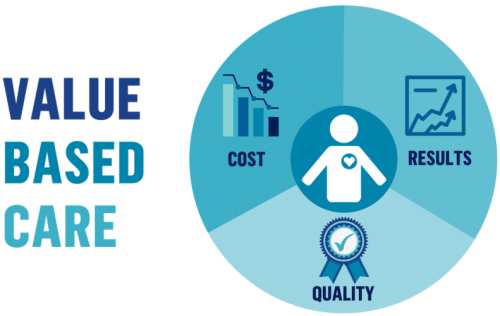
Value-based care is widely accepted as key to the health system’s transformation. Changing provider incentives from volume to value and engaging provider organizations in risk-sharing models with payers (including Medicare) are means to that end. But implementation vis a vis value-based models has produced mixed results thus far and current financial pressures facing providers (esp. hospitals) have stymied momentum in pursuit of value in healthcare. Last week, CMS indicated it intends to continue its value-based insurance design (VBID) model which targets insurers, and last month announced continued commitment to its bundled payment and ACO models. But they’re considered ‘works in process’ that, to date, have attracted early adopters with mixed results.
Questions:
What’s ahead for the value agenda in healthcare? Is it here to stay or will something replace it? How is your organization adapting?
Key takeaways from Discussion:
My take:
Hospitals, health systems, medical groups and other traditional providers are limited in their abilities to respond to opportunities in AI and value-based models by near-term operating margin pressures and uncertainty about their finances longer-term. Risk avoidance is reality in most settings, so investments in AI-solutions and value-based models must produce near-term ROI: that’s reality. Outsiders that operate in less-regulated environments with unlimited access to capital are advantaged in accessing and deploying AI and value-based model pursuits. Thus, partnerships with these may be necessary for most traditional providers.
AI is tricky for providers:
Integration of AI capabilities in hospitals and medical practices will produce added regulator and media scrutiny about data security and added concern for operational transparency. It will also prompt added tension in the workforce as new operational protocols are implemented and budgets adapted. And cooperation with EHR platforms—EPIC, Meditech, Cerner et al—will be essential to implementation. But many think that unlikely without ‘forced’ compliance.
Value-based models:
Participation in value-based models is a strategic imperative: in the near term, it adds competencies necessary to network design and performance monitoring, care coordination, risk and data management. Longer-term, it enables contracting directly with commercial payers and employers—Medicare alone will not drive the value-imperative in US healthcare successfully. Self-insured employers, private health insurers, and consumers will intensify pressure on providers for appropriate utilization, lower costs, transparent pricing, guaranteed outcome and satisfying user experiences. They’ll force consumerism and value into the system and reward those that respond effectively.
The immediate implications for all traditional provider organizations, especially not-for-profit health systems like the 11 who participated in Chicago last week, are 4:
Generative AI and value-based models are the two most compelling changes in U.S. healthcare’s future. They’re not a matter of IF, but how and how soon.
https://mailchi.mp/c9e26ad7702a/the-weekly-gist-april-7-2023?e=d1e747d2d8

As the locus of care continues to shift from inpatient hospitals to outpatient centers, health system executives face a growing conundrum over pricing. The combination of “consumerism” and tougher reimbursement policies raises a question about how aggressively systems should discount services to compete in the ambulatory arena.
Site-neutral payment remains a goal for Medicare, and consumers are increasingly voting with their pocketbooks when it comes to choosing where to have procedures and diagnostics performed. “We know we’re going to have to give on price,” one CEO recently shared with us. “The question is how much, and how soon.”
Should hospitals proactively shift to match prices offered by freestanding centers, or should they try to defend their substantially higher “hospital outpatient department” (HOPD) pricing?
The former choice could help win—or at least keep—business in the system, but at the risk of turning that business into a money-losing proposition.
To compete successfully, hospitals will not only need to lower price, but also lower cost-to-serve—rethinking how operations are run, how overhead is allocated, and how services are staffed and delivered in ambulatory settings.
“We’ve got to get our costs down,” the CEO admitted. “Trying to run an ambulatory business with our traditional hospital cost structure is a recipe for losing money.”
And as a system CFO recently told us, “We can’t just trade good price for bad, for doing the same work. We have to be smart about where to discount services.” The future sustainability of many health systems will hinge on how they navigate this transition to an ambulatory-centric model.

At a meeting with hospital system CEOs last Wednesday, one asked: “has healthcare reached the tipping point?” I replied ‘not yet but it’s getting close.’
I iterated factors that make these times uniquely difficult in every sector:
Unprecedented! But events like those last week prompt hitting the pause button: not everyone pays attention to healthcare like many of us. The slaughter of 6 innocents in Nashville hit close to home: it’s about guns, mental health and life and death. The appeal of tech-giants to press the pause button on Generative AI for at least 6 months was sobering. The ravage of tornados that left thousands insecure without food, housing or hope seemed unfair. Mounting tensions with Russia and complex negotiations with China that reminded us that the U.S. competes in a global economy. And President Trump’s court appearance tomorrow will stoke doubt about our justice system at a time when it’s role in healthcare and society is expanding.
I am a healthcare guy. I am prone to see the world through the lens of the U.S. health industry and keen to understand its trends, tipping points and future. There’s plenty to watch: this week will be no exception. The punch list is familiar:
All will soldier on but the food fights in healthcare and broader headwinds facing the industry suggest a tipping point might be near.
I am not a fatalist: the future for healthcare is brighter than its past, but not for everyone. Strategies predicated on protecting the past are obsolete. Strategies that consider consumers incapable of active participation in the delivery and financing of their care are archaic. Strategies that depend on unbridled consolidation and opaque pricing are naïve. And strategies that limit market access for non-traditional players are artifacts of the gilded age gone by when each sector protected its own against infidels outside.
These times call for two changes in every board room and C Suite in of every organization in healthcare:
Broader vision: Understanding healthcare’s future in the broader context of American society, democracy and capitalism: Beltway insiders and academics prognosticate based on lag indicators that are decreasingly valid for forecasting. Media pundits on healthcare fail to report context and underpinnings. Management teams are operating under short-term financial incentives lacking longer-term applicability. Consultants are telling C suites what they want to hear. And boards are being mis-educated about trends of consequence that matter. Understanding the future and building response scenarios is out of sight and out of mind to insiders more comfortable being victims than creators of the new normal.
Board leadership: Equipping boards to make tough decisions: Governance in healthcare is not taken seriously unless an organization’s investors are unhappy, margins are shrinking or disgruntled employees create a stir. Few have a systematic process for looking at healthcare 10 years out and beyond their business. Every Board must refresh its thinking about what tomorrow in healthcare will be and adjust. It’s easier for board to approve plans for the near-term than invest for the long-term: that’s why outsiders today will be tomorrow’s primary incumbents.
So, is U.S healthcare near its tipping point? I don’t know for sure, but it seems clear the tipping point is nearer than at any point in its history. It’s time for fresh thinking and new players.
 HENRY KOTULA