Dr. Anthony Fauci, the nation’s top infectious disease expert, tells CBS Evening News anchor and managing editor Norah O’Donnell that Americans need to “double down” on mask-wearing and social distancing to help control a surge in new coronavirus cases.
He also spoke about President Trump’s recovery from COVID-19, progress towards a vaccine, and how the pandemic will affect this year’s holiday gatherings. Watch the full interview.
Dr. Anthony Fauci on Thursday denounced the concept of herd immunity — the notion that if a large enough group of people contract an infection, it will ultimately stop the disease from spreading — calling it “nonsense” during an interview with Yahoo News.
“Anybody who knows anything about epidemiology will tell you that is nonsense and very dangerous,” Fauci said, “because what will happen is that if you do that, by the time you get to herd immunity, you will have killed a lot of people that would have been avoidable.”
Fauci, the director of the National Institute of Allergy and Infectious Diseases and member of the White House coronavirus task force, discussed the coronavirus pandemic and the country’s response to it during a live interview Thursday morning with Yahoo News Editor in Chief Daniel Klaidman and Chief Investigative Correspondent Michael Isikoff.
The coronavirus has killed more than 216,000 people in the U.S. and infected almost 8 million, according to data from Johns Hopkins University.
Now, more than seven months after the coronavirus was declared a pandemic, Fauci said Thursday that the U.S. is not in a good place.
“We talk about a second wave,” he said. “We’ve never really gotten out of the first wave. If you look at the baseline number of daily infections that we have had over the last several weeks, [it’s] been around 40,000 per day. It’s now gone up to about 50,000 per day. So right away, we have a very unfortunate baseline from which we need to deal.”
President Trump and his administration have been pushing the herd immunity approach as a possible solution to ending the pandemic, the New York Times reported Wednesday. During a call with reporters, two officials who requested anonymity cited a petition called the Great Barrington Declaration, which calls for states to lift coronavirus restrictions for the bulk of American citizens, the Times reported.
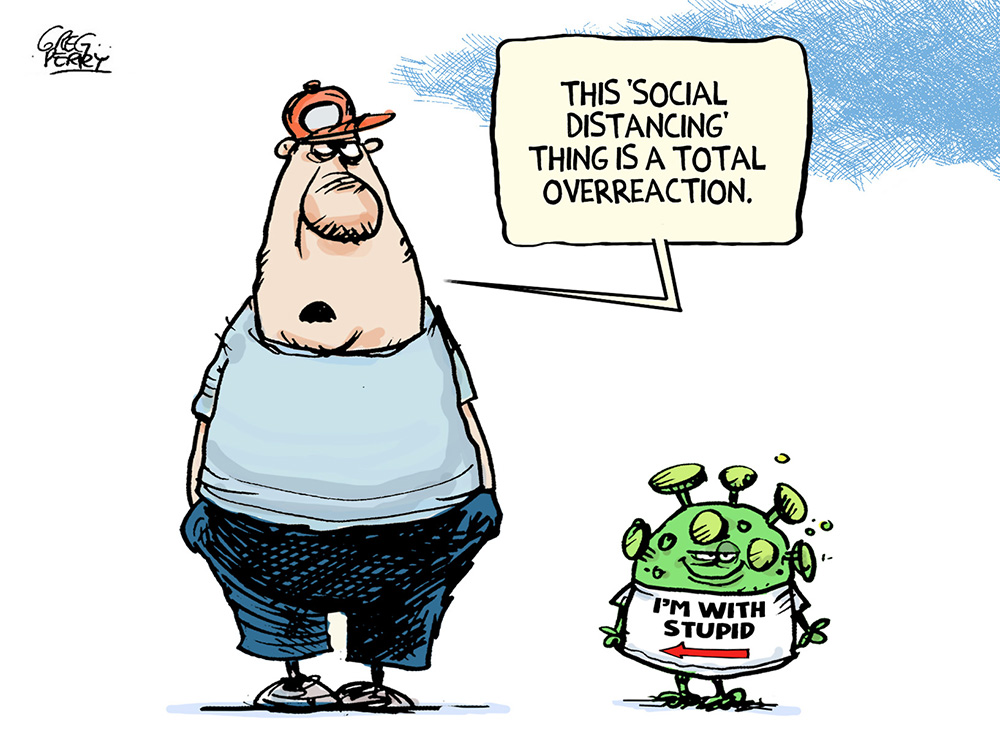
When asked about the herd immunity approach, Fauci said that while he agrees with what the declaration says about protecting the vulnerable and not closing down the country, virtually anyone with a solid understanding of epidemiology would disagree with the idea of letting everyone get infected.
“My position is known. Dr. Deborah Birx’s position is known, and Dr. [Robert] Redfield,” he said. “So you have me as the director of the National Institute of Allergy and Infectious Diseases, Debbie Birx, as the coordinator and a very experienced infectious disease person, the coordinator of the task force — and you have Bob Redfield, who’s the director of the [Centers for Disease Control and Prevention]. All three of us very clearly are against that.”
The White House is reportedly embracing a herd-immunity approach focused on “protecting the elderly and the vulnerable” but experts are calling the plan dangerous, “unethical”, and equivalent to “mass murder”.
“Current lockdown policies are producing devastating effects on short and long-term public health,” the declaration states, adding, “The most compassionate approach that balances the risks and benefits of reaching herd immunity, is to allow those who are at minimal risk of death to live their lives normally to build up immunity to the virus through natural infection, while better protecting those who are at highest risk. We call this Focused Protection.”
Essentially, herd immunity is when enough people are immune to a disease, like Covid-19, that the disease can’t be transmitted as easily and thus provides indirect protection.
It’s been rumoured that the government has been leaning towards this plan of action for some time now, although this is the first real admission.
In response to today’s news, experts around the world have been voicing their concerns.
And this isn’t the first time we’ve heard experts say herd immunity is not a good idea.
For example, the head of the World Health Organization said Monday that allowing the novel coronavirus to spread in an attempt to reach herd immunity was “simply unethical.”
Similarly, the National Institutes of Health (NIH) director Francis Collins also denounced herd immunity as a viable plan.
“What I worry about with this is it’s being presented as if it’s a major alternative view that’s held by large numbers of experts in the scientific community. That is not true. This is a fringe component of epidemiology. This is not mainstream science. It fits into the political views of certain parts of our confused political establishment,” he said in an interview.
Not to mention studies continue to show that Sweden’s attempts at herd immunity have failed and have resulted in a higher Covid-19 death toll than expected.
As more research comes out, scientists are starting to learn that Covid-19 immunity, even in those who were severely infected, can fade after a few weeks.
This is why we’ve seen cases of reinfection and why many experts are advising against a herd immunity plan.
To put that into context, that means around 197 million people would need to be infected in America. And assuming that the Covid-19 fatality rate is somewhere between 0.5% and 1%, based on numbers from the World Health Organization (WHO), more than 1 million people would die – at minimum.
William Haseltine, Chair and President of ACCESS Health International, told CNN “herd immunity is another word for mass murder. We are looking at two to six million Americans dead – not just this year but every year.”
“This is an unmitigated disaster for our country – to have people at the highest levels of our government countermanding our best public health officials. We know this epidemic can be put under control. Other countries have done it. We are doing the opposite.”
A new wave of Covid-19 cases is building across the United States, a harbinger of difficult winter months ahead.
America is now averaging nearly 48,000 new confirmed cases every day, the highest numbers since mid-August, according to the Covid Tracking Project. More than 34,500 Americans are currently hospitalized with Covid-19 in the US, up from less than 30,000 a week ago. Nearly 700 new deaths are being reported on average every day, too — and while that is down from August, when there were often more than 1,000 deaths a day, deaths are going to eventually start increasing if cases and hospitalizations continue to rise. It’s a pattern we have seen before.
Public health experts have been warning for months that fall and winter could lead to a spike in Covid-19 cases. Why? Because the best way to slow down the coronavirus’s spread is to keep your distance from other people and, if you are going to be around others, to be outside as much as possible — and both become harder when the weather gets cold.
We may now be seeing those predictions start to come true. The US already has more than 7.7 million confirmed cases and 214,000 deaths. Both numbers will continue to climb.
Eight months into the pandemic, America’s failures to contain Covid-19, and states’ eagerness to reopen even if they haven’t gotten their outbreaks under control, is once again leading to a surge in cases and hospitalizations.
Covid-19 cases are rising everywhere across the country
Earlier in the year, there was limited value to discussing “waves” because some states would have a decline in cases while other states were experiencing surges. What distinguishes this autumn wave is that it seems to be happening everywhere.
Case numbers are up in the Northeast, the Midwest, and the West. The South appears to be, at best, plateauing at a level even higher than that which the Northeast endured during the worst of New York’s outbreak.
What’s so worrisome is that no one state or region can be blamed for this new wave. Just 13 states have seen their number of new Covid-19 cases drop over the last two weeks, according to Covid Exit Strategy. Cases are up in all the others.
Raw case numbers can, of course, obscure important differences in population; 100 new cases means something different for California than it does for Wyoming. Experts will use another metric — new cases per million people — to gauge how saturated a given state is with Covid-19.
The goal would be to have fewer than 40 new cases per million people. But just three states — Maine, Vermont, and New Hampshire — meet that threshold. Meanwhile, North Dakota (627 cases per million), South Dakota (596), Montana (474), and Wisconsin (434) are some of the states seeing very high levels of new infections.
As Vox’s German Lopez reported this week, just one state — Maine — meets all of the benchmarks established by experts for a state to consider its Covid-19 outbreak contained. And yet, most states have reopened many of the businesses that were closed in the spring: 40 or so states have reopened restaurants, bars, gyms, movie theaters, and nonessential retail.
“Part of the problem is America never really suppressed its Covid-19 cases to begin with,” Lopez wrote, explaining why experts were anticipating a new surge in cases. “Think of a disease epidemic like a forest fire: It’s going to be really difficult to contain the virus when there are still flames raging in parts of the forest and small embers practically everywhere. The country always risks a full blaze with each step toward reopening and with each failure to take precautions seriously.”
Too many Covid-19 tests are coming back positive right now
Another closely watched indicator for renewed Covid-19 spread is the percentage of coronavirus tests that come back positive. The number of tests being conducted doesn’t actually tell you all that much; if a high percentage of them are positive, that suggests that many others aren’t being caught at all and the virus could continue to spread unchecked.
So while the US is now averaging nearly 1 million tests every day, that is not quite the triumph it might sound like (or President Donald Trump would like to believe it is). The country’s positive test rate is 5 percent, right at the threshold experts say would reflect adequate testing. Ideally, it would be even lower, 2 percent or less.
But even with that passable national positivity rate, most states are still not conducting nearly enough testing. Here are the 10 states with the highest positive test rates, according to Covid Exit Strategy:
Idaho (25 percent)
South Dakota (20.6 percent)
Wisconsin (19.5 percent)
Iowa (17.1 percent)
Kansas (16.1 percent)
Wyoming (15.5 percent)
Utah (14.7 percent)
Nevada (14.4 percent)
Indiana (13.6 percent)
Alabama (13.3 percent)
It’s really only a handful of better-performing states — namely, New York, with more than 115,000 tests conducted per day and a 1.2 percent positivity rate — that’s keeping the US’s overall positive test rate from looking a lot worse.
America has never had a cohesive Covid-19 testing strategy. Since February, there have been regular supply shortages delaying test results. States have been fighting each other for precious testing resources. Contact tracing has not been a priority for the federal government, and most states have still not hired nearly enough people to perform that work.
Wealthy countries like Germany and South Korea have used effective test-trace-isolate programs to keep their Covid-19 outbreaks in check. The US, meanwhile, is still struggling to perform enough tests or scale up its contact tracing capabilities. Just 11 states, plus the District of Columbia, could realistically expect to perform adequate contact tracing, according to Covid Exit Strategy, considering their positivity rate.
Without improvement in both of those areas, it will continue to be difficult for the US to contain the coronavirus before a vaccine becomes available.
More Americans are being hospitalized with Covid-19 too
Both case numbers and the positive test rate can be a little deceptive, depending on how many tests are being performed. They suggest what’s happening on the ground — in this case, Covid-19 is spreading — but they do have their limitations. There is some truth to the president’s claim that more tests will mean more cases, though that is not a reason to stop testing.
Hospitalizations, on the other hand, are more concrete. If more people are developing symptoms severe enough to warrant being hospitalized, that is a strong indicator that the real number of people being infected with Covid-19 is growing, regardless of whether they are getting tested.
And after a dip in September, the number of Americans currently in the hospital with Covid-19 is higher than it’s been in a month. That trend has been seen across the country.
The worry becomes that if hospitals take in too many patients, they’ll have to turn other people away, or that overwhelmed staff and facilities could lead to some patients receiving substandard care. According to Covid Exit Strategy, 20 states currently have reduced ICU capacity that puts them in a danger zone; 21 states have an elevated occupancy rate in their regular hospital beds.
Wisconsin,where the number of hospitalized Covid-19 patients has risen over the last month from about 300 to 876 today, recently established a new field hospital on its state park fairgrounds over fears that the state’s hospitals wouldn’t have enough beds given the recent surge in cases.
Fortunately, hospitals have gotten much better at treating Covid-19. They have proven treatments, like remdesivir and dexamethasone, that reduce the length of hospital stays and reduce mortality in patients with severe symptoms. They have learned techniques like putting patients on their stomach to improve breathing. Hospitals that have endured multiple spikes of Covid-19 cases report patients in the later waves are spending less time in the hospital and dying less frequently.
Nevertheless, more people developing severe symptoms, as we are starting to see, will inevitably lead to more deaths. Over the summer, people wondered why deaths were falling while cases and hospitalizations rose — until deaths did start to increase. There is a long lag between cases rising and deaths rising, because it can take a month or more between when a person first contracts Covid-19 and, if they die, when their death is reported.
That’s why these new Covid-19 trends in the US are so worrisome. Cases are rising, as are hospitalizations. It could be only a matter of time before deaths start to spike as well.
For its first 208 years, the New England Journal of Medicine has never endorsed a political candidate. But this week the journal published an editorial outlining its political position in the upcoming Presidential election, signed unanimously by all editors who are US citizens.
The editors did not explicitly endorse former Vice President Biden, but rather offered a scathing condemnation of the current administration’s performance during the COVID pandemic:“Reasonable people will certainly disagree about the many political positions taken by candidates.
But truth is neither liberal nor conservative. When it comes to the response to the largest public health crisis of our time, our current political leaders have demonstrated that they are dangerously incompetent. We should not abet them and enable the deaths of thousands more Americans by allowing them to keep their jobs.” (Formally endorsing Biden last month, Scientific American also made the first political endorsement in its 175-year history.)
Much of the media coverage of the NEJM statement has centered on the question of whether medicine should involve itself in politics, or “live above it”.
Medicine has been drawn into political disputes before, but now the nature of the involvement has changed. In the past, debates largely centered around regulation, payment or policy—but now the science itself has become a fundamentally political issue.
The very nature of the coronavirus has become a matter of political belief, not just an indisputable scientific fact.
Public trust in both scientific institutions and the government, and their ability to work together, has been damaged. We fear this will lead to poorer health outcomes regardless of who wins the upcoming election.
The D.C. Health Department is trying to jump-start contact tracing efforts around the White House’s coronavirus outbreak. Tracing has been inadequate so far even as cases spread deeper into the city, Axios’ Marisa Fernandez writes.
The big picture:The White House has decided not to move forward with recommended public health protocols of contact tracing and testing since President Trump tested positive for the virus.
The state of play: Tracing has been done for people who had direct contact with Trump, White House spokesman Judd Deere told the Washington Post.
On Capitol Hill, there’s also no formalized contact tracing program in place, even as lawmakers themselves test positive.
Two infected staffers in Rep. Doug Lamborn’s (R-Colo.) office were told to not disclose to roommates they may have been exposed, WSJ reports.
The bottom line:The White House’s refusal to contact trace is “a missed opportunity to prevent additional spread,” Emily Wroe, a co-leader of a contact-tracing team at Partners in Health, told Nature.






:format(webp):no_upscale()/cdn.vox-cdn.com/uploads/chorus_asset/file/21952241/1R_Reg_Positive__1_.png)
:no_upscale()/cdn.vox-cdn.com/uploads/chorus_asset/file/21952308/5R_Reg_Hospitalized.png)

 HENRY KOTULA