Whistleblower alleges Trump administration ignored coronavirus warnings

https://www.axios.com/coronavirus-rick-bright-whistleblower-f48cc9c6-8e6e-4662-a127-03e51f323288.html?stream=health-care&utm_source=alert&utm_medium=email&utm_campaign=alerts_healthcare

Whistleblower alleges Trump administration ignored coronavirus ...

Rick Bright, the former director of the U.S. Biomedical Advanced Research and Development Authority (BARDA), filed a whistleblower complaint Tuesday alleging that the Department of Health and Human Services failed to take early action to mitigate the threat of the novel coronavirus.

Flashback: Bright said last month he believes he was ousted after clashing with HHS leadership over his attempts to limit the use of hydroxychloroquine to treat the coronavirus.

What’s new: In his complaint, Bright claims he was excluded from an HHS meeting on the coronavirus in late January after he “pressed for urgent access to funding, personnel, and clinical specimens, including viruses” to develop treatments for the coronavirus should it spread outside of Asia.

  • Bright alleges it “became increasingly clear” in late January that “HHS leadership was doing nothing to prepare for the imminent mask shortage.”
  • Bright claims he “resisted efforts to fall into line with the Administration’s directive to promote the broad use of chloroquine and hydroxychloroquine and to award lucrative contracts for these and other drugs even though they lacked scientific merit and had not received prior scientific vetting.”
  • He adds that “even as HHS leadership began to acknowledge the imminent shortages in critical medical supplies, they failed to recognize the magnitude of the problem, and they failed to take the necessary urgent action.”

The White House declined to comment. HHS did not immediately respond to a request for comment.

https://www.documentcloud.org/documents/6882494-NEW-R-Bright-OSC-Complaint-Redacted.html


The U.S. plans to lend $500 billion to large companies. It won’t require them to preserve jobs or limit executive pay.

https://www.washingtonpost.com/business/2020/04/28/federal-reserve-bond-corporations/?fbclid=IwAR21PBlVqLVVDVf8CeVxGpTuHgxXbDqy49K49BpeeYav-KmKYxS_xfnAX5A&platform=hootsuite

DownWithTyranny!: April 2020

The Fed’s coronavirus aid program lacks restrictions Congress placed on companies seeking financial help under other programs.

A Federal Reserve program expected to begin within weeks will provide hundreds of billions in emergency aid to large American corporations without requiring them to save jobs or limit payments to executives and shareholders.

Under the program, the central bank will buy up to $500 billion in bonds issued by large companies. The companies will use the influx of cash as a financial lifeline but are required to pay it back with interest.

Unlike other portions of the relief for American businesses, however, this aid will be exempt from rules passed by Congress requiring recipients to limit dividends, executive compensation and stock buybacks and does not direct the companies to maintain certain employment levels.

Critics say the program could allow large companies that take the federal help to reward shareholders and executives without saving any jobs. The program was set up jointly by the Federal Reserve and the Treasury Department.

“I am struck that the administration is relying on the good will of the companies receiving this assistance,” said Eswar Prasad, a former official at the International Monetary Fund and economist at Cornell University. “A few months down the road, after the government purchases its debt, the company can turn around and issue a bunch of dividends to shareholders or fire its workers, and there’s no clear path to get it back.”

Treasury Secretary Steven Mnuchin defended the corporate aid program, saying that the lack of restrictions on recipients had been discussed and agreed to by Congress. “This was highly discussed on a bipartisan basis. This was thought through carefully,” he said in an interview with The Washington Post. “What we agreed upon was direct loans would carry the restrictions, and the capital markets transactions would not carry the restrictions.”

Democrats asked for restrictions on how companies can use the money from the central bank’s bond purchases but were rebuffed by the administration during negotiations about the Cares Act, said a spokesman for Senate Minority Leader Charles E. Schumer (D-N.Y.). The spokesman said Democrats won meaningful concessions from the administration on reporting transparency in the final agreement. (Transparency requirements do not apply to the small-business loans, the biggest business aid program rolled out to date.)

Mnuchin also said the program had already bolstered investor confidence in U.S. capital markets, which in turn helped firms raise capital they used to avoid layoffs.

“The mere announcement of these facilities, quite frankly, led to a reopening of a lot of these capital markets,” Mnuchin said in an interview. “Even before these facilities are up and running, they’ve had their desired impact of having stability in the markets. Stability in the markets allows companies to function, and raise money and allows them to keep and retain workers and get back to work.”

The corporate debt purchases by the Fed stand in stark contrast with other portions of the federal aid for U.S. businesses that come with requirements to protect jobs or limit spending.

The Paycheck Protection Program, which offers $659 billion for small businesses, requires companies to certify that the money will be used to “retain workers and maintain payroll or make mortgage payments, lease payments, and utility payments.”

The “Main Street” program offering up to $600 billion to “midsize” businesses — with 500 to 10,000 employees — forbids companies from issuing dividends and places limits on executive compensation, according to a term sheet issued by the Fed. Those restrictions are in effect until 12 months after the loan is no longer outstanding. The companies must also “make reasonable efforts” to maintain payroll and retain employees.

Likewise, the $46 billion program for airlines, air cargo companies and national security forbids dividends and limits executive pay. Its requirement on retaining employment is more rigorous, however. Companies are supposed retain at least 90 percent of their employees.

The first version of the Fed program to buy bonds from large companies, known as the Primary Market Corporate Credit Facility, probably would have compelled recipients of the aid to limit executive pay and dividends. That version of the program, described in a March 23 term sheet issued by the Fed, offered direct loans and bond purchases to companies. Under the Cares Act, the federal programs offering direct loans must set restrictions on company dividends and CEO pay; those that buy only corporate bonds do not. Both are forms of lending, although bonds are more easily resold.

But on April 9, the Fed altered the design of the program to exclude direct corporate lending. The Fed program will still essentially lend money to large companies — by buying their bonds — but the Fed will not be compelled by the Cares Act to ensure that companies abide by the divided and CEO pay rules.

“The change to the term sheet between March and April is the smoking gun on the Fed’s own culpability here,” said Gregg Gelzinis, a senior policy analyst at the Center for American Progress, a left-leaning think tank. “The basic principle of the Cares Act was that if we’re going to provide taxpayer funding to private industry, we need conditions to make sure it is in the public interest. This violates that principle.”

Bharat Ramamurti, an aide to Sen. Elizabeth Warren (D-Mass.) who was appointed to the board overseeing the bailout, said in a statement: “Big corporations have shown time and again that they will put their shareholders and executives ahead of their workers if given the choice. That’s why I’m so concerned that the Treasury and the Fed have chosen to direct hundreds of billions of dollars to big companies with no strings attached.”

A spokesman for the Federal Reserve declined to comment. The Fed’s board of governors unanimously approved the new bond purchasing program on March 22. The Fed has said it will purchase only the bonds of firms above a certain grade. The issuer of the bond also must meet the conflicts-of-interest requirements in the Cares Act, which preclude federal lawmakers or their relatives from benefiting financially from the government bailout.

In the interview, Mnuchin also said many companies are ceasing stock buybacks and are likely to use the additional capital to retain workers.

“A lot of companies have stopped their share buybacks and slashed their dividends, because they need that capital to invest in their business. Even though these restrictions don’t necessarily apply, that’s already happening,” he said.

Some experts disputed that assertion. “Some companies have ceased buybacks and dividends and some haven’t. We shouldn’t have to keep our fingers crossed,” Gelzinis said.

It is unknown what the terms will be for the Fed lending under the program, or how favorable they will be for recipients. The term sheet says only that they will depend on the company and be “informed” by market conditions.

Companies selling their bonds to the central bank are expected to be primarily investment grade, publicly traded firms and therefore subject to more disclosure and oversight than those that are privately held. Patricia C. Mosser, a former senior official at the Federal Reserve Bank of New York, said these corporations are scrutinized by the U.S. Securities and Exchange Commission, private investors and the credit rating agencies.

“It’s true that there’s nothing stopping these companies from continuing to pay stock dividends. You may not like that, and I have sympathy for that position,” said Mosser, now a professor at Columbia University. “But it’s easier to unmask bad behavior in public companies. Large companies certainly don’t do everything right, but they have to admit publicly how they pay top executives, where their profits go and how they use them. That history of disclosure and oversight means the risk of not being repaid is lower.”

The weaker restrictions on recipients of the Fed’s lending program may be partly justified, said Nathan Tankus, research director at the Modern Money Network, which studies monetary policy. The corporate bonds that the Fed is purchasing from companies can be resold, whereas direct loans establish an agreement between the company and the government that makes the asset less valuable to the central bank, he said.

“Purchases of debt are a slightly more arm’s-length transaction than the loan, which is forming a bilateral relationship,” Tankus said. “But this is really just the fig leaf the Fed can use to justify lifting the restrictions.”


Trump reportedly squandered 3 crucial weeks to mitigate the coronavirus outbreak after a CDC official’s blunt warnings spooked the stock market

https://www.businessinsider.com/trump-wasted-3-weeks-coronavirus-mitigation-time-february-march-nyt-2020-4

Dow closes with decline of 950 points as coronavirus continues to ...

  • President Donald Trump’s administration wasted three key weeks between February and March that could have been spent enacting mitigatory measures against COVID-19, The New York Times reported on Saturday.
  • By the end of February, top officials knew that time was running out to stem the virus spread, and wanted to present Trump with a plan to enact aggressive social distancing and stay-at-home measures.
  • But on February 26, a top CDC official issued stark warnings about the virus’ spread right before the stock market plummeted, which angered Trump for being, in his view, too alarmist. 
  • The Times reported that the entire episode killed off the efforts to persuade Trump to take aggressive, action to mitigate the virus’ spread. In the end, Trump didn’t issue stay-at-home guidance until March 16. 

President Donald Trump’s administration stalled three key weeks in February that could have been spent enacting mitigatory measures against COVID-19 after Trump was angered by a public health official issuing a dire warning about the virus, The New York Times reported on Saturday.

On Saturday,The Times published a lengthy investigation of all the instances Trump brushed aside warnings of the severity of the coronavirus crisis, failed to act, and was delayed by significant infighting and mixed messages from the White House over what action to take and when. 

The Times wrote: “These final days of February, perhaps more than any other moment during his tenure in the White House, illustrated Mr. Trump’s inability or unwillingness to absorb warnings coming at him.”

The Times conducted dozens of interviews with current and former officials and obtained 80 pages of emails from a number of public health experts both within and outside of the federal government who sounded the alarm about the severity of the crisis on an email chain they called “Red Dawn.”

One of the members of the email group, Health & Human Service disaster preparedness official Dr. Robert Kadlec, became particularly concerned about how rapidly the virus could spread when Dr. Eva Lee, a Georgia Tech researcher, shared a study with the group about a 20-year-old woman in China who spread the virus to five of her family members despite showing no symptoms.

“Eva is this true?! If so we have a huge [hole] on our screening and quarantine effort,” he replied on February 23. 

At that point, researchers and top officials in the federal government determined that since it was way too late to try to keep the virus out of the United States, the best course of action was to introduce mitigatory, non-pharmaceutical interventions (NPIs) like social distancing and prohibiting large gatherings.

As officials sounded the alarm that they didn’t have any time to waste before enacting aggressive measures to contain the virus, top public health officials including Dr. Robert Kadlec concluded that it was time to present Trump with a plan to curb the virus called “Four Steps to Mitigation.”

The plan, according to The Times, included canceling large gatherings, concerts, and sporting events, closing down schools, and both governments and private businesses alike ordering employees to work from home and stay at home as much as possible, in addition to quarantine and isolating the sick.

But their entire plan was derailed by a series of events that ended up delaying the White House’s response by several weeks, wasting precious time in the process.

Trump was on a state visit to India when Dr. Kadlec and other experts wanted to present him with the plan, so they decided to wait until he came back.

But less than a day later, Dr. Nancy Messonnier, the director of the National Center for Immunization and Respiratory Diseases at the CDC, publicly sounded the alarm about the severity of the coronavirus outbreak in a February 26 press conference, warning that the outbreak would soon become a pandemic.

“It’s not so much a question of if this will happen anymore but rather more a question of exactly when this will happen and how many people in this country will have severe illness,” Messonnier said, bluntly warning that community transmission of the virus would be inevitable.

The Times reported that Trump spent the plane ride stewing in anger both over Messonnier’s comments and the resulting plummet of the stock market they caused, calling Secretary of Health & Human Services Alex Azar “raging that Dr. Messonnier had scared people unnecessarily,” The Times said. 

The Times reported that the entire episode effectively killed off any efforts to persuade Trump to take aggressive, decisive action to mitigate the virus’ spread and led to Azar being sidelined, writing, ” With Mr. Pence and his staff in charge, the focus was clear: no more alarmist messages.” 

In the end, Dr. Kadlec’s team never made their presentation. Trump did not issue nationwide social distancing and stay-at-home guidelines until March 16, three weeks after Messonnier warned that the US had limited time to mitigate community transmission of the virus, and several weeks after top experts started calling for US officials to implement such measures.

In those nearly three weeks between February 26 and March 16, the number of confirmed COVID-19 cases rose from just 15 to 4,226, The Times said. As of April 12, there are over half a million confirmed cases in the United States with over 21,000 deaths.


Trump Administration Tells Employers Not To Worry About Recording COVID-19 Cases

https://www.yahoo.com/huffpost/osha-labor-department-coronavirus-cases-at-work-155001164.html

Know your rights: Michigan workers have new website for ...

The Trump administration announced Friday afternoon that employers outside of the health care industry generally won’t be required to record coronavirus cases among their workers, a decision that left some workplace safety advocates incredulous.

COVID-19, the disease caused by the coronavirus, is classified as a recordable illness, meaning employers would have to notify the Occupational Safety and Health Administration when an employee gets sick from an exposure at work. But the nation’s top workplace safety agency now says the majority of U.S. employers won’t have to try to determine whether employees’ infections happened in the workplace unless it’s obvious.

“OSHA is kidding, right?” tweeted David Michaels, who helmed OSHA throughout the presidency of Barack Obama.

It is not a joke. OSHA, which is part of the Labor Department, released an enforcement memo Friday spelling out the recording rules.

Employers in health care, emergency response and corrections would have to inform the agency when they become aware of a COVID-19 case that probably resulted from work. But other entities would not have to do so unless there was “objective evidence” that the transmission was work-related, or there was evidence “reasonably available to the employer” ― for example, if a whole slew of people who work right next to each other got sick.

The rationale: Those employers outside of health care “may have difficulty making determinations about whether workers who contracted COVID-19 did so due to exposures at work,” the memo stated.

But if employers don’t have to try to figure out whether a transmission happened in the workplace, it could leave both them and the government in the dark about emerging hotspots in places like retail stores or meatpacking plants.

“So all you infected bus drivers, grocery store clerks, poultry processors ― you didn’t get it at work,” tweeted Jordan Barab, a former OSHA official now with the House Committee on Education and Labor.

The announcement is part of an ongoing fight between the Trump administration and occupational safety experts who say OSHA is failing to fulfill its obligations under the president. Employer record keeping has been a key issue in that spat. Early in his presidency, Donald Trump loosened the recording requirements employers must follow, a move critics said would make it easier for companies to fudge their data and hide their injuries.

Safety advocates say recording injuries and illnesses like COVID-19 helps officials discover growing hazards and shape sound public policy to address them. The Labor Department, under Trump and Labor Secretary Eugene Scalia, has portrayed those kinds of employer obligations as burdensome red tape.

In its memo on COVID-19 recording, OSHA said that by not enforcing the requirement on most employers, the agency would “help employers focus their response efforts on implementing good hygiene practices in their workplaces, and otherwise mitigating COVID-19’s effects, rather than on making difficult [work-related] decisions in circumstances where there is community transmission.”

The Labor Department and OSHA in particular have drawn a lot of heat for their response to the coronavirus pandemic. Labor unions have been asking Scalia to issue an emergency standard for infectious disease, which would would give health care facilities clear, enforceable standards to protect their workers during the pandemic. 

Scalia hasn’t done that. Instead, OSHA has created a new poster for employers with tips on preventing infections, and tweaked the rules around respirators to help employers deal with a shortage.

A Labor Department spokesperson defended the agency’s work responding to the outbreak, saying in an email to HuffPost Friday that it had taken “swift and direct action to protect America’s workers.”


Political hackery at its worst: Supreme Court gives Wisconsin a green light to disenfranchise voters during the pandemic

https://www.yahoo.com/news/political-hackery-worst-supreme-court-021006989.html

Opinion: Hackery at its worst: Supreme Court conservatives just ...

The Los Angeles Times warned in an editorial last month that the COVID-19 pandemic threatened not only the health of individuals but the democratic process. The Supreme Court exacerbated that infection Monday when the justices blocked a lower court’s decision to extend the period in which Wisconsin voters could mail in absentee ballots.

Tuesday is election day in that state, and the Democratic presidential primary is only one of many contests on the ballot. As the COVID-19 crisis deepened, it became obvious that some voters would face a choice between exercising the franchise and protecting their health by staying home. But first the Wisconsin Supreme Court and then the U.S. Supreme Court failed to rise to the occasion.

On Monday the state Supreme Court rebuffed an attempt by Wisconsin’s Democratic governor to suspend in-person voting on Tuesday and expand voting by mail. Then late Monday the U.S. Supreme Court, with Democratic and Republican appointees on opposite sides, stayed an order by a lower federal court requiring Wisconsin to count mail-in ballots if they arrived by April 13 even if they were mailed after election day.

In an unsigned opinion, the court’s conservative justices providing a textbook example of exalting form over substance. The majority complained that the extended deadline for absentee ballots “fundamentally alters the nature of the election.” It cited the precedent of a 2006 decision in which the court overturned an injunction preventing Arizona’s use of a photo ID requirement — a ruling from a calmer time. Precedent loses its force in unprecedented circumstances.

This ruling is outrageously oblivious to the emergency posed by the pandemic. In the 2006 case the court emphasized that a state “indisputably has a compelling interest in preserving the integrity of its election process.” But given the pandemic and the disruptions it creates for the election process, the lower court’s order promoted exactly that objective.

As Justice Ruth Bader Ginsburg noted in a dissent signed by three other Democratic appointees, the court’s order means that absentee voters must postmark their ballots by Tuesday, even if they didn’t receive their ballots by that date because of a backlog. The result, she warned, could be “massive disenfranchisement.”

As disturbing as the result of the court’s ruling is the fact that it pitted conservative justices appointed by Republican presidents against liberal justices appointed by Democratic presidents, seeming to validate the perception that the justices are “politicians in robes.” So much for Chief Justice John G. Roberts Jr.’s campaign to portray the court as being aloof from partisan politics.


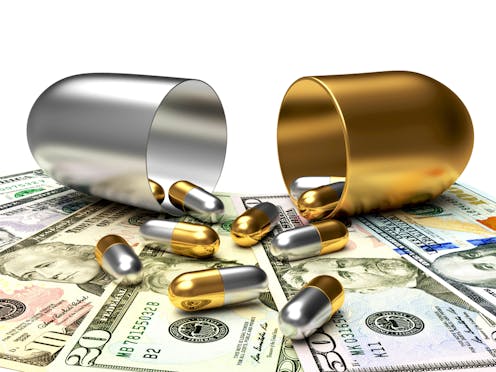
BIG PHARMA PREPARES TO PROFIT FROM THE CORONAVIRUS

Big Pharma Prepares to Profit From the Coronavirus

Image result for BIG PHARMA PREPARES TO PROFIT FROM THE CORONAVIRUS

AS THE NEW CORONAVIRUS spreads illness, death, and catastrophe around the world, virtually no economic sector has been spared from harm. Yet amid the mayhem from the global pandemic, one industry is not only surviving, it is profiting handsomely.

“Pharmaceutical companies view Covid-19 as a once-in-a-lifetime business opportunity,” said Gerald Posner, author of “Pharma: Greed, Lies, and the Poisoning of America.” The world needs pharmaceutical products, of course. For the new coronavirus outbreak, in particular, we need treatments and vaccines and, in the U.S., tests. Dozens of companies are now vying to make them.

“They’re all in that race,” said Posner, who described the potential payoffs for winning the race as huge. The global crisis “will potentially be a blockbuster for the industry in terms of sales and profits,” he said, adding that “the worse the pandemic gets, the higher their eventual profit.”

The ability to make money off of pharmaceuticals is already uniquely large in the U.S., which lacks the basic price controls other countries have, giving drug companies more freedom over setting prices for their products than anywhere else in the world. During the current crisis, pharmaceutical makers may have even more leeway than usual because of language industry lobbyists inserted into an $8.3 billion coronavirus spending package, passed last week, to maximize their profits from the pandemic.

Initially, some lawmakers had tried to ensure that the federal government would limit how much pharmaceutical companies could reap from vaccines and treatments for the new coronavirus that they developed with the use of public funding. In February, Rep. Jan Schakowsky, D-Ill., and other House members wrote to Trump pleading that he “ensure that any vaccine or treatment developed with U.S. taxpayer dollars be accessible, available and affordable,” a goal they said couldn’t be met “if pharmaceutical corporations are given authority to set prices and determine distribution, putting profit-making interests ahead of health priorities.”

When the coronavirus funding was being negotiated, Schakowsky tried again, writing to Health and Human Services Secretary Alex Azar on March 2 that it would be “unacceptable if the rights to produce and market that vaccine were subsequently handed over to a pharmaceutical manufacturer through an exclusive license with no conditions on pricing or access, allowing the company to charge whatever it would like and essentially selling the vaccine back to the public who paid for its development.”

But many Republicans opposed adding language to the bill that would restrict the industry’s ability to profit, arguing that it would stifle research and innovation. And although Azar, who served as the top lobbyist and head of U.S. operations for the pharmaceutical giant Eli Lilly before joining the Trump administration, assured Schakowsky that he shared her concerns, the bill went on to enshrine drug companies’ ability to set potentially exorbitant prices for vaccines and drugs they develop with taxpayer dollars.

The final aid package not only omitted language that would have limited drug makers’ intellectual property rights, it specifically prohibited the federal government from taking any action if it has concerns that the treatments or vaccines developed with public funds are priced too high.

“Those lobbyists deserve a medal from their pharma clients because they killed that intellectual property provision,” said Posner, who added that the language prohibiting the government from responding to price gouging was even worse. “To allow them to have this power during a pandemic is outrageous.”

The truth is that profiting off public investment is also business as usual for the pharmaceutical industry. Since the 1930s, the National Institutes of Health has put some $900 billion into research that drug companies then used to patent brand-name medications, according to Posner’s calculations. Every single drug approved by the Food and Drug Administration between 2010 and 2016 involved science funded with tax dollars through the NIH, according to the advocacy group Patients for Affordable Drugs. Taxpayers spent more than $100 billion on that research.

Among the drugs that were developed with some public funding and went on to be huge earners for private companies are the HIV drug AZT and the cancer treatment Kymriah, which Novartis now sells for $475,000.

In his book “Pharma,” Posner points to another example of private companies making exorbitant profits from drugs produced with public funding. The antiviral drug sofosbuvir, which is used to treat hepatitis C, stemmed from key research funded by the National Institutes of Health. That drug is now owned by Gilead Sciences, which charges $1,000 per pill — more than many people with hepatitis C can afford; Gilead earned $44 billion from the drug during its first three years on the market.

“Wouldn’t it be great to have some of the profits from those drugs go back into public research at the NIH?” asked Posner.

Instead, the profits have funded huge bonuses for drug company executives and aggressive marketing of drugs to consumers. They have also been used to further boost the profitability of the pharmaceutical sector. According to calculations by Axios, drug companies make 63 percent of total health care profits in the U.S. That’s in part because of the success of their lobbying efforts. In 2019, the pharmaceutical industry spent $295 million on lobbying, far more than any other sector in the U.S. That’s almost twice as much as the next biggest spender — the electronics, manufacturing, and equipment sector — and well more than double what oil and gas companies spent on lobbying. The industry also spends lavishly on campaign contributions to both Democratic and Republican lawmakers. Throughout the Democratic primary, Joe Biden has led the pack among recipients of contributions from the health care and pharmaceutical industries.

Big Pharma’s spending has positioned the industry well for the current pandemic. While stock markets have plummeted in reaction to the Trump administration’s bungling of the crisis, more than 20 companies working on a vaccine and other products related to the new SARS-CoV-2 virus have largely been spared. Stock prices for the biotech company Moderna, which began recruiting participants for a clinical trial of its new candidate for a coronavirus vaccine two weeks ago, have shot up during that time.

On Thursday, a day of general carnage in the stock markets, Eli Lilly’s stock also enjoyed a boost after the company announced that it, too, is joining the effort to come up with a therapy for the new coronavirus. And Gilead Sciences, which is at work on a potential treatment as well, is also thriving. Gilead’s stock price was already up since news that its antiviral drug remdesivir, which was created to treat Ebola, was being given to Covid-19 patients. Today, after Wall Street Journal reported that the drug had a positive effect on a small number of infected cruise ship passengers, the price went up further.

Several companies, including Johnson & Johnson, DiaSorin Molecular, and QIAGEN have made it clear that they are receiving funding from the Department of Health and Human Services for efforts related to the pandemic, but it is unclear whether Eli Lilly and Gilead Sciences are using government money for their work on the virus. To date, HHS has not issued a list of grant recipients. And according to Reuters, the Trump administration has told top health officials to treat their coronavirus discussions as classified and excluded staffers without security clearances from discussions about the virus.

Former top lobbyists of both Eli Lilly and Gilead now serve on the White House Coronavirus Task Force. Azar served as director of U.S. operations for Eli Lilly and lobbied for the company, while Joe Grogan, now serving as director of the Domestic Policy Council, was the top lobbyist for Gilead Sciences.


High-priced specialty drugs: Exposing the flaws in the system

https://theconversation.com/high-priced-specialty-drugs-exposing-the-flaws-in-the-system-129598

Image result for High-priced specialty drugs: Exposing the flaws in the system

My husband, Andy, has Parkinson’s disease. A year ago, his neurologist recommended a new pill that he was to take at bedtime. We quickly learned that the medication would cost US$1,300 for a one-month supply of 30 pills. In addition, Andy could obtain the drug from only one specialty pharmacy and would have to use mail order.

This was our introduction to specialty drugs.

These medications are becoming increasingly common, though many Americans are unfamiliar with the term. In 2018, the Food and Drug Administration approved 59 new medications, of which 39 are considered specialty drugs.

Specialty drugs are generally high-cost drugs requiring special handling such as refrigeration or injection, though Andy’s did not. They treat complex conditions such as cancer and multiple sclerosis.

Specialty drugs are often available only through specialty pharmacies. In addition to filling prescriptions, these outlets provide educational and support services to patients. For example, they provide refill reminders and help patients learn how to inject their drugs.

In a forthcoming articleprofessor Isaac Buck and I argue that specialty drugs raise significant legal and ethical questions. These merit attention from the public and policymakers.

Specialty drug concerns

First, the term “specialty drug” is somewhat elusive and has no clear definition. In addition, government authorities and medical experts are not the ones who decide whether a medication is designated a specialty drug. Rather, the decision is entirely up to pharmacy benefit managers, or PBMs.

PBMs administer health plans’ drug benefit programs and thereby serve insurers. PBMs have been criticized for driving up health care costs. Drugs that are specialty drugs under one insurance policy are sometimes classified differently in other policies. Furthermore, some specialty drugs are simple pills that do not involve complicated instructions, and thus, it is unclear why they are categorized as specialty drugs.

The second problem is the very high cost of specialty drugs. The average price tag of the more than 300 medications that are considered specialty drugs is approximately $79,000 per year. Almost half of the dollars that Americans pay for medications are spent on specialty drugs. In fact, Medicare spent $32.8 billion on specialty drugs in 2015.

Because of these exorbitant costs, some insurers have created what they call a “specialty tier” in their health plans. In this tier, patients’ cost-sharing responsibilities are higher than they are for medications in other tiers. If your drug is placed in a specialty tier, your coinsurance payment, or the percentage of cost that you pay, may be 25% to 33% of the drug’s price.

This leads to a situation in which you may have the least generous insurance coverage for your most expensive drugs. Under some plans you might pay $10 per month for generic drugs but hundreds of dollars per month for specialty drugs. This can translate into many thousands of dollars in annual out-of-pocket costs, even for consumers with good health insurance. There are no federal regulations in the U.S. that limit drug prices or insurers’ tiering practices.

Conflict of interest and patient choice

A third problem is conflict of interest. PBMs own or co-own the top four specialty pharmacies in the U.S., which are responsible for two-thirds of nationwide specialty drug prescription revenues.

PBMs frequently require patients to purchase their medications from the specific specialty pharmacy that they own. Thus, PBMs have much to gain from designating medications as specialty drugs. Doing so may lead to significant revenues in the form of purchases at PBM-owned specialty pharmacies.

A related problem is the limiting of patient choice. Many specialty pharmacies fill prescriptions only through mail order. Consequently, patients may be restricted to using just one pharmacy and be forced to rely on the mail for delivery.

Some patients enjoy the convenience of home delivery. Others, however, prefer the traditional approach of visiting a drugstore in person. They may worry that the mail will be late, their package will be stolen, or they will be out of town when the drugs arrive. Yet, such patients do not have the option of a brick and mortar pharmacy.

Possible corrective measures

Both political parties have stated that health care costs are a priority for them. However, they have shown a limited appetite for tackling this herculean problem.

The House recently passed a bill that would enable the federal government to negotiate prices with drug manufacturers. Such negotiations could well lower specialty drug prices. The Senate, however, is unlikely to approve the bill, and Congress is unlikely to pass sweeping legislation in a divisive election year.

There has been more success at the federal level in promoting consumer choice. Medicare rules establish that Medicare plans may not force participants to use mail-order pharmacies.

In the meantime, individual states offer useful solutions. For example, some have provided patients with relief in the form of capping out-of-pocket costs. California limits consumers’ expenditures to $250 or $500 for a 30-day supply, depending on the drug type.

At least 15 states also have pharmacy choice statutes. Several ban PBM mandates that prevent patients from freely selecting their preferred qualified pharmacy. Many ban mail-order only requirements.

Some states have recognized that PBMs should not be entirely free to designate medications as specialty drugs. Because such designations can significantly disadvantage patients and may increase patients’ costs, such states have statutory definitions for the term “specialty drug.”

They generally mandate that the drug require special administration, delivery, storage or oversight. Such requirements may justify purchase from a specialty pharmacy. However, drugs without complicated instructions should not be deemed specialty drugs.

One more option that some insurers have already adopted is allowing patients to obtain just a few pills or doses for an initial trial period. Sometimes individuals quickly learn that they cannot tolerate a medication or that it is ineffective. Such “partial fill” programs can spare patients the exorbitant cost of a full 30-day specialty drug supply.

Specialty drugs contribute significantly to the American health care cost crisis. Additional state, or better yet, federal laws should be enacted to constrain PBMs’ authority over specialty drugs. We need further regulation concerning drug classification, pricing, conflicts of interest and patient choice.


Moffitt Cancer Center CEO, center director step down; conflicts of interest cited

https://www.beckershospitalreview.com/hospital-executive-moves/moffitt-cancer-center-ceo-center-director-step-down-conflicts-of-interest-cited.html?origin=CEOE&utm_source=CEOE&utm_medium=email

Related image

Tampa, Fla.-based H. Lee Moffitt Cancer Center & Research Institute on Dec. 18 accepted the resignations of President and CEO Alan F. List, MD, and Thomas Sellers, an executive vice president and center director at Moffitt, the cancer center announced.

In a news release, Moffitt said the resignations were due to violations of conflict-of-interest rules through the work the center director and CEO did in China. An internal compliance review led up to the resignations.

“Moffitt initiated an internal review of team members’ collaborations with research institutions in China after the National Institutes of Health warned all its grant recipients of foreign efforts to influence or compromise U.S. researchers,” Moffitt said. “Moffitt found several compliance violations that also prompted separation of four additional researchers.”

Timothy Adams, Moffitt’s board chairman, will become interim CEO and president.

The Tampa Bay Times reports that the compliance violations were primarily associated with cancer center employees’ personal involvement in China’s “Thousand Talents” program, which aims to recruit global researchers and academics. 

Mr. Adams said in the news release: “At Moffitt, we pride ourselves not only on our lifesaving research and world-class patient care, but also on transparency and integrity among all our employees. This was an unfortunate but necessary decision.”

“Going forward, this will not damage the future of our research or the care of our patients. We will continue to be careful stewards of the public money entrusted to us for cancer research. Moffitt is proud to have 7,000 of the finest medical professionals in the world fighting every day to treat and cure cancer. That is what mattered yesterday, and that is what will matter tomorrow,” he added.

Former Florida House Speaker H. Lee Moffitt, the cancer center’s namesake, also addressed the matter, saying in the news release: “This great institution did its job. We listened to the warnings from NIH, conducted a proactive review, and took strong action when it was needed.”

Dr. List, who previously was Moffitt’s executive vice president and physician-in-chief as well as chief of the malignant hematology division, could not immediately be reached by the Times for comment.

Moffitt continues to conduct a review, including examining its research and education partnership with China’s Tianjin Medical University Cancer Institute and Hospital. Moffitt said nothing indicates that the cancer center’s research was compromised or patient care affected.


Another reality check on hospital beds

https://www.axios.com/newsletters/axios-vitals-1a6dd9a6-5198-4abf-812f-dbf8dd8e67cb.html

Image result for reality check

Hospital beds are not filling up like they used to, but that doesn’t mean hospitals want their beds to be empty, Axios’ Bob Herman reports.

What they’re saying: Even though more patients are being treated in outpatient clinics rather than hospitals, “we’ll still be able to keep our beds pretty full,” Don Scanlon, chief financial officer at Mount Sinai Health System, said this week at an investor lunch held at Goldman Sachs headquarters in New York City.

Details: Mount Sinai, a not-for-profit hospital system based in Manhattan with $5 billion in annual revenue, is preparing to sell $475 million in bonds, and was making its pitch to bondholders about why buying that debt would be a good deal.

Between the lines: Mount Sinai’s discharges have trended down, but the hospital doesn’t want to lose the bigger dollars tied to inpatient stays. And the system wants to reassure municipal investors they will see returns.

  • As a result, Mount Sinai has invested more money in outpatient centers in other parts of New York that serve as “feeders” for its main city hospitals, Scanlon said.

The bottom line: Mount Sinai, Trinity HealthBanner Health and a host of other hospital systems have openly touted plans to boost or retain admissions even though they say they want to keep people out of the hospital. This is a fundamental disconnect between “value-based care” and the system’s financial incentives.

Go deeper: How banks and law firms make millions from hospital debt