From Budget Battles to Consumer Backlash: Paul Keckley on the Future of U.S. Health Care

https://strategichcmarketing.com/from-budget-battles-to-consumer-backlash-paul-keckley-on-the-future-of-u-s-health-care/?access_code=667226

The U.S. health care industry is approaching a critical inflection point, according to veteran health care strategist Paul Keckley. In a candid and thought-provoking keynote at the 2025 Healthcare Marketing & Physician Strategies Summit (HMPS) in Orlando, Keckley outlined the challenges and potential opportunities health care leaders must navigate in an era of unprecedented economic uncertainty, regulatory disruption, and consumer discontent.

Drawing on decades of policy experience and his signature candid style, Keckley delivered a sobering yet actionable assessment of where the industry stands and what lies ahead.

Paul Keckley, PhD, health care research and policy expert and managing editor of The Keckley Report

Health care now accounts for a staggering 28 percent of the federal budget, with Medicaid expenditures alone ranging from the low 20s to 34 percent of individual state budgets. Despite its fiscal significance, Keckley points out that health care remains “not really a system, but a collection of independent sectors that cohabit the economy.”

In the article that follows, Keckley warns of a reckoning for those who remain entrenched in legacy assumptions. On the flip side, he notes, “The future is going to be built by those who understand the consumer, embrace transparency, and adapt to the realities of a post-institutional world.”

A Fractured System in a Fractured Economy

Fragmentation complicates any effort to meaningfully address rising costs or care quality. It also heightens the stakes in a political climate marked by what Keckley termed “MAGA, DOGE, and MAHA” factions, shorthand for various ideological forces shaping health care policy under the Trump 2.0 administration.

Meanwhile, macroeconomic conditions are only adding to the strain. At the time of Keckley’s address, the S&P 500 was down 8 percent, the Dow down 10 percent, and inflationary pressures were squeezing both provider margins and household budgets.

Economic uncertainty is not just about Wall Street,” Keckley warns. “It’s about kitchen-table economics — how households decide between paying for care or paying the cable bill.”

Traditional Forecasting Is Failing

One of Keckley’s key messages was that conventional methods of strategic planning in health care, based on lagging indicators like utilization rates and demographics, are no longer sufficient. Instead, leaders must increasingly look to external forces such as capital markets, regulatory volatility, and consumer behavior.

“Think outside-in,” he urges. “Forces outside health care are shaping its future more than forces within.”

He encourages health systems to go beyond isolated market studies and adopt holistic scenario planning that considers clinical innovation, workforce shifts, AI and tech disruption, and capital availability as interconnected variables.

Affordability and Accountability: The Hospital Reckoning

Keckley pulls no punches in addressing the mounting criticism of hospitals on Capitol Hill, particularly not-for-profit health systems. Public perception is faltering, with hospital pricing increasing faster than other categories in health care and only a third of providers in full compliance with price transparency rules.

“Economic uncertainty is not just about Wall Street. It’s about kitchen-table economics — how households decide between paying for care or paying the cable bill.”

“We have to get honest about trust, transparency, and affordability,” he says. “I’ve been in 11 system strategy sessions this year. Only one even mentioned affordability on their website, and none defined it.”

Keckley also predicts that popular regulatory targets like site-neutral payments, the 340B program, and nonprofit tax exemptions will face intensified scrutiny.

“Hospitals are no longer viewed as sacred institutions,” he says. “They’re being seen as part of the problem, especially by younger, more educated, and more skeptical Americans.”

The Consumer Awakens

Perhaps the most urgent shift Keckley outlines is the redefinition of the health care consumer. “We call them patients,” he says, “but they are consumers. And they are not happy.”

Keckley cites polling data showing that two out of three Americans believe the health care system needs to be rebuilt from the ground up. Roughly 40 percent of U.S. households have at least one unpaid medical bill, with many choosing intentionally not to pay. Among Gen Y and younger households, dissatisfaction is particularly acute.

“[Consumers] expect digital, personalized, seamless experiences — and they don’t understand why health care can’t deliver.”

These consumers aren’t just passive recipients of care; they’re voters, payers, and critics. With 14 percent of health care spending now coming directly from households, Keckley argues, health systems must engage consumers with the same sophistication that retail and tech companies use.

“They expect digital, personalized, seamless experiences — and they don’t understand why health care can’t deliver.”

Tech Disruption Is Real

Keckley underscores the transformative potential of AI and emerging clinical technologies, noting that in the next five years, more than 60 GLP-1-like therapeutic innovations could come to market. But the deeper disruption, he warns, is likely to come from outside the traditional industry.

Citing his own son’s work at Microsoft, Keckley envisions a future where a consumer’s smartphone, not a provider or insurer, is the true hub of health information. “Health care data will be consumer-controlled. That’s where this is headed.”

The takeaway for providers: Embrace data interoperability and consumer-centric technology now, or risk irrelevance. “The Amazons and Apples of the world are not waiting for CMS to set the rules,” Keckley says.

Capital, Consolidation, and Private Equity

Capital constraints and the shifting role of private equity also featured prominently in Keckley’s remarks. With declining non-operating revenue and shrinking federal dollars, some health systems increasingly rely on investor-backed funding.

But this comes with reputational and operational risks. While PE investments have been beneficial to shareholders, Keckley says, they’ve also produced “some pretty dire results for consumers” — particularly in post-acute care and physician practice consolidation.

“Policymakers are watching,” he says. “Expect legislation that will limit or redefine what private equity can do in health care.”

Politics and Optics: Navigating the Policy Minefield

In the regulatory arena, Keckley emphasizes that perception often matters more than substance. “Optics matter often more than the policy itself,” he says.

He cautions health leaders not to expect sweeping policy reform but to brace for “de jure chaos” as the current administration focuses on symbolic populist moves — cutting executive compensation, promoting price transparency, and attacking nonprofit tax exemptions.

With the 2026 midterm elections looming large, Keckley predicts a wave of executive orders and rhetorical grandstanding. But substantive policy change will be incremental and unpredictable.

“Don’t wait for a rescue from Washington. The future is going to be built by those who understand the consumer, embrace transparency, and adapt to the realities of a post-institutional world.”

The Workforce Crisis That Wasn’t Solved

Keckley also addresses the persistent shortage of health care workers and the failure of Title V of the ACA, which had promised to modernize the workforce through new team-based models. “Our guilds didn’t want it,” Keckley notes, bluntly. “So nothing happened.”

He argues that states, not the federal government, will drive the next chapter of workforce reform, expanding the scope of practice for pharmacists, nurse practitioners, and even lay caregivers, particularly in behavioral health and primary care.

What Should Leaders Do Now?

Keckley closed his keynote with a challenge for marketers and strategists: Get serious about defining affordability, understand capital markets, and stop defaulting to legacy assumptions.

“Don’t wait for a rescue from Washington,” he says. “The future is going to be built by those who understand the consumer, embrace transparency, and adapt to the realities of a post-institutional world.”

He encouraged leaders to monitor shifting federal org charts, track state-level policy moves, and scenario-plan for a future where trust, access, and consumer empowerment define success.

Conclusion: A Health Care Reckoning in the Making

Keckley’s keynote was more than a policy forecast; it was a wake-up call. In a landscape shaped by economic headwinds, political volatility, and consumer rebellion, health care leaders can no longer afford to stay in their lane. They must engage, adapt, and transform, or risk becoming casualties of a system under siege.

“Health care is not just one of 11 big industries,” Keckley says. “It’s the one that touches everyone. And right now, no one is giving us a standing ovation.”

Why Walgreens’ US Health President Is ‘Bullish’ on the Role of Retail in Healthcare

During a fireside chat at AHIP 2024, Mary Langowski, executive vice president and president of U.S. healthcare at Walgreens Boots Alliance, said she sees a bright future for retail in healthcare.

Retailers are facing several headwinds in healthcare in 2024. Walmart and Dollar General both recently ended healthcare endeavors, and CVS Health is reportedly looking for a private equity partner for Oak Street Health (which it acquired in 2023). VillageMD, which is backed by Walgreens, is shuttering numerous clinics.

Still, Mary Langowski, executive vice president and president of U.S. healthcare at Walgreens Boots Alliance, sees a strong future for retailers in healthcare.

“I happen to be very bullish on the role of retail in healthcare and frankly, having a very central role in healthcare,” she said. “And part of that is because over 80% of people want health and wellness offerings in a pharmacy and in a retail setting. Consumers want the ease, they want the convenience of it. And those are important things to keep in mind, that demand is there.”

Langowski, who joined Walgreens in March, made these comments during a Tuesday fireside chat at the AHIP 2024 conference held in Las Vegas. She added that what the industry is seeing is not an “evolution” of whether retailers will exist in healthcare, but a shift around what the “right model is going to be.” 

“We really think that if you take our core assets, … we can be a really good partner to not just one provider entity but many, many provider entities and payers across the United States,” Langowski said. “We’re everywhere. We’re in the community, we’re digitally inclined. I think a strategy for us is less capital-intensive, capital-light and very scaled models.”

She also told the health plans in the audience that she wants to collaborate more. She said she sees retail as a “really critical entry point” in the healthcare system.

“We have people using their pharmacists two times more than any doctor and Medicare patients see us eight times more than their physician,” Langowski declared. “We’re not doing enough together to take advantage of those moments where we can engage people and we can create interventions way earlier in their healthcare disease state.”

Langowski noted that insurers are under a lot of pressure, including rising costs, regulatory issues and challenges contracting with providers. However, Walgreens’ assets are “highly complementary” to insurers’ assets, she said. 

“We aren’t going to do what you do. You don’t do what we do, but we work really well together,” she said. “And what it will take is being clever about the commercial and economic model and I believe there are multiple ways to create win-win scenarios where everybody does well. Most importantly, patients get healthier and they have a much better and much more seamless experience with the system.”

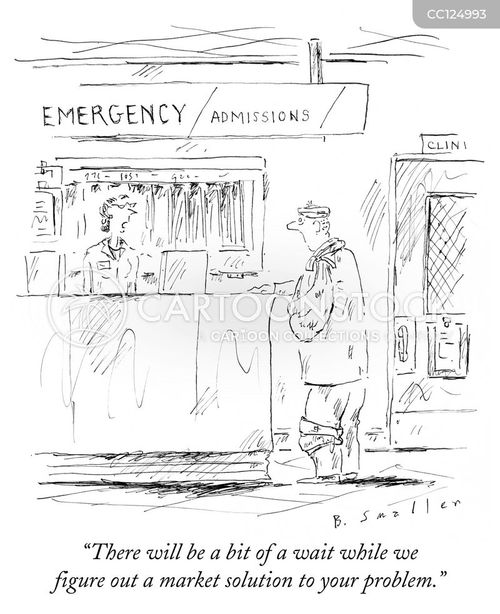
Cartoon – There will be a bit of a wait…

Patients Are Delaying Healthcare – Findings From 2022 BDO Patient Experience Survey

https://www.linkedin.com/pulse/patients-delaying-healthcare-findings-from-our-new-survey-shill/

Since the early days of the pandemic, the healthcare industry has faced seemingly insurmountable challenges to ensure access to high-quality care. While healthcare providers have performed admirably in the face of these challenges, patients are still seeing access challenges that are impacting their behaviors — which can lead to challenges in the long run.

In the 2022 BDO Patient Experience Survey, they sought to learn how patients feel about their providers and healthcare experience — from making appointments and interacting with care providers, to how patients access health insurance and who patients turn to for routine care.

From the survey of over 3,000 U.S. adults, they came across a few key takeaways:

 1. Delaying routine care is the new norm

Americans face a troubling dilemma: While 92% have health insurance and 91% have a regular care provider, 58% admit to delaying routine medical care in the past 12 months.

For routine (non-emergency) care, 69% of respondents report seeing a primary care physician and 12% routinely visit primary care nurse/nurse practitioner or physician assistant. Just 9% do not have a provider for routine medical care. Our survey found that Americans use a wide variety of health insurance options with employer-sponsored insurance (32%) being the most popular, followed by Medicare (28%), Medicaid (14%) and individual private insurance (7%). While 8% report having no health insurance, even those with insurance faced significant barriers to care.

Of those who delayed seeking medical care in the past 12 months, 30% cite unaffordability due to high out-of-pocket costs and 19% say they could not afford to seek care due to a lack of insurance. In addition to the high costs of medical care, many Americans struggle with a lack of cost transparency.

 2. Cost transparency is a continuing problem

Nearly a third of Americans (31%) have never tried to obtain cost estimates for medical care. When patients do not know what healthcare will cost, many avoid seeking necessary care. A critical way we can improve patient access to healthcare is to understand how patients like to obtain cost estimates.

Of patients surveyed who have sought cost estimates, most prefer to reach out to a person, with 38% preferring to contact their insurance provider and 37% opting to ask the healthcare provider’s administrative staff. On the digital side, 31% say they obtained cost estimates by looking at online patient portals and 27% look to health provider or medical facility websites.

3. Most patients experience frustration when seeking and receiving care

We know that long appointments lead times and high costs cause patients to put off care — but how do patients feel about the actual care they receive? 69% of Americans experience frustration during routine medical appointments, with having to wait for a late provider (29%), not getting enough time with the provider (22%) and having too much paperwork to fill out (21%) being the most common frustrations.

 When providers make it easier for patients to receive care, their efforts are noticed. Patients say providers make care more accessible by offering telehealth appointments (32%), reaching out to proactively schedule appointments (29%), offering walk-in appointments (27%) and implementing online/self-service scheduling (23%).

Patients are facing a challenging care environment — and so are providers. Fortunately, there are ways that providers can improve access and the care experience for their patients without breaking their budgets.

More health systems are charging patients to message their physicians

https://mailchi.mp/0622acf09daa/the-weekly-gist-december-2-2022?e=d1e747d2d8

 A growing number of health systems have begun to bill for certain electronic communications with patients via portals like MyChart. The systems instituting these practices, including Cleveland Clinic and Chicago-based Northwestern Medicine, have justified the billing based on the time demands placed on their providers to answer messages involving additional efforts, including extensive patient chart review. Northwestern shared that fewer than one percent of MyChart messages incurred fees, which are typically covered by insurance, and require patient consent before billing. 

The Gist: In a time of significant margin pressure, we understand the instinct to seek additional revenue by collecting whatever reimbursement is available. However, in the ongoing transition to technology-enabled hybrid care, this practice has the potential to confuse, or even drive away, patients, who finally began to embrace virtual provider communication during the pandemic. 

Viewing portal messaging as a “digital front door” for patients, rather than a revenue-generating service in and of itself, may prove more fruitful in the long run.

Amazon launches direct-to-consumer virtual care platform

https://mailchi.mp/4b683d764cf3/the-weekly-gist-november-18-2022?e=d1e747d2d8

On Tuesday, the e-commerce giant unveiled its latest healthcare endeavor, Amazon Clinic, a “virtual health storefront” that can asynchronously connect patients to third-party telemedicine providers. It offers diagnosis and treatment for roughly 20 low-acuity, elective health conditions—including acne, birth control, hair loss, and seasonal allergies—at flat, out-of-pocket rates. (The service does not currently accept insurance.) It also refills prescriptions, which customers can send to any pharmacy, including Amazon’s. At its launch, Amazon Clinic is available in 32 states. 

The Gist: This is exactly the kind of venture at which Amazon excels: creating a marketplace that’s convenient for buyers and sellers (patients and telemedicine providers), pricing it competitively to pursue scale over margins, and upselling customers by pairing care with Amazon’s other products or services (like Amazon Pharmacy). 

Its existing customer base and logistics expertise could position it to replace telemedicine storefront competitors, including Ro and Hims & Hers, as the leading direct-to-consumer healthcare platform, at least among those that don’t take insurance.

It bears watching to see how Amazon builds on this service, including whether it eventually incorporates insurance coverage, partners with health systems (similar to Hims & Hers), or connects Amazon Clinic to Prime in order to attract greater numbers of—generally young, healthy, and relatively wealthy—consumers.

Telehealth blurs the line between Prescription and Over-the-Counter Drugs

https://mailchi.mp/e60a8f8b8fee/the-weekly-gist-september-23-2022?e=d1e747d2d8

 A recent STAT News article highlights a concerning new trend in direct-to-consumer pharmaceutical marketing, enabled by access to virtual care. Pitched as a tool for patient empowerment, pharmaceutical companies are now offering consumers immediate treatment for a variety of health conditions at the click of a button that says, “Talk to a doctor now.”

Over 90 percent of eligible patients receive a prescription for the drug they “clicked” on, after connecting with a virtual care provider on a third-party telehealth platform. Not only does this practice give drug companies direct access to prospective patients, but it also delivers lucrative data on patient age, zip code, and medication history that can be used to target marketing efforts.

The Gist: Articles like this remind us why the US is one of only two countries in the world that allows direct-to-consumer marketing of prescription drugs (the other, interestingly, is New Zealand). 

As the number of Americans with a primary care provider continues to decline, this kind of Amazon-style, easy-button drug shopping experience will be increasingly appealing to many consumers. But wherever innovation outpaces regulation, situations in which for-profit companies prioritize profits over providing the best care for patients are sure to occur.

While we support the idea of greater consumer empowerment in healthcare, we worry that this highly fragmented approach to consumer-driven health can result in abuse and patient harm.

Setting the post-COVID agenda for health systems

https://mailchi.mp/9e0c56723d09/the-weekly-gist-july-8-2022?e=d1e747d2d8

As the economic situation has worsened over the past few months, we’ve been working with several health systems to recalibrate strategy. For many, the anticipated “post-COVID recovery” period has turned into a struggle to reverse declining (often negative) margins, while still scrambling to address mounting workforce shortages. All this amid continued pressure from disruptive competitors and ever-rising consumer expectations.

In the graphic above, we’ve pulled together some of the most important changes we believe health systems need to make. These range from improvements to the operating model (shifting to a team-based approach to staffing, greater use of automation where appropriate, and moving to asset-light capital strategies) to transformations of the clinical model (moving care into lower-cost outpatient and community settings, integrating virtual care into clinical delivery, and creating tighter alignment with key physicians).

In general, the goal is to deliver lower-cost care in less expensive settings, using less expensive staff. 

But those cost-saving strategies will need to be coupled with a new go-to-market approach, including new payment models that reward systems for shifting away from high-cost (and highly reimbursed) care models. 

Employers and consumers will expect more solution-based offerings, which integrate care across the continuum into coherent bundles of service. This will require a more deliberate focus on service line strategies, moving away from a fragmented, inpatient-centric model.

Contracting approaches must align payment with this shift, changing incentives to reward coordinated, cost-effective, outcomes-driven care. 

A key insight from our discussions with health system leaders: short-term cost-cutting initiatives to “stop the bleed” won’t suffice—instead, more permanent solutions will be required that address not only the core operating model, but also the approach to revenue generation. 

The post-COVID environment is turning out to be a lot tougher than many had expected, to say the least.