


Cartoon – Leadership Ethics


https://mailchi.mp/f2774a4ad1ea/the-weekly-gist-may-22-2020?e=d1e747d2d8

As states begin to reopen, employers need guidance to ensure safe, COVID-free operations, and are beginning to call local health systems for advice on how to manage this daunting task. Providing this support is uncharted territory for most systems, and they’re learning on the fly as they bring back shuttered outpatient services and surgery centers themselves. This week we convened leaders from across our Gist Healthcare membership to share ideas on how to assist employers in bringing businesses safely back online—and to discuss whether the pandemic might create broader opportunities for working with the employer community.
It’s no surprise some companies are hoping that providers can step in to test their full workforce, but as several systems shared, “Even if we thought that was the right plan, testing supplies and PPE are still too limited for us to deliver on it now.” Better to support businesses in creating comprehensive screening strategies (with some offering their own app-based solutions), coupled with a testing plan for symptomatic employees.
Health systems have been surprised by the hunger for information on COVID-19 among the business community. Hundreds of companies have registered for informational webinars, hosted by systems through their local chambers of commerce. They’re excited to receive distilled information on local COVID-19 impact and response. As one leader said, the system isn’t really creating new educational content, but rather summarizing and synthesizing CDC, state and local guidance.
Business leaders are looking for “a source of truth” from their local health system amid conflicting guidelines and media reports. Case in point: employers are asking about the need for antibody testing, having been approached by testing vendors and feeling pressure from employees. Guidance from system doctors provides a plain-spoken interpretation on testing utility (great for looking at a population, meaningless right now for an individual), and helps them make smarter decisions and educate their workforce.
Health systems are hopeful that helping employers through the coronavirus crisis will lay the foundation for longer-term partnerships with employers, allowing them to continue to provide benefits through lower cost, coordinated care and network options.
Timing is critical, and it may be smaller businesses that have the ability to change more quickly. Large companies have mostly locked in their benefits for 2021, whereas many mid-market businesses are looking for alternative options now.
Worksite health, telemedicine, and direct primary care arrangements are all on the table. One system surveyed local brokers and employers and found that 20 percent of mid-market employers are open to narrow-network partnerships. “The number seems low,” they reported, “but it’s up from five percent last year, a huge jump.” For systems seeking direct partnerships with employers, there’s a window of opportunity right now to find those businesses committed to continuing to offer benefits, who are looking for a creative, local alternative—and to get that first Zoom meeting on the calendar.
https://mailchi.mp/f2774a4ad1ea/the-weekly-gist-may-22-2020?e=d1e747d2d8
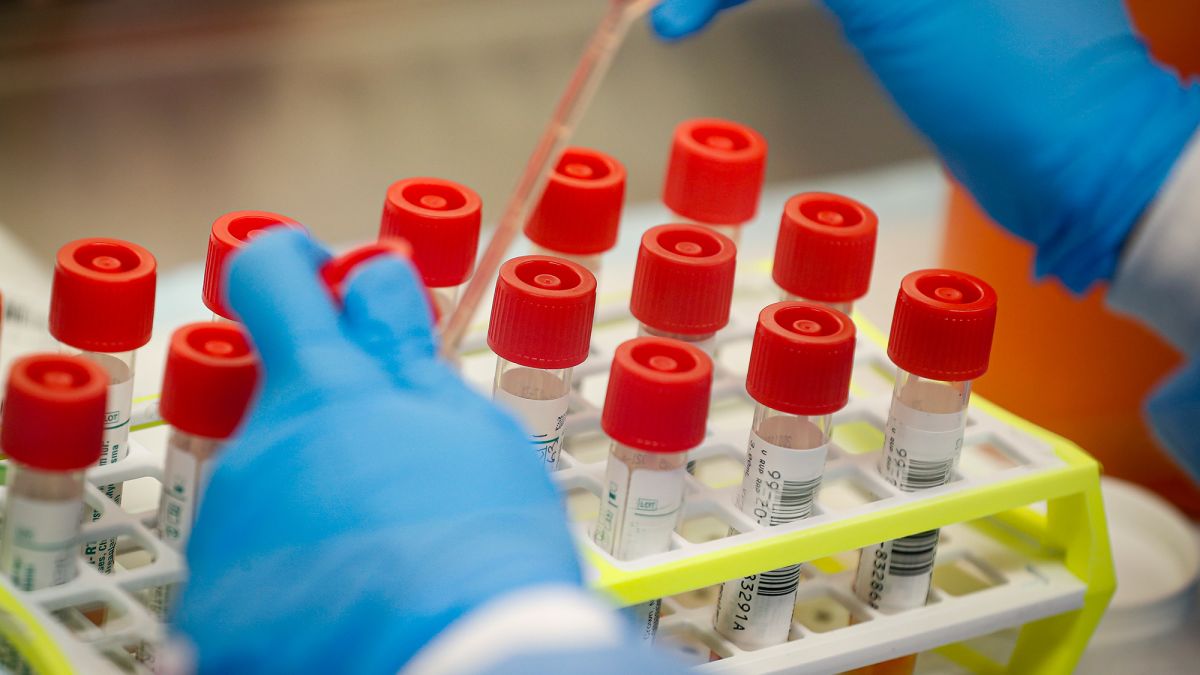
With all 50 states now in the process of reopening, data reported by public health agencies on coronavirus testing is under increased scrutiny. The issue is not how many tests are being conducted—that number has dramatically increased nationwide (although experts still caution that total testing should be about three times higher than the current 300,000 per day).
Rather, as reported this week, the issue is what kind of tests are being included in public reporting. It emerged this week that several states—including Georgia, Texas, Pennsylvania, Vermont, and Virginia—have been combining statistics on polymerase chain reaction (PCR) tests, used to diagnose current infection, with antibody blood tests, used to detect past infection.
More troublingly, The Atlantic reported on Wednesday that the Centers for Disease Control and Prevention (CDC) has been doing the same thing, which artificially inflates the number of tests conducted, and makes the numbers difficult to interpret. Among other experts, Dr. Ashish Jha, director of Harvard’s Global Public Health Institute, was stunned: “You’ve got to be kidding me. How could the CDC make that mistake? This is a mess.”
Accurate testing data is critical to determine the pace and scope of reopening, and to monitor for resurgences of the virus that might necessitate future restrictions. It’s important to know who’s infected now for clinical reasons, and it’s essential to understand who’s already been sick for public health purposes. Combining the two datasets is positively unhelpful, and likely only serves a political purpose.
Testing problems have proven to be this country’s original sin in the way the coronavirus pandemic has evolved, but it’s not too late to make sure that we have ample, accurate, and well-reported testing to guide critical public health decisions.
US coronavirus update: 1.62M cases, 95K+ confirmed deaths, 12.9M tests conducted (of some type).

Chloroquine or hydroxychloroquine (HCQ), with or without an antibiotic, in hospitalized COVID-19 patients were associated with increased risk of death in the hospital and higher rates of arrhythmias, analysis of outcomes in nearly 100,000 patients indicated.
The 15,000 patients who received HCQ or chloroquine were about twice as likely to die compared to controls who did not receive these agents after adjusting for covariates (18.o% for hydroxychloroquine and 16% for chloroquine versus 9.3% for controls), reported Mandeep Mehra, MD, of Brigham and Women’s Hospital in Boston, and colleagues.
The drug was also associated with a higher risk of ventricular arrhythmia during hospitalization (6.1% for hydroxychloroquine, 4.3% for chloroquine versus 0.3% for controls), the authors wrote in The Lancet.
Moreover, risks for both in-hospital mortality and ventricular arrhythmia were even higher compared to controls when either drug was combined with a macrolide antibiotic, they noted.
Mehra said in a statement these drugs should not be used as treatments for COVID-19 outside of clinical trials.
“This is the first large scale study to find statistically robust evidence that treatment with chloroquine or hydroxychloroquine does not benefit patients with COVID-19,” he said. “Instead, our findings suggest it may be associated with an increased risk of serious heart problems and increased risk of death. Randomised clinical trials are essential to confirm any harms or benefits associated with these agents.”
Mehra’s group analyzed some 96,000 patients from 671 hospitals on six continents with COVID-19 infection, from Dec. 20 to April 14, all of whom had either died or been discharged from the hospital by April 21.
Overall, 14,888 patients were treated with hydroxychloroquine, chloroquine, hydroxychloroquine with a macrolide antibiotic or chloroquine with an antibiotic, and their results were compared to 81,144 controls who did not receive these drugs.
Authors adjusted for demographic factors, as well as cardiovascular disease, diabetes, lung disease, smoking, immunosuppressed conditions and baseline disease severity.
The estimated excess risk attributable to the drug regimen rather than other factors, such as comorbidities, ranged from 34% to 35%.
Arrhythmia’s greatest risk was in the group who received hydroxychloroquine and a macrolide antibiotic such as azithromycin (8% versus 0.3% of controls), and this regimen was associated with a more than five-fold risk of developing an arrhythmia while hospitalized, though cause and effect cannot be inferred, the group noted.
“Previous small-scale studies have failed to identify robust evidence of a benefit and larger, randomised controlled trials are not yet completed,” said co-author Frank Ruschitzka, MD, Director of the Heart Center at University Hospital Zurich in a statement. “However, we now know from our study that the chance that these medications improve outcomes in COVID-19 is quite low.”
An accompanying editorial by Christian Funck-Brentano, MD, PhD, and Joe-Elie Salem, MD, PhD, of Sorbonne Université in Paris, noted limitations of the observational data, but said the authors “should be commended for providing results from a well designed and controlled study … in a very large sample of hospitalized patients.”
They also cautioned against attributing the increased risk of hospital deaths to the higher incidence of arrhythmias, noting that “the relationship between death and ventricular tachycardia was not studied and causes of deaths (i.e., arrhythmic vs non-arrhythmic) were not adjudicated.”
The editorialists nevertheless concluded both hydroxychloroquine and chloroquine, with or without azithromycin, “are not useful and could be harmful in hospitalized patients with COVID-19,” and stressed the importance of clinical trials for these drugs.
“The global community awaits the results of ongoing, well powered randomized controlled trials showing the effects of chloroquine and hydroxychloroquine on COVID-19 clinical outcomes,” they wrote.



https://www.ft.com/content/2ed602f1-ed11-4221-8d0b-ef85018c96ea

Fed chair says economy may not fully bounce back until virus vaccine is available.
Federal Reserve chair Jay Powell has warned that a full US economic recovery may take until the end of next year and require the development of a Covid-19 vaccine.
“For the economy to fully recover, people will have to be fully confident. And that may have to await the arrival of a vaccine,” Mr Powell told CBS News on Sunday. A full revival would happen, he said, but “it may take a while . . . it could stretch through the end of next year, we really don’t know”.
He added: “Assuming there is not a second wave of the coronavirus, I think you will see the economy recover steadily through the second half of this year.”
Mr Powell told CBS it was likely there would be a “couple more months” of net job losses, with the unemployment rate climbing to as high as 20-25 per cent. But he said it was “good news” that the “overwhelming” majority of those claiming unemployment benefits report themselves as having been laid off temporarily, meaning they are expecting to go back to their old jobs.
Oil prices and stocks in Asia rose on Monday despite the gloomy outlook. West Texas Intermediate, the US crude benchmark, climbed 4.4 per cent to take it above $30 a barrel for the first time in two months. Brent crude, the international benchmark, rose 3.6 per cent to $33.67 a barrel. Japan’s Topix was up 0.4 per cent and China’s CSI 300 index of Shanghai- and Shenzhen-listed stocks added 0.6 per cent.
Donald Trump, US president, said last week that he hoped to have a vaccine ready by the end of 2020. But public health experts, including Anthony Fauci, the head of the US National Institute of Allergy and Infectious Diseases, and Rick Bright, the recently ousted head of the US Biomedical Advanced Research and Development Authority, have warned that the process is likely to take longer.
Dr Fauci, a high-profile member of Mr Trump’s coronavirus task force, has said he expects the search for a vaccine to take at least a year to 18 months. But Dr Bright has said that was too optimistic.
Some world leaders have also raised doubts about the immediate prospects for a vaccine. Giuseppe Conte, prime minister of Italy, said at the weekend that his country could “not afford” to wait for a vaccine, while Boris Johnson, UK prime minister, warned that a vaccine “might not come to fruition” at all.
Mr Powell said that while lawmakers had “done a great deal and done it very quickly”, Congress and the Fed may need to do more “to avoid longer-run damage to the economy”.
The Fed chair said fiscal policies that “help businesses avoid avoidable insolvencies and that do the same for individuals” would position the US economy for a strong recovery post-crisis.
Mr Powell also reiterated his position against using negative interest rates, something Mr Trump has called for. The Fed chair told CBS that the Federal Open Market Committee had eschewed negative interest rates after the last financial crisis in favour of “other tools” such as forward guidance and quantitative easing.
The US Congress has already approved nearly $3tn of economic relief measures intended to support struggling businesses and individuals, but there is growing consensus in Washington that more fiscal stimulus will be needed — even if Democrats and Republicans are divided over how to dole out federal funds.
Late on Friday, the Democrat-controlled House of Representatives passed Nancy Pelosi’s plan for $3tn in new stimulus spending.
Mr Trump has repeatedly called for the next stimulus to include a cut to payroll taxes — deductions for entitlements such as social security and Medicare. Last week, Larry Kudlow, the top White House economic adviser, suggested that lower corporate taxes and looser business regulation should be part of any future relief package.
The Trump administration has taken a more bullish stance on the US economic recovery than Mr Powell, with White House officials repeatedly insisting that the economy will bounce back before the end of the year.
Mr Powell told CBS it was a “reasonable expectation that there will be growth in the second half of the year” but “we won’t get back to where we were by the end of the year”.
 HENRY KOTULA