Operating margins plummet at US hospitals, Kaufman Hall says

https://www.healthcaredive.com/news/Kaufman-hospitals-operating-margin-decline/576491/

Third Quarter Investment Report: Moving Into Choppy Waters « CPEA ...

Dive Brief:

  • Operating margins at the nation’s hospitals have plummeted due to large-scale volume and revenue declines coupled with flat to rising expenses, according to a new report from Kaufman Hall.
  • Based on March data from more than 800 U.S. hospitals, average operating margins dropped 150% year over year, plunging non-profit hospitals, which historically operate on already thin margins, into troublesome territory.
  • The data paint a dire picture for U.S. hospitals. “These initial numbers only reflect the first two weeks of the COVID-19 response and likely indicate more negative results in the future,” Jim Blake, managing director at Kaufman Hall, said in a statement.

Dive Insight:

Hospitals depend heavily on elective surgeries for revenue, but had to cancel or postpone many of them starting last month in order to preserve coveted COVID-19 resources such as personal protective equipment, beds and staff.

Those measures have upended the financial health of the entire industry in a matter of just weeks, according to new data and analysis from Kaufman Hall.

“We anticipate April will be significantly worse, and at this point, no one knows how long hospitals will continue on their current path,” Blake said.

Despite the ongoing pandemic, patient volumes overall have plunged. During March, the median hospital occupancy rate was 53%, with operating room minutes down 20% year-over-year and emergency room visits down 15% year over year, according to the report.

At the same time, hospitals’ labor expenses were up 3% year over year, and non-labor expenses were up 1%. In order to rein in operating costs, some health systems have begun to furlough or lay off workers.

While non-profit systems are especially vulnerable given their razor-thin margins, major for-profit systems are also struggling financially.

HCA Healthcare, Community Health Systems and Tenet Healthcare have all pulled their 2020 guidance in response to the pandemic. In its first quarter report Tuesday, HCA attributed a steep decrease in volumes and 45% drop in profit to the pandemic.

And Jefferies analyst wrote in a note Tuesday they are reducing their volume and earnings expectations for those companies for this year and 2021 based on the pandemic. “Our belief is that high unemployment translates to reduced commercial insurance coverage and disposable income to fund co-pays/deductibles, which results in fewer physician visits and procedures,” they wrote.

Under these circumstances, the federal government has attempted to financially support struggling hospitals through ongoing coronavirus relief legislation.

First came accelerated Medicare payments based on reimbursement data, in the form of loans that providers will have to pay back.

Separately, the Coronavirus Aid, Relief, and Economic Security Act passed by Congress in March benchmarked $100 billion in funding to provide financial support to struggling hospitals.

$30 billion first round was announced April 8 and given to providers based on historic Medicare payments. A second round of CARES act funding for systems in hot spots is next, although the timing is unclear.

On Tuesday the Senate approved a separate $484 billion aid package, the Paycheck Protection Program and Health Care Enhancement Act, that would send an additional $75 billion in emergency funds to hospitals. It also allocates $25 billion to expand testing for the virus across the country.

The White House expressed support for the package. It still needs House approval, which could happen as soon as this week.

The latest package comes in response to depleted funding for the Small Business Administration’s Paycheck Protection Program. Upon replenishing those funds, smaller health systems may be eligible for forgivable PPP loans used to meet payroll and other operating costs, but only if they have 500 or fewer employees.


Envision hires restructuring advisers, considers bankruptcy filing

https://www.beckershospitalreview.com/finance/envision-hires-restructuring-advisers-considers-bankruptcy-filing.html?utm_medium=email

Envision Healthcare Said to Be Considering Bankruptcy, 2 Years ...

Envision Healthcare, a Nashville, Tenn.-based physician staffing company owned by private equity firm KKR, is struggling to manage its $7 billion debt load and recently hired lawyers and an investment bank to advise on its restructuring options, sources told Bloomberg.

The company is looking at restructuring options, including a potential Chapter 11 bankruptcy filing, as it faces financial pressure from the COVID-19 pandemic, according to Bloomberg. Envision has seen a significant decline in patient volume across its practices and specialties during the pandemic.  

No decision has been made on a course of action for Envision, and the company is still seeking to ease its debt burden by swapping $1.2 billion of unsecured notes for a new term loan. Creditors have until the end of the month to decide whether to participate in the deal.

The company is exploring its restructuring options after taking several steps to improve its financial position, including holding back pay for physicians, reducing salaries of senior leadership and furloughing nonclinical staff. The company said clinical pay will be reduced in services with low patient volumes, and performance-based bonuses and clinician profit-sharing will be delayed until the fall. Additionally, Envision temporarily suspended retirement contributions, merit increases and promotions for all employees.

About a week after Envision implemented many of the changes, U.S. Sen. Elizabeth Warren of Massachusetts and U.S. Rep. Katie Porter of California sent a letter to Envision and other healthcare staffing companies backed by private equity regarding pay and benefits.

The letter, which Ms. Porter posted on Twitter, said Envision is cutting its physicians’ pay and benefits, “all while our doctors face new financial strains of their own” amid the COVID-19 pandemic.

In response, Envision cited challenges healthcare organizations are facing.

“The nation’s healthcare system has experienced a drastic drop in patient volume since the beginning of the COVID-19 crisis,” wrote Envision, which has more than 40,000 team members, 27,000 of whom are physicians and clinicians. “Even as COVID-19 fills emergency departments in hot spots around the country, Envision’s overall emergency volume is actually down 45 percent.”

Hospital and physician groups are trying to secure funds from the Coronavirus Aid, Relief and Economic Security Act and get additional aid. Though the private equity industry is lobbying Washington to gain access to the funds, it remains unclear whether private equity-backed companies like Envision will receive the emergency government funds. 


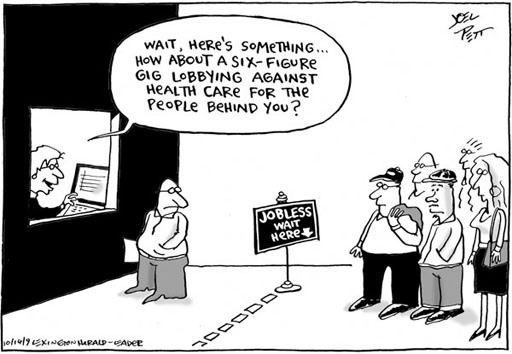
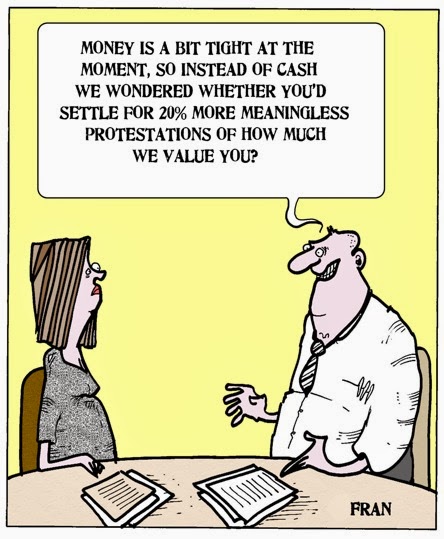
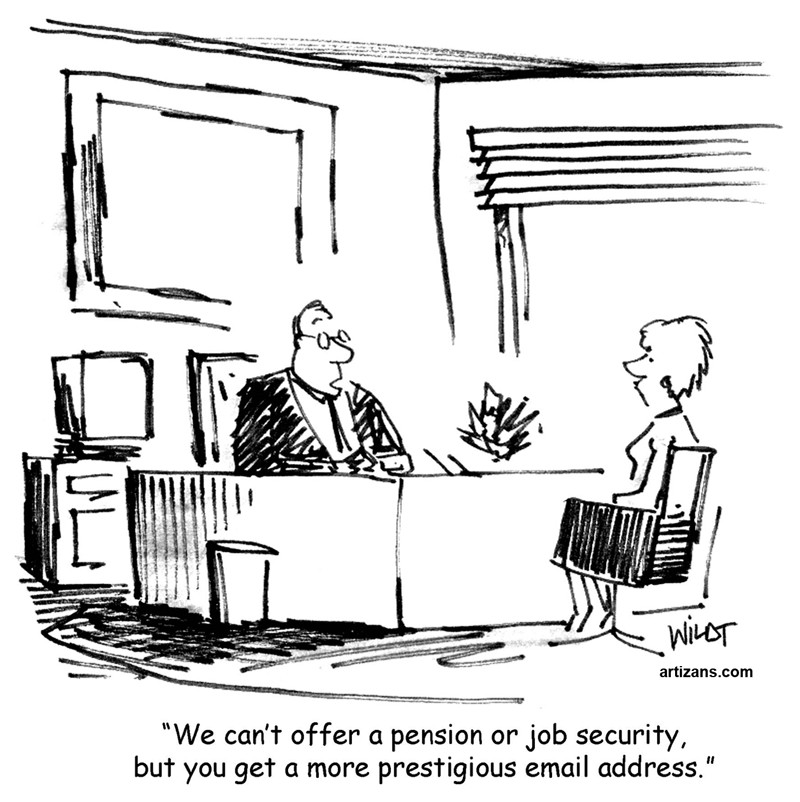
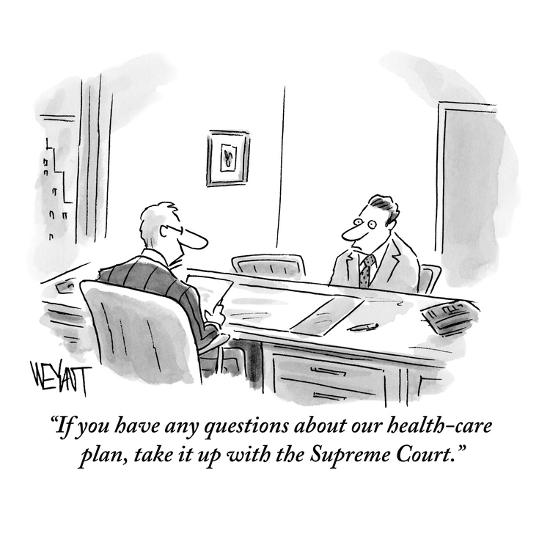
Cartoon – Job Opportunity

Political Cartoon: “Overheard In The Unemployment Line” by Joel ...

What is work sharing and how can it help the labor market?

https://www.brookings.edu/blog/up-front/2020/04/16/what-is-work-sharing-and-how-can-it-help-the-labor-market/?utm_campaign=Brookings%20Brief&utm_source=hs_email&utm_medium=email&utm_content=86505163

What is work sharing and how can it help the labor market?

When economic conditions worsen, as they did beginning in March 2020 because of the COVID-19 pandemic, employers often respond by laying off their employees. This can lead to very undesirable outcomes for society at large. Research shows that losing a job often causes decreased long-term earnings, health problems, and other adverse outcomes, the effects of which can last generations (Abraham and Houseman 2014). Layoffs create future costs for employers as well—once demand picks back up, firms will have to expend valuable resources on significant search, hiring, and training costs.

The U.S. unemployment insurance (UI) system can help. Its core function is to replace some of the earnings of workers who have lost their jobs, helping them to stay afloat during tough economic times. But the UI system can also support workers and employers as they reduce, rather than eliminate, employees’ work hours.

WHAT IS WORK SHARING?

A program called work sharing, or short-time compensation, encourages employers to temporarily reduce the hours of their employees rather than lay them off during an economic downturn. Work sharing allows employers to keep their skilled workforce and reestablish a full-time schedule when economic conditions improve. With this approach, employees continue to be paid for the hours they work, collecting pro-rated unemployment benefits that help cover the work hours they lose. For example, employers could reduce everyone’s hours by 20 percent and employees would qualify for 20 percent of the weekly unemployment benefit amount.

In a Hamilton Project proposal, economists Katharine Abraham and Susan Houseman described reforms that would facilitate the use of work sharing. The importance of these reforms for addressing the current economic downturn was discussed further in a recent webcast titled, “Unemployment Insurance during the COVID-19 Pandemic: Reducing the Impact of this Economic Downturn.”

WHAT IS THE RATIONALE FOR WORK SHARING? HOW MANY JOBS COULD IT SAVE?

Work sharing provides employers a way to respond to a decrease in demand by cutting back on hours rather than laying workers off. This approach maintains employer-employee connections, minimizing layoffs and supporting workers who have their hours reduced. Work sharing can be particularly helpful when the drop in demand is expected to be temporary, as many think likely for this pandemic-caused recession.

The value of preserving relationships between employers and employees is twofold. First, it can avoid huge spikes in permanent job losses that are financially ruinous for many families. Workers continue their employment, albeit with reduced hours, and avoid many of the damaging effects of losing a job (like loss of health insurance coverage). Second, both employers and workers will avoid costly search, hiring, and training once demand eventually picks back up.

Throughout the Great Recession, when only 17 states offered the option, use of work-sharing was very limited. Abraham and Houseman estimate that if work sharing had been available for the entire country during the Great Recession—and take-up rates had been similar to our European counterparts—work-sharing programs could have saved up to 1 million jobs, or 1 in 8 of the net jobs that were lost during the Great Recession.

HOW WIDESPREAD ARE WORK-SHARING PROGRAMS?

Today, 26 states, covering nearly 70 percent of the workforce, have operational work-sharing programs in place. But work sharing has been little used in the earliest days of this recession. As of the week ending in March 28, just 0.3 percent of the more than 8.2 million people claiming UI benefits received work-sharing benefits.

To expand coverage, Abraham and Houseman propose that Congress pass legislation that requires states to have a work-sharing program as a part of their UI system to participate in the federal–state UI system. Further, in order to encourage state take-up, they propose that the U.S. Department of Labor modify its funding formula to more accurately fund state administrative burdens associated with implementing and promoting work-sharing programs.

WHAT ELSE CAN BE DONE TO MAKE IT EASY FOR EMPLOYERS TO USE THE PROGRAM?

First, states could look for opportunities to expedite the process of starting up a work-sharing plan and paying benefits. Second, states could remove policies that tend to discourage the use of work sharing and push employers toward layoffs. For example, some states bar employers who have heavily used the UI system in the past from participating in work-sharing programs. Additionally, some states impose higher effective UI tax rates on employers who choose work-share programs than if they laid off their workers. Designed to prevent abuse of the UI system, these policies may discourage work sharing, especially during downturns. Abraham and Houseman recommend that Congress add a prohibition against the use of these policies to the existing criteria for state eligibility to participate in the federal–state UI system.

HOW CAN WORK-SHARING PROGRAMS BE FURTHER INCORPORATED INTO THE EXISTING UI SYSTEM?

Under current law, sharp increases in a state’s unemployment rate trigger extensions to the benefits available in that state; the federal government covers half the cost of those extensions. That same federal-state program could enhance the use of work sharing. Abraham and Houseman propose that the federal government cover half the cost of work-sharing programs when UI extended benefits are triggered in a state. As explained below, Congress has recently gone beyond this proposal, but only on a temporary basis.

HOW IS WORK SHARING ADDRESSED IN THE CORONAVIRUS AID, RELIEF, AND ECONOMIC SECURITY ACT (CARES ACT)?

The CARES Act, signed into law on March 25, 2020, encourages states and employers to use work-sharing programs. The federal government will reimburse 100 percent of the cost of short-time compensation benefits paid in states that have work-sharing programs in place. For those states that do not have a work-sharing program, the CARES act includes funds to pay for short-time benefits at a 50 percent federal coverage rate. Finally, the CARES Act allocates grant funding for states to promote and improve the implementation and administration of work-sharing programs.


Grocery workers are keeping Americans alive during the COVID-19 pandemic. Here’s what they need.

https://www.brookings.edu/blog/the-avenue/2020/03/25/grocery-workers-are-keeping-americans-alive-during-the-covid-19-pandemic-heres-what-they-need/?utm_campaign=Brookings%20Brief&utm_source=hs_email&utm_medium=email&utm_content=85335188
Grocery workers are keeping Americans alive during the COVID-19 ...

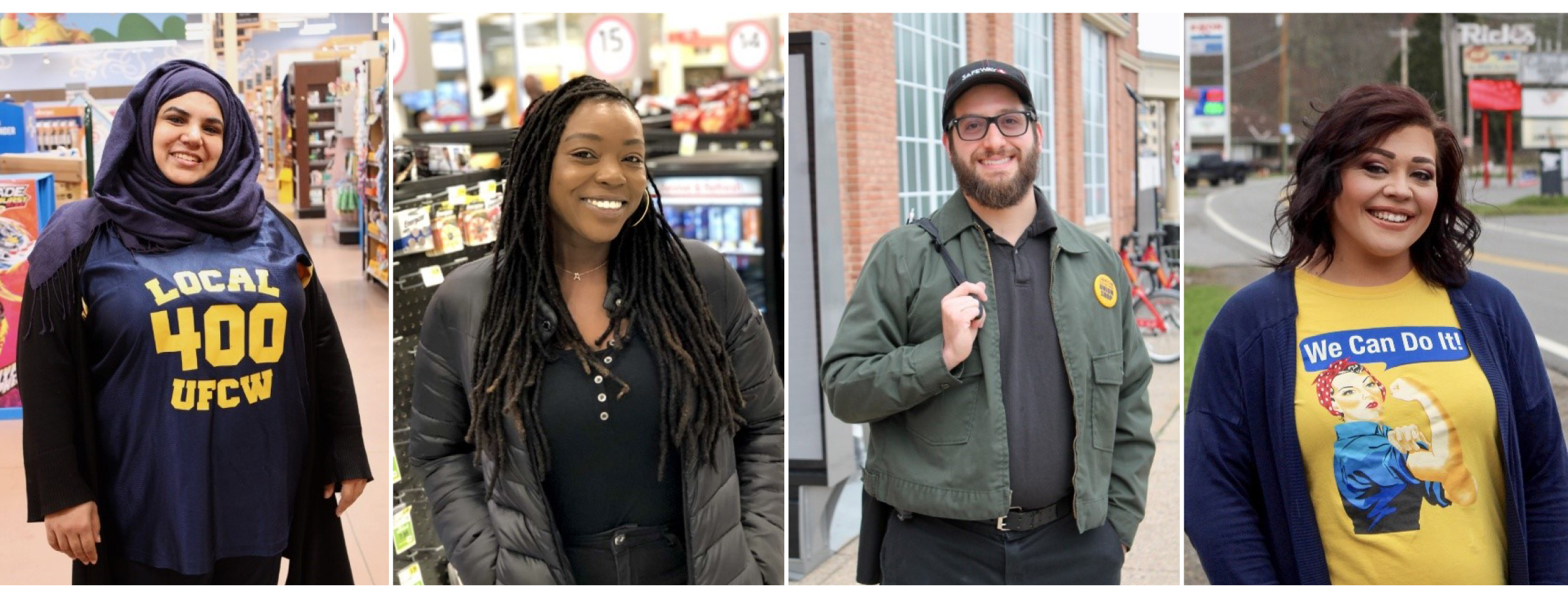
As worried Americans pack supermarket aisles in anticipation of quarantines and shelter-in-place orders, grocery workers like Courtney Meadows are working at a frantic pace to keep Americans fed and alive, and risking their own health in the process.

Meadows, a cashier at Kroger in Beckley, W.Va., said her store is the busiest she has seen it in 10 years on the job. “I have worked through snow scares, a blizzard, two derechos, holidays, anything that can impact a grocery store,” she told me. “This is the absolute worst I have seen it. It is a sea of people everywhere.”

Over the last week, I traveled to supermarkets across the Washington, D.C. region and interviewed workers from Virginia, Maryland, West Virginia and the District to hear—in their words—how COVID-19 is impacting them. These crowded stores I visited had few visible safeguards or protections for workers.

“We aren’t staying six feet away from the customers,” said Michelle Lee, a Safeway cashier in Alexandria, Va. “When we ring them up, they are like two feet away from us. We check out 200 customers a day. A doctor can wear a mask and protective gear. We don’t have all of that.”

Amber Stevens, a cashier at Shoppers in Prince George’s County, Md., expressed concern over social distancing as well. “I do still have a job to go to, but it isn’t helping me with social distancing because I am hands-on with customers,” she told me. “That is the scary part. Dealing with money, having to be so close to people.”

More than their own health, the grocery store employees I interviewed expressed the most concern about the safety of those around them: their loved ones at home, their elderly customers, their colleagues with underlying health conditions, and their neighbors in crowded apartment buildings. Several workers welled up with emotion as they described how hard it is to be unable to care for older relatives during the pandemic.

“All of that worry plus the stress of double the number of customers we normally have,” said Lisa Harris, a cashier at Kroger in Richmond, Va. “This isn’t just for one day. It is for weeks.”

As grocery workers put their lives on the line—often for low wages and few benefits—it is imperative that employers, policymakers, and even customers act with urgency to protect, support, and compensate them.

EMPLOYERS MUST KEEP GROCERY WORKERS HEALTHY

Employers need to implement immediate steps to reduce grocery workers’ exposure to COVID-19. First, employers should expand access to personal protective equipment (PPE) such as masks and gloves and end any restrictions on workers wearing them. While supplies of protective masks and gloves are extremely limited across the country, employers and policymakers should prioritize PPE for grocery workers as they become available. Employers should provide adequate cleaning supplies and hand sanitizer, regular opportunities for workers to wash their hands, and frequent equipment cleaning.

Second, stores should shorten hours and limit the number of customers at any given time. While several stores—including Trader Joe’sWalmart, and Safeway—have limited store hours and introduced “senior only” hours, most stores are not following the CDC’s guidance of limiting gatherings to 50 people. Even tighter restrictions may be needed to keep workers safe as the virus spreads; for instance, some stores in China are checking customers’ temperatures before they enter the store.

Third, grocery stores should implement additional measures to protect workers and enforce safe spacing of customers. Albertsons, which owns Safeway and 19 other grocery chains, was the first major company to announce they will install plexiglass “sneeze-guard” barriers at checkouts in its 2,200 stores over the next two weeks. Walmart and Kroger have made similar commitments, and other grocery stores should follow.

Even in the absence of specific CDC guidelines for grocery workers, employers should act boldly and creatively to modify stores to keep workers safe, continuously adapt to evolving best practices, and respond to safety priorities identified by unions like the United Food and Commercial Workers International Union (UFCW), which represents over 1.2 million workers.

INCREASE COMPENSATION AND OFFER HAZARD PAY

The coronavirus pandemic has put a harsh spotlight on the low wages that grocery workers earn for their life-saving work. At Kroger, the country’s second-largest grocery chain with 453,000 workers, the average hourly wage of cashiers is just $9.94 per hour, according to estimates on Indeed.com.

Lisa Harris, a Kroger cashier, described the financial hardships she and her low-wage colleagues face: “I have coworkers who stand all day serving people, and then have to go pay for their own groceries with food stamps. I am very lucky that my boyfriend works in pizza because that is our survival food. If we can’t afford to buy food, he brings home a pizza.”

Even in “normal” times, grocery workers—like other service and low-wage workers—deserve better wages. In these extreme times, adequately compensating them is even more imperative. As grocery sales soar and their stock prices rise, employers should provide additional compensation and hazard pay to their workers on the front line.

“I think that some pay increase would be wonderful,” Kroger cashier Courtney Meadows told me. “I don’t think they understand the toll that comes through in our lives. They don’t see it. They don’t see the panic on people’s faces.”

In response to the pandemic, the two largest grocery employers, Kroger and Walmart, have offered workers one-time bonuses of $300. Responding to pressure from the UFCW, Safeway and Shoppers are now offering an additional $2 per hour of hazard pay, while Whole Foods and Target are also raising pay $2 per hour.

These pay increases are an important start, but they don’t go far enough. The raises should be permanent, and enough to provide a family-sustaining wage to workers.

ENSURE ACCESS TO HEALTH INSURANCE AND EXTEND PAID SICK LEAVE

Now more than ever, paid sick leave and health insurance are critical for grocery workers. Well before the COVID-19 pandemic, hundreds of thousands of grocery workers didn’t receive paid sick leave from their employers. Responding to public outrage and pressure from employees and unions, most large employers now have updated their sick leave policy to respond to COVID-19. However, their policies don’t go far enough: They are temporary, focus narrowly on COVID-19, and are insufficient to meet the needs of workers.

Companies including Safeway, Kroger, and Walmart are now offering 14 days paid sick leave for workers with a confirmed COVID-19 diagnosis. But COVID-19 tests are in extremely short supply and many workers with suspected cases will be unable to get tested. Employers should modify paid leave policies to allow flexibility for ill workers to access the benefits even without a confirmed test, at least until testing is more widely available.

Policies should cover paid leave for grocery workers to care for their immediate family members or people they live with if they become ill. Employers should also compensate workers for any coronavirus-related medical bills that are not covered by their health insurance.

Employers should provide extra support to grocery workers who are especially high-risk, such as older workers and the immunocompromised. The most vulnerable workers may need to simply stay home during the pandemic and not work for weeks or months. Employers should do their part to ensure those workers have extended paid leave or other forms of adequate compensation and benefits, including health insurance.

CUSTOMERS CAN HELP KEEP GROCERY WORKERS SAFE

A major concern for the workers I interviewed was the actions of individual customers that could jeopardize their health. Many workers noted that customers continue to come to their store even when they are sick.

“Some customers will come through the line and cough or sneeze in their hand,” said Safeway cashier Michelle Lee. “If you are sick, you should stay home or cough in their elbow.”

Customers should do their part by keeping a safe distance from workers at checkout and throughout the store, practicing proper hygiene when coughing or sneezing, and staying home when ill.

RIGHT NOW, GROCERY WORKERS ARE EMERGENCY PERSONNEL

On March 15, Minnesota Governor Tim Walz made grocery store employees and food distribution personnel eligible for free child care by designating them as emergency workers. Four days later, Vermont’s Department of Public Safety added grocery workers to its list of essential personnel, giving them free child care at school-based centers set up by the state.

Other states should follow the lead of Minnesota and Vermont and designate grocery workers as emergency personnel, granting them the same protections and benefits as first responders and health workers.

If we had an opportunity to get free child care, people like me could go in,” Matt Milzman, a 29-year-old Safeway cashier in Washington, D.C. and father of two small children, told me. “They need all the people they can. I am low risk and healthy. I would much rather me work than someone who is older with a million health problems.”

Grocery workers are among the true heroes of the pandemic, providing basic necessities to keep Americans alive, but also human comfort for their customers during an anxious time.

“I choose to be happy and positive,” cashier Courtney Meadows told me. “If you can talk and make someone laugh, that might be the only positive thing in their life that day. That is what I choose to do.”

We owe them not only our gratitude, but the protection, support, and compensation they deserve.


Employers aren’t changing their health benefits

https://www.axios.com/employers-health-care-coverage-insurance-2020-election-e0ce92cf-c106-44fe-bb35-1c3c6e452712.html

Image result for Employers aren't changing their health benefits

Companies rarely switch the health plans they offer to their workers, and seem to be especially cautious in the 2020 election year.

The big picture: Medical and drug costs are crushing employers and workers alike. But altering benefits — which could require employees to change their doctors — could provoke even more anger.

By the numbers: Roughly half of employers offering health benefits did not shop around for new plans or insurance companies for 2019, according to the Kaiser Family Foundation’s latest employer benefit survey.

  • Of the half that did shop, just 18% changed to a new insurance carrier.
  • That means fewer than 10% of all employers switched carriers.
  • Large corporations, like GM, are much less likely to tinker with coverage than smaller firms.

“Disruption is the enemy,” Mike Turpin, an employer health care consultant at the brokerage USI Insurance Services, said on a call with Wall Street investors last week.

  • Turpin said he has seen even less switching for 2020 because employers don’t want to make waves over health care in an election year — “which buys another year” for the large, incumbent health insurance companies.

Between the lines: More companies have moved workers into less comprehensive plans since the Affordable Care Act was passed, but those changes often have been met with either immediate condemnation (like Harvard in 2015) or delayed outrage as workers shoulder more costs.

  • “It is telling that brokers perform an analysis for employers that’s called ‘disruption analysis’ — the goal of which is not to be disruptive, but to minimize disruption,” said Katherine Hempstead, a health policy adviser at the Robert Wood Johnson Foundation.

Yes, but: Millions of people still switch health plans every year when they buy it on their own, change jobs, get laid off or retire.