Covid-19 has killed more police officers this year than all other causes combined, data shows

https://www.washingtonpost.com/business/2020/09/02/coronavirus-deaths-police-officers-2020/?utm_campaign=wp_main&utm_medium=social&utm_source=facebook&fbclid=IwAR3KWZcuMmVXy_R7mDh_m58_BLdQkz6rw5iU9nsii950Bx46lwc0nbfC3p4

By one estimate, coronavirus deaths among law enforcement are likely to surpass those of 9/11.

In a speech this week in Pittsburgh, Joe Biden linked the Trump administration’s mismanagement of the coronavirus to its handling of protests and riots with a surprising statistic: “More cops have died from covid this year than have been killed on patrol,” he said.

The Democratic presidential nominee’s claim is true, according to data compiled by the Officer Down Memorial Page and the National Law Enforcement Officers Memorial Fund, two nonprofits that have tracked law enforcement fatalities for decades.

As of Sept. 2, on-the-job coronavirus infections were responsible for a least 100 officer deaths, more than gun violence, car accidents and all other causes combined, according to the Officer Down group. NLEOMF reported a nearly identical number of covid-related law enforcement deaths.

NLEOMF reported a nearly identical number of covid-related law enforcement deaths. It also noted that fatalities due to non-covid causes are actually down year-over-year, undermining President Trump’s claims that “law enforcement has become the target of a dangerous assault by the radical left.”

Both organizations only count covid deaths “if it is determined that the officer died as a result of exposure to the virus while performing official duties,” as the National Law Enforcement Officers Memorial Fund put it. “Substantive evidence will be required to show the death was more than likely due to the direct and proximate result of a duty-related incident.”

In addition to the 100 confirmed coronavirus fatalities listed on the Officer Down website, the nonprofit said it is in the process of verifying an additional 150 officer deaths due to covid-19 and presumed to have been contracted in the line of duty, said Chris Cosgriff, executive director of ODMP, in an email.

“By the end of this pandemic, it is very likely that COVID will surpass 9/11 as the single largest incident cause of death for law enforcement officers,” he wrote. Seventy-one officers were killed in the attacks on the twin towers, one officer was killed on United Flight 93, and more than 300 have passed away since then as a result of cancer contracted in the wake of the attacks, according to ODMP.

At the state level, Texas stands out for having the highest number of law enforcement covid fatalities with at least 21, according to NLEOMF. At least 16 of those represent officers with the Texas Department of Criminal Justice, which manages the state’s correctional facilities. Louisiana has 12 covid-related officer deaths. Florida, New Jersey and Illinois round out the top five with eight each.

According to both organizations, officers in correctional facilities account for a substantial number of covid-related law enforcement deaths, reflecting the dire epidemiological situation in many of the nation’s prisons and jails.

“Corrections officers and Corrections Departments have been hit harder than regular police agencies,” Cosgriff said. According to the Marshall Project, a nonprofit criminal justice news site, more than 100,000 U.S. prison inmates have tested positive for coronavirus and at least 928 have died. There have been an additional 24,000 cases and 72 deaths among prison staff.

ODMP’s tally includes police officers, sheriff’s deputies, correctional officers, federal law enforcement officers and military police officers killed outside of military conflict. NLEOMF’s inclusion criteria are similar.

This year, Trump signed the Safeguarding America’s First Responders Act of 2020, which guarantees law enforcement officers and their survivors federal benefits if the officer is killed or disabled by covid. For legal purposes, the legislation presumes that covid cases among officers were contracted in the line of duty.


Coronavirus Metric, The Case Fatality, Is Unreliable

https://www.npr.org/2020/07/24/894818106/trumps-favorite-coronavirus-metric-the-case-fatality-is-unreliable?fbclid=IwAR3Zfo29Yhv49yu7ORp9ytjSc8f6uqlhXP0BEFvBGOBUcvXZH0dYrJha2Sc

blog | Teksten, Wijsheid


As the number of coronavirus cases started spiking again this month, the White House keyed in on a different number — one that paints a more rosy picture of the pandemic: the case fatality rate.

When asked about rising cases at a recent briefing, press secretary Kayleigh McEnany quickly parried. “We’re seeing the fatality rate in this country come down,” said McEnany. “That is a very good thing.”

The case fatality rate is the result of a simple mathematical calculation: the number of deaths divided by the number of diagnosed coronavirus cases. But it’s also a moving target. Case numbers are rising fast; deaths are a lagging indicator, running several weeks behind.

“Measuring … mortality rates on any given day is not a reliable way of communicating about this pandemic,” said Dr. Tom Inglesby, director of the Johns Hopkins Center for Health Security.

It is possible that innovations in treatment methods and therapeutic drugs have helped improve the survivability of COVID-19. It is also possible that with more young people being infected in this latest round, they are less likely to die. But medical experts warn it is also just too soon to be sure. And, they say, it’s an unreliable and misleading metric.

But that hasn’t stopped President Trump from boasting about the figure.

“Our case fatality rate has continued to decline and is lower than the European Union and almost everywhere else in the world,” Trump said Tuesday at his first White House coronavirus briefing in nearly three months.

In his interview on Fox News Sunday with Chris Wallace, Trump asked his staff to bring him the “death chart.” He said “the death chart is much more important” as Wallace ticked through 75,000 daily cases and 1,000 daily deaths.

Trump had that chart displayed behind him during the briefing. But this isn’t a metric public health experts have been using.

Inglesby says that by a more direct measure (the sheer number of deaths), and even adjusted for population size, the U.S. is not doing well compared to other countries around the world.

“What national leaders have the obligation to tell people is just the direct truth,” Inglesby said. “If we give them a false sense that things are getting better when they’re not, then they’re going to make decisions that increase the risk of transmission. And they’re also going to stop having confidence in the information they’re being given.”

Focusing on the fatality rate also glosses over other serious problems with the coronavirus, says Dr. David Relman, who specializes in immunology and infectious diseases at Stanford. He says about 20% of people get really sick with potential long-term health consequences. Plus, he says, the coronavirus is stressing the medical system. And as long as it is uncontained, the virus is holding the economy back. So, as he sees it, talking about the case fatality rate is counterproductive.

“What you do instead when you pull out one little piece and dangle it in front of people is to confuse and distract and undermine the overall message,” said Relman.

He says people need to take this virus seriously and take precautions, and that is a sacrifice that requires leaders to get the public on board. For Trump, accentuating the positive might have short-term political benefits, but there are longer-term risks.

“I think it was a mistake early on to be dismissive of the seriousness of it and that it was just going to go away,” said Mike DuHaime, a Republican strategist.

DuHaime gives Trump credit for coming out this week and treating the coronavirus more seriously than he has in the past, telling people to wear masks and avoid crowds. But he readily acknowledges that Trump has gone through other brief spurts urging the public to sacrifice to slow the spread of the virus, only to reverse himself, downplay the severity and pressure states to reopen.

“In order for him to succeed here politically, his credibility has to be as strong as possible,” said DuHaime, who now works at the firm Mercury.

Trump’s credibility has taken a major hit through this crisis. According to the latest Pew Poll, only 30% of Americans trust Trump to get the facts right on the virus. And Trump’s approval rating has tanked too, something he is attempting to repair with the resumed daily briefings.

“At the end of the day, he just needs to do a good job. I know that sounds simplistic, but when you’re an incumbent running for reelection, doing a good job is really the most important thing,” said DuHaime. “And to this point people haven’t seen him do a good job on what they think is the greatest challenge of his presidency.”

DuHaime points out that people are checking the numbers every day — the number of new cases in their city and state, the number of hospitalizations and deaths. Those numbers are all readily available and easier to find than the case fatality rate.


Unemployment Claims Are ‘Stubbornly High’ as Layoffs Persist

Rise in Unemployment Claims Signals an Economic Reversal - The New York  Times

Just over one million Americans filed new claims for state jobless benefits last week, the latest sign that the economy is losing momentum just as federal aid to the unemployed has been pulled away.

Weekly claims briefly dipped below the one million mark early this month, offering a glimmer of hope in an otherwise gloomy job market. But filings jumped to 1.1 million the next week, and stayed above one million last week, the Labor Department said Thursday.

“It’s devastating how stubbornly high initial claims are,” said Julia Pollak, a labor economist at the employment site ZipRecruiter. “There are still huge numbers of layoffs taking place.”

Another 608,000 people filed for benefits under the federal Pandemic Unemployment Assistance program, which offers aid to independent contractors, self-employed workers and others not covered by regular state programs. That number, unlike the figures for state claims, is not seasonally adjusted.

Other recent indicators also suggest that the recovery is faltering. Job growth slowed in July, and real-time data from private-sector sources suggests that hiring has slumped further in August. On Tuesday, American Airlines said it will furlough 19,000 workers on Oct. 1, the latest in a string of such announcements from major corporations.

“It is worrying because it does signal that these large companies are pessimistic about the state of the recovery and don’t think that we are going to be returning to normal anytime soon,” said Daniel Zhao, senior economist at the career site Glassdoor.

Unemployment filings have fallen sharply since early April, when 6.6 million applied for benefits in a single week. But even after that decline, weekly filings far exceed any previous period. Close to 30 million Americans are receiving benefits under various state and federal programs.

The rate of job losses remains high as government support for the unemployed is waning. A $600-a-week federal supplement to state unemployment benefits expired at the end of July, and efforts to replace it have stalled in Congress. President Trump announced this month that he was using his executive authority to give jobless workers an additional $300 or $400 a week, but few states have begun paying out the new benefit.

Economists warn that the loss of federal support could act as a brake on the recovery. Nancy Vanden Houten, lead economist for the forecasting firm Oxford Economics, estimated that the lapse in extra unemployment benefits would reduce household income by $45 billion in August. That could lead to a drop in consumer spending and further layoffs, she said.

The benefit initiated by Mr. Trump would use federal emergency funds to provide $300 a week in extra payments to most unemployed workers. (States can choose to chip in an additional $100 a week, but few are doing so.) As of Wednesday, 34 states had been approved for grants under the program, known as Lost Wages Assistance.

Arizona, the first state to turn the grants into payments, sent $252.6 million to about 400,000 recipients last week, a sum that included retroactive payments for the first two weeks of August. Texas this week has paid out $424 million and expects to deliver nearly $1 billion more to cover the first three weeks of benefits. A handful of other states are paying benefits or expect to begin doing so within days.

Most, however, said it could take until mid-September or later.

Once the money starts flowing, it may not last long. Mr. Trump’s order authorized spending up to $44 billion, which federal officials said last week would cover four or five weeks of payments. That means jobless workers in many states may receive a lump sum covering several weeks of retroactive benefits, but nothing more without congressional action.

A crowd thronged a temporary unemployment office in Kentucky in June. Adapting computer systems to new benefits has been a crucial factor in processing claims.

On the surface, the new lost wages program looks like the earlier $600-a-week federal supplement, just cut in half. But there are subtle differences: The program has a different funding source (the Federal Emergency Management Agency instead of the Labor Department) and new restrictions (people receiving less than $100 a week in regular benefits don’t qualify).

Those kinds of adjustments would be trivial on a modern computer system. But many state unemployment systems are running on computers that are anything but modern.

In Oklahoma, for example, the unemployment system uses a 40-year-old mainframe computer that turns even minor adjustments into a major programming task. As a result, even though the state was among the first to apply for the $300 benefit this month, it doesn’t expect to begin paying the new benefit until late September.

“The fact that I’m working with a mainframe from 1978 to process claims is just crippling to the agency,” said Shelley Zumwalt, interim executive director of the agency that oversees Oklahoma’s unemployment system. “We are just holding that system together with masking tape and chewing gum.”

When the pandemic hit, Arizona, too, was stuck with archaic computer systems. It built a new system virtually from scratch to begin paying out federally funded emergency benefits, and it was among the last states to do so.

But the approach left Arizona better able to handle curveballs like the new $300 benefit.

“Through that chaos, we created a pandemic unemployment system,” said Michael Wisehart, director of the Arizona Department of Economic Security.

Christy Miller says there are three things that shape her identity: making people laugh, making people strong and lifting heavy objects. She can’t do any of those right now, and she isn’t sure when she will be able to again.

Ms. Miller, 49, is a standup comedian in New York, where comedy clubs have been closed since March. She is also a personal trainer and an amateur power lifter — activities she has had to give up because gyms, too, remain closed in the city.

The $600-a-week supplement to her unemployment pay didn’t just allow her to pay rent and buy food. It also freed up the time and mental energy for her to learn video production, podcasting and other skills to help her survive the pandemic-driven shutdown of her industry.

“I would give up the $600 a week any day for this coronavirus to go away and get back to work,” she said. “But the $600 has allowed me not to be homeless, to learn more computer stuff that I never would have learned or had the time to learn.”

None of those ventures are producing much income yet, though. She saved as much of her unemployment benefits as she could, and has enough to cover rent through the end of the year. But other bills are another matter. And there is little guarantee that her business will bounce back before her savings run out.

“If they don’t fix this pandemic thing, I may have to leave New York because I can’t afford to stay here,” she said.

Kris Fusco is finally back at work. That doesn’t mean her coronavirus worries are behind her.

When Ms. Fusco’s employer — a small, family-owned business in Massachusetts that rents musical instruments to students — laid her off in March, she expected to be out of work for a couple of weeks. That got extended to April, then to June. Eventually one of the owners called her to tell her they didn’t know when they could reopen.

“I said, ‘You do what you need to do to keep your business afloat, and I’m just going to hold on as long as I can,’” she said. Fortunately, her employer called her back shortly after the $600 supplement expired. She returned to work last week, and, despite some nervousness about going into the office with the virus still spreading, she said she was grateful for the paycheck.

But Ms. Fusco, 50, doesn’t know how long her good fortune will last. With many schools still teaching remotely or canceling activities like band, she worries that her company’s business will suffer. Already, she has noticed a large number of instruments being returned.

“It’s very worrisome for me because I can see the snowball effect from Covid-19 all around me,” she said. “It’s always lurking right behind my eyeballs that in six months I might be out of a job again.”


Unemployed struggle to cover basic expenses following CARES expiration: poll

Unemployed struggle to cover basic expenses following CARES expiration: poll

The number of jobless people saying that unemployment insurance does not cover basic expenses including food, clothing, housing and transportation nearly doubled after key benefits expired in July.

new survey from Morning Consult found that 50 percent of unemployed people said their benefits fell short of covering basic expenses, up from 27 percent in July.

The $600 in extra weekly benefits that Congress passed in March expired at the end of July, leaving many with significantly lower payments.

Republicans argued the $600 increase was too high and discouraged people from returning to work. Democrats countered that at a time of record high unemployment and limited job openings, the extra pay was unlikely to prevent jobs from getting filled.

A month later, negotiations between the White House and congressional Democrats remain stalled. Senate Republicans are setting a goal of voting on a more limited package of COVID-19 relief measures next week, though Speaker Nancy Pelosi (D-Calif.) has dismissed the idea of approving a limited bill.

An executive order by President Trump to provide $300 in additional benefits to a more limited pool of recipients has lagged in implementation, with only a handful of states able to start making new payments.

In the meantime, the pandemic continues to stifle the economy.

CNBC poll found that 14 percent of those surveyed had completely wiped out their emergency savings during the pandemic, and 39 percent were forced to take some sort of emergency measures to shore up their finances.

Among those who took emergency measures, 17 percent tapped into savings, 11 percent borrowed money, 6 percent stopped retirement contributions and 4 percent moved in with a family member.


Administration’s new pandemic adviser pushes controversial ‘herd immunity’ strategy, worrying public health officials

https://www.washingtonpost.com/politics/trump-coronavirus-scott-atlas-herd-immunity/2020/08/30/925e68fe-e93b-11ea-970a-64c73a1c2392_story.html?utm_campaign=wp_post_most&utm_medium=email&utm_source=newsletter&wpisrc=nl_most


One of President Trump’s top medical advisers is urging the White House to embrace a controversial “herd immunity” strategy to combat the pandemic, which would entail allowing the coronavirus to spread through most of the population to quickly build resistance to the virus, while taking steps to protect those in nursing homes and other vulnerable populations, according to five people familiar with the discussions.

The administration has already begun to implement some policies along these lines, according to current and former officials as well as experts, particularly with regard to testing.

The approach’s chief proponent is Scott Atlas, a neuroradiologist from Stanford’s conservative Hoover Institution, who joined the White House earlier this month as a pandemic adviser. He has advocated that the United States adopt the model Sweden has used to respond to the virus outbreak, according to these officials, which relies on lifting restrictions so the healthy can build up immunity to the disease rather than limiting social and business interactions to prevent the virus from spreading.

Sweden’s handling of the pandemic has been heavily criticized by public health officials and infectious-disease experts as reckless — the country has among the highest infection and death rates in the world. It also hasn’t escaped the deep economic problems resulting from the pandemic.

But Sweden’s approach has gained support among some conservatives who argue that social distancing restrictions are crushing the economy and infringing on people’s liberties.

That this approach is even being discussed inside the White House is drawing concern from experts inside and outside the government who note that a herd immunity strategy could lead to the country suffering hundreds of thousands, if not millions, of lost lives.

“The administration faces some pretty serious hurdles in making this argument. One is a lot of people will die, even if you can protect people in nursing homes,” said Paul Romer, a professor at New York University who won the Nobel Prize in economics in 2018. “Once it’s out in the community, we’ve seen over and over again, it ends up spreading everywhere.”

Atlas, who does not have a background in infectious diseases or epidemiology, has expanded his influence inside the White House by advocating policies that appeal to Trump’s desire to move past the pandemic and get the economy going, distressing health officials on the White House coronavirus task force and throughout the administration who worry that their advice is being followed less and less.

Atlas declined several interview requests in recent days. After the publication of this story, he released a statement through the White House: “There is no policy of the President or this administration of achieving herd immunity. There never has been any such policy recommended to the President or to anyone else from me.”

White House communications director Alyssa Farah said there is no change in the White House’s approach toward combatting the pandemic.

“President Trump is fully focused on defeating the virus through therapeutics and ultimately a vaccine. There is no discussion about changing our strategy,” she said in a statement. “We have initiated an unprecedented effort under Operation Warp Speed to safely bring a vaccine to market in record time — ending this virus through medicine is our top focus.”

White House officials said Trump has asked questions about herd immunity but has not formally embraced the strategy. The president, however, has made public comments that advocate a similar approach.

“We are aggressively sheltering those at highest risk, especially the elderly, while allowing lower-risk Americans to safely return to work and to school, and we want to see so many of those great states be open,” he said during his address to the Republican National Convention Thursday night. “We want them to be open. They have to be open. They have to get back to work.”

Atlas has fashioned himself as the “anti-Dr. Fauci,” one senior administration official said, referring to Anthony S. Fauci, the nation’s top infectious-disease official, who has repeatedly been at odds with the president over his public comments about the threat posed by the virus. He has clashed with Fauci as well as Deborah Birx, the White House coronavirus response coordinator, over the administration’s pandemic response.

Atlas has argued both internally and in public that an increased case count will move the nation more quickly to herd immunity and won’t lead to more deaths if the vulnerable are protected. But infectious-disease experts strongly dispute that, noting that more than 25,000 people younger than 65 have died of the virus in the United States. In addition, the United States has a higher number of vulnerable people of all ages because of high rates of heart and lung disease and obesity, and millions of vulnerable people live outside nursing homes — many in the same households with children, whom Atlas believes should return to school.

“When younger, healthier people get the disease, they don’t have a problem with the disease. I’m not sure why that’s so difficult for everyone to acknowledge,” Atlas said in an interview with Fox News’s Brian Kilmeade in July. “These people getting the infection is not really a problem and in fact, as we said months ago, when you isolate everyone, including all the healthy people, you’re prolonging the problem because you’re preventing population immunity. Low-risk groups getting the infection is not a problem.”

Atlas has said that lockdowns and social distancing restrictions during the pandemic have had a health cost as well, noting the problems associated with unemployment and people forgoing health care because they are afraid to visit a doctor.

“From personal communications with neurosurgery colleagues, about half of their patients have not appeared for treatment of disease which, left untreated, risks brain hemorrhage, paralysis or death,” he wrote in The Hill newspaper in May

The White House has left many of the day-to-day decisions regarding the pandemic to governors and local officials, many of whom have disregarded Trump’s advice, making it unclear how many states would embrace the Swedish model, or elements of it, if Trump begins to aggressively push for it to be adopted.

But two senior administration officials and one former official, as well as medical experts, noted that the administration is already taking steps to move the country in this direction.

The Department of Health and Human Services, for instance, invoked the Defense Production Act earlier this month to expedite the shipment of tests to nursing homes — but the administration has not significantly ramped up spending on testing elsewhere, despite persistent shortages. Trump and top White House aides, including Atlas, have also repeatedly pushed to reopen schools and lift lockdown orders, despite outbreaks in several schools that attempted to resume in-person classes.

The Centers for Disease Control and Prevention also updated its testing guidance last week to say that those who are asymptomatic do not necessarily have to be tested. That prompted an outcry from medical groups, infectious-disease experts and local health officials, who said the change meant that asymptomatic people who had contact with an infected person would not be tested. The CDC estimates that about 40 percent of people infected with covid-19, the disease caused by the coronavirus, are asymptomatic, and experts said much of the summer surge in infections was due to asymptomatic spread among young, healthy people.

Trump has previously floated “going herd” before being convinced by Fauci and others that it was not a good idea, according to one official.

The discussions come as at least 5.9 million infections have been reported and at least 179,000 have died from the virus this year and as public opinion polls show that Trump’s biggest liability with voters in his contest against Democratic nominee Joe Biden is his handling of the pandemic. The United States leads the world in coronavirus cases and deaths, with far more casualties and infections than any other developed nation.

The nations that have most successfully managed the coronavirus outbreak imposed stringent lockdown measures that a vast majority of the country abided by, quickly ramped up testing and contact tracing, and imposed mask mandates.

Atlas meets with Trump almost every day, far more than any other health official, and inside the White House is viewed as aligned with the president and White House Chief of Staff Mark Meadows on how to handle the outbreak, according to three senior administration officials.

In meetings, Atlas has argued that metropolitan areas such as New York, Chicago and New Orleans have already reached herd immunity, according to two senior administration officials. But Birx and Fauci have disputed that, arguing that even cities that peaked to potential herd immunity levels experience similar levels of infection if they reopen too quickly, the officials said.

Trump asked Birx in a meeting last month whether New York and New Jersey had reached herd immunity, according to a senior administration official. Birx told the president there was not enough data to support that conclusion.

Atlas has supporters who argue that his presence in the White House is a good thing and that he brings a new perspective.

“Epidemiology is not the only discipline that matters for public policy here. That is a fundamentally wrong way to think about this whole situation,” said Avik Roy, president of the Foundation for Research on Equal Opportunity, a think tank that researches market-based solutions to help low-income Americans. “You have to think about what are the costs of lockdowns, what are the trade-offs, and those are fundamentally subjective judgments policymakers have to make.”

It remains unclear how large a percentage of the population must become infected to achieve “herd immunity,” which is when enough people become immune to a disease that it slows its spread, even among those who have not been infected. That can occur either through mass vaccination efforts, or when enough people in the population become infected with coronavirus and develop antibodies that protect them against future infection.

Estimates have ranged from 20 percent to 70 percent for how much of a population would need to be infected. Soumya Swaminathan, the World Health Organization’s chief scientist, said given the transmissibility of the novel coronavirus, it is likely that about 65 to 70 percent of the population would need to become infected for there to be herd immunity.

With a population of 328 million in the United States, it may require 2.13 million deaths to reach a 65 percent threshold of herd immunity, assuming the virus has a 1 percent fatality rate, according to an analysis by The Washington Post.

It also remains unclear whether people who recover from covid-19 have long-term immunity to the virus or can become reinfected, and scientists are still learning who is vulnerable to the disease. From a practical standpoint, it is also nearly impossible to sufficiently isolate people at most risk of dying due to the virus from the younger, healthier population, according to public health experts.

Atlas has argued that the country should only be testing people with symptoms, despite the fact that asymptomatic carriers spread the virus. He has also repeatedly pushed to reopen schools and advocated for college sports to resume. Atlas has said, without evidence, that children do not spread the virus and do not have any real risk from covid-19, arguing that more children die of influenza — an argument he has made in television and radio interviews.

Atlas’s appointment comes after Trump earlier this summer encouraged his White House advisers to find a new doctor who would argue an alternative point of view from Birx and Fauci, whom the president has grown increasingly annoyed with for public comments that he believes contradict his own assertions that the threat of the virus is receding. Advisers sought a doctor with Ivy League or top university credentials who could make the case on television that the virus is a receding threat.

Atlas caught Trump’s attention with a spate of Fox News appearances in recent months, and the president has found a more simpatico figure in the Stanford doctor for his push to reopen the country so he can focus on his reelection. Atlas now often sits in the briefing room with Trump during his coronavirus news conferences, even as other doctors do not. He has given the president somewhat of a medical imprimatur for his statements and regularly helps draft the administration’s coronavirus talking points from his West Wing office as well as the slides that Trump often relies on for his argument of a diminishing threat.

Atlas has also said he is unsure “scientifically” whether masks make sense, despite broad consensus among scientists that they are effective. He has selectively presented research and findings that support his argument for herd immunity and his other ideas, two senior administration officials said.

Fauci and Birx have both said the virus is a threat in every part of the country. They have also put forward policy recommendations that the president views as too draconian, including mask mandates and partial lockdowns in areas experiencing surges of the virus.

Birx has been at odds with Atlas on several occasions, with one disagreement growing so heated at a coronavirus meeting earlier this month that other administration officials grew uncomfortable, according to a senior administration official.

One of the main points of tension between the two is over school reopenings. Atlas has pushed to reopen schools and Birx is more cautious.

“This is really unfortunate to have this fellow Scott Atlas, who was basically recruited to crowd out Tony Fauci and the voice of reason,” said Eric Topol, a cardiologist and head of the Scripps Research Translational Institute in San Diego. “Not only do we not embrace the science, but we repudiate the science by our president, and that has extended by bringing in another unreliable misinformation vector.”


US surpasses 6 million coronavirus cases nationwide

https://thehill.com/policy/healthcare/public-global-health/514364-us-passes-6-million-coronavirus-cases-nationwide

US surpasses 6 million coronavirus cases nationwide | TheHill

The United States has passed six million confirmed cases of the coronavirus since the beginning of the pandemic, according to Johns Hopkins University.

The country has also passed 183,000 deaths nationwide.

President Trump and his 2020 Democratic opponent, former Vice President Joe Biden, have battled for months over the U.S.’s coronavirus response, with allies of the Democratic nominee hammering the administration over the U.S.’s status as the country with the most confirmed COVID-19 cases in the world.

In July, Biden accused Trump of giving up on the U.S.’s efforts to control the disease’s spread, claiming that the president “raised the white flag.”

“He has no idea what to do. It’s zero. It’s only one thing he has in mind — how does he win reelection? And it doesn’t matter how many people get COVID and or die from COVID because he fears that if the economy is strapped as badly as it is today that, in fact, he is going to be in trouble,” the former vice president told MSNBC.

Trump, meanwhile, has struck an optimistic tone on the virus when addressing it in recent months and claimed that he believes a vaccine could be available before the election. He also claimed in a recent Axios interview that the virus is “under control as much as you can control it” in the U.S.

“They are dying, that’s true. And you have — it is what it is,” Trump said earlier in August. “But that doesn’t mean we aren’t doing everything we can. It’s under control as much as you can control it. This is a horrible plague.”


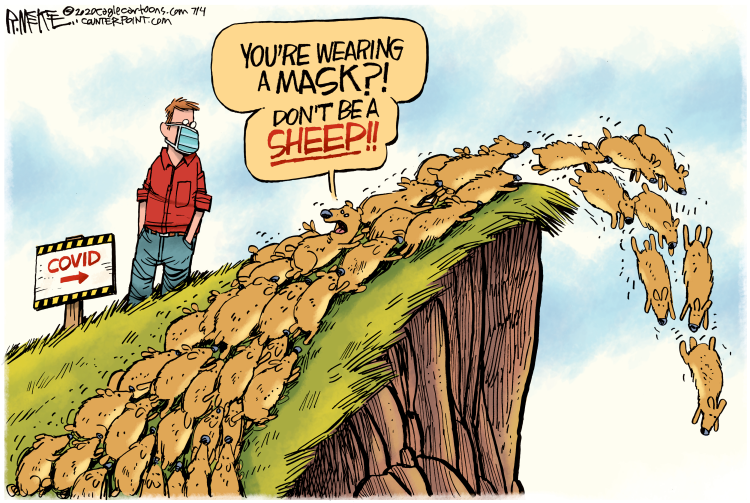
Cartoon – Sheep will be Sheep

Covid Lemmings

Cartoon – Talk About Super Spreaders

6-02 cartoon | Cartoons | heraldandnews.com

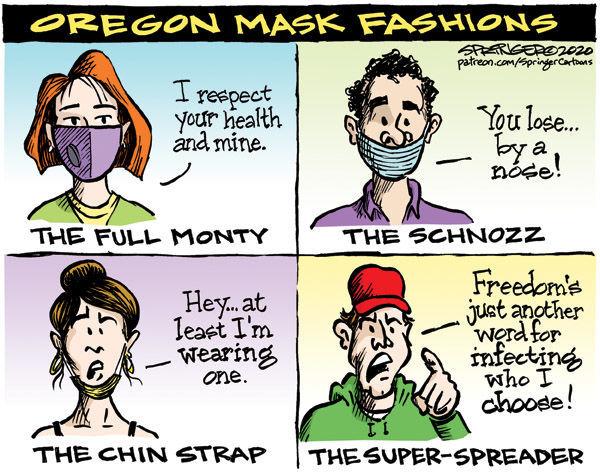
Cartoon – Coronavirus Mask Fashions

5-27 cartoon | Cartoons | heraldandnews.com

Convalescent Plasma: The Unanswered Questions

https://www.medpagetoday.com/infectiousdisease/covid19/88264?xid=fb_o&trw=no&fbclid=IwAR0F6xiRAQ7ngBz4pNozJ2VqWm0-UJqGdlQojfOeyXbPJjbAeYtGL8jbAiw

“The data don’t show anything useful”

Problems with the government’s rationale for authorizing use of convalescent plasma in COVID-19 patients go far beyond the dustup over the purported 35% survival benefit cited by top officials on Sunday, numerous researchers say.

That figure quickly came under fire, leading to an apology from Commissioner Stephen Hahn, MD — but that’s not the only criticism leveled at the FDA’s analysis of the available data.

Much of it came from the Mayo Clinic and FDA expanded access program (EAP), at this point published only as a preprint manuscript. Although a large number of patients were included, the study was observational only, with no untreated control group. That makes the findings merely hypothesis-generating, and can’t offer any firm conclusions.

That’s fine for issuing an emergency use authorization (EUA), but not so much for making claims about survival benefit, independent researchers said.

“It’s not even a question of overstating,” Adam Gaffney, MD, MPH, a critical care doctor and health policy researcher at Harvard Medical School, told MedPage Today. “You can’t state much at all when you don’t have a randomized controlled trial.”

“People have made a big deal of Hahn referring to relative versus absolute risk reduction, but I think that’s less of a big deal,” Gaffney said. “The biggest problem is that the data they are citing … is not randomized. That’s the source of all the problems.”

Hahn took heat for saying that a “35% improvement in survival is a pretty substantial clinical benefit” further explaining that of “100 people who are sick with COVID-19, 35 would have been saved because of the administration of plasma.”

Critics rapidly took to Twitter, stating that the interpretation was incorrect. Hahn was referring to relative risk reduction, not absolute risk reduction. Thus, calculating the number of lives saved — which isn’t something experts recommend doing based on observational data in the first place — would have translated to somewhere more in the ballpark of 5 out of 100.

Moreover, the “risk reduction” came from a comparison of patients treated with high-titer plasma versus those receiving lower-titer preparations. The study offered no basis for concluding how many patients may have been “saved” relative to standard care.

And the 35% reduction in that analysis was for 7-day mortality; the relative reduction at 30 days was only 23%.

Hahn’s recital of the 35% figure “was just PART of the error,” tweeted Vinay Prasad, MD, MPH, of the University of California San Francisco. “The entire comparison is flawed. It is not a suitable control. The data don’t show anything useful.”

“The much broader problem here is the lack of commitment to performing large, national randomized controlled trials,” Gaffney said. “We could have done it for convalescent plasma. Instead, we did the EAP. I understand why people wanted it, but now we don’t know [if convalescent plasma works]. We have a question mark instead of a period.”

Undermining Trust in FDA?

Critics have charged that serious mistakes like Hahn’s misstatement could undermine FDA’s credibility, especially as it faces challenging decisions about potentially approving a vaccine this fall.

“This is playing out in the context of a hyper-politicized moment,” Gaffney said. “It behooves everyone to be extremely cautious in speaking about these things to avoid the appearance of politicization.”

On CBS This Morning on Tuesday, Hahn addressed concerns about politicization by offering reassurance to the “American people that this decision was made based upon sound science and data.”

In response to questions about the timing of the EUA announcement — it came just a day after President Donald Trump tweeted allegations that the “deep state” was holding back access to COVID-19 treatments with Hahn’s Twitter handle cited, and a day before the Republican National Convention got underway — Hahn said the agency had been working on the application for 3 or 4 weeks and was waiting on additional validation data, which were received at the end of last week and over the weekend.

“We’re going to continue to get data and as we’ve done with any other authorization, we will update that decision as new data come,” Hahn said on the news program. His agency initially issued an EUA for hydroxychloroquine, for instance, but later revoked it when the negative randomized trial data became available.

Lack of Access to FDA’s Data Review

Whether the public will ever see the full convalescent plasma data underlying the EUA is another matter. The “Clinical Memorandum” issued as the evidence behind the FDA’s decision glossed over the statistical analysis conducted by the agency; in particular, it made no mention of the 35% relative reduction in deaths.

Another problem with that is the 35% figure’s source isn’t fully clear. Although the EAP preprint manuscript is the most obvious source, Gaffney noted that HHS Secretary Alex Azar said it referred to a subgroup of patients under age 80 who were not on a ventilator. That is not found in the publicly available data. He also pointed to a tweet by FDA spokesperson Emily Miller that contains an agency slide showing a 37% reduction in mortality for non-intubated patients age 80 or under treated within 72 hours who got high-titer convalescent plasma, compared with low-titer product. Neither of those figures is reflected in the EAP manuscript.

The FDA did not return a request by MedPage Today for the full summary of data reviewed by FDA and any independent statistical analysis done by the agency.

Shmuel Shoham, MD, of Johns Hopkins University in Baltimore, said during a press briefing organized by the Infectious Diseases Society of America that “enormous amounts of data have been generated” from the EAP, in which more than 70,000 patients have been treated.

“Some data have been reported in articles and at meetings, but that’s only part of what the FDA — this is their program — has access to,” he said. “The stuff in the public domain is only a fraction of the data they have collected.”

Shoham is on the scientific advisory board of the EAP and is involved in two convalescent plasma clinical trials at Johns Hopkins.

Gaffney said Mayo researchers and FDA reviewers have noted that physicians were blinded to the dose of antibody given in plasma infusions, which he described as a “pseudo-randomization effect. We could use that to make more causal inferences about the effectiveness of antibody titers.”

However, he said there were some significant differences between those who received high-titer versus low-titer antibody, including differences in P-to-F ratio (a measure of inhaled oxygen to blood oxygen) and in those with five or more severe risk factors, suggesting the low-titer group was sicker to begin with than the high-titer group.

Also, patients in the EAP received a variety of other treatments: about half got steroids and 40% were given remdesivir.

“This is why we do randomized controlled trials,” Gaffney said. “Without them it’s very difficult to ensure that the effect you see is the result of the drug, and not the result of patient characteristics.”

Is an Answer Forthcoming?

Several randomized controlled trials of convalescent plasma are underway in the U.S., but the big concern is that wider access to convalescent plasma will limit enrollment. Will clinicians recommend that their patients enroll in a trial in which they might receive placebo? Will patients agree?

For the Hopkins studies, the prevention trial has enrolled 25 people out of a goal of 500, and its outpatient trial has enrolled 50 people of its 600-patient goal.

Liise-anne Pirofski, MD, of Montefiore Medical Center in New York, started a study at the end of April, looking to enroll 300 people. She said the team enrolled the first 150 people quickly, but “then the pandemic began to wane in New York.” With subsequent funding from the NIH, the trial has managed to enroll 190 patients, and has now expanded to four additional sites: New York University, Yale, the University of Miami, and the University of Texas Houston.

Clifton Callaway, MD, PhD, of the University of Pittsburgh Medical Center and lead investigator on the C3PO trial looking at outpatient convalescent plasma, said he hopes the EUA doesn’t discourage participation.

“To the contrary, I believe it should reassure persons considering participation that the FDA feels that convalescent plasma is safe and potentially useful and that the FDA specifically comments: ‘Current data suggest the largest clinical benefit is associated with high-titer units of CCP administered early in the course of disease.’ Giving high-titer convalescent plasma earlier (before you are sick enough to be in the hospital) is exactly what C3PO is testing.”

In addition to determining whether earlier or prophylactic treatment works, Shoham said other unanswered questions include identifying whether other components in plasma are useful therapies and whether low-titer plasma can work at all.

“What everyone agrees on is that the gaps in knowledge that exist can best be addressed by high-quality randomized controlled trials,” he said.

Pirofski said the science and data should be the focus, “rather than the decision and what drove the decision…. I don’t think anyone knows what drove that decision other than the people in that room. Hopefully they know.”