Questioning the motives behind UnitedHealth Group (UHG)’s acquisition of Change Healthcare

https://mailchi.mp/4b683d764cf3/the-weekly-gist-november-18-2022?e=d1e747d2d8
UHG closed its $13B acquisition of data analytics company Change in early October, just weeks after the Justice Department failed in its bid to block the sale on antitrust grounds. In court proceedings, UHG denied it intended to use Change data to give its insurance arm, UnitedHealthcare, a competitive advantage against the rival insurers who use Change as an electronic data interchange clearinghouse.

But a new ProPublica report highlights how communications between UHG and consulting firm McKinsey & Co. point to this potential data advantage as one of the clear upsides from acquiring Change. The McKinsey report was explicitly dismissed by the US District Court judge who, in his ruling in UHG’s favor, was persuaded by testimony from senior executives and evidence of UHG’s history of maintaining internal data firewalls.

The Gist: UHG has a longstanding business interest in maintaining the trust of rival insurers that use its data analytics unit, OptumInsight. Voluntary and internally imposed firewalls between the UHG’s insurance arm and its other businesses are key to maintaining this trust. Although Justice Department lawyers could not provide convincing evidence that UHG has or intends to breach its firewalls, there is still reason to monitor any such activity closely. 

The failure of the McKinsey report to sway the court against the deal illustrates how difficult it is for the Justice Department to challenge vertical mergers, even when there is compelling evidence that such deals may impact competition.

Agents and brokers for Medicare Advantage plans using deceptive marketing tactics

https://mailchi.mp/cfd0577540a3/the-weekly-gist-november-11-2022?e=d1e747d2d8

 In their latest article scrutinizing the MA program, New York Times reporters Reed Abelson and Margot Sanger-Katz highlight MA marketing practices brought to light in a recent report from the Senate Finance Committee. Complaints to the Centers for Medicare and Medicaid Services (CMS) about MA marketing more than doubled from 2020 to 2021, as agents and brokers took advantage of oversight rules relaxed during the Trump administration. Some of the most egregious alleged abuses include agents switching seniors into new plans without their consent and exploiting individuals with cognitive impairments.

The Gist: Media interest is finally catching up to the building legislative and regulatory pressure on Medicare Advantage. While earlier reporting has highlighted how plans can inflate payments from Medicare, this new story shows how the process of selecting a plan can be fraught for the seniors enrolled. 

Plan design is confusing even for industry insiders, so it is no surprise that seniors might find themselves ‘choosing’ plans that omit key providers, or even drug coverage they already rely on, particularly after being badgered or misled by agents and brokers.

Many of the regulatory fixes highlighted in the report can be implemented directly by CMS, but insurers, who remember the managed care backlash of the 90s, shouldn’t wait to tighten the reins on questionable marketing practices, lest they risk losing public support for one of their most lucrative business lines.

Oscar Health pulls out of major Medicare Advantage (MA) markets

https://mailchi.mp/cfd0577540a3/the-weekly-gist-november-11-2022?e=d1e747d2d8

In its Q3 earnings call, Oscar Health CEO Mario Schlosser revealed that the “insurtech” has pulled out of the MA market in Texas and New York, leaving it with only one Florida-based plan. Oscar entered the MA business with high hopes in 2020, but counted fewer than 5K MA members in Q3 2022.

Although its Affordable Care Act exchange enrollment has nearly doubled since last year, now covering more than 1M lives, Oscar is still struggling with high medical loss ratios, which have kept it from turning a profit. The company’s stock price is at an all-time low, having declined over 90 percent from its peak, shortly after its 2021 IPO.

The Gist: Like Bright HealthCare before them, Oscar pulling out of MA is another sign that the chance of meaningful disruption from “insurtechs” has nearly vanished. While still privately held, Oscar achieved fame in the early 2010s through catchy marketing that targeted a young, tech-savvy client base, and its move into MA before the pandemic signaled broader ambitions.

Oscar’s travails illustrate just how hard it is to start an insurance company from scratch, even with an intriguing and comprehensive technology platform. The company proved unable to overcome its lack of market power in negotiations with providers, and faced difficulty managing a small, unstable risk pool. 

Now that more traditional insurers are improving their mobile tech interfaces and telehealth offerings, the differentiated value Oscar offers to its members has clearly diminished.

Big payers ranked by Q3 profits

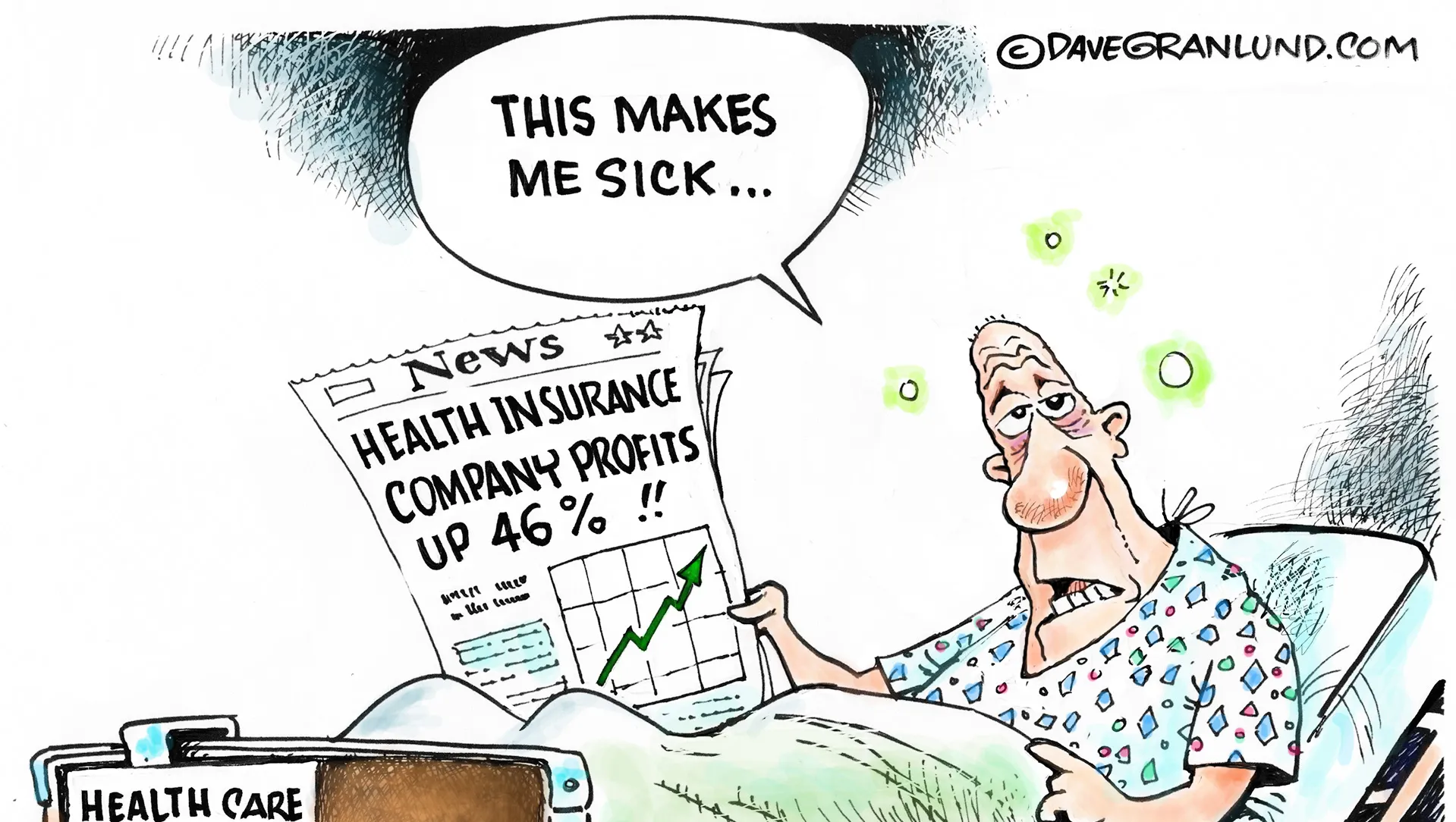
The nation’s largest payers have filed their third-quarter earnings reports, revealing which grew their profits the most year over year.

1. UnitedHealth Group: $5.3 billion
The company’s third quarter earnings increased over 28 percent year over year. Total net earnings in 2022 are $15.7 billion, an increase of 16.2 percent from $13.5 billion in 2021.

2. Cigna: $2.8 billion
The company’s third quarter earnings increased over 70 percent year over year. Total net earnings in 2022 are $5.5 billion, an increase of over 29 percent from $4.2 billion in 2021.

3. Elevance Health: $1.6 billion
The company’s third quarter earnings increased over 7 percent year over year. Total net earnings in 2022 are $5.06 billion, an increase of nearly 2 percent from $5 billion in 2021.

4. Humana: $1.2 billion
The company’s third quarter earnings decreased over 21 percent year over year. Total net earnings in 2022 are $2.8 billion, a decrease of over 4 percent from $2.9 billion in 2021.

5. Centene: $738 million
The company’s third quarter earnings increased over 26 percent year over year. Total net earnings in 2022 are $1.4 billion, an increase of over 89 percent from $748 million in 2021.

6. CVS Health: $3.4 billion losses
The company’s third quarter losses are attributable to an opioid legal settlement. Total net earnings in 2022 are $1.9 billion, a decrease of over 71 percent from $6.6 billion in 2021.

Pennsylvania hospital group to stop accepting Aetna insurance next year

Allentown, Pa.-based Lehigh Valley Health Network, which operates 13 hospitals and numerous care sites in Eastern Pennsylvania, will largely stop accepting Aetna insurance in 2023, Morning Call reported Nov. 10.

The move will be effective from March 13, LVHN said in a letter to employees. It comes after years of Aetna refusing to pay for care or delaying care for patients, the health group claimed.

LVHN, which has contracted with Aetna for 20 years, has been in dispute with the insurance company before, the report said. Back in 2000, the hospital group threatened to cut ties with Aetna over a dispute over care reimbursements. 

Some Aetna coverage will remain for emergency care or for serious treatments such as cancer care, according to the letter.

LVHN declined to comment to Morning Call, and Aetna could not be reached, the report said.

More details on the story, which comes at a time when people are enrolling in new healthcare plans, can be found here.

The ethics and legality of private equity (PE) once again in the spotlight

https://mailchi.mp/46ca38d3d25e/the-weekly-gist-november-4-2022?e=d1e747d2d8

 In a recent STAT News article, reporters Tara Bannow and Bob Herman took an in-depth look at private-equity firm Welsh, Carson, Anderson & Stowe, examining the performance of four of its healthcare portfolio companies. They show how the firm’s A-list partners, clients, and board members have promoted controversial business practices—often at the expense of publicly funded healthcare programs—that conflict with its well-curated public image.

The Gist: This article emphasizes how the complex and opaque regulatory structure of American healthcare allows motivated parties like PE firms to find technically legal, though ethically suspect, business models, which can easily tip over into outright illegality.

It highlights the “revolving door” flow of executives between industry and government, which allows investment firms to play a long game by actively shaping the regulatory landscape and lobbying to create business opportunities where none previously existed. Justified backlash at “gotcha” business models and profit-seeking at the expense of vulnerable patients may swamp any positive contribution that PE investment and rollups may make to the business of healthcare.

Health systems suffer while payer profits soar

Large health systems are reporting big losses this year while insurers continue to turn billion-dollar profits.

Humana reported $1.2 billion in third quarter profits, a slight drop from the same period last year. The company has focused on regaining Medicare Advantage market share and increased quarterly revenues 10.2 percent year over year.

Cigna’s third quarter profits jumped 70 percent year over year, hitting $2.8 billion. The company reported $45.3 billion in third quarter revenues and raised its annual earnings outlook based on the results. The company now projects $179 billion for full year 2022 adjusted revenue.

CVS Health also beat investor expectations in the third quarter and raised its earnings outlook. The company’s third quarter revenue jumped almost 10 percent year over year to $81.2 billion, although it reported $3.4 billion in losses after agreeing to pay into a $5 billion global opioid lawsuit settlement over 10 years.

At the same time, health systems are reporting multimillion and even billion-dollar losses. Chicago-based CommonSpirit Health reported $1.3 billion operating loss for the 12-months end on June 30. Ascension, based in St. Louis, also reported a $1.8 billion loss for the fiscal year’s end in June.

Community Health System reported a $42 million net loss for the third quarter in October and both Dallas-based Tenet Healthcare and Nashville, Tenn.-based HCA Healthcare reported more than 50 percent drops in quarterly net income from 2021 to 2022.

The profitability mismatch between the nation’s largest payers and health systems of all sizes will be front and center during contract negotiations in the coming year. There have already been high profile contract impasses between insurers and large systems, with some leading to contract termination.

The next health care wars are about costs

All signs point to a crushing surge in health care costs for patients and employers next year — and that means health care industry groups are about to brawl over who pays the price.

Why it matters: The surge could build pressure on Congress to stop ignoring the underlying costs that make care increasingly unaffordable for everyday Americans — and make billions for health care companies.

[This special report kicks off a series to introduce our new, Congress-focused Axios Pro: Health Care, coming Nov. 14.]

  • This year’s Democratic legislation allowing Medicare to negotiate drug prices was a rare case of addressing costs amid intense drug industry lobbying against it. Even so, it was a watered down version of the original proposal.
  • But the drug industry isn’t alone in its willingness to fight to maintain the status quo, and that fight frequently pits one industry group against another.

Where it stands: Even insured Americans are struggling to afford their care, the inevitable result of years of cost-shifting by employers and insurers onto patients through higher premiums, deductibles and other out-of-pocket costs.

  • But employers are now struggling to attract and retain workers, and forcing their employees to shoulder even more costs seems like a less viable option.
  • Tougher economic times make patients more cost-sensitive, putting families in a bind if they get sick.
  • Rising medical debt, increased price transparency and questionable debt collection practices have rubbed some of the good-guy sheen off of hospitals and providers.
  • All of this is coming to a boiling point. The question isn’t whether, but when.

Yes, but: Don’t underestimate Washington’s ability to have a completely underwhelming response to the problem, or one that just kicks the can down the road — or to just not respond at all.

Between the lines: If you look closely, the usual partisan battle lines are changing.

  • The GOP’s criticism of Democrats’ drug pricing law is nothing like the party’s outcry over the Affordable Care Act, and no one seriously thinks the party will make a real attempt to repeal it.
  • One of the most meaningful health reforms passed in recent years was a bipartisan ban on surprise billing, which may provide a more modern template for health care policy fights.
  • Surprise medical bills divided lawmakers into two teams, but it wasn’t Democrats vs. Republicans; it was those who supported the insurer-backed reform plan vs. the hospital and provider-backed one. This fight continues today — in court.

The bottom line: Someone is going to have to pay for the coming cost surge, whether that’s patients, taxpayers, employers or the health care companies profiting off of the system. Each industry group is fighting like hell to make sure it isn’t them.