Tightening the Rules Around Short-Term Health Insurance Plans Won’t Lead to More People Going Without Insurance

Short-term, limited-duration insurance (STLDI) plans are exempt from the Affordable Care Act’s (ACA) essential benefit coverage requirements and from prohibitions on medical underwriting.

This means that consumers with preexisting conditions can be denied coverage and anyone who purchases such a plan may lack coverage for key services.

In August 2018, under the Trump administration, the U.S. Department of Health and Human Services revised the definition of short-term plans to include coverage with an initial term of less than 12 months that could be renewed for up to 36 months. While the purported goal of this change was to increase coverage and reduce uninsured rates, our analysis indicates that it did not accomplish this: coverage did not increase and the uninsured rate did not drop.

In July 2023, the Biden administration issued a notice to limit the initial duration of short-term plans to three months, with an option to renew for one additional month. This change was intended to ensure that people purchasing insurance coverage have meaningful protection and to preserve the preexisting condition protections in the ACA. 

Critics feared and some cost estimates suggested that tightening the STLDI rules could leave many without any coverage at all.

In 2019, the Congressional Budget Office (CBO), using its forecast model (data were not yet available), estimated that 1.5 million people would purchase short-term plans and that 500,000 would gain coverage (relative to being uninsured). Our analysis suggests that these forecasts substantially overstated the effects of the rule change; far fewer people enrolled in STLDI plans and the enrollment that did occur was from people moving off marketplace coverage.

There is no evidence that the number of uninsured people declined because these plans became available.

Using data from the American Community Survey and marketplace enrollment from the Centers for Medicare and Medicaid Services (CMS), we assessed whether the loosening of STLDI regulations (under the Trump administration) led to increased enrollment in off-marketplace nongroup coverage in states that permitted sales compared to those that did not. Plans sold off the marketplace include STLDI as well as ACA-compliant plans, grandfathered coverage, health care sharing ministries, and fixed indemnity plans. Next, we looked to see whether the Trump-era regulations increased nongroup insurance coverage altogether (including marketplace coverage) in these states. Finally, we looked to see whether the broader availability of STLDI was associated with lower uninsured rates. We examined coverage patterns for adults ages 26 to 64 and then focused on young men ages 26 to 35, who may be most sensitive to the presence of regulations similar to those in the ACA because they are less likely to have preexisting conditions or to seek comprehensive coverage.

In 2017, 2.6 million adults ages 26 to 64, about 1.6 percent of that population, purchased private nongroup insurance outside the marketplace. By 2020, about 270,000 more people were enrolled in off-marketplace nongroup plans, across all states, than had been in 2017. There was a larger increase in off-marketplace nongroup enrollment among all adults and among young adults (we cannot separate young men in the CMS data) in states that permitted the sale of STLDI coverage, compared to those that prohibited it. This is consistent with the evidence of growth in sales of these plans. Across all states, about 160,000 more young adults, ages 26 to 34, held off-marketplace nongroup coverage in 2020 than in 2017.

The ACS data show that off-marketplace plans largely substituted for marketplace plans in states that permitted the sale of STLDI. Patterns of enrollment in nongroup plans overall were very similar in states with and without STLDI plans available for purchase over this period. While nongroup coverage was consistently more popular in states with no restrictions, between 2017 and 2020 enrollment in nongroup plans declined slightly more in states where STLDI plans were available for purchase than in those where they were not. The same pattern of marginally greater declines held for young men (and young adults) in states where STLDI plans were available.

Nongroup coverage was slightly higher in states where STLDI plans were available for sale, but the overall uninsured rate is much higher in these states, primarily because many did not expand Medicaid eligibility.

The gap in uninsured rates between states with STLDI plans available and those in which they were not available widened through 2018, narrowed slightly in 2019, and rose again in 2020. Patterns among young men were similar.

The lack of reliable information on STLDI plans and the small size of the market make it difficult to draw strong inferences about how changes in regulations affected participation. Nonetheless, by comparing states where the 2018 regulatory changes took effect and those where they did not, we are able to rule out any notable effects. A modest number of people — no more than one-fifth of the 1.5 million the CBO projected — are likely to have enrolled in STLDI plans that became available after the Trump administration’s regulatory change. This enrollment mainly appears to have displaced marketplace coverage.

There is no evidence that the broader availability of STLDI plans had any meaningful effect on nongroup coverage in general or on uninsurance, either in the full population or among young men.

This suggests that the Biden administration’s proposed tightening of STLDI is unlikely to have substantial negative effects on nongroup coverage or uninsurance. Instead, limiting STLDI will likely strengthen the health insurance marketplaces that offer reliable, comprehensive nongroup coverage.


For Healthcare, the Debt Limit and Possible Shutdown Further a Shift away from its Status Quo

This week, all eyes will be on the U.S. Congress as the clock ticks toward a potential government shutdown. Whether lawmakers reach agreement on a continuing resolution to extend funding for30 to 60 days or the government shuts down at midnight this Saturday, it will have direct negative impact on consumer activities and spending in healthcare.

Background:

A shutdown alone is not apocalyptic for consumers: they’ve weathered 20 shutdowns averaging 8 days each since 1976 and recovered productivity shortfalls within 3-6 months. What’s complicating and most problematic for healthcare is its concurrence with equally threatening events and trends inside and outside healthcare:

  • The resumption of Student Loan debt payments starting in October 1 impacting 900,000 Americans– 90% say they can’t!
  • The probability the Federal Reserve will increase its federal borrowing rate by 25 basis points to 5.50 thus increasing interest costs and consumer prices.
  • The slowdown in GDP growth and increase in fuel costs projected by economists and regulators.
  • Increased workforce-management tension resulting in strikes, walkouts and slowdowns in labor-intense settings like auto manufacturing, nursing homes and hospitals.
  • Medical inflation: technological advancements, increased demand, rising drug prices, expensive medical equipment, and increased administrative costs are contributors. According to the U.S. Bureau of Labor Statistics, prices for medical care are 5,274.47% higher in 2023 vs. 1935 (a $52,744.67 difference in value). Between 1935 and 2023, medical care experienced an average inflation rate of 4.63% per year, but in that period, working-age consumers who are privately insured paid a disproportionate and growing share projected to exceed 10% in 2023.

The health system’s economics are partially protected from shutdowns since funding for the Medicare and Medicaid is somewhat protected. That’s the status quo.

But the confluence of growing bipartisan Congressional antipathy toward the industry vis a vis regulatory reforms (i.e. price transparency, site neutral payments, DOJ-FTC consolidation constraints et al), high profile congressional investigations (i.e. PBMs and drug prices, role of private equity ownership), administrative orders from the White House and Governors (i.e.medical debt, value initiatives, organ procurement et al) and negative publicity challenging community benefits, CEO compensation and fraudulent activities erode the industry’s good will and expose it to unprecedented consumer risks.

Evidence in support of this assessment is substantial as illustrated in the sections that follow. There are no easy solutions. The U.S. health industry status quo is a B2B2P2C (business to business to physician to consumer) industry in which most decisions impacting what consumers ultimately spend for healthcare products and services are made for them, not by them. The direct costs associated with supply chain, technologies, facilities and R&D are closely guarded secrets. Indirect costs, administrative overhead, off balance sheet activities, partnerships and alliances even more.

What’s clear is that every sector in healthcare will be subject to scrutiny through an uncomfortable lens—the consumer. Prices matter. Service matters. Integrity matters. Transparency matters. Ownership matters. Purpose matters. And whether accurate or not, fair or not, comfortable or not, information accessible to consumers is readily accessible.

The shutdown over the debt limit might happen or be diverted. What will not be diverted is growing discontent with the medical system that the majority of consumers believe wasteful, expensive and self-serving.  How the status quo is impacted is anyone’s guess, but it’s a good bet its future is not a cut-and-paste version of its past.

Ryder Cup Lessons for Team USA Healthcare

Saturday, Congress voted overwhelming (House 335-91, Senate 88-9) to keep the government funded until Nov. 17 at 2023 levels. No surprise.  Congress is supposed to pass all 12 appropriations bills before the start of each fiscal year but has done that 4 times since 1970—the last in 1997. So, while this chess game plays out, the health system will soldier on against growing recognition it needs fixing.

In Wednesday night’s debate, GOP Presidential aspirant Nicki Haley was asked what she would do to address the spike in personal bankruptcies due to medical debt. Her reply:

“We will break all of it [down], from the insurance company, to the hospitals, to the doctors’ offices, to the PBMs [pharmacy benefit managers], to the pharmaceutical companies. We will make it all transparent because when you do that, you will realize that’s what the problem is…we need to bring competition back into the healthcare space by eliminating certificate of need systems… Once we give the patient the ability to decide their healthcare, deciding which plan they want, that is when we will see magic happen, but we’re going to have to make every part of the industry open up and show us where their warts are because they all have them”

It’s a sentiment widely held across partisan aisles and in varied degrees among taxpayers, employers and beyond. It’s a system flaw and each sector is complicit.

What seems improbable is a solution that rises above the politics of healthcare where who wins and loses is more important than the solutions themselves.

Perhaps as improbable as the European team’s dominating performance in the 44th Ryder Cup Championship played in Rome last week especially given pre-tournament hype about the US team.

While in Rome last week, I queried hotel employees, restaurant and coffee shop owners, taxi drivers and locals at the tournament about the Italian health system. I saw no outdoor signage for hospitals and clinics nor TV ads for prescriptions and OTC remedies. Its pharmacies, clinics and hospitals are non-descript, modest and understated. Yet groups like the World Health Organization (WHO) and the Organization for Economic Cooperation Development (OECD) rank Servizio Sanitario Nazionale (SSN), the national system authorized in December 1978, in the top 10 in the world (The WHO ranks it second overall behind France).

“It covers all Italian citizens and legal foreign residents providing a full range of healthcare services with a free choice of providers. The service is free of charge at the point of service and is guided by the principles of universal coverage, solidarity, human dignity, and health. In principle, it serves as Italy’s public healthcare system.” Like U.S. ratings for hospitals, rankings for the Italian system vary but consistently place it in the top 15 based on methodologies comparing access, quality, and affordability.

The U.S., by contrast, ranks only first in certain high-end specialties and last among developed systems in access and affordability.

Like many systems of the world, SSN is governed by a national authority that sets operating principles and objectives administered thru 19 regions and two provinces that deliver health services under an appointed general manager. Each has significant independence and the flexibility to determine its own priorities and goals, and each is capitated based on a federal formula reflecting the unique needs and expected costs for that population’s health. 

It is funded through national and regional taxes, supplemented by private expenditure and insurance plans and regions are allowed to generate their own additional revenue to meet their needs. 74% of funding is public; 26% is private composed primarily of consumer out-of-pocket costs. By contrast, the U.S. system’s funding is 49% public (Medicare, Medicaid et al), 24% private (employer-based, misc.) and 27% OOP by consumers.

Italians enjoy the 6th highest life expectancy in the world, as well as very low levels of infant mortality. It’s not a perfect system: 10% of the population choose private insurance coverage to get access to care quicker along with dental care and other benefits. Its facilities are older, pharmacies small with limited hours and hospitals non-descript.

But Italians seem satisfied with their system reasoning it a right, not a privilege, and its absence from daily news critiques a non-concern.

Issues confronting its system—like caring for its elderly population in tandem with declining population growth, modernizing its emergency services and improving its preventive health programs are understood but not debilitating in a country one-fifth the size of the U.S. population.

My take:

Italy spends 9% of its overall GDP on its health system; the $4.6 trillion U.S spends 18% in its GDP on healthcare, and outcomes are comparable.  Our’s is better known but their’s appears functional and in many ways better.

Should the U.S.copy and paste the Italian system as its own? No. Our societies, social determinants and expectations vary widely. Might the U.S. health system learn from countries like Italy? Yes.

Questions like these merit consideration:

Might the U.S. system perform better if states had more authority and accountability for Medicare, CMS, Veterans’ health et al?

Might global budgets for states be an answer?

Might more spending on public health and social services be the answer to reduced costs and demand?

Might strict primary care gatekeeping be an answer to specialty and hospital care?

Might private insurance be unnecessary to a majority satisfied with a public system?

Might prices for prescription drugs, hospital services and insurance premiums be regulated or advertising limited?

Might employers play an expanded role in the system’s accountability?

Can we afford the system long-term, given other social needs in a changing global market?

Comparisons are constructive for insights to be learned. It’s true in healthcare and professional golf. The European team was better prepared for the Ryder Cup competition. From changes to the format of the matches, to pin placements and second shot distances requiring precision from 180-200 yards out on approach shots: advantage Europe. Still, it was execution as a team that made the difference in its dominating 16 1/2- 11 1/2 win —not the celebrity of any member.

The time to ask and answer tough questions about the sustainability of the U.S. system and chart a path forward. A prepared, selfless effort by a cross-sector Team Healthcare USA is our system’s most urgent need. No single sector has all the answers, and all are at risk of losing.

Team USA lost the Ryder Cup because it was out-performed by Team Europe: its data, preparation and teamwork made the difference.

Today, there is no Team Healthcare USA: each sector has its stars but winning the competition for the health and wellbeing of the U.S. populations requires more.

Do We Still Care About the Uninsured?

Were you better off in 2022 than you were in 2017? I was for a lot of reasons. One thing that didn’t change over those five years, though, was my health insurance status. I had health insurance in 2017, and I had health insurance in 2022. And I still have health insurance today.

So do most Americans. In fact, according to the U.S. Census Bureau’s latest report on health insurance coverage in the U.S., 92.1% of us had some form of health insurance in 2022. That’s about 304 million people, per the report.

Conversely, 7.9% of us were uninsured last year. That’s a little more than 25.9 million people. That’s down from 8.3% and about 27.2 million people in 2021.

Some may see the decrease in both the percentage and number of uninsured as good news. And it is. Any time the uninsured figures go down, that’s good.

The bad news is, we’re back where we were in 2017. That’s also when 7.9% of us, or about 25.6 million people, were uninsured. Five years of trying to get more people insured and nothing to show for it.

The number of people with any type of private health insurance (employer-based or direct-purchase) crept up to 216.5 million last year from 216.4 million in 2021. The number of people with any type of public health insurance (Medicare, Medicaid, etc.) rose to 119.1 million last year from 117.1 million in 2021. Both headed in the right direction but too slow to push the uninsured rate significantly down.

If we want to get serious about achieving universal coverage, let’s get serious about it. If we don’t want to get serious about it because most of us already have health insurance, the only useful purpose of the Census Bureau’s annual reports on health insurance is to show us how little we really care.

Thanks for reading.

To learn more about this topic, please read:

How Do Democrats and Republicans Rate Healthcare for 2024?

https://mailchi.mp/burroughshealthcare/april-16-9396870?e=7d3f834d2f

It feels as though November 5, 2024 is far away, but for both Democrats and Republicans, the election is now. On the issue of healthcare, the two parties’ approaches differ sharply.


Think back to the behemoth effort by Republicans to “repeal and replace” the Affordable Care Act six years ago, an effort that left them floundering for a replacement, basically empty-handed. Recall the 2022 midterms, when their candidates in 10 of the tightest House and Senate races uttered hardly a peep about healthcare.
 
That reticence stood in sharp contrast to Democrats who weren’t shy about reiterating their support for abortion rights, simultaneously trying hard to ensure that Americans understood and applauded healthcare tenets in the Inflation Reduction Act.
 
As The Hill noted in early August, sounds like the same thing is happening this time around as America barrels toward November 2024. The publication said it reached to 10 of the leading Republican candidates about their plans to reduce healthcare costs and make healthcare more affordable, and only one responded: Rep. Will Hurd (R-Texas).


Healthcare ‘A Very Big Problem’


Maybe the party thinks its supporters don’t care. But, a Pew Research poll from June showed 64% of us think healthcare affordability is a “very big problem,” superseded only by inflation. In that research, 73% of Democrats and 54% of Republicans thought so.


Chuck Coughlin, president and CEO of HighGround, an Arizona-based public affairs firm, told The Hill that the results aren’t surprising.
 
“If you’re a Republican, what are you going to talk about on healthcare?” he said.
 
Observers note that the party has homed in on COVID-lockdowns, transgender medical rights, and yes, abortion.


Republicans Champion CHOICE


There is action on this front, for in late July, House Republicans passed the CHOICE Arrangement Act. Its future with the Democratic-controlled Senate is bleak, but if Republicans triumph in the Senate and White House next year, it could advance with its focus on short-term health plans. They don’t offer the same broad ACA benefits and have a troubling list of “what we won’t cover” that feels like coverage is going backwards to some.
 

Plans won’t offer coverage for preexisting conditions, maternity care, or prescription drugs, and they can set limits on coverage. The plans will make it easier for small employers to self-insure, so they don’t have to adhere to ACA or state insurance rules.


CHOICE would let large groups come together to buy Association Health Plans, said NPR, which noted that in the past, there have been “issues” with these types of plans.
 
Insurance experts say that the act takes a swing at the very foundation of the ACA. As one analyst described it, the act intends to improve America’s healthcare “through increased reliance on the free market and decreased reliance on the federal government.”


Democrats Tout Reduce-Price Prescriptions


Meanwhile, on Aug. 29, President Joe Biden spoke proudly in The White House: “Folks, there’s a lot of really great Republicans out there. And I mean that sincerely…But we’ll stand up to the MAGA Republicans who have been trying for years to get rid of the Affordable Care Act and deny tens of millions of Americans access to quality, affordable healthcare.” 
 
Current ACA enrollment is higher than 16 million.

 
He said that Big Pharma charges Americans more than three times what other countries charge for medications. And on that date, he announced that “the (Inflation Reduction Act) law finally gave Medicare the power to negotiate lower prescription drug prices.” He wasn’t shy about saying that this happened without help from “the other team.”
 
The New York Times said it feels this push for lower healthcare costs will be the centerpiece of his re-election campaign. The announcement confirmed that his administration will negotiate to lower prices on 10 popular—and expensive drugs—that treat common chronic illnesses.


It said previous research shows that as many as 80% of Americans want the government to have the power to negotiate.


The president also said that “Next year, Medicare will select more drugs for negotiation.” He added that his administration “is cracking down on junk health insurance plans that look like they’re inexpensive but too often stick consumers with big hidden fees.” And it’s tackling the extensive problem of surprise medical bills.
 
Earlier, on August 11, Biden and fellow Democrats celebrated the first anniversary of the PACT Act, legislation that provides healthcare to veterans exposed to toxic burn pits while serving. He said more than 300,000 veterans and families have received these services, with more than 4 million screened for toxic exposure conditions.


Push for High-Deductible Plans


Republicans want to reduce risk of high-deductible plans and make them more desirable—that responsibility is on insurers. According to Politico, these plans count more than 60 million people as members, and feature low premiums and tax advantages. The party said plans will also help lower inflation when people think twice about seeking unneeded care.
 
The plans’ low monthly premiums offer comprehensive preventive care coverage: physicals, vaccinations, mammograms, and colonoscopies, and have no co-payments, Politico said. The “but” in all this is that members will pay their insurers’ negotiated rate when they’re sick, and for medicines and surgeries. Minimum deductible is $1,500 or $3,000 for families—and can be even higher.
 
Members can fund health savings accounts but can’t fund flexible spending accounts.
Proponents cite more access to care, and reduced costs due to promotion of preventive care. Nay-sayers worry about lower-income members facing costly bills due to insufficient coverage.
 

Republican Candidates Diverge on Medicaid
 

The American Hospital Association (AHA) doesn’t love these high deductible plans. It explained that members “find they can’t manage the gap between what their insurance pays and what they themselves owe as a result,” and that, AHA said, contributes to medical debt—something the association wants to change.


An Aug. 3 Opinion in JAMA Health Forum pointed out other ways the two parties diverge on healthcare. For example, the piece cited Biden’s incentives for Medicaid expansion. In contrast, Florida Governor Ron DeSantis, a Republican presidential candidate, has not worked to offer Medicaid to all lower-income residents under the ACA. Former Governor Nikki Haley of South Carolina feels the same, doing nothing. However, former New Jersey Governor Chris Christie has expanded it, as did former Vice President Mike Pence, when he governed Indiana.


Undoubtedly, as in presidential elections past, healthcare will be at least a talking point, with Democrats likely continuing to make it a central focus, as before.

California warns hospitals of tougher enforcement action for violating nurse staffing ratios

https://www.healthcarefinancenews.com/news/california-warns-hospitals-tougher-enforcement-action-violating-nurse-staffing-ratios?mkt_tok=NDIwLVlOQS0yOTIAAAGOM3hPgkuufiyi2yh9nvquSoc19gtQkW-i0sinpIHy6fnnJtHwb24wf83LZvu8YdhWRq5YF15CT7BwLlpCsupOGYHL5DrWUd4Px_21QLp7WK8

Hospitals in California are being warned not to violate state law on staffing levels or face fines. New state policy narrows the circumstances under which hospitals can claim “unpredictable circumstances” for violating the mandate.

The California Department of Public Health this week, in a notice to hospitals, warned that noncompliance can result in a $15,000 fine for a first violation and $30,000 for a second. 

The state conducts periodic, unannounced inspections to enforce compliance. 

New policy by Governor Newsom narrows the circumstances under which hospitals will not be penalized for violations due to “unpredictable circumstances,” requiring them to document efforts to maintain safe staffing and that such instances be truly unforeseen. 
 
In an advisory letter to hospitals, the public health department said, “Situations that are not considered unpredictable, unknown or uncontrollable include consistent, ongoing patterns of understaffing. Facilities are expected to maintain required nurse-to-patient ratios at all times, including but not limited to, weekends, holidays, leaves of absences, among others.”  

WHY THIS MATTERS

Minimum staffing ratios have been law in California since nurses and healthcare workers fought to pass AB 394, the nation’s first nurse-patient staffing ratio law in 1999.

In addition, SB 227, which passed in 2019, requires the state to assess administrative fines on hospitals that violate the safe staffing law. Law AB 1422 requires public comment before the public health department grants waivers to the critical care program flexibility requests. 

THE LARGER TREND

Nurse staffing ratios are controversial and California remains the only state to have enacted them.

Earlier this month, the Department of Health and Human Services proposed national minimum staffing standards for nursing homes.

study reportedly commissioned by the Centers for Medicare and Medicaid Services said there was “no single staffing level that would guarantee quality care.”

In 2010, the National Institutes of Health conducted a study comparing implications of the California staffing ratios with two other states that did not have the legislation.

The NIH looked at survey data from 22,336 hospital staff nurses in California, Pennsylvania and New Jersey in 2006 and state hospital discharge databases.
California hospital nurses cared for one less patient on average than nurses in the other states and two fewer patients in medical and surgical units, the NIH research said. 

The study found that lower ratios were associated with significantly lower mortality.  When nurses’ workloads were in line with California-mandated ratios in all three states, nurses’ burnout and job dissatisfaction were lower, and nurses reported consistently better quality of care, the NIH said.

Also, the hospital nurse staffing ratios in California were associated with better nurse retention than in the other states.
 
ON THE RECORD

“Patients in California are safer today because nurses and healthcare workers demanded that hospitals be held accountable for violating safe-staffing laws,” said Leo Pérez, RN and president of SEIU 121RN. “The COVID-19 pandemic taught us that our state’s health depends on supporting and listening to those who are on the front lines of patient care – a lesson we should never forget. Today’s action is the result of SEIU’s relentless vigilance. We applaud the step CDPH has taken to enforce laws that keep patients safe.”

An unexpected reprieve from Medicare cost growth

https://mailchi.mp/d0e838f6648b/the-weekly-gist-september-8-2023?e=d1e747d2d8

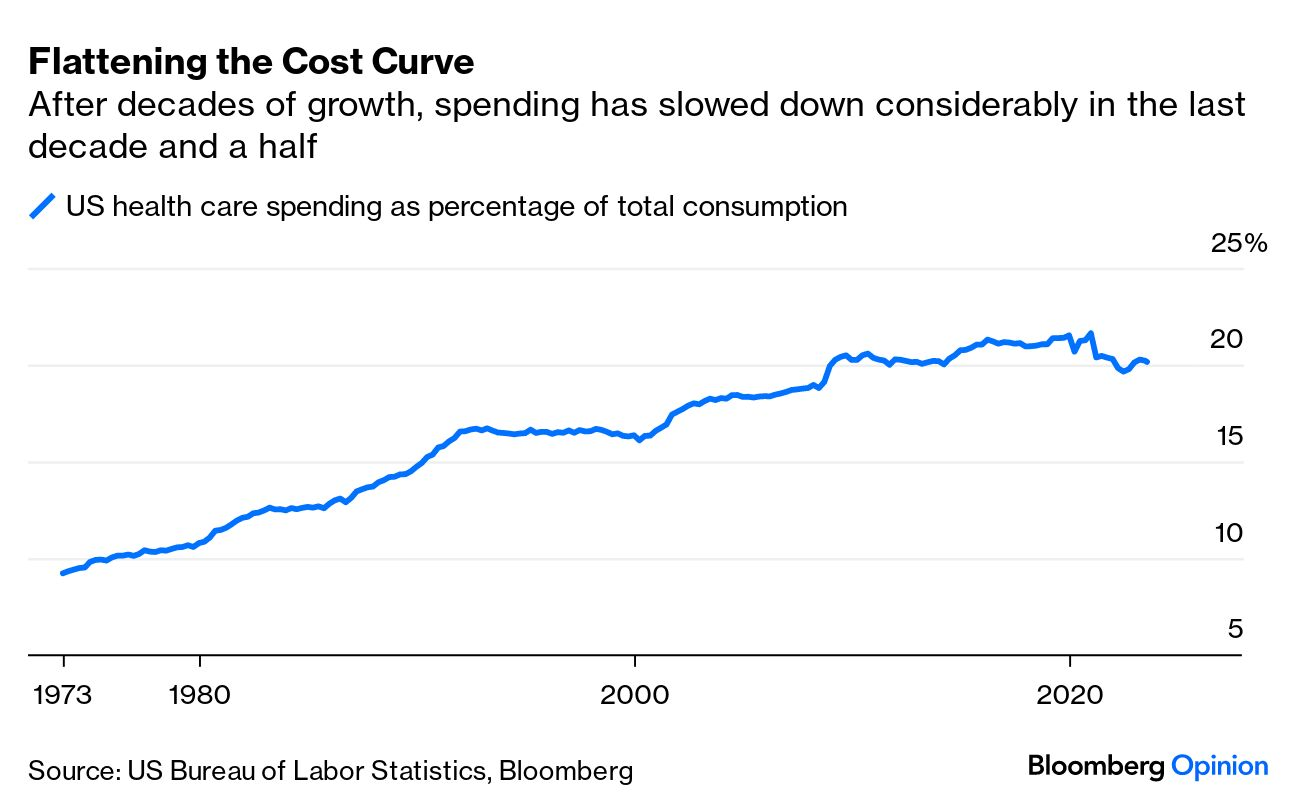
piece published this week in the New York Times documents how Medicare spending per beneficiary has flattened since the early 2010s, coming in below projections by nearly $4T. 

While the authors run through possible explanations, including changes made by the Affordable Care Act and to the Medicare Advantage program, the proliferation of effective cholesterol and blood-pressure medications, and fewer breakthroughs in new, expensive drug classes, they acknowledge that scholars have not reached a consensus on the primary drivers of this trend.

Beyond academic debate, there is also no agreement on how long the flattened spending pattern will hold—or what factors might reignite rapid cost growth.

The Gist: 

Whatever the causes of this phenomenon, it has helped avert the kind of Medicare austerity measures that dominated political debates on the program in past decades. 

We assume some of this flattening has to do with the fact that the average age of Medicare beneficiaries has dropped as Baby Boomers have entered the program in droves, given that younger beneficiaries are much less costly to insure.

 In coming decades, the average age of Medicare beneficiaries will increasealong with their care costs, and the total number of Medicare beneficiaries will continue to rise. 

By 2053, seniors will make up over 22 percent of the population and over 40 percent of the projected federal budget will be spent on programs for them.

CMS to pilot global health budgets for states

https://mailchi.mp/d0e838f6648b/the-weekly-gist-september-8-2023?e=d1e747d2d8

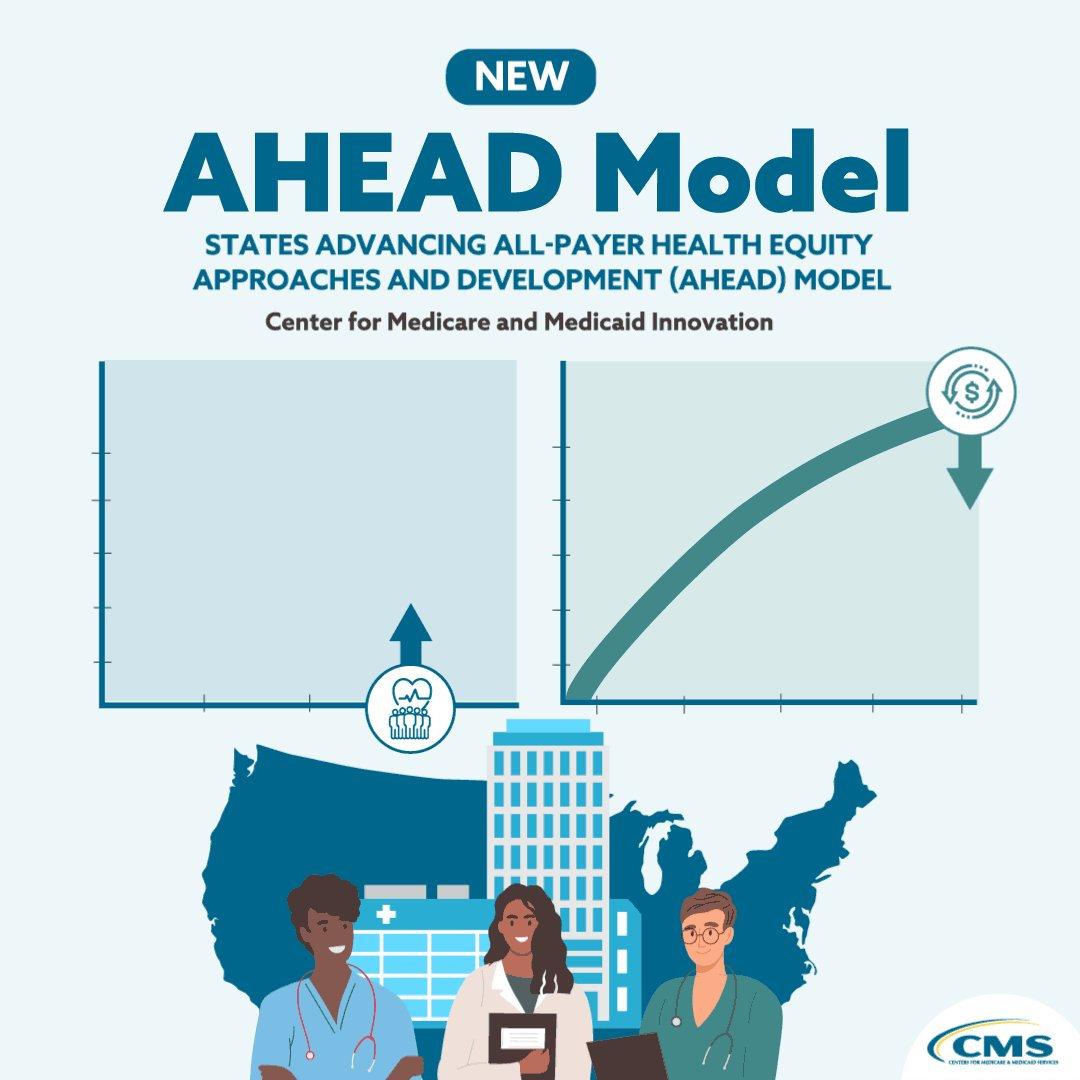
On Tuesday, CMS announced the States Advancing All-Payer Health Equity Approaches and Development (AHEAD) Model, a new payment model that will give up to eight states or sub-state regions the ability to test global hospital budgets across an 11-year period.

Participating states will assume responsibility for managing healthcare costs for traditional Medicare and Medicaid populations, while encouraging private payers to pay hospitals under a similar relationship.

Primary care practices will have the option to participate in a primary care component of the model, called Primary Care AHEAD, in which they will receive a Medicare care management fee and be required to engage in state-led Medicaid transformation initiatives.

CMS is hoping that the AHEAD model will reduce healthcare cost growth, improve population health, and reduce health outcome disparities. It builds upon existing Innovation Center state-based models, including the Maryland Total Cost of Care Model, the Vermont All-Payer Accountable Care Organization Model, and the Pennsylvania Rural Health Model, which have all shown promise in lowering Medicare spending while improving patient outcomes.

Program applications will open late this year, and the first states selected would begin a pre-implementation period in summer 2024.  

The Gist:

Shifting to a total-cost-of-care model will be a difficult undertaking for even the most motivated states. 

Though a stable annual budget may be a welcome prospect to struggling hospitals, large regional systems may balk at the idea, especially as the Maryland Hospital Association has claimed that their state’s regulated rates have lagged hospital cost inflation by 1.3 percent per year.

With the Medicare Shared Savings Program (MSSP) saving only one quarter of one percent of Medicare’s total spending in 2022, CMS has good reason to explore other ways to reduce Medicare cost growth

—but these Innovation Center models will only achieve their goals if they can first induce sufficient participation.

First ten drugs selected for Medicare’s drug price negotiation program

https://mailchi.mp/d0e838f6648b/the-weekly-gist-september-8-2023?e=d1e747d2d8

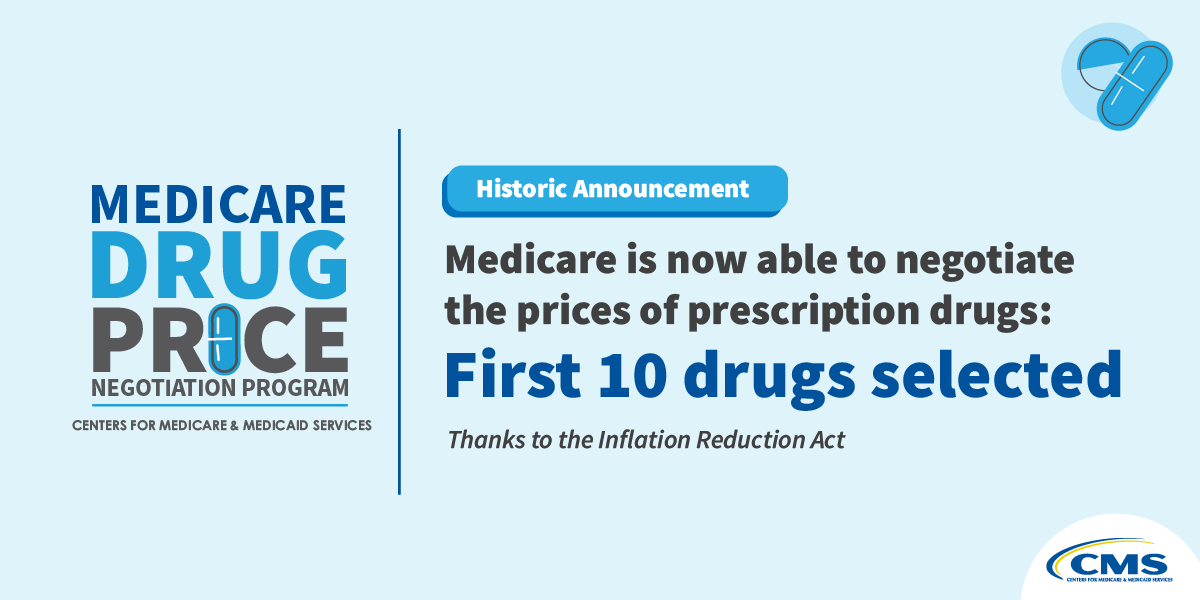
Last week, the Centers for Medicare and Medicaid Services (CMS) released the list of the first round of prescription drugs chosen for Medicare Part D price negotiations. The 2022 Inflation Reduction Act (IRA) granted CMS the authority to negotiate directly with pharmaceutical manufacturers, establishing a process that will ramp up to include 20 drugs per year and cover Part B medicines by 2029.

The majority of the initial 10 medications, including Eliquis, Jardiance, and Xarelto, are highly utilized across Medicare beneficiaries, treating mainly diabetes and cardiovascular disease. But three of the drugs (Enbrel, Imbruvica, and Stelara) are very high-cost drugs used by fewer than 50k beneficiaries to treat some cancers and autoimmune diseases.

Together the 10 drugs cost Medicare about $50B annually, comprising 20 percent of Part D spending. Drug manufacturers must now engage with CMS in a complex negotiation process, with negotiated prices scheduled to go into effect in 2026. 

The Gist:

Most of the drugs on this list are not a surprise, with the Biden administration prioritizing more common chronic disease medications, with large total spend for the program, over the most expensive drugs, many of which are exempted by the IRA’s minimum seven-year grace period for new pharmaceuticals.

However, pharmaceutical companies are threatening to derail the process before it even begins. Several companies with drugs on the list have already filed lawsuits against the government on the grounds that the entire negotiation program is unconstitutional. 

While President Biden is already touting lowering drug prices as a key plank of his reelection pitch, it will take years before these negotiations translate into lower costs for beneficiaries and reduced government spending. There also may be adverse unintended consequences, as drug companies may raise prices for commercial payers while increasing rebates to stabilize net prices, leading to higher costs for some consumers. 

Still, it’s a step in the right direction for the US, given that we pay 2.4 times more than peer countries for prescription medications.  

The Medicare Drug Pricing Program will Attract Uncomfortable Attention to the Rest of the Industry

Last Tuesday, the Center for Medicare and Medicaid Services (CMS) announced the first 10 medicines that will be subject to price negotiations with Medicare starting in 2026 per authorization in the Inflation Reduction Act (2022). It’s a big deal but far from a done deal.

Here are the 10:

  • Eliquis, for preventing strokes and blood clots, from Bristol Myers Squibb and Pfizer
  • Jardiance, for Type 2 diabetes and heart failure, from Boehringer Ingelheim and Eli Lilly
  • Xarelto, for preventing strokes and blood clots, from Johnson & Johnson
  • Januvia, for Type 2 diabetes, from Merck
  • Farxiga, for chronic kidney disease, from AstraZeneca
  • Entresto, for heart failure, from Novartis
  • Enbrel, for arthritis and other autoimmune conditions, from Amgen
  • Imbruvica, for blood cancers, from AbbVie and Johnson & Johnson
  • Stelara, for Crohn’s disease, from Johnson & Johnson
  • Fiasp and NovoLog insulin products, for diabetes, from Novo Nordisk

Notably, they include products from 10 of the biggest drug manufacturers that operate in the U.S. including 4 headquartered here (Johnson and Johnson, Merck, Lilly, Amgen) and the list covers a wide range of medical conditions that benefit from daily medications.

But only one cancer medicine was included (Johnson & Johnson and AbbVie’s Imbruvica for lymphoma) leaving cancer drugs alongside therapeutics for weight loss, Crohn’s and others to prepare for listing in 2027 or later.  

And CMS included long-acting insulins in the inaugural list naming six products manufactured by the Danish pharmaceutical giant Novo Nordisk while leaving the competing products made by J&J and others off. So, there were surprises.

To date, 8 lawsuits have been filed against the U.S. Department of Health and Human Services by drug manufacturers and the likelihood litigation will end up in the Supreme Court is high.

These cases are being brought because drug manufacturers believe government-imposed price controls are illegal. The arguments will be closely watched because they hit at a more fundamental question:

what’s the role of the federal government in making healthcare in the U.S. more affordable to more people? 

Every major sector in healthcare– hospitals, health insurers, medical device manufacturers, physician organizations, information technology companies, consultancies, advisors et al may be impacted as the $4.6 trillion industry is scrutinized more closely . All depend on its regulatory complexity to keep prices high, outsiders out and growth predictable. The pharmaceutical industry just happens to be its most visible.

The Pharmaceutical Industry

The facts are these:

  • 66% of American’s take one or more prescriptions: There were 4.73 billion prescriptions dispensed in the U.S. in 2022
  • Americans spent $633.5 billion on their medicines in 2022 and will spend $605-$635 billion in 2025.
  • This year (2023), the U.S. pharmaceutical market will account for 43.7% of the global pharmaceutical market and more than 70% of the industry’s profits.
  • 41% of Americans say they have a fair amount or a great deal of trust in pharmaceutical companies to look out for their best interests and 83% favor allowing Medicare to negotiate pricing directly with drug manufacturers (the same as Veteran’s Health does).
  • There were 1,106 COVID-19 vaccines and drugs in development as of March 18, 2023.
  • The U.S. industry employs 811,000 directly and 3.2 million indirectly including the 325,000 pharmacists who earn an average of $129,000/year and 447,000 pharm techs who earn $38,000.
  • And, in the U.S., drug companies spent $100 billion last year for R&D.

It’s a big, high-profile industry that claims 7 of the Top 10 highest paid CEOs in healthcare in its ranks, a persistent presence in social media and paid advertising for its brands and inexplicably strong influence in politics and physician treatment decisions.

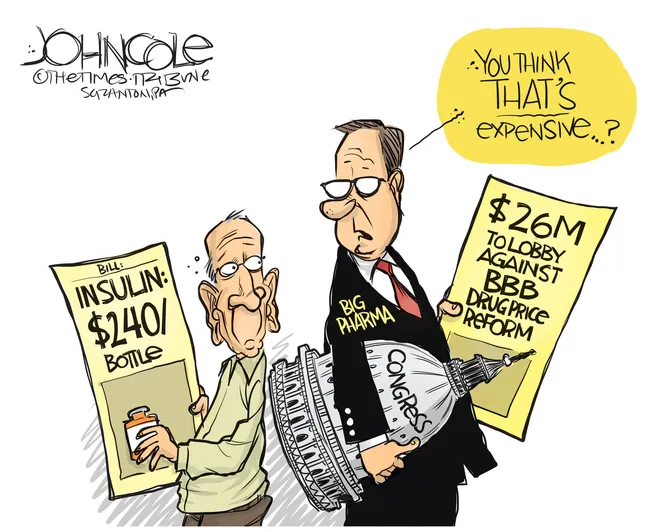
The industry is not well liked by consumers, regulators and trading partners but uses every legal lever including patents, couponing, PBM distortion, pay-to-delay tactics, biosimilar roadblocks et al to protect its shareholders’ interests. And it has been effective for its members and advisors.

My take:

It’s easy to pile-on to criticism of the industry’s opaque pricing, lack of operational transparency, inadequate capture of drug efficacy and effectiveness data and impotent punishment against its bad actors and their enablers. 

It’s clear U.S. pharma consumers fund the majority of the global industry’s profits while the rest of the world benefits.

And it’s obvious U.S. consumers think it appropriate for the federal government to step in. The tricky part is not just government-imposed price controls for a handful of drugs; it’s how far the federal government should play in other sectors prone to neglect of affordability and equitable access.

There will be lessons learned as this Inflation Reduction Act program is enacted alongside others in the bill– insulin price caps at $35/month per covered prescription, access to adult vaccines without cost-sharing, a yearly cap ($2,000 in 2025) on out-of-pocket prescription drug costs in Medicare and expansion of the low-income subsidy program under Medicare Part D to 150% of the federal poverty level starting in 2024. And since implementation of these price caps isn’t until 2026, plenty of time for all parties to negotiate, spin and adapt.

But the bigger impact of this program will be in other sectors where pricing is opaque, the public’s suspicious and valid and reliable data is readily available to challenge widely-accepted but flawed assertions about quality, value, access and outcomes. It’s highly likely hospitals will be next.

Stay tuned.