Kaiser Permanente union in California nearing strike

Dive Brief:

  • A union representing 24,000 Kaiser Permanente clinicians in California has put a pause on its 24-year partnership with management, the group said Friday.
  • Leadership of the union voted last week to move forward with a membership vote that would authorize the bargaining team to call a strike.
  • The United Nurses Associations of California/Union of Health Care Professionals said in a press release Kaiser Permanente is planning “hefty cuts” to nurse wages and benefits despite the ongoing COVID-19 pandemic and high levels of burnout among nurses.

Dive Insight:

Union activity at hospitals has been ramping up since the onset of the pandemic, as front-line healthcare workers have been stretched to the brink with full ICUs, worries of infection and sick coworkers.

Now, Kaiser Permanente nurses in California are saying they’re not being appreciated for their efforts.

“How do you tell caregivers in one breath you’re our heroes, we’re invested in you, I want to protect you, but in the next say I want to take away your wages and benefits? Even say you’re a drag on our bottom line,” Charmaine Morales, executive vice president of the union, said in a press release. “For the first time in 26 years, we could be facing a strike.”

The most recent bargaining session between the health system and the union was Sept. 10. Another one hasn’t been scheduled, despite most contracts being set to expire at the end of the month, the union said.

The labor management partnership started in the 1990s as an attempt for the union and management to share information and decision-making, the union said.

But they also said company leaders have not been invested in the agreement recently.

“Kaiser Permanente has stepped back from the principles of partnership for some time now, and they have violated the letter of our partnership agreement in the lead up to our present negotiations,” union president Denise Duncan said in the press release. “Despite that, we are here and ready to collaborate again if KP leaders find their way back to the path — where patient care is the true north in our value compass, and everything else falls in line behind that principle. Patient care is Kaiser Permanente’s core business, or at least we thought so.”

The press release cites Kaiser’s profitability, as the system’s net income was nearly $3 billion in the second quarter of this year. However, that was a decrease of more than a third from the prior-year period.

It also noted multiple lawsuits alleging Kaiser tried to game the Medicare Advantage program by submitting inaccurate diagnosis codes. The Department of Justice has joined six of those lawsuits.

Kaiser Permanente did not respond to a request for comment by time of publication.

Labor Shortage extends beyond Nursing, beyond Hospitals

https://mailchi.mp/60a059924012/the-weekly-gist-september-10-2021?e=d1e747d2d8

How Could You Be Affected by the Healthcare Labor Shortage? - Right Way  Medical

The typical media coverage of the healthcare workforce crisis often focuses on the acute shortage of hospital-based nurses. For instance, the hospital forced to close a unit as nurses, burned out after 18 months of extra shifts taking care of COVID patients, leave for lower-stress, more predictable jobs in outpatient facilities or doctors’ offices.

But we’re hearing about a reverse trend in recent conversations with health system leaders. Instead of outpatient settings benefiting from an influx of nursing talent, ambulatory leaders report that nurses are now leaving for hospital or travel nursing positions that offer higher salaries and large sign-on bonuses. That’s forcing non-hospital settings to reduce operating room and endoscopy capacity.

Nor are shortages just in the nursing workforce. One system executive lamented that they had to cancel several non-emergent cardiac surgeries, not due to nurse staffing challenges; rather, they were short on surgical technicians. “Surgical techs aren’t leaving because of COVID,” the executive shared, “they’re leaving because the labor market is so strong, and they can make the same money doing something entirely different.” 

For lower-wage workers in particular, the old value proposition of working for a health system, centered around good benefits, continuing education, and a long-term career path, isn’t providing the boost it used to. Workers are willing to trade those for improved work-life balance, predictability, and the perception of a “safer” workplace.

Stabilizing the healthcare workforce will ultimately require providers to rethink job design, the allocation of talent across settings of care, and the integration of technology in workflow. And it will require re-anchoring the work in the mission of serving the community.

But in the short term, many health systems will find themselves having to pay more to retain key workers, including but not limited to hospital nurses, to maintain patient access to care. 
 

A bidding war for critical nursing talent

https://mailchi.mp/60a059924012/the-weekly-gist-september-10-2021?e=d1e747d2d8https://mailchi.mp/60a059924012/the-weekly-gist-september-10-2021?e=d1e747d2d8

As the pandemic rages on, hospitals across the country are experiencing significant labor shortages for critical clinical roles. In the graphic above, we highlight the shortage of nursing talent, perhaps the most sought-after role for which health systems are struggling to hire.

Even before the current COVID surge, many nurses reported feeling dissatisfied or feeling burned out. In a May 2021 survey, more than one in five nurses said they were considering leaving their current jobs, citing insufficient staffing, workload, and the emotional toll of the work. Many health systems are offering lucrative incentives, such as five-figure signing bonuses, to fill immediate critical care needs, and to address the growing backlog of patients returning for delayed care.

As more nurses quit or retire from their permanent positions, health systems are being forced to fill workforce gaps by luring temporary talent at much higher costs (now cresting $8K a week to fund a single travel nurse in some parts of the country). Travel nurse demand reached an all-time high in August, up almost 40 percent from the previous peak in December 2020. As they struggle to fill essential openings, hospital leaders must also focus on keeping the current nursing staff engaged—a challenge that only gets harder as staff nurses compare their salaries to those paid to the temporary colleagues working alongside them.

Industry pushes for more time before surprise billing ban enforced

As the healthcare industry gears up to fall under the requirements of the No Surprises Act that bans balance billing, hospitals and insurers said they need more time and information to abide by the requirements.

Payers are asking for a safe harbor until 2023 calling the Jan. 1 start day is too soon for plans to determine payment amounts to out-of-network providers and as it seeks clarification on the resolution process.

Safety net hospitals represented by America’s Essential Hospitals want implementation to be delayed until six months after the public health emergency for COVID-19 ends, saying staff and resources are spread too thin dealing with the pandemic and especially the spread of the delta variant.

HHS released the first interim final rule to implement the No Surprises Act in June — one of multiple expected to be released this year — including those from the Departments of Treasury and Labor.

A major and much-debated aspect of the law is how qualifying payment amounts — the amount paid to providers who are not in network but are providing care at an in-network facility — are calculated.

Later rules are expected to provide more detail on the key issue of how the independent dispute resolution process will be conducted.

Payers and providers both argued in their comments that without more information on that process, it is hard to prepare. 

The ERISA Industry Committee, which lobbies for large employers, said that as the resolution process is developed, deviation from QPAs “should be limited to extenuating circumstances.” That’s in direct contrast to the American Hospital Association, which requested the department not overly weigh the QPA as a factor in consideration.

When Congress debated a ban on surprise billing, whether a dispute resolution process would be used or whether rates for out-of-network providers would be based on a set rate was perhaps the most hotly contested aspect. In the end, providers got the win with the arbitration clause.

In comments on the rule, both AHA and payer lobby AHIP called for a multi-stakeholder group to advise on issues such as what provisions fall under state and federal jurisdiction and other operational challenges.

The hospital lobby requested clarification on a number of aspects of the rule, such as how good faith estimates of costs should be calculated on consent forms patients may sign to waive balance billing protections and when a provider can bill a patient if their claim is denied by the plan.

In multiple instances, the group asked the department to confirm that the initial payment should not be the QPA unless both the plan and provider agree to that circumstance.

The country’s largest hospital lobby is also concerned that the act won’t do enough to ensure network adequacy from insurers and will not institute enough oversight on plans’ compliance.

AHA said it is “deeply concerned that the existing oversight mechanisms are insufficient to monitor plan and issuer behavior and a more robust structure is needed to enforce the QPA requirements.”

The Federation of American Hospitals expressed similar concerns, particular regarding “abusive plan practices” like inappropriate claims denials and downcoding. The group urged the departments “to expand their oversight of plans and issuers to prevent and address unlawful and abusive plan practices.”

AEH, meanwhile, asked for assurances that administrative burdens like the notice and consent documentation would be fairly split with insurers.

Under the rule, the QPA is to be decided by a plan’s median in-network contracted rate for a geographic area. It must have a minimum of three contracted rates to use this method. If that is not available, the payer can use an independent claims database.

FAH, in particular, asked that the rule strengthen conflict of interest regulations for these databases and have their eligibility determined by the departments instead of the insurers themselves.

AHIP’s most immediate concern is the timeline for implementation. It asked for the good faith safe harbor request to develop QPA methodologies, create the infrastructure to transmit notice and consent forms with providers and for it to receive the forthcoming information on the arbitration process.

“Health plans and issuers have responsibility for developing work streams; updating information technology; creating forms, notices, and other communications; training employees; and other operational measures necessary to effectuate obligations” in the rule, the group wrote.

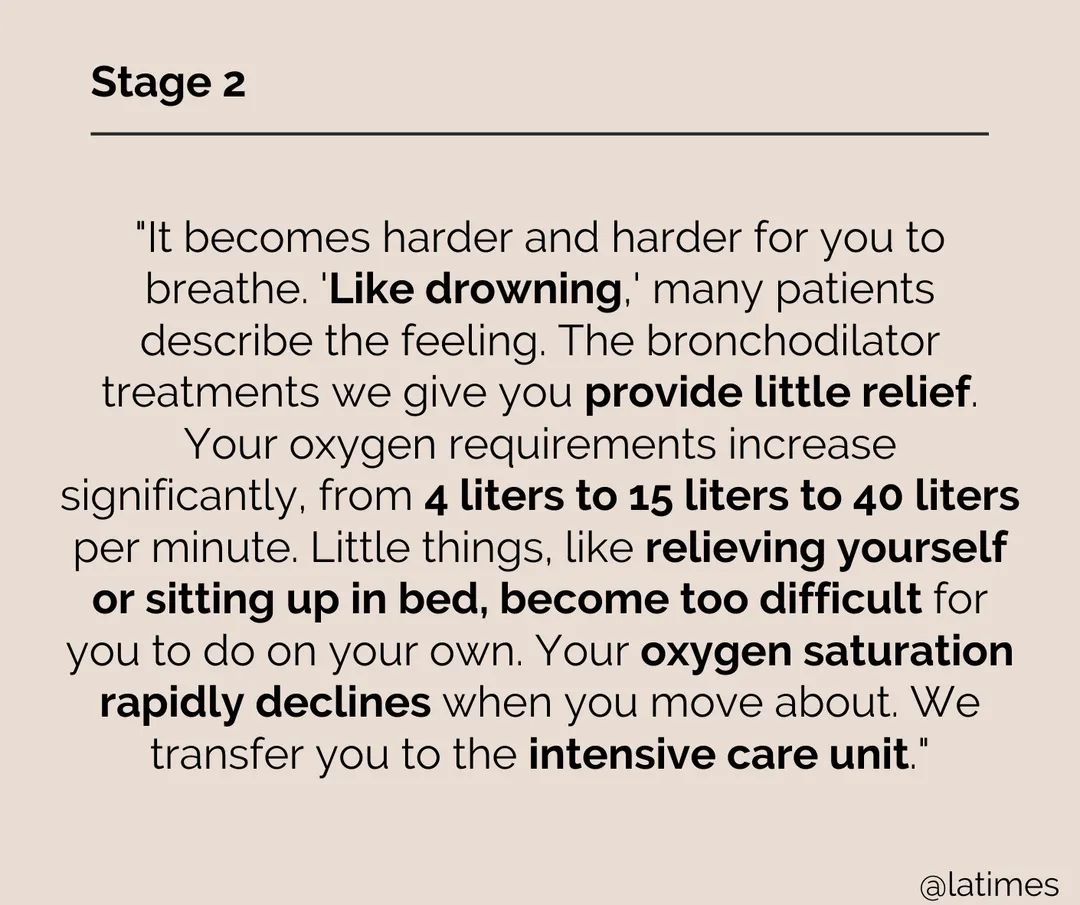
The 7 Stages of Severe Covid-19

67 financial benchmarks for health system executives

35 financial benchmarks for healthcare executives | HENRY KOTULA

Health system leaders use benchmarking as a way to determine how their organizations stack up against both local and regional peers.

Below are 67 financial benchmarks, including key ratios for health systems, as well as revenue and margin metrics, broken down by rating category.

Key balance sheet metrics, ratios:

Source: Fitch Ratings’ “2021 Median Ratios: Not-for-Profit Hospitals and Healthcare Systems” report. It was released Aug. 3. 

1. Cash on hand: 255 days

2. Accounts receivable: 44.6 days

3. Cushion ratio: 29x

4. Current liabilities: 95 days

5. Cash to debt: 169.9 percent

6. Cash to adjusted debt: 161.1 percent

7. Operating margin: 1.3 percent

8. Operating EBITDA margin: 6.7 percent

9. Excess margin: 3.1 percent

10. EBITDA margin: 8.5 percent

11. Net adjusted debt to adjusted EBITDA: -2.6 percent

12. Personnel costs as percent of total operating revenue: 55 percent

13. EBITDA debt service coverage: 3.9x

14. Operating EBITDA debt service coverage: 3.2x

15. Maximum annual debt service as percent of revenues: 2.2 percent

16. Debt to EBITDA ratio: 4.4x

17. Debt to capitalization: 35.2 percent

18. Average age of plant: 11.4 years

19. Capital expenditures as percent of depreciation expense: 110.1 percent

Margins, revenue financial benchmarks broken down by rating category: 

Source: S&P Global Ratings “U.S. Not-For-Profit Health Care System Median Financial Ratios — 2019 vs. 2021″ report.” The report was released Aug. 30.

“AA+” rating

20. Net patient service revenue: $4.16 billion

21. Total operating revenue: $4.43 billion

22. Operating margin: 4.5 percent

23. Operating EBIDA margin: 11.3 percent

24. Excess margin: 5.5 percent

25. EBIDA margin: 12.2 percent

“AA” rating

26. Net patient service revenue: $3.98 billion

27. Total operating revenue: $4.95 billion

28. Operating margin: 3.2 percent

29. Operating EBIDA margin: 8.3 percent

30. Excess margin: 5.8 percent

31. EBIDA margin: 10.7 percent

“AA-” rating

32. Net patient service revenue: $3.08 billion

33. Total operating revenue: $3.41 billion

34. Operating margin: 1.9 percent

35. Operating EBIDA margin: 7.1 percent

36. Excess margin: 4.1 percent

37. EBIDA margin: 9.2 percent

“A+” rating

38. Net patient service revenue: $2.26 billion

39. Total operating revenue: $2.55 billion

40. Operating margin: 3 percent

41. Operating EBIDA margin: 7.1 percent

42. Excess margin: 5.5 percent

43. EBIDA margin: 10.9 percent

“A” rating

44. Net patient service revenue: $2.69 billion

45. Total operating revenue: $3.07 billion

46. Operating margin: 0.7 percent

47. Operating EBIDA margin: 6.6 percent

48. Excess margin: 5.5 percent

49. EBIDA margin: 2.3 percent

“A-” rating

50. Net patient service revenue: $2.08 billion

51. Total operating revenue: $2.69 billion

52. Operating margin: 0.6 percent

53. Operating EBIDA margin: 6.7 percent

54. Excess margin: 2.4 percent

55. EBIDA margin: 8 percent

“BBB+” rating

56. Net patient service revenue: $1.85 billion

57. Total operating revenue: $2.27 billion

58. Operating margin: -0.2 percent

59. Operating EBIDA margin: 5 percent

60. Excess margin: 0.5 percent

61. EBIDA margin: 6 percent

“BBB” rating

62. Net patient service revenue: $2.96 billion

63. Total operating revenue: $4.11 billion

64. Operating margin: -3.2 percent

65. Operating EBIDA margin: 1.6 percent

66. Excess margin: -2 percent

67. EBIDA margin: 2.8 percent

Providence looks to rapidly fill 17,000 jobs

Providence looks to rapidly fill 17,000 jobs

Providence is investing $220 million to fill open positions and give bonuses to current employees, the Renton, Wash.-based system announced Sept. 3. 

The health system is giving a $1,000 bonus to every caregiver who has been with the organization for at least 90 days. The bonuses, which will be given to workers up to and including the director level, will be paid in two installments in September and December. 

Providence is also making investments to rapidly fill 17,000 job openings. The system said it is offering sign-on bonuses to front-line workers with the goal of filling positions quickly and alleviating the stress and burnout many clinicians are experiencing. Current employees are eligible for referral bonuses of between $1,000 and $7,500. 

“Our caregivers are the core of who we are, and we have been committed to supporting their health and well-being throughout the pandemic,” Providence President and CEO Rod Hochman, MD, said in a news release. “Now, as we enter month 21 of our COVID-19 response, it’s even more imperative to continue to care for and bolster those who make our mission possible.” 

Cartoon- Bearing the Burden of Anti Mask/Vax Freedom

Private equity as an enabler of Boomer doctor retirements

https://mailchi.mp/13ef4dd36d77/the-weekly-gist-august-27-2021?e=d1e747d2d8

How Much Money Does a Doctor Need to Retire? — Finity Group, LLC

There’s been a lot of hand wringing over the ongoing feeding frenzy among private equity (PE) firms for physician practice acquisition, which has caused health system executives everywhere to worry about the displacement effect on physician engagement strategies (not to mention the inflationary impact on practice valuations).

While we’ve long believed that PE firms are not long-term owners of practices, instead playing a roll-up function that will ultimately end in broader aggregation by vertically-integrated insurance companies, a recent conversation with one system CEO reframed the phenomenon in a way we hadn’t thought of before. It’s all about a demographic shift, she argued.

There’s a generation of Boomer-aged doctors who followed their entrepreneurial calling and started their own practices, and are now nearing retirement age without an obvious path to exit the business. Many didn’t plan for retirement—rather than a 401(k), what they have is equity in the practice they built.

What the PE industry is doing now is basically helping those docs transition out of practice by monetizing their next ten years of income in the form of a lump-sum cash payout. You could have predicted this phenomenon decades ago.

The real question is what happens to the younger generations of doctors left behind, who have another 20 or 30 years of practice ahead of them? Will they want to work in a PE-owned (or insurer-owned) setting, or would they prefer health system employment—or something else entirely?

The answer to that question will determine the shape of physician practice for decades to come…at least until the Millennials start pondering their own retirement.