Cleveland Clinic-owned hospital system pays $21M to settle False Claims allegations

Dive Brief:

  • A Cleveland Clinic-owned hospital system in Akron, Ohio, is paying the federal government $21.3 million to settle claims it illegally billed the Medicare program.
  • Akron General Health System allegedly overpaid physicians well above market value for referring physicians to the system, violating the Anti-Kickback Statute and Physician Self-Referral Law, and then billed Medicare for the improperly referred business, violating the False Claims Act, between August 2010 and March 2016.
  • Along with an AGHS whistleblower, the Cleveland Clinic Foundation, which acquired the system at the end of 2015, voluntarily disclosed to the federal government its concerns with the compensation arrangements, which were enacted by AGHS’ prior leadership, the Department of Justice said Friday.

Dive Insight:

The Anti-Kickback Statute forbids providers from paying for or otherwise soliciting other parties to get them to refer patients covered by federal programs like Medicare, while the Physician Self-Referral Law, otherwise known as the Stark Law, prohibits a hospital from billing for those services. Despite the laws and a bevy of other regulations resulting in a barrage of DOJ lawsuits and been a thorn in the side of providers for decades, fraud is still rampant in healthcare.

Of the more than $3 billion recovered by the government in 2019 from fraud and false claims, almost 90% involved the healthcare industry, according to DOJ data.

“Physicians must make referrals and other medical decisions based on what is best for patients, not to serve profit-boosting business arrangements,” HHS Office of Inspector General Special Agent in Charge Lamont Pugh said in a statement on the AGHS settlement.

Cleveland Clinic struck a deal with AGHS in 2014, agreeing to pay $100 million for minority ownership in the system. The agreement gave the clinic the option to fully acquire AGHS after a year, which it exercised as soon as that period expired in August 2015.

The settlement stems from a whistleblower suit brought by AGHS’s former Director of Internal Audit Beverly Brouse, who will receive a portion of the settlement, the DOJ said. The False Claims Act allows whistleblowers to share in the proceeds of a suit.

As fraud has increased in healthcare over the past decade — the DOJ reported 247 new matters for potential investigation in 2000, 427 in 2010 and 505 in 2019 — the federal government has renewed its efforts to crack down on illegal schemes. That’s resulted in the formation of groups like the Medicare Fraud Strike Force in 2007 and the Opioid Fraud and Abuse Detection Unit in 2017, which has in turn resulted in the DOJ recovering huge sums in stings, settlements and guilty verdicts.

Some of the biggest settlements reach into the hundreds of millions, and involve billions in false claims.

In 2018, DOJ charged more than 600 people for falsely billing federal programs more than $2 billion; last year federal agencies charged almost 350 people for submitting more than $6 billion in false claims. That last case led to creation of a rapid response strike force to investigate fraud involving major providers in multiple geographies.

Other large settlements include Walgreens’ $270 million fine in 2019 to settle lawsuits accusing the pharmacy giant of improperly billing Medicare and Medicaid for drug reimbursements; hospital operator UHS’ $122 million settlement last summer finalizing a fraudulent billing case with the DOJ after being accused of fraudulently billing Medicare and Medicaid for services at its behavioral healthcare facilities; and West Virginia’s oldest hospital, nonprofit Wheeling Hospital, agreeing in September to pay $50 million to settle allegations it systematically violated the laws against physician kickbacks, improper referrals and false billing.

EHR vendor eClinicalWorks paid $155 million to settle False Claims Act allegations around misrepresentation of software capabilities in 2017, while Florida-based EHR vendor Greenway Health was hit with a $57.3 million fine in 2019 to to settle allegations the vendor caused users to submit false claims to the EHR Incentives Program.
Temple completes purchase of Philadelphia hospital campus

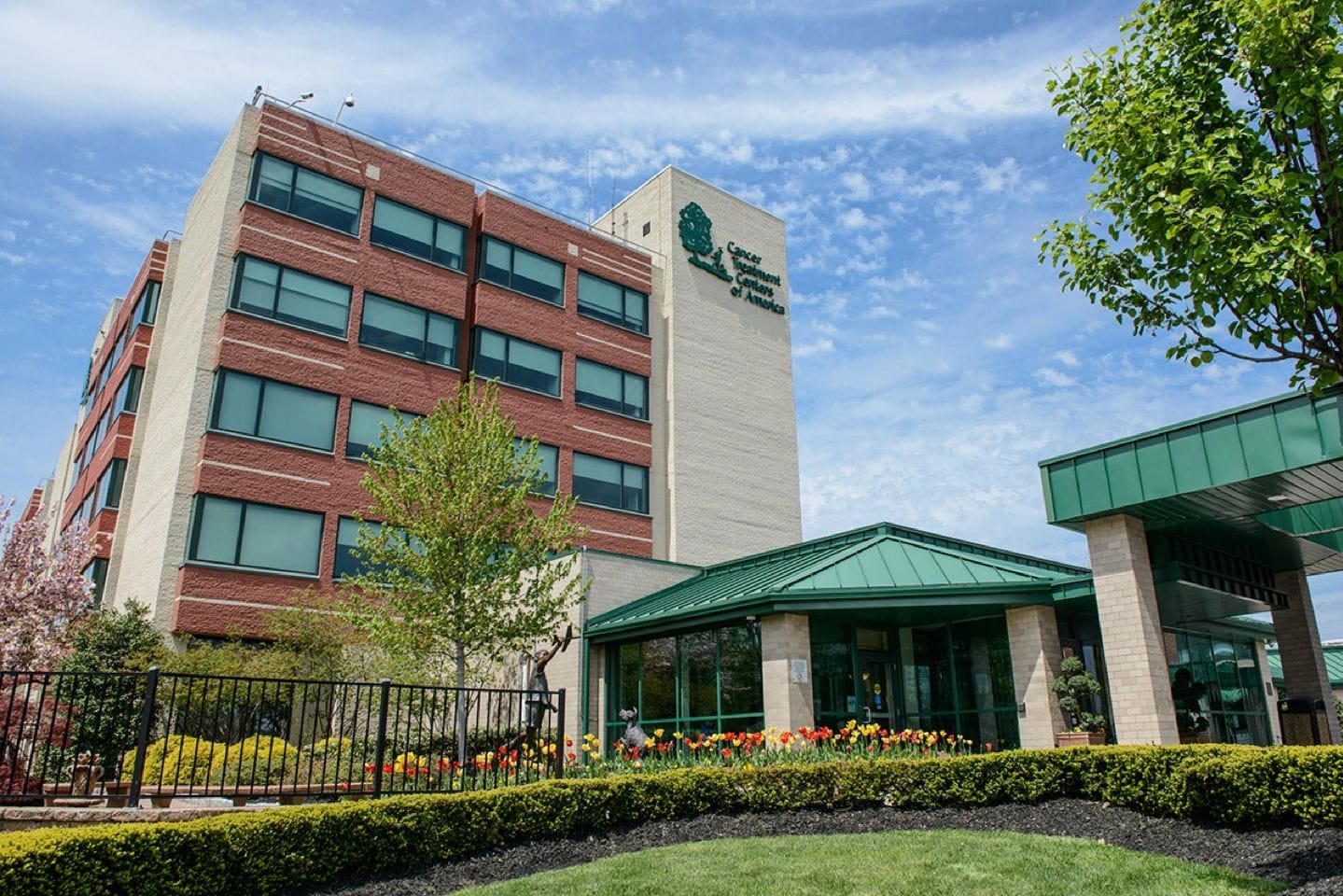
Philadelphia Cancer Treatment

Philadelphia-based Temple University Hospital has finalized the purchase of the former Cancer Treatment Center of America’s Philadelphia campus. 

The hospital paid $12 million for the buildings, equipment and supplies at the former campus, The Philadelphia Inquirer reported July 9. 

Boca Raton, Fla.-based Cancer Treatment Centers of America signed an agreement in March to sell the campus to Temple University Hospital. 

“This opens a significant and historic new chapter in our Health System’s history — one which speaks to our improving clinical outcomes, operational efficiency, positive financial performance, and long-term strength of our organization,” said Michael Young, president and CEO of Temple University Health System and Temple University Hospital. 

Temple Health said it is still working to determine the healthcare specialties the campus will house but said it will use the new location to replace the Temple Administrative Services Building as a first step.

340B Drug Payment Case Heads to Supreme Court

Supreme court to hear 340B drug payment case

The US Supreme Court recently announced that it will hear an ongoing debate over cuts to 340B drug payments to Medicare hospitals.

The case will be heard during the Supreme Court’s upcoming term, which starts in October. A decision is expected sometime next year.

The case was brought on by the American Hospital Association (AHA) and other national hospital groups seeking to overturn HHS’ decision to reduce Medicare reimbursement to hospitals in the 340B Drug Pricing Program by nearly 30 percent.

HHS had finalized the cuts in the 2018 Outpatient Prospective Payment System (OPPS) rule. The federal department said in a fact sheet that the cuts address the “recent trends of increasing drug prices, for which some of the cost burden falls to Medicare beneficiaries.”

Hospital groups led by the AHA challenged the cuts, arguing that reduced drug payments would harm access to care since the 340B Drug Pricing Program includes safety-net hospitals. An appeals court did not agree with their arguments in August 2020, ruling in favor of HHS.

We are pleased that the U.S. Supreme Court has agreed to hear the compelling arguments in our case on payments cuts to the 340B drug pricing program that are adversely impacting care to patients,” Melinda Hatton, the AHA’s general counsel, said publicly on Friday.

“We are hopeful that the Court will reject the appellate court decision deferring to the government’s interpretation of the law that clearly imperils the important services that the 340B program helps allow eligible hospitals and health systems to provide to vulnerable communities, many of which would otherwise be unavailable,” Hatton continued.

Other hospital groups also cheered the Supreme Court’s decision to hear the 340B drug payment case.

“We are pleased that the Supreme Court has agreed to review the appellate court decision, which we believe was legally flawed,”  Maureen Testoni, CEO of 340B Health, said on the group’s website.* “We are hopeful that the justices will reverse the lower court decision that upheld these damaging cuts to many 340B hospitals treating patients with low incomes. In the meantime, we continue to urge the Biden administration to change this harmful policy by abandoning the payment cuts for 2022 and beyond.”

The other plaintiff, Association of American Medical Colleges (AAMC), also said it is looking forward to the consideration of the case.

“The current reimbursement rates reduce the 340B drug discounts granted to safety-net providers, many of which are teaching hospitals,” explained David J. Skorton, MD, AAMC president and CEO. “These hospitals use the current savings to deliver critical health care services to low-income and vulnerable patients, which includes providing free or substantially discounted drugs to low-income patients, establishing neighborhood clinics, and improving access to specialized care previously unavailable in some areas. A reversal of the cuts will ensure that low-income, rural, and other underserved patients and communities are able to access the vital services they need.”

Neither HHS nor CMS provided a public statement regarding the Supreme Court’s decision to hear the 340B drug payment case.

Dangerously low blood supply in U.S. forces some hospitals to postpone surgeries

https://www.cbsnews.com/news/blood-donation-shortage-us-2021/

Dangerously low blood supply in U.S. forces some hospitals to postpone  surgeries - CBS News

Blood centers in some U.S. cities are down to a one-day supply, forcing hospitals to postpone surgeries. The blood shortage is yet another fallout from the pandemic, experts say.

OneBlood, the Southeast’s largest blood center, is scrambling to manage the blood shortage crisis.

“It’s a 24/7 operation,” said OneBlood’s Susan Forbes. “The donors are not in the traditional locations anymore. We lost large corporations, religious organizations, movie theater drives, festivals that were taking place ended.”

Before COVID-19 shutdowns, schools accounted for 25% of collected blood. Now, demand for blood products is up 10% nationwide.

Some hospitals have had to delay scheduled surgeries. At NYU Langone Health in New York City, surgeon-in-chief Dr. Paresh Shah said they came close to doing the same.

“There’s this huge backlog of operations that really needed to get done,” Shah said. “We were down to such a low inventory of blood that if we had one major transfusion event, we would have been depleted completely.”

He said the lack of blood can mean life or death in trauma situations.

Eleven-year-old Iggy Friday was diagnosed with Leukemia this winter and has needed more than 30 transfusions during chemotherapy. His recent platelet transfusion was delayed because of the shortage — luckily for just a few hours.

“I did think about the people who needed it now and stuff. So that’s why I was fine with waiting,” he said. “It helps a lot of people and can save a lot of lives.”

A new divide is making the workforce crisis worse

https://mailchi.mp/bfba3731d0e6/the-weekly-gist-july-2-2021?e=d1e747d2d8

How the Hybrid Workforce will Drive the Future of Work

Health system executives continue to tell us that the top issue now keeping them up at night is workforce engagement.

Exhausted from the COVID experience, facing renewed cost pressures, and in the midst of a once-in-a-generation rethink of work-life balance among employees, health systems are having increasing difficulty filling vacant positions, and holding on to key staff—particularly clinical talent. One flashpoint that has emerged recently, according to leaders we work with, is the growing divide between those working a “hybrid” schedule—part at home, part in the office—and those who must show up in person for work because of their roles. Largely this split has administrative staff on one side and clinical workers on the other, leading doctors, nurses, and other clinicians to complain that they have to come into work (and have throughout the pandemic), while their administrative colleagues can continue to “Zoom in”. There’s growing resentment among those who don’t have the flexibility to take a kid to baseball practice at 3 o’clock, or let the cable guy in at noon without scheduling time off, making the sense of burnout and malaise even more intense. Add to that the resurgence in COVID admissions in some markets, and the “help wanted” situation in the broader economy, and the health system workforce crisis looks worse and worse. Beyond raising wages, which is likely inevitable for most organizations, there is a need to rethink job design and work patterns, to allow a tired, frustrated, and—thanks to the in-person/WFH divide—envious workforce the chance to recover from an incredibly difficult year.

Is it time to take Physicians off the Hamster Wheel?

https://mailchi.mp/bfba3731d0e6/the-weekly-gist-july-2-2021?e=d1e747d2d8

7 Smart Strategies for Paying Off Medical School Debt | Student Loan Hero

In theory, the idea of salaried compensation for employed physicians makes a lot of sense. For one thing, it’s blessedly simple, with the potential to remove the tensions that arise in shifting to value-based payment or implementing lower-cost (but lower-reimbursement) care models like telemedicine.

However, medical group leaders have long feared that productivity would tank if doctors were put on salary. (As a consulting colleague said recently, the switch to salary would cause a 20+ percent drop in productivity in the medical group, creating a challenge akin to keeping an airline profitable after removing a quarter of the seats on its planes). We’ve been expecting that more doctors might seek stable compensation models in the wake of the pandemic, and so weren’t entirely surprised when the question of moving to straight salary came up in three conversations over the past two weeks.
 
In all three cases, leaders are hoping to create more predictability, and to decrease the resources and effort needed to execute against a menu of complex plans. They believe that a move to salary is inevitable, and their questions have more to do with timing. 

Gauging when to make the move should be determined not by external market shifts, but by internal cultural and operational readiness. Are the systems in place to enable doctors to work at a high level of efficiency? And do we have the group collaboration needed to maintain high performance without paying doctors as if they are salesmen on commission?

Another wrinkle has popped up for groups who might be ready now: the past year has upended the benchmarks that groups might otherwise use to inform decisions on where to set salaries. Nevertheless, over time we expect more groups to move in this direction, with the hope of getting off the “hamster wheel” of compensation committee meetings and ever more exotic permutations of bonus plans, in search of a more stable model.

Biden administration begins to implement a ban on surprise bills

https://mailchi.mp/bfba3731d0e6/the-weekly-gist-july-2-2021?e=d1e747d2d8

Biden Faces Health Industry Fight Over New 'Surprise' Billing Ban

On Thursday, the Biden administration issued the first of what is expected to be a series of new regulations aimed at implementing the No Surprises Act, passed by Congress last year and signed into law by President Trump, which bans so-called “surprise billing” by out-of-network providers involved in a patient’s in-network hospital visit.

The interim final rule, which takes effect in 2022prohibits surprise billing of patients covered by employer-sponsored and individual marketplace plans, requiring providers to give advance warning if out-of-network physicians will be part of a patient’s care, limiting the amount of patient cost-sharing for bills issued by those providers, and prohibiting balance billing of patients for fees in excess of in-network reimbursement amounts.

The rule also establishes a process for determining allowable rates for out-of-network care, involving comparison to prevailing statewide rates or the involvement of a neutral arbitrator, but falls short of specifying a baseline price for arbitrators to use in determining allowable charges. That methodology, along with other details, will be part of future rulemaking, which will be issued later this year.

Of note, the rule does not include a ban on surprise billing for ground ambulance services, which were excluded by Congress in the law’s final passage—even though more than half of all ambulance trips result in an out-of-network bill. Expect intense lobbying by industry interests to continue as the details of future rulemaking are worked out, as has been the case since before the law was passed.

While burdensome for patients, surprise billing has become a lucrative business model for some large, investor-owned specialist groups, who will surely look to minimize the law’s impact on their profits.

The Supreme Court lets site-neutral payment policies proceed

https://mailchi.mp/bfba3731d0e6/the-weekly-gist-july-2-2021?e=d1e747d2d8

Senators urge CMS to reconsider proposal to expand site-neutral policies |  AHA News

This week, the Supreme Court declined to hear an appeal challenging Medicare’s 2019 regulation calling for “site-neutral payment” for services provided by hospitals in outpatient settings, clearing the way for the rule’s implementation. The appeal was filed by the American Hospital Association (AHA), along with numerous hospitals and health systems, after a lower court ruling last year upheld the change to Medicare’s reimbursement policies.

The rule aims to level the playing field between independent providers and hospital-owned clinics by curtailing hospitals’ ability to charge higher “facility fees” for services provided in locations they own. Site-neutral payment has been a longstanding target of criticism by health economists and policymakers, who cite the pricing advantage as a driver of consolidation in the industry, which has tended to push the cost of care upward.

The AHA expressed disappointment in the Court’s decision not to hear the appeal, saying that the changes to payment policy “directly undercut the clear intent of Congress to protect them because of the many real and crucial differences between them and other sites of care.” The primary difference, of course, is hospitals’ need to fully allocate their costs across all the services they bill for, making care in lower-acuity settings more expensive than similar care delivered by practices that don’t have to subsidize inpatient hospitals and other costly assets.

Over the years that legitimate business need has turned into a deliberate business model—purchasing independent practices in order to take advantage of higher hospital pricing. As Medicare looks to manage Baby Boomer-driven cost growth, and employers and consumers grapple with rising health spending, expect increasingly rigorous efforts to push back against these kinds of pricing strategies.

California hospital beats suit over ER fee nondisclosure

California moves end surprise ER bills after Vox's reporting - Vox

A California hospital was properly dismissed from a lawsuit alleging it violated state consumer protection laws by failing to disclose emergency room visit fees before treatment, a state appellate court ruled June 29. 

Joshua Yebba filed the lawsuit against AHMC Anaheim (Calif.) Regional Medical Center, alleging the hospital violated California’s Unfair Competition Law and Consumer Legal Remedies Act when it did not disclose a separate fee for an emergency room visit before treating him. Mr. Yebba claimed he would have gone to a different ER if he knew about the fee. He sued on behalf of himself and others who allegedly were charged the separate ER fee without knowing about it. 

The lawsuit centered on whether the hospital had a duty to disclose the ER fee to patients before treating them and whether the hospital violated the consumer protection laws by not disclosing them. 

The hospital argued that it fulfilled any duty to disclose the fee because it has a written or electronic copy of its chargemaster available. However, Mr. Yebba contended that Anaheim Regional had a duty to tell him personally while checking in or to at least post a sign about the fees in the ER. 

A lower court dismissed the case against the hospital on the grounds that Anaheim Regional had no duty to disclose the separate ER fee to Mr. Yebba before treating him and that the allegations didn’t violate the consumer protection acts.

The California Court of Appeals 4th District affirmed the dismissal, saying that California lawmakers have determined what pricing information hospitals must disclose to patients and when, and a court decision increasing the requirements “upsets the legislative balance between the consumers’ right to information and the hospitals’ burden of providing it.”

Read the full court opinion here

‘It’d be catastrophic’: Dallas-area hospitals could lose $1.1B annually without Medicaid waiver, healthcare group warns

Original map. Location of hospitals in Dallas, TX. Source: North... |  Download Scientific Diagram

Hospitals in the Dallas-Fort Worth region could collectively lose $1.1 billion in funding each year without a Medicaid waiver extension, a healthcare group warned, according to CBS Local.

The group, Texas Essential Healthcare Partnerships, represents 72 hospitals in the Dallas-Fort Worth region, including those operated by Dallas-based Tenet Healthcare and Houston-based Baylor Scott & White Health. 

In April, CMS rescinded approval for a Section 1115 waiver to extend reimbursement to Texas hospitals for uncompensated care through September 2030. President Joe Biden’s CMS said that under the previous administration, CMS and Texas failed to adhere to public comment period requirements in the approval process, so it should be rescinded.  

Don Lee, Texas Essential Healthcare Partnerships, told CBS he’s concerned about CMS’ decision to rescind the waiver next year and that hospitals could begin feeling the effects in just three months. 

“There’s about $330 million of very important mental healthcare funding for mental healthcare services for the poor that will be lost starting in September of this year,” Mr. Lee told CBS Local. 

Texas plans to resubmit its application to extend the 1115 waiver soon, according to the report. However, if the new application is not approved, Mr. Lee said that some hospitals in the North Texas region may be forced to close. 

“We believe it’d be catastrophic, not just for the hospitals, but for all Texans,” Mr. Lee told CBS Local.