Cartoon – What does your mask say about you?

Jim Morrissey: What does your coronavirus mask say about you ...

Rely on the science and avoid the politics, Fauci says

https://www.cnn.com/2020/08/12/health/us-coronavirus-wednesday/index.html?utm_source=nl&utm_brand=wired&utm_mailing=WIR_Science_081220&utm_campaign=aud-dev&utm_medium=email&utm_term=WIR_Science&bxid=5db707423f92a422eaeaf234&cndid=54318659&esrc=bounceX&source=EDT_WIR_NEWSLETTER_0_SCIENCE_ZZ

Science Day

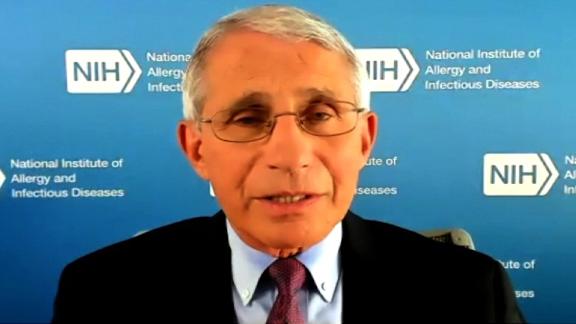
Although practices like wearing face coverings have been politicized, Dr. Anthony Fauci said Tuesday he has learned that in order to be a good public health leader in a crisis, you have to divorce yourself from politics, rely on science and be as transparent as possible.

“Completely divorce yourself from the kind of political undertones that sometimes go into an important outbreak like this,” Fauci, director of the National Institute of Allergy and Infectious Diseases, said as he was honored with a 2020 Citizen Leadership Award on Tuesday night by the Aspen Institute.
“You’ve got to stay away from that, lead by example, be perfectly honest and don’t be afraid to say you don’t know something when you don’t know it. I find that to be a very good formula when you’re dealing in a crisis.”
Even with the polarization, every state in the US passed at least one physical distancing measure in March to slow the spread, researchers from Harvard University and University College London said. Those measures worked, a new study found.
Physical distancing resulted in a reduction of more than 600,000 cases within just three weeks, according to the study, published Tuesday in the journal PLOS. Had there not been preventative interventions, the models suggest up to 80% of Americans would have been infected with Covid-19.
“In short, these measures work, and policy makers should use them as an arrow in their quivers to get on top of local epidemics where they are not responding to containment measures,” said the study’s co-author Dr. Mark J. Siedner in a news release.


The Fed’s independence helped it save the US economy in 2008 – the CDC needs the same authority today

https://theconversation.com/the-feds-independence-helped-it-save-the-us-economy-in-2008-the-cdc-needs-the-same-authority-today-142593

Centers for Disease Control and Prevention

The image of scientists standing beside governors, mayors or the president has become common during the pandemic. Even the most cynical politician knows this public health emergency cannot be properly addressed without relying on the scientific knowledge possessed by these experts.

Yet, ultimately, U.S. government health experts have limited power. They work at the discretion of the White House, leaving their guidance subject to the whims of politicians and them less able to take urgent action to contain the pandemic.

The Centers for Disease Control and Prevention has issued guidelines only to later revise them after the White House intervened. The administration has also undermined its top infectious disease expert, Dr. Anthony Fauci, over his blunt warnings that the pandemic is getting worse – a view that contradicts White House talking points.

And most recently, the White House stripped the CDC of control of coronavirus data, alarming health experts who fear it will be politicized or withheld.

In the realm of monetary policy, however, there is an agency with experts trusted to make decisions on their own in the best interests of the U.S. economy: the Federal Reserve. As I describe in my recent book, “Stewards of the Market,” the Fed’s independence allowed it to take politically risky actions that helped rescue the economy during the financial crisis of 2008.

That’s why I believe we should give the CDC the same type of authority as the Fed so that it can effectively guide the public through health emergencies without fear of running afoul of politicians.


The paradox of expertise

There is a paradox inherent in the relationship between political leaders and technical experts in government.

Experts have the training and skill to apply scientific knowledge in complex biological and economic systems, yet democratically elected political leaders may overrule or ignore their advice for ill or good.

This happened in May when the CDC, the federal agency charged with controlling the spread of disease, removed advice regarding the dangers of singing in church choirs from its website. It did not do so because of new evidence. Rather, it was because of political pressure from the White House to water down the guidance for religious groups.

Similarly, the White House undermined the CDC’s guidance on school reopenings and has pressured it to revise them. So far, it seems the CDC has rebuffed the request.

The ability of elected leaders to ignore scientists – or the scientists’ acquiescence to policies they believe are detrimental to public welfare – is facilitated by many politicians’ penchant for confident assertion of knowledge and the scientist’s trained reluctance to do so.

Compare Fauci’s repeated comment that “there is much we don’t know about the virus” with President Donald Trump’s confident assertion that “we have it totally under control.”


Experts with independence

Given these constraints on technical expertise, the performance of the Fed in the financial crisis of 2008 offers an informative example that may be usefully applied to the CDC today.

The Federal Reserve is not an executive agency under the president, though it is chartered and overseen by Congress. It was created in 1913 to provide economic stability, and its powers have expanded to guard against both depression and crippling inflation.

At its founding, the structure of the Fed was a political compromise designed make it independent within the government in order to de-politicize its economic policy decisions. Today its decisions are made by a seven-member board of governors and a 12-member Federal Open Market Committee. The members, almost all Ph.D. economists, have had careers in academia, business and government. They come together to analyze economic data, develop a common understanding of what they believe is happening and create policy that matches their shared analysisThis group policymaking is optimal when circumstances are highly uncertain, such as in 2008 when the global financial system was melting down.

The Fed was the lead actor in preventing the system’s collapse and spent several trillion dollars buying risky financial assets and lending to foreign central banks – decisions that were pivotal in calming financial markets but would have been much harder or may not have happened at all without its independent authority.

The Fed’s independence is sufficiently ingrained in our political culture that its chair can have a running disagreement with the president yet keep his job and authority.


Putting experts at the wheel

A health crisis needs trusted experts to guide decision-making no less than an economic one does. This suggests the CDC or some re-imagined version of it should be made into an independent agency.

Like the Fed, the CDC is run by technical experts who are often among the best minds in their fields. Like the Fed, the CDC is responsible for both analysis and crisis response. Like the Fed, the domain of the CDC is prone to politicization that may interfere with rational response. And like the Fed, the CDC is responsible for decisions that affect fundamental aspects of the quality of life in the United States.

Were the CDC independent right now, we would likely see a centralized crisis management effort that relies on the best science, as opposed to the current patchwork approach that has failed to contain the outbreak nationally. We would also likely see stronger and consistent recommendations on masks, social distancing and the safest way to reopen the economy and schools.

Independence will not eliminate the paradox of technical expertise in government. The Fed itself has at times succumbed to political pressure. And Trump would likely try to undermine an independent CDC’s legitimacy if its policies conflicted with his political agenda – as he has tried to do with the central bank.

But independence provides a strong shield that would make it much more likely that when political calculations are at odds with science, science wins.


Fauci says family has faced threats, harassment amid pandemic

Fauci says family has faced threats, harassment amid pandemic

Fauci says family has faced threats, harassment amid pandemic ...

Dr. Anthony Fauci, the nation’s top infectious disease expert, said he and his family are getting death threats because people don’t like what he says about COVID-19.

“Getting death threats for me, and my family, and harassing my daughters, to the point where I have to get security is just — I mean, it’s amazing,” Fauci said during an interview with CNN’s Sanjay Gupta on Wednesday.

“I wouldn’t have imagined in my wildest dreams that people who object to things that are pure public health principles, are so set against it and don’t like what you and I say, namely in the world of science, that they actually threaten you.”

He noted that crises like COVID-19 has brought out the best of people but also the worst of people.

Fauci’s notoriety has been elevated by COVID-19, as he is often on TV offering a blunt portrayal of the state of the pandemic in the U.S.

Fauci, 79, is one of the world’s most respected infectious disease experts, having advised six presidents on HIV/AIDS, Ebola, Zika and other health crises. He has earned a reputation for being blunt and willing to correct the president.

Fauci has had a security detail since at least April.

Fauci also reflected on what he says is a degree of “anti-science” sentiment in the U.S. that is making it difficult to get people to do things to slow the spread of COVID-19 like wearing masks.

“There is a degree of anti-science feeling in this country, and I think it is not just related to science. It’s almost related to authority and a mistrust in authority that spills over,” he told Gupta.

“Because in some respects, scientists, because they’re trying to present data, may be looked upon as being an authoritative figure, and the pushing back on authority, the pushing back on government is the same as pushing back on science.”

He said the scientific community should be more transparent and reach out to people to underscore the importance of science and evidence-based policy.

“I know when I say that if we follow these five or six principles, we can open up we don’t have to stay shut…There are some people that just don’t believe me or don’t pay attention to that. And that’s unfortunate because that is the way out of this,” he said.

President Trump has repeatedly undermined Fauci, questioning the White House coronavirus task force member on Twitter and in interviews with the media.

Over the weekend, Trump tweeted out a video of a portion of Fauci’s testimony explaining why the U.S. has recorded more cases than European cases and called it “wrong.” Trump has falsely claimed several times that the U.S. has more cases because it is doing more testing.

Trump has also retweeted multiple messages that question Fauci’s expertise, including one last week that said he had “misled the American public.”


State of the Union: by Paul Field

Image may contain: text that says 'Whoever Paul Field is he hit the nail on the head. Field PM own opinion, but you post Everyone entitled silly "Welcome Socialism... You Socialism. the wealthiest, geographically advantaged, productive people. about This failure our, "Booming economy," modest challenges. tis the market dissonance stores, farmers/producers and crisis about corporations needing emergency bailout longest history ending interest with being unable equipped provide healthcare, time post profits. crisis response depending antiquated systems nobody remembers operate. But all, politicization the for the benefit of education, science, natural lifestyles, lifestyles, charity, compassion, virtually else for brief gain gutted our society.'