Learning from the largest US study of coronavirus patients

https://mailchi.mp/0d4b1a52108c/the-weekly-gist-april-24-2020?e=d1e747d2d8

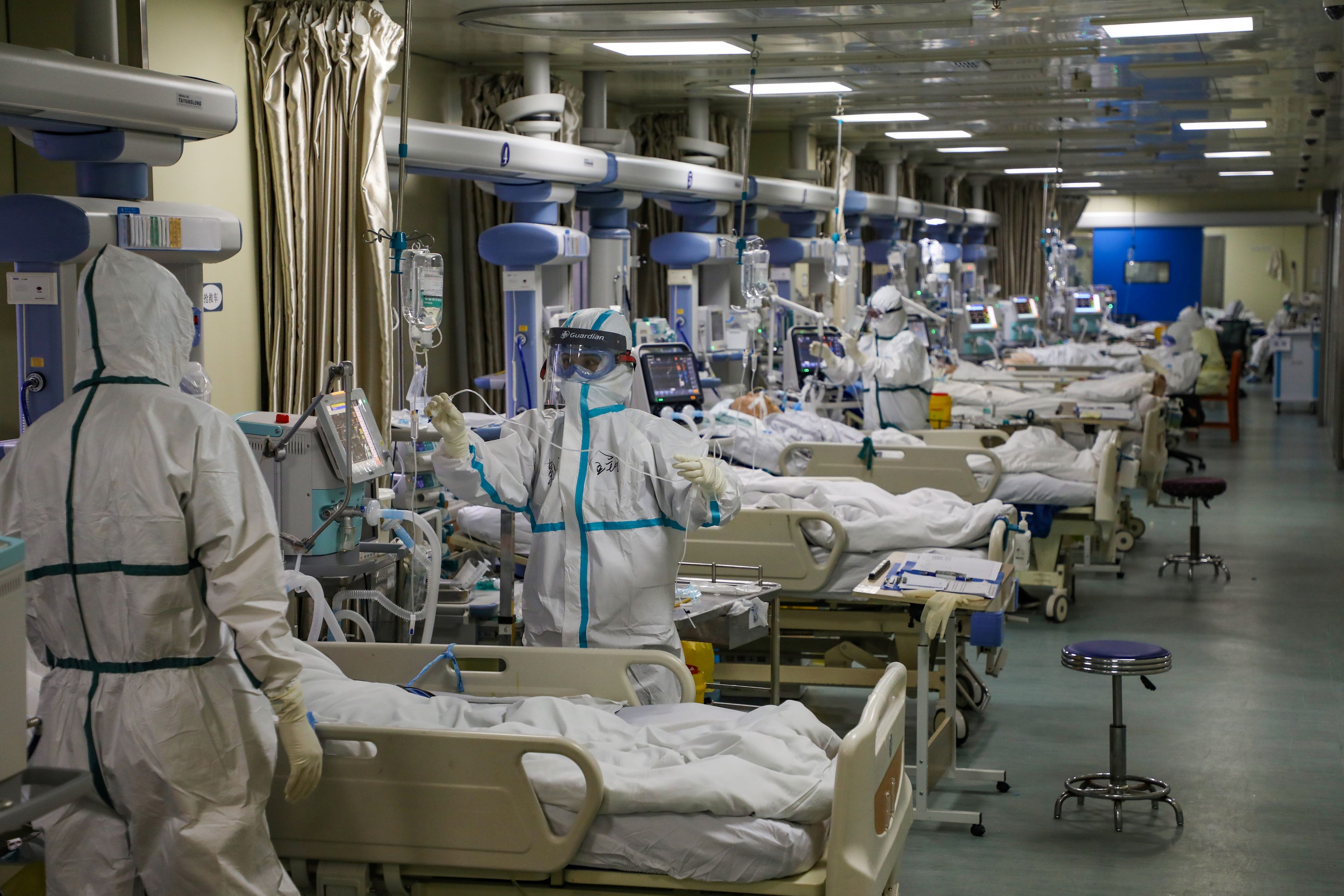
ICU patients with coronavirus and pneumonia treated in Wuhan ...

study published this week in JAMA provides a look at the largest series of COVID-19 hospitalized patients studied to date in the US, reporting that almost all patients treated had at least one underlying condition. Physicians from Northwell Health evaluated the outcomes, comorbidities and clinical course of 5,700 confirmed coronavirus patients hospitalized between March 1st and April 4th across the New York City area. Hospitalized patients, 60 percent of whom were men, had a high burden of chronic disease.

Similar to other reports, older patients, and those with a higher chronic disease burden (especially diabetes) were both more likely to require mechanical ventilation, and more likely to die. Only nine of the 436 patients under age 50 who had no significant cormorbidities (as measured by the Charlson Comorbidity Index) had died. One number received the most press coverage: as reported in the abstract, 88 percent of patients who received mechanical ventilation died. Digging into the details of the series, this may end up being an overestimation, as the statistic is based on a subset of 320 ventilated patients who either died or were discharged by April 4th. At that time, 831 patients remained in the hospital on ventilators, with outcomes still to be determined. Ultimately, the mortality rate of full cohort of ventilated patients could fall nearer to the 50-60 percent range seen in other studies.

Regardless, the rich dataset of the Northwell report adds to the body of evidence that severe COVID-19 infections and deaths involve several organ systems. This Science article provides a thorough (and comprehensible to the non-clinician) review of how the virus invades the body. While the lungs remain “ground zero” for infection, critically ill patients may experience serious kidney, cardiac, or even nervous system involvement. A host of chronic diseases predispose patients for worse outcomes—yet doctors remain puzzled that they aren’t seeing “a huge number of asthmatics” in ICUs. Patients are presenting with dangerously low oxygen levels but less distress than expected, likely because they are able to still “blow off” carbon dioxide, limiting the body’s ability to sense the seriousness of their condition.

Many dying patients are overwhelmed by a “cytokine storm”—an overreaction of the immune system that compounds organ failure. And new evidence suggests that large numbers of critically ill patients may experience abnormal blood clotting, contributing to the high mortality rates of the disease. The more doctors and scientists learn about coronavirus, the more complex the disease process seems—leaving doctors with work to do to understand, manage, and treat the tens of thousands of these seriously ill patients.


Young and middle-aged people, barely sick with covid-19, are dying from strokes

https://www.washingtonpost.com/health/2020/04/24/strokes-coronavirus-young-patients/?fbclid=IwAR0yPJ-Baf7Rk780ldh07roTJepyT6EVN0A2b9mh9JdmEgc4mAcy1eDVBxA&utm_campaign=wp_main&utm_medium=social&utm_source=facebook

Young people with coronavirus are dying from strokes - The ...

Doctors sound alarm about patients in their 30s and 40s left debilitated or dead. Some didn’t even know they were infected.

Thomas Oxley wasn’t even on call the day he received the page to come to Mount Sinai Beth Israel Hospital in Manhattan. There weren’t enough doctors to treat all the emergency stroke patients, and he was needed in the operating room.

The patient’s chart appeared unremarkable at first glance. He took no medications and had no history of chronic conditions. He had been feeling fine, hanging out at home during the lockdown like the rest of the country, when suddenly, he had trouble talking and moving the right side of his body. Imaging showed a large blockage on the left side of his head.

Oxley gasped when he got to the patient’s age and covid-19 status: 44, positive.

The man was among several recent stroke patients in their 30s to 40s who were all infected with the coronavirus. The median age for that type of severe stroke is 74.

As Oxley, an interventional neurologist, began the procedure to remove the clot, he observed something he had never seen before. On the monitors, the brain typically shows up as a tangle of black squiggles — “like a can of spaghetti,” he said — that provide a map of blood vessels. A clot shows up as a blank spot. As he used a needlelike device to pull out the clot, he saw new clots forming in real-time around it.

“This is crazy,” he remembers telling his boss.

Stroke surge

Reports of strokes in the young and middle-aged — not just at Mount Sinai, but also in many other hospitals in communities hit hard by the novel coronavirus — are the latest twist in our evolving understanding of its connected disease, covid-19. Even as the virus has infected nearly 2.8 million people worldwide and killed about 195,000 as of Friday, its biological mechanisms continue to elude top scientific minds. Once thought to be a pathogen that primarily attacks the lungs, it has turned out to be a much more formidable foe — impacting nearly every major organ system in the body.

Until recently, there was little hard data on strokes and covid-19.

There was one report out of Wuhan, China, that showed that some hospitalized patients had experienced strokes, with many being seriously ill and elderly. But the linkage was considered more of “a clinical hunch by a lot of really smart people,” said Sherry H-Y Chou, a University of Pittsburgh Medical Center neurologist and critical care doctor.

Now for the first time, three large U.S. medical centers are preparing to publish data on the stroke phenomenon. The numbers are small, only a few dozen per location, but they provide new insights into what the virus does to our bodies.

A stroke, which is a sudden interruption the blood supply, is a complex problem with numerous causes and presentations. It can be caused by heart problems, clogged arteries due to cholesterol, even substance abuse. Mini-strokes often don’t cause permanent damage and can resolve on their own within 24 hours. But bigger ones can be catastrophic.

The analyses suggest coronavirus patients are mostly experiencing the deadliest type of stroke. Known as large vessel occlusions, or LVOs, they can obliterate large parts of the brain responsible for movement, speech and decision-making in one blow because they are in the main blood-supplying arteries.

Many researchers suspect strokes in covid-19 patients may be a direct consequence of blood problems that are producing clots all over some people’s bodies.

Clots that form on vessel walls fly upward. One that started in the calves might migrate to the lungs, causing a blockage called a pulmonary embolism that arrests breathing — a known cause of death in covid-19 patients. Clots in or near the heart might lead to a heart attack, another common cause of death. Anything above that would probably go to the brain, leading to a stroke.

Robert Stevens, a critical care doctor at Johns Hopkins Hospital in Baltimore, called strokes “one of the most dramatic manifestations” of the blood-clotting issues. “We’ve also taken care of patients in their 30s with stroke and covid, and this was extremely surprising,” he said.

Many doctors expressed worry that as the New York City Fire Department was picking up four times as many people who died at home as normal during the peak of infection that some of the dead had suffered sudden strokes. The truth may never be known because few autopsies were conducted.

Chou said one question is whether the clotting is because of a direct attack on the blood vessels, or a “a friendly-fire problem” caused by the patient’s immune response.

“In your body’s attempt to fight off the virus, does the immune response end up hurting your brain?” she asked. Chou is hoping to answer such questions through a review of strokes and other neurological complications in thousands of covid-19 patients treated at 68 medical centers in 17 countries.

Thomas Jefferson University Hospitals, which operates 14 medical centers in Philadelphia, and NYU Langone Health in New York City, found that 12 of their patients treated for large blood blockages in their brains during a three-week period had the virus. Forty percent were under 50, and they had few or no risk factors. Their paper is under review by a medical journal, said Pascal Jabbour, a neurosurgeon at Thomas Jefferson.

Jabbour and his co-author Eytan Raz, an assistant professor of neuroradiology at NYU Langone, said that strokes in covid-19 patients challenge conventional thinking. “We are used to thinking of 60 as a young patient when it comes to large vessel occlusions,” Raz said of the deadliest strokes. “We have never seen so many in their 50s, 40s and late 30s.”

Raz wondered whether they are seeing more young patients because they are more resistant than the elderly to the respiratory distress caused by covid-19: “So they survive the lung side, and in time develop other issues.”

Jabbour said many cases he has treated have unusual characteristics. Brain clots usually appear in the arteries, which carry blood away from the heart. But in covid-19 patients, he is also seeing them in the veins, which carry blood in the opposite direction and are trickier to treat. Some patients are also developing more than one large clot in their heads, which is highly unusual.

“We’ll be treating a blood vessel and it will go fine, but then the patient will have a major stroke” because of a clot in another part of the brain, he said.

The 33-year-old

At Mount Sinai, the largest medical system in New York City, physician-researcher J Mocco said the number of patients coming in with large blood blockages in their brains doubled during the three weeks of the covid-19 surge to more than 32, even as the number of other emergencies fell. More than half of were covid-19 positive.

It isn’t just the number of patients that was unusual. The first wave of the pandemic has hit the elderly and those with heart disease, diabetes, obesity or other preexisting conditions disproportionately. The covid-19 patients treated for stroke at Mount Sinai were younger and mostly without risk factors.

On average, the covid-19 stroke patients were 15 years younger than stroke patients without the virus.

“These are people among the least likely statistically to have a stroke,” Mocco said.

Mocco, who has spent his career studying strokes and how to treat them, said he was “completely shocked” by the analysis. He noted the link between covid-19 and stroke “is one of the clearest and most profound correlations I’ve come across.”

“This is much too powerful of a signal to be chance or happenstance,” he said.

In a letter to be published in the New England Journal of Medicine next week, the Mount Sinai team details five case studies of young patients who had strokes at home from March 23 to April 7. They make for difficult reading: The victims’ ages are 33, 37, 39, 44 and 49, and they were all home when they began to experience sudden symptoms, including slurred speech, confusion, drooping on one side of the face and a dead feeling in one arm.

One died, two are still hospitalized, one was released to rehabilitation, and one was released home to the care of his brother. Only one of the five, a 33-year-old woman, is able to speak.

Oxley, the interventional neurologist, said one striking aspect of the cases is how long many waited before seeking emergency care.

The 33-year-old woman was previously healthy but had a cough and headache for about a week. Over the course of 28 hours, she noticed her speech was slurred and that she was going numb and weak on her left side but, the researchers wrote, “delayed seeking emergency care due to fear of the covid-19 outbreak.”

It turned out she was already infected.

By the time she arrived at the hospital, a CT scan showed she had two clots in her brain and patchy “ground glass” in her lungs — the opacity in CT scans that is a hallmark of covid-19 infection. She was given two different types of therapy to try to break up the clots and by Day 10, she was well enough to be discharged.

Oxley said the most important thing for people to understand is that large strokes are very treatable. Doctors are often able to reopen blocked blood vessels through techniques such as pulling out clots or inserting stents. But it has to be done quickly, ideally within six hours, but no longer than 24 hours: “The message we are trying to get out is if you have symptoms of stroke, you need to call the ambulance urgently. ”

As for the 44-year-old man Oxley was treating, doctors were able to remove the large clot that day in late March, but the patient is still struggling. As of this week, a little over a month after he arrived in the emergency room, he is still hospitalized.


A mysterious blood-clotting complication is killing coronavirus patients

https://www.washingtonpost.com/health/2020/04/22/coronavirus-blood-clots/?utm_campaign=wp_news_alert_revere_trending_now&utm_medium=email&utm_source=alert&wpisrc=al_trending_now__alert-hse–alert-national&wpmk=1

Blood-clotting complication is killing coronavirus patients ...

Once thought a relatively straightforward respiratory virus, covid-19 is proving to be much more frightening.

Craig Coopersmith was up early that morning as usual and typed his daily inquiry into his phone. “Good morning, Team Covid,” he wrote, asking for updates from the ICU team leaders working across 10 hospitals in the Emory University health system in Atlanta.

One doctor replied that one of his patients had a strange blood problem. Despite receiving anticoagulants, the patient was still developing clots in various parts of his body. A second said she’d seen something similar. And a third. Soon, every person on the text chat had reported the same thing.

“That’s when we knew we had a huge problem,” said Coopersmith, a critical-care surgeon. As he checked with his counterparts at other medical centers, he became increasingly alarmed: “It was in as many as 20, 30 or 40 percent of their patients.”

One month ago, as the country went into lockdown to prepare for the first wave of coronavirus cases, many doctors felt confident that they knew what they were dealing with. Based on early reports, covid-19 appeared to be a standard variety respiratory virus, albeit a very contagious and lethal one with no vaccine and no treatment. But they’ve since become increasingly convinced that covid-19 attacks not only the lungs, but also the kidneys, heart, intestines, liver and brain.

And many are also reporting bizarre, unsettling cases that don’t seem to follow the textbooks they’ve trained on. They describe patients with startlingly low oxygen levels — so low that they would normally be unconscious or near death — talking and swiping on their phones. Asymptomatic pregnant women suddenly in cardiac arrest. Patients who by all conventional measures seem to have mild disease deteriorating within minutes and dying at home.

With no clear patterns in terms of age or chronic conditions, some scientists now hypothesize that at least some of these abnormalities may be explained by severe changes in patients’ blood.

The concern is so acute that some doctors groups have raised the controversial possibility of giving preventive blood thinners to everyone with covid-19 — even those well enough to endure their illness at home.

Blood clots, in which the red liquid turns gel-like, appear to be the opposite of what occurs in Ebola, Dengue, Lassa and other hemorrhagic fevers that lead to uncontrolled bleeding. But they are actually part of the same phenomenon — and can have similarly devastating consequences.

Autopsies have shown that some people’s lungs are filled with hundreds of microclots. Errant blood clots of a larger size can break off and travel to the brain or heart, causing a stroke or a heart attack. On Saturday, Broadway actor Nick Cordero, 41, had his right leg amputated after being infected with the novel coronavirus and suffering from clots that blocked blood from getting to his toes.

Lewis Kaplan, a University of Pennsylvania physician and head of the American Society of Critical Care Medicine, said that every year, doctors treat a large variety of people with clotting complications, from those with cancer to victims of severe trauma, “and they don’t clot like this.”

“The problem we are having is that while we understand that there is a clot, we don’t yet understand why there is a clot,” Kaplan said. “We don’t know. And therefore, we are scared.”

‘It crept up on us’

The first sign that something was going haywire was in legs, which were turning blue and swelling. Even patients on blood thinners in the ICU were developing clots in them — which is not unusual in one or two patients in one unit, but is for so many at the same time. Next came the clogging of the dialysis machines, which filter impurities in blood when kidneys are failing, and were getting jammed up several times a day.

“There was a universal understanding that this was different,” Coopersmith said.

Then came the autopsies. When they opened up some deceased patients’ lungs, they expected to find evidence of pneumonia and damage to the tiny air sacs that exchange oxygen and carbon dioxide between the lungs and the bloodstream. Instead, they found tiny clots all over.

Zoom meetings were convened in some of the largest medical centers nationwide. Tufts. Yale-New Haven. The University of Pennsylvania. Brigham and Women’s. Columbia-Presbyterian. Theories were shared. Treatments debated.

And although there was no consensus on the biology of why this was happening and what could be done about it, many came to believe the clots might be responsible for a significant share of U.S. coronavirus deaths — possibly helping to explain why so many people are dying at home.

In hindsight, there were hints that blood problems had been an issue in China and Italy as well, but it was more of a footnote in studies and on information-sharing calls that focused on the disease’s effects on lungs.

“It crept up on us. We weren’t hearing a tremendous amount about this internationally,” said Greg Piazza, a cardiovascular specialist at Brigham and Women’s who has begun a study of bleeding complications of covid-19.

Helen W. Boucher, an infectious-disease specialist at Tufts Medical Center, said there’s no reason to think anything is different about the virus in the United States. More likely, she said, the problem was more obvious to American doctors because of the unique demographics of U.S. patients, including large percentages with heart disease and obesity that make them more vulnerable to the ravages of blood clots. She also noted small but important differences in the monitoring and treatment of patients in ICUs in this country that would make clots easier to detect.

“Part of this is by virtue of the fact that we have such incredible intensive care facilities,” she said.

A leading cause of death

The body’s circulatory or cardiovascular system is often described as a network of one-way streets that connect the heart to other organs. Blood is the transport system, responsible for moving nutrients to the cells and waste away from them. A common cold or a cut on the finger can lead to changes that help repair the damage, but when the body undergoes a more significant trauma, the blood can overreact, leading to an imbalance that can cause excessive clots or bleeding — and sometimes both.

Scientists call this “hemostatic derangement.” In math, a derangement is a permutation in which no element is in its original position.

Harlan Krumholz, a cardiac specialist at the Yale-New Haven Hospital Center, said no one knows whether blood complications are a result of a direct assault on blood vessels, or a hyperactive inflammatory response to the virus by the patient’s immune system.

“One of the theories is that once the body is so engaged in a fight against an invader, the body starts consuming the clotting factors, which can result in either blood clots or bleeding. In Ebola, the balance was more toward bleeding. In covid-19, it’s more blood clots,” he said.

A Dutch study published April 10 in the journal Thrombosis Research provided more evidence that the issue is widespread, finding that among 184 covid-19 patients in an intensive care unit, 38 percent had blood that clotted abnormally. The researchers called it “a conservative estimation” because many of the patients were still hospitalized and at risk of further complications.

Early data from China on a sample of 183 patients showed that more than 70 percent of patients who died of covid-19 had small clots develop throughout their bloodstream.

Although acute respiratory distress syndrome (ARDS) still appears to be the leading cause of death in covid-19 patients, blood complications are not far behind, said Behnood Bikdeli, a fourth-year fellow at Columbia University Irving Medical Center, who helped anchor a paper about the blood clots in the Journal of The American College of Cardiology.

“My guess is it’s one of the top three causes of demise and deterioration in covid-19 patients,” he said.

That recognition is prompting many hospitals to change the way they think about the disease and manage it. When the novel coronavirus first hit, the Centers for Disease Control and Prevention and others put people with asthma at the top of their lists of those who might be the most vulnerable. But recently, European researchers writing in the journal Lancet noted that it was “striking” how underrepresented asthma patients had been. Earlier this month, when New York state released data about the top chronic health problems of those who died of covid-19, asthma was not among them. Instead, they were almost all cardiovascular conditions.

Some medical centers recently have begun giving all hospitalized covid-19 patients small doses of blood thinners as preventive measures, and many are adjusting doses upward for the most seriously ill. The challenge is that the more you give, the greater the danger of upsetting the balance in the other direction and having the patient bleed out.

Another big mystery the doctors hope the blood issue will shed light on is why some maternity patients are collapsing during or after giving birth.

A paper published in the American Journal of Obstetrics & Gynecology MFM in late March detailed how two women with no prior symptoms of covid-19 ended up in intensive care. The first was a 38-year-old patient of New York-Presbyterian/Columbia University Irving Medical Center in Manhattan who spiked a fever of 101.3 while undergoing a C-section delivery and began bleeding profusely. The second woman, 33, also underwent a C-section. But the next day, she developed a cough that progressed to respiratory distress. Her heart started beating irregularly and her blood pressure jumped to as high as 200/90.

Several physician-researchers said that the relationship between covid-19, clotting and pregnant women is “an area of interest.” Women in childbirth have always experienced clotting and bleeding complications because of the involvement of the blood-rich placenta, but it’s possible that covid-19 may be triggering additional cases by making some women’s bodies “lose balance.”

“There’s lots of speculation,” Krumholz said. “That’s one of the frustrating things about this virus. We’re in a lot of darkness still.”


Melinda Gates: This is not a once-in-a-century pandemic.

https://www.businessinsider.com/melinda-gates-coronavirus-interview-vaccine-timeline-2020-4?linkId=87026774

Melinda Gates

‘We will absolutely have more of these.’ The billionaire philanthropist predicts a timeline for going back to normal.

  • Business Insider spoke with Melinda Gates about COVID-19, the prospect and timeline of making an effective vaccine, and how the world will be permanently changed by the coronavirus.
  • Gates said it would likely take about 18 months for a vaccine to become widely available, and that it should first go to healthcare workers to help them keep others safe.
  • She said this pandemic was not a once-in-a-century situation, like the Spanish flu. Because the world is now a global community, we’re likely to see other pandemics in our lifetimes, Gates said.
  • Even after things get back to normal, “our psyches are going to permanently changed … I hope we change to realize that we’re a global community.”

Melinda Gates is the cochair of the Bill & Melinda Gates Foundation, which has donated more than $45 billion to tackle some of the world’s toughest problems, including vaccination research and combating pandemics, from coronavirus to Ebola.

Gates and her husband have long been concerned about a pandemic and have warned that we need to be more prepared at a global level.

In a wide-ranging interview with Gates on Thursday afternoon, she gave her thoughts on the coronavirus pandemic, the inequality of it all, and how the world can go back to semi-normal. The highlights:

  • The world needs a vaccine delivered at mass scale to go back to “normal.” A realistic timeline is about 18 months, the same time it took to create an Ebola vaccine.
  • It is possible we won’t be able to find an effective vaccine for coronavirus, although Gates thinks that is highly unlikely.
  • The idea of herd immunity solving coronavirus is far-fetched. Gates said that would require more than half the population to get coronavirus (which isn’t anywhere close to happening) and a lot of death along the way.
  • To effectively roll out a vaccine, Gates believes you need to first give it to health workers, then to high-risk groups, then distribute it equitably to different countries and communities. The vaccine also has to cost very little with a fund to cover it for everyone. What the US is doing right now, pitting states against each other for supplies and allowing wealthy individuals to access tests first, would be disastrous for a vaccine rollout.
  • To prepare for the second wave of coronavirus this fall, or even a next pandemic, we need mass testing from the get-go, voluntary data sharing from people so that we can trace who has been tested and where they have been, and vaccine stockpiles so that you can distribute those as soon as you see signs of an outbreak.
  • Gates said there would “absolutely” be more pandemics in our lifetime. Coronavirus is not a once-in-a-century occurrence like the Spanish flu.
  • If you want to help vulnerable, poor communities survive coronavirus, Gates recommends giving to the WHO COVID Solidarity FundUnited Way, or America’s Food Fund.

We need a vaccine to be widely distributed before the world will start to feel normal again. Gates says we won’t get that for at least 18 months.

Alyson Shontell: How is it going in the Gates household?

Melinda Gates: Like all other families, it’s been a complete change of life for all of us. But we are also incredibly privileged, and we know that, and our kids know that. But yes, life has changed drastically. The kids are studying online. Bill and I are doing all of our meetings via video teleconference. I’m a terrible cook, so I’m heating things up a lot more, and everybody’s trying to pitch in to do what needs to get done in terms of things around the house.

And the other thing I would just say is every night, we’ve had this tradition for a long time of saying grace before meals. And what that looks like is that we all go around and say something we’re thankful for. Pretty much every night what comes up from the kids and us is we’re thankful for our health and for the fact that we’re not going hungry and the fact that we can still do our work and the kids can still learn. It’s kind of amazing.

Shontell: We heard Dr. Fauci say earlier this week that things probably won’t return to normal until we have a vaccine. What do you think is a realistic timeline for a wide distribution of a vaccine? Is anything faster than 18 months really safe?

Gates: I think it’s likely 18 months. Just from everything we know from working with our partners for many, many years on vaccines, you have to test the compounds. Then, you have to go into preclinical trials, then full-scale trials. And even though I’m sure the FDA will fast-track some of these vaccine trials like they did with Ebola, still by the time you get it through the trials safety- and efficacy-wise, then you have to manufacture the vaccine and manufacture at scale. I think it really is 18 months.

The good news that I’m seeing on that front, though, is so many scientists are coming forward, and I’m seeing CEOs come forward and say, “I have this platform we can use.” Pharmaceutical companies are coming together already to say, “How do we build up the manufacturing capacity so it’s there when we get a vaccine and we can basically just run it through the manufacturing process?” I’m seeing lots of good things come forward, but it’s a process that needs to run its full course, because you don’t want to put something in someone’s body that is harmful.

Shontell: Right. It seems like, in addition to creating something we’ve never had before, you do really have to do these human tests in a way that’s safe so that you’re not creating a vaccine that maybe cures coronavirus but gives you something else.

Gates: I’d add also that we need to know who it’s safe to give the vaccine to and in what dosages. We know COVID-19 is affecting people who are particularly vulnerable health-wise if they have diabetes, or a heart condition, or they have asthma. You have to make sure that, safety-wise, you’re not giving somebody a vaccine that’s going to affect their heart. So yeah, there are lots of issues there that have to be tested.

It’s possible we won’t be able to create a coronavirus vaccine, although Gates thinks that’s highly unlikely. Also, herd immunity is not the solution.

Shontell: If at the end of this 18-month period, or however long it is, we do feel like we’ve got a vaccine, what do you think that vaccine will actually look like? Is it possible that we actually won’t be able to create a vaccine at all? Could that be one scenario?

Gates: Well, it’s possible. We have to look at how far science has come even in the last five years. And the number of compounds we have, there’s something like 14,000 compounds that we, with our partners alone, have. And there are many, many, many others testing compounds that we’re looking at to see, “Is this promising?” Could that one be promising? And we have high throughput screening now of compounds. I really think we’re going to find a vaccine.

We found a vaccine for Ebola, right? And we did that in about an 18-month time frame, and that was hard. When I see the scientific community all coming together the way they are around the globe and sharing data and sharing information, we’re going to get a vaccine.

Shontell: OK, so you’d say that it’s a high likelihood.

Gates: High likelihood.

Shontell: That’s very, very good to know.

Gates: The other thing to think about is, in the meantime, there’s another whole strand of work going on, which is the therapeutics accelerator. Through the accelerator, we’re trying to find medicines so that if you get COVID-19, hopefully we can boost your immune system or tamp down the effect of the disease on you. So again, hopefully, we’ll come up with some medicines that will also help so people don’t get as sick as they’re getting and landing in the ICU, which is what’s truly tragic.

Shontell: Is there anything to this idea of herd immunity? Could we be closer than we think on that, or is that far-fetched thinking?

Gates: That’s still very far-fetched today. You don’t get herd immunity until you have a huge percent of your population that has had the disease. We know that from all the diseases in the past that humans have had. So no, we’re still a long way from herd immunity. And you can’t count on that because a lot of people are going to die in the meantime if you let the experiment run and you just let the disease run its course in communities. Sure, we could get herd immunity and we will get so much death. That’s why it’s so important to remind people the only tools we have today are physical distancing, handwashing, and wearing masks in public. We have to go with what we know works.

How to distribute a coronavirus vaccine to the masses: 1. Make it cheap and buy it for everyone. 2. Give it to healthcare workers. 3. Give it to the highest-risk people. 4. Come up with an equitable way for everyone else to get it (the US is screwing that up right now).

Shontell: Once we have a vaccine, what do you think is the best way to distribute it to the masses? Who should get it first? How would we do it on such a big scale?

Gates: We have to make sure that the vaccine is very low priced and that there’s a fund for buying it for everyone, whether you’re in a low-, middle-, or a high-income country. And that’s doable. We’ve done that with the Vaccine Alliance that exists today. That’s been in existence since 1990, so we know how to do that piece.

But we also have to distribute very carefully. The very first people that need to get this vaccine are healthcare workers, because if you can keep them safe, they can help keep others safe. Then you need to distribute it to the people who are the very most vulnerable. That is, they have underlying health conditions, some of the ones that we’ve talked about before. And from there, you then make it distributed completely equitably across society.

And even the United States is going to have to really work at that. COVID-19 is exposing all the inequities we have in our healthcare system. And so we need to look at, OK, does Mississippi get this vaccine at the same time California gets it and New York gets it? We can’t do this game that we’re playing right now where you have 50 different states competing for resources for masks and PPE, that makes zero sense. You need a national strategy that will equitably distribute this vaccine and we first look at the vulnerable populations.

Shontell: To touch on that point, as you mentioned, there are so many inequalities coming to light with this pandemic, from who has been able to get initial testing on to how it’s affecting different genders in different ways, to more African Americans in the US dying of this than other races. When you think about it, social distancing, stocking up on food, and handwashing are all privileges that some of the poorest communities don’t have.

You’ve done a lot of work on equality efforts, and you’ve said it’s the best way to fix everything in society is to level the playing field. How do we start leveling the playing field so the next time it’s better for everybody? How do we help the people who are in the poorest, most vulnerable communities right now?

Gates: We have to start by remembering that COVID-19 anywhere is COVID-19 everywhere. And if we keep that front and center in our minds, then we will start to think really deeply about these most vulnerable populations.

The thing that keeps me up at night — because I’ve traveled to Africa so many times and been in so many townships and slums — is if you are a person living in those conditions, you can’t begin to handwashing or social distance. In those situations, we need to start with food. People need to be able to feed themselves. And then if they feel like they have COVID symptoms, then they don’t have to go out of the house looking for food.

When I think forward about how we would do this, right now, we have to focus on the pandemic today right in front of us. We have to take the tools we have and try and distribute them as equitably as we possibly can. That means a national response that is thought out and strategic. So you start there.

When you plan for the future, you start to plan it out the way we did for other diseases that came into the world. You would create a vaccine stockpile. We’ve actually been quite involved with that for cholera, which we don’t get much in the United States anymore, but you get in a lot of places in the developing world or in refugee camps. And when there’s a stockpile of vaccine, then when you see an outbreak or a vulnerable population get it, it’s already basically paid for and you ship the vaccines out.

We have to have not a national stockpile of vaccines but an international stockpile of vaccines for something like COVID. We can predict some of these types of disease outbreaks; we just haven’t been planning it. We plan for things like an earthquake or a fire. We need to plan for disease. We are a global community. People travel. We’ve just learned that New York mostly got infected from people coming back from Europe. We have to plan for these things as a global community in the future.

How to be ready for the 2nd wave to hit this fall: Are you ready to give up your personal data and get tracked?

Shontell: Clearly, we were caught flat-footed and unprepared here in the US especially. There’s talk of a second wave of coronavirus potentially hitting in the fall. What are the things we need to do to plan for it? What has to be done by the end of the summer to put us all in a much better shape for it? And then I’m curious what we need to have in place to prevent something like this moving forward, if that’s even possible.

Gates: In terms of what we need to do to prepare ourselves this fall, first of all, all the way through this, we need to listen to the medical experts and the science experts. They know what’s real. We need to do the disease modeling to see where the outbreaks are going. We need to plan resources appropriately and share them in the United States with all the states in an equitable way.

And then we need to do massive testing. We have to have testing at wide scale so that you can get a test and you can know if you’re positive. And if you’re positive, then you self-isolate. Unless you get further disease, you then get telemedicine. You figure out if you need to go to the health system. And you have different tiers of the health system, places people can go for oxygen versus people who go to the ICU.

We can do that, kind of. You can do that triage of people if you have a test. To be frank, we also need to be able to share all that testing data so that eventually the US would be a place like South Korea, where I can literally prove on my phone “I took a test this morning — I’m COVID-free” or “Guess what? I had COVID before and I tested for antibodies in my system. I can be out in society working maybe now.” You could literally have a code on your phone that says, “Tested this morning” or “See? I have a COVID antibody.”

And so we can start to see who can be in society versus who needs to self-isolate. But without testing and contact tracing and some way of being able to prove to one another we’re safe, you can’t plan for a full eventual reopening of society. We need to do get that up and running at scale at a national level.

Preparing for the next epidemic is a whole different conversation. You’d have tests available from the get-go. You would have fought through the civil-liberties issues of people sharing their health information willingly or not willingly. Am I willing to share my health data so that you know if I got it?

Early on, people with COVID had symptoms we didn’t know to track. If we had known that from the get-go because they were able to share their information into a national database voluntarily, we would have known to tell people, “Look for these symptoms. Self-isolate just in case you have it.” We have to be able to start thinking through those types of systems as a country so that we’re prepared for whatever comes next.

Whose job is it to solve a pandemic, the elite’s or the government’s?

Shontell: Yes to all of that. Edelman put out on their annual Trust Barometer in January. They found that trust in media is really low right now. Trust in the government is really low too. But trust in business leaders is the highest group, and people seem to put the most faith in business leaders to solve some of society’s biggest problems.

You and Bill have done a tremendous amount with the foundation. You’re seeing Mark Zuckerberg giving a ton of money toward this. Sheryl Sandberg is doing the same. Jack Dorsey just pledged a big chunk of net worth to help fight COVID. Lots of people are stepping up. Bezos as well.

Is it the responsibility of business leaders to do this versus the government? Is this something we should come to expect? How do you kind of view the responsibility of the people who are in positions of the most privilege as we tackle something as wide-scale is this?

Gates: What I’m seeing is people stepping up. I sometimes wish people could see the number of emails we’re receiving daily at the foundation, not just Bill and me, but our scientists and our head of global health. We’re seeing CEOs come forward. We’re seeing philanthropists come forward. We’re seeing people who have knowledge and data saying, “Should we look at this? What should we do?” I am seeing the best of humanity come out right now in some of these leaders who are stepping forward and doing the right thing.

“Is this the responsibility of business?” was your question. It’s the responsibility of all of us. Business won’t be able to solve this. There’s no way business or philanthropy can solve this alone. It takes the government. It’s government who puts out huge amounts of money into our healthcare system to take care of everybody, to take care of the most vulnerable. It’s philanthropy and business and nonprofits coming together with government to have a national response. That is the only way we’re going to be able to care for all Americans.

But what I see is amazing scientists like Dr. Fauci stepping up and giving all the right messages. Those are the people we should be listening to, and I am seeing so many people come together behind the scenes to try and do the right thing. While the vulnerable is what keeps me up at night, one of the things that keeps me encouraged when I wake up in the morning is seeing so many people doing the right thing.

This is not just a once-in-a-century pandemic. ‘We are absolutely going to have more of these.’

Shontell: Is this a once-in-a-century pandemic like the Spanish flu, or do we need to expect to face more pandemics like this moving forward?

Gates: This is not a once-in-a-century pandemic. We are absolutely going to have more of these. This thing is highly infectious, COVID-19. But it is not nearly as infectious as measles. And we dealt with measles in the world. We know how to deal with measles. We’re going to see more, so we need to plan for them. And we haven’t planned for them as a global community.

Shontell: Why do you think we’ll see more pandemics?

Gates: We’ll see more because of all kinds of reasons, but mainly because we’re a global community and we travel and we spread disease.

Alyson: To end on a positive note, we are going to get through this, right? It will be hard, but we will get through this. I’m curious from your estimation: What timeline are we looking at for life to feel normal again? Or are we in a new normal, and are there things that we should expect to be permanently changed?

No one really knows when things will feel normal again. But be prepared for some permanent changes, including to your psyche.

Gates: I definitely think there are going to be things that are permanently changed. Our psyches are going to be permanently changed. We are learning some things about how to do more meetings online. We’re learning how to take care of each other online. People are reaching out to the elderly in their homes and doing video calls and sending emails or dropping a meal off. What’s going to change is our psyche, and I hope we change to realize that we’re a global community.

To the question of when does society reopen in what we think of as our normal form, nobody really knows the answer to that. It really is when we get a vaccine at scale.

Will we get, over time, probably some partial reopenings of society where you can do certain smaller group things or be out walking with one friend or two friends? I think we will start to see some partial reopenings.

We have to follow the data, though, of how is that working in Wuhan right now? How did it work in South Korea? How does it work in Germany? The places that are kind of ahead of us on both their response and when they got the disease? And then, we’ll start to be able to see, OK, where can we open up pockets of society over time? For right now, we need to be physically distant from one another.

Shontell: If the average person wants to give to help a vulnerable person or community, what’s the best way to do that other than social distancing? Is there some cause to give to or something that’s most helpful?

Gates: Yes. You could go globally. You could go to the WHO COVID Solidarity Fund. Locally, you could go to United Way. America’s Food Fund is another place you can go. I would give also to local domestic-violence organizations. We see domestic violence on the rise for many, many people, particularly women. Any of those would be amazing places to go and to give, even if you only give $10 — $10 or $100, it all makes a difference.

Shontell: I’m leaving this conversation very hopeful. Thank you for all efforts you and Bill and the foundation are doing in helping fight this. You were early to realizing the problems of pandemics, and we are grateful that you’re on it.

Gates: Thanks, Alyson. Be safe. Be well.


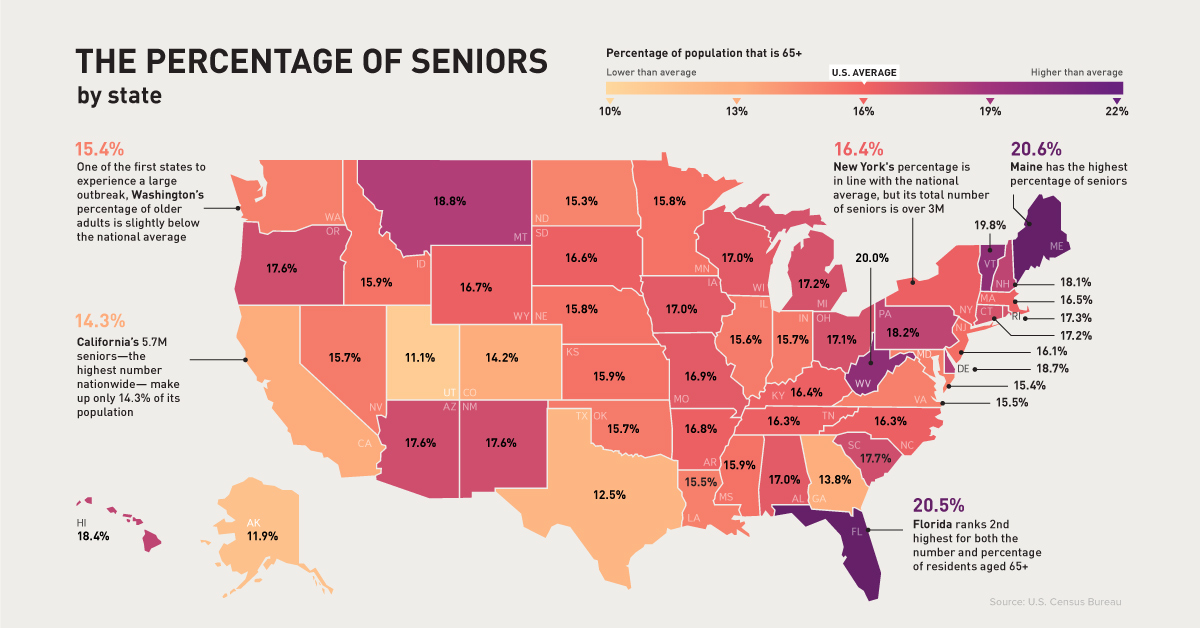
At Risk: The Geography of America’s Senior Population

At Risk: The Geography of America’s Senior Population

At Risk: The Geography of the U.S. Senior Population

U.S. Senior Population by State, Covid-19

senior population vs covid-19 outbreak


More than 9,000 healthcare workers have contracted COVID-19 as of last week, CDC says

https://www.healthcarefinancenews.com/node/139992?mkt_tok=eyJpIjoiTWprMk5XVmlOVFV5T0RNMyIsInQiOiJ6dFdBNXNaYUVKdER0RXQzckFKMVpmanhyRjRBMjVSdHFrajR0UnBJSlkyWG50SzNtalp5a3FXXC9HUFl2ZndYcEZ2TVdyd1VvdGxLRWUrZkRCTXB6U3AxRTQzTXRtWTJoUDN3QytSbVwvV1IzZXg5QnpYdWp0SDhXV2tjQ25UTDNiIn0%3D

Healthcare Finance News

CDC warns the data may not reflect the true scope of the problem, as uneven reporting of confirmed cases likely underestimates the impact.

Healthcare workers who treat patients infected with the COVID-19 coronavirus are at risk of contracting the disease themselves due to frequent exposure and proximity to such patients.

New figures from the U.S. Centers for Disease Control and Prevention detail the extent to which this is true, finding that 9,282 healthcare workers across the country are confirmed to have been infected.

Of those confirmed cases, 27 have died, according to numbers culled from February 12 to April 9. About 55% of all healthcare personnel who were infected only had contact with COVID-19 patients within the healthcare setting.

The vast majority of confirmed positive healthcare workers – 90% – were not hospitalized. Up to 5% of those who were hospitalized ended up in intensive care, while 10 of the 27 deaths were among those workers 65 years old or older.

The CDC warned that the data may not reflect the true scope of the problem, as uneven reporting of confirmed cases across the country has resulted in figures that likely underestimate the number of healthcare workers infected.

WHAT’S THE IMPACT?

The number of coronavirus cases among healthcare workers is expected to rise. While this is due in part to more communities experiencing widespread transmission, the nature of working in the healthcare field understandably contributes to the risk: About 45% of workers who tested positive lived in households or communities in which the virus was present, meaning they risk exposure on two fronts, both inside a healthcare setting and outside of it.

Compounding the problem is that transmission can come from unrecognized sources, including those who are asymptomatic or presymptomatic. Because of that, contact tracing after occupational exposures will likely fail to identify many healthcare workers who are at risk for developing COVID-19.

As with the general population, the higher a healthcare workers’ age, the more likely they were to experience a severe outcome, although severe outcomes – including death – are possible at any age.

Preventative measures meant to staunch the spread among healthcare personnel include screening all workers for fever and respiratory symptoms at the beginning of their shifts, prioritizing such workers for testing, and discouraging working while sick by offering flexible and non-punitive medical leave policies.

The CDC said older healthcare personnel, or those with underlying health conditions, should consult with their healthcare provider and employee health program to better understand their risks. On hospitals’ part, they should consider the enhanced likelihood of severe outcomes among older personnel when mobilizing retired workers to increase surge capacity, especially in light of a shortage of personal protective equipment. One consideration would be preferential assignment of retired workers to lower-risk settings such as telehealth, administrative assignments or clinics for non-COVID-19 patients.

THE LARGER TREND

PPE shortages, insufficient tests, slow results and a dearth of ventilators are all factors that contribute to risk of infection among healthcare workers, and these challenges play off each other in a toxic cycle, an Office of the Inspector General report found last week.

Hospitals said their most significant challenges centered on testing and caring for patients with COVID-19 and keeping staff safe. Severe shortages of testing supplies and extended waits for test results limited hospitals’ ability to monitor the health of patients and staff, and widespread shortages of PPE are putting both groups at risk. Hospitals also said they were not always able to maintain adequate staffing levels or to offer staff adequate support.


Medical supply scramble continues

https://www.axios.com/newsletters/axios-vitals-fb6b1c68-afc1-4b2b-9096-de20fd0b10a7.html?utm_source=newsletter&utm_medium=email&utm_campaign=newsletter_axiosvitals&stream=top

What's Really To Blame For Drug Shortages

The U.S. is still scrambling to get health care workers the personal protective equipment, ventilators and lab testing materials that they need.

Between the lines: President Trump has repeatedly said that governors are responsible for obtaining supplies for their states, but industry groups are asking the federal government to play a larger role.

  • The American Medical Association asked FEMA to create a national system to acquire and distribute personal protective equipment, in light of ongoing shortages.
  • David Skorton, president and CEO of the Association of American Medical Colleges, wrote a letter to coronavirus task force coordinator Deborah Birx asking for more federal help with diagnostic testing supply shortages.

Meanwhile, the private sector is shifting into gear on its own and in partnership with the government.

  • The Trump administration and 20 major health care systems launched a new ventilator loan program that will allow hospitals to ship unused machines to areas where they are needed most to fight the coronavirus pandemic, Axios’ Joann Muller reports.
  • General Motors started manufacturing ventilators on Tuesday under a $489.4 million federal contract. But it will take until August to produce all 30,000 the government ordered under the Defense Production Act.
  • Space-focused organizations around the U.S. are now looking to manufacture ventilators and other much-needed health equipment to aid the pandemic relief effort, Axios’ Miriam Kramer reports.

1 scary stat: Prescription drugs needed by patients on ventilators are being filled only 53% of the time so far in April, as demand has skyrocketed, according to Vizient, a health care purchasing group.


Bill Gates says the world is entering ‘uncharted territory’ because it wasn’t prepared for a pandemic like COVID-19

https://www.businessinsider.com/bill-gates-warns-world-is-entering-uncharted-territory-coronavirus-2020-4

5 Books Bill Gates Wants You to Read This Summer | Time

  • Microsoft cofounder Bill Gates said the world was entering into “uncharted territory” because it was not prepared for a pandemic like COVID-19, the disease caused by the novel coronavirus.
  • Speaking to “BBC Breakfast” by video chat on Sunday, Gates said the world should’ve invested more in mitigating a global health crisis.
  • “There is the period where the virus shows up in those first few months,” he said. “Were the tests prepared? Did countries think through getting their ICU and ventilator capacity up?”
  • He added that once the crisis is over “very few countries are going to get an A grade” for their handling of the outbreak.

Microsoft cofounder Bill Gates said the world was entering into “uncharted territory” because it was not prepared for a pandemic like COVID-19, the disease caused by the novel coronavirus.

Gates, who has been warning about the risk of a pandemic disease for years and who has poured millions into fighting the new coronavirus outbreak, told “BBC Breakfast” on Sunday that the world should have invested more into mitigating a global health crisis.

“Well, there was a period when I and other health experts were saying that this was the greatest potential downfall the world faced,” he told the BBC in an interview on Sunday, highlighting his previous warnings against the possibility of a deadly pandemic.

“So we definitely will look back and wish we had invested more,” he said, “so that we could quickly have all the diagnostics, drugs, and vaccines. We underinvested,” he said.

The 67-year-old billionaire warned that in the period before COVID-19 became a public-health crisis, countries could have better prepared their testing capabilities and made sure hospitals were stocked with ventilators and other necessary health supplies.

“There is the period where the virus shows up in those first few months,” he said. “Were the tests prepared? Did countries think through getting their ICU and ventilator capacity up?”

He added that once the crisis is over “very few countries are going to get an A grade” for their handling of the outbreak.

“Now, here we are, we didn’t simulate this, we didn’t practice,” he said. “So both in health policies and economic policies, we find ourselves in uncharted territory.”

Gates has become an outspoken advocate for preparing for a global health crisis like COVID-19.

Speaking to the Financial Times earlier this month, Gates said that COVID-19 was the “biggest event that people will experience in their entire lives” and world leaders and global policymakers have “paid many trillions of dollars more than we might have had to if we’d been properly ready.”

He told FT he was confident that lessons learned from this outbreak would encourage people to better prepare for next time but lamented that the cost this time around was too high.

“It shouldn’t have required a many trillions of dollars loss to get there,” he said. “The science is there. Countries will step forward.”


The US just became the first country in the world to record more than 2,000 coronavirus deaths in 24 hours

https://www.yahoo.com/news/us-just-became-first-country-092209704.html

US becomes first country to record 2,000 coronavirus deaths in 1 ...

The US has become the first country in the world to record more than 2,000 coronavirus deaths in a single day.

2,108 people lost their lives on Friday, according to data collated by researchers at Johns Hopkins University.

The US also surpassed half a million infections at the end of what has been a devastating week.

More Americans died between Monday and Saturday (8,800) than died from the wars in Afghanistan and Iraq combined. 

The US death toll, 18,693, as of Saturday morning, is expected to surpass that in Italy, 18,849, by Sunday, but the overall picture indicates that while deaths continue to rise, the speed of the outbreak looks to be slowing.

“We’re starting to see the leveling off and the coming down,”Dr Anthony Fauci, the US top epidemiologist advising the White House, said on Friday.

But other officials were keen to play down any thoughts of an end to the crisis.

“As encouraging as they are, we have not reached the peak,” Dr Deborah Birx, White House coronavirus response director, said of the easing of new cases on Friday.

While the US as a whole may look better, New York state is still in a dire situation, and remains the country’s worst affected region. 777 new fatalities were reported on Friday, according to The Associated Press.


Timeline: How the U.S. fell behind on the coronavirus

https://www.axios.com/coronavirus-timeline-trump-administration-testing-c0858c03-5679-410b-baa4-dba048956bbf.html

Behind the Curve | Netflix

Early missteps allowed the new coronavirus to spread throughout the U.S for weeks before state and local officials implemented strict lockdowns designed to keep the pandemic from spinning further out of control.

Why it matters: The U.S. missed the boat on the kind of swift, early response that would have been most effective, and has been scrambling to catch up ever since. This timeline, compiled from official sources as well as media reports, shows how that all-important time was lost.

Dec. 31, 2019: China reports the novel coronavirus to the World Health Organization.

Jan. 6: The Centers for Disease Control and Prevention issued a travel notice for Wuhan, China.

Jan. 15: The first U.S. case is confirmed, in a man who traveled from Wuhan.

Jan. 17: The World Health Organization publishes a protocol for manufacturing coronavirus tests.

  • The Centers for Disease Control and Prevention opts to develop its own test instead of using the WHO’s.

Jan. 30: The WHO declares global health emergency.

Jan. 31: The Trump Administration suspended entry into the U.S. for most foreign nationals who had traveled to China in the past 14 days.

Feb. 5: The CDC begins shipping its diagnostic tests to state and local health agencies.

Feb. 8: Labs report problems with the CDC’s tests.

Feb. 24: President Trump tweets: “The Coronavirus is very much under control in the USA. We are in contact with everyone and all relevant countries. CDC & World Health have been working hard and very smart. Stock Market starting to look very good to me!”

Feb. 29: Washington state reports the first COVID-19 death in the U.S.

  • The Food and Drug Administration allows academic labs to develop and begin testing coronavirus testing kits while reviewing pending applications.
  • The WHO reports 86,604 coronavirus cases worldwide.

March 5: LabCorp and Quest Diagnostics launch coronavirus test for commercial use.

March 9: Trump tweets: “So last year 37,000 Americans died from the common Flu. It averages between 27,000 and 70,000 per year. Nothing is shut down, life & the economy go on. At this moment there are 546 confirmed cases of CoronaVirus, with 22 deaths. Think about that!”

  • The WHO reports 114,381 coronavirus cases worldwide.

March 13: Trump declares a national emergency, freeing up $50 billion in federal funds for states and territories.

March 15: 33 states and the District of Columbia closed public schools, according to Education Week. This included the New York City school system, the largest in the country.

March 16: Trump advises Americans to self-isolate for 15 days.

March 19: Trump signed into law an emergency coronavirus relief package for paid sick leave and free testing.

March 23: 9 states had stay-at-home orders.

  • Washington, Oregon, California, Louisiana, Illinois, Ohio, New York, Massachusetts and New Jersey.

March 26: The U.S. now leads world in coronavirus cases.

  • 12 more states issue stay-at-home orders, totaling 21: Idaho, Colorado, New Mexico, Michigan, Wisconsin, Kentucky, Indiana, West Virginia, Hawaii, Connecticut, Vermont and Delaware

March 29: Trump extends social distancing measures to April 30.

March 30: Nine more states issue stay-at-home orders, bringing the total to 30.

  • Governors say testing is still lacking in many states.

March 31: Trump warns of the potential for 100,000 to 240,000 deaths.

April 6: Twelve more states issue stay-at-home orders, bringing the total to 42.