The rise of ubiquitous self-testing and the paucity of accurate, timely data from the CDC on COVID numbers has left us feeling our way in the dark in terms of the current state of the pandemic. Clearly there’s a new surge underway, driven by the BA.5 variant. What we can report from our experiences on the road over the past few weeks is that the wave is significant.
We’re hearing from our health system members that inpatient COVID volumes and COVID-related ED visits are significantly up again—often double or more what they were just two months ago, although still well below levels of past surges. Length of stay for COVID inpatients is shorter, with fewer ICU visits than during the Delta surge—about the same intensity, proportionally, as during Omicron.
But COVID-related staffing shortages are once again having a real impact on hospitals’ ability to deliver care—clinical and non-clinical staff callouts are at high levels again, as during Omicron.
One piece of good news: masking is back in vogue among many health system executive teams, likely in response to a number of “superspreader” events: gatherings of hospital staff over the past few weeks that resulted in clusters of cases. One system described an all-hands session for anesthesiologists that resulted in more than a dozen cases across the next week—forcing the hospital to cancel procedures.
We’re worried that this BA.5 surge is just getting started, and with booster uptake stagnating and masking all but nonexistent in the general population, the late summer and early autumn situation could be significantly worse.
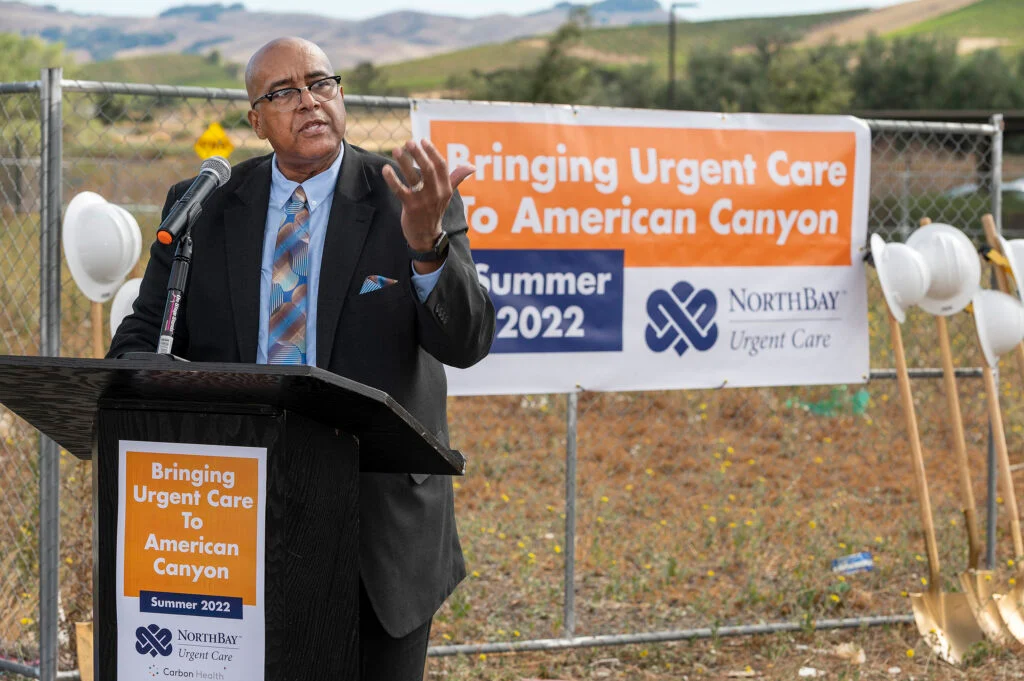
Fairfield, Calif.-based NorthBay Health announced July 11 that it will cut 7 percent of its workforce following continued financial strains, the Daily Republic reported July 12.
“The harsh reality is a number of factors contributed to NorthBay’s economic headwinds, including reduced volumes; skyrocketing prices for supplies, drugs and medical devices; the continuing need to rely on expensive temporary workers; and the rising number of Medicare and Medi-Cal patients whose care is not fully covered by government payments,” B. Konard Jones, president and CEO of NorthBay Health, said in a press release shared with the Daily Republic.
This 7 percent encompasses full-time positions or multiple part-time positions that equate to full-time hours. NorthBay Health said that 190 full-time positions will be cut in total.
Mr. Jones added that the healthcare system has a plan in place to get its budget back on track, but details of that plan have not been revealed at this time.
So far, NorthBay Health has already cut senior management positions by 20 percent. It is likely more positions will be cut in the future, according to the Daily Republic.
NorthBay Health is an independent, nonprofit healthcare system with a medical center in Fairfield, Calif., a hospital in Vacaville, Calif., and multiple specialty care clinics throughout Solano County. It was formerly known as NorthBay Healthcare.
A hospital industry-backed campaign argues that a new pay hike’s exclusion of public facilities and other provider organizations will lead to an exodus of workers. Proponents of the measure say it will rejuvenate a battered workforce and that the industry is simply looking to protect pandemic profits. (City of Los Angeles and Marqueece Harris-Dawson)
California hospitals have launched a campaign to roll back Los Angeles’ newly enacted $25 per hour minimum wage for many private sector healthcare workers.
The Healthcare Workers Minimum Wage Ordinancewas signed Friday by Los Angeles Mayor Eric Garcetti after the city received a petition for the pay increase organized by the labor group SEIU-United Healthcare Workers West (SEIU-UHW) and signed by more than 145,000 people. Los Angeles’ current minimum wage is $16.04.
The pay bump is set to take effect 31 days after being published by the city clerk, will be adjusted annually for cost of living starting in 2024 and will raise wages for roughly 20,000 healthcare workers across the city, according to the mayor’s office. Those impacted include non-clinical staff, such as food service workers, groundskeepers and maintenance workers, according to the ordinance.
“Working long, grueling hours and absorbing insurmountable stress, the burnout being felt from the pressures of COVID-19 has been prevalent, causing an alarming number of healthcare workers to leave the profession altogether,” Los Angeles Councilmember Curren Price said in a statement. “The approval to raise their wages demonstrates to the countless workers that they are valued, seen, heard and above all, their lives matter.”
The ordinance was opposed by hospitals under the banner of the No on the Unequal Pay Measure Coalition, a campaign sponsored by the California Association of Hospitals and Health Systems.
The group is now seeking enough signatures to put the wage hike in front of Los Angeles voters, which would block the increase from going into effect until a 2024 election yields a verdict. The hospitals-backed push would require nearly 41,000 signatures to be submitted within 30 days.
The coalition paints the Healthcare Workers Minimum Wage Ordinance as an “inequitable, arbitrary and discriminatory” move that would ultimately harm patients and workers.
Because it applies only to certain workers at private hospitals, hospital-based facilities and dialysis clinics, the “vast majority” of Los Angeles healthcare workers are excluded from the measure’s pay increase, the coalition said.
As such, the ordinance will drive a flight of talent from public hospitals and other non-covered facilities such as community health clinics, Planned Parenthood clinics and nursing homes, the group said.
Workforce shortages at these facilities would disproportionately harm the disadvantaged, underserved and uninsured communities whom these facilities more often serve, the coalition said. Service cuts would also be in the cards as provider organizations contend with tens of millions of dollars in increased annual costs, they said.
“We all agree healthcare workers are heroes, but this Unequal Pay Ordinance is deeply flawed, inequitable and will hurt workers and patients,” the coalition said.
The city and proponents of the measure viewed much of the opposition as a push for profits.
In the ordinance’s text, the city highlighted “huge profits in the billions of dollars” and “increasing profit margins” health systems have seen during the pandemic. The city government wrote that “the healthcare industry needs to use some of its profits to fairly compensate workers who are sacrificing every day to care for patients.”
In a release celebrating the ordinance’s signing, SEIU-UHW said healthcare employers “have failed to compensate us for our dedication and sacrifices” and “have more than enough to raise wages.”
The group noted similar wage increase efforts ongoing in eight other California cities as well as a push to bring the $25 minimum to all of the state’s healthcare workers.
In a statement to the Los Angeles Times, SEIU-UHW spokesperson Renée Saldaña said the hospitals “are out of step with local voters if they think the solution is to slash wages for the caregivers who got us through the pandemic. … The problem that needs to be addressed is bloated executive compensation that is driving up healthcare costs for Angelenos.”
George Greene, president and CEO of the Hospital Association of Southern California, told the paper that many of the region’s hospitals are “reeling” financially due to the pandemic. He also said the city passed the ordinance without conducting any type of analysis regarding the impact it would have on the area’s hospitals.
As employers plan for 2023, attracting and retaining talent is top of mind amid a competitive U.S. labor market. That’s led to over two-thirds of companies planning to enhance employee health and benefit offerings next year, according to survey results from Mercer published July 6.
The survey was conducted April 26 to May 13. In total, 708 organizations participated, from all industries and of all sizes ranging from fewer than 500 employees to more than 5,000.
Nine things to know:
Among large employers, 70 percent are planning to enhance health and benefit offerings in 2023.
Among all employers, 61 percent are conducting surveys on employee benefit preferences.
Among large employers, 41 percent currently provide a plan option with a low deductible or none at all, and 11 percent are considering it.
Over half of employees say no remote or hybrid work is a deal breaker when considering to join or stay with an organization. Among all employers, 78 percent now allow employees to work from home regularly, compared to 26 percent in 2021.
Among large employers, 52 percent will offer virtual behavioral healthcare in 2023, and 40 percent will offer a virtual primary care physician network or service.
Though 64 percent of employers are not prioritizing a single employee group for benefit enhancements, 35 percent say they are focusing on hourly and low-wage employees.
Nearly one-third of employers will offer benefits such as fertility treatment coverage and adoption and surrogacy benefits by 2023, and almost another third are considering it.
Among all employers, 70 percent currently offer or plan to offer paid parental leave in 2023.
Among all employers, 75 percent offer or plan to offer tuition reimbursement in 2023.
Columbus-based OhioHealth is eliminating 637 jobs, its biggest layoff ever, according to The Columbus Dispatch. The move is part of a plan to engage external partners to provide some services the system currently provides in house.
Over the next three to five months, the system will eliminate those jobs in information technology and revenue cycle management. Of those, 567 are in information technology. It informed workers of the cuts on July 7.
“We are committed to providing a high-level of support to all associates affected by this change,” Colin Yoder, director of media and public relations at OhioHealth, told Becker’s in a statement. “This includes outplacement support, a job fair specifically for those displaced, temporary salary and benefits continuation after their OhioHealth employment ends and upskill training for those in Information Technology.”
OhioHealth said the IT work will be handled by the professional services company Accenture, and AGS Health will handle the revenue cycle business.
The layoffs, according to OhioHealth, are intended to improve patient care and services and position the healthcare system for a future where patients rely more on telemedicine and cellphones to obtain their healthcare.
“This strategy will enable us to secure the skills, technology, expertise and innovation required to deliver a best-in-class, patient-centric, personalized healthcare experience without taking away from investments we are already making at the bedside,” Mr. Yoder said.
The IT workers will remain on payroll until Jan. 3 and will be given the opportunity for training that could make them eligible for other jobs at the company. The other workers will be laid off Nov. 4.
As the economic situation has worsened over the past few months, we’ve been working with several health systems to recalibrate strategy. For many, the anticipated “post-COVID recovery” period has turned into a struggle to reverse declining (often negative) margins, while still scrambling to address mounting workforce shortages. All this amid continued pressure from disruptive competitors and ever-rising consumer expectations.
In the graphic above, we’ve pulled together some of the most important changes we believe health systems need to make. These range from improvements to the operating model (shifting to a team-based approach to staffing, greater use of automation where appropriate, and moving to asset-light capital strategies) to transformations of the clinical model (moving care into lower-cost outpatient and community settings, integrating virtual care into clinical delivery, and creating tighter alignment with key physicians).
In general, the goal is to deliver lower-cost care in less expensive settings, using less expensive staff.
But those cost-saving strategies will need to be coupled with a new go-to-market approach, including new payment models that reward systems for shifting away from high-cost (and highly reimbursed) care models.
Employers and consumers will expect more solution-based offerings, which integrate care across the continuum into coherent bundles of service. This will require a more deliberate focus on service line strategies, moving away from a fragmented, inpatient-centric model.
Contracting approaches must align payment with this shift, changing incentives to reward coordinated, cost-effective, outcomes-driven care.
A key insight from our discussions with health system leaders: short-term cost-cutting initiatives to “stop the bleed” won’t suffice—instead, more permanent solutions will be required that address not only the core operating model, but also the approach to revenue generation.
The post-COVID environment is turning out to be a lot tougher than many had expected, to say the least.
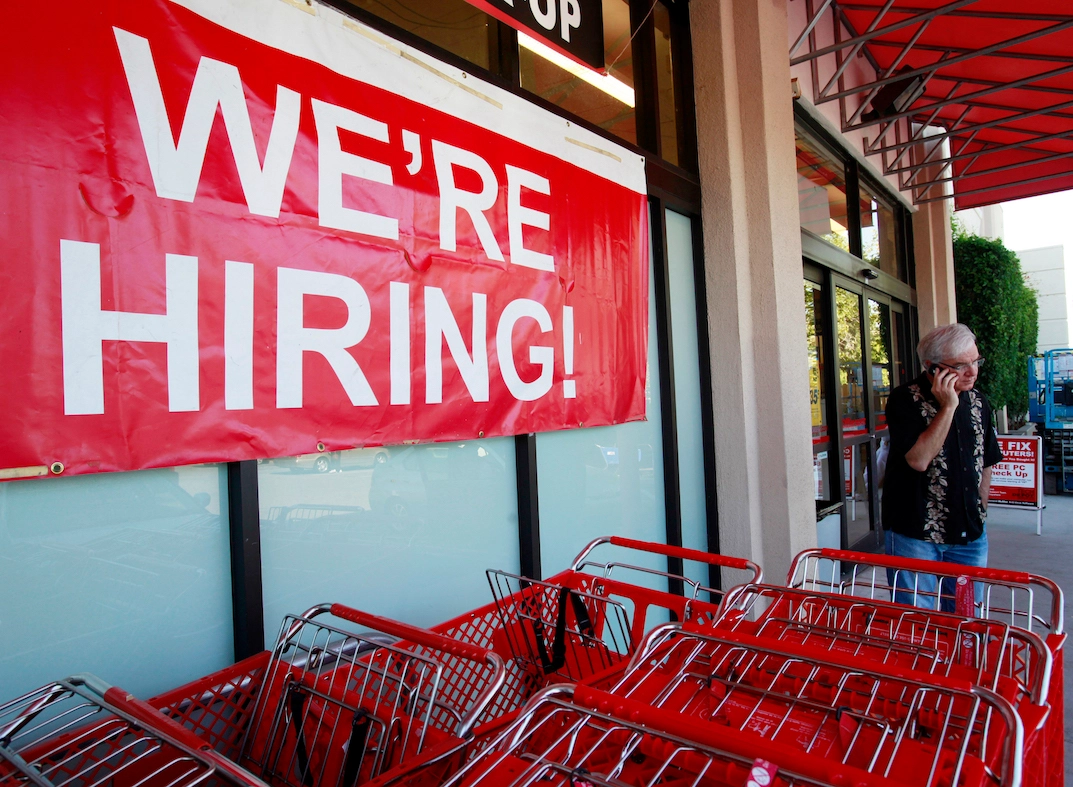
Job openings fell slightly in May as demand for workers remained near record highs, according to data released Wednesday by the Labor Department, even amid growing concerns of a potential recession.
The number of open jobs listed in the U.S. on the final business day of May totaled 11.3 million, dropping from 11.7 million in April after seasonal adjustments. Though job openings fell in May, hires, layoffs and quits stayed roughly even with their April numbers, according to the May Job Openings and Labor Turnover Survey (JOLTS) report.
The JOLTS report showed a labor market still stacked strongly for workers in May, a month when the U.S. added 390,000 jobs and saw the jobless rate hold strong at 3.6 percent. Despite the decline in job openings, there were still almost two open gigs for each unemployed American.
That mismatch can give workers many opportunities to find new jobs with better compensation and career opportunities than their current ones.
“This is not what a recession looks like. The May 2022 JOLTS data obviously lags what’s happening in the labor market presently, but all signs are that it remains strong,” wrote Nick Bunker, research director at Indeed.com, in a Wednesday analysis.
“If the labor market were quickly and suddenly taking a downturn, we would see employers’ demand for new hires drop and their willingness to let workers go increase. For now, we aren’t seeing a sudden move in either direction.”
Businesses hired roughly 6.5 million workers and lost 6 million in May, both in line with April totals. The percentage of the workers who quit their jobs in May fell to 2.8 percent, just 0.1 percentage points from a record high of 2.9 percent set earlier this year.
With ample jobs available and people still eager to leave in search of better work, businesses have avoided laying off employees over fears they could be hard to replace. Roughly 1.4 million workers were laid off in May, slightly higher than April’s total of 1.3 million. But the percentage of the workforce laid off by their employers held even at 0.9 percent, which is below pre-pandemic levels.
“Despite continued headlines about layoffs, particularly in the tech sector, the layoff rate remains low,” Bunker explained. “This is the 15th straight month that the layoff rate has been below its pre-pandemic bottom.”
The steady strength of the U.S. job market helped propel a rapid recovery from the depths of the COVID-19 recession through much of 2020 and 2021. The U.S. is fewer than 1 million new jobs away from replacing the 21 million jobs lost to the onset of the pandemic, and the speed of the pandemic recovery has helped fuel rapid wage growth, particularly for low-earning workers.
Even so, many economists — including Federal Reserve officials — fear the strength of the job market could add further fuel to inflation already at four-decade highs. While steady job gains are good for the economy, the intense competition for workers has made it difficult for many firms to stay adequately staffed and keep up with both higher wage demands and rising prices.
Fed Chairman Jerome Powelland many economists are hopeful that higher interest rates and the fading effects of fiscal stimulus can help reduce job openings — and the pressure they put on wages — without wiping out job gains.
The Fed has boosted its baseline interest rate range by 1.5 percentage points from near-zero levels in January and is expected to hike by another 2 percentage points by the end of the year. Higher interest rates are meant to reduce inflation by slowing the economy enough to force businesses to stop raising prices and wages.
Even so, he has acknowledged it will be difficult for the Fed to avoid slowing down the labor market into a standstill as the central bank boosts interest rates to fight inflation.
“The labor market conditions [Powell] has described as ‘extremely, historically’ tight and ‘unsustainably hot’ persisted in May,” wrote Julia Pollak, chief economist at ZipRecruiter, in a Wednesday analysis.
“Employers are hanging onto the workers they have in a tight labor market where replacing them is unusually costly.”
The June jobs report, set to be released Friday, will give a most recent view into how well the labor market has held up amid Fed rate hikes. Economists expect the U.S. to have added roughly 268,000 jobs last month, according to consensus estimates.
“There will be a time when the US labor market takes a downturn, jobs are shed at a higher rate, and workers stop quitting their jobs. But that time has yet to come. The labor market remains very tight and very hot. That may change, but it hasn’t yet,” Bunker wrote.
U.S.-based employers announced 32,517 cuts in June 2022, a 58.8 percent increase from 20,476 cuts announced in the same month last year, according to a new job report from Challenger, Gray & Christmas.
June marks the highest month since February 2021, when 34,531 cuts were announced. It is the second time this year that cuts were higher in 2022 than the corresponding month a year earlier.
Healthcare/products manufacturers and providers announced the most job cuts this year with 19,390, which is up 54 percent from the 12,620 announced through June 2021. The automotive industry posted the second-highest cuts with 15,578, a number that is up from the 6,111 cuts in the previous year.
Andrew Challenger, senior vice president of executive search firm Challenger, Gray & Christmas, said the numbers demonstrate increasing economic strain.
“Employers are beginning to respond to financial pressures and slowing demand by cutting costs. While the labor market is still tight, that tightness may begin to ease in the next few months,” Mr. Challenger said.
Locations suffering the highest losses include California with 28,692, New York at 15,952, and Pennsylvania at 9,310.
Several hospitals are trimming their workforces due to financial and operational challenges, and some are offering affected workers new positions.
1. Santa Cruz Valley Hospital in Green Valley, Ariz., closed June 30. The closure resulted in 315 workers losing their jobs. CEO Steve Harris said the decision to close Santa Cruz Valley Regional Hospital was made after it was unable to secure emergency department staffing for the Fourth of July weekend. The hospital issued a Worker Adjustment and Retraining Notification Act notice June 20, which gave the hospital’s 315 workers notice of the mass layoff.
2. Claxton-Hepburn Medical Center in Ogdensburg, N.Y., is cutting approximately 5 percent of its 800-person workforce as it makes changes aimed at improving revenue cycle functions. The hospital said in late June that it is planning to outsource revenue cycle functions and lay off revenue cycle staff.
3. Sturgis (Mich.) Hospital said it is planning to lay off 194 employees in July as it scales back services or closes. The hospital subsequently secured a loan to keep it open through July, according to WTVB.
4. Bristol (Conn.) Health on June 16 eliminated 31 positions, including 10 that were filled and 21 that were vacant. The majority of those laid off were in management.
5. Citing skyrocketing expenses and flat revenue, St. Charles Health System in Bend, Ore., will cut 181 positions, according to a May 18 announcement. The workforce reduction includes laying off 105 caregivers and eliminating 76 vacant positions. The layoffs affect mainly nonclinical workers, including many leadership positions. The four-hospital health system said it took steps to address its financial challenges, but it ended the month of April with a $21.8 million loss.
6. Toledo, Ohio-based ProMedica’s health plan, Paramount, is laying off about 200 employees in July after losing a Medicaid contract. Anthem acquired Paramount’s Medicaid contract, and ProMedica and Anthem have been working to identify open roles for employees affected by the layoffs.
7. Greenwood (Miss.) Leflore Hospital announced in May that it will lay off 30 employees to help offset losses. The layoffs, which include an undisclosed number of physicians, affect less than 4 percent of the hospital’s workforce. Many of the affected employees were notified May 17.
8. Mercy Medical Center in Springfield, Mass., part of Trinity Health of New England, is trimming jobs. The hospital laid off 12 of its 380 unionized nurses, the Massachusetts Nurses Association told Western Mass News in May. Translators and ancillary staff were also affected by the cuts. Trinity Health of New England, which declined to provide the number of workers affected by the layoffs, attributed the cuts to national disruption in the healthcare industry. In addition to the layoffs, Trinity Health of New England is also eliminating some positions that are currently vacant.






 HENRY KOTULA