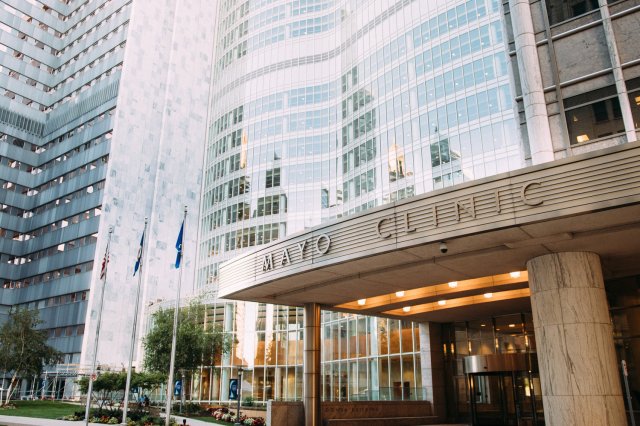
COVID-19 pushes Mayo Clinic’s operating income into free fall

https://www.healthcaredive.com/news/covid-19-pushes-mayo-clinics-operating-income-into-free-fall/578191/

Farrugia calls 2019 'a year of remarkable growth' as Mayo reports ...

Dive Brief:

  • Prior to the onset of the novel coronavirus, Mayo Clinic was cruising along with a healthy operating margin of 6.7% during the first two months of the quarter. But by the close of the period, the operating margin was squeezed to just 0.9% while net operating income fell off a cliff, free falling 88% to $29 million compared to the first quarter of 2019.
  • Due to contracting services and the near closure of its outpatient business in response to the pandemic, revenues for the quarter declined nearly 4% while expenses rose 3% compared to the prior-year period.
  • The fluctuation in the financial markets caused a downturn in Mayo’s investment portfolio, leading to an overall net loss of $623 million for the Rochester, Minnesota-based nonprofit health system.

Dive Insight:

Mayo Clinic is the latest hospital operator to report it first quarter results have been battered by the pandemic.

The system, which took in more than $1 billion in operating income in 2019, joins other major hospital operators that reported a dip in volumes amid the public health crisis, including HCA and CommonSpirit.

The second quarter is not likely to look better, according to Fitch Ratings. The second quarter looks bleak as the ratings agency issued an ominous report predicting it would be the “worst on record” for most nonprofit hospitals.

Yet, some of the for-profit hospital operators see May as the beginning of the recovery. Both Tenet and CHS executives seemed upbeat about the prospects for this month, noting it was the start of resuming elective procedures that had been put off.

Despite the hospital sector as a whole taking a major hit from the pandemic, big wealthy systems like Mayo have significant rainy day funds. Mayo reported cash and investments of more than $10.6 billion as of March 30 with 252 days cash on hand.

In April, Mayo issued a voluntary notice about how the virus was taking on its business, noting reduced salaries for executives and physicians, furloughs and a hiring freeze, among other efforts.​

In its first quarter report, Mayo detailed the ways in which it’s tackling the novel coronavirus on the medical front, including leading a program, approved by the FDA, that gives severely sick COVID-19 patients plasma from those who were previously sickened but have since recovered from the virus.

Mayo said it’s preparing the program’s first safety report on the first 5,000 patients to receive the infusion. As of May 12, more than 9,300 patients have been infused, Mayo said.

The system also runs COVID-19 testing, and said it is now able to administer 8,500 molecular tests and 20,000 serologic tests, which look for antibodies to the virus in those that may have been previously infected, daily.



Fitch Q2 outlook for nonprofit hospitals: ‘worst on record’

https://www.healthcaredive.com/news/fitch-analysts-hospital-worries-FY-2020/577875/

Nicklaus Children's Health System Receives A+ Rating from Fitch ...

From the Mayo Clinic to Kaiser Permanente, nonprofit hospitals are posting massive losses as the coronavirus pandemic upends their traditional way of doing business.

Fitch Ratings analysts predict a grimmer second quarter: “the worst on record for most,” Kevin Holloran, senior director for Fitch, said during a Tuesday webinar.​

Over the past month, Fitch has revised its nonprofit hospital sector outlook from stable to negative. It has yet to change its ratings outlook to negative, though the possibility wasn’t ruled out.

Some have already seen the effects. Mayo estimates up to $3 billion in revenue losses from the onset of the pandemic until late April — given the system is operating “well below” normal capacity. It also announced employee furloughs and pay cuts, as several other hospitals have done.

Data released Tuesday from health cost nonprofit FAIR Health show how steep declines have been for larger hospitals in particular. The report looked at process claims for private insurance plans submitted by more than 60 payers for both nonprofit and for-profit hospitals.

Facilities with more than 250 beds saw average per-facility revenues based on estimated in-network amounts decline from $4.5 million in the first quarter of 2019 to $4.2 million in the first quarter of 2020. The gap was less pronounced in hospitals with 101 to 250 beds and not evident at all in those with 100 beds or fewer.

Funding from federal relief packages has helped offset losses at those larger hospitals to some degree.

Analysts from the ratings agency said those grants could help fill in around 30% to 50% of lost revenues, but won’t solve the issue on their own.

They also warned another surge of COVID-19 cases could happen as hospitals attempt to recover from the steep losses they felt during the first half of the year.

Anthony Fauci, the nation’s top infectious disease expert, warned lawmakers this week that the U.S. doesn’t have the necessary testing and surveillance infrastructure in place to prep for a fall resurgence of the coronavirus, a second wave that’s “entirely conceivable and possible.”

“If some areas, cities, states or what have you, jump over these various checkpoints and prematurely open up … we will start to see little spikes that may turn into outbreaks,” he told a Senate panel.

That could again overwhelm the healthcare system and financially devastate some on the way to recovery.

“Another extended time period without elective procedures would be very difficult for the sector to absorb,” Holloran said, suggesting if another wave occurs, such procedures should be evaluated on a case-by-case basis, not a state-by-state basis.

Hospitals in certain states and markets are better positioned to return to somewhat normal volumes later this year, analysts said, such as those with high growth and other wealth or income indicators. College towns and state capitols will fare best, they said.

Early reports of patients rescheduling postponed elective procedures provide some hope for returning to normal volumes.

“Initial expectations in reopened states have been a bit more positive than expected due to pent up demand,” Holloran said. But he cautioned there’s still a “real, honest fear about returning to a hospital.”

Moody’s Investors Service said this week nonprofit hospitals should expect the see the financial effects of the pandemic into next year and assistance from the federal government is unlikely to fully compensate them.

How quickly facilities are able to ramp up elective procedures will depend on geography, access to rapid testing, supply chains and patient fears about returning to a hospital, among other factors, the ratings agency said.

“There is considerable uncertainty regarding the willingness of patients — especially older patients and those considered high risk — to return to the health system for elective services,” according to the report. “Testing could also play an important role in establishing trust that it is safe to seek medical care, especially for nonemergency and elective services, before a vaccine is widely available.”

Hospitals have avoided major cash flow difficulties thanks to financial aid from the federal government, but will begin to face those issues as they repay Medicare advances. And the overall U.S. economy will be a key factor for hospitals as well, as job losses weaken the payer mix and drive down patient volumes and increase bad debt, Moody’s said.

Like other businesses, hospitals will have to adapt new safety protocols that will further strain resources and slow productivity, according to the report.​

Another trend brought by the pandemic is a drop in ER volumes. Patients are still going to emergency rooms, FAIR Health data show, but most often for respiratory illnesses. Admissions for pelvic pain and head injuries, among others declined in March.

“Hospitals may also be losing revenue from a widespread decrease in the number of patients visiting emergency rooms for non-COVID-19 care,” according to the report. “Many patients who would have otherwise gone to the ER have stayed away, presumably out of fear of catching COVID-19.”


$100B federal hospital aid won’t fully compensate lost revenue, Moody’s says

https://www.beckershospitalreview.com/finance/100b-federal-hospital-aid-won-t-fully-compensate-lost-revenue-moody-s-says.html?utm_medium=email

Moodys | HENRY KOTULA

The $2 trillion federal coronavirus aid package signed into law that includes $100 billion for nonprofit hospitals won’t completely cover the revenue hospitals will lose as a result of the pandemic, Moody’s Investors Service wrote in an April 3 note.

While the aid package includes several provisions like compensation for lost revenue, increased Medicare reimbursement and advances on future Medicare reimbursement, cash flow at nonprofit hospitals will still likely be materially lower for the next several months. Postponed services alone are likely to reduce hospital revenue by 25 percent to 40 percent a month on average, Moody’s said, a reduction that is affecting even hospitals that aren’t treating large COVID-19 case loads.

“The $100 billion aid package provides some relief to hospitals by supporting their operations and providing access to critical supplies,” Dan Steingart, vice president at Moody’s, said. “However, it is unlikely to fully compensate the sector for the two main financial challenges facing providers as a result of the coronavirus outbreak. The first is a material decline in revenue and cash flow as profitable elective surgeries, procedures and other services are postponed to preserve resources and avoid spreading the virus. The second is difficulty curbing expenses as surge preparation costs offset any expense reductions from postponed or canceled services.”

Moody’s maintained its negative outlook on nonprofit hospitals. 


Nonprofit hospital outlook negative as COVID-19 restricts cash flow, Moody’s says

https://www.beckershospitalreview.com/finance/nonprofit-hospital-outlook-negative-as-covid-19-restricts-cash-flow-moody-s-says.html?utm_medium=email

Image result for Nonprofit hospital outlook negative as COVID-19 restricts cash flow, Moody's says

Moody’s Investor Services changed its outlook for nonprofit hospitals from stable to negative because of how the coronavirus outbreak is expected to affect cash flow.

Four things to know:

1. While Moody’s previously expected 2-3 percent growth in cash flow for 2020, this is no longer the case. Moody’s said the coronavirus situation is changing too quickly to estimate a specific range for this year, but nonprofit hospitals will likely see lower cash flow compared to 2019.

2. Moody’s said nonprofit hospitals will take a revenue hit as they cancel lucrative elective surgeries and procedures to prepare for a surge in COVID-19 patients. 

3. Revenue declines will be paired with higher expenses as the need for equipment and supplies increases.

4. Moody’s predicts the containment of the outbreak will come in 2020, and the economy will start to gradually recover. Still, analysts note there is a high degree of uncertainty and a risk that the outbreak could last longer than predicted.