Senate Finance Hearing on Hospital Consolidation: Political Theatre or Something More?

Last Thursday, the Senate Finance Committee heard testimony from experts who offered damning testimony about hospital consolidation (excerpts below).  Committee Chair Ron Wyden (D-OR) gaveled the session to order with this commentary:

“I’d like to talk about health care costs and quality. Advocates for proposed mergers often say they will bring lower health costs due to increased efficiency. Time after time, it’s simply not proven to be the case. When hospitals merge, prices go up, not down. When insurers merge, premiums go up, not down. And quality of care is not any better with this higher cost. “

Ranking Member Mike Crapo (R-ID) offered a more conciliatory assessment in his opening statement: “In exploring and addressing these problems, we have the opportunity to build on our efforts to improve medication access and affordability by taking a broader look at the health care system through a similarly bipartisan, consensus-based lens…We need to examine the drivers of consolidation, as well as its effects on care quality and costs, both for patients and taxpayers. We also need to develop focused, bipartisan and bicameral solutions that reduce out-of-pocket spending while protecting access to lifesaving services.”

Congress’ concern about consolidation in healthcare is broad-based. Pharmacy benefits managers and health insurers face similar scrutiny. Drug price control referenda have passed in several states and a federal cap was included in the Inflation Reduction Act.

The reality is this: the entire U.S. health system is on trial in the court of public opinion for ‘careless disregard for affordability’. And hospitals are seen as part of the problem justifying consolidation as a defense mechanism.

What followed in this 3-hour hearing was testimony from 3 experts critical of hospital consolidation, a Colorado community hospital CEO who opined to competition with big hospital systems and a Peterson Foundation spokesperson who offered that data access and transparency are necessary to mitigate consolidation’s downside impact.

None of their testimony was surprising. Nor were questions from the 25 members of the committee. It’s a narrative that played out in House Energy and Commerce and Ways and Means Committee hearings last month. It’s likely to continue.

Often, Congressional Hearings on healthcare issues amount to little more than political theatre. In this one, four key themes emerged:

  1. Consolidation among hospitals has adversely impacted quality of care and affordability of healthcare. Prices have gone up without commensurate improvements in quality harming consumers.
  2. Larger organizations use horizontal and vertical integration to strengthen their positions relative to smaller competitors. Physician employment by hospitals is concerning. Rural and safety net hospitals are impaired most.
  3. Anti-trust efforts, price transparency mandates, data sharing and value-based programs have not been as effective as anticipated.
  4. Physicians are victims of consolidation and corporatization in U.S. healthcare. They’re paid less because others are paid more.

While committee members varied widely in the intensity of their animosity toward hospitals, a consensus emerged that the hospital status quo is not working for voters and consumers.

My take:

Consolidation is part of everyday life. Last Tuesday’s bombshell announcement of the merger of the PGA Tour and the Saudi Arabia’s Public Investment Fund caught the golfing world by surprise. Anti-trust issues and monopolistic behaviors are noticed by voters and lawmakers. Hospital consolidation is no exception festering suspicions among lawmakers and voters that the public’s good is ill-served. And studies showing that charity care among not-for-profit hospitals is lower than for-profit confuse and complicate.

As I listened to the hearing, I had questions…

  • Were all relevant perspectives presented?
  • Was the information provided by witnesses and cited in Committee member questioning accurate?
  • Will meaningful action result?

But having testified before Congressional Committees, I find myself dismissive of most hearings which seem heavy on political staging but light on meaningful insight. Many are little more than political theatre. Hospital consolidation seems different. There seems to be growing consensus that it’s harmful to some and costly to all.

Sadly, this hearing is the latest evidence that the good will built by hospital heroics in the pandemic is now forgotten. It’s clear hospital consolidation is an issue that faces strong and increased headwinds with evidence mounting—accurate or not– showing more harm than good.

Pennsylvania unions file antitrust complaint against UPMC

https://www.healthcaredive.com/news/upmc-unions-antitrust-complaint-doj-workers/650739/

Dive Brief:

  • Pennsylvania unions have filed a complaint with the Department of Justice alleging integrated hospital giant UPMC is abusing its dominant market position to suppress wages and retain workers.
  • On Thursday, SEIU Healthcare Pennsylvania and a coalition of labor unions filed a 55-page complaint against UPMC, the largest private employer in the state, saying the hospital system’s size has allowed it to stamp out wage growth, “drastically increase” workload and keep workers from departing to other jobs.
  • The unions are asking federal regulators to investigate UPMC for antitrust violations, citing its dominance of the healthcare market in select regions of Pennsylvania. UPMC denied allegations of wage suppression.

Dive Insight:

The Pittsburgh-based system has seen a rise in labor complaints, according to the unions, as the system has grown into its 41-hospital footprint through a series of mergers and acquisitions. UPMC, which also operates 800 doctors offices and clinics and a handful of health insurance offerings, reported $26 billion in operating revenue last year.

Attempts in the last decade to organize UPMC’s hourly workers have been unsuccessful, according to SEIU.

Matt Yarnell, president of SEIU Healthcare Pennsylvania, called the complaints groundbreaking on a Thursday call with reporters, saying that no entity has ever filed a complaint arguing that mobility restrictions and labor violations are anticompetitive, and in violation of antitrust law.

The complaint alleges that, for every 10% increase in market share, the wages of UPMC workers falls 30 to 57 cents an hour on average. UPMC hospital workers face an average 2% wage gap compared to non-UPMC facilities, according to a study cited in the complaint.

In addition, the labor groups allege that UPMC’s staffing ratios have fallen over the past decade, resulting in its staffing ratios being 19% lower on average compared with non-UPMC care sites as of 2020.

The unions are going after UPMC for being a “monopsony,” or a company that controls buying in a given marketplace, including controlling a large number of jobs. UPMC has some 92,000 workers, according to the complaint, and has cut off avenues of competition through non-compete agreements, in addition to preventing employees from unionizing.

“If, as we believe, UPMC is insulated from competitive market pressures, it will be able to keep workers’ wages and benefits — and patient quality — below competitive levels, while at the same time continually imposing further restraints and abuses on workers to maintain its market dominance,” the complaint states. “Because we believe this conduct is contrary to Section 2 of the Sherman Act, we respectfully urge the Department of Justice to investigate UPMC and take action to halt this conduct.”

In response to the allegations, UPMC said it has the highest entry-level pay of any provider in the state, and offers “above-industry” employee benefits. UPMC’s average wage is more than $78,000, Paul Wood, UPMC’s chief communications officer, told Healthcare Dive in a statement.

“There are no other employers of size and scope in the regions UPMC serves that provide good paying jobs at every level and an average wage of this magnitude,” Wood said.

Healthcare workers are increasingly pushing for better working conditions and pay amid the COVID-19 pandemic, as hospitals grapple with recruitment and retention issues driven by burnout and heightened labor costs.

Regulation of Consolidation

Jaime King On Consolidation and Competition — The Trials and Triumphs of Health Care Antitrust Law New England Journal of Medicine March 18, 2023; 388:1057-1060 DOI: 10.1056/NEJMp2201629

 “Over the past 30 years, health care consolidation has gone largely unchecked by federal and state antitrust enforcers, which has resulted in higher prices, stagnant quality of care, and limited access to care for patients. Similarly, consolidation has contributed to the availability of fewer employment options, limited wage growth, longer hours, and staff shortages for health care providers.

Antitrust law is designed to prevent such harms, but its failure to evolve alongside the health care industry has led to pervasive consolidation, which now necessitates regulation in some markets to address market-power abuses that competitive forces can no longer govern…

Although mergers are often justified with promises of improved quality or patient access, evidence supporting these claims is lacking.

Clinical integration as envisioned in accountable care organizations, for example, requires substantial oversight, training, and investment that goes well beyond the financial integration involved in most mergers. Most studies have found either no changes or a reduction in quality after provider mergers. Consolidation can also limit access to care; post-merger facility closures, reductions in charity care, and elimination of abortion and other reproductive health services have often occurred.

Consolidation among insurers also affects health care prices and quality. Insurers with market power can increase premiums above competitive levels by exercising monopoly power or can push provider payments below competitive levels by exercising monopsony power. Lower premiums are commonly found in areas with more insurers, whereas in the absence of competition, insurers that obtain price concessions from providers may not pass savings on to consumers.4 Some evidence suggests, however, that moderate amounts of insurer consolidation may be associated with improved patient experience, since providers in such markets have an incentive to compete on quality.

Given the health care industry’s growing complexity, future oversight could involve a combination of more responsive antitrust enforcement and creative regulatory interventions. Combining competitive and regulatory forces may offer the only hope for controlling health care prices, restoring high-quality care, protecting health care workers, and preserving and expanding access to care.”

‘Hospital purgatory’: Confidence in healthcare plunges as criticism grows louder and larger

Payers, pharmacy benefit managers and drug manufacturers are no strangers to heavy criticism from the public and providers alike. Now another sector of the healthcare system has found itself increasingly caught in the crosshairs of constituents looking to point a finger for the rising cost of care: hospitals.

As sharp words against the industry bubble up more often and encompass a wider variety of issues, it marks an important turn in the ethos of American healthcare. Most policymakers have historically wanted hospitals on their side, and health systems are often the largest employer within their communities and in many states.

“In my career, I’ve never seen things more aligned to the detriment of hospitals than it is now,” Paul Keckley, PhD, said. Dr. Keckley is a widely known industry analyst and editor of The Keckley Report, a weekly newsletter discussing healthcare policy and current trends. 

Confidence in the medical system as a whole fell from 51 percent in 2020 to a record low of 38 percent in 2022. Though the healthcare system is among all major U.S. institutions facing record-low public confidence, are hospitals ready for an era of widespread distrust? 

We’re going into hospital purgatory. It’s a period in which old rules may not work in the future,” Dr. Keckley said. “The only thing we know for sure is that it’s not going to get easier.”

State-versus-hospital fights have popped up throughout the U.S. over the past year. Most recently, in Colorado, a back and forth unfolded between Gov. Jared Polis and the state’s hospital association over who is ultimately responsible for high care costs. In a speech Jan. 17, the Democratic governor accused Colorado’s hospitals of overcharging patients and sitting on significant cash reserves.

“It’s time that we hold them accountable,” he said.

The Colorado Hospital Association says the data supporting those claims does not reflect the several ongoing industry challenges, among them labor shortages, regulatory burdens and inflationary pressures.

“Unfortunately, we continue to hear rhetoric against the hospitals and health systems that have worked diligently on healthcare quality, access and affordability,” CHA said in a statement to Becker’s. “Colorado’s hospitals and health systems have been working with the administration on many of these programs, including reinsurance, hospital discounted care, price transparency, out-of-network patient protections, and more.”

Some 1,500 miles eastward, another incident of hospital-community conflict grew. In January, Pennsylvania lawmakers promoted a nonpartisan report that accuses UPMC of building a monopoly in the state through consolidation over the last decade — the Pittsburgh-based system refuted the claims, saying they were based on “flawed data.”

To the south, North Carolina officials accused the state’s seven largest health systems in June of using pandemic aid to enrich themselves. Hospitals said the accusations were based on “cherry-picked data” spun in a way that does not reflect their ongoing challenges.

As state- and market-level fights against hospitals intensify and grab national attention, hospitals and health systems may find themselves less familiar in steadying public perception than their payer and pharmaceutical counterparts, who are no strangers to vocal opponents.  

“With public opinion shifting a bit amid COVID, and with some anecdotal evidence that hospitals are doing some bad things, state policymakers feel that they are enjoying the political will to make these gestures,” Ge Bai, PhD, said. “It’s also a key issue for voters. Even if they don’t do anything in reality, the gesture will probably get political capital.”

Dr. Bai is a professor of accounting and health policy at Baltimore-based Johns Hopkins University. She believes a key underlying factor driving hospital critiques as of late is the reduced public confidence in medicine by way of the pandemic. 

“The hospital industry has moved away from its traditional charitable mission and toward a business orientation that is undeniable,” she said. “With the [pandemic] dust settling, I think a lot of people realize the clinicians are the heroes, but hospitals are maybe not as altruistic as they once thought.”

In 2021, over 70 percent of Americans said they trusted physicians and nurses, but only 22 percent said the same about hospital executives, according to a study from the University of Chicago and The Associated Press-NORC Center for Public Affairs Research. 

“It’s a tough job and a complicated business to run, and everybody in the community has an opinion about it based on anecdotal evidence,” Dr. Keckley said. “I think much of the blame too for hospitals taking a lot of hits has been boards that are not prepared to govern.”

For both Drs. Keckley and Bai, there are other major issues they each point to as contributing factors to the growing wariness around hospital operations: 

  • A lack of compliance with CMS price transparency rules. Some of the most recent studies estimate hospital compliance rates could range from 16 percent to 55 percent, while hospitals say the issue has been mischaracterized. CMS has penalized very few hospitals for noncompliance since the rule took effect in 2021.
  • The decades-long trend of consolidation hitting a tipping point. With consolidation, hospitals have long argued the trend would lead to more efficiency, care access, quality of care and lower costs. One of the most comprehensive consolidation studies to date was released Jan. 24 in JAMA and concluded that merged health systems have led to “marginally better care at significantly higher costs.”

    “Hospitals are doing exactly what they’re supposed to do — make money to survive and expand,” Dr. Bai said. “Instead of blaming individual players, we have to raise the bar and think about who created the system in the first place that makes competition so difficult — the government.”
  • State retirement benefits plans struggling financially. Though not a new trend, unfunded healthcare benefits promised to retired public employees and their dependents continues to grow around the country, incentivizing state lawmakers to look in new directions to save on costs. Unfunded retiree healthcare liabilities across all states surpassed $1 trillion in 2019, according to the American Legislative Exchange Council.
  • Competition from other healthcare sectors. Competition for patients has arrived from other healthcare sectors, especially from payers. In 2023, UnitedHealth Group’s Optum owns or is affiliated with the most physicians in the country at 60,000, though it’s likely higher after several large acquisitions last year.

“The center of gravity in healthcare has shifted from hospitals that muscled their way into scaling,” Dr. Keckley said. “The reality is that providing hospital services in non-hospital settings that are safe, effective and less costly is where the market, and insurers, are going.”

Despite the uptick in states and Americans that have gone into fault-finding mode against hospitals and those running them, operating a financially successful hospital or health system in 2023 is a monumental task, perhaps even close to impossible for many. Last year, approximately half of U.S. hospitals finished the year with a negative margin, making it “the worst financial year” for the industry since the start of the pandemic, according to Kaufman Hall’s latest “National Flash Hospital Report.”

“Hospitals aren’t going into this with a huge amount of goodwill at their backs, and I think that’s what they need to be prepared for,” Dr. Keckley said. “You can’t just go in and tell the story of ‘look at what we do for the community’ or ‘look at all the people we employ’ — that is not going to work anymore.”

U.S. healthcare: A conglomerate of monopolies

The Taylor Swift ticketing debacle of 2022 left thousands of frustrated ‘Swifties’ without a chance to see their favorite artist in concert. And it also highlighted the trouble that arises when companies like Ticketmaster gain monopolistic control.

In any industry, market consolidation limits competition, choice and access to goods and services, all of which drive up prices.

But there’s another—often overlooked—consequence.

Market leaders that grow too powerful become complacent. And, when that happens, innovation dies. Healthcare offers a prime example.

And industry of monopolies

De facto monopolies abound in almost every healthcare sector: Hospitals and health systems, drug and device manufacturers, and doctors backed by private equity. The result is that U.S. healthcare has become a conglomerate of monopolies.  

For two decades, this intense concentration of power has inflicted harm on patients, communities and the health of the nation. For most of the 21st century, medical costs have risen faster than overall inflation, America’s life expectancy (and overall health) has stagnated, and the pace of innovation has slowed to a crawl.

 This article, the first in a series about the ominous and omnipresent monopolies of healthcare, focuses on how merged hospitals and powerful health systems have raised the price, lowered the quality and decreased the convenience of American medicine.

Future articles will look at drug companies who wield unfettered pricing power, coalitions of specialist physicians who gain monopolistic leverage, and the payers (businesses, insurers and the government) who tolerate market consolidation. The series will conclude with a look at who stands the best chance of shattering this conglomerate of monopolies and bringing innovation back to healthcare.

How hospitals consolidate power

The hospital industry is now home to a pair of seemingly contradictory trends. On one hand, economic losses in recent years have resulted in record rates of hospital (and hospital service) closures. On the other hand, the overall market size, value and revenue of U.S. hospitals are growing.

This is no incongruity. It’s what happens when hospitals and health systems merge and eliminate competition in communities.  

Today, the 40 largest health systems own 2,073 hospitals, roughly one-third of all emergency and acute-care facilities in the United States. The top 10 health systems own a sixth of all hospitals and combine for $226.7 billion in net patient revenues.

Though the Federal Trade Commission and the Antitrust Division of the DOJ are charged with enforcing antitrust laws in healthcare markets and preventing anticompetitive conduct, legal loopholes and intense lobbying continue to spur hospital consolidation. Rarely are hospital M&A requests denied or even challenged.

The ills of hospital consolidation

The rapid and recent increase in hospital consolidation has left hundreds of communities with only one option for inpatient care.

But the lack of choice is only one of the downsides.

Hospital administrators know that state and federal statutes require insurers and self-funded businesses to provide hospital care within 15 miles of (or 30 minutes from) a member’s home or work. And they understand that insurers must accept their pricing demands if they want to sell policies in these consolidated markets. As a result, studies confirm that hospital prices and profits are higher in uncompetitive geographies.

These elevated prices negatively impact the pocketbooks of patients and force local governments (which must balance their budgets) to redirect funds toward hospitals and away from local police, schools and infrastructure projects.

Perhaps most concerning of all is the lack of quality improvement following hospital consolidation. Contrary to what administrators claim, clinical outcomes for patients are no better in consolidated locations than in competitive ones—despite significantly higher costs.

How hospitals could innovate (and why they don’t)

Hospital care in the United States accounts for more than 30% of total medical expenses (about $1.5 trillion). Even though fewer patients are being admitted each year, these costs continue to rise at a feverish pace.

If our nation wants to improve medical outcomes and make healthcare more affordable, a great place to start would be to innovate care-delivery in our country’s hospitals.

To illuminate what’s possible, below are three practical innovations that would simultaneously improve clinical outcomes and lower costs. And yet, despite the massive benefits for patients, few hospital-system administrators appear willing to embrace these changes.

Innovation 1: Leveraging economies of scale

In most industries, bigger is better because size equals cost savings. This advantage is known as economies of scale.

Ostensibly, when bigger hospitals acquire smaller ones, they gain negotiating power—along with plenty of opportunities to eliminate redundancies. These factors could and should result in lower prices for medical care.

Instead, when hospitals merge, the inefficiencies of both the acquirer and the acquired usually persist. Rather than closing small, ineffective clinical services, the newly expanded hospital system keeps them open. That’s because hospital administrators prefer to raise prices and keep people happy rather than undergo the painstaking process of becoming more efficient.

The result isn’t just higher healthcare costs, but also missed opportunities to improve quality.

Following M&A, health systems continue to schedule orthopedic, cardiac and neurosurgical procedures across multiple low-volume hospitals. They’d be better off creating centers of excellence and doing all total joint replacements, heart surgeries and neurosurgical procedures in a single hospital or placing each of the three specialties in a different one. Doing so would increase the case volumes for surgeons and operative teams in that specialty, augmenting their experience and expertise—leading to better outcomes for patients.

But hospital administrators bristle at the idea, fearing pushback from communities where these services close.   

Innovation 2: Switching to a seven-day hospital

When patients are admitted on a Friday night, rather than a Monday or Tuesday night, they spend on average an extra day in the hospital.

This delay occurs because hospitals cut back services on weekends and, therefore, frequently postpone non-emergent procedures until Monday. For patients, this extra day in the hospital is costly, inconvenient and risky. The longer the patient stays admitted, the greater the odds of experiencing a hospital acquired infection, medical error or complications from underlying disease.

It would be possible for physicians and staff to spread the work over seven days, thus eliminating delays in care. By having the necessary, qualified staff present seven days a week, inpatients could get essential, but non-emergent treatments on weekends without delay. They could also receive sophisticated diagnostic tests and undergo procedures soon after admission, every day of the week. As a result, patients would get better sooner with fewer total inpatient days and far lower costs.  

Hospital administrators don’t make the change because they worry it would upset the doctors and nurses who prefer to work weekdays, not weekends.

Innovation 3: Bringing hospitals into homes

During Covid-19, hospitals quickly ran out of staffed beds. Patients were sent home on intravenous medications with monitoring devices and brief nurse visits when needed.

Clinical outcomes were equivalent to (and often better than) the current inpatient care and costs were markedly less.

Building on this success, hospitals could expand this approach with readily available technologies.

Whereas doctors and nurses today check on hospitalized patients intermittently, a team of clinicians set up in centralized location could monitor hundreds of patients (in their homes) around the clock.

By sending patients home with devices that continuously measure blood pressure, pulse and blood oxygenation—along with digital scales that can calibrate fluctuations in a patient’s weight, indicating either dehydration or excess fluid retention—patients can recuperate from the comforts of home. And when family members have questions or concerns, they can obtain assistance and advice through video.

Despite dozens of advantages, use of the “hospital at home” model is receding now that Covid-19 has waned.

That’s because hospital CEOs and CFOs are paid to fill beds in their brick-and-mortar facilities. And so, unless their facilities are full, they prefer that doctors and nurses treat patients in a hospital bed rather than in people’s own homes.

Opportunities for hospital innovations abound. These three are just a few of many changes that could transform medical care. Instead of taking advantage of them, hospital administrators continue to construct expensive new buildings, add beds and raise prices.

Why large health insurers are buying up physicians

https://mailchi.mp/3a7244145206/the-weekly-gist-december-9-2022?e=d1e747d2d8

An enlightening piece published this week in Stat News lays out exactly how UnitedHealth Group (UHG) is using its vast network of physicians to generate new streams of profit, a playbook being followed by most other major payers. Already familiar to close observers of the post-Affordable Care Act healthcare landscape, the article highlights how UHG can use “intercompany eliminations”—payments from its UnitedHealthcare payer arm to its Optum provider and pharmacy arms—to achieve profits above the 15 to 20 percent cap placed on health insurance companies.

So far in 2022, 38 percent of UHG’s insurance revenue has flowed into its provider groups, up from 23 percent in 2017. And UHG expects next year’s intercompany eliminations to grow by 20 percent to a total of $130B, which would make up over half of its total projected revenue.

The Gist:

The profit motive behind payer-provider vertical integration is as clear as it is concerning for the state of competition in healthcare

UHG now employs or affiliates with 70K physicians—10K more than last year—seven percent of the US physician workforce, and the largest of any entity. 

Given the weak antitrust framework for regulating vertical integration, the federal government has proven unable to stop the acquisition of providers by payers. Eventually, profit growth for these vertically integrated payers will have to come from tightening provider networks, and not just acquiring more assets. That could prompt regulatory action or consumer backlash, if the government or enrollees determine that access to care is being unfairly restricted.

Until then, the march of consolidation is likely to continue.

Questioning the motives behind UnitedHealth Group (UHG)’s acquisition of Change Healthcare

https://mailchi.mp/4b683d764cf3/the-weekly-gist-november-18-2022?e=d1e747d2d8

UHG closed its $13B acquisition of data analytics company Change in early October, just weeks after the Justice Department failed in its bid to block the sale on antitrust grounds. In court proceedings, UHG denied it intended to use Change data to give its insurance arm, UnitedHealthcare, a competitive advantage against the rival insurers who use Change as an electronic data interchange clearinghouse.

But a new ProPublica report highlights how communications between UHG and consulting firm McKinsey & Co. point to this potential data advantage as one of the clear upsides from acquiring Change. The McKinsey report was explicitly dismissed by the US District Court judge who, in his ruling in UHG’s favor, was persuaded by testimony from senior executives and evidence of UHG’s history of maintaining internal data firewalls.

The Gist: UHG has a longstanding business interest in maintaining the trust of rival insurers that use its data analytics unit, OptumInsight. Voluntary and internally imposed firewalls between the UHG’s insurance arm and its other businesses are key to maintaining this trust. Although Justice Department lawyers could not provide convincing evidence that UHG has or intends to breach its firewalls, there is still reason to monitor any such activity closely. 

The failure of the McKinsey report to sway the court against the deal illustrates how difficult it is for the Justice Department to challenge vertical mergers, even when there is compelling evidence that such deals may impact competition.

Federal Trade Commission (FTC) probing large anesthesia group

https://mailchi.mp/b1e0aa55afe5/the-weekly-gist-october-7-2022?e=d1e747d2d8

The FTC is investigating US Anesthesia Providers (USAP), a private equity (PE)-backed group with 4.5K physicians working in nine states, over concerns of monopoly power in certain markets. The inquiry is focused on USAP’s acquisition history, which has followed the PE “playbook” of rolling up small anesthesiology groups into a single entity large enough to exert leverage in contract negotiations. USAP’s presence in Texas and Colorado is likely to be of particular interest, as it controls at least 30 percent of the anesthesiology market in both states. 

The Gist: Like many other PE-backed physician groups, USAP achieved market power mostly through myriad acquisitions too small to warrant regulatory attention on their own. The probe is in line with recent government scrutiny of private equity influence in the healthcare sector, and will no doubt be closely watched by investors and PE-backed groups.

If USAP is forced to divest from certain markets, the precedent could prove especially damaging to other rapidly growing investor-backed physician groups, particularly those staffing hospital functions, who are already being rocked by ramifications of the No Surprises Act

The Fed’s big mistake

The Federal Reserve just raised interest rates by three-quarters of a percentage point, the biggest single increase in interest rates since 1994. It’s another move in the Fed’s effort to tackle the fastest inflation in four decades.

I understand the Fed’s urgency, but it has entered dangerous territory. If the Fed continues down this path – as it has signaled it will – the economy will be plunged into a recession. Every time over the last half century the Fed has raised interest rates this much and this quickly, it has caused a recession.

Besides, interest rate increases will not remedy the major causes of the current inflation – huge pent-up worldwide demand from two years of pandemic, shortages of goods and services responding to that demand, Putin’s war in Ukraine, and big profitable corporations with enough pricing power to use inflation as a cover for pushing up prices even further.

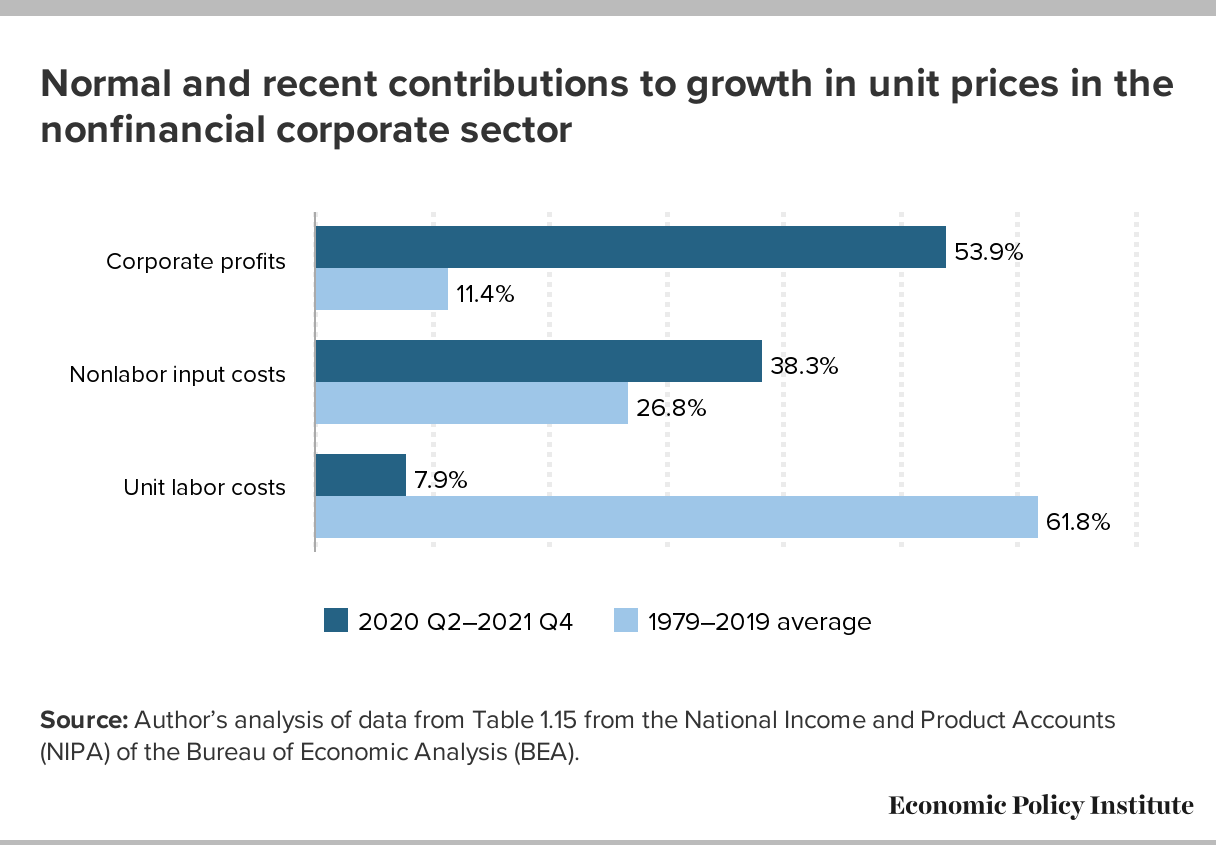
The Fed assumes that price increases are being driven by wage increases — so-called “wage-price inflation.” That’s incorrect. Wages are lagging behind inflation. A more accurate description of what we’re now seeing might be called “profit-price inflation” — prices driven upward by corporations seeking increased profits. (See chart below, from the Economic Policy Institute.)

A recession will be especially harmful to people who are most vulnerable to downturns in the economy — who are the first to be fired (and last to be hired again when the economy turns upward): lower-wage workers, disproportionately women and people of color.  

The Fed is making a big mistake.

Charlotte, NC-based Atrium Health and Illinois- and Wisconsin-based Advocate Aurora Health announce plans to merge

The combined health system will become the sixth largest nationwide, with $27B in revenue and 67 hospitals across six Midwest and Southeast states. The system will be based in Charlotte, and known as Advocate Health, though Atrium will continue to use its name in its markets.

Atrium CEO Gene Woods is slated to ultimately lead the combined entity, after an 18-month co-CEO arrangement with Advocate Aurora CEO Jim Skogsbergh. While the cross-market merger is unlikely to create antitrust concerns about increased pricing leverage, the Biden administration has been making noises about applying stricter scrutiny to the impact of health system consolidation on labor market competition.  

The Gist: Earlier this year, Utah-based Intermountain Healthcare and Colorado-based SCL Health combined to create a 33-hospital, $14B health system, which became the 11th largest nationwide. While these mega-mergers of regional systems can realize cost savings from back-office synergies, there is a significant opportunity to create larger “platforms” of care to win consumer loyalty, deploy digital capabilities, attract talent, and become more desirable partners for nontraditional players like Amazon, Walmart, and One Medical.

It will be critical to watch whether the governance and cultural challenges that often hinder health system mergers come into play here. Advocate Aurora has had two prospective mergers fall apart in recent years, the first with Chicago-based NorthShore University HealthSystem, and the second with Michigan-based Beaumont Health (who subsequently finalized a merger with Spectrum Health earlier this year). 

But the combination with Atrium is structured as a joint operating agreement, essentially creating a new superstructure atop the two legacy systems. This may allow the combined entity more flexibility in local decision-making, but the ultimate question will be how the combined entity will create value for consumers. Time will tell.